

Follow the path of the brush and the fate
 |
Description
Book Introduction
Revealed for the first time,
The stories of 142 famous calligraphers from the Joseon Dynasty and their writings.
From Il-du Jeong Yeo-chang, a master of Neo-Confucianism during the reign of King Seongjong of Joseon, to Sim-am Jo Du-sun, who served as Prime Minister and Chief of the Gyeongbokgung Yeonggeondogam during the reign of King Gojong, the opinions of 142 renowned scholars and Confucian scholars of the Joseon Dynasty were gathered in one place.
The main characters who wrote these letters were the prominent Confucian scholars who influenced their times, such as Jo Gwang-jo, Yi Hwang, Kim Jang-saeng, Yi Hang-bok, Kim Sang-heon, Jo Gyeong, Heo Mok, Song Si-yeol, Nam Gu-man, Kwon Sang-ha, and Kim Chang-hyeop. These letters will be a valuable resource for studying the microhistory of the Joseon Dynasty, and their handwriting, each with its own unique style, is also a valuable resource that will help study Joseon Dynasty calligraphy.
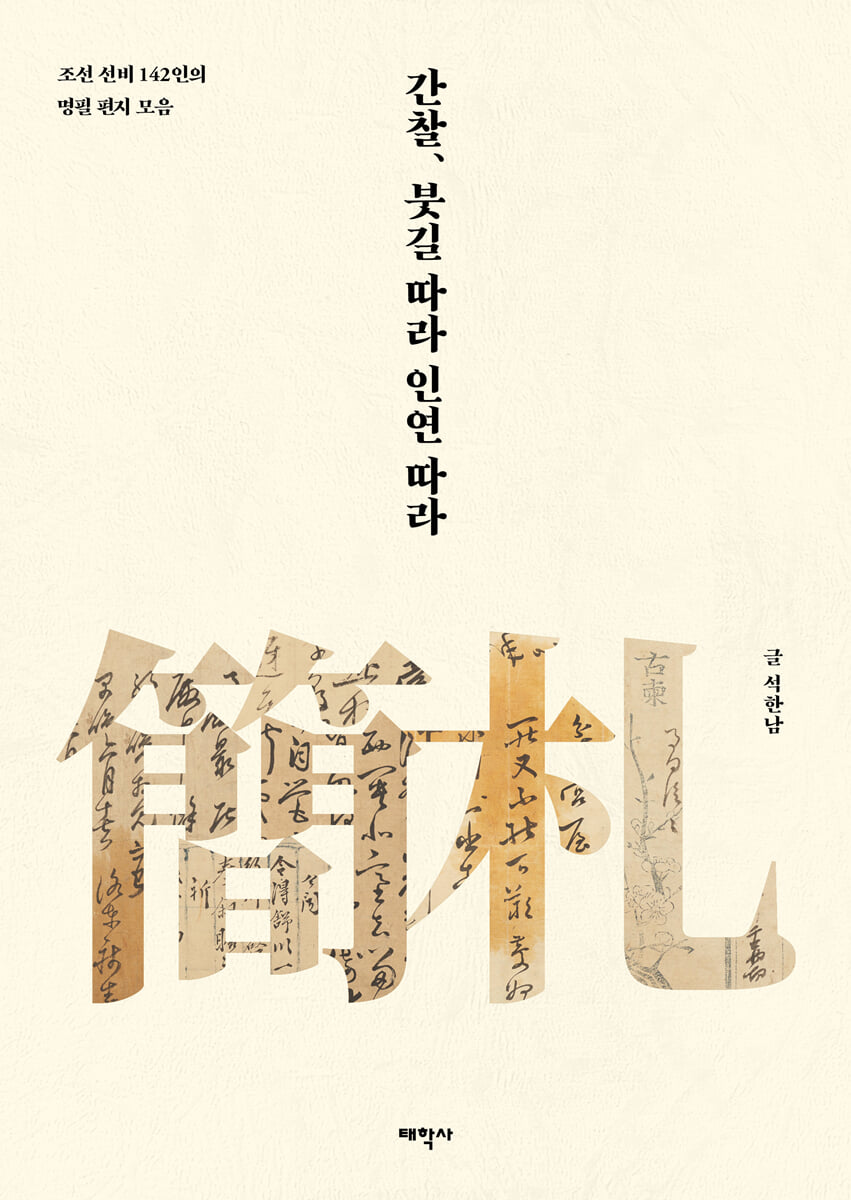
Seok Han-nam, a researcher of ancient documents and the author of this book who translated and wrote it, said, “Old letters are generally called ‘Ganchal (簡札)’.
“Its name comes from the fact that in the days before paper, people used to write on bamboo or pieces of wood to communicate,” he said, adding, “Ganchal clearly shows the inner workings of the Joseon scholars’ mental world and lifestyle.
He explains its significance by saying, “It also provides a valuable opportunity to glimpse the handwriting of our ancestors.”
The observations included in this book are precious relics owned by Chairman Lee Sang-jun of The Prima Co., Ltd., a famous collector known to everyone in the Korean art world.
This book is a reorganization of 164 short notes and poems by 142 authors, arranged in chronological order of their birth and death, from the six volumes of Ganchalcheop, one of his numerous collections of famous calligraphers from the Joseon Dynasty. This publication marks the first time that these notes have been made public.
The author introduces the author of each commentary and explains that he or she transcribed the original text of the commentary and translated and annotated it. This is a very rare case in which an individual, rather than a government agency, transcribed and annotated a handwritten commentary written in cursive script rather than a printed anthology.
The stories of 142 famous calligraphers from the Joseon Dynasty and their writings.
From Il-du Jeong Yeo-chang, a master of Neo-Confucianism during the reign of King Seongjong of Joseon, to Sim-am Jo Du-sun, who served as Prime Minister and Chief of the Gyeongbokgung Yeonggeondogam during the reign of King Gojong, the opinions of 142 renowned scholars and Confucian scholars of the Joseon Dynasty were gathered in one place.
The main characters who wrote these letters were the prominent Confucian scholars who influenced their times, such as Jo Gwang-jo, Yi Hwang, Kim Jang-saeng, Yi Hang-bok, Kim Sang-heon, Jo Gyeong, Heo Mok, Song Si-yeol, Nam Gu-man, Kwon Sang-ha, and Kim Chang-hyeop. These letters will be a valuable resource for studying the microhistory of the Joseon Dynasty, and their handwriting, each with its own unique style, is also a valuable resource that will help study Joseon Dynasty calligraphy.
Seok Han-nam, a researcher of ancient documents and the author of this book who translated and wrote it, said, “Old letters are generally called ‘Ganchal (簡札)’.
“Its name comes from the fact that in the days before paper, people used to write on bamboo or pieces of wood to communicate,” he said, adding, “Ganchal clearly shows the inner workings of the Joseon scholars’ mental world and lifestyle.
He explains its significance by saying, “It also provides a valuable opportunity to glimpse the handwriting of our ancestors.”
The observations included in this book are precious relics owned by Chairman Lee Sang-jun of The Prima Co., Ltd., a famous collector known to everyone in the Korean art world.
This book is a reorganization of 164 short notes and poems by 142 authors, arranged in chronological order of their birth and death, from the six volumes of Ganchalcheop, one of his numerous collections of famous calligraphers from the Joseon Dynasty. This publication marks the first time that these notes have been made public.
The author introduces the author of each commentary and explains that he or she transcribed the original text of the commentary and translated and annotated it. This is a very rare case in which an individual, rather than a government agency, transcribed and annotated a handwritten commentary written in cursive script rather than a printed anthology.
- You can preview some of the book's contents.
Preview
index
prolog
Part 1: Jeong Yeo-chang - Kim Jang-saeng
Observations of people born in the late 1400s to early 1500s
001 Jeong Yeo-chang
002 Jo Gwang-jo
003 Lee Eon-jeok
004 Seongsu Chim
005 Yi Hwang
006 Geum Nan-su
007 Kim Bu-ryun
008 Kim Hyun-seong
009 Lee Won-ik
010 Kim Jang-saeng
Part 2: Song Sang-hyeon - Chae Yu-hu
Observations of people born in the late 1500s
011 Jeon (傳) Song Sang-hyeon (宋象賢)
012 Lee Hang-bok
013 Han Jun-gyeom
014 Jeon (傳) Kim Ji-nam (金止男)
015 Lee Jun
016 Kim Sang-jun (金尙寯)
017 Lee Hong-ju
018 Park Dong-seon
019 Lee Jeong-gu
020 Seong Gye-seon
021 Park Dong-ryang
022 Simyeol (沈悅)
023 Kim Sang-heon
024 Kim Ryu (金?)
025 Kihyeop (Strange Association)
026 Lee Hyeon-yeong
027 Jo Ik
028 Kim Yuk (金堉)
029 Lee Si-baek
030 Jeong Hong-myeong
031 Yoon Shin-ji
032 Lee Sik
033 Kang Hak-nyeon
034 Lee Gyeong-yeo
035 Shim Dae-bu
036 Jo Kyung
037 Jang Yu (張維)
038 Oh Jun (吳竣)
039 Shin Ik-seong
040 Lee?
041 Kim Se-ryeom
042 Lee Si-bang
043 Lee Won-jin
044 Lee Myeong-han
045 Jo Sok
046 Lee Gyeong-seok
047 Heo Mok (許穆)
048 Park Jeong (朴炡)
049 Kim Nam-jung
050 Lee So-han
051 Chae Yu-hu
Part 3: Park Ui - Kim Woo-hang
Observations of people born in the early 1600s
052 Park Ui (Park?)
053 Im Yu-hu (任有後)
054 Lee Si-sul
055 Song Si-yeol
056 Heo Gyeok
057 Hwangho (黃?)
058 Yu Do-sam
059 Yoon Seon-geo (尹宣擧)
060 Park Jang-won
061 Lee Jeong-gi (李廷?)
062 Lee Sang-jin
063 Lee Tae-yeon
064 Lee Jeong-yeong
065 Lee Eun-sang
066 Hongwi (洪?)
067 Yeoseongje (呂聖齊)
068 Kim Su-heung (金壽興)
069 Lee Dan-sang
070 Nam Yong-ik (南龍翼)
071 Kim Su-hang
072 Nam Gu-man
073 Lee Se-hwa
074 Jeong Jae-sung
075 Hong Yu-gu (洪有龜)
076 Lee Min-seo
077 Yun Sim (尹深)
078 Kim Seok-ju (金錫胄)
079 Shin Ik-sang
080 Seo Mun-jung
081 Lee Se-baek
082 Yoon Ji-wan
083 Nayangjwa
084 Jo Ji-gyeom
085 Zhao Weiming
086 Jo Sang-woo
087 Sim Ik-hyeon (沈益顯)
088 Kwon Sang-ha
089 Lee Don (Lee?)
090 Lee Se-pil
091 Shim Kwon
092 Oh Do-il
093 Lee Yu
094 Shin Wan
095 Choi Seok-jeong (崔錫鼎)
096 Park Tae-yu
097 Lee Se-jae
098 Lee Jeong-gyeom
099 Jeong Jae-ryun
100 Kim Gu (金構)
101 Kim Woo-hang
Part 4: Kang Hyeon - Won Gyeong-ha
Observations of people born in the late 1600s
102 Kang Hyeon (姜?)
103 Choi Gyu-seo
104 Kim Chang-hyeop
105 Song Jing-eun (宋徵殷)
106 Lee Ik-su
107 Kim Chang-heup (金昌翕)
108 Park Tae-bo
109 Lee Hee-jo (李喜朝)
110 Lee In-yeop
111 Song Sang-gi
112 Kim Jin-gyu (金鎭圭)
113 Yoon Deok-jun
114 Kim Chang-eop
115 Min Jin-hu
116 Oh Tae-ju
117 Choi Chang-dae
118 Cai Pengyun
119 Lee Byeong-yeon
120 Hanji (韓祉)
121 Yoon Soon (尹淳)
122 Lee Jae (李縡)
123 Kim Jae-ro
124 An Jung-gwan
125 Yun Bong-gu (尹鳳九)
126 Yu Cheok-gi
127 Wonkyungha (元景夏)
Part 5: Kim Si-chan - Unknown
Observations of people born after 1700
128 Kim Si-chan (金時粲)
129 Jo Myeong-jeong
130 Jo Jung-hoe
131 Seo Ji-su
132 Kim Sang-suk (金相肅)
133 Hong Nak-seong
134 Kim Jong-hu
135 Min Baek-bun
136 Kim Jong-su (金鍾秀)
137 Kim Geun-sun
138 Cho Doo-soon
139 Unknown 1
140 Unknown 2
141 Unknown 3
142 Unknown 4
Epilogue - Lee Sang-jun
Part 1: Jeong Yeo-chang - Kim Jang-saeng
Observations of people born in the late 1400s to early 1500s
001 Jeong Yeo-chang
002 Jo Gwang-jo
003 Lee Eon-jeok
004 Seongsu Chim
005 Yi Hwang
006 Geum Nan-su
007 Kim Bu-ryun
008 Kim Hyun-seong
009 Lee Won-ik
010 Kim Jang-saeng
Part 2: Song Sang-hyeon - Chae Yu-hu
Observations of people born in the late 1500s
011 Jeon (傳) Song Sang-hyeon (宋象賢)
012 Lee Hang-bok
013 Han Jun-gyeom
014 Jeon (傳) Kim Ji-nam (金止男)
015 Lee Jun
016 Kim Sang-jun (金尙寯)
017 Lee Hong-ju
018 Park Dong-seon
019 Lee Jeong-gu
020 Seong Gye-seon
021 Park Dong-ryang
022 Simyeol (沈悅)
023 Kim Sang-heon
024 Kim Ryu (金?)
025 Kihyeop (Strange Association)
026 Lee Hyeon-yeong
027 Jo Ik
028 Kim Yuk (金堉)
029 Lee Si-baek
030 Jeong Hong-myeong
031 Yoon Shin-ji
032 Lee Sik
033 Kang Hak-nyeon
034 Lee Gyeong-yeo
035 Shim Dae-bu
036 Jo Kyung
037 Jang Yu (張維)
038 Oh Jun (吳竣)
039 Shin Ik-seong
040 Lee?
041 Kim Se-ryeom
042 Lee Si-bang
043 Lee Won-jin
044 Lee Myeong-han
045 Jo Sok
046 Lee Gyeong-seok
047 Heo Mok (許穆)
048 Park Jeong (朴炡)
049 Kim Nam-jung
050 Lee So-han
051 Chae Yu-hu
Part 3: Park Ui - Kim Woo-hang
Observations of people born in the early 1600s
052 Park Ui (Park?)
053 Im Yu-hu (任有後)
054 Lee Si-sul
055 Song Si-yeol
056 Heo Gyeok
057 Hwangho (黃?)
058 Yu Do-sam
059 Yoon Seon-geo (尹宣擧)
060 Park Jang-won
061 Lee Jeong-gi (李廷?)
062 Lee Sang-jin
063 Lee Tae-yeon
064 Lee Jeong-yeong
065 Lee Eun-sang
066 Hongwi (洪?)
067 Yeoseongje (呂聖齊)
068 Kim Su-heung (金壽興)
069 Lee Dan-sang
070 Nam Yong-ik (南龍翼)
071 Kim Su-hang
072 Nam Gu-man
073 Lee Se-hwa
074 Jeong Jae-sung
075 Hong Yu-gu (洪有龜)
076 Lee Min-seo
077 Yun Sim (尹深)
078 Kim Seok-ju (金錫胄)
079 Shin Ik-sang
080 Seo Mun-jung
081 Lee Se-baek
082 Yoon Ji-wan
083 Nayangjwa
084 Jo Ji-gyeom
085 Zhao Weiming
086 Jo Sang-woo
087 Sim Ik-hyeon (沈益顯)
088 Kwon Sang-ha
089 Lee Don (Lee?)
090 Lee Se-pil
091 Shim Kwon
092 Oh Do-il
093 Lee Yu
094 Shin Wan
095 Choi Seok-jeong (崔錫鼎)
096 Park Tae-yu
097 Lee Se-jae
098 Lee Jeong-gyeom
099 Jeong Jae-ryun
100 Kim Gu (金構)
101 Kim Woo-hang
Part 4: Kang Hyeon - Won Gyeong-ha
Observations of people born in the late 1600s
102 Kang Hyeon (姜?)
103 Choi Gyu-seo
104 Kim Chang-hyeop
105 Song Jing-eun (宋徵殷)
106 Lee Ik-su
107 Kim Chang-heup (金昌翕)
108 Park Tae-bo
109 Lee Hee-jo (李喜朝)
110 Lee In-yeop
111 Song Sang-gi
112 Kim Jin-gyu (金鎭圭)
113 Yoon Deok-jun
114 Kim Chang-eop
115 Min Jin-hu
116 Oh Tae-ju
117 Choi Chang-dae
118 Cai Pengyun
119 Lee Byeong-yeon
120 Hanji (韓祉)
121 Yoon Soon (尹淳)
122 Lee Jae (李縡)
123 Kim Jae-ro
124 An Jung-gwan
125 Yun Bong-gu (尹鳳九)
126 Yu Cheok-gi
127 Wonkyungha (元景夏)
Part 5: Kim Si-chan - Unknown
Observations of people born after 1700
128 Kim Si-chan (金時粲)
129 Jo Myeong-jeong
130 Jo Jung-hoe
131 Seo Ji-su
132 Kim Sang-suk (金相肅)
133 Hong Nak-seong
134 Kim Jong-hu
135 Min Baek-bun
136 Kim Jong-su (金鍾秀)
137 Kim Geun-sun
138 Cho Doo-soon
139 Unknown 1
140 Unknown 2
141 Unknown 3
142 Unknown 4
Epilogue - Lee Sang-jun
Publisher's Review
A story written along the path of the brush and according to fate
“I am barely making a living with my parents, but the bodies of those who starve to death continue to pile up, and it seems that no one will survive in the future. What more can I say?
“Every day when I sit down to eat, it feels like there’s a needle stuck in my throat.”
On February 13, 1671 (the 12th year of King Hyeonjong’s reign), Nam Gu-man wrote a letter to an elder in his family who was his uncle’s age.
Nam Gu-man is a well-known figure known for his sijo poem, “Is your classmate bright?”
From 1670, the Joseon people suffered an unprecedented famine due to abnormal weather and the spread of infectious diseases.
This disaster, which began in the year of Gyeongsul (1670) and continued until the year of Sinhae (1671), is recorded in history as the Gyeongsin Great Famine.
This great famine caused nearly a million deaths from disease and starvation throughout Joseon.
In Hamgyeong Province, the damage to the people was the greatest because swarms of locusts appeared and devoured even the relief crops.
The Hamgyeong-do governor at that time was Nam Gu-man.
“After being buried in the ground, I will never be able to see your voice or your appearance again. This body feels lonely and all things seem distant. I close the door and lie down alone, shedding tears. What more can I say to you?”
On January 12, 1701 (the 27th year of King Sukjong's reign), Kim Chang-hyeop held his only son, who was still as young as a newborn, in his heart and wrote this.
His son, Kim Sung-gyeom (金崇謙), was a prodigy who was deeply learned and left behind hundreds of poems, although he died young at the age of 19.
Meanwhile, the latter part of the notice often contains content about sending goods.
Hong Yu-gu, who was busy welcoming Chinese envoys, wrote the following on February 18, 1682 (the 8th year of King Sukjong's reign) while sending a memorial offering to the recipient.
“The small writing on the left is to be offered as an offering to the ancestral rites, but it is so insignificant that I feel ashamed and disappointed.
Two lumps of yeast
Two croakers
Early Fourth Round”
The author says that “this is a very grand gift given and received as recorded in the records,” and that most of the gifts were nothing more than fans, calendars, paper, ink, meat, and sweets.
The surveillance culture of Joseon scholars
The author says that because the letters are closely related to the private lives of scholars who lived in an era, their format and content are very diverse, and that when the recipient is an elder, the letters are written neatly in running script, which is close to regular script, but when sent to children or close subordinates, the handwriting is sometimes so cursive that it is almost impossible for a third party to read.
There were also cases where the sender omitted the name to show that he or she was very close to the recipient. When only two letters of the name would have been used, the two letters were written as "unknown" to mean "omitting the name when in a position where one knows the recipient well."
There are even cases where it is written as 'Heum (欠)', which is said to express the meaning of not using the name as an onomatopoeia like 'Heum!' or 'Ahem!'
At the end of the observations containing serious content, '병(丙)' or '정(丁)' was sometimes written. Since '병(丙)' and '정(丁)' correspond to '화(火)' in the Five Elements, it was a request to burn them after reading.
However, as these observations were surprisingly frequently discovered, it seemed that recipients were ignoring them.
“I am barely making a living with my parents, but the bodies of those who starve to death continue to pile up, and it seems that no one will survive in the future. What more can I say?
“Every day when I sit down to eat, it feels like there’s a needle stuck in my throat.”
On February 13, 1671 (the 12th year of King Hyeonjong’s reign), Nam Gu-man wrote a letter to an elder in his family who was his uncle’s age.
Nam Gu-man is a well-known figure known for his sijo poem, “Is your classmate bright?”
From 1670, the Joseon people suffered an unprecedented famine due to abnormal weather and the spread of infectious diseases.
This disaster, which began in the year of Gyeongsul (1670) and continued until the year of Sinhae (1671), is recorded in history as the Gyeongsin Great Famine.
This great famine caused nearly a million deaths from disease and starvation throughout Joseon.
In Hamgyeong Province, the damage to the people was the greatest because swarms of locusts appeared and devoured even the relief crops.
The Hamgyeong-do governor at that time was Nam Gu-man.
“After being buried in the ground, I will never be able to see your voice or your appearance again. This body feels lonely and all things seem distant. I close the door and lie down alone, shedding tears. What more can I say to you?”
On January 12, 1701 (the 27th year of King Sukjong's reign), Kim Chang-hyeop held his only son, who was still as young as a newborn, in his heart and wrote this.
His son, Kim Sung-gyeom (金崇謙), was a prodigy who was deeply learned and left behind hundreds of poems, although he died young at the age of 19.
Meanwhile, the latter part of the notice often contains content about sending goods.
Hong Yu-gu, who was busy welcoming Chinese envoys, wrote the following on February 18, 1682 (the 8th year of King Sukjong's reign) while sending a memorial offering to the recipient.
“The small writing on the left is to be offered as an offering to the ancestral rites, but it is so insignificant that I feel ashamed and disappointed.
Two lumps of yeast
Two croakers
Early Fourth Round”
The author says that “this is a very grand gift given and received as recorded in the records,” and that most of the gifts were nothing more than fans, calendars, paper, ink, meat, and sweets.
The surveillance culture of Joseon scholars
The author says that because the letters are closely related to the private lives of scholars who lived in an era, their format and content are very diverse, and that when the recipient is an elder, the letters are written neatly in running script, which is close to regular script, but when sent to children or close subordinates, the handwriting is sometimes so cursive that it is almost impossible for a third party to read.
There were also cases where the sender omitted the name to show that he or she was very close to the recipient. When only two letters of the name would have been used, the two letters were written as "unknown" to mean "omitting the name when in a position where one knows the recipient well."
There are even cases where it is written as 'Heum (欠)', which is said to express the meaning of not using the name as an onomatopoeia like 'Heum!' or 'Ahem!'
At the end of the observations containing serious content, '병(丙)' or '정(丁)' was sometimes written. Since '병(丙)' and '정(丁)' correspond to '화(火)' in the Five Elements, it was a request to burn them after reading.
However, as these observations were surprisingly frequently discovered, it seemed that recipients were ignoring them.
GOODS SPECIFICS
- Date of issue: June 5, 2025
- Page count, weight, size: 512 pages | 176*248*35mm
- ISBN13: 9791168103603
- ISBN10: 1168103606
You may also like
카테고리
korean


korean

![GQ KOREA Mark (Monthly): December [2025]](http://librairie.coreenne.fr/cdn/shop/files/8ef265dbbfbf186523ed75ba7319009d.jpg?v=1765340328&width=3840)


