

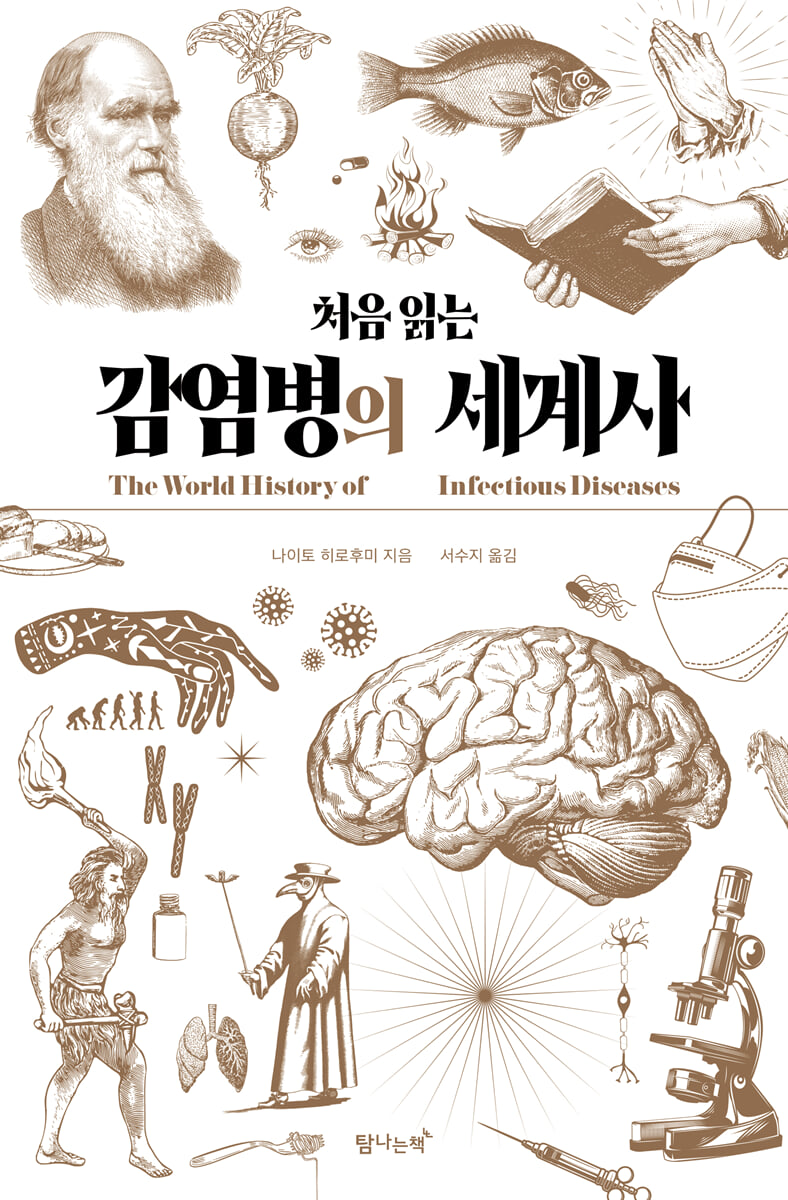
A World History of Infectious Diseases: A First Look
 |
Description
Book Introduction
The constant battle between humans and disease
“The 2020 COVID-19 pandemic was a historic event that reaffirmed the threat of infectious diseases, including novel infectious diseases, global pandemics, economic paralysis, and restrictions on freedom.”
Tracing the global historical impact of infectious diseases!
The COVID-19 pandemic that swept the globe in 2020 was a shocking event that once again reminded humanity that the threat of infectious diseases is not a thing of the past, but a serious and ongoing problem.
Historically, infectious diseases have gone beyond simply threatening individual health; they have possessed the powerful power to determine the fate of a nation and shake up social systems.
The examples of infectious diseases that took countless lives and changed eras, such as the plague and smallpox, clearly demonstrate this.
By the 19th century, as the existence of bacteria and viruses was discovered and hygiene became widespread, hopes arose that humanity could gain an advantage in the fight against infectious diseases.
Plague and smallpox were no longer feared, and even dangerous tropical diseases like malaria seemed to be coming under control thanks to DDT spraying.
As influenza was considered the only infectious disease requiring attention, we dreamed of an optimistic future in which we would be completely free from infectious diseases.
But the COVID-19 pandemic of 2020 clearly revealed that these expectations were a hasty illusion.
We are now faced with the harsh reality that an unknown infectious disease can emerge at any time and invade our society.
What's interesting is that past efforts to eradicate infectious diseases may have paradoxically led to the emergence of new ones.
The analysis is that efforts to eradicate malaria after World War II promoted population growth, and the indiscriminate development to support the growing population led to frequent encounters with animals that humans had never previously encountered, increasing the risk of spreading infectious diseases from animals.
In fact, major infectious diseases such as Ebola, AIDS, SARS, and COVID-19 are believed to have originated from animals.
In this context, the 2020 COVID-19 pandemic can be interpreted as the prelude to a new battle between humanity and infectious diseases.
Like a brief play before a full-scale battle, we may be witnessing a real-time warning that we may face a more powerful and unpredictable infectious disease threat in the future.
As humans expand their territories and globalization accelerates, the risk of infectious diseases spreading is bound to increase.
The historical example of the plague spreading across Eurasia during the expansion of the Mongol Empire in the 14th century, disrupting social systems and ushering in a new era, suggests that a similar situation could recur in the 21st century.
Against this backdrop, this book traces how infectious diseases have influenced world history and highlights moments that decisively changed the course of history.
Although not infectious diseases, it presents a broader perspective on the human struggle with various diseases by including cases of scurvy and beriberi, which were mistaken for infectious diseases in the past and influenced history.
Ultimately, the fight against all diseases, including infectious diseases, is a task that humanity must continue to face as its destiny.
“The 2020 COVID-19 pandemic was a historic event that reaffirmed the threat of infectious diseases, including novel infectious diseases, global pandemics, economic paralysis, and restrictions on freedom.”
Tracing the global historical impact of infectious diseases!
The COVID-19 pandemic that swept the globe in 2020 was a shocking event that once again reminded humanity that the threat of infectious diseases is not a thing of the past, but a serious and ongoing problem.
Historically, infectious diseases have gone beyond simply threatening individual health; they have possessed the powerful power to determine the fate of a nation and shake up social systems.
The examples of infectious diseases that took countless lives and changed eras, such as the plague and smallpox, clearly demonstrate this.
By the 19th century, as the existence of bacteria and viruses was discovered and hygiene became widespread, hopes arose that humanity could gain an advantage in the fight against infectious diseases.
Plague and smallpox were no longer feared, and even dangerous tropical diseases like malaria seemed to be coming under control thanks to DDT spraying.
As influenza was considered the only infectious disease requiring attention, we dreamed of an optimistic future in which we would be completely free from infectious diseases.
But the COVID-19 pandemic of 2020 clearly revealed that these expectations were a hasty illusion.
We are now faced with the harsh reality that an unknown infectious disease can emerge at any time and invade our society.
What's interesting is that past efforts to eradicate infectious diseases may have paradoxically led to the emergence of new ones.
The analysis is that efforts to eradicate malaria after World War II promoted population growth, and the indiscriminate development to support the growing population led to frequent encounters with animals that humans had never previously encountered, increasing the risk of spreading infectious diseases from animals.
In fact, major infectious diseases such as Ebola, AIDS, SARS, and COVID-19 are believed to have originated from animals.
In this context, the 2020 COVID-19 pandemic can be interpreted as the prelude to a new battle between humanity and infectious diseases.
Like a brief play before a full-scale battle, we may be witnessing a real-time warning that we may face a more powerful and unpredictable infectious disease threat in the future.
As humans expand their territories and globalization accelerates, the risk of infectious diseases spreading is bound to increase.
The historical example of the plague spreading across Eurasia during the expansion of the Mongol Empire in the 14th century, disrupting social systems and ushering in a new era, suggests that a similar situation could recur in the 21st century.
Against this backdrop, this book traces how infectious diseases have influenced world history and highlights moments that decisively changed the course of history.
Although not infectious diseases, it presents a broader perspective on the human struggle with various diseases by including cases of scurvy and beriberi, which were mistaken for infectious diseases in the past and influenced history.
Ultimately, the fight against all diseases, including infectious diseases, is a task that humanity must continue to face as its destiny.
- You can preview some of the book's contents.
Preview
index
preface
The COVID-19 pandemic has opened a new chapter in the battle between humanity and infectious diseases.
Chapter 1: Religion Born of Plague, the Fall of Empires, and the Migration of Peoples
The Birth of World Religions: Christianity, Buddhism, and Islam Formed in Plague-Prone Areas
The Caste System in India - An Aryan Conqueror's Invention to Prevent Indigenous Plaguesㆍ19
The End of Athens' Prosperity - What Plague Driven the Invincible Athens to Defeat During the Peloponnesian War?ㆍ22
The Plague of Alexander the Great - The Plague of the Plague-26, the Swarm That Destroyed an Empire
Malaria in Rome - The Decline of the Empire and the Population Decline of the Italian Peninsulaㆍ28
Antonine Plague - The Last Emperor Who Stopped the Plague but Couldn't Stop the Empire's Declineㆍ31
Plague of Cyprian - The 3rd-century plague that paved the way for Christianity to become the state religion of Rome.
The Huanan region of China, once an undeveloped land, was abandoned as a plague-ridden area, and was once China's largest granary.
The Weakness of Chinese Dynasties: The Han Dynasty and Its Subsequent Dynasties' Failure to Prevent Population Declines Due to Plaguesㆍ43
The Great Migration: Was the Huns' Migration, a Threat to the Germanic Peoples, Caused by Anthrax?ㆍ45
Chapter 2: Infectious Diseases That Shaped the Power Struggle in Medieval Western Europe
Benedictine Monastery - The Hospital That Established Catholicism in Europeㆍ50
Plague of Justinian - A plague that halted the Byzantine emperor's revival of the Roman Empire in the 6th century.
The Decline of Sassanid Persia - The Plague that Plagued the Persian Empire in the 6th Century
The Rise of Islam: A Leap Ahead of the Plague-Weakened Byzantine Empire and Sassanid Persiaㆍ60
China's Southern and Northern Dynasties - The Huanan Development After the Loss of North China to Foreignersㆍ63
The Fall of Sui - The Plague Spread in Manchuria and the Failure of the Goguryeo Expeditionㆍ67
The Decline of the Tang Dynasty - The Fall of the Empire Due to the Ansa Rebellion and the Plagueㆍ70
Establishing the Authority of the Pope - Malaria in Rome, Which Gave Its Independence from the Holy Roman Emperors 72
Revenge for the Humiliation of Canossa - Henry IV, who escaped the plague and ultimately overthrew the Pope of Rome, 76
The failure of the Crusades - a war lost before it was even fought due to widespread malaria, dysentery, and scurvy. 79
The Rise of Kingship - The King Who Defeated the Pope by Becoming a Skin Disease Healerㆍ84
Scottish Heroes of Savior - Robert the Bruce and the English Defeat
Chapter 3: The Mongol Empire: Plagues Sweep Eurasia
Peace in Mongolia - The Expedition That Fueled the Spread of Plagueㆍ94
The End of the Yuan Dynasty and the Founding of the Ming Dynasty - The Yuan Dynasty Retreats North Due to Famine, Social Unrest, and Plague.
The 14th-Century Plague - Europe Devastated by a Plague from Central Asiaㆍ100
The Shaking Reign of Christianity - The Clergy Fallen by the Plagueㆍ104
The End of Feudalism: The Fall of the Lords Brought About by Population Declineㆍ107
The Birth of National Literature: The Era of Literature Written in the Native Language Instead of Latinㆍ109
Plague Prevention System - Quarantine and Lockdownㆍ113
Discrimination and Persecution - Hatred of Jews, Lepers, and Arabsㆍ115
The Stagnant Islamic World: The Decline of the Middle East, a Region with Advanced Science and Technologyㆍ117
The Hundred Years' War between England and France - Edward the Black Prince and Henry V, who died of dysentery, 119
The Establishment of the Tudor Dynasty - The "English Fever" that Established the Royal Authority of Henry VII, Despite His Legitimacy
Chapter 4: The Reorganization of Europe and the Tragedy of the New World Due to the Opening of New Sea Routes
The Italian Wars and Syphilis - The Disease That Forced France to Retreatㆍ126
The Borgia Family's Ambitions - Unification of the Italian Peninsula Frustrated by Malariaㆍ129
The Conquistadors' Conquest - Why Spain Was Able to Conquer Central and South American Empires in a Flashㆍ132
The Downfall of Native Americans - The Decline of Population Due to Smallpox and Dysentery Before the Battle with the Britishㆍ135
The Destruction of the Invincible Armada - The Spanish Navy Weakened by Typhusㆍ137
Kings who fell to syphilis - The divorced king and the brain emperor who threw the dynasty into chaos with their promiscuous sex lives, and the infectious diseases of 140 famous people?
The Qing Dynasty's Rise - The Manchus Maintained National Power by Rescuing the Plagueㆍ144
The Qing Dynasty's Unification of China - The Plague That Corrupted the Ming Dynasty from Its Foundationsㆍ147
The Thirty Years' War: Germany Became a Showcase for Typhus, Plague, and Dysentery
The Execution of Charles I - The English King Who Lost His Chance to Victory in the Civil War Due to Typhus, 153
The Slave Trade and Black People - Black People Sent from Africa to the Malaria-Infested Caribbeanㆍ155
The Jesuits' Global Expansion: Cinchona Bark, a Malaria Treatment That Supported Catholic Missions, 159
Chapter 5: An era in which a country that controls infectious diseases with advanced science dominates the world.
The Epidemic of Beriberi - A Mysterious Disease of Unknown Origin that Spread Through Cities in the Edo Periodㆍ164
The Birth of Great Britain - The Stuart Dynasty Ended by Smallpoxㆍ168
Jenner's Discovery: A Turning Point in Humanity's Fight Against Infectious Diseases, Smallpox Vaccination ㆍ171
French Revolution - French troops seize the opportunity to win after a plague struck the Prussian army. 175
Napoleon's Egyptian Expedition - The Plague in Syria, More Dreadful Than Admiral Nelsonㆍ177
Napoleon's Empire and the Smallpox Law: Dispelling Prejudice and Contributing to the Expeditionㆍ179
Russian Expedition - Napoleon's Army Already Defeated by Typhusㆍ181
British Navy - Lime Juice Prevented Scurvyㆍ184
Haiti's Independence - French Forces Retreat Due to Yellow Feverㆍ187
The British Empire and Cholera - Pax Britannica and Imperialism: How India's Endemic Disease Spread Globally
Water and Sewerage Maintenance - Hygiene Begins with the Identification of the Cause of Choleraㆍ193
Nationalism in the Balkans: The Ottoman Empire Weakened by Cholera and the Rise of Nationalismㆍ196
Crimean War - Nightingale's Battlefield Sanitationㆍ199
The Meiji Restoration - A Healthy Lower-Ranking Warrior Who Overthrew the Edo Shogunate, Plagued by the Sickness of the Horsemenㆍ202
Pasteur and Koch: Uncovering the Invisible Enemy and Establishing Preventive Medicineㆍ205
The Split of the African Continent - The Rapid Colonization of the Dark Continentㆍ208
The Boer War - Britain Struggles with the Spread of Infectious Diseasesㆍ212
The Opening of the Panama Canal: Africa's Malaria Strategy and the Hegemony Its Takeover ㆍ216
Chapter 6: Why was humanity, having established a quarantine system, once again struck by a pandemic?
World War I - The War Prolonged by Typhusㆍ224
Russian Revolution - The Tsar's Decline in Authority Due to Negligence in Responding to Typhus Outbreakㆍ228
The Russian Civil War - Lenin's Eradication of Typhus and Prevention of Epidemic Typhus, 231
The 1918 Spanish Flu - A Pandemic Caused by the International Movement of Troops During World War I. 233
Yellow Fever Prevention in Mexico - How the Rockefeller Foundation's Devotion Tempered Anti-American Sentiment in Mexicoㆍ239
World War II - The Allied Victory Brought About by the Development of Penicillinㆍ242
The Pacific War: Malaria and the 244 Celebrity Infectious Diseases That Determined Victory and Defeat on Guadalcanal and New Guinea
The Age of Population Explosion - Malaria and Typhus Eradicated by DDTㆍ250
The African Continent's Stagnation: HIV Infection Steals the Future of Youthㆍ253
SARS - The Prelude to a New Threatㆍ257
Ebola Hemorrhagic Fever - A Vicious Virus with No Vaccine or Cureㆍ260
COVID-19 - What kind of world awaits us after COVID-19 ends?ㆍ263
The COVID-19 pandemic has opened a new chapter in the battle between humanity and infectious diseases.
Chapter 1: Religion Born of Plague, the Fall of Empires, and the Migration of Peoples
The Birth of World Religions: Christianity, Buddhism, and Islam Formed in Plague-Prone Areas
The Caste System in India - An Aryan Conqueror's Invention to Prevent Indigenous Plaguesㆍ19
The End of Athens' Prosperity - What Plague Driven the Invincible Athens to Defeat During the Peloponnesian War?ㆍ22
The Plague of Alexander the Great - The Plague of the Plague-26, the Swarm That Destroyed an Empire
Malaria in Rome - The Decline of the Empire and the Population Decline of the Italian Peninsulaㆍ28
Antonine Plague - The Last Emperor Who Stopped the Plague but Couldn't Stop the Empire's Declineㆍ31
Plague of Cyprian - The 3rd-century plague that paved the way for Christianity to become the state religion of Rome.
The Huanan region of China, once an undeveloped land, was abandoned as a plague-ridden area, and was once China's largest granary.
The Weakness of Chinese Dynasties: The Han Dynasty and Its Subsequent Dynasties' Failure to Prevent Population Declines Due to Plaguesㆍ43
The Great Migration: Was the Huns' Migration, a Threat to the Germanic Peoples, Caused by Anthrax?ㆍ45
Chapter 2: Infectious Diseases That Shaped the Power Struggle in Medieval Western Europe
Benedictine Monastery - The Hospital That Established Catholicism in Europeㆍ50
Plague of Justinian - A plague that halted the Byzantine emperor's revival of the Roman Empire in the 6th century.
The Decline of Sassanid Persia - The Plague that Plagued the Persian Empire in the 6th Century
The Rise of Islam: A Leap Ahead of the Plague-Weakened Byzantine Empire and Sassanid Persiaㆍ60
China's Southern and Northern Dynasties - The Huanan Development After the Loss of North China to Foreignersㆍ63
The Fall of Sui - The Plague Spread in Manchuria and the Failure of the Goguryeo Expeditionㆍ67
The Decline of the Tang Dynasty - The Fall of the Empire Due to the Ansa Rebellion and the Plagueㆍ70
Establishing the Authority of the Pope - Malaria in Rome, Which Gave Its Independence from the Holy Roman Emperors 72
Revenge for the Humiliation of Canossa - Henry IV, who escaped the plague and ultimately overthrew the Pope of Rome, 76
The failure of the Crusades - a war lost before it was even fought due to widespread malaria, dysentery, and scurvy. 79
The Rise of Kingship - The King Who Defeated the Pope by Becoming a Skin Disease Healerㆍ84
Scottish Heroes of Savior - Robert the Bruce and the English Defeat
Chapter 3: The Mongol Empire: Plagues Sweep Eurasia
Peace in Mongolia - The Expedition That Fueled the Spread of Plagueㆍ94
The End of the Yuan Dynasty and the Founding of the Ming Dynasty - The Yuan Dynasty Retreats North Due to Famine, Social Unrest, and Plague.
The 14th-Century Plague - Europe Devastated by a Plague from Central Asiaㆍ100
The Shaking Reign of Christianity - The Clergy Fallen by the Plagueㆍ104
The End of Feudalism: The Fall of the Lords Brought About by Population Declineㆍ107
The Birth of National Literature: The Era of Literature Written in the Native Language Instead of Latinㆍ109
Plague Prevention System - Quarantine and Lockdownㆍ113
Discrimination and Persecution - Hatred of Jews, Lepers, and Arabsㆍ115
The Stagnant Islamic World: The Decline of the Middle East, a Region with Advanced Science and Technologyㆍ117
The Hundred Years' War between England and France - Edward the Black Prince and Henry V, who died of dysentery, 119
The Establishment of the Tudor Dynasty - The "English Fever" that Established the Royal Authority of Henry VII, Despite His Legitimacy
Chapter 4: The Reorganization of Europe and the Tragedy of the New World Due to the Opening of New Sea Routes
The Italian Wars and Syphilis - The Disease That Forced France to Retreatㆍ126
The Borgia Family's Ambitions - Unification of the Italian Peninsula Frustrated by Malariaㆍ129
The Conquistadors' Conquest - Why Spain Was Able to Conquer Central and South American Empires in a Flashㆍ132
The Downfall of Native Americans - The Decline of Population Due to Smallpox and Dysentery Before the Battle with the Britishㆍ135
The Destruction of the Invincible Armada - The Spanish Navy Weakened by Typhusㆍ137
Kings who fell to syphilis - The divorced king and the brain emperor who threw the dynasty into chaos with their promiscuous sex lives, and the infectious diseases of 140 famous people?
The Qing Dynasty's Rise - The Manchus Maintained National Power by Rescuing the Plagueㆍ144
The Qing Dynasty's Unification of China - The Plague That Corrupted the Ming Dynasty from Its Foundationsㆍ147
The Thirty Years' War: Germany Became a Showcase for Typhus, Plague, and Dysentery
The Execution of Charles I - The English King Who Lost His Chance to Victory in the Civil War Due to Typhus, 153
The Slave Trade and Black People - Black People Sent from Africa to the Malaria-Infested Caribbeanㆍ155
The Jesuits' Global Expansion: Cinchona Bark, a Malaria Treatment That Supported Catholic Missions, 159
Chapter 5: An era in which a country that controls infectious diseases with advanced science dominates the world.
The Epidemic of Beriberi - A Mysterious Disease of Unknown Origin that Spread Through Cities in the Edo Periodㆍ164
The Birth of Great Britain - The Stuart Dynasty Ended by Smallpoxㆍ168
Jenner's Discovery: A Turning Point in Humanity's Fight Against Infectious Diseases, Smallpox Vaccination ㆍ171
French Revolution - French troops seize the opportunity to win after a plague struck the Prussian army. 175
Napoleon's Egyptian Expedition - The Plague in Syria, More Dreadful Than Admiral Nelsonㆍ177
Napoleon's Empire and the Smallpox Law: Dispelling Prejudice and Contributing to the Expeditionㆍ179
Russian Expedition - Napoleon's Army Already Defeated by Typhusㆍ181
British Navy - Lime Juice Prevented Scurvyㆍ184
Haiti's Independence - French Forces Retreat Due to Yellow Feverㆍ187
The British Empire and Cholera - Pax Britannica and Imperialism: How India's Endemic Disease Spread Globally
Water and Sewerage Maintenance - Hygiene Begins with the Identification of the Cause of Choleraㆍ193
Nationalism in the Balkans: The Ottoman Empire Weakened by Cholera and the Rise of Nationalismㆍ196
Crimean War - Nightingale's Battlefield Sanitationㆍ199
The Meiji Restoration - A Healthy Lower-Ranking Warrior Who Overthrew the Edo Shogunate, Plagued by the Sickness of the Horsemenㆍ202
Pasteur and Koch: Uncovering the Invisible Enemy and Establishing Preventive Medicineㆍ205
The Split of the African Continent - The Rapid Colonization of the Dark Continentㆍ208
The Boer War - Britain Struggles with the Spread of Infectious Diseasesㆍ212
The Opening of the Panama Canal: Africa's Malaria Strategy and the Hegemony Its Takeover ㆍ216
Chapter 6: Why was humanity, having established a quarantine system, once again struck by a pandemic?
World War I - The War Prolonged by Typhusㆍ224
Russian Revolution - The Tsar's Decline in Authority Due to Negligence in Responding to Typhus Outbreakㆍ228
The Russian Civil War - Lenin's Eradication of Typhus and Prevention of Epidemic Typhus, 231
The 1918 Spanish Flu - A Pandemic Caused by the International Movement of Troops During World War I. 233
Yellow Fever Prevention in Mexico - How the Rockefeller Foundation's Devotion Tempered Anti-American Sentiment in Mexicoㆍ239
World War II - The Allied Victory Brought About by the Development of Penicillinㆍ242
The Pacific War: Malaria and the 244 Celebrity Infectious Diseases That Determined Victory and Defeat on Guadalcanal and New Guinea
The Age of Population Explosion - Malaria and Typhus Eradicated by DDTㆍ250
The African Continent's Stagnation: HIV Infection Steals the Future of Youthㆍ253
SARS - The Prelude to a New Threatㆍ257
Ebola Hemorrhagic Fever - A Vicious Virus with No Vaccine or Cureㆍ260
COVID-19 - What kind of world awaits us after COVID-19 ends?ㆍ263
Into the book
Anthrax is a zoonotic infectious disease.
It is an infectious disease that mainly affects sheep, goats, and cattle, and can also be transmitted to humans.
Although not contagious from person to person, it is a highly toxic and fatal disease with a mortality rate of over 90% if contracted.
The livestock that the Huns were grazing carried anthrax from somewhere and died one after another. When the anthrax spread to the Huns who came into contact with the livestock, many people died, and the people would have fled in fear.
So, the Huns, fearing an unknown plague, moved west in search of anthrax-free regions.
Their migration triggered the migration of the Germanic tribes, and the wheel of history turned again, until the domino effect of plague brought about the fall of the Western Roman Empire in 476.
--- From "The Great Migration"
In the early 5th century, the Visigoths, who had raided Rome, withdrew from the Italian peninsula with surprising speed.
This was because the malaria epidemic was rampant at the time.
In fact, the first king of the Visigoths, Alaric (reigned 395-410), died from a fever believed to be malaria, and the Visigoths, having lost their leader, were pushed back to the Iberian Peninsula.
In the early 6th century, the Ostrogoths occupied the Italian peninsula, but this time, a plague broke out, weakening the Ostrogoths' fighting power and leading to their fall to the Byzantine (Eastern Roman) Empire.
--- From the Benedictine Monastery
The plague is mainly transmitted by fleas carrying the plague bacteria.
When fleas that live on rodents, including rats, become infected with the fungus and bite a person, the plague bacteria enter the human body.
Plague is sometimes transmitted through the air, when an infected person sneezes or coughs and releases droplets that enter the respiratory tract of another person, causing infection.
(See the picture on page 56) If you contract the plague, you will experience symptoms such as darkening of the armpits and the groin area near the thighs, which is where the nickname "The Black Death" came from.
The sight of plague patients, their bodies blackened, suffering from high fevers and dying must have been terrifying to the people of that time.
--- From "The Plague of Justinian"
Sassanid Persia was an empire founded by Iranians who had long opposed the ancient Roman Empire and whose main industry was agriculture.
Sassanid Persia rivaled the Byzantine Empire, the successor to the Roman Empire, and adopted Zoroastrianism as its state religion.
During the reign of Khosrau II (reign 590-628), it reached its peak, ruling Palestine, Egypt, and South Arabia, but it was destroyed 20 years after Khosrau II passed away.
--- From "The Decline of Sassanid Persia"
In China, epidemics raged from the 1st century to the mid-3rd century, causing a population cliff.
As the population declined sharply, the migration of nomadic tribes seeking to occupy the lands emptied of people like an ebb tide increased.
And these foreigners overthrew the dynasty established by the Han Chinese in China and established their own dynasty.
Its beginning was the Yeongga Rebellion, which began in 307.
The Southern Xiongnu in Shanxi overthrew the Western Jin Dynasty and established their own dynasty in North China.
In the following centuries, ethnic groups such as the Huns, Jurchen, Xianbei, and Jiang took turns establishing dynasties in North China.
Koreans, fearful of being caught up in this war, packed their bags and fled to Huanan.
--- From "Russian Expedition"
In 610, a plague broke out in some parts of China.
As historian William McNeill points out in A World History of Epidemics, the Plague of Justinian is believed to have entered China.
It is not difficult to imagine that when a dynasty unified the North and South and opened a canal connecting the two regions, rats carrying fleas infected with the plague spread throughout China.
It is an infectious disease that mainly affects sheep, goats, and cattle, and can also be transmitted to humans.
Although not contagious from person to person, it is a highly toxic and fatal disease with a mortality rate of over 90% if contracted.
The livestock that the Huns were grazing carried anthrax from somewhere and died one after another. When the anthrax spread to the Huns who came into contact with the livestock, many people died, and the people would have fled in fear.
So, the Huns, fearing an unknown plague, moved west in search of anthrax-free regions.
Their migration triggered the migration of the Germanic tribes, and the wheel of history turned again, until the domino effect of plague brought about the fall of the Western Roman Empire in 476.
--- From "The Great Migration"
In the early 5th century, the Visigoths, who had raided Rome, withdrew from the Italian peninsula with surprising speed.
This was because the malaria epidemic was rampant at the time.
In fact, the first king of the Visigoths, Alaric (reigned 395-410), died from a fever believed to be malaria, and the Visigoths, having lost their leader, were pushed back to the Iberian Peninsula.
In the early 6th century, the Ostrogoths occupied the Italian peninsula, but this time, a plague broke out, weakening the Ostrogoths' fighting power and leading to their fall to the Byzantine (Eastern Roman) Empire.
--- From the Benedictine Monastery
The plague is mainly transmitted by fleas carrying the plague bacteria.
When fleas that live on rodents, including rats, become infected with the fungus and bite a person, the plague bacteria enter the human body.
Plague is sometimes transmitted through the air, when an infected person sneezes or coughs and releases droplets that enter the respiratory tract of another person, causing infection.
(See the picture on page 56) If you contract the plague, you will experience symptoms such as darkening of the armpits and the groin area near the thighs, which is where the nickname "The Black Death" came from.
The sight of plague patients, their bodies blackened, suffering from high fevers and dying must have been terrifying to the people of that time.
--- From "The Plague of Justinian"
Sassanid Persia was an empire founded by Iranians who had long opposed the ancient Roman Empire and whose main industry was agriculture.
Sassanid Persia rivaled the Byzantine Empire, the successor to the Roman Empire, and adopted Zoroastrianism as its state religion.
During the reign of Khosrau II (reign 590-628), it reached its peak, ruling Palestine, Egypt, and South Arabia, but it was destroyed 20 years after Khosrau II passed away.
--- From "The Decline of Sassanid Persia"
In China, epidemics raged from the 1st century to the mid-3rd century, causing a population cliff.
As the population declined sharply, the migration of nomadic tribes seeking to occupy the lands emptied of people like an ebb tide increased.
And these foreigners overthrew the dynasty established by the Han Chinese in China and established their own dynasty.
Its beginning was the Yeongga Rebellion, which began in 307.
The Southern Xiongnu in Shanxi overthrew the Western Jin Dynasty and established their own dynasty in North China.
In the following centuries, ethnic groups such as the Huns, Jurchen, Xianbei, and Jiang took turns establishing dynasties in North China.
Koreans, fearful of being caught up in this war, packed their bags and fled to Huanan.
--- From "Russian Expedition"
In 610, a plague broke out in some parts of China.
As historian William McNeill points out in A World History of Epidemics, the Plague of Justinian is believed to have entered China.
It is not difficult to imagine that when a dynasty unified the North and South and opened a canal connecting the two regions, rats carrying fleas infected with the plague spread throughout China.
--- From "The Destruction of Numbers"
Publisher's Review
The shocking truth hidden behind history!
World history shaken by infectious diseases!
"Infectious diseases are more than just diseases; they have been a significant driving force in world history, and they continue to exert a powerful influence in modern society."
This book explores the far-reaching and decisive impact infectious diseases have had on human civilization throughout history.
From ancient times to the present, plagues have been a powerful force that has influenced major historical events, such as the birth of religions, the rise and fall of empires, the migration of peoples, the victory or defeat of wars, and the transformation of social systems.
Early humans responded passively to infectious diseases, but advances in science and technology have provided humans with weapons to fight them.
Smallpox vaccination, the development of antibiotics, and improved sanitation marked important turning points in the fight against infectious diseases.
But ironically, even after the 20th century, new pandemics such as the Spanish flu, SARS, Ebola, and COVID-19 occurred, showing that humanity is still not free from the threat of infectious diseases.
The author presents specific examples of the connection between infectious diseases and historical events such as the opening of new sea routes, colonial expansion, and world wars.
Furthermore, it points out that characteristics of modern society, such as population growth, environmental change, and increased international exchange, can facilitate the emergence and spread of new infectious diseases, emphasizing the importance of preparing for future pandemics and learning from history.
Ultimately, infectious diseases are not just diseases; they have been a significant driving force in human history, and they continue to be a challenge requiring continued attention and preparedness.
World history shaken by infectious diseases!
"Infectious diseases are more than just diseases; they have been a significant driving force in world history, and they continue to exert a powerful influence in modern society."
This book explores the far-reaching and decisive impact infectious diseases have had on human civilization throughout history.
From ancient times to the present, plagues have been a powerful force that has influenced major historical events, such as the birth of religions, the rise and fall of empires, the migration of peoples, the victory or defeat of wars, and the transformation of social systems.
Early humans responded passively to infectious diseases, but advances in science and technology have provided humans with weapons to fight them.
Smallpox vaccination, the development of antibiotics, and improved sanitation marked important turning points in the fight against infectious diseases.
But ironically, even after the 20th century, new pandemics such as the Spanish flu, SARS, Ebola, and COVID-19 occurred, showing that humanity is still not free from the threat of infectious diseases.
The author presents specific examples of the connection between infectious diseases and historical events such as the opening of new sea routes, colonial expansion, and world wars.
Furthermore, it points out that characteristics of modern society, such as population growth, environmental change, and increased international exchange, can facilitate the emergence and spread of new infectious diseases, emphasizing the importance of preparing for future pandemics and learning from history.
Ultimately, infectious diseases are not just diseases; they have been a significant driving force in human history, and they continue to be a challenge requiring continued attention and preparedness.
GOODS SPECIFICS
- Date of issue: June 2, 2025
- Page count, weight, size: 268 pages | 140*213*20mm
- ISBN13: 9791194381389
- ISBN10: 1194381383
You may also like
카테고리
korean


korean

![GQ KOREA Mark (Monthly): December [2025]](http://librairie.coreenne.fr/cdn/shop/files/8ef265dbbfbf186523ed75ba7319009d.jpg?v=1765340328&width=3840)


