

Mesopotamia, the land between two rivers
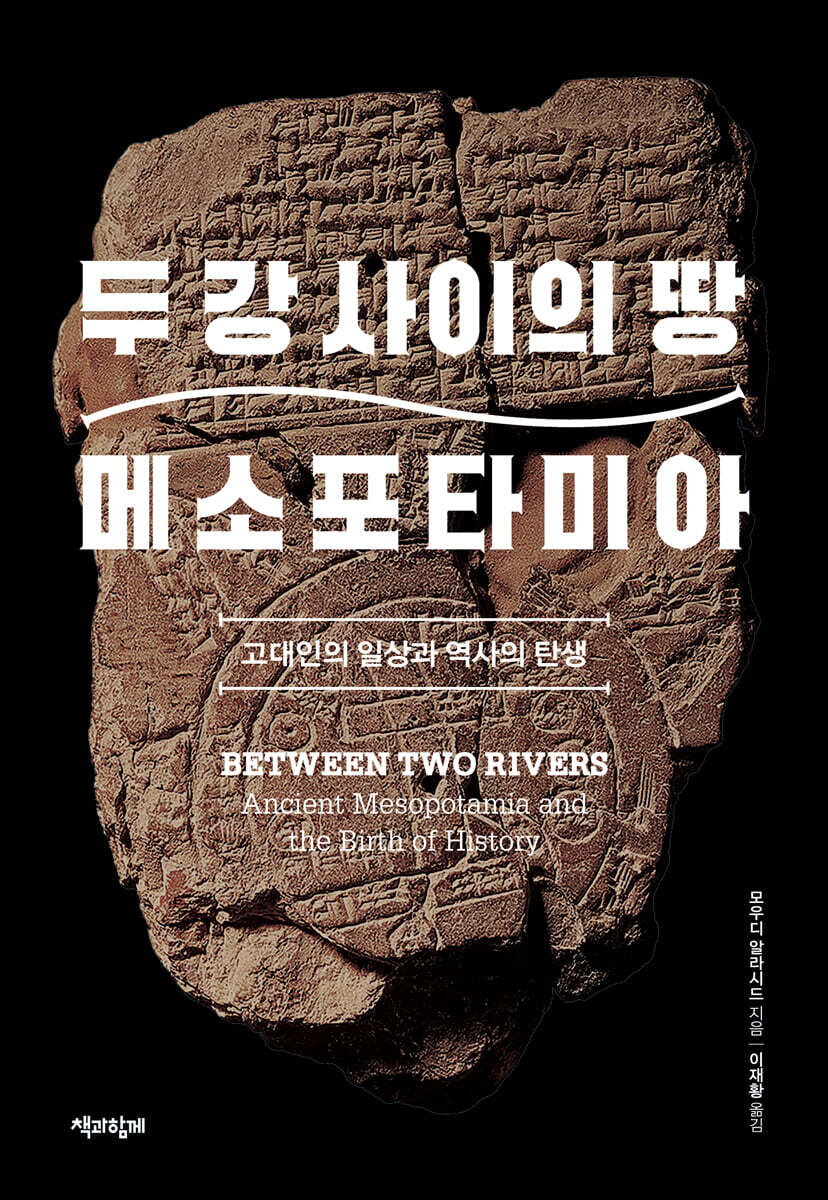 |
Description
Book Introduction
Across thousands of years, we meet ancient people who resemble us.
The starting point of the record, unfolding in Mesopotamia
The unfamiliar yet familiar daily life and the history of 'history'
Thousands of years ago, in a region we call ancient Mesopotamia, people first began writing things down.
What they left behind in Mesopotamia, the "land between the two rivers," the Tigris and the Euphrates, were astonishing discoveries such as the first depiction of the wheel and the first approximation of pi.
Beyond these remarkable scientific discoveries, historian Moudi Al-Rashid draws attention to the daily lives of ancient people through numerous clay tablets and artifacts discovered in the ancient Mesopotamian region.
It depicts the lives of ancient people, not so different from modern people's daily lives: lullabies to soothe babies, doodles students draw in class, slaves negotiating their freedom, beer receipts, princesses nagging at their homework, and struggling working mothers.
This is significant in that the records left behind by ancient people go beyond historical records and reveal aspects of their emotions and lives.
Meanwhile, clay tablets and artifacts provide insight not only into the history of ancient Mesopotamia, but also into the history of 'history'.
These objects offer us a glimpse into the birth of writing, architecture, education, science, war, poverty and privilege, the lives of women and children, and show that the Mesopotamians were in their own way connected to their deeper past.
They used their history to consolidate their power, beautify the courtyards of their palaces, and connect with those who had lived before.
In other words, by respecting history, they preserved what was important to them and ensured that it continued to have vitality.
Listen to Moudi Al-Rashid's account of life and the history of "history" thousands of years ago between two rivers, and you will experience the vivid image of ancient people transcending time.
The starting point of the record, unfolding in Mesopotamia
The unfamiliar yet familiar daily life and the history of 'history'
Thousands of years ago, in a region we call ancient Mesopotamia, people first began writing things down.
What they left behind in Mesopotamia, the "land between the two rivers," the Tigris and the Euphrates, were astonishing discoveries such as the first depiction of the wheel and the first approximation of pi.
Beyond these remarkable scientific discoveries, historian Moudi Al-Rashid draws attention to the daily lives of ancient people through numerous clay tablets and artifacts discovered in the ancient Mesopotamian region.
It depicts the lives of ancient people, not so different from modern people's daily lives: lullabies to soothe babies, doodles students draw in class, slaves negotiating their freedom, beer receipts, princesses nagging at their homework, and struggling working mothers.
This is significant in that the records left behind by ancient people go beyond historical records and reveal aspects of their emotions and lives.
Meanwhile, clay tablets and artifacts provide insight not only into the history of ancient Mesopotamia, but also into the history of 'history'.
These objects offer us a glimpse into the birth of writing, architecture, education, science, war, poverty and privilege, the lives of women and children, and show that the Mesopotamians were in their own way connected to their deeper past.
They used their history to consolidate their power, beautify the courtyards of their palaces, and connect with those who had lived before.
In other words, by respecting history, they preserved what was important to them and ensured that it continued to have vitality.
Listen to Moudi Al-Rashid's account of life and the history of "history" thousands of years ago between two rivers, and you will experience the vivid image of ancient people transcending time.
- You can preview some of the book's contents.
Preview
index
Prologue: Mesopotamia Matters
1 | The Museum of Ancient History and the History of History
2 | Clay Drums: Where Recording Began
3 | Bricks of Amarshin: Building Materials from Mesopotamia
4 | King Shulgi's Statue: How to Be a Good King
5 | Learning Tablet: The Alphabet of Ancient Babylonia
6 | The Cone of Kudurmabuk: The Birth of Science
7 | Boundary Stone: The Slave Clerk, the Weaver's Wife
8 | Mongchi Head: The Reality of Technology vs. War
9 | Ennigaldinanna: Princess, Priestess, and Curator?
Epilogue: Between Us and Them
Ancient Mesopotamian Timeline
Acknowledgements
Translator's Note
Key artifacts cited
main
References
Search
1 | The Museum of Ancient History and the History of History
2 | Clay Drums: Where Recording Began
3 | Bricks of Amarshin: Building Materials from Mesopotamia
4 | King Shulgi's Statue: How to Be a Good King
5 | Learning Tablet: The Alphabet of Ancient Babylonia
6 | The Cone of Kudurmabuk: The Birth of Science
7 | Boundary Stone: The Slave Clerk, the Weaver's Wife
8 | Mongchi Head: The Reality of Technology vs. War
9 | Ennigaldinanna: Princess, Priestess, and Curator?
Epilogue: Between Us and Them
Ancient Mesopotamian Timeline
Acknowledgements
Translator's Note
Key artifacts cited
main
References
Search
Into the book
Ancient Mesopotamia and cities like Ur were not home to just one civilization, but to a diverse array of ancient peoples and cultures.
The Sumerians, Babylonians, Assyrians and others lived between or near the two rivers thousands of years ago, and the entire region is covered in thick layers of relics from past civilizations.
When the princess's palace was built, Ur must have been one of the most important cities in its long history.
It would have been an important cultural center and a key port at a time when the Persian (or Arabian) Gulf coastline extended further inland than it does today.
---From "Prologue│Mesopotamia is Important"
Ur came to prominence around 2300 BC, when the Sumerian cities were conquered by King Sargon.
Sargon and his army came from the city of Akkad, the ruins of which can still be seen.
The name of the capital of this vast empire appears in countless written records, from records of the deeds of kings to ordinary receipts.
It was a social, political and economic center that later came to symbolize the 'world' in a certain sense and to occupy a mythical position.
Kings continued to call themselves 'Kings of Sumer and Akkad' as a way of expressing 'Kings of the World'.
---From "1│Ancient Museums and the History of History"
Brick has outlived its purpose as a building material in many ways.
Amarshin's bricks are an example of something that goes far beyond the elements of secular construction.
The use of bricks was essential in many medical ceremonies in this area.
In one ancient remedy, a patient experiencing discomfort was told to remove a brick from the doorway of their house and place it in the oven.
It meant burning it.
Even today, in some West Asian traditions, the doorway is a boundary zone between the safety of the home and the dangers of the outside world (where evil can gather).
So, symbolically, removing one brick helps to remove all the forces that are causing trouble for that person and that house.
---From "3│Amarshin's Bricks"
The Old Babylonian period (2000–1600 BC), following the fall of the Third Dynasty of Ur, left behind some of the richest evidence of formal education in ancient Mesopotamia.
This period is famous in Mesopotamian history for its learning tablets.
The abundance of these tablets has allowed modern scholars to reconstruct step-by-step how the fledgling scribes learned to read and write.
The clay tablets, often circular in shape, show the teacher's neat handwriting on one side and the student's messy attempt at copying on the other.
It is similar to the pronunciation workbooks used to teach children today.
The letters in type are at the top, and the children copy them repeatedly underneath.
---From "5│Learning Book"
The cone of the Kudurma Book illustrates an important element of ancient Mesopotamian knowledge and scholarship: revelation.
The idea that the gods are constantly revealing truth to those trained to understand it has inspired and influenced all manner of scholarly inquiry, from medicine to astronomy.
Against the backdrop of constant communication with God, scholars have made individual leaps and generational leaps in the history of science, especially the history of astronomy.
By reading the divine messages from the heavens year after year over many years, ancient scholars eventually gained enough information to build mathematical models of astronomical phenomena.
By 500 BC, their night observations had even led to the development of the zodiac theory, which is still used today.
---From "6│The Cone of Kudurmabuk"
A round clay tablet from Ashurbanipal's library is divided into several sections like a pie and is depicted with constellations such as the Pleiades and numbers.
This clay figure takes us back in time, showing us the night sky over Nineveh on January 3, 650 BC.
Phrases from the Epic of Gilgamesh and remedies for depression and fever once filled the classic shelves of this library.
The clay letters preserve a very human moment between royals.
The princess scolds the Crown Princess Olkain for not doing her homework, and the king mourns the death of his child.
I really like these tablets.
Although the tablets preserve only a small part of the human experience of ancient Mesopotamians, they tell us what life was like, what kings thousands of years ago considered important for defense and expansion, and even what knowledge they used to make military decisions.
The Sumerians, Babylonians, Assyrians and others lived between or near the two rivers thousands of years ago, and the entire region is covered in thick layers of relics from past civilizations.
When the princess's palace was built, Ur must have been one of the most important cities in its long history.
It would have been an important cultural center and a key port at a time when the Persian (or Arabian) Gulf coastline extended further inland than it does today.
---From "Prologue│Mesopotamia is Important"
Ur came to prominence around 2300 BC, when the Sumerian cities were conquered by King Sargon.
Sargon and his army came from the city of Akkad, the ruins of which can still be seen.
The name of the capital of this vast empire appears in countless written records, from records of the deeds of kings to ordinary receipts.
It was a social, political and economic center that later came to symbolize the 'world' in a certain sense and to occupy a mythical position.
Kings continued to call themselves 'Kings of Sumer and Akkad' as a way of expressing 'Kings of the World'.
---From "1│Ancient Museums and the History of History"
Brick has outlived its purpose as a building material in many ways.
Amarshin's bricks are an example of something that goes far beyond the elements of secular construction.
The use of bricks was essential in many medical ceremonies in this area.
In one ancient remedy, a patient experiencing discomfort was told to remove a brick from the doorway of their house and place it in the oven.
It meant burning it.
Even today, in some West Asian traditions, the doorway is a boundary zone between the safety of the home and the dangers of the outside world (where evil can gather).
So, symbolically, removing one brick helps to remove all the forces that are causing trouble for that person and that house.
---From "3│Amarshin's Bricks"
The Old Babylonian period (2000–1600 BC), following the fall of the Third Dynasty of Ur, left behind some of the richest evidence of formal education in ancient Mesopotamia.
This period is famous in Mesopotamian history for its learning tablets.
The abundance of these tablets has allowed modern scholars to reconstruct step-by-step how the fledgling scribes learned to read and write.
The clay tablets, often circular in shape, show the teacher's neat handwriting on one side and the student's messy attempt at copying on the other.
It is similar to the pronunciation workbooks used to teach children today.
The letters in type are at the top, and the children copy them repeatedly underneath.
---From "5│Learning Book"
The cone of the Kudurma Book illustrates an important element of ancient Mesopotamian knowledge and scholarship: revelation.
The idea that the gods are constantly revealing truth to those trained to understand it has inspired and influenced all manner of scholarly inquiry, from medicine to astronomy.
Against the backdrop of constant communication with God, scholars have made individual leaps and generational leaps in the history of science, especially the history of astronomy.
By reading the divine messages from the heavens year after year over many years, ancient scholars eventually gained enough information to build mathematical models of astronomical phenomena.
By 500 BC, their night observations had even led to the development of the zodiac theory, which is still used today.
---From "6│The Cone of Kudurmabuk"
A round clay tablet from Ashurbanipal's library is divided into several sections like a pie and is depicted with constellations such as the Pleiades and numbers.
This clay figure takes us back in time, showing us the night sky over Nineveh on January 3, 650 BC.
Phrases from the Epic of Gilgamesh and remedies for depression and fever once filled the classic shelves of this library.
The clay letters preserve a very human moment between royals.
The princess scolds the Crown Princess Olkain for not doing her homework, and the king mourns the death of his child.
I really like these tablets.
Although the tablets preserve only a small part of the human experience of ancient Mesopotamians, they tell us what life was like, what kings thousands of years ago considered important for defense and expansion, and even what knowledge they used to make military decisions.
---From "8│Mongchi Head"
Publisher's Review
A researcher whose life changed after being drawn to cuneiform script
Guided by a space of memory and interpretation on clay
Author Moudi Al-Rasheed, originally from Saudi Arabia, was preparing for law school when he impulsively enrolled in a week-long course on ancient texts in London.
Her life was completely changed the moment she came across a curious chick-foot-shaped inscription on a palm-sized clay tablet in a class she had attended without much expectation.
Her confession that “after just a few hours, I was so captivated by cuneiform that I gave up law school and knew I was set to spend the rest of my life reading clay tablets” was a turning point in her life and the starting point for this book.
The author later became a historian at Oxford, studying cuneiform script and ancient Mesopotamia, and this book, "Mesopotamia: The Land Between Two Rivers," is her first work and the result of her time spent reading and interpreting clay tablets.
“When I first picked up a cuneiform tablet, I felt like I was holding hands with an ancient scribe who once held up the damp clay to create the many cuneiform impressions.
These were buried untouched for thousands of years, only to be unearthed and studied.
Just as people today value their connections with those who died long ago and with the distant past in which they lived, so did the people of ancient Mesopotamia.” ― From the Prologue
Moudi Al-Rasheed does not view artifacts as simply 'old objects' in glass museum cases.
These artifacts are evidence of a life that someone created, recorded, and left behind by hand, and are living history in themselves.
For her, archaeology is not a dead civilization, but a restoration of ancient life, a way of connecting.
It is no coincidence that the author included the 'Ancient Museum' in the first scene of this book.
The artifacts excavated from the palace of Ennigaldinanna, princess of Ur, were from different eras, and their enigmatic combination offered her a new interpretation: 'a space where history itself is piled up.'
While some might see the room as a mere storage room, she read it as a space of memory and interpretation.
The author is convinced that there is something in common between us and them, given that ancient people, like modern people, sought to connect with times older than themselves.
And then we convey that interesting content to our readers.
Nine stories engraved on relics
Become the key to restoring the lives of ancient people
This book examines the lives of ancient Mesopotamians and the traces they left behind, focusing on nine artifacts excavated from ancient Mesopotamia.
Each relic is not an isolated piece of the past, but rather a cross-section of an organically connected civilization, drawing us into the time carved into clay.
The story begins with a collection of mysterious artifacts discovered in the palace of Ennigaldinanna, princess of Ur, and a small, unusual 'clay drum' placed among them.
This clay drum is believed to be the first 'museum tag' discovered in ancient Mesopotamia, suggesting that people at the time were collecting and preserving a past older than their own.
Through this, the author proposes the concept of an ancient museum, showing that the beginning of records was not a simple storage but an attempt at historicization.
And by tracing the identity of the characters written on these 'tags', we explain the birth of cuneiform and the spread of the writing system.
Writing is not simply a system of symbols; it is a way for a society to preserve memories and establish order.
The author examines the relationship between language and writing, showing how early the use of writing became commonplace in ancient Mesopotamia.
Next, we analyze the city's physical composition and its symbolic system of power based on bricks from the reign of King Amar-Sin, which are mentioned in the clay drum but have disappeared.
Even a single ordinary brick was engraved with the king's name and achievements, suggesting that it had a meaning beyond just being a building material.
In other words, the entire city was a ‘readable space.’
And we examine royal authority and leadership, focusing on some of the statues of King Shulgi.
Although the statue was badly damaged, some of the remaining cuneiform inscriptions allow his achievements and character to be conveyed to this day.
Here, the relationship between power and memory is explored through the question, "What kind of person was a good king?"
It also vividly depicts the educational landscape of ancient Babylonia based on learning tablets excavated from the palace.
The scribbles, repeated sentences, and teacher-like nagging left on the clay tablets bring to mind the students of thousands of years ago, who were nervous, complaining, and wary of others before exams, and the students of today.
Next, we look at how ancient people communicated with the gods through clay cones made by a figure called Kudurmabuk to commemorate constructions for the gods.
The actions taken to accept and respond to the commands of God were recorded on clay, and these records became the seeds of knowledge and science beyond religion.
In addition, the obelisk-shaped artifacts provide insight into Mesopotamian economic activities and family relationships.
Nobles receiving land, mothers fighting for their children, and nameless people caught in contracts and disputes reveal the specifics of the ancient economy and how human relationships were formed and recorded within it.
It also deals with war and violence, centering around the Mongchi, a giant stone discovered in the princess's palace.
This artifact, which was used as a weapon by the monarch, has a meaning beyond a simple tool of war.
It restores how the war was remembered, justified and transmitted to them.
Finally, the author returns to the place where all these artifacts were unearthed: the palace of Princess Ennigaldinanna.
Through the life of a princess, daughter of the last king of Babylon and high priestess, we examine the power and roles of women in ancient Mesopotamia, and the image of princesses as "teller of history."
She may have been a 'curator' who continued ancient memories through acts of collection, interpretation, and preservation.
Why Mesopotamia again?
Finding answers from the origins of civilization to the present
But why should we focus on Mesopotamia now? What prompted the author to write this book? Mesopotamia is often portrayed in textbooks as the cradle of civilization and the birthplace of writing. However, Mesopotamia possesses a multifaceted meaning that defies the simple label of "first civilization."
It is the origin of institutions such as writing, law, cities, and religion, and it is also the first place where humans began to understand themselves through records.
The author says that this place is not a place to be remembered only as a great legacy of the past.
Mesopotamia also serves as a mirror to many of the issues we face today: inequality, labor, education, gender, and care.
The roots of the problems we face today lie in the daily lives and struggles of ancient people.
That is why we need to pay attention to this civilization again.
If you want to understand the problems people faced in their daily lives thousands of years ago, and if you want to find answers to the present through them, you must read the small traces they left behind.
The clay tablets contain the lives and emotions, choices and conflicts, anguish and reality of ancient people.
Those who wish to explore the universality of human nature and the flow of emotions will be able to contemplate deeply about modern humanity through the lives of ancient people in this book.
This book will also be a valuable guide for humanities readers interested in the ways of recording and remembering.
If we follow the lives of ancient people, we will eventually encounter ourselves today in them, as if in a mirror.
In the middle of that journey, the author, Moudi Al-Rasheed, quietly waits for us, holding a clay tablet in his hand.
Just as the author experienced the feeling of holding a clay tablet and shaking hands with an ancient Mesopotamian, I hope that through this book, readers will also experience a moment of connection with the world beyond the clay tablet.
Guided by a space of memory and interpretation on clay
Author Moudi Al-Rasheed, originally from Saudi Arabia, was preparing for law school when he impulsively enrolled in a week-long course on ancient texts in London.
Her life was completely changed the moment she came across a curious chick-foot-shaped inscription on a palm-sized clay tablet in a class she had attended without much expectation.
Her confession that “after just a few hours, I was so captivated by cuneiform that I gave up law school and knew I was set to spend the rest of my life reading clay tablets” was a turning point in her life and the starting point for this book.
The author later became a historian at Oxford, studying cuneiform script and ancient Mesopotamia, and this book, "Mesopotamia: The Land Between Two Rivers," is her first work and the result of her time spent reading and interpreting clay tablets.
“When I first picked up a cuneiform tablet, I felt like I was holding hands with an ancient scribe who once held up the damp clay to create the many cuneiform impressions.
These were buried untouched for thousands of years, only to be unearthed and studied.
Just as people today value their connections with those who died long ago and with the distant past in which they lived, so did the people of ancient Mesopotamia.” ― From the Prologue
Moudi Al-Rasheed does not view artifacts as simply 'old objects' in glass museum cases.
These artifacts are evidence of a life that someone created, recorded, and left behind by hand, and are living history in themselves.
For her, archaeology is not a dead civilization, but a restoration of ancient life, a way of connecting.
It is no coincidence that the author included the 'Ancient Museum' in the first scene of this book.
The artifacts excavated from the palace of Ennigaldinanna, princess of Ur, were from different eras, and their enigmatic combination offered her a new interpretation: 'a space where history itself is piled up.'
While some might see the room as a mere storage room, she read it as a space of memory and interpretation.
The author is convinced that there is something in common between us and them, given that ancient people, like modern people, sought to connect with times older than themselves.
And then we convey that interesting content to our readers.
Nine stories engraved on relics
Become the key to restoring the lives of ancient people
This book examines the lives of ancient Mesopotamians and the traces they left behind, focusing on nine artifacts excavated from ancient Mesopotamia.
Each relic is not an isolated piece of the past, but rather a cross-section of an organically connected civilization, drawing us into the time carved into clay.
The story begins with a collection of mysterious artifacts discovered in the palace of Ennigaldinanna, princess of Ur, and a small, unusual 'clay drum' placed among them.
This clay drum is believed to be the first 'museum tag' discovered in ancient Mesopotamia, suggesting that people at the time were collecting and preserving a past older than their own.
Through this, the author proposes the concept of an ancient museum, showing that the beginning of records was not a simple storage but an attempt at historicization.
And by tracing the identity of the characters written on these 'tags', we explain the birth of cuneiform and the spread of the writing system.
Writing is not simply a system of symbols; it is a way for a society to preserve memories and establish order.
The author examines the relationship between language and writing, showing how early the use of writing became commonplace in ancient Mesopotamia.
Next, we analyze the city's physical composition and its symbolic system of power based on bricks from the reign of King Amar-Sin, which are mentioned in the clay drum but have disappeared.
Even a single ordinary brick was engraved with the king's name and achievements, suggesting that it had a meaning beyond just being a building material.
In other words, the entire city was a ‘readable space.’
And we examine royal authority and leadership, focusing on some of the statues of King Shulgi.
Although the statue was badly damaged, some of the remaining cuneiform inscriptions allow his achievements and character to be conveyed to this day.
Here, the relationship between power and memory is explored through the question, "What kind of person was a good king?"
It also vividly depicts the educational landscape of ancient Babylonia based on learning tablets excavated from the palace.
The scribbles, repeated sentences, and teacher-like nagging left on the clay tablets bring to mind the students of thousands of years ago, who were nervous, complaining, and wary of others before exams, and the students of today.
Next, we look at how ancient people communicated with the gods through clay cones made by a figure called Kudurmabuk to commemorate constructions for the gods.
The actions taken to accept and respond to the commands of God were recorded on clay, and these records became the seeds of knowledge and science beyond religion.
In addition, the obelisk-shaped artifacts provide insight into Mesopotamian economic activities and family relationships.
Nobles receiving land, mothers fighting for their children, and nameless people caught in contracts and disputes reveal the specifics of the ancient economy and how human relationships were formed and recorded within it.
It also deals with war and violence, centering around the Mongchi, a giant stone discovered in the princess's palace.
This artifact, which was used as a weapon by the monarch, has a meaning beyond a simple tool of war.
It restores how the war was remembered, justified and transmitted to them.
Finally, the author returns to the place where all these artifacts were unearthed: the palace of Princess Ennigaldinanna.
Through the life of a princess, daughter of the last king of Babylon and high priestess, we examine the power and roles of women in ancient Mesopotamia, and the image of princesses as "teller of history."
She may have been a 'curator' who continued ancient memories through acts of collection, interpretation, and preservation.
Why Mesopotamia again?
Finding answers from the origins of civilization to the present
But why should we focus on Mesopotamia now? What prompted the author to write this book? Mesopotamia is often portrayed in textbooks as the cradle of civilization and the birthplace of writing. However, Mesopotamia possesses a multifaceted meaning that defies the simple label of "first civilization."
It is the origin of institutions such as writing, law, cities, and religion, and it is also the first place where humans began to understand themselves through records.
The author says that this place is not a place to be remembered only as a great legacy of the past.
Mesopotamia also serves as a mirror to many of the issues we face today: inequality, labor, education, gender, and care.
The roots of the problems we face today lie in the daily lives and struggles of ancient people.
That is why we need to pay attention to this civilization again.
If you want to understand the problems people faced in their daily lives thousands of years ago, and if you want to find answers to the present through them, you must read the small traces they left behind.
The clay tablets contain the lives and emotions, choices and conflicts, anguish and reality of ancient people.
Those who wish to explore the universality of human nature and the flow of emotions will be able to contemplate deeply about modern humanity through the lives of ancient people in this book.
This book will also be a valuable guide for humanities readers interested in the ways of recording and remembering.
If we follow the lives of ancient people, we will eventually encounter ourselves today in them, as if in a mirror.
In the middle of that journey, the author, Moudi Al-Rasheed, quietly waits for us, holding a clay tablet in his hand.
Just as the author experienced the feeling of holding a clay tablet and shaking hands with an ancient Mesopotamian, I hope that through this book, readers will also experience a moment of connection with the world beyond the clay tablet.
GOODS SPECIFICS
- Date of issue: May 10, 2025
- Page count, weight, size: 384 pages | 506g | 146*210*20mm
- ISBN13: 9791194263425
- ISBN10: 1194263429
You may also like
카테고리
korean


korean

![GQ KOREA Mark (Monthly): December [2025]](http://librairie.coreenne.fr/cdn/shop/files/8ef265dbbfbf186523ed75ba7319009d.jpg?v=1765340328&width=3840)


