

Imperial Conspiracy
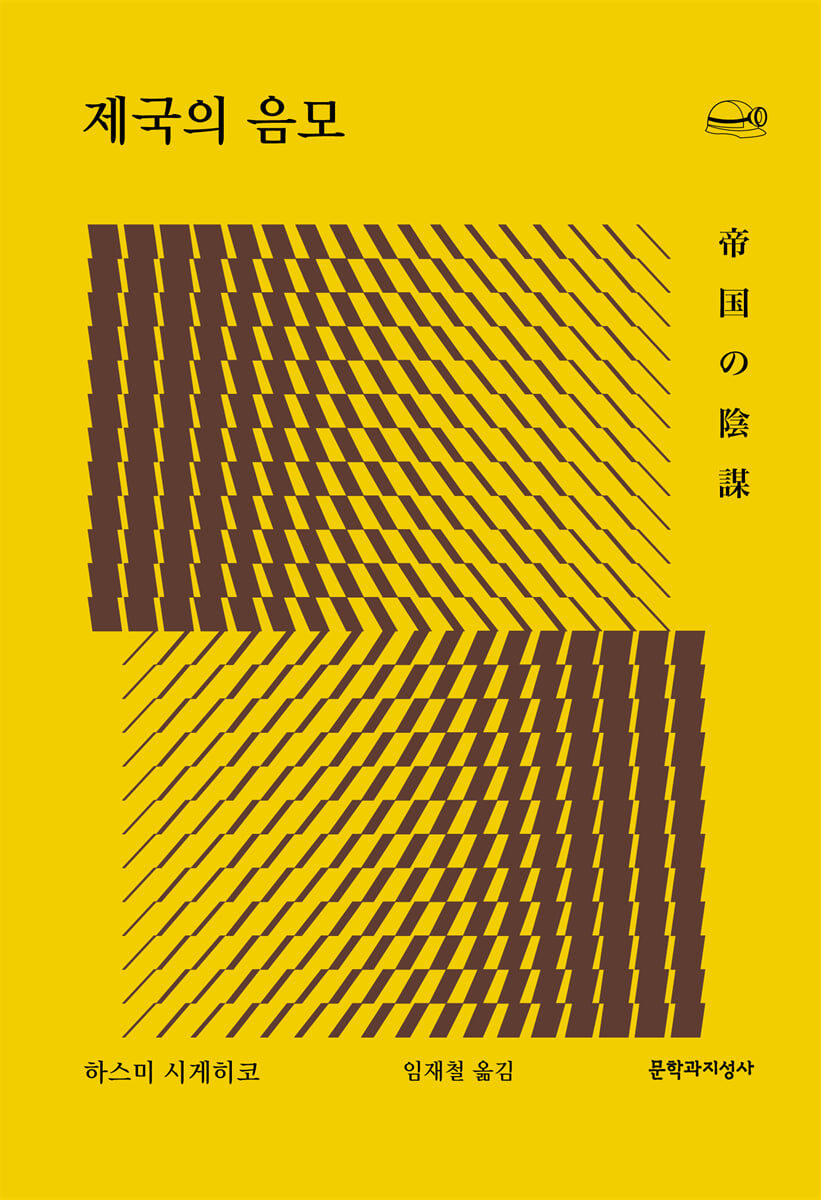 |
Description
Book Introduction
“It is a work that I have a considerable affection for.
I hope this book will be read as a cultural and political pamphlet.”
_Shigehiko Hasumi
“This book could be said to be a B-movie that is as good as, or almost better than, an A-movie in its simultaneous release.”
_Im Jae-cheol (film critic)
“Perhaps this noble ‘illegitimate child’ foresaw the coming of an era in which the ambiguity of self-identity itself could become a weapon, and by boldly clinging to ‘anonymity,’ he may have been adapting well to the prevailing trend of the time.”
Japanese French literature scholar and literary critic Shigehiko Hasumi's "Imperial Conspiracy" (1991) was published as part of Munhak-kwa-Jiseongsa's "Quarry Series."
Shigehiko Hasumi is considered one of Japan's leading intellectuals along with Kojin Karatani, but in Korea, his work as a film critic has been more prominent.
『The Imperial Conspiracy』 is a book closer to his main job as a literary critic, and deals with the coup d'état of December 2, 1851, staged by Louis Napoleon, nephew of Napoleon Bonaparte, and his stepson de Morny, imitating Bonaparte's coup.
Marx said, “Hegel said somewhere that events and people of enormous importance in world history are repeated twice.
But he forgot to add:
In The Eighteenth Brumaire of Louis Bonaparte, which begins with the famous sentence, “First as tragedy, then as farce,” the political course of this event is analyzed.
Hasumi points out that Marx's analysis, while very sharp, crucially fails to grasp the essence of the case by overlooking several crucial aspects, and brings to center stage the figure of de Morny, whom Marx had only mentioned by name.
Hasumi describes how the 1851 coup d'état, planned by Louis Napoleon, who was nothing more than a deteriorated 'imitation' of 'Napoleon the Great', and his stepson, who was an extremely 'ordinary being' with a fake name, worked during the Second Empire, from 1852, when Louis Bonaparte ascended to the throne as Napoleon III, to 1870, when he was finally dethroned. Hasumi presents an interesting interpretation that views this as a key scene of postmodernism and de Morny as "the first typical figure of postmodernism."
I hope this book will be read as a cultural and political pamphlet.”
_Shigehiko Hasumi
“This book could be said to be a B-movie that is as good as, or almost better than, an A-movie in its simultaneous release.”
_Im Jae-cheol (film critic)
“Perhaps this noble ‘illegitimate child’ foresaw the coming of an era in which the ambiguity of self-identity itself could become a weapon, and by boldly clinging to ‘anonymity,’ he may have been adapting well to the prevailing trend of the time.”
Japanese French literature scholar and literary critic Shigehiko Hasumi's "Imperial Conspiracy" (1991) was published as part of Munhak-kwa-Jiseongsa's "Quarry Series."
Shigehiko Hasumi is considered one of Japan's leading intellectuals along with Kojin Karatani, but in Korea, his work as a film critic has been more prominent.
『The Imperial Conspiracy』 is a book closer to his main job as a literary critic, and deals with the coup d'état of December 2, 1851, staged by Louis Napoleon, nephew of Napoleon Bonaparte, and his stepson de Morny, imitating Bonaparte's coup.
Marx said, “Hegel said somewhere that events and people of enormous importance in world history are repeated twice.
But he forgot to add:
In The Eighteenth Brumaire of Louis Bonaparte, which begins with the famous sentence, “First as tragedy, then as farce,” the political course of this event is analyzed.
Hasumi points out that Marx's analysis, while very sharp, crucially fails to grasp the essence of the case by overlooking several crucial aspects, and brings to center stage the figure of de Morny, whom Marx had only mentioned by name.
Hasumi describes how the 1851 coup d'état, planned by Louis Napoleon, who was nothing more than a deteriorated 'imitation' of 'Napoleon the Great', and his stepson, who was an extremely 'ordinary being' with a fake name, worked during the Second Empire, from 1852, when Louis Bonaparte ascended to the throne as Napoleon III, to 1870, when he was finally dethroned. Hasumi presents an interesting interpretation that views this as a key scene of postmodernism and de Morny as "the first typical figure of postmodernism."
- You can preview some of the book's contents.
Preview
index
Chapter 1: Illegitimate Children
Chapter 2 Conspiracy
Chapter 3: Decision
Chapter 4 Signature
Chapter 5 Chairman
Chapter 6: Comedy
Chapter 7 repeat
Author's Note
Paperback review
Bibliographic information
Commentary | Tetsuro Irie
The noble 'illegitimate child' and the 'fake count'
Translator's Note | Jae-cheol Lim
"The Empire's Conspiracy" as a B-movie that surpasses the original
Chapter 2 Conspiracy
Chapter 3: Decision
Chapter 4 Signature
Chapter 5 Chairman
Chapter 6: Comedy
Chapter 7 repeat
Author's Note
Paperback review
Bibliographic information
Commentary | Tetsuro Irie
The noble 'illegitimate child' and the 'fake count'
Translator's Note | Jae-cheol Lim
"The Empire's Conspiracy" as a B-movie that surpasses the original
Into the book
Of course, there is absolutely no reason to regard the writings of a powerful person who has not even left his mark on literary history as a high artistic achievement, and it is not the intention of this discourse to discover the literary significance hidden within them.
The goal here is to decipher the strangely intertwined relationship between two texts left behind by the "illegitimate child" who served as Minister of the Interior and Speaker of the Legislative Council. This will require a reading approach that differs from qualitative appreciation of each stroke, analysis of the content they convey, or grasp of their symbolic meaning.
But before we begin that task, it will be necessary to compile some information about the authors of the two articles under analysis.
--- p.12
Now, people cannot help but find themselves, somewhat suddenly, opening their eyes to a 'Deleuzian' subject area.
This is because the mid-19th-century conspiracy of two stepbrothers is accomplished by gestures that fit perfectly into the outlines of the concept of 'simulacrum' that the pen of the 20th-century French philosopher Gilles Deleuze would sketch.
This is because, when a large number of printed copies of a name, which is nothing more than a 'formal' fiction, are circulated around, acquiring a certain sense of reality despite the fact that the writer never wrote the signature that should have been considered the origin of a sentence, people can call the printed name, which is a 'repetition' lacking an 'origin', a 'simulacrum' following Deleuze.
What happens then is nothing more than a cynical situation in which the 'simulacra' circulating around us quantitatively actualize the 'origin', which is nothing more than a 'formal' fiction.
Wouldn't this be a perfect signature for the 'illegitimate' de Morni, whom many commentators considered a cynical figure?
--- p.58~59
Monsieur Schufleury is at home tonight, first and foremost an operetta buffa based on a successful 'conspiracy'.
Mr. Schefflery is determined to preserve his name by paying money, and so he gives his daughter to a young artist.
To this wealthy man, 'money' and 'women' are no different from symbols that can be exchanged for 'names', and it can be said that the 'conspiracy' here was prepared on the premise of their equivalence.
Whether it was Zontag, Rubini, or Tamburini, the only thing that mattered was the names everyone knew, and in an era where it no longer mattered whether the people playing them were real or fake, this 'conspiracy' was planned out in a steady manner.
It is in this sense that I said that “Monsieur Schufleury is at Home Tonight” is a script with the theme of “performance.”
Here, the question is no longer raised about the nature of the sign, but only about its function for establishing exchangeable equivalence.
When only the superiority of the role to be played sustains the circulation of symbols, 'conspiracy' is easily achieved by utilizing the system, and thus there is no longer any need to even attempt to change the system.
--- p.99~100
As Marx said, the coup d'état of Napoleon III certainly 'repeated' something, but the author of The Eighteenth Brumaire of Louis Bonaparte clearly misjudged the genre he was supposed to be performing.
The genre at issue in this 'conspiracy' is not 'farce' but 'operetta buffa', and furthermore, it is not a boring re-enactment of something that was once performed as a 'tragedy', but a performance of a work that had not yet been performed, exactly ten years before it was written.
In short, the reversal of events is that Monsieur Schoefleury is not a reenactment of the 1851 coup d'état, but rather that the coup succeeded in faithfully imitating its plot, which is the true nature of the 'repetition' here.
This is nothing but a cynical and optimistic triumph of politics realized by de-seriously seizing power, which should be political, and it cannot be denied that Marx missed the advent of an uncontrollable event with the Hegelian view of history, in which what was first performed as a "tragedy" is later re-enacted as a "farce."
--- p.114~115
Written over a period of seven years and of considerable length, 『Portrait of an Universal Artist: Maxime du Canron』(1988) can be said to be Shigehiko Hasumi's masterpiece.
However, we must also remember that a thin and simple book called 『Imperial Conspiracy』(1991) was published a few years later, like a 'younger brother' that was lacking in many ways(!).
Hasumi himself later recalled that he had not planned out what kind of book he would write in advance, and so he wrote the book in two or three days without even serializing it in a magazine.
On the surface, 『The Imperial Conspiracy』 may seem like a spin-off or a "sister volume" of the main story, 『A Portrait of an Artist』, but when viewed from the perspective of the twin nature of power it deals with, it could be said that this book is a B-movie that is as good as, or almost better than, an A-movie in its simultaneous release.
The goal here is to decipher the strangely intertwined relationship between two texts left behind by the "illegitimate child" who served as Minister of the Interior and Speaker of the Legislative Council. This will require a reading approach that differs from qualitative appreciation of each stroke, analysis of the content they convey, or grasp of their symbolic meaning.
But before we begin that task, it will be necessary to compile some information about the authors of the two articles under analysis.
--- p.12
Now, people cannot help but find themselves, somewhat suddenly, opening their eyes to a 'Deleuzian' subject area.
This is because the mid-19th-century conspiracy of two stepbrothers is accomplished by gestures that fit perfectly into the outlines of the concept of 'simulacrum' that the pen of the 20th-century French philosopher Gilles Deleuze would sketch.
This is because, when a large number of printed copies of a name, which is nothing more than a 'formal' fiction, are circulated around, acquiring a certain sense of reality despite the fact that the writer never wrote the signature that should have been considered the origin of a sentence, people can call the printed name, which is a 'repetition' lacking an 'origin', a 'simulacrum' following Deleuze.
What happens then is nothing more than a cynical situation in which the 'simulacra' circulating around us quantitatively actualize the 'origin', which is nothing more than a 'formal' fiction.
Wouldn't this be a perfect signature for the 'illegitimate' de Morni, whom many commentators considered a cynical figure?
--- p.58~59
Monsieur Schufleury is at home tonight, first and foremost an operetta buffa based on a successful 'conspiracy'.
Mr. Schefflery is determined to preserve his name by paying money, and so he gives his daughter to a young artist.
To this wealthy man, 'money' and 'women' are no different from symbols that can be exchanged for 'names', and it can be said that the 'conspiracy' here was prepared on the premise of their equivalence.
Whether it was Zontag, Rubini, or Tamburini, the only thing that mattered was the names everyone knew, and in an era where it no longer mattered whether the people playing them were real or fake, this 'conspiracy' was planned out in a steady manner.
It is in this sense that I said that “Monsieur Schufleury is at Home Tonight” is a script with the theme of “performance.”
Here, the question is no longer raised about the nature of the sign, but only about its function for establishing exchangeable equivalence.
When only the superiority of the role to be played sustains the circulation of symbols, 'conspiracy' is easily achieved by utilizing the system, and thus there is no longer any need to even attempt to change the system.
--- p.99~100
As Marx said, the coup d'état of Napoleon III certainly 'repeated' something, but the author of The Eighteenth Brumaire of Louis Bonaparte clearly misjudged the genre he was supposed to be performing.
The genre at issue in this 'conspiracy' is not 'farce' but 'operetta buffa', and furthermore, it is not a boring re-enactment of something that was once performed as a 'tragedy', but a performance of a work that had not yet been performed, exactly ten years before it was written.
In short, the reversal of events is that Monsieur Schoefleury is not a reenactment of the 1851 coup d'état, but rather that the coup succeeded in faithfully imitating its plot, which is the true nature of the 'repetition' here.
This is nothing but a cynical and optimistic triumph of politics realized by de-seriously seizing power, which should be political, and it cannot be denied that Marx missed the advent of an uncontrollable event with the Hegelian view of history, in which what was first performed as a "tragedy" is later re-enacted as a "farce."
--- p.114~115
Written over a period of seven years and of considerable length, 『Portrait of an Universal Artist: Maxime du Canron』(1988) can be said to be Shigehiko Hasumi's masterpiece.
However, we must also remember that a thin and simple book called 『Imperial Conspiracy』(1991) was published a few years later, like a 'younger brother' that was lacking in many ways(!).
Hasumi himself later recalled that he had not planned out what kind of book he would write in advance, and so he wrote the book in two or three days without even serializing it in a magazine.
On the surface, 『The Imperial Conspiracy』 may seem like a spin-off or a "sister volume" of the main story, 『A Portrait of an Artist』, but when viewed from the perspective of the twin nature of power it deals with, it could be said that this book is a B-movie that is as good as, or almost better than, an A-movie in its simultaneous release.
--- p.147~148
Publisher's Review
Those who wear the mask of Napoleon and imagine themselves to be the real Napoleon
The success of this imitative coup, plotted by an illegitimate child who had forged his own name,
What era does it testify to?
What does today's world share with that era?
In his commentary on 『The Imperial Conspiracy』, Tetsuro Irie states that Shigehiko Hasumi's criticism and all other writing work are defined by the time and space of the Second French Empire.
Hasumi himself says that he is quite obsessed with this subject, and the result is a masterpiece of over a thousand pages in Korean called “Portrait of an Ordinary Artist.”
This book describes, through the character of Maxime du Camp, how the concept of "universality," a field of relative difference where everything is reduced to interchangeable signs, came to be established as a special historical reality of the Second Empire.
And in this spin-off book, 『The Imperial Conspiracy』, the Second Empire is discussed with the same problem in mind, focusing on the stepbrothers Louis Napoleon and de Morny.
Louis Napoleon, the first president elected through a national referendum in the Second Republic established by the February Revolution of 1848, staged a coup d'état in 1851 and ascended to the throne as emperor in December of the following year.
Following the example of his uncle Napoleon Bonaparte, who had overthrown the Republic in a coup on the 18th Brumaire (November 9, 1799) and been crowned Emperor on December 2, 1804, this insignificant nephew also overthrew the Republic.
In this process, de Morny, who was born as an illegitimate child of Louis Napoleon and had to live his entire life calling himself 'another person's name', takes on the role of a cool and realistic mastermind.
Hasumi suggests that this illegitimate stepsister may have foreseen the coming of an era in which the ambiguity of self-identity itself could become a weapon, and he turns his attention to two texts left behind by de Morny (under different names) and deciphers the strangely intertwined relationship between them.
One is the "Proclamation," an administrative document signed by "Minister of the Interior de Morny" and issued on the day of the coup d'état, December 2, 1851, which is a text that "actually" carries out the conspiracy of the coup d'état.
The reason this has real effect is not because a real Minister of the Interior signed it, but because a reverse mechanism is at work whereby de Morny's name gains authority as a 'result' of a mass printing and distribution of a mere formal signature.
Here we find a situation in which the Deleuzian simulacrum becomes a political reality.
In this way, a 'cynical' situation arises in which the simulacrum actualizes the 'origin', which is nothing more than a formal fiction.
Another text is the libretto for the operetta buffa [Monsieur Sufleury, You Are Home Tonight], performed at the residence of de Morny, who had become President of the Legislative Council on 31 May 1861, ten years after the coup, and in which another of de Morny's fabricated names, de Saint-Rémy, is listed alongside that of the composer Jacques Offenbach.
The play has a plot where a young couple cleverly 'imitates' a real opera singer through a play within a play, thereby deceiving their bourgeois father, who wants to gain fame ('name') by 'imitating' the upper class, and eventually receives permission to marry and a dowry.
According to Hasumi, this plot, which involves the success of a conspiracy through 'imitation', is reminiscent of the 'repetition' of the stepbrothers' coup.
Moreover, the entangled relationship between the real and the fake has something in common with the concept of art that is called postmodern today, and the fact that 'money' and 'woman' have become interchangeable with 'name' as a single symbol testifies to the advent of an era in which the essence of the symbol is no longer important.
Discovery of universality:
The advent of an era where only symbolic differences exist
Important events and people in world history are repeated twice.
First as a tragedy, then as a farce.
But Marx misspoke about the genre of the recurring play.
The genre is not a farce, but an operetta buffa.
Here the author makes the interesting argument that while the coup d'état of Napoleon III (Louis Napoleon) certainly "repeated" something, Marx misjudged the genre of the performance in The Eighteenth Brumaire of Louis Bonaparte. The genre in question in this conspiracy is not "farce" but "operetta buffa," and furthermore, it is not a tedious re-enactment of something that has already been performed as a "tragedy," but rather a performance of a work that has not yet been performed, having already been performed exactly ten years before it was written.
The Second Empire reveals the early form of a society in which the public tolerates the emperor as a symbol, just as women, money, and names are circulated as symbols in de Morny's operetta buffa.
The year 1851 marked the beginning of an era in which cynical politics, realized through the downplaying of the supposedly political seizure of power, became the dominant force.
The translation of this book was done by film critic Lim Jae-cheol, who has introduced many of Shigehiko Hasumi's works to Korea.
He says the book was written quickly, as a sort of spin-off to his massive 1988 work, A Portrait of an Artist, but it has the brilliance of a B-movie, rivaling or almost surpassing the A-movie it was released with.
Although short and brisk, it covers the core themes of Hasumi's criticism and is useful in showing where his unique, multifaceted perspective comes from.
The success of this imitative coup, plotted by an illegitimate child who had forged his own name,
What era does it testify to?
What does today's world share with that era?
In his commentary on 『The Imperial Conspiracy』, Tetsuro Irie states that Shigehiko Hasumi's criticism and all other writing work are defined by the time and space of the Second French Empire.
Hasumi himself says that he is quite obsessed with this subject, and the result is a masterpiece of over a thousand pages in Korean called “Portrait of an Ordinary Artist.”
This book describes, through the character of Maxime du Camp, how the concept of "universality," a field of relative difference where everything is reduced to interchangeable signs, came to be established as a special historical reality of the Second Empire.
And in this spin-off book, 『The Imperial Conspiracy』, the Second Empire is discussed with the same problem in mind, focusing on the stepbrothers Louis Napoleon and de Morny.
Louis Napoleon, the first president elected through a national referendum in the Second Republic established by the February Revolution of 1848, staged a coup d'état in 1851 and ascended to the throne as emperor in December of the following year.
Following the example of his uncle Napoleon Bonaparte, who had overthrown the Republic in a coup on the 18th Brumaire (November 9, 1799) and been crowned Emperor on December 2, 1804, this insignificant nephew also overthrew the Republic.
In this process, de Morny, who was born as an illegitimate child of Louis Napoleon and had to live his entire life calling himself 'another person's name', takes on the role of a cool and realistic mastermind.
Hasumi suggests that this illegitimate stepsister may have foreseen the coming of an era in which the ambiguity of self-identity itself could become a weapon, and he turns his attention to two texts left behind by de Morny (under different names) and deciphers the strangely intertwined relationship between them.
One is the "Proclamation," an administrative document signed by "Minister of the Interior de Morny" and issued on the day of the coup d'état, December 2, 1851, which is a text that "actually" carries out the conspiracy of the coup d'état.
The reason this has real effect is not because a real Minister of the Interior signed it, but because a reverse mechanism is at work whereby de Morny's name gains authority as a 'result' of a mass printing and distribution of a mere formal signature.
Here we find a situation in which the Deleuzian simulacrum becomes a political reality.
In this way, a 'cynical' situation arises in which the simulacrum actualizes the 'origin', which is nothing more than a formal fiction.
Another text is the libretto for the operetta buffa [Monsieur Sufleury, You Are Home Tonight], performed at the residence of de Morny, who had become President of the Legislative Council on 31 May 1861, ten years after the coup, and in which another of de Morny's fabricated names, de Saint-Rémy, is listed alongside that of the composer Jacques Offenbach.
The play has a plot where a young couple cleverly 'imitates' a real opera singer through a play within a play, thereby deceiving their bourgeois father, who wants to gain fame ('name') by 'imitating' the upper class, and eventually receives permission to marry and a dowry.
According to Hasumi, this plot, which involves the success of a conspiracy through 'imitation', is reminiscent of the 'repetition' of the stepbrothers' coup.
Moreover, the entangled relationship between the real and the fake has something in common with the concept of art that is called postmodern today, and the fact that 'money' and 'woman' have become interchangeable with 'name' as a single symbol testifies to the advent of an era in which the essence of the symbol is no longer important.
Discovery of universality:
The advent of an era where only symbolic differences exist
Important events and people in world history are repeated twice.
First as a tragedy, then as a farce.
But Marx misspoke about the genre of the recurring play.
The genre is not a farce, but an operetta buffa.
Here the author makes the interesting argument that while the coup d'état of Napoleon III (Louis Napoleon) certainly "repeated" something, Marx misjudged the genre of the performance in The Eighteenth Brumaire of Louis Bonaparte. The genre in question in this conspiracy is not "farce" but "operetta buffa," and furthermore, it is not a tedious re-enactment of something that has already been performed as a "tragedy," but rather a performance of a work that has not yet been performed, having already been performed exactly ten years before it was written.
The Second Empire reveals the early form of a society in which the public tolerates the emperor as a symbol, just as women, money, and names are circulated as symbols in de Morny's operetta buffa.
The year 1851 marked the beginning of an era in which cynical politics, realized through the downplaying of the supposedly political seizure of power, became the dominant force.
The translation of this book was done by film critic Lim Jae-cheol, who has introduced many of Shigehiko Hasumi's works to Korea.
He says the book was written quickly, as a sort of spin-off to his massive 1988 work, A Portrait of an Artist, but it has the brilliance of a B-movie, rivaling or almost surpassing the A-movie it was released with.
Although short and brisk, it covers the core themes of Hasumi's criticism and is useful in showing where his unique, multifaceted perspective comes from.
GOODS SPECIFICS
- Date of issue: April 18, 2025
- Page count, weight, size: 155 pages | 182g | 128*187*8mm
- ISBN13: 9788932043647
You may also like
카테고리
korean


korean

![GQ KOREA Mark (Monthly): December [2025]](http://librairie.coreenne.fr/cdn/shop/files/8ef265dbbfbf186523ed75ba7319009d.jpg?v=1765340328&width=3840)


