

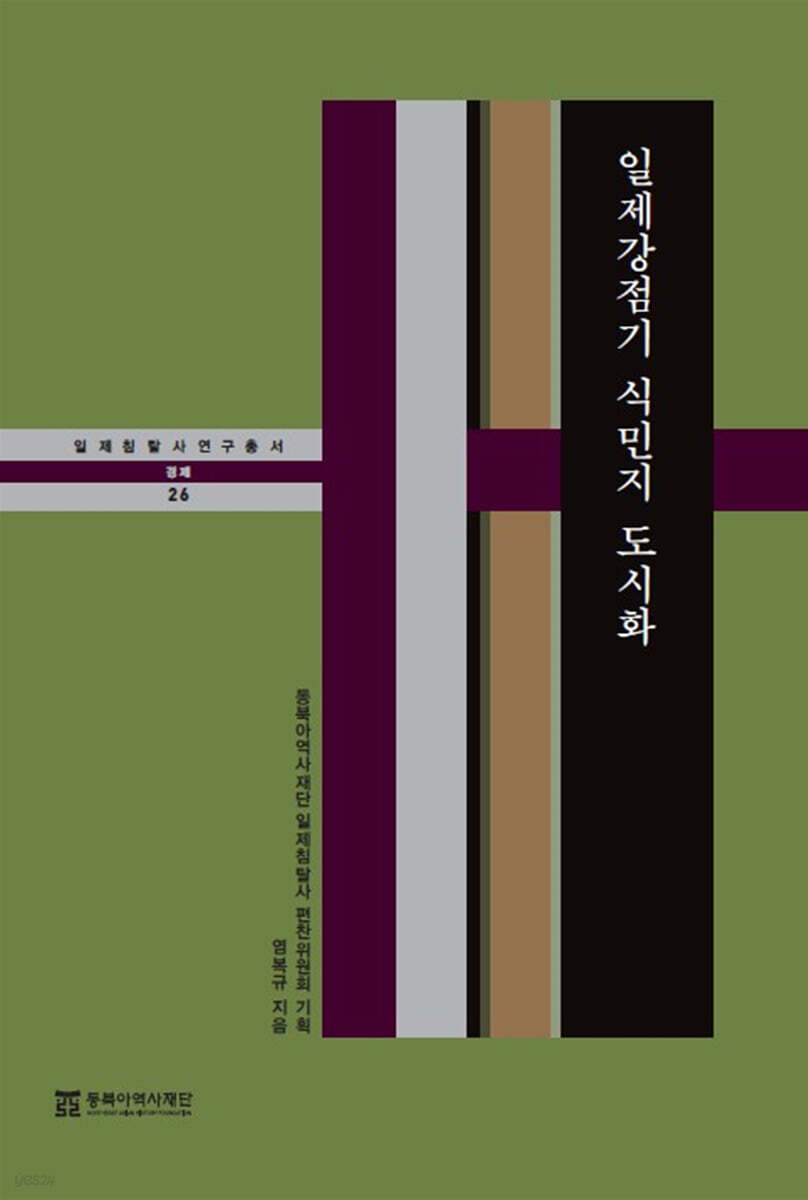
Colonial urbanization during the Japanese colonial period
 |
Description
Book Introduction
This book describes the 'urban history' that began in earnest in the early 2000s, with a focus on the colonial period.
Although urban history started relatively late in the field of modern Korean history, it has accumulated research history faster than any other field.
On the other hand, the accumulated research history has never been organized into a kind of grammar.
This study attempted to meticulously organize the accumulated research findings to date, including the institutions that enabled the formation of colonial cities, changes in population composition and administrative districts, the process by which 'new cities' and 'traditional cities' became colonial cities in their respective contexts, and the politics surrounding infrastructure construction. In addition, it aimed to present new perspectives and methodologies.
Therefore, this book aims to provide a general overview of colonial urbanization during the Japanese colonial period based on prior research and to lay the foundation for further developmental research.
Although urban history started relatively late in the field of modern Korean history, it has accumulated research history faster than any other field.
On the other hand, the accumulated research history has never been organized into a kind of grammar.
This study attempted to meticulously organize the accumulated research findings to date, including the institutions that enabled the formation of colonial cities, changes in population composition and administrative districts, the process by which 'new cities' and 'traditional cities' became colonial cities in their respective contexts, and the politics surrounding infrastructure construction. In addition, it aimed to present new perspectives and methodologies.
Therefore, this book aims to provide a general overview of colonial urbanization during the Japanese colonial period based on prior research and to lay the foundation for further developmental research.
index
preface
1.
The significance and topography of urban history research during the Japanese colonial period
2.
Trends in Urban History Research during the Japanese Colonial Period
3.
Structure of this book
Chapter 1: Urban Categories, Administrative Districts, and Population during the Japanese Colonial Period
1.
The institutional formation process and meaning of urban categories
2.
Changes in urban administrative districts
3.
Composition and changes in urban population
Chapter 2: The Trends and Aspects of Urban Formation Before and After Japanese Colonialism
1.
The formation of a 'new city' before and after the occupation
2.
Colonial Transformation of a 'Traditional City'
Chapter 3: The Formation of Urban Infrastructure during the Japanese Colonial Period
1.
City district revision - formation of urban road network
2.
Maintenance and frustration of water supply and sewerage and urban sanitation facilities
3.
Tram operation and urban transportation
4.
Parks and Cemeteries - 'Control' of City Notices
5.
Construction of key facilities in the port-opening city
Chapter 4: Urban Planning and Construction of New Industrial Cities During the Japanese Colonial Period
1.
The development of 'urban planning' and various aspects of urban change
2.
The Formation and Significance of the "New Industrial City" in the Late Japanese Colonial Period
Chapter 5: Institutions and Practices of Urban Politics
1.
Institutional changes and structure of urban politics
2.
The Reality of Urban Politics
Conclusion
buoy
References
Search
1.
The significance and topography of urban history research during the Japanese colonial period
2.
Trends in Urban History Research during the Japanese Colonial Period
3.
Structure of this book
Chapter 1: Urban Categories, Administrative Districts, and Population during the Japanese Colonial Period
1.
The institutional formation process and meaning of urban categories
2.
Changes in urban administrative districts
3.
Composition and changes in urban population
Chapter 2: The Trends and Aspects of Urban Formation Before and After Japanese Colonialism
1.
The formation of a 'new city' before and after the occupation
2.
Colonial Transformation of a 'Traditional City'
Chapter 3: The Formation of Urban Infrastructure during the Japanese Colonial Period
1.
City district revision - formation of urban road network
2.
Maintenance and frustration of water supply and sewerage and urban sanitation facilities
3.
Tram operation and urban transportation
4.
Parks and Cemeteries - 'Control' of City Notices
5.
Construction of key facilities in the port-opening city
Chapter 4: Urban Planning and Construction of New Industrial Cities During the Japanese Colonial Period
1.
The development of 'urban planning' and various aspects of urban change
2.
The Formation and Significance of the "New Industrial City" in the Late Japanese Colonial Period
Chapter 5: Institutions and Practices of Urban Politics
1.
Institutional changes and structure of urban politics
2.
The Reality of Urban Politics
Conclusion
buoy
References
Search
GOODS SPECIFICS
- Date of issue: December 30, 2024
- Page count, weight, size: 416 pages | 868g | 160*232*25mm
- ISBN13: 9791171611669
- ISBN10: 1171611668
You may also like
카테고리
korean


korean

![GQ KOREA Mark (Monthly): December [2025]](http://librairie.coreenne.fr/cdn/shop/files/8ef265dbbfbf186523ed75ba7319009d.jpg?v=1765340328&width=3840)


