

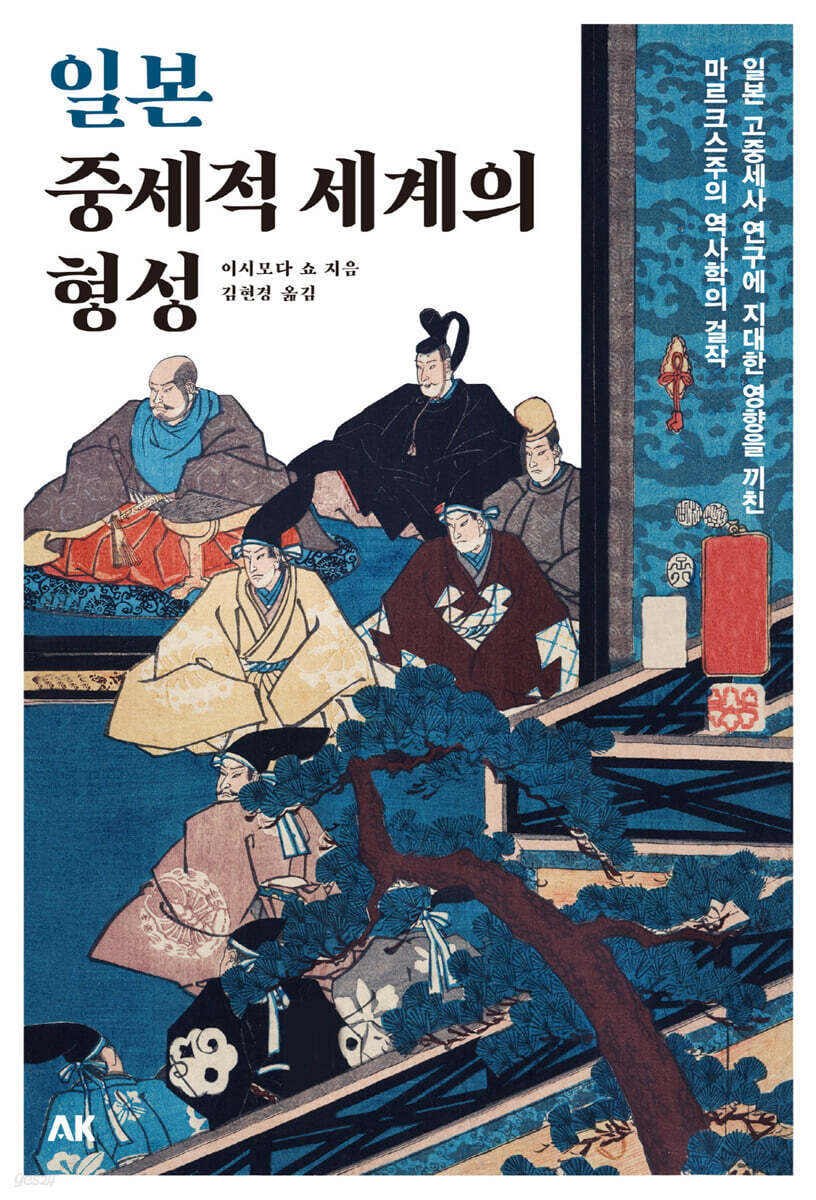
The Formation of Japan's Medieval World
 |
Description
Book Introduction
This book meticulously analyzes the history of the manors that existed in the mountainous regions of southern Iga Province, Japan, from the 10th to the 16th centuries.
The author views Jangwon as “a world where humans lived, struggled, and thus formed history,” and by tracing its history, he seeks to explore the great historical current of “the formation of the medieval world.”
This classic, which left a significant mark on Japanese historiography with its "local lord system," which states that samurai ruled their local lords, will open up another perspective on understanding Japan.
The author views Jangwon as “a world where humans lived, struggled, and thus formed history,” and by tracing its history, he seeks to explore the great historical current of “the formation of the medieval world.”
This classic, which left a significant mark on Japanese historiography with its "local lord system," which states that samurai ruled their local lords, will open up another perspective on understanding Japan.
- You can preview some of the book's contents.
Preview
index
Preface to the opening
Preface to the first edition
Chapter 1
Fujiwara no Saneto
Section 1 Establishment of the Major
Section 2 Management and Downfall
Section 3: The Lord and Todaiji
Chapter 2
Todaiji Temple
Section 1: Establishment of Kuroda-jo
Section 2: Ancient Logic
Section 3 Two Laws
Chapter 3
Minamoto no Toshikata
Section 1 Household
Section 2: Establishment of the Musadan
Section 3: The Defeat of the Middle Ages
Chapter 4
Kuroda villain
Section 1: Reconstruction of Antiquity
Section 2 The Medieval World
Section 3 The End
Preface to the first edition
Brief Chronology of Kuroda-jo
Book Review: Mr. Ishimoda's "The Formation of the Medieval World" | Shinichi Sato
To the paperback edition | Sho Ishimoda
Commentary | Susumu Ishii
Translator's Note
List of Ishimoda Sho's papers
index
Preface to the first edition
Chapter 1
Fujiwara no Saneto
Section 1 Establishment of the Major
Section 2 Management and Downfall
Section 3: The Lord and Todaiji
Chapter 2
Todaiji Temple
Section 1: Establishment of Kuroda-jo
Section 2: Ancient Logic
Section 3 Two Laws
Chapter 3
Minamoto no Toshikata
Section 1 Household
Section 2: Establishment of the Musadan
Section 3: The Defeat of the Middle Ages
Chapter 4
Kuroda villain
Section 1: Reconstruction of Antiquity
Section 2 The Medieval World
Section 3 The End
Preface to the first edition
Brief Chronology of Kuroda-jo
Book Review: Mr. Ishimoda's "The Formation of the Medieval World" | Shinichi Sato
To the paperback edition | Sho Ishimoda
Commentary | Susumu Ishii
Translator's Note
List of Ishimoda Sho's papers
index
Publisher's Review
The major trends in Japanese history during the transition from ancient to medieval times
This book meticulously analyzes the history of Kurodajo, a manor that existed in the mountainous southern part of Iga Province, Japan, from the 10th to the 16th centuries.
The author believed that the Middle Ages was formed from a feudal class system based on land ownership.
This paper focuses on Jangwon as “a world where humans lived, struggled, and thus formed history,” and by tracing its history, it seeks to explore the larger historical trend of “the formation of the medieval world.”
Although it appears to be a narrative of the history of a single estate, it is in fact a general historical study that examines the historical development from an ancient nation to medieval society, and furthermore, it seeks to suggest laws of world historical development that go beyond simple medieval Japanese history.
The author presents an excellent perspective by sharply examining numerous events that occurred during the process of 'forming the medieval world' from a consistent standpoint.
The story interestingly describes the interplay between the universal and the particular, with the human figures set in a narrow space intertwined with and yet at odds with the broader historical development of Japanese society.
This classic, which left a significant mark on Japanese historiography with its "local lord system," which states that samurai ruled their local lords, will open up another perspective on understanding Japan.
This book meticulously analyzes the history of Kurodajo, a manor that existed in the mountainous southern part of Iga Province, Japan, from the 10th to the 16th centuries.
The author believed that the Middle Ages was formed from a feudal class system based on land ownership.
This paper focuses on Jangwon as “a world where humans lived, struggled, and thus formed history,” and by tracing its history, it seeks to explore the larger historical trend of “the formation of the medieval world.”
Although it appears to be a narrative of the history of a single estate, it is in fact a general historical study that examines the historical development from an ancient nation to medieval society, and furthermore, it seeks to suggest laws of world historical development that go beyond simple medieval Japanese history.
The author presents an excellent perspective by sharply examining numerous events that occurred during the process of 'forming the medieval world' from a consistent standpoint.
The story interestingly describes the interplay between the universal and the particular, with the human figures set in a narrow space intertwined with and yet at odds with the broader historical development of Japanese society.
This classic, which left a significant mark on Japanese historiography with its "local lord system," which states that samurai ruled their local lords, will open up another perspective on understanding Japan.
GOODS SPECIFICS
- Date of issue: December 10, 2024
- Page count, weight, size: 700 pages | 614g | 128*188*35mm
- ISBN13: 9791127483449
- ISBN10: 1127483447
You may also like
카테고리
korean


korean

![GQ KOREA Mark (Monthly): December [2025]](http://librairie.coreenne.fr/cdn/shop/files/8ef265dbbfbf186523ed75ba7319009d.jpg?v=1765340328&width=3840)


