

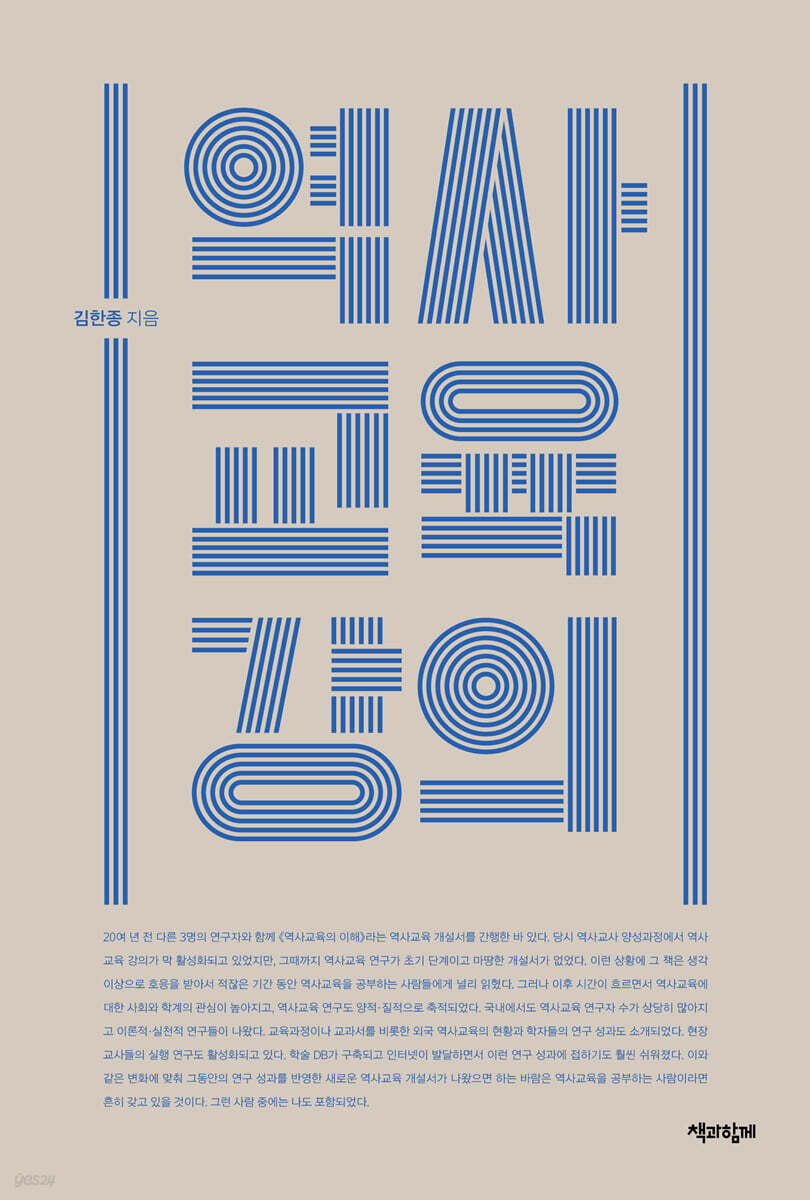
History education lecture
 |
Description
Book Introduction
What kind of historical education theory is needed in today's rapidly changing educational landscape?
Crossing the past, present, and future of history education
An introductory book covering a wide range of topics from theory to practice.
History Education Theory aims to address key issues and controversies that history teachers and researchers who wish to study history education in depth and apply the theory to classroom practice must understand by understanding the concept and nature of history education and the basic theories of history education.
So, it is also a required subject for students who want to become history teachers.
This book is a new introductory textbook on history education written by Professor Emeritus Kim Han-jong of the Department of History Education at Korea National University of Education, who has taught prospective history teachers and devoted himself to research on history education for decades.
This study aimed to broadly cover the discussions surrounding the theory of history education, based not only on the quantitative and qualitative research achievements in history education accumulated since the 2000s, but also on the changes directly experienced in the classroom.
Above all, it faithfully covers the concept and nature of history education, the social and educational issues surrounding history education, and the overall content that should be fundamentally known or considered as a theory of history education.
Crossing the past, present, and future of history education
An introductory book covering a wide range of topics from theory to practice.
History Education Theory aims to address key issues and controversies that history teachers and researchers who wish to study history education in depth and apply the theory to classroom practice must understand by understanding the concept and nature of history education and the basic theories of history education.
So, it is also a required subject for students who want to become history teachers.
This book is a new introductory textbook on history education written by Professor Emeritus Kim Han-jong of the Department of History Education at Korea National University of Education, who has taught prospective history teachers and devoted himself to research on history education for decades.
This study aimed to broadly cover the discussions surrounding the theory of history education, based not only on the quantitative and qualitative research achievements in history education accumulated since the 2000s, but also on the changes directly experienced in the classroom.
Above all, it faithfully covers the concept and nature of history education, the social and educational issues surrounding history education, and the overall content that should be fundamentally known or considered as a theory of history education.
- You can preview some of the book's contents.
Preview
index
Entering
Chapter 1: The Nature of History Education
1.
Is it a theory of historical education or a study of historical education? - Between discourse and scholarship.
2.
Studying "History" or "Studying" History? - The Debate on the Content and Methods of History Education
3.
Is history education about studying past events? - Historical Facts and Historical Interpretation
4.
Can We Teach Historical Research Methods? - The Nature of Historical Sources and Historical Research
5.
Is History Education Research Theory or Practice? - The Purpose and Practice of History Education Research
Chapter 2: Historical Perception and Historical Thinking
1.
What Does It Mean to Know History? - The Meaning of Historical Awareness and the Study of History
2.
Are Historical Accounts Useful for History Education? - Science and the Explanation of History
3.
Are re-experience and empathy essential to understanding history? - Historical Understanding and History Education
4.
Is Narrative Perception or Expression? - Narrative History and Description
Chapter 3: Selection and Organization of History Education Content
1.
Why is content structure the most important focus in history education? - The Meaning of Curriculum and Content
2.
Historical Fact or Concept? - Organizational Concepts and Real Concepts
3.
What Historical Facts Are Significant? - Selecting Content for History Education
4.
Is Topic-Based Content Organization an Alternative? - Syntax and Topic Learning
5.
Is life history easy, but socioeconomic history difficult? - The systematics of Korean history
Chapter 4: History Classes and Teacher Knowledge
1.
Class or Learning? - A Shift in Class Perception
2.
How do teachers create lesson content? - Curriculum content and teacher knowledge
3.
Can elementary, middle, and high school students explore history like historians? - Exploring and Making History
4.
Are Diverse Perspectives Essential to Historical Understanding? - Learning about the Controversial Nature and Issues of History
5.
Does Historical Inquiry Begin with Questions? - The Nature and Types of Historical Inquiry
Chapter 5: Social Memory and Reading History
1.
New History or Post-History? - Trends in Historical Research and History Education
2.
Does History Education Transmit Collective Memory? - Historical Identity as Memory
3.
Should We Remember Our Shameful History? - Dark Tourism's History Education
4.
Should History Education Address Everyday Life? - The Duality of Everyday Life
5.
Will Public History Replace School History? - Popularizing History and Public History
Chapter 6: Changes in History Education and School History Education
1.
Is History Education Confucian? - Pre-modern History Education: The Unity of Confucianism and Precepts
2.
Does History Create a "National" Identity? - History Education as a Tool for Building a Modern Nation-State
3.
Assimilation or Discrimination? - Japanese Educational Ordinances and Historical Education in Korea
4.
Is History Education a Product of Political Ideology? - Changes in History Education Since Liberation
5.
Ethnicity or Class? - The Duality of North Korean History Education
Chapter 7: Challenges and Prospects for History Education
1.
Is History Education Civic Education? - The Dilemma of History Education as Civic Education
2.
How to Resolve Historical Conflicts: History Education for Diversity in Historical Perception
3.
Does History Education Cultivate Practical Human Beings? - Critical Thinking and the Social Practicality of History Education
4.
Should Regional and National Perspectives Differ? - History Through Regional Eyes
5.
Who is the subject of history education? - The agency of the state, teachers, and students.
References
Search
Chapter 1: The Nature of History Education
1.
Is it a theory of historical education or a study of historical education? - Between discourse and scholarship.
2.
Studying "History" or "Studying" History? - The Debate on the Content and Methods of History Education
3.
Is history education about studying past events? - Historical Facts and Historical Interpretation
4.
Can We Teach Historical Research Methods? - The Nature of Historical Sources and Historical Research
5.
Is History Education Research Theory or Practice? - The Purpose and Practice of History Education Research
Chapter 2: Historical Perception and Historical Thinking
1.
What Does It Mean to Know History? - The Meaning of Historical Awareness and the Study of History
2.
Are Historical Accounts Useful for History Education? - Science and the Explanation of History
3.
Are re-experience and empathy essential to understanding history? - Historical Understanding and History Education
4.
Is Narrative Perception or Expression? - Narrative History and Description
Chapter 3: Selection and Organization of History Education Content
1.
Why is content structure the most important focus in history education? - The Meaning of Curriculum and Content
2.
Historical Fact or Concept? - Organizational Concepts and Real Concepts
3.
What Historical Facts Are Significant? - Selecting Content for History Education
4.
Is Topic-Based Content Organization an Alternative? - Syntax and Topic Learning
5.
Is life history easy, but socioeconomic history difficult? - The systematics of Korean history
Chapter 4: History Classes and Teacher Knowledge
1.
Class or Learning? - A Shift in Class Perception
2.
How do teachers create lesson content? - Curriculum content and teacher knowledge
3.
Can elementary, middle, and high school students explore history like historians? - Exploring and Making History
4.
Are Diverse Perspectives Essential to Historical Understanding? - Learning about the Controversial Nature and Issues of History
5.
Does Historical Inquiry Begin with Questions? - The Nature and Types of Historical Inquiry
Chapter 5: Social Memory and Reading History
1.
New History or Post-History? - Trends in Historical Research and History Education
2.
Does History Education Transmit Collective Memory? - Historical Identity as Memory
3.
Should We Remember Our Shameful History? - Dark Tourism's History Education
4.
Should History Education Address Everyday Life? - The Duality of Everyday Life
5.
Will Public History Replace School History? - Popularizing History and Public History
Chapter 6: Changes in History Education and School History Education
1.
Is History Education Confucian? - Pre-modern History Education: The Unity of Confucianism and Precepts
2.
Does History Create a "National" Identity? - History Education as a Tool for Building a Modern Nation-State
3.
Assimilation or Discrimination? - Japanese Educational Ordinances and Historical Education in Korea
4.
Is History Education a Product of Political Ideology? - Changes in History Education Since Liberation
5.
Ethnicity or Class? - The Duality of North Korean History Education
Chapter 7: Challenges and Prospects for History Education
1.
Is History Education Civic Education? - The Dilemma of History Education as Civic Education
2.
How to Resolve Historical Conflicts: History Education for Diversity in Historical Perception
3.
Does History Education Cultivate Practical Human Beings? - Critical Thinking and the Social Practicality of History Education
4.
Should Regional and National Perspectives Differ? - History Through Regional Eyes
5.
Who is the subject of history education? - The agency of the state, teachers, and students.
References
Search
Publisher's Review
Reflecting the achievements of historical education research accumulated over 20 years and changes in the educational field
The definitive edition of the newly published theory of history education
《History Education Lectures》 is a new introductory book on history education published by Professor Kim Han-jong, who previously published an introductory book on history education called 《Understanding History Education》 with three other researchers about 20 years ago, reflecting the accumulated research results on history education over the past 20 years and changes in the educational field.
History Education Theory is a required subject in history teacher training courses at universities or graduate schools, although the name may vary slightly depending on the school.
This course is designed to foster the ability to study history education in depth and apply it to classroom practice by understanding the concept and nature of history education and basic history education theories.
The content of this book also has that kind of character.
Therefore, this book aims to include the nature of historical education theory, social and educational issues surrounding historical education, and general content that should be fundamentally known or considered as a theory of historical education.
In particular, the book faithfully reflects the content of the history education theory lectures that the author has supplemented every year, and the explanation methods and examples actually used in the lectures are included throughout the book.
Accordingly, rather than sticking to one method of explanation, the nature and specificity of historical education theory and practice, and the method of presenting cases were used appropriately depending on the section or item.
The author primarily sought to address the core issues in historical education theory that he considered important, while also covering the broader discussion surrounding historical education theory.
Is historical education research theory or practice?
Seeking an integrated understanding of the two poles
This book discusses the core concepts and characteristics of history education, while actively addressing the issue of theory and practice, a long-standing topic of debate in history education research.
Chapter 1, “The Nature of History Education,” deals with the concepts and nature of history education and history education theory.
In order to explore the academic possibilities of historical education research, the need for an integrated understanding of the theory and practice, content and method of historical education was raised.
Chapter 2, “Historical Perception and Historical Thinking,” organizes core concepts of historical education theory, including the nature of historical perception, historical explanation and understanding, and narrative, and examines research trends.
It makes us reconsider the meaning of historical education theory in practice through various concepts intertwined not only with history education but also with philosophy, historical theory, and even hermeneutics and epistemology, as well as examples of historical facts.
Chapter 3, “Selection and Organization of History Education Content,” introduces the principles and methods of content selection and organization, which are the most frequently discussed areas not only in the development of the national curriculum but also when teachers plan lessons, and examines the problems that arise when discussing them in school education.
Chapter 4, “History Classes and Teacher Knowledge,” focuses on the issues that need to be considered when applying the contents of Chapter 3 to actual history classes, with particular attention to the roles of teachers and students as the main actors in implementing history education.
While what to teach is important, we will also examine how the history perceived can vary depending on the teacher's historical awareness, historical education perspective, classroom teaching conditions, and students, and examine related theories.
What is the social significance of history education?
And how is history education changing in response to social changes?
Historical education is receiving increasing social attention, and sometimes history education has changed in response to social needs.
This book examines social discussions on Korean history education from the past to the present and suggests the direction in which history education should proceed.
Chapter 5, “Social Memory of History and Reading History,” examines the issue of memory, which has recently been a hot topic in school history education as well as in society.
As experiential learning becomes more active, dark tourism is gaining attention and discussions about public history are becoming more active.
Through these issues, we examined the relationship between memory and history and the impact of the growing interest in historical memory on school history education.
Chapter 6, “Changes in History Education and School History Education,” is a history of history education that deals with changes in Korean history education.
While covering the changes in history education from pre-modern to modern times, we also paid attention to the changes that the national history curriculum underwent and how history education was influenced by political and social changes.
Finally, we also examine how North Korea's history education has changed since liberation.
Chapter 7, “Tasks and Prospects of History Education,” examines the current challenges of history education and the educational and social discussions surrounding them, and forecasts future directions.
We examined various issues, including history education as civic education, domestic and international conflicts arising from differences in historical perspectives and perceptions, the practicality of critical thinking and history education as alternatives to knowledge-centered history education, and the relationship between national history and local history.
The definitive edition of the newly published theory of history education
《History Education Lectures》 is a new introductory book on history education published by Professor Kim Han-jong, who previously published an introductory book on history education called 《Understanding History Education》 with three other researchers about 20 years ago, reflecting the accumulated research results on history education over the past 20 years and changes in the educational field.
History Education Theory is a required subject in history teacher training courses at universities or graduate schools, although the name may vary slightly depending on the school.
This course is designed to foster the ability to study history education in depth and apply it to classroom practice by understanding the concept and nature of history education and basic history education theories.
The content of this book also has that kind of character.
Therefore, this book aims to include the nature of historical education theory, social and educational issues surrounding historical education, and general content that should be fundamentally known or considered as a theory of historical education.
In particular, the book faithfully reflects the content of the history education theory lectures that the author has supplemented every year, and the explanation methods and examples actually used in the lectures are included throughout the book.
Accordingly, rather than sticking to one method of explanation, the nature and specificity of historical education theory and practice, and the method of presenting cases were used appropriately depending on the section or item.
The author primarily sought to address the core issues in historical education theory that he considered important, while also covering the broader discussion surrounding historical education theory.
Is historical education research theory or practice?
Seeking an integrated understanding of the two poles
This book discusses the core concepts and characteristics of history education, while actively addressing the issue of theory and practice, a long-standing topic of debate in history education research.
Chapter 1, “The Nature of History Education,” deals with the concepts and nature of history education and history education theory.
In order to explore the academic possibilities of historical education research, the need for an integrated understanding of the theory and practice, content and method of historical education was raised.
Chapter 2, “Historical Perception and Historical Thinking,” organizes core concepts of historical education theory, including the nature of historical perception, historical explanation and understanding, and narrative, and examines research trends.
It makes us reconsider the meaning of historical education theory in practice through various concepts intertwined not only with history education but also with philosophy, historical theory, and even hermeneutics and epistemology, as well as examples of historical facts.
Chapter 3, “Selection and Organization of History Education Content,” introduces the principles and methods of content selection and organization, which are the most frequently discussed areas not only in the development of the national curriculum but also when teachers plan lessons, and examines the problems that arise when discussing them in school education.
Chapter 4, “History Classes and Teacher Knowledge,” focuses on the issues that need to be considered when applying the contents of Chapter 3 to actual history classes, with particular attention to the roles of teachers and students as the main actors in implementing history education.
While what to teach is important, we will also examine how the history perceived can vary depending on the teacher's historical awareness, historical education perspective, classroom teaching conditions, and students, and examine related theories.
What is the social significance of history education?
And how is history education changing in response to social changes?
Historical education is receiving increasing social attention, and sometimes history education has changed in response to social needs.
This book examines social discussions on Korean history education from the past to the present and suggests the direction in which history education should proceed.
Chapter 5, “Social Memory of History and Reading History,” examines the issue of memory, which has recently been a hot topic in school history education as well as in society.
As experiential learning becomes more active, dark tourism is gaining attention and discussions about public history are becoming more active.
Through these issues, we examined the relationship between memory and history and the impact of the growing interest in historical memory on school history education.
Chapter 6, “Changes in History Education and School History Education,” is a history of history education that deals with changes in Korean history education.
While covering the changes in history education from pre-modern to modern times, we also paid attention to the changes that the national history curriculum underwent and how history education was influenced by political and social changes.
Finally, we also examine how North Korea's history education has changed since liberation.
Chapter 7, “Tasks and Prospects of History Education,” examines the current challenges of history education and the educational and social discussions surrounding them, and forecasts future directions.
We examined various issues, including history education as civic education, domestic and international conflicts arising from differences in historical perspectives and perceptions, the practicality of critical thinking and history education as alternatives to knowledge-centered history education, and the relationship between national history and local history.
GOODS SPECIFICS
- Date of issue: December 14, 2024
- Page count, weight, size: 448 pages | 152*225*30mm
- ISBN13: 9791194263173
- ISBN10: 1194263178
You may also like
카테고리
korean


korean

![GQ KOREA Mark (Monthly): December [2025]](http://librairie.coreenne.fr/cdn/shop/files/8ef265dbbfbf186523ed75ba7319009d.jpg?v=1765340328&width=3840)


