

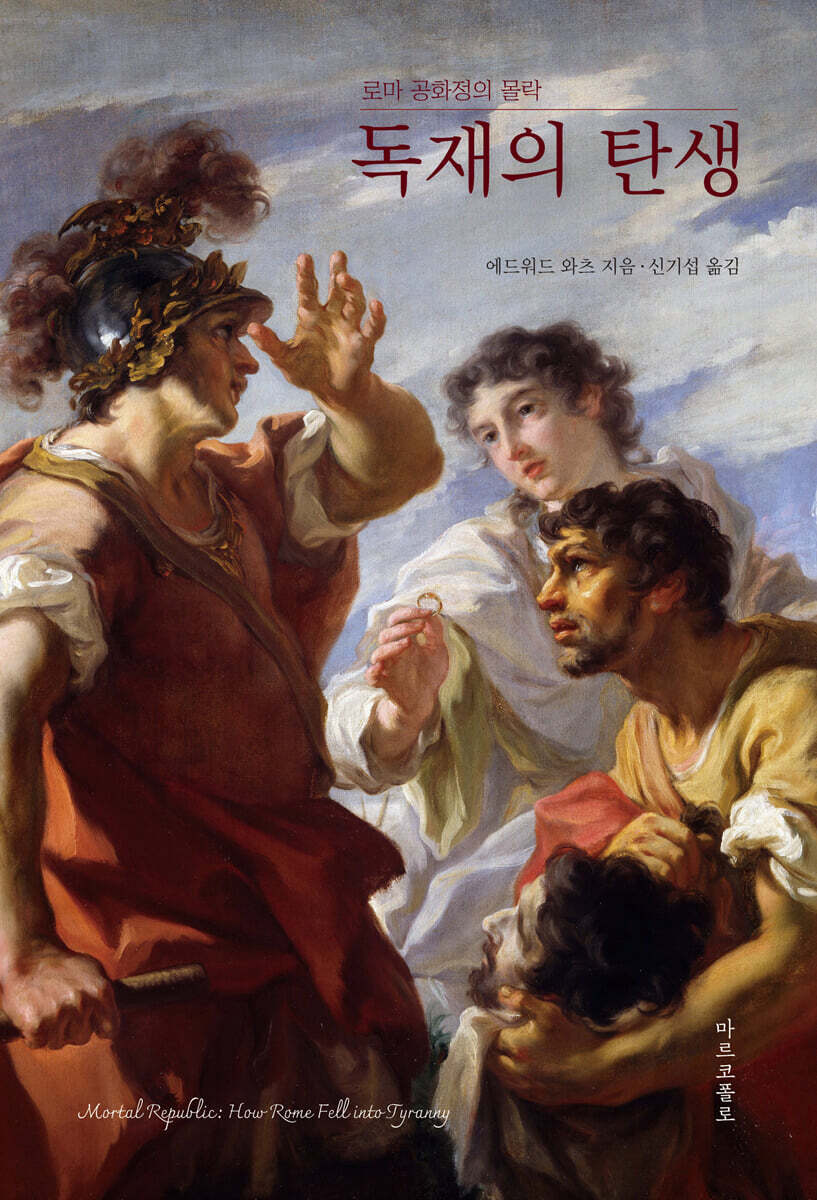
The Rise of Dictatorship: The Fall of the Roman Republic
 |
Description
Book Introduction
New York Times Book of the Year
The Guardian's Book of the Year
The New Yorker Book of the Year
Wall Street Journal, Book of the Year
New York Journal of Books, Recommended Reading
Los Angeles Book Review, Recommended Reading
Kirkus Book Reviews, Recommended Reading
Edward Watts's twelve-chapter The Fall of the Roman Republic: The Rise of a Tyranny traces the transformation of the Roman Republic into the one-man dictatorship of the emperor by examining key economic, social, and political developments.
The Guardian's Book of the Year
The New Yorker Book of the Year
Wall Street Journal, Book of the Year
New York Journal of Books, Recommended Reading
Los Angeles Book Review, Recommended Reading
Kirkus Book Reviews, Recommended Reading
Edward Watts's twelve-chapter The Fall of the Roman Republic: The Rise of a Tyranny traces the transformation of the Roman Republic into the one-man dictatorship of the emperor by examining key economic, social, and political developments.
- You can preview some of the book's contents.
Preview
index
Preface to the Korean edition .................................................
14
Preface ........................................................
18
Chapter 1 Freedom within Dictatorship .........................................24
Chapter 2 The New World Order ..................................32
Chapter 3 Empire and Inequality .......................................68
Chapter 4: The Politics of Frustration.........................................94
Chapter 5 The Rise of Foreigners ..................................
126
Chapter 6 The Cracks of the Republic..................................
152
Chapter 7 Rebuilding from the Rubble .............................
182
Chapter 8 The Republic of the Second-Rate ..................................208
Chapter 9: Staggering Towards Dictatorship .......................234
Chapter 10: The Rise and Fall of Caesar's Republic ............264
Chapter 11: Octavian's Republic .......................290
Chapter 12: Augustus' Choice of Freedom .............326
14
Preface ........................................................
18
Chapter 1 Freedom within Dictatorship .........................................24
Chapter 2 The New World Order ..................................32
Chapter 3 Empire and Inequality .......................................68
Chapter 4: The Politics of Frustration.........................................94
Chapter 5 The Rise of Foreigners ..................................
126
Chapter 6 The Cracks of the Republic..................................
152
Chapter 7 Rebuilding from the Rubble .............................
182
Chapter 8 The Republic of the Second-Rate ..................................208
Chapter 9: Staggering Towards Dictatorship .......................234
Chapter 10: The Rise and Fall of Caesar's Republic ............264
Chapter 11: Octavian's Republic .......................290
Chapter 12: Augustus' Choice of Freedom .............326
Detailed image

Publisher's Review
New York Times Book of the Year
The Guardian's Book of the Year
The New Yorker Book of the Year
Wall Street Journal, Book of the Year
New York Journal of Books, Recommended Reading
Los Angeles Book Review, Recommended Reading
Kirkus Book Reviews, Recommended Reading
Edward Watts's twelve-chapter The Fall of the Roman Republic: The Rise of a Tyranny traces the transformation of the Roman Republic into the one-man dictatorship of the emperor by examining key economic, social, and political developments.
Rome's transformation from a republic to a dictatorship is a long-standing topic in Western history.
In his introduction, Edward Watts, professor of Roman history at the University of California, San Diego, notes the similarities between modern political systems and those of Rome.
In this book, Watts explains how the internal conflicts of the Roman Republic exploded, how the traditional values of political consensus collapsed, and how it ultimately transformed into a political system of one-man dictatorship.
At its peak, Rome was the world's only democracy.
Rome's governing institutions, synagogue rules, and political customs were created and maintained through negotiation and compromise.
Rome rewarded individuals with honors based on their merits and service to the Roman state.
By 130 BC, Roman leaders were increasingly pursuing personal interests and sabotaging their opponents.
As dysfunction grew, the infighting between politicians led to political violence in the streets.
Roman politics became a zero-sum game, with winners reaping enormous rewards and losers often paying the price with their lives.
This stage was set for a devastating civil war and ultimately the imperial reign of Augustus.
This book covers the political history of Rome in great detail, covering a period of approximately 300 years from 280 BC to 27 BC, until the Roman victory in the Second Pyrenean War and Octavian's complete seizure of power, which marked the end of the Roman Republic.
This book is not a military history, but rather a political history of Rome and its rulers at the time, detailing what events occurred and how they affected the Republic.
From Tiberius Gracchus, who justified violence against political opponents, to Sulla, who used the Roman army against his own people, to Caesar, who usurped all power, the Roman Republic died little by little every time the political process was abused or political opponents were threatened.
The death of the Republic became inevitable when the common people did not support or condemn those who destroyed democratic institutions, such as Sulla, Marius, Caesar, and Augustus.
Ultimately, the republic disappeared because the Romans, who thought it would last forever, turned a blind eye to all of this.
What is most striking about this book is that it prompts reflection on the similarities between the political situation in the Roman Republic and that of modern democracies.
The Roman Republic teaches its modern descendants the immense dangers of tolerating political obstruction and condoning political violence.
Nothing could better demonstrate that the Republic is in mortal danger when its citizens turn a blind eye to such corrupt actions by its leaders.
Impunity hinders consensus and fuels violence.
In Rome, the Romans eventually traded the Republic for the comfort of a dictatorship, and this was how the Republic met its death.
As citizens, are we condoning political interference and tolerating political violence? Have political divisions become so severe that we have abandoned all attempts at consensus? Regardless of which side of the political divide we find ourselves on, are we destroying democracy through our stubbornness? Ultimately, this book leaves us with a stark warning.
The democratic republic is something that must be cherished and protected.
If you fail, an uncertain and dangerous future awaits you on the other side.
The subject of this book was pioneered by Edward Gibbon, and is also a story that has been taken up by popular writers of our time, such as Tom Holland, Mary Beard, and Mike Duncan.
Watts's storytelling style easily transcends the confines of the academy and has a powerful appeal even to those unfamiliar with Roman history.
It is significant that, despite his training as a historian, he does not disparage the general public.
As we read this book, we find ourselves unconsciously comparing it to the political system of our time.
Perhaps this comparison is natural, as they are similar in many ways.
The way the Roman Republic fell and the new norms imposed by the emperors that followed naturally bring to mind memories of being forced into Trump's world-system theory.
Above all, propaganda brought about a new phase in Roman politics, and the populism of politicians bears a striking resemblance to modern politics.
This remarkable book first came out in New York in the fall of 2020, during the Trump presidency.
Therefore, it can also be read as a metaphor for the contemporary political system, regime, and rulers.
The fact that America's founding principles were modeled after the Roman Republic has much to teach us in that regard.
The Guardian's Book of the Year
The New Yorker Book of the Year
Wall Street Journal, Book of the Year
New York Journal of Books, Recommended Reading
Los Angeles Book Review, Recommended Reading
Kirkus Book Reviews, Recommended Reading
Edward Watts's twelve-chapter The Fall of the Roman Republic: The Rise of a Tyranny traces the transformation of the Roman Republic into the one-man dictatorship of the emperor by examining key economic, social, and political developments.
Rome's transformation from a republic to a dictatorship is a long-standing topic in Western history.
In his introduction, Edward Watts, professor of Roman history at the University of California, San Diego, notes the similarities between modern political systems and those of Rome.
In this book, Watts explains how the internal conflicts of the Roman Republic exploded, how the traditional values of political consensus collapsed, and how it ultimately transformed into a political system of one-man dictatorship.
At its peak, Rome was the world's only democracy.
Rome's governing institutions, synagogue rules, and political customs were created and maintained through negotiation and compromise.
Rome rewarded individuals with honors based on their merits and service to the Roman state.
By 130 BC, Roman leaders were increasingly pursuing personal interests and sabotaging their opponents.
As dysfunction grew, the infighting between politicians led to political violence in the streets.
Roman politics became a zero-sum game, with winners reaping enormous rewards and losers often paying the price with their lives.
This stage was set for a devastating civil war and ultimately the imperial reign of Augustus.
This book covers the political history of Rome in great detail, covering a period of approximately 300 years from 280 BC to 27 BC, until the Roman victory in the Second Pyrenean War and Octavian's complete seizure of power, which marked the end of the Roman Republic.
This book is not a military history, but rather a political history of Rome and its rulers at the time, detailing what events occurred and how they affected the Republic.
From Tiberius Gracchus, who justified violence against political opponents, to Sulla, who used the Roman army against his own people, to Caesar, who usurped all power, the Roman Republic died little by little every time the political process was abused or political opponents were threatened.
The death of the Republic became inevitable when the common people did not support or condemn those who destroyed democratic institutions, such as Sulla, Marius, Caesar, and Augustus.
Ultimately, the republic disappeared because the Romans, who thought it would last forever, turned a blind eye to all of this.
What is most striking about this book is that it prompts reflection on the similarities between the political situation in the Roman Republic and that of modern democracies.
The Roman Republic teaches its modern descendants the immense dangers of tolerating political obstruction and condoning political violence.
Nothing could better demonstrate that the Republic is in mortal danger when its citizens turn a blind eye to such corrupt actions by its leaders.
Impunity hinders consensus and fuels violence.
In Rome, the Romans eventually traded the Republic for the comfort of a dictatorship, and this was how the Republic met its death.
As citizens, are we condoning political interference and tolerating political violence? Have political divisions become so severe that we have abandoned all attempts at consensus? Regardless of which side of the political divide we find ourselves on, are we destroying democracy through our stubbornness? Ultimately, this book leaves us with a stark warning.
The democratic republic is something that must be cherished and protected.
If you fail, an uncertain and dangerous future awaits you on the other side.
The subject of this book was pioneered by Edward Gibbon, and is also a story that has been taken up by popular writers of our time, such as Tom Holland, Mary Beard, and Mike Duncan.
Watts's storytelling style easily transcends the confines of the academy and has a powerful appeal even to those unfamiliar with Roman history.
It is significant that, despite his training as a historian, he does not disparage the general public.
As we read this book, we find ourselves unconsciously comparing it to the political system of our time.
Perhaps this comparison is natural, as they are similar in many ways.
The way the Roman Republic fell and the new norms imposed by the emperors that followed naturally bring to mind memories of being forced into Trump's world-system theory.
Above all, propaganda brought about a new phase in Roman politics, and the populism of politicians bears a striking resemblance to modern politics.
This remarkable book first came out in New York in the fall of 2020, during the Trump presidency.
Therefore, it can also be read as a metaphor for the contemporary political system, regime, and rulers.
The fact that America's founding principles were modeled after the Roman Republic has much to teach us in that regard.
GOODS SPECIFICS
- Date of issue: December 7, 2024
- Page count, weight, size: 380 pages | 152*225*30mm
- ISBN13: 9791192667690
- ISBN10: 1192667697
You may also like
카테고리
korean


korean

![GQ KOREA Mark (Monthly): December [2025]](http://librairie.coreenne.fr/cdn/shop/files/8ef265dbbfbf186523ed75ba7319009d.jpg?v=1765340328&width=3840)


