

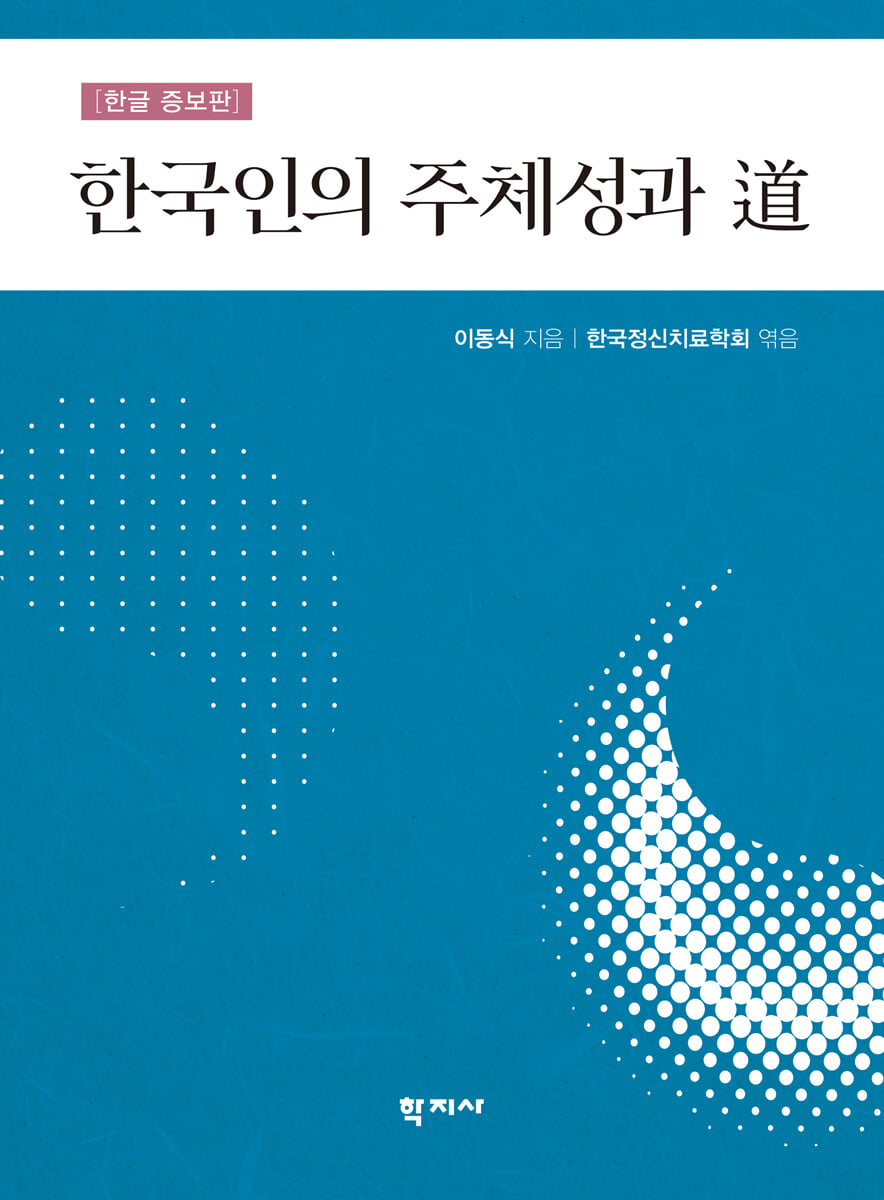
The subjectivity and nature of Koreans
 |
Description
Book Introduction
Professor Lee Dong-sik lamented that his book, 『Korean Subjectivity and the Way』, which describes his thoughts in the most depth and detail, is difficult for the younger generation to read because it has many Chinese characters.
Accordingly, the Koreanization work began by typing by changing Chinese characters to Korean and adding Chinese characters in parentheses.
This Korean-language expanded edition consists of four parts, including parts 1, 2, and 3 from the original edition, and the teacher's other writings compiled into a fourth part.
Part 1 contains papers on the proclamation and establishment of Korean subjectivity.
Part 2 consists of writings on the relationship between the crisis of modern human civilization and the Tao, the modern significance of the Tao, issues of mental pathology and mental health in Korean society, the relationship between counseling and psychotherapy and the Tao, and psychotherapy and counseling rooted in Korean tradition.
Part 3 is a collection of excerpts from published articles, titled 'Past, Present, Future'.
Part 4 is a collection of the most essential and important articles, published under the theme of ‘Integration of Eastern and Western Cultures.’
I hope that through this book, you can reflect on the meaning of subjectivity and the Way in your personal life and in your life as a Korean.
Accordingly, the Koreanization work began by typing by changing Chinese characters to Korean and adding Chinese characters in parentheses.
This Korean-language expanded edition consists of four parts, including parts 1, 2, and 3 from the original edition, and the teacher's other writings compiled into a fourth part.
Part 1 contains papers on the proclamation and establishment of Korean subjectivity.
Part 2 consists of writings on the relationship between the crisis of modern human civilization and the Tao, the modern significance of the Tao, issues of mental pathology and mental health in Korean society, the relationship between counseling and psychotherapy and the Tao, and psychotherapy and counseling rooted in Korean tradition.
Part 3 is a collection of excerpts from published articles, titled 'Past, Present, Future'.
Part 4 is a collection of the most essential and important articles, published under the theme of ‘Integration of Eastern and Western Cultures.’
I hope that through this book, you can reflect on the meaning of subjectivity and the Way in your personal life and in your life as a Korean.
index
While editing the Korean version
While publishing the Korean version
preface
In publishing the second edition
Part 1: Korean Subjectivity and Its Establishment
1.
Korean subjectivity and the ideology of student guidance
2.
Koreans' ideological ills
3.
A new perspective on Korea
4.
Challenges to Korean Mental Health and Education
5.
Women's Roles and Modern Korean Women
6.
The nature and expression of subjectivity
Part 2: Modern Culture and the Tao
1.
Modernity and Human Alienation
2.
The reality of anxiety and escapism
3.
Conflict between heterogeneous value systems
4.
mental development of infants
5.
Introduction to the Philosophical Foundations of Psychotherapy and Counseling in Korea
6.
The Way and Counseling and Counselors
7.
Knowledge of ignorance
8.
The modern significance of Tao
9.
Zen and psychoanalysis
10.
Buddhism and Counseling
11.
The World Federation for Mental Health (WFMH) and the Korean Mental Health Movement
12.
Modern concepts of mental health and current challenges facing our country
13.
Challenges facing Korea in the fields of psychotherapy and relationships
14.
Psychotherapy in Korea
15.
The Way and Learning
16.
The Way and Science
17.
Anthropology and Korean Thought
18.
Children's growth and problems in modern society
19.
The Mission of Science to Illuminate Civilization
20.
Consciousness of Korean intellectuals
Part 3: Past, Present, and Future
1.
The roots of Korean disease
2.
Democracy in Korea
3.
Liquidation of colonial remnants and national spirit
4.
Korean and Japanese
5.
A Psychiatrist's View of the Korean People and the Asian Games
6.
National consciousness and behavior
7.
The subjectivity of Korean Americans
8.
Korean culture and the Korean spirit
9.
Nationalism and globalism
10.
Mental health of college students
11.
Let's all go back to our places
12.
Intemperance
13.
The dictator's dictatorial psychology
14.
Self-respect and self-esteem
15.
The madness of modern people and its characteristics
Part 4: Integration of Eastern and Western Cultures
1.
Freud's life and thought
2.
My footsteps on the lonely path of becoming a psychotherapist
3.
Integration of Eastern and Western psychotherapy
4.
What is the Korean Wave?
· Appendix: Biography of Soam Lee Dong-sik
While publishing the Korean version
preface
In publishing the second edition
Part 1: Korean Subjectivity and Its Establishment
1.
Korean subjectivity and the ideology of student guidance
2.
Koreans' ideological ills
3.
A new perspective on Korea
4.
Challenges to Korean Mental Health and Education
5.
Women's Roles and Modern Korean Women
6.
The nature and expression of subjectivity
Part 2: Modern Culture and the Tao
1.
Modernity and Human Alienation
2.
The reality of anxiety and escapism
3.
Conflict between heterogeneous value systems
4.
mental development of infants
5.
Introduction to the Philosophical Foundations of Psychotherapy and Counseling in Korea
6.
The Way and Counseling and Counselors
7.
Knowledge of ignorance
8.
The modern significance of Tao
9.
Zen and psychoanalysis
10.
Buddhism and Counseling
11.
The World Federation for Mental Health (WFMH) and the Korean Mental Health Movement
12.
Modern concepts of mental health and current challenges facing our country
13.
Challenges facing Korea in the fields of psychotherapy and relationships
14.
Psychotherapy in Korea
15.
The Way and Learning
16.
The Way and Science
17.
Anthropology and Korean Thought
18.
Children's growth and problems in modern society
19.
The Mission of Science to Illuminate Civilization
20.
Consciousness of Korean intellectuals
Part 3: Past, Present, and Future
1.
The roots of Korean disease
2.
Democracy in Korea
3.
Liquidation of colonial remnants and national spirit
4.
Korean and Japanese
5.
A Psychiatrist's View of the Korean People and the Asian Games
6.
National consciousness and behavior
7.
The subjectivity of Korean Americans
8.
Korean culture and the Korean spirit
9.
Nationalism and globalism
10.
Mental health of college students
11.
Let's all go back to our places
12.
Intemperance
13.
The dictator's dictatorial psychology
14.
Self-respect and self-esteem
15.
The madness of modern people and its characteristics
Part 4: Integration of Eastern and Western Cultures
1.
Freud's life and thought
2.
My footsteps on the lonely path of becoming a psychotherapist
3.
Integration of Eastern and Western psychotherapy
4.
What is the Korean Wave?
· Appendix: Biography of Soam Lee Dong-sik
GOODS SPECIFICS
- Date of issue: November 15, 2024
- Page count, weight, size: 440 pages | 173*235*18mm
- ISBN13: 9788999732751
- ISBN10: 8999732754
You may also like
카테고리
korean


korean

![GQ KOREA Mark (Monthly): December [2025]](http://librairie.coreenne.fr/cdn/shop/files/8ef265dbbfbf186523ed75ba7319009d.jpg?v=1765340328&width=3840)


