

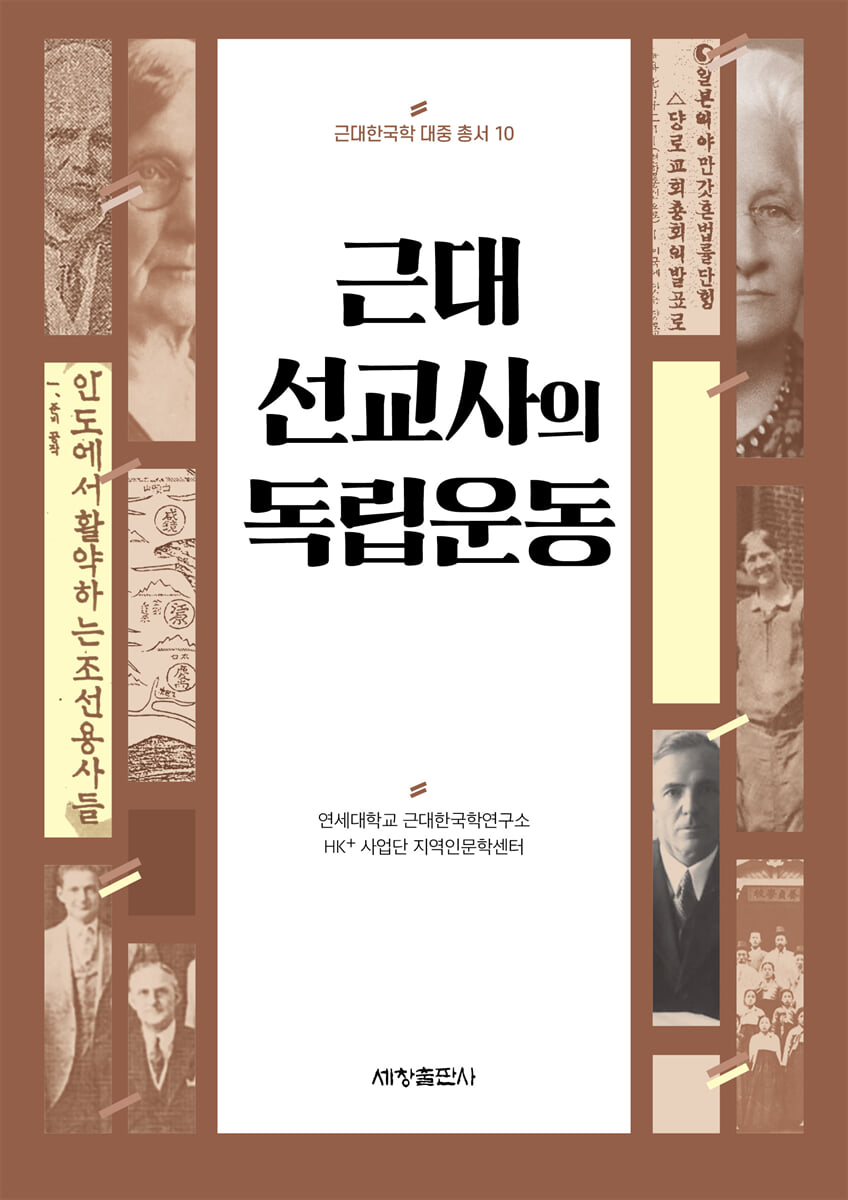
The independence movement of modern missionaries
 |
Description
Book Introduction
Although modern foreign missionaries had a significant influence on Korean society at the time, they were not given much attention in the history of the Korean independence movement.
In this book, author Professor Shim Ok-ju traces the activities of five missionaries who contributed to Korea's independence movement during the Japanese colonial period, examining how they dedicated themselves to Korea and describing the events of that time with a vivid voice and friendly tone.
Horace Underwood, Alice Hammond Sharp, Isabella Menzies, George Shannon McCune, Frank Williams.
Beyond their role as simple missionaries, they fought against Japanese oppression alongside Koreans in their own ways, including through education, medical care, and the independence movement.
Through those who poured their sweat and passion into Korea's independence movement, we reflect on the noble spirit of those who did not turn away from Korea's independence.
In this book, author Professor Shim Ok-ju traces the activities of five missionaries who contributed to Korea's independence movement during the Japanese colonial period, examining how they dedicated themselves to Korea and describing the events of that time with a vivid voice and friendly tone.
Horace Underwood, Alice Hammond Sharp, Isabella Menzies, George Shannon McCune, Frank Williams.
Beyond their role as simple missionaries, they fought against Japanese oppression alongside Koreans in their own ways, including through education, medical care, and the independence movement.
Through those who poured their sweat and passion into Korea's independence movement, we reflect on the noble spirit of those who did not turn away from Korea's independence.
- You can preview some of the book's contents.
Preview
index
Preface
Entering
Horace Underwood (1890-1951), defending Korea and Emperor Gojong
Alice Hammond Sharp (1871-1972), fateful encounter with Yu Gwan-sun
Isabella Menzies (1856-1935), shouting "Manse" with Ilshin Girls
George Shannon McCune (1873-1941) and The Mansei Movement
Frank Williams (1883-1962) meets the Korean Liberation Army in India
Entering
Horace Underwood (1890-1951), defending Korea and Emperor Gojong
Alice Hammond Sharp (1871-1972), fateful encounter with Yu Gwan-sun
Isabella Menzies (1856-1935), shouting "Manse" with Ilshin Girls
George Shannon McCune (1873-1941) and The Mansei Movement
Frank Williams (1883-1962) meets the Korean Liberation Army in India
Into the book
As the weather began to get warmer in the summer, an epidemic began to spread, and families began to die more frequently in the village.
In those days, there was a lack of hygiene, so boiling water and knowledge about hygiene were not common.
This led to an increase in the number of patients with infectious diseases, and even missionaries died from the disease.
To address these realistic concerns, Underwood became even more enthusiastic about medical education at Jejungwon.
--- p.27
Missionaries, including Underwood, set out to protect King Gojong.
Although it was said to be a protective measure against the intentions of Japan's invasion and the injustice of its atrocities, Underwood did not turn a blind eye to the reality of Korea and Emperor Gojong.
--- p.47
At that time, Korean women were living in the wave of modernization, but were excluded from social activities due to the strict patriarchal atmosphere.
I encountered women who were trapped within the social system, not as human beings who deserve respect and as independent women.
While engaged in Christian missionary work, Saarishi looked with curiosity at a society biased towards exclusive views.
--- p.60
So, is Saae-ri a independence activist?
I believe that Saari City was a person who practiced more than just the independence movement because he nurtured intellectuals during the Enlightenment period and provided a foundation for anti-Japanese patriots to be trained during the Japanese colonial period, thereby igniting the flame of independence.
Moreover, Saarishi was present at the scene of the independence movement.
I personally witnessed my disciples and acquaintances being arrested and churches and schools being burned.
--- p.76~77
The person in charge of the school dormitory during the period when Ilshin Girls' School students participated in the independence movement was none other than the school's founder, Menzies.
As news of the Manse Movement spread across the country, Ilshin Girls' School, like other regions, was worried that demonstrations would take place.
And he warned the teachers and students at Ilshin Girls' High School's dormitory to be careful.
But the righteous students of that day, oppressed by Japanese oppression, could not remain silent.
After receiving the proclamation, Ilshin Girls' High School students and teachers had no choice but to march outside the school gate and protest.
--- p.94
After returning to Australia, Menzies visited Busan in November 1930 at the age of 76.
He congratulated his adopted daughter Min Shin-bok on her wedding and gave her a hanok in Jwacheon-dong as a wedding gift.
Isabella Menzies died on September 10, 1935, at the age of 79.
Although her traces can now be found in Ballarat Cemetery, shouldn't we now remember Isabella Menzies, who dedicated her flowery days to Korean students, teachers, and adopted daughters?
--- p.115
The surprising thing is that the record that connected me was not that of my father, George Shannon McCune, but that of Shannon McCune, the youngest of his four children.
George Shannon McCune had four children.
--- p.127
Perhaps the most influential person in Shannon McCune's life was her father, George Shannon McCune.
Shannon McCune remembers her father growing up as being somewhat critical of Japan.
Because my father was a strong advocate for the rights of students and teachers who were unjustly accused in the 105-person incident, he also studied Japanese diligently.
Although he studied Japanese to understand Japan, he made it a point to develop the habit of not speaking Japanese when he was in Korea.
He visited Japan to learn Japanese and interacted with Japanese people, but he remembers being somewhat critical of the reality of them ignoring the rights of Koreans.
--- p.137~138
Frank Williams, who went from being the principal of Gongju Youngmyeong School in Korea to becoming an English instructor for members of the Korean Liberation Army! The smooth joint operations between the Korean Liberation Army and the British Army were possible thanks to Frank Williams's assistance in learning English and facilitating smooth communication.
--- p.163
Why didn't they accept the Japanese curriculum?
The answer is confirmed by the fact that when the March 1st Independence Movement spread nationwide in 1919, most of the teachers at Gongju Yeongmyeong School, who had received a modern education, jumped into the independence movement together with the students of Gongju Yeongmyeong School.
In those days, there was a lack of hygiene, so boiling water and knowledge about hygiene were not common.
This led to an increase in the number of patients with infectious diseases, and even missionaries died from the disease.
To address these realistic concerns, Underwood became even more enthusiastic about medical education at Jejungwon.
--- p.27
Missionaries, including Underwood, set out to protect King Gojong.
Although it was said to be a protective measure against the intentions of Japan's invasion and the injustice of its atrocities, Underwood did not turn a blind eye to the reality of Korea and Emperor Gojong.
--- p.47
At that time, Korean women were living in the wave of modernization, but were excluded from social activities due to the strict patriarchal atmosphere.
I encountered women who were trapped within the social system, not as human beings who deserve respect and as independent women.
While engaged in Christian missionary work, Saarishi looked with curiosity at a society biased towards exclusive views.
--- p.60
So, is Saae-ri a independence activist?
I believe that Saari City was a person who practiced more than just the independence movement because he nurtured intellectuals during the Enlightenment period and provided a foundation for anti-Japanese patriots to be trained during the Japanese colonial period, thereby igniting the flame of independence.
Moreover, Saarishi was present at the scene of the independence movement.
I personally witnessed my disciples and acquaintances being arrested and churches and schools being burned.
--- p.76~77
The person in charge of the school dormitory during the period when Ilshin Girls' School students participated in the independence movement was none other than the school's founder, Menzies.
As news of the Manse Movement spread across the country, Ilshin Girls' School, like other regions, was worried that demonstrations would take place.
And he warned the teachers and students at Ilshin Girls' High School's dormitory to be careful.
But the righteous students of that day, oppressed by Japanese oppression, could not remain silent.
After receiving the proclamation, Ilshin Girls' High School students and teachers had no choice but to march outside the school gate and protest.
--- p.94
After returning to Australia, Menzies visited Busan in November 1930 at the age of 76.
He congratulated his adopted daughter Min Shin-bok on her wedding and gave her a hanok in Jwacheon-dong as a wedding gift.
Isabella Menzies died on September 10, 1935, at the age of 79.
Although her traces can now be found in Ballarat Cemetery, shouldn't we now remember Isabella Menzies, who dedicated her flowery days to Korean students, teachers, and adopted daughters?
--- p.115
The surprising thing is that the record that connected me was not that of my father, George Shannon McCune, but that of Shannon McCune, the youngest of his four children.
George Shannon McCune had four children.
--- p.127
Perhaps the most influential person in Shannon McCune's life was her father, George Shannon McCune.
Shannon McCune remembers her father growing up as being somewhat critical of Japan.
Because my father was a strong advocate for the rights of students and teachers who were unjustly accused in the 105-person incident, he also studied Japanese diligently.
Although he studied Japanese to understand Japan, he made it a point to develop the habit of not speaking Japanese when he was in Korea.
He visited Japan to learn Japanese and interacted with Japanese people, but he remembers being somewhat critical of the reality of them ignoring the rights of Koreans.
--- p.137~138
Frank Williams, who went from being the principal of Gongju Youngmyeong School in Korea to becoming an English instructor for members of the Korean Liberation Army! The smooth joint operations between the Korean Liberation Army and the British Army were possible thanks to Frank Williams's assistance in learning English and facilitating smooth communication.
--- p.163
Why didn't they accept the Japanese curriculum?
The answer is confirmed by the fact that when the March 1st Independence Movement spread nationwide in 1919, most of the teachers at Gongju Yeongmyeong School, who had received a modern education, jumped into the independence movement together with the students of Gongju Yeongmyeong School.
--- p.178
Publisher's Review
Foreign missionaries who joined us in the fight against Japanese imperialism
Their dedication in various fields such as education, healthcare, and independence
Following in the footsteps of those who contributed to Korea's independence movement
Although modern foreign missionaries had a significant influence on Korean society at the time, they were not given much attention in the history of the Korean independence movement.
In this book, author Professor Shim Ok-ju traces the activities of five missionaries who contributed to Korea's independence movement during the Japanese colonial period, examining how they dedicated themselves to Korea. She unravels the events of that time with a vivid voice and friendly tone.
Horace Underwood, Alice Hammond Sharp, Isabella Menzies, George Shannon McCune, Frank Williams.
Beyond their role as simple missionaries, they fought against Japanese oppression alongside Koreans in their own ways, including through education, medical care, and the independence movement.
Through those who poured their sweat and passion into Korea's independence movement, we reflect on the noble spirit of those who did not turn away from Korea's independence.
Laying the foundation for modern Korean education and medicine
Nurturing independence activists
Horace Grant Underwood (Won Du-woo) played a significant role in the development of modern education and medicine in Korea.
He arrived in Joseon in 1885 and established Yonhui College (now Yonsei University) and Gyeongsin School, laying the foundation for modern education in Korea. He also contributed to the early medical activities of Jejungwon and helped train the first Korean doctors.
His achievements in Joseon were officially recognized when he was awarded the Taegeukjang by Emperor Gojong, who had been observing his activities for a long time.
Underwood can be called the father of independence activists, as some of his students grew up to become independence activists.
In this way, Underwood, who did not ignore the reality of Korea and supported the national movement by producing intellectuals through education, can be said to have left a deep mark on Korean history.
An educator who awakened women's consciousness,
Dreaming of Korean independence despite Japanese oppression
Alice Hammond Sharp (Saae-ri-shi) was a figure dedicated to Korean women's education and the independence movement.
While working in Gongju, South Chungcheong Province, she established Myeongseon Girls' School (later Gongju Yeongmyeong Girls' School), the first women's educational institution in the Chungcheong region, and devoted herself to the education of Korean women.
By inspiring a sense of independence among women, she laid the foundation for women to fight for their country under Japanese oppression.
Representative figures who had a connection with Sharp or entered women's education through her recommendation, and whose activities in the independence movement are confirmed, include Yu Gwan-sun, No Maria, Kim Yu-sil, Yi Sun-ae, Park Ru-isa, and Jo Hwa-byeok.
Sharpe went beyond simply serving as an educator to help women become active participants in the independence movement, contributing to redefining the role of women in Korean society.
In addition, they periodically reported to the Women's Missionary Society in Korea about events related to the March 1st Movement, such as students' participation in the Manse Movement and their imprisonment, to inform them of the seriousness of the situation.
The dream of independence that blossomed through overcoming adversity,
Brightening the Path for Women through Education
Isabella Menzies (Minjisa) also played an important role in Korean women's education and the independence movement.
She pioneered the education of Korean women by establishing Busanjin Ilshin Girls' School, the first modern women's educational institution in Yeongnam, and also played a significant role in encouraging Korean women during the Japanese colonial period to promote independence awareness and participate in the independence movement.
He also resisted Japanese oppression by participating in the Manse demonstration with students during the March 1st Movement. Menzies was an educator, but he was also a practical missionary who went beyond education and worked with students to awaken their spirit of independence.
Afterwards, he became a target of surveillance by the Japanese as a leading figure who refused to visit the Shinto shrine.
In March 2023, thanks to the efforts of the Australian missionary excavation team of the Korean Women's Independence Movement Research Institute, including the author, the Ministry of Patriots and Veterans Affairs posthumously awarded Menzies a distinction as a person of merit for independence, thereby nationally recognizing Menzies' contributions to the Korean independence movement.
A precious connection with 『The Mansei Movement』,
The McCune family's independence movement as seen through the records of that day
In the fall of 2022, the author receives a phone call from a writer friend in Hawaii.
It was a call saying that they had obtained a book containing the records of an independence activist's family.
『The Mansei Movement』 was a memoir by Shannon McCune, the son of George Shannon McCune, known in Korea as Yun San-on.
The author was so touched by the unexpected call that he couldn't sleep that night.
In this way, Professor Shim Ok-ju encounters the story of the McCune family's independence movement.
His father, George Shannon McCune, was a missionary who participated in the 105 People Incident in Korea, the March 1st Movement, and the opposition to Shinto shrine worship. He served as the principal of Pyongyang Sungsil College and Sungsil Middle School, and practiced missionary work and the independence movement until he was deported to the United States in early 1936 for refusing to worship at Shinto shrines.
Even after that, until his death on December 7, 1941, he continued his activities to inform the world about Korea's independence, the Manse Movement, the oppression of Japanese imperialism, and the current state of affairs in Korea.
Through his son Shannon McCune's book, "The Mansei Movement," you can encounter the vivid story of the McCune family, who personally experienced the 105 People Incident and the March 1st Movement.
Even under Japanese pressure, even far away from Korea,
A noble spirit that never gave up on the dream of Korean independence
Frank Williams (Wooriam) was a missionary who supported education and the independence movement in Korea.
He established Gongju Youngmyeong School in Gongju, South Chungcheong Province, and took the lead in providing education to young Koreans and fostering national consciousness.
However, he was eventually expelled after resisting Japanese oppression and forced worship at Shinto shrines, and later immigrated to India.
Even while in India, Williams continued to support the independence movement by interacting with the Korean Liberation Army.
He helped educate the Korean Liberation Army in English and contributed to spreading their independence movement internationally.
Although his activities in Korea have come to an end, he has continued to show interest in the Korean independence movement and has supported us from overseas.
In 2023, the Ministry of Patriots and Veterans Affairs commemorated the 78th anniversary of Liberation Day by awarding Frank Williams, who worked to keep the flame of Korean independence alive, as a person of merit for independence.
Their dedication in various fields such as education, healthcare, and independence
Following in the footsteps of those who contributed to Korea's independence movement
Although modern foreign missionaries had a significant influence on Korean society at the time, they were not given much attention in the history of the Korean independence movement.
In this book, author Professor Shim Ok-ju traces the activities of five missionaries who contributed to Korea's independence movement during the Japanese colonial period, examining how they dedicated themselves to Korea. She unravels the events of that time with a vivid voice and friendly tone.
Horace Underwood, Alice Hammond Sharp, Isabella Menzies, George Shannon McCune, Frank Williams.
Beyond their role as simple missionaries, they fought against Japanese oppression alongside Koreans in their own ways, including through education, medical care, and the independence movement.
Through those who poured their sweat and passion into Korea's independence movement, we reflect on the noble spirit of those who did not turn away from Korea's independence.
Laying the foundation for modern Korean education and medicine
Nurturing independence activists
Horace Grant Underwood (Won Du-woo) played a significant role in the development of modern education and medicine in Korea.
He arrived in Joseon in 1885 and established Yonhui College (now Yonsei University) and Gyeongsin School, laying the foundation for modern education in Korea. He also contributed to the early medical activities of Jejungwon and helped train the first Korean doctors.
His achievements in Joseon were officially recognized when he was awarded the Taegeukjang by Emperor Gojong, who had been observing his activities for a long time.
Underwood can be called the father of independence activists, as some of his students grew up to become independence activists.
In this way, Underwood, who did not ignore the reality of Korea and supported the national movement by producing intellectuals through education, can be said to have left a deep mark on Korean history.
An educator who awakened women's consciousness,
Dreaming of Korean independence despite Japanese oppression
Alice Hammond Sharp (Saae-ri-shi) was a figure dedicated to Korean women's education and the independence movement.
While working in Gongju, South Chungcheong Province, she established Myeongseon Girls' School (later Gongju Yeongmyeong Girls' School), the first women's educational institution in the Chungcheong region, and devoted herself to the education of Korean women.
By inspiring a sense of independence among women, she laid the foundation for women to fight for their country under Japanese oppression.
Representative figures who had a connection with Sharp or entered women's education through her recommendation, and whose activities in the independence movement are confirmed, include Yu Gwan-sun, No Maria, Kim Yu-sil, Yi Sun-ae, Park Ru-isa, and Jo Hwa-byeok.
Sharpe went beyond simply serving as an educator to help women become active participants in the independence movement, contributing to redefining the role of women in Korean society.
In addition, they periodically reported to the Women's Missionary Society in Korea about events related to the March 1st Movement, such as students' participation in the Manse Movement and their imprisonment, to inform them of the seriousness of the situation.
The dream of independence that blossomed through overcoming adversity,
Brightening the Path for Women through Education
Isabella Menzies (Minjisa) also played an important role in Korean women's education and the independence movement.
She pioneered the education of Korean women by establishing Busanjin Ilshin Girls' School, the first modern women's educational institution in Yeongnam, and also played a significant role in encouraging Korean women during the Japanese colonial period to promote independence awareness and participate in the independence movement.
He also resisted Japanese oppression by participating in the Manse demonstration with students during the March 1st Movement. Menzies was an educator, but he was also a practical missionary who went beyond education and worked with students to awaken their spirit of independence.
Afterwards, he became a target of surveillance by the Japanese as a leading figure who refused to visit the Shinto shrine.
In March 2023, thanks to the efforts of the Australian missionary excavation team of the Korean Women's Independence Movement Research Institute, including the author, the Ministry of Patriots and Veterans Affairs posthumously awarded Menzies a distinction as a person of merit for independence, thereby nationally recognizing Menzies' contributions to the Korean independence movement.
A precious connection with 『The Mansei Movement』,
The McCune family's independence movement as seen through the records of that day
In the fall of 2022, the author receives a phone call from a writer friend in Hawaii.
It was a call saying that they had obtained a book containing the records of an independence activist's family.
『The Mansei Movement』 was a memoir by Shannon McCune, the son of George Shannon McCune, known in Korea as Yun San-on.
The author was so touched by the unexpected call that he couldn't sleep that night.
In this way, Professor Shim Ok-ju encounters the story of the McCune family's independence movement.
His father, George Shannon McCune, was a missionary who participated in the 105 People Incident in Korea, the March 1st Movement, and the opposition to Shinto shrine worship. He served as the principal of Pyongyang Sungsil College and Sungsil Middle School, and practiced missionary work and the independence movement until he was deported to the United States in early 1936 for refusing to worship at Shinto shrines.
Even after that, until his death on December 7, 1941, he continued his activities to inform the world about Korea's independence, the Manse Movement, the oppression of Japanese imperialism, and the current state of affairs in Korea.
Through his son Shannon McCune's book, "The Mansei Movement," you can encounter the vivid story of the McCune family, who personally experienced the 105 People Incident and the March 1st Movement.
Even under Japanese pressure, even far away from Korea,
A noble spirit that never gave up on the dream of Korean independence
Frank Williams (Wooriam) was a missionary who supported education and the independence movement in Korea.
He established Gongju Youngmyeong School in Gongju, South Chungcheong Province, and took the lead in providing education to young Koreans and fostering national consciousness.
However, he was eventually expelled after resisting Japanese oppression and forced worship at Shinto shrines, and later immigrated to India.
Even while in India, Williams continued to support the independence movement by interacting with the Korean Liberation Army.
He helped educate the Korean Liberation Army in English and contributed to spreading their independence movement internationally.
Although his activities in Korea have come to an end, he has continued to show interest in the Korean independence movement and has supported us from overseas.
In 2023, the Ministry of Patriots and Veterans Affairs commemorated the 78th anniversary of Liberation Day by awarding Frank Williams, who worked to keep the flame of Korean independence alive, as a person of merit for independence.
GOODS SPECIFICS
- Date of issue: October 2, 2024
- Page count, weight, size: 208 pages | 152*215*10mm
- ISBN13: 9791166843518
You may also like
카테고리
korean


korean

![GQ KOREA Mark (Monthly): December [2025]](http://librairie.coreenne.fr/cdn/shop/files/8ef265dbbfbf186523ed75ba7319009d.jpg?v=1765340328&width=3840)


