

Dictionary of Medieval European Worldviews
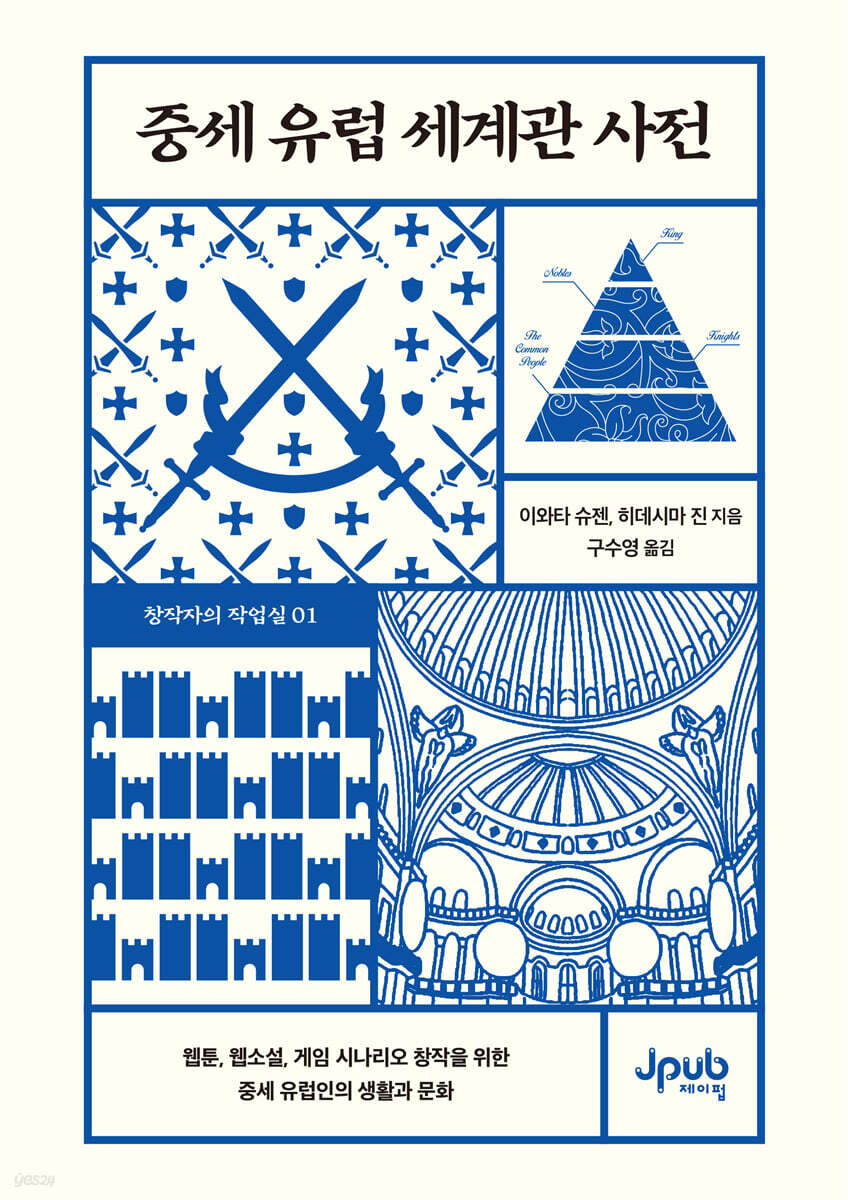 |
Description
Book Introduction
A medieval European history book that helps creators take their first steps.
Have you ever opened a history book to create a compelling worldview? Perhaps you've been weary of navigating the vast ocean of history, content with merely "acquiring knowledge."
Especially if you are a budding creator who is just starting out with storytelling, you may lack the ability to select the information you need.
This book briefly summarizes the overall culture of medieval Europe, using information as a reference when establishing a worldview.
Let's take a look at the medieval history introduced in this book, page by page, and effectively select and select the settings necessary for your own work.
Have you ever opened a history book to create a compelling worldview? Perhaps you've been weary of navigating the vast ocean of history, content with merely "acquiring knowledge."
Especially if you are a budding creator who is just starting out with storytelling, you may lack the ability to select the information you need.
This book briefly summarizes the overall culture of medieval Europe, using information as a reference when establishing a worldview.
Let's take a look at the medieval history introduced in this book, page by page, and effectively select and select the settings necessary for your own work.
- You can preview some of the book's contents.
Preview
index
Starting with 8
10 Basic Knowledge About Medieval Europe to Help You Create
12 Things to Know About the Feudal System When Creating a Medieval Worldview
Understanding the forms of government and power structures enhances the quality of your story. 14
Structure of this book 16
PART 1 The Lives of the Powerful
① People in the Palace: Who Lived in the Palace? 18
② Local power holder: The lord is like a king in the area under his jurisdiction 22
③ The Life of a Lord: 24 Lords Who Lived an Elegant Life Drinking Wine from Morning
④ The Lady and Young-ae: There were times when the wife went to battle in her husband's stead. 28
⑤ Knight: Are knights nobles or commoners? 30 Work and Roles
⑥ The Pope: Is the Pope an absolute ruler? 34 Hierarchical Clerical Systems
⑦ Bishops and Archbishops: Bishops who had power similar to that of nobles 38
⑧ Abbot: The leader of the monastery! Did he lead a strict life? 40
⑨ The Life of a Clergyman: Dietary Lifestyles Vary by Social Status 42
⑩ Religious Knights: A group of knights with great power × religious people 44
⑪ Hanseatic League: A merchant organization with a strong voice based on enormous economic power 46
Column 1: Love Beyond Status: Was Marriage Between a Knight and a Royal Family Permitted? 48
PART 2 The Life of Ordinary People
① City Life: The Place and Structure of Urban Development 50
② City food: 54 merchants working in the city, such as butchers, bakers, and taverns
③ Bathing: It is common to bathe in the morning 58
④ Hygiene: Excrement in the Garden?! 60 Not-So-Glamorous Realities of the City
⑤ Entertainment: Adults gamble, children play with insects 62
⑥ Market: In an era before supermarkets, markets were a hot place.
⑦ Guild: A pyramid hierarchy that existed in the world of artisans.
⑧ Militia and Police: It's Not Just Knights Who Fight! 70 Guards Protecting the City
⑨ Executioner: A person who carries out the judgment of the law, but is hated on the streets. 72
⑩ Others: The Emergence of Poverty-Based Business 74
⑪ Rural Life: The Growing Gap in Farmer Classes Due to Land Ownership 80
⑫ Festivals: The Foundation of European Culture! 82 Festivals Born One After Another
⑬ Agricultural products: Crops produced in the Middle Ages, such as wheat, beans, and fruits 84
⑭ Rural food: The bread of rural areas is mainly black, hard rye bread. 86
⑮ Rural tavern: A rural tavern that also served as an inn 88
? Rural Work: People Living and Working in Rural Areas 90
Column 2: Did the Werewolf Who Shook the World Really Exist? 94
PART 3 Rules and Concepts of Medieval European Society
① Time: The concept of time is sufficient for day and night 96
② Legal System: Medieval Trials, Where Judges Change Depending on the Suspect 98
③ Monetary economy: Medieval money was not paper, but 100 silver coins.
④ Road Maintenance: Difficult to Walk? 102 Unmaintained Medieval Roads
⑤ Ajil: A refuge for sinners to escape to 104
⑥ Marriage: In aristocratic society, men can marry at the age of 14, and women at the age of 12. 106
⑦ Taxation: Even in the Middle Ages, there were resident taxes and inheritance taxes. 108
⑧ Punishment: Various punishments for punishing criminals 110
⑨ Information Transmission: In the era before smartphones, information was primarily transmitted orally. 112
⑩ Medicine: Medieval medicine that treated illness through divination or magic 114
⑪ Disease: The Plague That Terrorized Medieval Europe 116
⑫ Disasters: Are Natural Disasters God's Wrath? 118
⑬ Religious views: The basic religious views of medieval people 120
⑭ Life and Death: Purgatory, the Gap Between Heaven and Hell 122
Column 3: Animals Were Also Judged in Trial 124
PART 4 Facilities and Housing in Medieval Europe
① Castle: A castle that served as the home and workplace of a king or lord. 126
② Church: Christian architectural styles that change with the times 128
③ Monastery: The residence of monks. Point 130 in the inner courtyard corridor.
④ City facilities: A city surrounded by walls to protect against enemy attacks 132
⑤ Urban housing: The houses where citizens lived were mostly three stories or higher. 134
⑥ Rural facilities: There was a church at the center of the village. 136
⑦ Rural housing: Simple houses made of straw or rope 138
⑧ Inns: A wide variety of accommodations, from budget to luxury. 140
Column 4 From Feudal Society to Sovereign State 142
PART 5: Create a story set in medieval Europe
Creative FILE ① The First Step to Creative Activity! Analyzing "Writable" Genres 144
Creative FILE ② Create a core plot and make the starting and ending points clear. 146
Creative FILE ③ A Deep Understanding of Historical Facts Can Create Vivid Fiction 148
Creative FILE ④ Let's create a story about commoners, not royalty or knights. 150
Creative FILE ⑤ In medieval works, pay attention to the relationship between story and religion. 152
Creative File ⑥ Let's Appeal to the Character's Charm with Classic Patterns 154
Creative File ⑦ Using honorifics in dialogue makes it easy to express relationships 156
Medieval Europe Chronology 158: Useful to Know
10 Basic Knowledge About Medieval Europe to Help You Create
12 Things to Know About the Feudal System When Creating a Medieval Worldview
Understanding the forms of government and power structures enhances the quality of your story. 14
Structure of this book 16
PART 1 The Lives of the Powerful
① People in the Palace: Who Lived in the Palace? 18
② Local power holder: The lord is like a king in the area under his jurisdiction 22
③ The Life of a Lord: 24 Lords Who Lived an Elegant Life Drinking Wine from Morning
④ The Lady and Young-ae: There were times when the wife went to battle in her husband's stead. 28
⑤ Knight: Are knights nobles or commoners? 30 Work and Roles
⑥ The Pope: Is the Pope an absolute ruler? 34 Hierarchical Clerical Systems
⑦ Bishops and Archbishops: Bishops who had power similar to that of nobles 38
⑧ Abbot: The leader of the monastery! Did he lead a strict life? 40
⑨ The Life of a Clergyman: Dietary Lifestyles Vary by Social Status 42
⑩ Religious Knights: A group of knights with great power × religious people 44
⑪ Hanseatic League: A merchant organization with a strong voice based on enormous economic power 46
Column 1: Love Beyond Status: Was Marriage Between a Knight and a Royal Family Permitted? 48
PART 2 The Life of Ordinary People
① City Life: The Place and Structure of Urban Development 50
② City food: 54 merchants working in the city, such as butchers, bakers, and taverns
③ Bathing: It is common to bathe in the morning 58
④ Hygiene: Excrement in the Garden?! 60 Not-So-Glamorous Realities of the City
⑤ Entertainment: Adults gamble, children play with insects 62
⑥ Market: In an era before supermarkets, markets were a hot place.
⑦ Guild: A pyramid hierarchy that existed in the world of artisans.
⑧ Militia and Police: It's Not Just Knights Who Fight! 70 Guards Protecting the City
⑨ Executioner: A person who carries out the judgment of the law, but is hated on the streets. 72
⑩ Others: The Emergence of Poverty-Based Business 74
⑪ Rural Life: The Growing Gap in Farmer Classes Due to Land Ownership 80
⑫ Festivals: The Foundation of European Culture! 82 Festivals Born One After Another
⑬ Agricultural products: Crops produced in the Middle Ages, such as wheat, beans, and fruits 84
⑭ Rural food: The bread of rural areas is mainly black, hard rye bread. 86
⑮ Rural tavern: A rural tavern that also served as an inn 88
? Rural Work: People Living and Working in Rural Areas 90
Column 2: Did the Werewolf Who Shook the World Really Exist? 94
PART 3 Rules and Concepts of Medieval European Society
① Time: The concept of time is sufficient for day and night 96
② Legal System: Medieval Trials, Where Judges Change Depending on the Suspect 98
③ Monetary economy: Medieval money was not paper, but 100 silver coins.
④ Road Maintenance: Difficult to Walk? 102 Unmaintained Medieval Roads
⑤ Ajil: A refuge for sinners to escape to 104
⑥ Marriage: In aristocratic society, men can marry at the age of 14, and women at the age of 12. 106
⑦ Taxation: Even in the Middle Ages, there were resident taxes and inheritance taxes. 108
⑧ Punishment: Various punishments for punishing criminals 110
⑨ Information Transmission: In the era before smartphones, information was primarily transmitted orally. 112
⑩ Medicine: Medieval medicine that treated illness through divination or magic 114
⑪ Disease: The Plague That Terrorized Medieval Europe 116
⑫ Disasters: Are Natural Disasters God's Wrath? 118
⑬ Religious views: The basic religious views of medieval people 120
⑭ Life and Death: Purgatory, the Gap Between Heaven and Hell 122
Column 3: Animals Were Also Judged in Trial 124
PART 4 Facilities and Housing in Medieval Europe
① Castle: A castle that served as the home and workplace of a king or lord. 126
② Church: Christian architectural styles that change with the times 128
③ Monastery: The residence of monks. Point 130 in the inner courtyard corridor.
④ City facilities: A city surrounded by walls to protect against enemy attacks 132
⑤ Urban housing: The houses where citizens lived were mostly three stories or higher. 134
⑥ Rural facilities: There was a church at the center of the village. 136
⑦ Rural housing: Simple houses made of straw or rope 138
⑧ Inns: A wide variety of accommodations, from budget to luxury. 140
Column 4 From Feudal Society to Sovereign State 142
PART 5: Create a story set in medieval Europe
Creative FILE ① The First Step to Creative Activity! Analyzing "Writable" Genres 144
Creative FILE ② Create a core plot and make the starting and ending points clear. 146
Creative FILE ③ A Deep Understanding of Historical Facts Can Create Vivid Fiction 148
Creative FILE ④ Let's create a story about commoners, not royalty or knights. 150
Creative FILE ⑤ In medieval works, pay attention to the relationship between story and religion. 152
Creative File ⑥ Let's Appeal to the Character's Charm with Classic Patterns 154
Creative File ⑦ Using honorifics in dialogue makes it easy to express relationships 156
Medieval Europe Chronology 158: Useful to Know
Detailed image

Publisher's Review
A table of contents designed to reflect the worldview of a novice writer.
When creating novels, webtoons, movie scripts, and other works, professional writers may have ample time to borrow a ton of history books from the library or watch related documentaries and movies.
However, if you are a novice writer who is just starting to get interested in world-building or lacks the know-how to gather background information, this task can feel daunting.
The biggest advantage of this book, which is different from ordinary history books, is that it has a table of contents solely for setting up the world view, making it easy for aspiring creators to refer to.
For example, Chapter 1 introduces the 'life of the powerful', while Chapter 2 introduces the contrasting 'life of ordinary people'.
If you're used to character-centric creation, the basic settings introduced in Chapters 1 and 2 will be helpful.
Let's use our imagination based on historical facts.
Chapter 3, 'Rules and Concepts of Medieval European Society' and Chapter 4, 'Facilities and Housing in Medieval Europe', deal with various social concepts and building structures that are easily overlooked in setting up a worldview.
For example, suppose a very ordinary farmer discovers the sinister plan of a nobleman with a reputation for goodness.
After much deliberation, I decided to go to my neighbors for a secret meeting.
But wouldn't it sound a bit too modern if you said to your neighbor, "Let's meet quietly in the backyard of the church tomorrow at 9:00 PM sharp?" According to this book, for farmers living in medieval Europe, time flowed around farming, so the concepts of "day" and "night" were sufficient.
So, it would be more vivid to say, 'Let's meet in the backyard of the church when the bell rings on a dark night when the sun has completely disappeared.'
These basic social cultures may seem trivial at times, but when utilized properly, they can create a more realistic worldview.
Create realistic lies with tips from storytelling experts.
The final chapter, Chapter 5, provides specific advice on how to apply the knowledge from Chapters 1 through 4 to your own creative work.
The author of Chapter 5 is a story expert who has created various creative works including novels, and has collected writing know-how that can be helpful to novice writers.
First, the aspiring writer finds a genre he or she can write in, and then provides his or her know-how on how to determine the story's outline and theme.
It also introduces a method of structuring the ordeals the protagonist will face through a plot structure that allows one to predict the ending of the story.
Let's now create a "realistic lie" by understanding the tips in Chapter 5 and utilizing the book's core message that a deep understanding of historical facts can create vivid fiction.
When creating novels, webtoons, movie scripts, and other works, professional writers may have ample time to borrow a ton of history books from the library or watch related documentaries and movies.
However, if you are a novice writer who is just starting to get interested in world-building or lacks the know-how to gather background information, this task can feel daunting.
The biggest advantage of this book, which is different from ordinary history books, is that it has a table of contents solely for setting up the world view, making it easy for aspiring creators to refer to.
For example, Chapter 1 introduces the 'life of the powerful', while Chapter 2 introduces the contrasting 'life of ordinary people'.
If you're used to character-centric creation, the basic settings introduced in Chapters 1 and 2 will be helpful.
Let's use our imagination based on historical facts.
Chapter 3, 'Rules and Concepts of Medieval European Society' and Chapter 4, 'Facilities and Housing in Medieval Europe', deal with various social concepts and building structures that are easily overlooked in setting up a worldview.
For example, suppose a very ordinary farmer discovers the sinister plan of a nobleman with a reputation for goodness.
After much deliberation, I decided to go to my neighbors for a secret meeting.
But wouldn't it sound a bit too modern if you said to your neighbor, "Let's meet quietly in the backyard of the church tomorrow at 9:00 PM sharp?" According to this book, for farmers living in medieval Europe, time flowed around farming, so the concepts of "day" and "night" were sufficient.
So, it would be more vivid to say, 'Let's meet in the backyard of the church when the bell rings on a dark night when the sun has completely disappeared.'
These basic social cultures may seem trivial at times, but when utilized properly, they can create a more realistic worldview.
Create realistic lies with tips from storytelling experts.
The final chapter, Chapter 5, provides specific advice on how to apply the knowledge from Chapters 1 through 4 to your own creative work.
The author of Chapter 5 is a story expert who has created various creative works including novels, and has collected writing know-how that can be helpful to novice writers.
First, the aspiring writer finds a genre he or she can write in, and then provides his or her know-how on how to determine the story's outline and theme.
It also introduces a method of structuring the ordeals the protagonist will face through a plot structure that allows one to predict the ending of the story.
Let's now create a "realistic lie" by understanding the tips in Chapter 5 and utilizing the book's core message that a deep understanding of historical facts can create vivid fiction.
GOODS SPECIFICS
- Date of issue: October 14, 2024
- Page count, weight, size: 160 pages | 294g | 152*215*10mm
- ISBN13: 9791193926567
You may also like
카테고리
korean


korean

![GQ KOREA Mark (Monthly): December [2025]](http://librairie.coreenne.fr/cdn/shop/files/8ef265dbbfbf186523ed75ba7319009d.jpg?v=1765340328&width=3840)


