

Useful Korean History
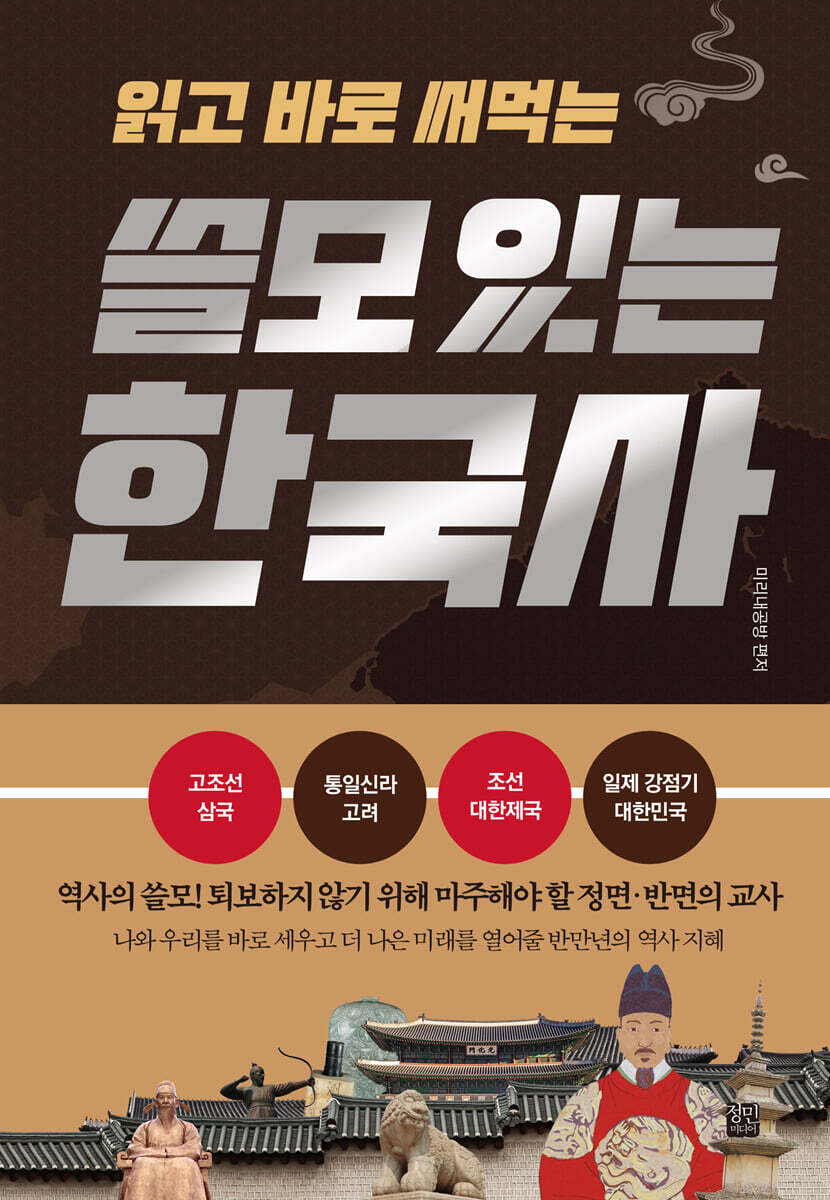 |
Description
Book Introduction
Our Reason for Existence: Looking Back on Half a Millennium of National History
Korean history, organized in one volume and ready to use
The Korean Peninsula's long history of half a millennium is the evolutionary history of our people, accumulated through the DNA of the Korean people.
This book clearly describes our history, which continues from Gojoseon, the Three Kingdoms of Silla, Goguryeo, and Baekje, through Unified Silla and Balhae, Goryeo and Joseon, and the Japanese colonial period to the Republic of Korea, in nine chapters, making it a 'Korean history that can be organized and used immediately in one volume.'
Let's take a diachronic look at the light and dark sides of our history with this one book and strive to realize a better present and future.
Korean history, organized in one volume and ready to use
The Korean Peninsula's long history of half a millennium is the evolutionary history of our people, accumulated through the DNA of the Korean people.
This book clearly describes our history, which continues from Gojoseon, the Three Kingdoms of Silla, Goguryeo, and Baekje, through Unified Silla and Balhae, Goryeo and Joseon, and the Japanese colonial period to the Republic of Korea, in nine chapters, making it a 'Korean history that can be organized and used immediately in one volume.'
Let's take a diachronic look at the light and dark sides of our history with this one book and strive to realize a better present and future.
- You can preview some of the book's contents.
Preview
index
Korean History Plot
Gojoseon | Three Kingdoms | Unified Silla | Goryeo | Joseon | Korean Empire | Japanese Colonial Period | Birth of the Republic of Korea
The origin of our people
· Ancient times
Set in East Asia | The Korean Peninsula is 600 million years old | The Paleolithic Age on the Korean Peninsula | The Emergence of Humanity | Making and Using Extensions | The Neolithic Age on the Korean Peninsula | New Artifacts | The Ancestors of Our Nation
· Gojoseon
The Founding of Gojoseon | The Birth of Dangun | The World and Content of Mythology | The Summary of the Dangun Myth in Samguk Yusa | Society and Culture | Wiman Joseon | The Four Commanderies of Han | Tribal States
Development of the Three Kingdoms
· Goguryeo
The Founding and Heyday of the Nation | Prince Yuri and the Hwangjo Family | Princess Nakrang and Prince Hodong | Overcoming Crisis | The Power of King Gwanggaeto | The Spread of Buddhism | The Battle of Salsu and Eulji Mundeok | Emperor Taizong of Tang and Yang Manchun | Yeon Gaesomun and His Sons | Politics and Revival Movements | Culture and Arts
Baekje
The Ten Emperors and Baekje | The Years of Prosperity | King Uija's Counterattack | Gyebaek, the Hero of Hwangsanbeol | The Legend of Nakhwaam | King Muryeong's Tomb and Sabi Fortress | Revival Movement | Trade with Foreign Countries | Architecture and Art
Silla
The Myth of Najeong | National Title and King | Seonggol and Jingol | Historical Distinctions | Territorial Expansion | Hwarangdo and the Five Secular Precepts | Queen Seondeok's Wisdom | Baekgyeol's Mill Song | The Dream of Unifying the Three Kingdoms | Protect the Royal Authority | The Aspiration of National Buddhism | Brilliant Cultural Heritage | The Emergence of Choi Chi-won
Later Three Kingdoms and Balhae
· Later Three Kingdoms
Yang Gil's Uprising | The Rise of Gyeon Hwon | Gung Ye's Forces
· Balhae
The Rise of Daejoyeong | The Spirit of Goguryeo | Amazing Power | Dazzling Development | The East Sea's Prosperity | Diplomacy and Scholarship
consideration
· Descendants of the Dragon
The Rise of Wang Geon | The Eve of the Founding | Unification of the Later Three Kingdoms | Buddhism as the State Religion | Confrontation with the Khitan | Gang Gam-chan's Battle of Gwiju | Yun Gwan and the Conquest of the Jurchen
· The crisis of rebellion
Yi Ja-gyeom's Rebellion | Myocheong's Theory of Moving the Capital to the West | King Uijong Enjoying a Game | The Quarrel of the Military Officials | Jeong Jung-bu's Central Politics | The Peasant and Slave Rebellion | The Manjeok Rebellion
· Confrontation with Mongolia
Seven Rebellions | The Military Regime's Relocation of the Capital to Ganghwa | The Power of the Tripitaka Koreana | The Sambyeolcho Uprising | Bae Jung-son's Fight against the Mongols | A Mongol Princess as Queen | The Conquest of Tsushima
· Dizziness
The Greed of the Aristocrats | The Conflict Between Choi Young and Yi Seong-gye | The Japanese Pirates and the Red Turban Rebels | The Treacherous Shin Don | The Imperial Princess and King Gongmin | King Gongmin's Tragic End | Jeong Mong-ju's Devotion | The Loyalty of the 72 Sages of Dumundong
· Korea's reputation
Korea's rise to national prestige | The wonders of governance | The flourishing of culture | The mystery of Goryeo celadon | Life and holidays
shipbuilding
· New dynasty
King Taejo Yi Seong-gye | Change of national title and relocation of the capital to Hanyang | Muhak, who ruled King Taejo | Hamheung Chasa
· 500 years of new history
Characteristics of the Times | Prince's Rebellion | The Four Great Confucian Schools of Foreign Affairs | King Sejong's Achievements | The Affliction of King Danjong | The Tyranny of the Sarim | Fierce Factional Strife | The Blood of Geumsam | The Righteous Thief, Im Kkeokjeong
· Imjin War
The Tragic Seven Years' War | The Greatest Crisis | Admiral Yi Sun-sin, the Hero Who Saved the Nation | The Three Great Battles of the Imjin War | Tremendous Losses
· Age of Chaos
A king driven out by his subjects | Fierce power politics | Crown Prince Sado | Hong Gyeong-rae's call for a new world | Hong Gyeong-rae's rebellion and Kim Sat-gat | Daewongun, the patriarch of Onggojip | The newly built Gyeongbokgung Palace | The monument to the refusal of trade | Threats from the great powers | The Gapsin Coup that ended in three days | A haunted house in the palace | The Donghak Peasant Revolution | The Eulmi Incident and the flight to the Russian Legation | The tragic death of Empress Myeongseong
Korean Empire
· The foundation of a democratic nation
New Reforms | The Establishment of an Empire | The Hague Envoy | The Shackles of Colonial Rule
· Modernization work
Gwangmu Reform | The Furious Shortening Order | Ingenious Ideas | The Lamentable Eulsa Treaty
· New educational craze
A Breeze of National Education | Literacy Movement | National Enlightenment Movement | Ban on the Use of the Korean Language
Japanese colonial period
· Harsh ruling rule
Lost Years | The Independence Movement Spreads | Anti-Japanese Movements Abroad | The Explosion of the March 1st Independence Movement | Police Turn a Blind Eye | The Provisional Government of the Republic of Korea
· Indignation over national division
Eradicating the National Spirit | Names of Shame | Military Rule | Tragedy of Japanese Names | Korean Language Society Incident | Fierce Armed Struggle | Battle of Cheongsanri | Joint ROK-China Operation | Ignoring Demands for Voting Rights | Forced Conscription and Comfort Women
· Exploitation policy
Confiscation of land and property | Harsh taxes | Poor health and sanitation
· Age of Dawn
Yalta Conference | Moscow Tripartite Conference | Japan's Surrender Broadcast | The Joy of Liberation | The Bolt of Division | The Shackles of Trusteeship
Birth of the Republic of Korea
· Establishment of the government of the Republic of Korea
Opening of the Constitutional Assembly | Inter-Korean Conflict and the Cold War | The Bloody Korean War | The Armistice Agreement | The Bitter Military Demarcation Line | 10 Million Separated Families
· Growth of South Korea
National Name and Meaning | North Korea: A Communist Dictatorship | April 19 Student Revolution | May 16 Military Coup | The Passion for Industrialization
· Past governments
From the First Republic to the Moon Jae-in administration
supplement
· Korean history chronology
Gojoseon | Three Kingdoms | Unified Silla | Goryeo | Joseon | Korean Empire | Japanese Colonial Period | Birth of the Republic of Korea
The origin of our people
· Ancient times
Set in East Asia | The Korean Peninsula is 600 million years old | The Paleolithic Age on the Korean Peninsula | The Emergence of Humanity | Making and Using Extensions | The Neolithic Age on the Korean Peninsula | New Artifacts | The Ancestors of Our Nation
· Gojoseon
The Founding of Gojoseon | The Birth of Dangun | The World and Content of Mythology | The Summary of the Dangun Myth in Samguk Yusa | Society and Culture | Wiman Joseon | The Four Commanderies of Han | Tribal States
Development of the Three Kingdoms
· Goguryeo
The Founding and Heyday of the Nation | Prince Yuri and the Hwangjo Family | Princess Nakrang and Prince Hodong | Overcoming Crisis | The Power of King Gwanggaeto | The Spread of Buddhism | The Battle of Salsu and Eulji Mundeok | Emperor Taizong of Tang and Yang Manchun | Yeon Gaesomun and His Sons | Politics and Revival Movements | Culture and Arts
Baekje
The Ten Emperors and Baekje | The Years of Prosperity | King Uija's Counterattack | Gyebaek, the Hero of Hwangsanbeol | The Legend of Nakhwaam | King Muryeong's Tomb and Sabi Fortress | Revival Movement | Trade with Foreign Countries | Architecture and Art
Silla
The Myth of Najeong | National Title and King | Seonggol and Jingol | Historical Distinctions | Territorial Expansion | Hwarangdo and the Five Secular Precepts | Queen Seondeok's Wisdom | Baekgyeol's Mill Song | The Dream of Unifying the Three Kingdoms | Protect the Royal Authority | The Aspiration of National Buddhism | Brilliant Cultural Heritage | The Emergence of Choi Chi-won
Later Three Kingdoms and Balhae
· Later Three Kingdoms
Yang Gil's Uprising | The Rise of Gyeon Hwon | Gung Ye's Forces
· Balhae
The Rise of Daejoyeong | The Spirit of Goguryeo | Amazing Power | Dazzling Development | The East Sea's Prosperity | Diplomacy and Scholarship
consideration
· Descendants of the Dragon
The Rise of Wang Geon | The Eve of the Founding | Unification of the Later Three Kingdoms | Buddhism as the State Religion | Confrontation with the Khitan | Gang Gam-chan's Battle of Gwiju | Yun Gwan and the Conquest of the Jurchen
· The crisis of rebellion
Yi Ja-gyeom's Rebellion | Myocheong's Theory of Moving the Capital to the West | King Uijong Enjoying a Game | The Quarrel of the Military Officials | Jeong Jung-bu's Central Politics | The Peasant and Slave Rebellion | The Manjeok Rebellion
· Confrontation with Mongolia
Seven Rebellions | The Military Regime's Relocation of the Capital to Ganghwa | The Power of the Tripitaka Koreana | The Sambyeolcho Uprising | Bae Jung-son's Fight against the Mongols | A Mongol Princess as Queen | The Conquest of Tsushima
· Dizziness
The Greed of the Aristocrats | The Conflict Between Choi Young and Yi Seong-gye | The Japanese Pirates and the Red Turban Rebels | The Treacherous Shin Don | The Imperial Princess and King Gongmin | King Gongmin's Tragic End | Jeong Mong-ju's Devotion | The Loyalty of the 72 Sages of Dumundong
· Korea's reputation
Korea's rise to national prestige | The wonders of governance | The flourishing of culture | The mystery of Goryeo celadon | Life and holidays
shipbuilding
· New dynasty
King Taejo Yi Seong-gye | Change of national title and relocation of the capital to Hanyang | Muhak, who ruled King Taejo | Hamheung Chasa
· 500 years of new history
Characteristics of the Times | Prince's Rebellion | The Four Great Confucian Schools of Foreign Affairs | King Sejong's Achievements | The Affliction of King Danjong | The Tyranny of the Sarim | Fierce Factional Strife | The Blood of Geumsam | The Righteous Thief, Im Kkeokjeong
· Imjin War
The Tragic Seven Years' War | The Greatest Crisis | Admiral Yi Sun-sin, the Hero Who Saved the Nation | The Three Great Battles of the Imjin War | Tremendous Losses
· Age of Chaos
A king driven out by his subjects | Fierce power politics | Crown Prince Sado | Hong Gyeong-rae's call for a new world | Hong Gyeong-rae's rebellion and Kim Sat-gat | Daewongun, the patriarch of Onggojip | The newly built Gyeongbokgung Palace | The monument to the refusal of trade | Threats from the great powers | The Gapsin Coup that ended in three days | A haunted house in the palace | The Donghak Peasant Revolution | The Eulmi Incident and the flight to the Russian Legation | The tragic death of Empress Myeongseong
Korean Empire
· The foundation of a democratic nation
New Reforms | The Establishment of an Empire | The Hague Envoy | The Shackles of Colonial Rule
· Modernization work
Gwangmu Reform | The Furious Shortening Order | Ingenious Ideas | The Lamentable Eulsa Treaty
· New educational craze
A Breeze of National Education | Literacy Movement | National Enlightenment Movement | Ban on the Use of the Korean Language
Japanese colonial period
· Harsh ruling rule
Lost Years | The Independence Movement Spreads | Anti-Japanese Movements Abroad | The Explosion of the March 1st Independence Movement | Police Turn a Blind Eye | The Provisional Government of the Republic of Korea
· Indignation over national division
Eradicating the National Spirit | Names of Shame | Military Rule | Tragedy of Japanese Names | Korean Language Society Incident | Fierce Armed Struggle | Battle of Cheongsanri | Joint ROK-China Operation | Ignoring Demands for Voting Rights | Forced Conscription and Comfort Women
· Exploitation policy
Confiscation of land and property | Harsh taxes | Poor health and sanitation
· Age of Dawn
Yalta Conference | Moscow Tripartite Conference | Japan's Surrender Broadcast | The Joy of Liberation | The Bolt of Division | The Shackles of Trusteeship
Birth of the Republic of Korea
· Establishment of the government of the Republic of Korea
Opening of the Constitutional Assembly | Inter-Korean Conflict and the Cold War | The Bloody Korean War | The Armistice Agreement | The Bitter Military Demarcation Line | 10 Million Separated Families
· Growth of South Korea
National Name and Meaning | North Korea: A Communist Dictatorship | April 19 Student Revolution | May 16 Military Coup | The Passion for Industrialization
· Past governments
From the First Republic to the Moon Jae-in administration
supplement
· Korean history chronology
Detailed image

Into the book
It is generally believed that the origins of our people also originated in the Neolithic Age.
This was a time when agriculture began and a clan society was formed based on blood ties.
Then, as we entered the Bronze Age, powerful and wealthy chieftains emerged, and they governed their surroundings and led tribal society.
Here, a ruling class and power were formed, and as society changed into a competitive society, clans gathered and formed tribes, leading to communal living.
At this time, dominant military leaders and military leaders with strong leadership merged other tribal states to form the initial state.
Our country's first nation, Dangun Joseon, was founded by Dangun Wanggeom in 2333 BC.
Hwanung, the son of God, came down to Shinsi at the foot of Mount Baekdu and gave birth to Dangun, who founded a nation.
This country gradually grew and developed, ruling over the entire Manchuria region.
---From "Gojoseon"
The three kingdoms of Goguryeo, Baekje, and Silla expanded their power as they established themselves in the Korean Peninsula and Manchuria.
Goguryeo was a country founded by Jumong in 37 BC at Jolbon in the Dongga River basin, a tributary of the Amnok River. Baekje was founded in 18 BC by Jumong's son Onjo, who moved south and established his capital at Wiryeseong near the Han River.
Silla was founded in 57 BC by Park Hyeokgeose in Saroguk in the Gyeongju region, before Goguryeo and Baekje, and was relatively late to establish a national system among the three kingdoms.
During this period, Gaya was growing in the Nakdong River basin next to Silla.
---From "Three Kingdoms"
Silla was established in the southeastern part of the Korean Peninsula and grew late among the three kingdoms.
In the early 6th century, it was established as a centralized state, and during the reign of the 22nd king, Jijeung, the national title was changed from Saroguk to Silla, and the title of the king was also changed from Maripgan to Wang.
During the reign of the 23rd King Beopheung, the bone rank system was established for the first time, laying the foundation for the country.
From then on, the country's power grew and it took the final lead in the competition between the three kingdoms.
Silla formed an alliance with the Tang Dynasty, destroyed Baekje, then overthrew Goguryeo and drove the Tang Dynasty out of the Korean Peninsula, completing the unification of the three kingdoms and establishing a unified nation that ruled the Korean Peninsula.
---From "Unified Silla"
Wang Geon unified the Later Three Kingdoms and laid the foundation for the nation.
Goryeo established Buddhism as its state religion, laying the foundation for innovation, and adopted Confucianism as its political guiding ideology, laying the foundation for a transition from a simple dynasty to a medieval society.
Through these efforts, the chaos that followed the Later Three Kingdoms period was resolved, national governance and social stability were established, and order was restored.
By introducing the past system, they recruited talented people and established a centralized state system to foster a new ruling power.
This gave rise to a new, emerging class of scholars, who solidified their position as the leading figures of Goryeo.
---From "Goryeo"
Joseon was a country founded by Yi Seong-gye, who seized power by turning back the troops who had advanced north to conquer Liaodong at Wihwado Island.
King Taejo Lee Seong-gye established the name of the country as Joseon, made Hanyang the capital, and implemented reformist policies that changed the national system from that of Goryeo.
He rejected Buddhism, embraced Confucianism, and established a ruling system based on Confucian political ideology.
Thus, Joseon established a system of government as a centralized state centered on royal authority.
In the capital city of Hanyang, he established Sungkyunkwan University and the Four Schools, secondary educational institutions, and in the provinces, he established Hyanggyo, middle schools, to educate students.
A civil service examination was conducted on people who were educated in this way to select talented people and appoint them to government positions.
---From "Joseon"
The Korean Empire was a country that existed from October 12, 1897, the 34th year of the reign of King Gojong, the 26th king of the late Joseon Dynasty, to August 29, 1910.
The Korean Empire, which began as a modern nation that heralded the beginning of the Republic of Korea, already strongly declared its autonomy and independence in its national name.
On February 11, 1896, after Japan assassinated Empress Myeongseong, Gojong fled from Gyeongbokgung Palace to the Russian embassy, the so-called "Agwanpacheon."
The following year, in 1897, Gojong returned to Deoksugung Palace and established and proclaimed the Korean Empire.
From that day on, the name Joseon was not officially used.
Therefore, with the establishment of the Korean Empire, Joseon disappeared into history.
---From "The Korean Empire"
The Korean Empire, established as an independent modern nation, was forcibly annexed by Japan in 1910, losing its status and our country was reduced to a Japanese colony without sovereignty.
Japan ruled our country as a colony and oppressed its people by exercising military power and carrying out arbitrary politics.
As a result, our country lost all governing power and suffered as a colony.
---From "The Japanese Colonial Period"
South of the 38th parallel, a general election was held on May 10, 1948, a Constituent Assembly was opened, the Constitution of the Republic of Korea was established, and on July 1, the name of the country was decided as the Republic of Korea. On July 20, Syngman Rhee was elected as the first President of the Republic of Korea, and Lee Si-young was elected as Vice President. The presidential inauguration ceremony was held on the 24th.
And on August 15th, Liberation Day, the founding of the Republic of Korea, a free democratic nation, was proclaimed to the world and the government was established.
North of the 38th parallel, the Democratic People's Republic of Korea, a communist regime centered around Kim Il-sung, was established in September 1948, and the Korean Peninsula became divided into South and North Korea, with the 38th parallel as the dividing line.
This was a time when agriculture began and a clan society was formed based on blood ties.
Then, as we entered the Bronze Age, powerful and wealthy chieftains emerged, and they governed their surroundings and led tribal society.
Here, a ruling class and power were formed, and as society changed into a competitive society, clans gathered and formed tribes, leading to communal living.
At this time, dominant military leaders and military leaders with strong leadership merged other tribal states to form the initial state.
Our country's first nation, Dangun Joseon, was founded by Dangun Wanggeom in 2333 BC.
Hwanung, the son of God, came down to Shinsi at the foot of Mount Baekdu and gave birth to Dangun, who founded a nation.
This country gradually grew and developed, ruling over the entire Manchuria region.
---From "Gojoseon"
The three kingdoms of Goguryeo, Baekje, and Silla expanded their power as they established themselves in the Korean Peninsula and Manchuria.
Goguryeo was a country founded by Jumong in 37 BC at Jolbon in the Dongga River basin, a tributary of the Amnok River. Baekje was founded in 18 BC by Jumong's son Onjo, who moved south and established his capital at Wiryeseong near the Han River.
Silla was founded in 57 BC by Park Hyeokgeose in Saroguk in the Gyeongju region, before Goguryeo and Baekje, and was relatively late to establish a national system among the three kingdoms.
During this period, Gaya was growing in the Nakdong River basin next to Silla.
---From "Three Kingdoms"
Silla was established in the southeastern part of the Korean Peninsula and grew late among the three kingdoms.
In the early 6th century, it was established as a centralized state, and during the reign of the 22nd king, Jijeung, the national title was changed from Saroguk to Silla, and the title of the king was also changed from Maripgan to Wang.
During the reign of the 23rd King Beopheung, the bone rank system was established for the first time, laying the foundation for the country.
From then on, the country's power grew and it took the final lead in the competition between the three kingdoms.
Silla formed an alliance with the Tang Dynasty, destroyed Baekje, then overthrew Goguryeo and drove the Tang Dynasty out of the Korean Peninsula, completing the unification of the three kingdoms and establishing a unified nation that ruled the Korean Peninsula.
---From "Unified Silla"
Wang Geon unified the Later Three Kingdoms and laid the foundation for the nation.
Goryeo established Buddhism as its state religion, laying the foundation for innovation, and adopted Confucianism as its political guiding ideology, laying the foundation for a transition from a simple dynasty to a medieval society.
Through these efforts, the chaos that followed the Later Three Kingdoms period was resolved, national governance and social stability were established, and order was restored.
By introducing the past system, they recruited talented people and established a centralized state system to foster a new ruling power.
This gave rise to a new, emerging class of scholars, who solidified their position as the leading figures of Goryeo.
---From "Goryeo"
Joseon was a country founded by Yi Seong-gye, who seized power by turning back the troops who had advanced north to conquer Liaodong at Wihwado Island.
King Taejo Lee Seong-gye established the name of the country as Joseon, made Hanyang the capital, and implemented reformist policies that changed the national system from that of Goryeo.
He rejected Buddhism, embraced Confucianism, and established a ruling system based on Confucian political ideology.
Thus, Joseon established a system of government as a centralized state centered on royal authority.
In the capital city of Hanyang, he established Sungkyunkwan University and the Four Schools, secondary educational institutions, and in the provinces, he established Hyanggyo, middle schools, to educate students.
A civil service examination was conducted on people who were educated in this way to select talented people and appoint them to government positions.
---From "Joseon"
The Korean Empire was a country that existed from October 12, 1897, the 34th year of the reign of King Gojong, the 26th king of the late Joseon Dynasty, to August 29, 1910.
The Korean Empire, which began as a modern nation that heralded the beginning of the Republic of Korea, already strongly declared its autonomy and independence in its national name.
On February 11, 1896, after Japan assassinated Empress Myeongseong, Gojong fled from Gyeongbokgung Palace to the Russian embassy, the so-called "Agwanpacheon."
The following year, in 1897, Gojong returned to Deoksugung Palace and established and proclaimed the Korean Empire.
From that day on, the name Joseon was not officially used.
Therefore, with the establishment of the Korean Empire, Joseon disappeared into history.
---From "The Korean Empire"
The Korean Empire, established as an independent modern nation, was forcibly annexed by Japan in 1910, losing its status and our country was reduced to a Japanese colony without sovereignty.
Japan ruled our country as a colony and oppressed its people by exercising military power and carrying out arbitrary politics.
As a result, our country lost all governing power and suffered as a colony.
---From "The Japanese Colonial Period"
South of the 38th parallel, a general election was held on May 10, 1948, a Constituent Assembly was opened, the Constitution of the Republic of Korea was established, and on July 1, the name of the country was decided as the Republic of Korea. On July 20, Syngman Rhee was elected as the first President of the Republic of Korea, and Lee Si-young was elected as Vice President. The presidential inauguration ceremony was held on the 24th.
And on August 15th, Liberation Day, the founding of the Republic of Korea, a free democratic nation, was proclaimed to the world and the government was established.
North of the 38th parallel, the Democratic People's Republic of Korea, a communist regime centered around Kim Il-sung, was established in September 1948, and the Korean Peninsula became divided into South and North Korea, with the 38th parallel as the dividing line.
---From "The Birth of the Republic of Korea"
Publisher's Review
A nation that forgets its history has no future!
Our Big History: Reading the Past and Drawing the Future
The Korean Peninsula's long history of half a millennium is the evolutionary history of our people, accumulated through the DNA of the Korean people.
Our history begins with the first ancient state, Gojoseon, founded in 2333 BC, and continues with Wiman Joseon, Nakrang, Jinbeon, Imdun, and Hyeondu, the Four Han Commanderies, and Daifang Commanderies, the Three Hans of Buyeo, Mahan, Jinhan, and Byeonhan, the Three Kingdoms of Silla, Goguryeo, and Baekje, Unified Silla and Balhae, Goryeo and Joseon, and through the modern era to the Republic of Korea.
During this time, our people have enjoyed a proud history as the most powerful nation in East Asia, commanding the Manchurian continent. We have also endured a history of humiliation as we have fallen to the invasions of great powers like Japan. We have also experienced a history of chaos due to the self-restraint among our own people.
And now, in this uncertain world, history is still being written.
In the 21st century, our Korean Peninsula, still caught between great powers, is destined to maintain stability and peace while pursuing national interests.
History is the milestone necessary to achieve that national task.
It has been said that a nation that forgets its history has no future.
When we correctly understand and reflect on the history of the past, a positive future opens up.
Let's unfold our big history, reading the past and drawing a blueprint for the future, through this book.
The Usefulness of History! The Front and Back Faces of Teachers We Must Face to Avoid Regression
Korean history, easily organized and rewritten in one volume
This book clearly describes our history, which continues from Gojoseon, the Three Kingdoms of Silla, Goguryeo, and Baekje, through Unified Silla and Balhae, Goryeo and Joseon, and the Japanese colonial period to the Republic of Korea, in nine chapters, making it a “Korean history organized and rewritten in one volume.”
Therefore, we focused on understanding the political history, social and cultural trends of each era and on clearly and interestingly understanding the cause and effect of historical events.
This book is not a Korean history book for the college entrance exam or anything like that.
This is not a rigid history textbook for students preparing for exams, but rather a three-dimensional structure that allows anyone to easily understand, organize, and apply it in their daily lives.
We visualized each piece of content by adding related images, and we made key events of each era into stories to make them more interesting and memorable.
From now on, let's take a diachronic look at the light and dark sides of our history with this one book and strive to realize a better present and future.
This book will be a front-and-back teacher who will illuminate the path.
Our Big History: Reading the Past and Drawing the Future
The Korean Peninsula's long history of half a millennium is the evolutionary history of our people, accumulated through the DNA of the Korean people.
Our history begins with the first ancient state, Gojoseon, founded in 2333 BC, and continues with Wiman Joseon, Nakrang, Jinbeon, Imdun, and Hyeondu, the Four Han Commanderies, and Daifang Commanderies, the Three Hans of Buyeo, Mahan, Jinhan, and Byeonhan, the Three Kingdoms of Silla, Goguryeo, and Baekje, Unified Silla and Balhae, Goryeo and Joseon, and through the modern era to the Republic of Korea.
During this time, our people have enjoyed a proud history as the most powerful nation in East Asia, commanding the Manchurian continent. We have also endured a history of humiliation as we have fallen to the invasions of great powers like Japan. We have also experienced a history of chaos due to the self-restraint among our own people.
And now, in this uncertain world, history is still being written.
In the 21st century, our Korean Peninsula, still caught between great powers, is destined to maintain stability and peace while pursuing national interests.
History is the milestone necessary to achieve that national task.
It has been said that a nation that forgets its history has no future.
When we correctly understand and reflect on the history of the past, a positive future opens up.
Let's unfold our big history, reading the past and drawing a blueprint for the future, through this book.
The Usefulness of History! The Front and Back Faces of Teachers We Must Face to Avoid Regression
Korean history, easily organized and rewritten in one volume
This book clearly describes our history, which continues from Gojoseon, the Three Kingdoms of Silla, Goguryeo, and Baekje, through Unified Silla and Balhae, Goryeo and Joseon, and the Japanese colonial period to the Republic of Korea, in nine chapters, making it a “Korean history organized and rewritten in one volume.”
Therefore, we focused on understanding the political history, social and cultural trends of each era and on clearly and interestingly understanding the cause and effect of historical events.
This book is not a Korean history book for the college entrance exam or anything like that.
This is not a rigid history textbook for students preparing for exams, but rather a three-dimensional structure that allows anyone to easily understand, organize, and apply it in their daily lives.
We visualized each piece of content by adding related images, and we made key events of each era into stories to make them more interesting and memorable.
From now on, let's take a diachronic look at the light and dark sides of our history with this one book and strive to realize a better present and future.
This book will be a front-and-back teacher who will illuminate the path.
GOODS SPECIFICS
- Date of issue: October 7, 2024
- Page count, weight, size: 392 pages | 686g | 152*225*24mm
- ISBN13: 9791191669770
- ISBN10: 1191669777
You may also like
카테고리
korean


korean

![GQ KOREA Mark (Monthly): December [2025]](http://librairie.coreenne.fr/cdn/shop/files/8ef265dbbfbf186523ed75ba7319009d.jpg?v=1765340328&width=3840)


