

History of the Prairies
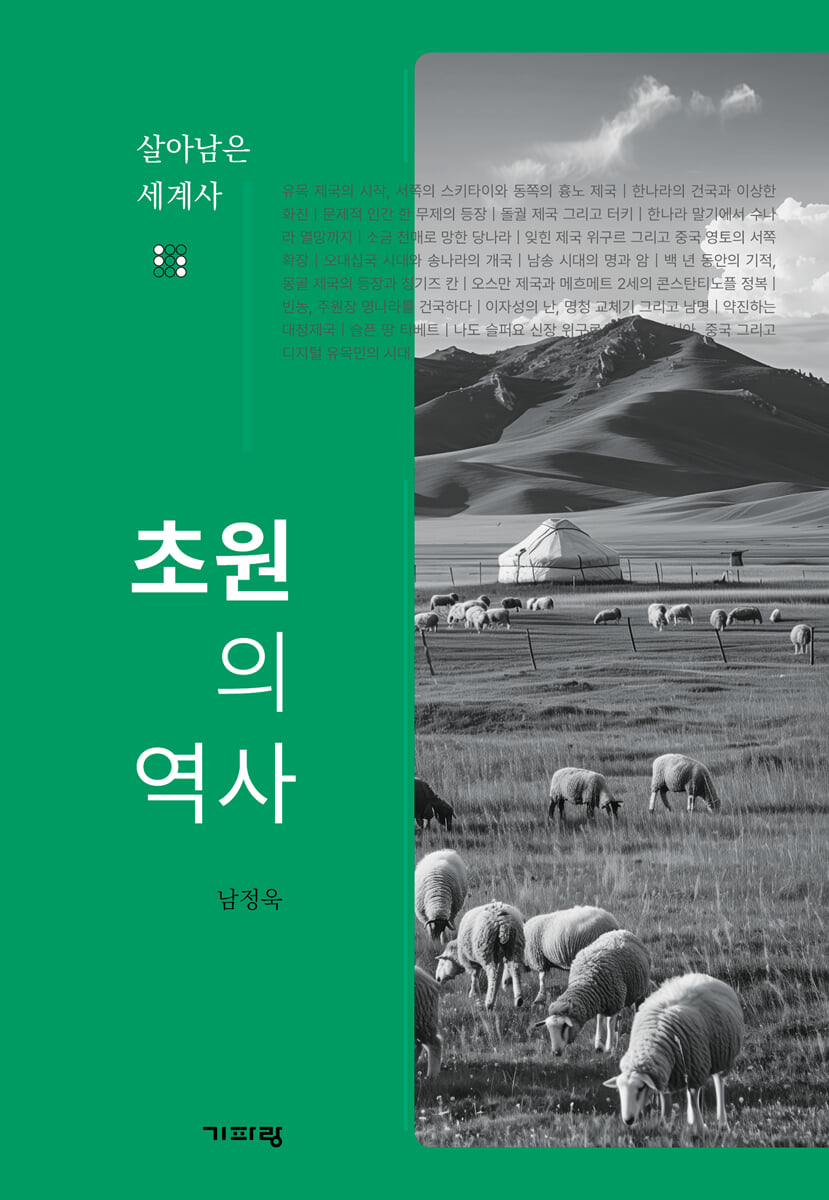 |
Description
Book Introduction
Encounter history anew.
A series of history books that even a history novice can understand in a day.
We are starting a series of history books that even people with little knowledge or interest in history can read and understand in one day.
This series is the result of the author's long-standing passion to eliminate misunderstandings and distance from history and provide opportunities to enjoy history as entertainment.
History, once considered a boring subject of memorizing dates and the order of events, has been transformed into a lifelong entertainment.
Rather than simply repeating the content of existing history books, it serves as an excellent teacher that helps readers acquire historical knowledge through a single book without relying on media sources such as YouTube, Wikipedia, and ChatGPT.
The author, who spent 10 years studying and another 10 years writing this book, is confident that it will remain competitive with these platforms for the foreseeable future.
A series of history books that even a history novice can understand in a day.
We are starting a series of history books that even people with little knowledge or interest in history can read and understand in one day.
This series is the result of the author's long-standing passion to eliminate misunderstandings and distance from history and provide opportunities to enjoy history as entertainment.
History, once considered a boring subject of memorizing dates and the order of events, has been transformed into a lifelong entertainment.
Rather than simply repeating the content of existing history books, it serves as an excellent teacher that helps readers acquire historical knowledge through a single book without relying on media sources such as YouTube, Wikipedia, and ChatGPT.
The author, who spent 10 years studying and another 10 years writing this book, is confident that it will remain competitive with these platforms for the foreseeable future.
- You can preview some of the book's contents.
Preview
index
West Gate … 4
1.
The beginning of the nomadic empires, the Scythians in the west and the Xiongnu Empire in the east… 11
2.
The founding of a nation and a strange peace treaty… 19
3.
The emergence of a problematic human being, Han Mu-je… 28
4.
The Turkic Empire and Türkiye… 46
5.
From the end of the Han Dynasty to the fall of the Sui Dynasty… 56
6.
The Tang Dynasty's downfall due to the salt monopoly… 68
7.
The Forgotten Empire of the Uyghurs and the Westward Expansion of China… 81
8.
The Five Dynasties and Ten Kingdoms Period and the Founding of the Song Dynasty… 93
9.
Light and Darkness in the Southern Song Dynasty… 105
10.
A Century of Miracles: The Rise of the Mongol Empire and Genghis Khan… 118
11.
The Ottoman Empire and Mehmed II's conquest of Constantinople… 148
12.
Poor peasant, Zhu Yuanzhang founds the Ming Dynasty… 170
13.
The Li Zicheng Rebellion, the Ming-Qing Dynasty Transition, and the Southern Ming… 181
14.
The advancing Qing Empire… 192
15.
Tibet, the sad land… 199
16.
I'm sad too, Xinjiang Uyghurs... 215
17.
Central Eurasia, China, and the Age of Digital Nomads… 222
1.
The beginning of the nomadic empires, the Scythians in the west and the Xiongnu Empire in the east… 11
2.
The founding of a nation and a strange peace treaty… 19
3.
The emergence of a problematic human being, Han Mu-je… 28
4.
The Turkic Empire and Türkiye… 46
5.
From the end of the Han Dynasty to the fall of the Sui Dynasty… 56
6.
The Tang Dynasty's downfall due to the salt monopoly… 68
7.
The Forgotten Empire of the Uyghurs and the Westward Expansion of China… 81
8.
The Five Dynasties and Ten Kingdoms Period and the Founding of the Song Dynasty… 93
9.
Light and Darkness in the Southern Song Dynasty… 105
10.
A Century of Miracles: The Rise of the Mongol Empire and Genghis Khan… 118
11.
The Ottoman Empire and Mehmed II's conquest of Constantinople… 148
12.
Poor peasant, Zhu Yuanzhang founds the Ming Dynasty… 170
13.
The Li Zicheng Rebellion, the Ming-Qing Dynasty Transition, and the Southern Ming… 181
14.
The advancing Qing Empire… 192
15.
Tibet, the sad land… 199
16.
I'm sad too, Xinjiang Uyghurs... 215
17.
Central Eurasia, China, and the Age of Digital Nomads… 222
Publisher's Review
The Origins, Contemporary Significance, and Lessons of the Middle East Conflict
[A History of the Steppes] is a comprehensive history covering the history of the civilizations and empires that existed in the Eurasian steppe region.
It details the emergence and complex interactions of various nomadic peoples and settled empires, particularly the major nomadic empires, from the Scythians in the west to the Xiongnu in the east.
* The birth and rise and fall of nomadic empires
The history of the grasslands begins in Central Eurasia, which connects Europe and Asia.
The Caucasian race, originating in Central Asia, migrated westward and settled in Europe, and some migrated south to India, forming the roots of the Indo-European language family. This population movement had a great impact on history.
At the same time, large-scale migrations were also taking place in Central Eurasia, a vast region encompassing present-day Mongolia, Kazakhstan, and Turkey, with the Mongolian Plateau and Transoxiana serving as particularly important staging areas.
Around the 7th century BC, the Scythians, an Iranian nomadic people, established the first nomadic empire by taking control of the northern Black Sea region.
The Scythians were known for their mobility and fighting prowess, and records from that time indicate that it was difficult to pursue or escape from them.
Meanwhile, to the east of Scythia, the Huns were rising.
The Xiongnu were a coalition of Turkic, Mongol, and Manchurian Tungus tribes, and were the first nomadic empire to rule the Mongolian Plateau and grasslands.
The Xiongnu Empire had a more systematic governing system than the Scythians, and gained an advantage in competition with the northern peoples.
The Huns were in constant conflict with China and became a powerful enemy in their confrontation with the Han Dynasty.
The Xiongnu became so powerful because of their tactics that made excellent use of the plains and highlands, as well as their very sophisticated ruling structure.
The Huns boasted a formidable military force through cavalry tactics in which they fired arrows in all directions from horseback.
As befitting a nomadic people, they were a nation-state with all citizens as soldiers. They used tactics of retreat and counterattack to confuse the enemy, and they took over most of their territory, proclaiming victory.
The 'Seonwoo' reigned as the supreme ruler, and under him were the 'Left Wise King' and the 'Right Wise King', who each ruled their respective regions and exercised military autonomy.
Thanks to this systematic organization, the Xiongnu were able to grow into a powerful empire.
* The dramatic ascension of Mukdol Seonwoo
The person who led the Xiongnu Empire to its heyday was the Chanyu of Modun.
He was almost killed by his father, Duman Chanyu, but he showed his wit and killed Duman Chanyu, ascended to the throne, and seized power.
The Mukdol showed off the power of the Xiongnu Empire by fighting against the Jin Dynasty of China.
Under his leadership, the Huns defeated powerful tribes such as the Donghu and Yuezhi and gained control of central Eurasia.
* Conflict between the Han Dynasty and the Xiongnu
Meanwhile, in China, the Han Dynasty was established with the collapse of the Qin Dynasty.
The Han Dynasty was in constant conflict with the Xiongnu in the north, and during the reign of Emperor Wu of Han, a large-scale war against the Xiongnu broke out.
Emperor Wu of Han invested enormous resources in subduing the Xiongnu, and in the process, China's national power was greatly depleted.
However, the Xiongnu also gradually weakened under the continuous offensive of the Han Dynasty, and eventually split into the Southern Xiongnu and the Northern Xiongnu.
The Southern Xiongnu surrendered to the Han Dynasty, and the Northern Xiongnu moved westward and advanced into Europe. These were the Huns who later swept through Europe.
Nomadic empires controlled vast territories based on their mobility and fighting prowess, but constant wars of conquest and internal divisions eventually led to their decline.
Nonetheless, the cultural and military legacy they left behind had a significant influence on later empires such as the Mongol Empire, and Central Eurasia remains an important region that facilitated exchanges between Eastern and Western civilizations.
This historical trend still influences today.
The Central Eurasian region remains strategically important, and international competition surrounding it remains fierce.
The history of the grasslands deserves renewed attention because it is not simply a story of the past, but also holds significant significance for the present and future.
Features of this book
When dealing with history, which has clear records, the writing tends to become somewhat rigid, but the author took care to make it easier for readers to understand and accept by explaining it in terms of modern situations and adding metaphorical expressions.
Also, since it is a description of territory and country from a long time ago, the parts that are difficult to read at first glance are drawn on the map as concisely as possible so that they can be seen immediately with just one look.
These intuitive maps are excellent visual aids that not only help you understand the content, but also provide a review effect just by looking at the map after reading the entire book.
[A History of the Steppes] is a comprehensive history covering the history of the civilizations and empires that existed in the Eurasian steppe region.
It details the emergence and complex interactions of various nomadic peoples and settled empires, particularly the major nomadic empires, from the Scythians in the west to the Xiongnu in the east.
* The birth and rise and fall of nomadic empires
The history of the grasslands begins in Central Eurasia, which connects Europe and Asia.
The Caucasian race, originating in Central Asia, migrated westward and settled in Europe, and some migrated south to India, forming the roots of the Indo-European language family. This population movement had a great impact on history.
At the same time, large-scale migrations were also taking place in Central Eurasia, a vast region encompassing present-day Mongolia, Kazakhstan, and Turkey, with the Mongolian Plateau and Transoxiana serving as particularly important staging areas.
Around the 7th century BC, the Scythians, an Iranian nomadic people, established the first nomadic empire by taking control of the northern Black Sea region.
The Scythians were known for their mobility and fighting prowess, and records from that time indicate that it was difficult to pursue or escape from them.
Meanwhile, to the east of Scythia, the Huns were rising.
The Xiongnu were a coalition of Turkic, Mongol, and Manchurian Tungus tribes, and were the first nomadic empire to rule the Mongolian Plateau and grasslands.
The Xiongnu Empire had a more systematic governing system than the Scythians, and gained an advantage in competition with the northern peoples.
The Huns were in constant conflict with China and became a powerful enemy in their confrontation with the Han Dynasty.
The Xiongnu became so powerful because of their tactics that made excellent use of the plains and highlands, as well as their very sophisticated ruling structure.
The Huns boasted a formidable military force through cavalry tactics in which they fired arrows in all directions from horseback.
As befitting a nomadic people, they were a nation-state with all citizens as soldiers. They used tactics of retreat and counterattack to confuse the enemy, and they took over most of their territory, proclaiming victory.
The 'Seonwoo' reigned as the supreme ruler, and under him were the 'Left Wise King' and the 'Right Wise King', who each ruled their respective regions and exercised military autonomy.
Thanks to this systematic organization, the Xiongnu were able to grow into a powerful empire.
* The dramatic ascension of Mukdol Seonwoo
The person who led the Xiongnu Empire to its heyday was the Chanyu of Modun.
He was almost killed by his father, Duman Chanyu, but he showed his wit and killed Duman Chanyu, ascended to the throne, and seized power.
The Mukdol showed off the power of the Xiongnu Empire by fighting against the Jin Dynasty of China.
Under his leadership, the Huns defeated powerful tribes such as the Donghu and Yuezhi and gained control of central Eurasia.
* Conflict between the Han Dynasty and the Xiongnu
Meanwhile, in China, the Han Dynasty was established with the collapse of the Qin Dynasty.
The Han Dynasty was in constant conflict with the Xiongnu in the north, and during the reign of Emperor Wu of Han, a large-scale war against the Xiongnu broke out.
Emperor Wu of Han invested enormous resources in subduing the Xiongnu, and in the process, China's national power was greatly depleted.
However, the Xiongnu also gradually weakened under the continuous offensive of the Han Dynasty, and eventually split into the Southern Xiongnu and the Northern Xiongnu.
The Southern Xiongnu surrendered to the Han Dynasty, and the Northern Xiongnu moved westward and advanced into Europe. These were the Huns who later swept through Europe.
Nomadic empires controlled vast territories based on their mobility and fighting prowess, but constant wars of conquest and internal divisions eventually led to their decline.
Nonetheless, the cultural and military legacy they left behind had a significant influence on later empires such as the Mongol Empire, and Central Eurasia remains an important region that facilitated exchanges between Eastern and Western civilizations.
This historical trend still influences today.
The Central Eurasian region remains strategically important, and international competition surrounding it remains fierce.
The history of the grasslands deserves renewed attention because it is not simply a story of the past, but also holds significant significance for the present and future.
Features of this book
When dealing with history, which has clear records, the writing tends to become somewhat rigid, but the author took care to make it easier for readers to understand and accept by explaining it in terms of modern situations and adding metaphorical expressions.
Also, since it is a description of territory and country from a long time ago, the parts that are difficult to read at first glance are drawn on the map as concisely as possible so that they can be seen immediately with just one look.
These intuitive maps are excellent visual aids that not only help you understand the content, but also provide a review effect just by looking at the map after reading the entire book.
GOODS SPECIFICS
- Date of issue: August 26, 2024
- Page count, weight, size: 328 pages | 420g | 152*210*14mm
- ISBN13: 9788965234944
- ISBN10: 8965234948
You may also like
카테고리
korean


korean

![GQ KOREA Mark (Monthly): December [2025]](http://librairie.coreenne.fr/cdn/shop/files/8ef265dbbfbf186523ed75ba7319009d.jpg?v=1765340328&width=3840)


