

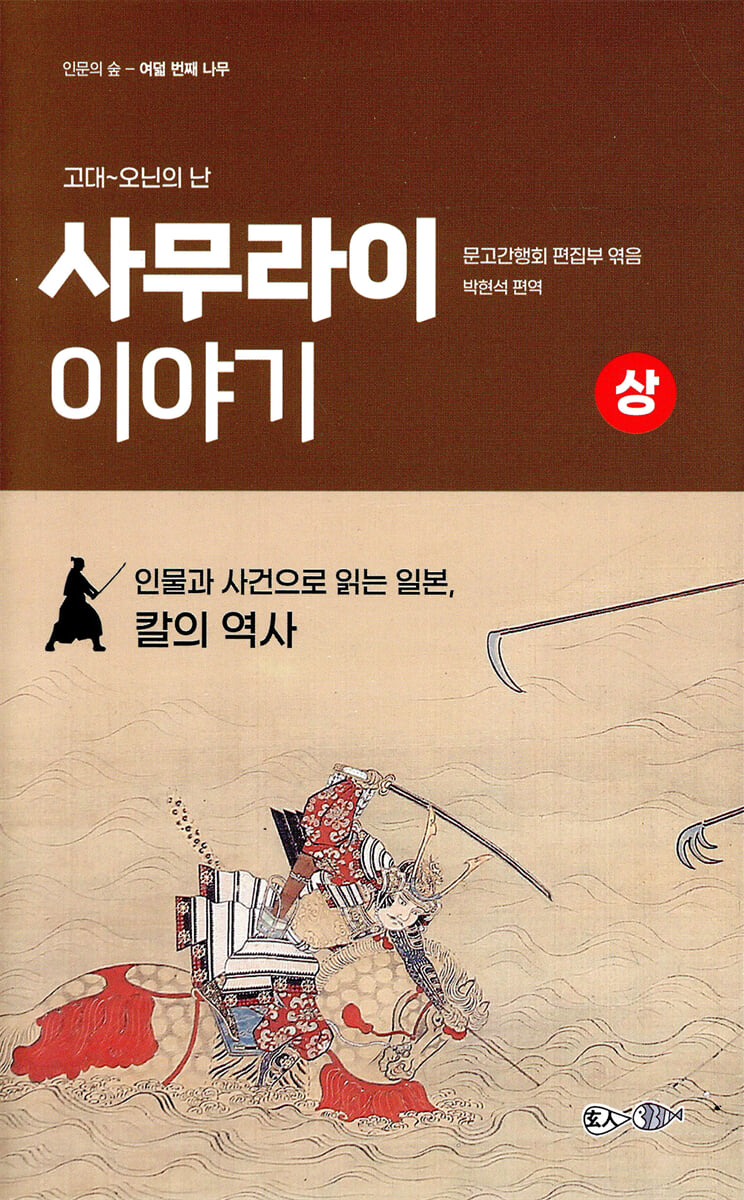
Samurai Story (Part 1)
 |
Description
Book Introduction
The story of the samurai who ruled Japanese society for 700 years.
From the Middle Ages to the modern era, Japanese history has been a history of swords.
Politics was conducted by warriors, and their spirit soon became the spirit that represented Japan.
Therefore, to understand present-day Japan, it is necessary to understand the spirit of the samurai who ruled them for a long time.
This book contains stories of warriors who were active from the ancient times (the rise of the warriors), which can be considered the first half of the 700-year samurai regime, to the Onin War that occurred just before the Warring States period, written in an easy-to-understand manner.
Through this book, I hope you will learn about the warrior spirit that runs deep within the Japanese people.
From the Middle Ages to the modern era, Japanese history has been a history of swords.
Politics was conducted by warriors, and their spirit soon became the spirit that represented Japan.
Therefore, to understand present-day Japan, it is necessary to understand the spirit of the samurai who ruled them for a long time.
This book contains stories of warriors who were active from the ancient times (the rise of the warriors), which can be considered the first half of the 700-year samurai regime, to the Onin War that occurred just before the Warring States period, written in an easy-to-understand manner.
Through this book, I hope you will learn about the warrior spirit that runs deep within the Japanese people.
index
Chapter 1: The Origin of the Samurai
1.
Origin of the warrior
2.
Genji and Heike (Johei and Tengyo Rebellion)
3.
Hachiman Taro Yoshiie (Zenkunen no Eki)
4.
Gosannennoeki and the Genji forces
5.
The way of the master and servant
Chapter 2: The Rise of Heishi
1.
A strange light inside the shrine
2.
Hogen Rebellion
3.
Heiji's Rebellion
Chapter 3: Taira no Shigemori
1.
Loyalty and filial piety
Chapter 4: The Beginning of a Governance of Nobility
1.
Fan on the lawn of Byodoin
2.
The uprising at Ishibashiyama
3.
The Sound of Waterfowl's Wings (Battle of Fujikawa)
4.
In Kuramayama
5.
The Darkness of Kurikaradani (Battle of Kurikaratoge)
6.
The Thin Ice of Awazugahara (Battle of Ujigawa)
7.
Hiyodorigoe surprise attack (Battle of Ichinotani)
8.
Sunset at Yashima (Battle of Yashima)
9.
The Last of the Heike (Battle of Dan-no-ura)
10.
The Last Battle at Koromogawa (Battle of Oshu)
11.
First Shogun
Chapter 5: The Gotoba Situation
1.
Nun Shogun (Wada Yoshimori Rebellion)
2.
shade of ginkgo trees
3.
Jokyu Rebellion
Chapter 6: Hojo Tokimune
1.
Selection
2.
The Bun'ei Rebellion (the first Yuan expedition)
3.
Koan Rebellion (Yuan Dynasty's second expedition)
Chapter 7 Emperor Godaigo
1.
Dogfighting (Shochu's change)
2.
Raindrops on a Pine Tree (Battle of Kasagiyama)
3.
Log fish farm
4.
Foot of Mount Kongo (Battle of Akasaka Castle)
5.
Hannyaji's lightness
6.
Among the trees of Mount Senjo (Battle of Mount Senjo)
7.
The fall of the Hojo clan (Battle of Kamakura)
8.
Kenmu's revival
Chapter 8: Kusunoki Masashige
1.
Daitonomiya (Nakasendai Rebellion)
2.
Seii Taishogun (Battle of Teshimagawara)
3.
Reborn as a human seven times (Battle of Minatogawa)
Chapter 9: Nitta Yoshisada
1.
Hokkoku's eyes
2.
Kanegasaki Falls
3.
Arrow of the White Feather (Battle of Fujishima)
Chapter 10: Kitabatake Chikafusa and Kusunoki Masatsura
1.
Dew of Ishizu (Battle of Ishizu)
2.
Yoshino's Palace
3.
The Storm of Shijonawate (Battle of Shijonawate)
Chapter 11: Kikuchi Takemitsu
1.
Seisei Shogun
2.
Battle of Chikugo River
Chapter 12: The Presumption of the Ashikaga Clan
1.
Retribution for disloyalty
2.
Unification of the North and South Dynasties
Chapter 13: The Decline of the Ashikaga Clan
1.
To gain power
2.
Onin War
1.
Origin of the warrior
2.
Genji and Heike (Johei and Tengyo Rebellion)
3.
Hachiman Taro Yoshiie (Zenkunen no Eki)
4.
Gosannennoeki and the Genji forces
5.
The way of the master and servant
Chapter 2: The Rise of Heishi
1.
A strange light inside the shrine
2.
Hogen Rebellion
3.
Heiji's Rebellion
Chapter 3: Taira no Shigemori
1.
Loyalty and filial piety
Chapter 4: The Beginning of a Governance of Nobility
1.
Fan on the lawn of Byodoin
2.
The uprising at Ishibashiyama
3.
The Sound of Waterfowl's Wings (Battle of Fujikawa)
4.
In Kuramayama
5.
The Darkness of Kurikaradani (Battle of Kurikaratoge)
6.
The Thin Ice of Awazugahara (Battle of Ujigawa)
7.
Hiyodorigoe surprise attack (Battle of Ichinotani)
8.
Sunset at Yashima (Battle of Yashima)
9.
The Last of the Heike (Battle of Dan-no-ura)
10.
The Last Battle at Koromogawa (Battle of Oshu)
11.
First Shogun
Chapter 5: The Gotoba Situation
1.
Nun Shogun (Wada Yoshimori Rebellion)
2.
shade of ginkgo trees
3.
Jokyu Rebellion
Chapter 6: Hojo Tokimune
1.
Selection
2.
The Bun'ei Rebellion (the first Yuan expedition)
3.
Koan Rebellion (Yuan Dynasty's second expedition)
Chapter 7 Emperor Godaigo
1.
Dogfighting (Shochu's change)
2.
Raindrops on a Pine Tree (Battle of Kasagiyama)
3.
Log fish farm
4.
Foot of Mount Kongo (Battle of Akasaka Castle)
5.
Hannyaji's lightness
6.
Among the trees of Mount Senjo (Battle of Mount Senjo)
7.
The fall of the Hojo clan (Battle of Kamakura)
8.
Kenmu's revival
Chapter 8: Kusunoki Masashige
1.
Daitonomiya (Nakasendai Rebellion)
2.
Seii Taishogun (Battle of Teshimagawara)
3.
Reborn as a human seven times (Battle of Minatogawa)
Chapter 9: Nitta Yoshisada
1.
Hokkoku's eyes
2.
Kanegasaki Falls
3.
Arrow of the White Feather (Battle of Fujishima)
Chapter 10: Kitabatake Chikafusa and Kusunoki Masatsura
1.
Dew of Ishizu (Battle of Ishizu)
2.
Yoshino's Palace
3.
The Storm of Shijonawate (Battle of Shijonawate)
Chapter 11: Kikuchi Takemitsu
1.
Seisei Shogun
2.
Battle of Chikugo River
Chapter 12: The Presumption of the Ashikaga Clan
1.
Retribution for disloyalty
2.
Unification of the North and South Dynasties
Chapter 13: The Decline of the Ashikaga Clan
1.
To gain power
2.
Onin War
Into the book
For a warrior, loyalty was the most important virtue and the most important duty to be followed.
However, the path of loyalty that a warrior had to walk was somewhat different from the loyalty to the king that was considered the duty of ordinary people.
Loyalty to the king was, so to speak, an absolute duty that had to be observed, but the loyalty of the warriors was relatively.
Later on, this also became absolute, but at first it was undoubtedly relative.
In other words, because the lord protected his subordinates well and showed them excessive kindness, the subordinates were moved by the kindness and developed a sense of loyalty that was willing to sacrifice themselves.
World-renowned generals like Yoriyoshi and Yoshiie were able to gain many warriors who pledged their devotion to them because they cared for their subordinates and cared for them as if they were their own. This power was what brought them to fame.
In short, the existence of the warrior society and warriors was maintained by two things: the love of the master and the loyalty of the subordinates.
As soon as the concept of "Mu-mun" and "Mu-ga" began, such special concepts emerged.
Yoritomo never undertook anything he was not naturally confident he could succeed at.
It was this cautious nature that allowed him to ascend to the position of shogun and gain the political power to rule Japan in a way that had never existed before.
However, the bad thing about Yoritomo was that he was very suspicious.
He took the slanders of Kajiwara and others lightly and killed many loyal vassals, including brothers Yoshitsune and Noriyori.
So when he died, there was no one left to help Genji.
Because of this, the Genji lineage was cut off before even three generations had passed, putting them in an awkward situation.
Therefore, it would be fair to say that it was Yoritomo who destroyed the Genji.
I once asked, “What should we do to please the people and govern the country well?”
Fujitsuna,
“I don’t have such a brilliant idea, but if I may just share my own thoughts, I believe that this world will be well-governed when the minds of those who rule above and the people below are in harmony with each other.
However, if there are any officials who are not righteous among those who are in power and those who are in power, then sometimes the righteous are called wrong, and sometimes the innocent fall into sin, and so on. This causes many bad things to happen.
In such cases, those without thought think, "This is because those above are not good," while those with thought think, "This world cannot be changed."
“If there are such officials, the world will become chaotic.”
The reason why the Hojo clan did not perish for a long time was because, above all, they loved the people.
Secondly, it is because he practiced frugality.
Thirdly, it is because he used good official seals.
Fourthly, because the trial was conducted fairly.
Fifthly, it was because he cared for the samurai.
Regardless of the era, if you have this kind of mindset, you can carry out great politics.
However, the path of loyalty that a warrior had to walk was somewhat different from the loyalty to the king that was considered the duty of ordinary people.
Loyalty to the king was, so to speak, an absolute duty that had to be observed, but the loyalty of the warriors was relatively.
Later on, this also became absolute, but at first it was undoubtedly relative.
In other words, because the lord protected his subordinates well and showed them excessive kindness, the subordinates were moved by the kindness and developed a sense of loyalty that was willing to sacrifice themselves.
World-renowned generals like Yoriyoshi and Yoshiie were able to gain many warriors who pledged their devotion to them because they cared for their subordinates and cared for them as if they were their own. This power was what brought them to fame.
In short, the existence of the warrior society and warriors was maintained by two things: the love of the master and the loyalty of the subordinates.
As soon as the concept of "Mu-mun" and "Mu-ga" began, such special concepts emerged.
Yoritomo never undertook anything he was not naturally confident he could succeed at.
It was this cautious nature that allowed him to ascend to the position of shogun and gain the political power to rule Japan in a way that had never existed before.
However, the bad thing about Yoritomo was that he was very suspicious.
He took the slanders of Kajiwara and others lightly and killed many loyal vassals, including brothers Yoshitsune and Noriyori.
So when he died, there was no one left to help Genji.
Because of this, the Genji lineage was cut off before even three generations had passed, putting them in an awkward situation.
Therefore, it would be fair to say that it was Yoritomo who destroyed the Genji.
I once asked, “What should we do to please the people and govern the country well?”
Fujitsuna,
“I don’t have such a brilliant idea, but if I may just share my own thoughts, I believe that this world will be well-governed when the minds of those who rule above and the people below are in harmony with each other.
However, if there are any officials who are not righteous among those who are in power and those who are in power, then sometimes the righteous are called wrong, and sometimes the innocent fall into sin, and so on. This causes many bad things to happen.
In such cases, those without thought think, "This is because those above are not good," while those with thought think, "This world cannot be changed."
“If there are such officials, the world will become chaotic.”
The reason why the Hojo clan did not perish for a long time was because, above all, they loved the people.
Secondly, it is because he practiced frugality.
Thirdly, it is because he used good official seals.
Fourthly, because the trial was conducted fairly.
Fifthly, it was because he cared for the samurai.
Regardless of the era, if you have this kind of mindset, you can carry out great politics.
--- From the text
Publisher's Review
From the Middle Ages to the modern era, Japan, an island nation, was rarely invaded by foreign powers.
But instead, the internal fighting continued unabated.
The biggest cause of the civil war that lasted for many years was the struggle for power, and the largest force in that power struggle was the shogunate, representing the traditional imperial family and the samurai.
Of course, since the shogun, the leader of the warriors, held power for a long time based on military force, the power of the emperor was very weak. However, the emperor had the potential to form a force that could threaten the shogun just by existing, so he was always a target of the shogun's wariness.
This subtle conflict between the Emperor and the Shogun continues to influence the consciousness of the Japanese people to this day, creating an invisible competitive spirit between the East (the region centered around Tokyo, a society centered around the Shogun) and the West (the region centered around Kyoto and Osaka, a society centered around the Emperor).
If we turn our attention to the samurai clan, there was a conflict between the Genji (Minamoto clan) and the Heike (Taira clan).
It would not be an exaggeration to say that the struggle for power between the two families was a fight between these two families.
Of course, there is a tendency in history after the Warring States period to try to force the status of the warriors who stood out in each region into the history of the two Genpei clans (a term that refers to the Genji and Heike clans), but the conflict between the two Genpei clans had such a great influence on the consciousness of the Japanese people that it was necessary to force it into their history.
Because the flag representing the Genji was white and the flag representing the Heike was red, the term "Red and White War" is still commonly used in Japan.
It is also undeniable that the two families, the Minamoto and Taira, had a profound influence on the Japanese spirit.
Next, if we turn our attention to the common soldiers, the greatest ethic that governed them was loyalty.
However, the loyalty of the warriors was a little different from the loyalty to the king that we generally know. Loyalty to the king was of course absolute, but in addition, loyalty to the master one served was also added as a virtue that must be maintained.
And when these two loyalties conflicted, there were times when loyalty to the master one was directly serving took precedence over loyalty to the king. A thorough understanding of this relationship will allow for a more accurate understanding of Japanese history.
Another core idea of the warriors was shame.
In order to avoid being shamed, they would sometimes even throw away their lives without much difficulty.
Let us examine in detail the origins of the underlying spirit of Japan's history, which has long been characterized by a unique political system in which the imperial family and the shogunate coexisted and ruled the world.
But instead, the internal fighting continued unabated.
The biggest cause of the civil war that lasted for many years was the struggle for power, and the largest force in that power struggle was the shogunate, representing the traditional imperial family and the samurai.
Of course, since the shogun, the leader of the warriors, held power for a long time based on military force, the power of the emperor was very weak. However, the emperor had the potential to form a force that could threaten the shogun just by existing, so he was always a target of the shogun's wariness.
This subtle conflict between the Emperor and the Shogun continues to influence the consciousness of the Japanese people to this day, creating an invisible competitive spirit between the East (the region centered around Tokyo, a society centered around the Shogun) and the West (the region centered around Kyoto and Osaka, a society centered around the Emperor).
If we turn our attention to the samurai clan, there was a conflict between the Genji (Minamoto clan) and the Heike (Taira clan).
It would not be an exaggeration to say that the struggle for power between the two families was a fight between these two families.
Of course, there is a tendency in history after the Warring States period to try to force the status of the warriors who stood out in each region into the history of the two Genpei clans (a term that refers to the Genji and Heike clans), but the conflict between the two Genpei clans had such a great influence on the consciousness of the Japanese people that it was necessary to force it into their history.
Because the flag representing the Genji was white and the flag representing the Heike was red, the term "Red and White War" is still commonly used in Japan.
It is also undeniable that the two families, the Minamoto and Taira, had a profound influence on the Japanese spirit.
Next, if we turn our attention to the common soldiers, the greatest ethic that governed them was loyalty.
However, the loyalty of the warriors was a little different from the loyalty to the king that we generally know. Loyalty to the king was of course absolute, but in addition, loyalty to the master one served was also added as a virtue that must be maintained.
And when these two loyalties conflicted, there were times when loyalty to the master one was directly serving took precedence over loyalty to the king. A thorough understanding of this relationship will allow for a more accurate understanding of Japanese history.
Another core idea of the warriors was shame.
In order to avoid being shamed, they would sometimes even throw away their lives without much difficulty.
Let us examine in detail the origins of the underlying spirit of Japan's history, which has long been characterized by a unique political system in which the imperial family and the shogunate coexisted and ruled the world.
GOODS SPECIFICS
- Date of issue: August 10, 2024
- Page count, weight, size: 360 pages | 130*210*30mm
- ISBN13: 9791190156516
- ISBN10: 1190156512
You may also like
카테고리
korean


korean

![GQ KOREA Mark (Monthly): December [2025]](http://librairie.coreenne.fr/cdn/shop/files/8ef265dbbfbf186523ed75ba7319009d.jpg?v=1765340328&width=3840)


