

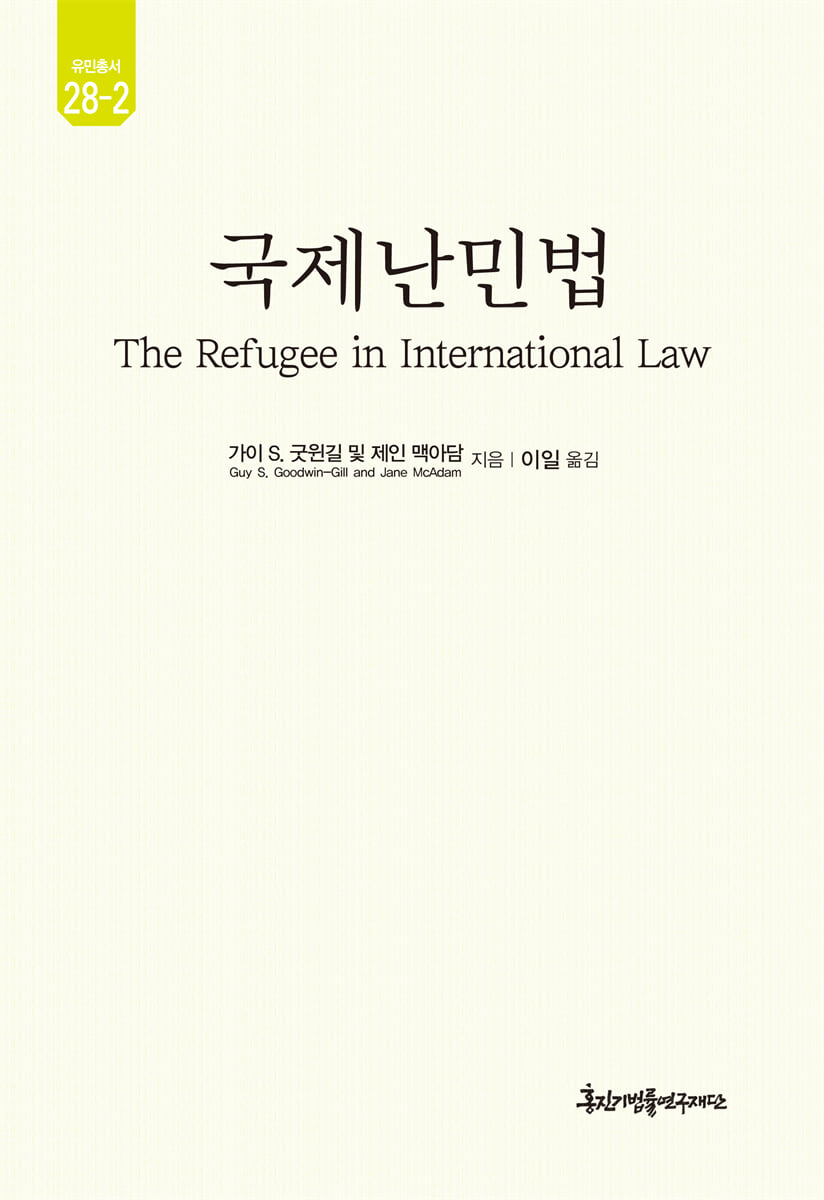
International Refugee Law 2
 |
Description
Book Introduction
Today, international refugee law and institutions have a history of over 100 years.
Fridtjof Nansen, the first High Commissioner for Refugees of the League of Nations, had to deal with the causes of refugee creation, such as war and conflict, social reconstruction and nation-building, famine and epidemics, problems not so different from those facing the international community today.
We hope this book will serve as a reminder to readers of the inherent dignity of all who seek refuge, and that fleeing persecution or other serious harm is not a crime.
We have attempted to reiterate the importance, resilience, and capacity for development of the international protection system.
We aim to provide an authoritative account of refugees in international law, offering insights into current and future debates and hoping for a future in which the need for asylum may actually be reduced.
Fridtjof Nansen, the first High Commissioner for Refugees of the League of Nations, had to deal with the causes of refugee creation, such as war and conflict, social reconstruction and nation-building, famine and epidemics, problems not so different from those facing the international community today.
We hope this book will serve as a reminder to readers of the inherent dignity of all who seek refuge, and that fleeing persecution or other serious harm is not a crime.
We have attempted to reiterate the importance, resilience, and capacity for development of the international protection system.
We aim to provide an authoritative account of refugees in international law, offering insights into current and future debates and hoping for a future in which the need for asylum may actually be reduced.
index
introduction
Acknowledgements
Translator's Preface
Part 3 Protection
Chapter 9 International Protection
Section 1 International Organizations
Section 1.1 United Nations High Commissioner for Refugees (UNHCR)
Section 1.1.1 Relations between the UN General Assembly and UNHCR and the status of UNHCR in general international law
Section 1.1.2 UNHCR Executive Committee
Section 1.2 United Nations Relief and Works Agency for Palestine Refugees (UNRWA)
Section 1.3 Office of the High Commissioner for Human Rights (OHCHR)
Section 1.4 United Nations Office for the Coordination of Humanitarian Affairs (OCHA)
Section 1.4.1 Strengthening Collaboration
Section 1.4.2 Complementary Roles of UN Agencies
Section 1.5 Other Organizations and Institutions
Section 1.5.1 International Organization for Migration (IOM)
Section 1.5.2 International Red Cross and Red Crescent Movement
Section 1.5.3 Regional Organizations
Section 1.5.4 Non-Governmental Organizations (NGOs)
Section 1.5.5 Humanitarian Workers
Section 2 Refugee Protection in International Law
Section 2.1 General International Law
Section 2.2 Treaties and Domestic Law
Section 2.2.1 Principle of Good Faith
Section 3 Protection of Specific Refugee Groups
March 1st Refugee Women
3.2 Refugee Children
3.3 Disabled Refugees
Chapter 10: International Cooperation, Protection, and Solutions
Section 1: Rights of Refugees: Refugee Camps, Settlements, and Society at Large
Section 2 Solution
2.1 Community Integration
Section 2.2 Voluntary repatriation
Section 2.2.1 Facilitating and promoting
2.2.2 Safe return
Section 2.3 Resettlement
Section 2.4 Complementary Pathways to Admission
Section 2.5 Support and Development
Section 3 International Cooperation
March 1st New York Declaration and Global Compact
Section 3.1.1 Global Refugee Compact (GCR)
Section 3.1.2 Global Migration Compact (GCM)
Chapter 11: Standards of the Convention and Implementation in Domestic Law
Section 1: 1951 Refugee Convention and 1967 Protocol Relating to the Status of Refugees
1.1 Standards of treatment requested
Section 1.1.1 Equality of treatment, employment and social benefits
Section 1.2 Criteria applied to refugees based on their refugee status
Section 1.2.1 Administrative Assistance: Article 25
Section 1.2.2 Identification Card: Article 27
1.2.3 Travel Documents under the Convention: Article 28
Section 1.2.4 Treatment of Refugees Who Entered the Country Illegal: Article 31
Section 1.2.5 Expulsion of Refugees: Article 32
Section 1.2.6 Prohibition of Refoulement: Article 33
1.3 Categories of eligibility for treatment under the Agreement
1.3.1 Simple presence
Section 1.3.2 Lawful presence
Section 1.3.3 Lawful residence
Section 1.3.4 Habitual residence
Section 1.4 Geographical Scope
Section 2 Protection under domestic law: Refugee status determination procedures
Section 2.1 General Criteria for Refugee Status Determination
Section 2.2 The Role of UNHCR in National Refugee Status Determination Procedures
Section 2.3 Due process and procedural fairness in refugee status determination procedures
Section 3 2013 European Union Procedural Directive
Section 4: The Refugee Status Determination Process: From the decision of 'recognition' to the decision of 'rejection'
4.1 Interview, investigation or interrogation date
Section 4.2 Use and Abuse of National Circumstances Information and Other Information
Consistency of the decision in Section 4.3
Section 4.4 Credibility Assessment and Evidence-Based Inference
Section 4.4.1 Reasoning about Credibility: Consistency and Inconsistency
Section 4.5 Objection or Reconsideration
Section 5. Refugee status under domestic law and termination of refugee status
May 1st Refugee Status and the 'Countervailing Force' of Decisions
5.2 Principle of vested rights
Chapter 12 Displacement Related to the Impacts of Disasters and Climate Change
Section 1 Introduction
Section 1.1 Terminology and Concepts
Section 2 Internally Displaced Persons
Section 3 Application of International Refugee Law
Section 4 Application of International Human Rights Law
4.1 Protection from arbitrary deprivation of life
Section 4.2 Protection from inhuman or degrading treatment
Section 4.2.1 Children
Section 4.2.2 Alternative Domestic Refuge
Section 5: The 'Disappearance' of the Nation
Section 6 International Processes and Developments
June 1st Nansen Initiative and Disaster Displacement Platform
Section 6.2 Other International Procedures
Section 7: Preventing displacement and finding permanent solutions
Chapter 13 Nationality, Statelessness, and Protection
Section 1 The Role of Nationality in Inter-State Relations
Section 1.1 The Right to Nationality under International Law
1.2 Deprivation of citizenship
Section 1.2.1 Deprivation of Citizenship and the 1961 Convention on the Reduction of Statelessness
1.2.2 Follow-up execution
Section 1.2.3 Deprivation of Citizenship and Its Implications in International Law
Section 2 Statelessness in International Law and Practice
2.1 League of Nations
2.2 UN
Section 2.2.1 1949 UN Statelessness Study
Section 2.3 1954 Convention Relating to the Status of Stateless Persons
Section 3: Eradicating and preventing statelessness
March 1st International Law Commission
Section 3.1.1 Eradication and Reduction of Statelessness
Section 3.1.2 1961 Convention on the Reduction of Statelessness
Section 4: Protecting Stateless Persons
Protecting Stateless Refugees Through Status Determination on Section 4.1
Protecting Stateless Persons through Status Determination in Section 4.2
References
Index INDEX
Acknowledgements
Translator's Preface
Part 3 Protection
Chapter 9 International Protection
Section 1 International Organizations
Section 1.1 United Nations High Commissioner for Refugees (UNHCR)
Section 1.1.1 Relations between the UN General Assembly and UNHCR and the status of UNHCR in general international law
Section 1.1.2 UNHCR Executive Committee
Section 1.2 United Nations Relief and Works Agency for Palestine Refugees (UNRWA)
Section 1.3 Office of the High Commissioner for Human Rights (OHCHR)
Section 1.4 United Nations Office for the Coordination of Humanitarian Affairs (OCHA)
Section 1.4.1 Strengthening Collaboration
Section 1.4.2 Complementary Roles of UN Agencies
Section 1.5 Other Organizations and Institutions
Section 1.5.1 International Organization for Migration (IOM)
Section 1.5.2 International Red Cross and Red Crescent Movement
Section 1.5.3 Regional Organizations
Section 1.5.4 Non-Governmental Organizations (NGOs)
Section 1.5.5 Humanitarian Workers
Section 2 Refugee Protection in International Law
Section 2.1 General International Law
Section 2.2 Treaties and Domestic Law
Section 2.2.1 Principle of Good Faith
Section 3 Protection of Specific Refugee Groups
March 1st Refugee Women
3.2 Refugee Children
3.3 Disabled Refugees
Chapter 10: International Cooperation, Protection, and Solutions
Section 1: Rights of Refugees: Refugee Camps, Settlements, and Society at Large
Section 2 Solution
2.1 Community Integration
Section 2.2 Voluntary repatriation
Section 2.2.1 Facilitating and promoting
2.2.2 Safe return
Section 2.3 Resettlement
Section 2.4 Complementary Pathways to Admission
Section 2.5 Support and Development
Section 3 International Cooperation
March 1st New York Declaration and Global Compact
Section 3.1.1 Global Refugee Compact (GCR)
Section 3.1.2 Global Migration Compact (GCM)
Chapter 11: Standards of the Convention and Implementation in Domestic Law
Section 1: 1951 Refugee Convention and 1967 Protocol Relating to the Status of Refugees
1.1 Standards of treatment requested
Section 1.1.1 Equality of treatment, employment and social benefits
Section 1.2 Criteria applied to refugees based on their refugee status
Section 1.2.1 Administrative Assistance: Article 25
Section 1.2.2 Identification Card: Article 27
1.2.3 Travel Documents under the Convention: Article 28
Section 1.2.4 Treatment of Refugees Who Entered the Country Illegal: Article 31
Section 1.2.5 Expulsion of Refugees: Article 32
Section 1.2.6 Prohibition of Refoulement: Article 33
1.3 Categories of eligibility for treatment under the Agreement
1.3.1 Simple presence
Section 1.3.2 Lawful presence
Section 1.3.3 Lawful residence
Section 1.3.4 Habitual residence
Section 1.4 Geographical Scope
Section 2 Protection under domestic law: Refugee status determination procedures
Section 2.1 General Criteria for Refugee Status Determination
Section 2.2 The Role of UNHCR in National Refugee Status Determination Procedures
Section 2.3 Due process and procedural fairness in refugee status determination procedures
Section 3 2013 European Union Procedural Directive
Section 4: The Refugee Status Determination Process: From the decision of 'recognition' to the decision of 'rejection'
4.1 Interview, investigation or interrogation date
Section 4.2 Use and Abuse of National Circumstances Information and Other Information
Consistency of the decision in Section 4.3
Section 4.4 Credibility Assessment and Evidence-Based Inference
Section 4.4.1 Reasoning about Credibility: Consistency and Inconsistency
Section 4.5 Objection or Reconsideration
Section 5. Refugee status under domestic law and termination of refugee status
May 1st Refugee Status and the 'Countervailing Force' of Decisions
5.2 Principle of vested rights
Chapter 12 Displacement Related to the Impacts of Disasters and Climate Change
Section 1 Introduction
Section 1.1 Terminology and Concepts
Section 2 Internally Displaced Persons
Section 3 Application of International Refugee Law
Section 4 Application of International Human Rights Law
4.1 Protection from arbitrary deprivation of life
Section 4.2 Protection from inhuman or degrading treatment
Section 4.2.1 Children
Section 4.2.2 Alternative Domestic Refuge
Section 5: The 'Disappearance' of the Nation
Section 6 International Processes and Developments
June 1st Nansen Initiative and Disaster Displacement Platform
Section 6.2 Other International Procedures
Section 7: Preventing displacement and finding permanent solutions
Chapter 13 Nationality, Statelessness, and Protection
Section 1 The Role of Nationality in Inter-State Relations
Section 1.1 The Right to Nationality under International Law
1.2 Deprivation of citizenship
Section 1.2.1 Deprivation of Citizenship and the 1961 Convention on the Reduction of Statelessness
1.2.2 Follow-up execution
Section 1.2.3 Deprivation of Citizenship and Its Implications in International Law
Section 2 Statelessness in International Law and Practice
2.1 League of Nations
2.2 UN
Section 2.2.1 1949 UN Statelessness Study
Section 2.3 1954 Convention Relating to the Status of Stateless Persons
Section 3: Eradicating and preventing statelessness
March 1st International Law Commission
Section 3.1.1 Eradication and Reduction of Statelessness
Section 3.1.2 1961 Convention on the Reduction of Statelessness
Section 4: Protecting Stateless Persons
Protecting Stateless Refugees Through Status Determination on Section 4.1
Protecting Stateless Persons through Status Determination in Section 4.2
References
Index INDEX
GOODS SPECIFICS
- Date of issue: September 29, 2025
- Format: Hardcover book binding method guide
- Page count, weight, size: 652 pages | 152*224*32mm
- ISBN13: 9788949968797
You may also like
카테고리
korean


korean

![GQ KOREA Mark (Monthly): December [2025]](http://librairie.coreenne.fr/cdn/shop/files/8ef265dbbfbf186523ed75ba7319009d.jpg?v=1765340328&width=3840)


