

The Korean War You Didn't See: Leaflet Psychological Warfare
 |
Description
Book Introduction
In Search of the Origins of the "Filth Balloon" Leaflets to North Korea
A group of North Korean defectors scatter anti-North Korean leaflets using balloons, and the North responds with so-called "filth balloons," and the South responds with loudspeaker broadcasts.
In the end, a sewage balloon ended up falling into the presidential office building in Yongsan.
It's an endless vicious cycle.
July 27, 2024 will mark the 71st anniversary of the Korean War Armistice Agreement.
The gunfire has stopped, but the war is not over yet.
It's psychological warfare.
Among psychological warfare, the most analogical form, that is, psychological warfare through leaflets, is still ongoing.
Why does North Korea react so nervously and hostilely to leaflets sent by defector groups?
One might wonder if we are being overly presumptuous and overreacting.
But if you read this book, you will be able to answer those questions and understand to some extent why this vicious cycle continues.
There is also a simple solution to break this vicious cycle.
Newstapa Publishing, the publishing division of the Newstapa Foundation, will publish [Korean War Leaflet Psychological Warfare You Didn't See] on July 27, 2024, the 71st anniversary of the Korean War Armistice Agreement.
This record collection is the second publication in the series [The Korean War You Didn't See], planned as a series by Newstapa Publishing.
Last year, to mark the 70th anniversary of the Korean War Armistice Agreement, we published the first book in the [Korean War You Never Saw] series, [Scorched Earth Bombing].
A group of North Korean defectors scatter anti-North Korean leaflets using balloons, and the North responds with so-called "filth balloons," and the South responds with loudspeaker broadcasts.
In the end, a sewage balloon ended up falling into the presidential office building in Yongsan.
It's an endless vicious cycle.
July 27, 2024 will mark the 71st anniversary of the Korean War Armistice Agreement.
The gunfire has stopped, but the war is not over yet.
It's psychological warfare.
Among psychological warfare, the most analogical form, that is, psychological warfare through leaflets, is still ongoing.
Why does North Korea react so nervously and hostilely to leaflets sent by defector groups?
One might wonder if we are being overly presumptuous and overreacting.
But if you read this book, you will be able to answer those questions and understand to some extent why this vicious cycle continues.
There is also a simple solution to break this vicious cycle.
Newstapa Publishing, the publishing division of the Newstapa Foundation, will publish [Korean War Leaflet Psychological Warfare You Didn't See] on July 27, 2024, the 71st anniversary of the Korean War Armistice Agreement.
This record collection is the second publication in the series [The Korean War You Didn't See], planned as a series by Newstapa Publishing.
Last year, to mark the 70th anniversary of the Korean War Armistice Agreement, we published the first book in the [Korean War You Never Saw] series, [Scorched Earth Bombing].
index
Chapter 1.
prolog
Chapter 2.
US Far East Command and United Nations Command
Chapter 3.
Eighth US Army Headquarters
Chapter 4.
Korean military
Chapter 5.
North Korean People's Army and Chinese People's Volunteer Army
Chapter 6.
Epilogue
prolog
Chapter 2.
US Far East Command and United Nations Command
Chapter 3.
Eighth US Army Headquarters
Chapter 4.
Korean military
Chapter 5.
North Korean People's Army and Chinese People's Volunteer Army
Chapter 6.
Epilogue
Publisher's Review
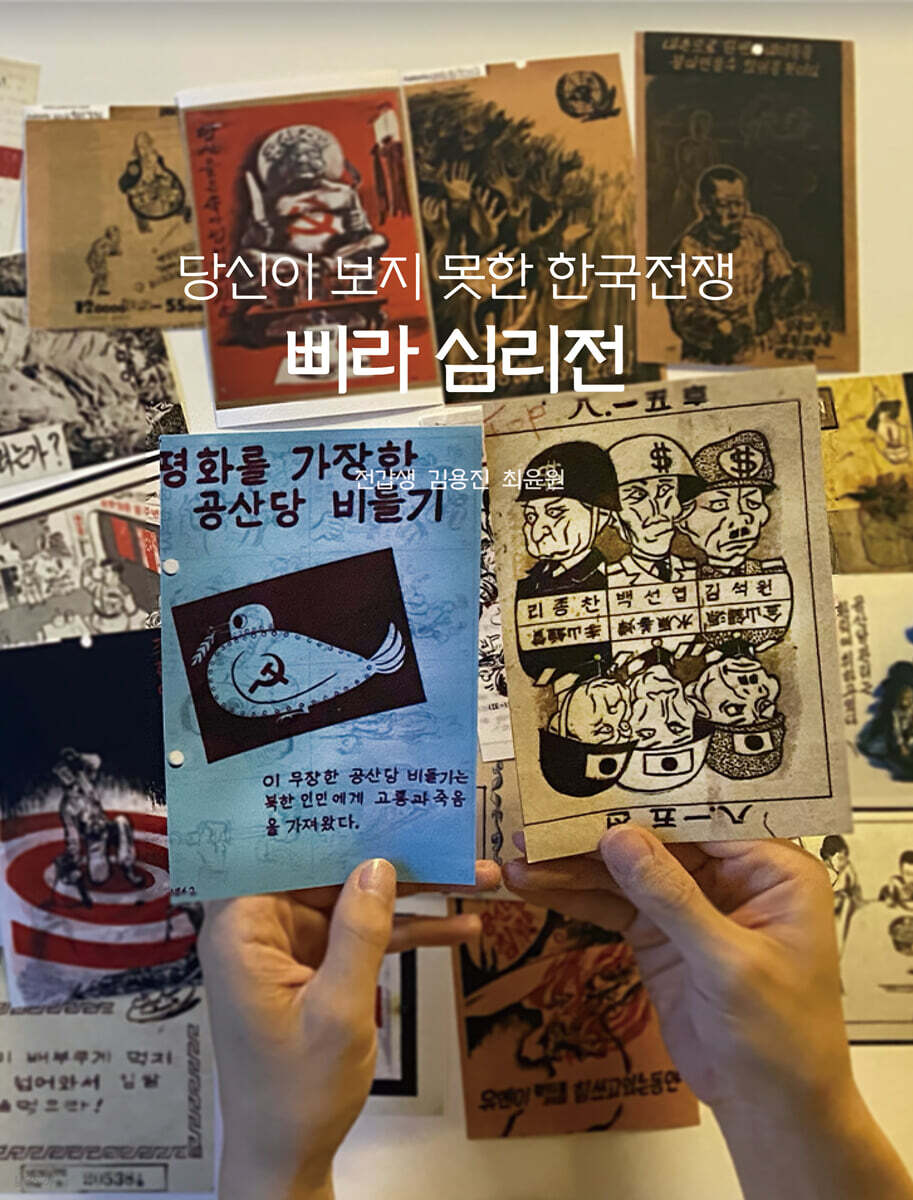
Selected from 7,400 leaflets collected over several years by the U.S. National Archives of America (NARA), approximately 340 leaflets.
Newstapa Publishing publishes books based on the results of long-term investigative reporting by the Korea Center for Investigative Journalism (KCJ) and Newstapa, and this collection of records is one of them.
The leaflets included in this book were selected from over 7,400 leaflets, slogans, and posters from the Korean War and before and after the war, collected over several years by the Korea Center for Investigative Journalism-Newstapa Overseas Document Collection Team at the U.S. National Archives and Records Administration (NARA).
The producers of the psychological warfare propaganda leaflets included in this book include the US Far East Command/United Nations Command, the US 8th Army, the South Korean Army, and the North Korean People's Army/Chinese People's Volunteer Army.
The order of the books is organized by each producer and period.
The characteristics of the leaflets by producer are summarized for each chapter, and the editor added brief captions to each leaflet.
The included flyers are edited in full color, giving you the vivid feeling of seeing the original.
[Korean War Leaflet Psychological Warfare You Haven't Seen] contains over 300 leaflets, all in color, on 392 pages.
Because the leaflets were scanned in high resolution when collected by the National Archives and Records Administration, the original colors and textures were preserved in the record book.
The two leaflets included in the book were produced and distributed by the US Far East Command's Deep Russian Warfare Unit and the North Korean People's Army Command, respectively.
The pictures and text were copied from the same concept.
But if you look closely, you can see subtle differences in handwriting and color.
The book also includes high-quality images so that the differences can be clearly seen.
Also included is a report on the production of the US military leaflets, helping to understand the production process and background.
Newstapa Publishing's new book, [The Korean War You Didn't See - Leaflet Psychological Warfare], includes not only leaflets but also leaflet production reports from the US Far East Command and the US 8th Army psychological warfare unit, allowing readers to understand the targets and purposes of leaflet distribution.
The leaflet below is the 'Dog Corpse' leaflet produced by the US Far East Command's psychological warfare unit in 1951 and distributed against the North Korean People's Army.
The Korea Center for Investigative Journalism-Newstapa's overseas data collection team collected this leaflet from the U.S. NARA, along with a report on the production of the leaflet written by the U.S. military.
The original image of the report was also included in the book.
Includes a large number of leaflets produced by the North Korean People's Army and the Chinese People's Volunteer Army.
Most existing research papers and books dealing with leaflets during the Korean War focused on leaflets produced by the US Far East Command or the US 8th Army.
However, [The Korean War You Didn't See - Leaflet Psychological Warfare] also included a large number of leaflets produced and distributed by the North Korean People's Army and the Chinese People's Volunteer Army by year.
It is expected that these leaflets will serve as basic data for studying North Korea and China's leaflet psychological warfare.
It also included some reports from the US military that collected and analyzed leaflets scattered by North Korea, as well as North Korean leaflets.
This data provides a glimpse into the fierce psychological warfare between the two sides during the Korean War.
First public release of leaflets related to the suppression of Jeju guerrillas.
On March 30, 1957, the Busan Ilbo reported an article titled “Jeju Island Remnant Bandit Leader Killed” with the caption, “The police suppression unit announced on the 28th that it had killed the former remnant commander Kim Seong-gyu (29) and one other remnant.”
Janbi is an abbreviation for 'remaining public funds'.
The name of Kim Seong-gyu, the 'Remnant Commander' who was killed in 1957, appears on a leaflet in the name of Jeju Island Police Chief Lee Gyeong-jin in 1953.
This leaflet called Kim Seong-gyu and Kim I-bong the enemies of the Jeju people and demanded that they be killed.
[The Korean War You Didn't See - Leaflet Psychological Warfare] is the first to unearth and reveal four types of eight-page leaflets related to Jeju Island, including this leaflet titled "A Shout to Comrades Lost on Mt. Halla!"
When we escape the psychological warfare brainwashing of the Korean War
Newstapa Publishing's new book, [The Korean War You Didn't See - Psychological Warfare Through Leaflets], serves as a guide to provide a three-dimensional look at the Cold War worldview left behind by psychological warfare during the Korean War, using hundreds of leaflets and related materials.
The power of psychological warfare, which incites hatred and disgust by labeling opponents as monsters and puppets, still dominates us.
The distribution of leaflets to North Korea, broadcasts through loudspeakers, and the countermeasures of balloons are only one aspect.
The Yoon Seok-yeol administration's North Korea policy and the mainstream South Korean media's perspective on North Korea are essentially within the framework of past psychological warfare.
It's been over 70 years now.
It's time to break free from that brainwashing.
To do that, we need to understand the origins and reality of brainwashing.
[The Korean War You Didn't See - Leaflet Psychological Warfare] is more than just a collection of data; it's a journey to discover the origins of the hatred and hostility between the South and the North.
And at the end of that journey, it makes you realize how absurd the psychological warfare framework that has been ingrained in our heads for generations is.
Newstapa Publishing publishes books based on the results of long-term investigative reporting by the Korea Center for Investigative Journalism (KCJ) and Newstapa, and this collection of records is one of them.
The leaflets included in this book were selected from over 7,400 leaflets, slogans, and posters from the Korean War and before and after the war, collected over several years by the Korea Center for Investigative Journalism-Newstapa Overseas Document Collection Team at the U.S. National Archives and Records Administration (NARA).
The producers of the psychological warfare propaganda leaflets included in this book include the US Far East Command/United Nations Command, the US 8th Army, the South Korean Army, and the North Korean People's Army/Chinese People's Volunteer Army.
The order of the books is organized by each producer and period.
The characteristics of the leaflets by producer are summarized for each chapter, and the editor added brief captions to each leaflet.
The included flyers are edited in full color, giving you the vivid feeling of seeing the original.
[Korean War Leaflet Psychological Warfare You Haven't Seen] contains over 300 leaflets, all in color, on 392 pages.
Because the leaflets were scanned in high resolution when collected by the National Archives and Records Administration, the original colors and textures were preserved in the record book.
The two leaflets included in the book were produced and distributed by the US Far East Command's Deep Russian Warfare Unit and the North Korean People's Army Command, respectively.
The pictures and text were copied from the same concept.
But if you look closely, you can see subtle differences in handwriting and color.
The book also includes high-quality images so that the differences can be clearly seen.
Also included is a report on the production of the US military leaflets, helping to understand the production process and background.
Newstapa Publishing's new book, [The Korean War You Didn't See - Leaflet Psychological Warfare], includes not only leaflets but also leaflet production reports from the US Far East Command and the US 8th Army psychological warfare unit, allowing readers to understand the targets and purposes of leaflet distribution.
The leaflet below is the 'Dog Corpse' leaflet produced by the US Far East Command's psychological warfare unit in 1951 and distributed against the North Korean People's Army.
The Korea Center for Investigative Journalism-Newstapa's overseas data collection team collected this leaflet from the U.S. NARA, along with a report on the production of the leaflet written by the U.S. military.
The original image of the report was also included in the book.
Includes a large number of leaflets produced by the North Korean People's Army and the Chinese People's Volunteer Army.
Most existing research papers and books dealing with leaflets during the Korean War focused on leaflets produced by the US Far East Command or the US 8th Army.
However, [The Korean War You Didn't See - Leaflet Psychological Warfare] also included a large number of leaflets produced and distributed by the North Korean People's Army and the Chinese People's Volunteer Army by year.
It is expected that these leaflets will serve as basic data for studying North Korea and China's leaflet psychological warfare.
It also included some reports from the US military that collected and analyzed leaflets scattered by North Korea, as well as North Korean leaflets.
This data provides a glimpse into the fierce psychological warfare between the two sides during the Korean War.
First public release of leaflets related to the suppression of Jeju guerrillas.
On March 30, 1957, the Busan Ilbo reported an article titled “Jeju Island Remnant Bandit Leader Killed” with the caption, “The police suppression unit announced on the 28th that it had killed the former remnant commander Kim Seong-gyu (29) and one other remnant.”
Janbi is an abbreviation for 'remaining public funds'.
The name of Kim Seong-gyu, the 'Remnant Commander' who was killed in 1957, appears on a leaflet in the name of Jeju Island Police Chief Lee Gyeong-jin in 1953.
This leaflet called Kim Seong-gyu and Kim I-bong the enemies of the Jeju people and demanded that they be killed.
[The Korean War You Didn't See - Leaflet Psychological Warfare] is the first to unearth and reveal four types of eight-page leaflets related to Jeju Island, including this leaflet titled "A Shout to Comrades Lost on Mt. Halla!"
When we escape the psychological warfare brainwashing of the Korean War
Newstapa Publishing's new book, [The Korean War You Didn't See - Psychological Warfare Through Leaflets], serves as a guide to provide a three-dimensional look at the Cold War worldview left behind by psychological warfare during the Korean War, using hundreds of leaflets and related materials.
The power of psychological warfare, which incites hatred and disgust by labeling opponents as monsters and puppets, still dominates us.
The distribution of leaflets to North Korea, broadcasts through loudspeakers, and the countermeasures of balloons are only one aspect.
The Yoon Seok-yeol administration's North Korea policy and the mainstream South Korean media's perspective on North Korea are essentially within the framework of past psychological warfare.
It's been over 70 years now.
It's time to break free from that brainwashing.
To do that, we need to understand the origins and reality of brainwashing.
[The Korean War You Didn't See - Leaflet Psychological Warfare] is more than just a collection of data; it's a journey to discover the origins of the hatred and hostility between the South and the North.
And at the end of that journey, it makes you realize how absurd the psychological warfare framework that has been ingrained in our heads for generations is.
GOODS SPECIFICS
- Date of issue: July 27, 2024
- Page count, weight, size: 392 pages | 760g | 188*257*30mm
- ISBN13: 9791197412394
- ISBN10: 1197412395
You may also like
카테고리
korean


korean

![GQ KOREA Mark (Monthly): December [2025]](http://librairie.coreenne.fr/cdn/shop/files/8ef265dbbfbf186523ed75ba7319009d.jpg?v=1765340328&width=3840)


