

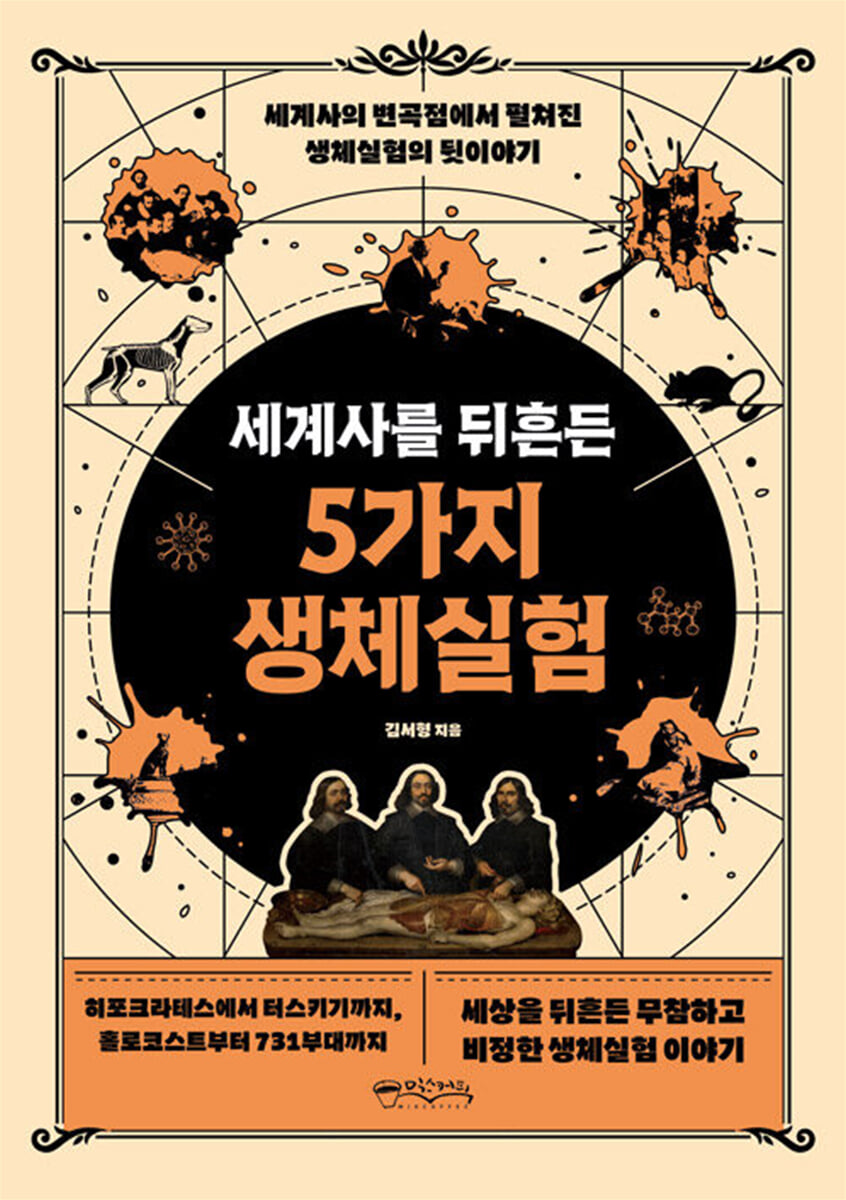
Five Bio-Experiments That Shook World History
 |
Description
Book Introduction
Looking at human history, there are many cases where illegal and forced biological experiments caused controversy.
So when did vivisection begin? What knowledge and information was gained through vivisection? How were vivisections perceived in those days? And how can we evaluate such experiments? This book contains the answers to these questions.
This book, "5 Vivisections That Shook World History," examines in detail the vivisections conducted throughout human history, from ancient times to the present.
As an authority on the history of medicine, the author analyzes the historical background of the time of vivisection and evaluates the significance of vivisection.
By examining the positive and controversial impacts of bioexperimentation on us, we can gain a balanced perspective on the message it conveys.
The moment you open this book, you will be able to see humanity's past, present, future direction, and even its history from a new perspective.
So when did vivisection begin? What knowledge and information was gained through vivisection? How were vivisections perceived in those days? And how can we evaluate such experiments? This book contains the answers to these questions.
This book, "5 Vivisections That Shook World History," examines in detail the vivisections conducted throughout human history, from ancient times to the present.
As an authority on the history of medicine, the author analyzes the historical background of the time of vivisection and evaluates the significance of vivisection.
By examining the positive and controversial impacts of bioexperimentation on us, we can gain a balanced perspective on the message it conveys.
The moment you open this book, you will be able to see humanity's past, present, future direction, and even its history from a new perspective.
- You can preview some of the book's contents.
Preview
index
Introduction
PART 1: Ancient Medicine Developed from Vivisection
The first animal experiment, Alcmaeon
The Separation of Medicine and the Discovery of Epilepsy, Hippocrates
Galen, the Emperor of Ancient Medicine and Anatomy
Vesalius, the founder of modern anatomy
Modern Anatomy: From Galen to Bernard
PART 2: The Boundary of Curiosity and Cruelty: Frederick II's Vivisections
From the birth to expansion of the Holy Roman Empire
The Crusades of Henry VI and Frederick II
The tolerance of the 'first modern man to sit on the throne'
Stupa Mundi, Frederick II's Vivisection
PART 3: Unit 731's Atrocities Linked Vivisection and Medical Advancement
The inhuman and shameful aspects of human history
Genocide, the worst crime against humanity
The Angel of Death and Nazi Vivisection
From the Nuremberg Trials to the Helsinki Declaration
PART 4: The Emergence of the Metaverse
The brutal atrocities of Unit 731 and Shiro Ishii
The brutality of the biological experiments conducted by Unit 731
The International Military Tribunal for the Far East and the Unclear Settlement of Past History
PART 5: The Tragedy of the Tuskegee Experiments: A Product of White Supremacy
Reasons for the violence during the KKK's heyday
What White Supremacy Brings
The Tuskegee Experiment and the Devil in the White Coat
The text that appears
PART 1: Ancient Medicine Developed from Vivisection
The first animal experiment, Alcmaeon
The Separation of Medicine and the Discovery of Epilepsy, Hippocrates
Galen, the Emperor of Ancient Medicine and Anatomy
Vesalius, the founder of modern anatomy
Modern Anatomy: From Galen to Bernard
PART 2: The Boundary of Curiosity and Cruelty: Frederick II's Vivisections
From the birth to expansion of the Holy Roman Empire
The Crusades of Henry VI and Frederick II
The tolerance of the 'first modern man to sit on the throne'
Stupa Mundi, Frederick II's Vivisection
PART 3: Unit 731's Atrocities Linked Vivisection and Medical Advancement
The inhuman and shameful aspects of human history
Genocide, the worst crime against humanity
The Angel of Death and Nazi Vivisection
From the Nuremberg Trials to the Helsinki Declaration
PART 4: The Emergence of the Metaverse
The brutal atrocities of Unit 731 and Shiro Ishii
The brutality of the biological experiments conducted by Unit 731
The International Military Tribunal for the Far East and the Unclear Settlement of Past History
PART 5: The Tragedy of the Tuskegee Experiments: A Product of White Supremacy
Reasons for the violence during the KKK's heyday
What White Supremacy Brings
The Tuskegee Experiment and the Devil in the White Coat
The text that appears
Into the book
In ancient Greece, the temple of Asclepius was often a hospital.
The ancient Greeks believed that spending a day at the temple of Asclepius would cure all illnesses.
Because many people thought of illness as a supernatural phenomenon.
The doctor traveled from city to city practicing medicine and was not held responsible for any medical accidents.
So, people at the time did not consider doctors as experts.
--- p.29
There are also errors in Galen's anatomy.
This is because the study was limited to animal testing and examined human organs.
Galen's greatest error concerns blood.
He believed that the nutrients a person consumes move to the liver and are transformed into blood through the 'Natural Spirit'.
It was thought that it then moved to the heart, entered the lungs through breathing, mixed with the 'vital spirit', circulated throughout the body, and then disappeared.
--- p.54
The Roman Empire began to be called the Holy Roman Empire in the mid-12th century.
During this period, the Roman Empire's territory expanded to its greatest extent, unifying present-day Germany and the Italian peninsula.
Frederick I of Germany added the term 'sacred' to the Roman Empire.
From the 1250s onwards, the Roman Empire was called the Holy Roman Empire, and in the 16th century, after losing most of the Italian peninsula and Burgundy, it was renamed the Holy Roman Empire of the Germans.
--- p.97
The massacre that occurred in Constantine later spread to several other regions.
Not only soldiers but also civilians participated in the massacre.
Records show that there were many bodies that had been skinned, including those shot.
But no country in Western Europe helped the Armenians.
It is estimated that between 100,000 and 300,000 people were killed in this massacre.
That's why historians call the Armenian Genocide "the first genocide in modern society."
--- p.147
Animal blood was injected into humans and even into maruta to see if seawater could replace saline solution.
What was even more horrific was that they put humans in centrifuges and spun them until they died.
Through this, we discovered that more than 70% of the substances that make up the human body are water.
--- p.189
The KKK's representative violence during this period was 'lynching'.
Lynching is an act of arbitrary punishment or violence without a court ruling.
Its origins date back to the 18th century.
When the American judicial system was not yet established, Virginia magistrate Charles Lynch used "lynch laws" to deal with heinous criminals privately.
--- p.210
The subjects of the Tuskegee experiment were 600 people, most of whom were poor tenant farmers.
The federal government simply told them that it was providing "free health care for black people," and deceived patients with syphilis into signing consent by telling them it would treat a disease called "bad blood."
Of the 600 subjects at the time, 399 had syphilis and 201 did not.
The ancient Greeks believed that spending a day at the temple of Asclepius would cure all illnesses.
Because many people thought of illness as a supernatural phenomenon.
The doctor traveled from city to city practicing medicine and was not held responsible for any medical accidents.
So, people at the time did not consider doctors as experts.
--- p.29
There are also errors in Galen's anatomy.
This is because the study was limited to animal testing and examined human organs.
Galen's greatest error concerns blood.
He believed that the nutrients a person consumes move to the liver and are transformed into blood through the 'Natural Spirit'.
It was thought that it then moved to the heart, entered the lungs through breathing, mixed with the 'vital spirit', circulated throughout the body, and then disappeared.
--- p.54
The Roman Empire began to be called the Holy Roman Empire in the mid-12th century.
During this period, the Roman Empire's territory expanded to its greatest extent, unifying present-day Germany and the Italian peninsula.
Frederick I of Germany added the term 'sacred' to the Roman Empire.
From the 1250s onwards, the Roman Empire was called the Holy Roman Empire, and in the 16th century, after losing most of the Italian peninsula and Burgundy, it was renamed the Holy Roman Empire of the Germans.
--- p.97
The massacre that occurred in Constantine later spread to several other regions.
Not only soldiers but also civilians participated in the massacre.
Records show that there were many bodies that had been skinned, including those shot.
But no country in Western Europe helped the Armenians.
It is estimated that between 100,000 and 300,000 people were killed in this massacre.
That's why historians call the Armenian Genocide "the first genocide in modern society."
--- p.147
Animal blood was injected into humans and even into maruta to see if seawater could replace saline solution.
What was even more horrific was that they put humans in centrifuges and spun them until they died.
Through this, we discovered that more than 70% of the substances that make up the human body are water.
--- p.189
The KKK's representative violence during this period was 'lynching'.
Lynching is an act of arbitrary punishment or violence without a court ruling.
Its origins date back to the 18th century.
When the American judicial system was not yet established, Virginia magistrate Charles Lynch used "lynch laws" to deal with heinous criminals privately.
--- p.210
The subjects of the Tuskegee experiment were 600 people, most of whom were poor tenant farmers.
The federal government simply told them that it was providing "free health care for black people," and deceived patients with syphilis into signing consent by telling them it would treat a disease called "bad blood."
Of the 600 subjects at the time, 399 had syphilis and 201 did not.
--- p.237
Publisher's Review
Unfolding at a turning point in world history
The story behind the biological experiment!
Looking at human history, there are many cases where illegal and forced biological experiments caused controversy.
So when did vivisection begin? What knowledge and information was gained through vivisection? How were vivisections perceived in those days? And how can we evaluate such experiments? This book contains the answers to these questions.
This book, "5 Vivisections That Shook World History," examines in detail the vivisections conducted throughout human history, from ancient times to the present.
As an authority on the history of medicine, the author analyzes the historical background of the time of vivisection and evaluates the significance of vivisection.
By examining the positive and controversial impacts of bioexperimentation on us, we can gain a balanced perspective on the message it conveys.
The moment you open this book, you will be able to see humanity's past, present, future direction, and even its history from a new perspective.
I encourage you to open the first chapter of this book, which tells the story behind the biological experiments.
In the midst of the artificial intelligence craze
Looking forward to new bio-experiments
Many people consider vivisection to be an inhumane and anti-human act performed on living humans.
The Nazi Holocaust, the Maruta of Unit 731, and the Tuskegee incident are representative phenomena that symbolize this.
But are these only negative aspects of vivisection? Is it impossible to find any positive aspects? The anatomy and vivisection of Galen, Vesalius, and Harvey certainly contribute to the advancement of medicine through the accumulation of knowledge and information.
The author predicts that artificial intelligence will replace bio-experimentation in future societies.
They say that through extensive analysis algorithms, they will be able to reduce the mistakes and failures that could have occurred in past animal or biological experiments, and will work to protect the lives of countless people who have been sacrificed throughout human history and improve human rights.
Before that, I hope we can explore the direction and attitude we should take through the five biological experiments that became turning points in world history.
A look into 5 bio-experiments
Decisive moments in world history
This book is divided into five parts.
Part 1 examines the history of ancient medicine, which developed from vivisection.
We explore the people and events that have had a profound impact on ancient medicine, from Alcmaeon, Hippocrates, Galen and his anatomy, to Vesalius and Bernard.
In Part 2, we learn about Frederick II's vivisection.
Learn more about the history of the birth and expansion of the Holy Roman Empire, the Crusades of Henry VI and Frederick II, and the Stupa Mundi.
Part 3 reveals the full story of Nazi biological experiments.
Although we are all familiar with the Nazis, the story behind Nazi biological experiments, genocide, the Nuremberg Trials, and the Helsinki Declaration is explained in a way that readers can easily understand.
Part 4 examines how the atrocities of Unit 731 were linked to medicine and continue to this day.
Finally, Part 5 shows the Tuskegee experiments, which were sparked by white supremacy.
This explains why violence occurred during the KKK's heyday and why lynchings were triggered.
The story behind the biological experiment!
Looking at human history, there are many cases where illegal and forced biological experiments caused controversy.
So when did vivisection begin? What knowledge and information was gained through vivisection? How were vivisections perceived in those days? And how can we evaluate such experiments? This book contains the answers to these questions.
This book, "5 Vivisections That Shook World History," examines in detail the vivisections conducted throughout human history, from ancient times to the present.
As an authority on the history of medicine, the author analyzes the historical background of the time of vivisection and evaluates the significance of vivisection.
By examining the positive and controversial impacts of bioexperimentation on us, we can gain a balanced perspective on the message it conveys.
The moment you open this book, you will be able to see humanity's past, present, future direction, and even its history from a new perspective.
I encourage you to open the first chapter of this book, which tells the story behind the biological experiments.
In the midst of the artificial intelligence craze
Looking forward to new bio-experiments
Many people consider vivisection to be an inhumane and anti-human act performed on living humans.
The Nazi Holocaust, the Maruta of Unit 731, and the Tuskegee incident are representative phenomena that symbolize this.
But are these only negative aspects of vivisection? Is it impossible to find any positive aspects? The anatomy and vivisection of Galen, Vesalius, and Harvey certainly contribute to the advancement of medicine through the accumulation of knowledge and information.
The author predicts that artificial intelligence will replace bio-experimentation in future societies.
They say that through extensive analysis algorithms, they will be able to reduce the mistakes and failures that could have occurred in past animal or biological experiments, and will work to protect the lives of countless people who have been sacrificed throughout human history and improve human rights.
Before that, I hope we can explore the direction and attitude we should take through the five biological experiments that became turning points in world history.
A look into 5 bio-experiments
Decisive moments in world history
This book is divided into five parts.
Part 1 examines the history of ancient medicine, which developed from vivisection.
We explore the people and events that have had a profound impact on ancient medicine, from Alcmaeon, Hippocrates, Galen and his anatomy, to Vesalius and Bernard.
In Part 2, we learn about Frederick II's vivisection.
Learn more about the history of the birth and expansion of the Holy Roman Empire, the Crusades of Henry VI and Frederick II, and the Stupa Mundi.
Part 3 reveals the full story of Nazi biological experiments.
Although we are all familiar with the Nazis, the story behind Nazi biological experiments, genocide, the Nuremberg Trials, and the Helsinki Declaration is explained in a way that readers can easily understand.
Part 4 examines how the atrocities of Unit 731 were linked to medicine and continue to this day.
Finally, Part 5 shows the Tuskegee experiments, which were sparked by white supremacy.
This explains why violence occurred during the KKK's heyday and why lynchings were triggered.
GOODS SPECIFICS
- Date of issue: July 23, 2024
- Page count, weight, size: 244 pages | 317g | 148*209*15mm
- ISBN13: 9791170435532
- ISBN10: 117043553X
You may also like
카테고리
korean


korean

![GQ KOREA Mark (Monthly): December [2025]](http://librairie.coreenne.fr/cdn/shop/files/8ef265dbbfbf186523ed75ba7319009d.jpg?v=1765340328&width=3840)


