

Yushin
 |
Description
Book Introduction
History we must know now!
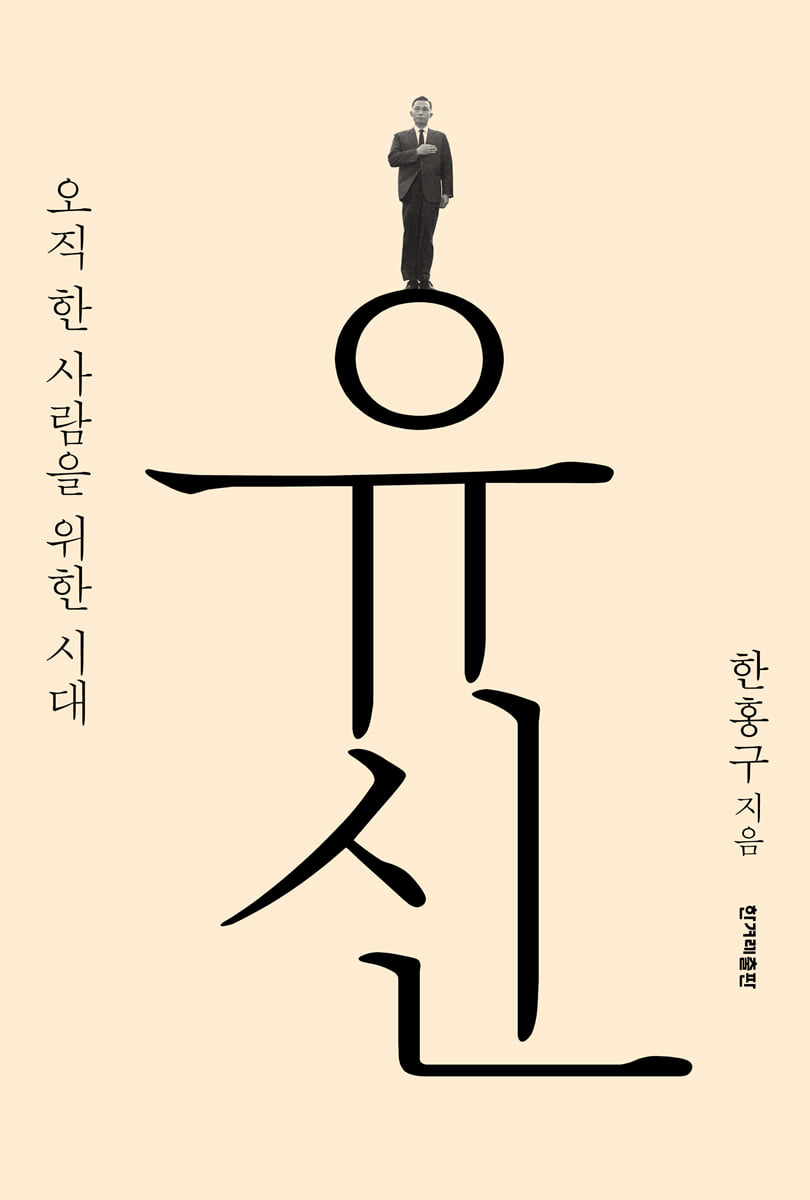
[Korean History] The Story of the Rise and Fall of the Yushin Regime, as Told by Han Hong-gu
Professor Han Hong-gu of Sungkonghoe University, author of the must-read book on modern Korean history, [History of the Republic of Korea], has published a new book that covers the Yushin era.
These days, with public opinion increasingly suggesting that the era of President Park Geun-hye is a return to the Yushin era of her father, President Park Geun-hye, Yushin is a historical event that must be revisited.
[Korean History] The Story of the Rise and Fall of the Yushin Regime, as Told by Han Hong-gu
Professor Han Hong-gu of Sungkonghoe University, author of the must-read book on modern Korean history, [History of the Republic of Korea], has published a new book that covers the Yushin era.
These days, with public opinion increasingly suggesting that the era of President Park Geun-hye is a return to the Yushin era of her father, President Park Geun-hye, Yushin is a historical event that must be revisited.
index
Recommendation by Go Eun (poet)
Opening remarks by Lee Man-yeol (Professor Emeritus, Sookmyung Women's University, former Chairman of the National Institute of Korean History)
Author's Preface
Prologue - To You Who Has the Body of Yushin and the Heart of Gwangju
Part 1: Destruction of the Constitution
1 The eve of Yushin, Republic of Korea in 1971
2 Preparations for a coup d'état and a bumper crop project
3 Park Chung-hee and Japan - The Spiritual Roots of Yushin
Part 2 One Person Above the Constitution
1. The puppet in the National Assembly, Yoo Jeong-hoe
2. The Yun Pil-yong case
3. Kim Dae-jung kidnapping incident
4 Emergency Measures and the National Youth and Student Federation
5. People's Revolutionary Party Reconstruction Committee Incident
6 Attempted assassination of the President and the death of First Lady Yuk Young-soo
7. Jang Jun-ha's suspicious death
Part 3: Taboos, Resistance, and Wounds
1 The Age of Taboo and Youth Culture
2. The Love Story of a Female Worker
3. Dongil Textile Labor Union Feces Incident
4. The Korean Peninsula Trade Union and the Central Intelligence Agency
5 Urban Industrial Mission Witch Hunt
6. Awakening of Journalists, Declaration of Freedom of the Press
7. Dong-A Ilbo blank advertisement incident
8 The Tragedy of 'Tarzan of Mt. Mudeung'
Part 4: Social History of the Yushin Reform
1 The Shadow of the 'Militarization' of the Fatherland
2. What the Vietnam troop deployment left behind
3. Camp village cleanup movement
4 Another name for Yushin: Saemaul Movement
5. Unification Rice and Food Production Increase Policy
6 Between nuclear power generation and nuclear weapons development
7 The Birth of the Gangnam Republic
8. Abolishment of middle school entrance exams and equalization of high schools
Part 5: The Collapse of the Yushin Regime
1 Prelude to 10?26, the YH incident
2 Namminjeon Incident
3. The disappearance and death of Kim Hyung-wook
The 4th Buma Uprising: Flames Rise
5 1979.10.26.
fateful day
Epilogue - Remembering Those Left Behind in the Wiretapping - Gwangju, That Majestic Defeat
Appendix 1 - An Open Letter to Candidate Park Geun-hye
Appendix 2 - The Night of the New God
Opening remarks by Lee Man-yeol (Professor Emeritus, Sookmyung Women's University, former Chairman of the National Institute of Korean History)
Author's Preface
Prologue - To You Who Has the Body of Yushin and the Heart of Gwangju
Part 1: Destruction of the Constitution
1 The eve of Yushin, Republic of Korea in 1971
2 Preparations for a coup d'état and a bumper crop project
3 Park Chung-hee and Japan - The Spiritual Roots of Yushin
Part 2 One Person Above the Constitution
1. The puppet in the National Assembly, Yoo Jeong-hoe
2. The Yun Pil-yong case
3. Kim Dae-jung kidnapping incident
4 Emergency Measures and the National Youth and Student Federation
5. People's Revolutionary Party Reconstruction Committee Incident
6 Attempted assassination of the President and the death of First Lady Yuk Young-soo
7. Jang Jun-ha's suspicious death
Part 3: Taboos, Resistance, and Wounds
1 The Age of Taboo and Youth Culture
2. The Love Story of a Female Worker
3. Dongil Textile Labor Union Feces Incident
4. The Korean Peninsula Trade Union and the Central Intelligence Agency
5 Urban Industrial Mission Witch Hunt
6. Awakening of Journalists, Declaration of Freedom of the Press
7. Dong-A Ilbo blank advertisement incident
8 The Tragedy of 'Tarzan of Mt. Mudeung'
Part 4: Social History of the Yushin Reform
1 The Shadow of the 'Militarization' of the Fatherland
2. What the Vietnam troop deployment left behind
3. Camp village cleanup movement
4 Another name for Yushin: Saemaul Movement
5. Unification Rice and Food Production Increase Policy
6 Between nuclear power generation and nuclear weapons development
7 The Birth of the Gangnam Republic
8. Abolishment of middle school entrance exams and equalization of high schools
Part 5: The Collapse of the Yushin Regime
1 Prelude to 10?26, the YH incident
2 Namminjeon Incident
3. The disappearance and death of Kim Hyung-wook
The 4th Buma Uprising: Flames Rise
5 1979.10.26.
fateful day
Epilogue - Remembering Those Left Behind in the Wiretapping - Gwangju, That Majestic Defeat
Appendix 1 - An Open Letter to Candidate Park Geun-hye
Appendix 2 - The Night of the New God
Into the book
The Yushin era was a time when young people raised by the Japanese colonial government became adults and ran society.
This period was a time that showed the tragic consequences of not being able to liquidate pro-Japanese remnants, or rather, of the forces that attempted to liquidate pro-Japanese remnants being liquidated by pro-Japanese collaborators.
As we will see in more detail later, the garrison state under Park Chung-hee's command was remarkably similar to the national defense system of Manchukuo and the total mobilization system of Japan during his youth.
The true nature of Park Chung-hee, a pro-Japanese collaborator who was born and raised as an imperial subject, should be found not in his days as a young officer, but in his revival of the failed models of Manchukuo and the Showa Restoration.
The tyranny of the Yushin regime is clear evidence of Park Chung-hee's lack of leadership.
Park Chung-hee could no longer lead the complex social structure that had developed with 'modernization' and economic development by maintaining a minimal level of formal democracy.
The 'regression' from the 1960s to the 1970s meant that Park Chung-hee broke away from the American-style democracy that did not suit his constitution and brought out the Japanese model that he had been familiar with since his youth, packaging it as 'Korean democracy.'
--- p.23
The question of whether the cause of the Yushin regime can be found in the internal and external crisis situations was concluded so simply that it could not even be called a 'debate'.
The vast majority of researchers agree that the crisis Park Chung-hee proclaimed was exaggerated, and that even if a real crisis existed, it would not require unusual measures such as the suspension of constitutional government.
Even Cho Gap-je, a conservative commentator who wrote a 13-volume biography of Park Chung-hee, said, “It felt really out of the blue” to suddenly dissolve the National Assembly when there was “no riot or invasion by the North Korean army,” and admitted that nowhere in the special declaration was there “a convincing explanation as to why such a drastic measure had to be taken.”
It is clear that the fundamental cause of the emergence of the Yushin regime was Park Chung-hee's ambition to remain in power for life.
If Park Chung-hee had not had the ambition to remain in power for life, there would be no historical basis for a dictatorship like the Yushin regime to emerge.
--- p.30
The New Democratic Party's significant advance in the 8th National Assembly election in 1971 was a major factor in Park Chung-hee's coup d'état known as the Yushin Constitution.
For Park Chung-hee, who dreamed of permanent rule, the National Assembly, with its strong and challenging opposition party, was an inefficient space that only resulted in partisan strife and division of public opinion.
Park Chung-hee secretly prepared for the Yushin regime and sought ways to neutralize the National Assembly.
There were two problems that Park Chung-hee was concerned about.
One was to secure a stable number of seats in the National Assembly, and the other was to resolve the phenomenon of the opposition party being defeated in major cities such as Seoul.
Park Chung-hee effectively appointed one-third of the National Assembly members in the Yushin Constitution.
And by introducing a multi-member district system instead of a single-member district system, the ruling party was able to secure a stable majority of seats, close to two-thirds, by opening the way for the ruling party to be elected alongside the opposition party in cities.
--- p.59
The Yun Pil-yong incident triggered a chain reaction of major incidents, and as a result, the power structure surrounding Park Chung-hee changed significantly.
With the exception of Kim Jeong-ryeol, the chief of staff at the Blue House, all of the key aides were sucked into a huge whirlpool.
Yoon Pil-yong went to prison, and Kim Hyung-wook, who had resigned from his position as director of the Central Intelligence Agency, immediately fled to Taiwan under the pretext of receiving an honorary doctorate after Yoon Pil-yong was arrested, and then went into exile in the United States.
Lee Hu-rak was replaced after actively intervening in the kidnapping of Kim Dae-jung in order to recover his position, which had been shaken by the Yoon Pil-yong incident, and Kang Chang-seong was thrown into the trash can.
The kidnapping of Kim Dae-jung caused an explosion of anti-Park Chung-hee sentiment in the Korean community in Japan, which led to Moon Se-gwang's attempted assassination of Park Chung-hee (the death of Yuk Young-soo), and Park Jong-gyu, the head of the security service, resigned, taking responsibility for this.
His successor was Cha Ji-cheol, and the position of director of the Central Intelligence Agency went to Kim Jae-gyu through Shin Ji-soo.
The plot that led to Park Chung-hee's death was woven from the Yun Pil-yong incident, the full details of which only Park Chung-hee knew.
--- p.77
During Park Chung-hee's 18 years in power, more than half, or about 120 months, were under martial law, state of emergency, or emergency measures.
The Yushin era was a period of continued oppression and fear under emergency measures, except for a few months in 1973 and a few months after the death of First Lady Yuk Young-soo in 1974 until Emergency Measure No. 9 was enacted the following year.
--- p.97
The People's Revolutionary Party Reconstruction Committee case, the worst public security manipulation case during the Park Chung-hee regime, was retried in 2007 and found not guilty based on investigations by the Suspicious Deaths Committee and the National Intelligence Service Truth and Reconciliation Commission.
The bereaved families filed a claim for damages against the state, and were awarded 49 billion won in compensation in the first trial, with a significant amount being provisionally executed.
However, the Supreme Court significantly reduced the amount of compensation, stating that the interest was overcalculated, and based on this, the state filed a lawsuit against the bereaved family members who received compensation and 77 people involved in the case, demanding the return of 25.1 billion won in “unjust profits.”
The People's Revolutionary Party incident is not over.
--- p.116
In the latter half of the 20th century, Korea achieved remarkable results in two areas: industrialization and democratization.
Some in the conservative camp even package themselves as “industrialization forces” and make the absurd claim that democratization was possible because of industrialization.
Some also hold Park Chung-hee in high regard as the father of industrialization and the father of the modernization of the country.
Who really achieved democratization and industrialization in this land?
The people who played a truly crucial role in both democratization and industrialization, but were not treated as the main players, were workers, especially female workers who suffered discrimination and contempt under the name of "Gongsoon-i."
They are the ones who achieved industrialization from the bottom through long hours of hard labor, and they are the vanguard of democratization that brought down the entrenched Yushin dictatorship.
--- p.165
Not long after the rumor began to spread among people that they lived by reading the Dong-A Ilbo, several companies began to withdraw advertising plates from the Dong-A Ilbo starting on December 16, 1974.
At the time, the advertising effect of the Dong-A Ilbo was so great that it is said that you had to wait several days even if you paid cash to place an advertisement.
In the Dong-A Ilbo, advertisers canceled their advertisements and took back their plates, asking not to be named. At first, the Dong-A Ilbo held on by bringing forward reserved advertisements and placing book advertisements in sister publications such as Shin Dong-A and Women's Dong-A, but when 98 percent of the advertisements were canceled, the newspaper published a blank advertisement page on December 26.
The absurd thing happened when advertisements disappeared from a newspaper that boasted the highest influence and circulation.
The Central Intelligence Agency attempted to strangle free speech with an advertising crackdown that no one could have predicted, but something truly unexpected began to happen.
Beginning with the publication of an opinion advertisement titled “Freedom of the Press and Freedom of Business” by veteran journalist Hong Jong-in on December 28, readers began pouring in with encouraging advertisements.
It was truly embarrassing for the Central Intelligence Agency, and the members of the Dong-A Ilbo were left choked up by “the truly heartbreaking donations and encouraging advertisements that were too painful to accept.”
--- p.226
The dispatch of troops to Vietnam had a long-term impact on Korean political history.
From above, key figures of the new military government, such as Chun Doo-hwan, Roh Tae-woo, Jeong Ho-yong, Hwang Young-si, Yu Hak-seong, Jang Se-dong, and Ahn Hyun-tae, and from below, many of the officers and non-commissioned officers of the airborne unit that had been deployed to Gwangju were dispatched to Vietnam.
Even if only a very small number of these individuals were actually involved in the massacre of civilians in Vietnam, it is by no means a coincidence that those who had experience pointing guns at civilians as potential Viet Cong in the Vietnam War, when the distinction between guerrillas and civilians was virtually impossible, became the main perpetrators of the Gwangju Massacre.
Additionally, some officers who had gained wealth and experience in Vietnam, which was rich in materials, banded together in private organizations such as the Hanahoe, pushing and pulling each other.
--- p.272
On the morning of October 18, 1979, people who picked up the morning newspaper were shocked.
It is said that martial law was declared in Busan at midnight on the 18th.
Although Park Chung-hee frequently used special measures such as “state of emergency,” “emergency measures,” and “martial law,” the term “emergency martial law” carried special weight.
According to the Martial Law, “Martial law is declared in areas where social order is extremely disturbed due to an enemy siege in times of war or war-like incidents.”
Since the YH incident broke out last summer, an injunction was filed to suspend New Democratic Party President Kim Young-sam from his duties, and two weeks ago, on October 4, there was even an uproar over President Kim Young-sam being expelled from the National Assembly, so the political situation had been in turmoil. However, martial law came so suddenly.
The Yushin regime, which began with a sudden martial law on October 17th seven years ago, began to rush toward its end exactly seven years later with a sudden martial law.
No one could have predicted that the small protest that took place at Pusan National University two days earlier on October 16th would escalate into a violent street demonstration with 50,000 participants.
Moreover, no one could have imagined that this demonstration, which brought about martial law, would be just a butterfly flapping its wings and bring about a tremendous typhoon that would lead to the director of the Central Intelligence Agency shooting the president to death.
The Buma Uprising of October 1979 was one such event that its historical significance has not been properly understood because its consequences were so enormous.
--- p.383~384
Kim Jae-gyu accompanied Park Chung-hee's internal rebellion, known as the May 16th Coup and the Yushin Coup, but ultimately ended it.
It was Chun Doo-hwan's rebellion that drove Kim Jae-gyu's actions to murder for the purpose of rebellion.
In his final statement, Kim Jae-gyu said goodbye to the people with the words, “Fellow citizens, enjoy liberal democracy.”
Kim Jae-gyu was executed on May 24, 1980, during the height of the Gwangju Uprising.
Chun Doo-hwan, who killed Kim Jae-gyu, trampled on the Gwangju citizens' uprising and reopened the Yushin regime, which seemed to have lost its life, by simply changing its name.
Chun Doo-hwan's civil war was thus completed, and 33 years later, we still have not enjoyed liberal democracy.
--- p.412
The Yushin era was an era of death.
It wasn't just Choi Jong-gil, Jang Jun-ha, and those associated with the People's Revolutionary Party who were sacrificed.
The Yushin era was a time when about 1,500 people died in the military every year.
(…) In the entire Yushin era, one division was annihilated without even fighting a battle.
No, it's not that they died without war, but rather that so many people were sacrificed in the war that Park Chung-hee waged against democracy.
(…) Second, the Yushin era was a time when everyone’s freedom was sacrificed for the freedom of one person, Park Chung-hee.
(…) Park Chung-hee did not want to go on campaign trips and have debates, so he abolished the direct presidential election system.
At that time, Park Chung-hee dreamed of an absolute position like that of an emperor.
Third, the Yushin era was a time when freedom of expression was terribly trampled upon.
The Yushin regime was one where people would be arrested without a warrant and sentenced to 15 years in prison by a military court even if they asked (petitioned) the president to “amend” the constitution, rather than saying, “Let’s overthrow the Yushin dictatorship” or “Abolish the Yushin Constitution.”
(…) Fourth, the Yushin era was a time when not only freedom of expression but also freedom of conscience within humans was violated.
Park Chung-hee, who had breathlessly transformed from a pro-Japanese collaborator to a member of the Korean Liberation Army, from the Korean Liberation Army to the top agent infiltrated by the left wing in the military, and from a leftist agent to the right wing again, could not tolerate the appearance of leftists who did not convert.
The Social Security Act, enacted in 1975, required prisoners to remain in prison even after serving their sentence if they did not submit a letter of conversion.
Even those who had served their sentences and were released were arrested again if they did not write a letter of conversion and were sentenced to indefinite imprisonment under the pretext of protective custody.
This period was a time that showed the tragic consequences of not being able to liquidate pro-Japanese remnants, or rather, of the forces that attempted to liquidate pro-Japanese remnants being liquidated by pro-Japanese collaborators.
As we will see in more detail later, the garrison state under Park Chung-hee's command was remarkably similar to the national defense system of Manchukuo and the total mobilization system of Japan during his youth.
The true nature of Park Chung-hee, a pro-Japanese collaborator who was born and raised as an imperial subject, should be found not in his days as a young officer, but in his revival of the failed models of Manchukuo and the Showa Restoration.
The tyranny of the Yushin regime is clear evidence of Park Chung-hee's lack of leadership.
Park Chung-hee could no longer lead the complex social structure that had developed with 'modernization' and economic development by maintaining a minimal level of formal democracy.
The 'regression' from the 1960s to the 1970s meant that Park Chung-hee broke away from the American-style democracy that did not suit his constitution and brought out the Japanese model that he had been familiar with since his youth, packaging it as 'Korean democracy.'
--- p.23
The question of whether the cause of the Yushin regime can be found in the internal and external crisis situations was concluded so simply that it could not even be called a 'debate'.
The vast majority of researchers agree that the crisis Park Chung-hee proclaimed was exaggerated, and that even if a real crisis existed, it would not require unusual measures such as the suspension of constitutional government.
Even Cho Gap-je, a conservative commentator who wrote a 13-volume biography of Park Chung-hee, said, “It felt really out of the blue” to suddenly dissolve the National Assembly when there was “no riot or invasion by the North Korean army,” and admitted that nowhere in the special declaration was there “a convincing explanation as to why such a drastic measure had to be taken.”
It is clear that the fundamental cause of the emergence of the Yushin regime was Park Chung-hee's ambition to remain in power for life.
If Park Chung-hee had not had the ambition to remain in power for life, there would be no historical basis for a dictatorship like the Yushin regime to emerge.
--- p.30
The New Democratic Party's significant advance in the 8th National Assembly election in 1971 was a major factor in Park Chung-hee's coup d'état known as the Yushin Constitution.
For Park Chung-hee, who dreamed of permanent rule, the National Assembly, with its strong and challenging opposition party, was an inefficient space that only resulted in partisan strife and division of public opinion.
Park Chung-hee secretly prepared for the Yushin regime and sought ways to neutralize the National Assembly.
There were two problems that Park Chung-hee was concerned about.
One was to secure a stable number of seats in the National Assembly, and the other was to resolve the phenomenon of the opposition party being defeated in major cities such as Seoul.
Park Chung-hee effectively appointed one-third of the National Assembly members in the Yushin Constitution.
And by introducing a multi-member district system instead of a single-member district system, the ruling party was able to secure a stable majority of seats, close to two-thirds, by opening the way for the ruling party to be elected alongside the opposition party in cities.
--- p.59
The Yun Pil-yong incident triggered a chain reaction of major incidents, and as a result, the power structure surrounding Park Chung-hee changed significantly.
With the exception of Kim Jeong-ryeol, the chief of staff at the Blue House, all of the key aides were sucked into a huge whirlpool.
Yoon Pil-yong went to prison, and Kim Hyung-wook, who had resigned from his position as director of the Central Intelligence Agency, immediately fled to Taiwan under the pretext of receiving an honorary doctorate after Yoon Pil-yong was arrested, and then went into exile in the United States.
Lee Hu-rak was replaced after actively intervening in the kidnapping of Kim Dae-jung in order to recover his position, which had been shaken by the Yoon Pil-yong incident, and Kang Chang-seong was thrown into the trash can.
The kidnapping of Kim Dae-jung caused an explosion of anti-Park Chung-hee sentiment in the Korean community in Japan, which led to Moon Se-gwang's attempted assassination of Park Chung-hee (the death of Yuk Young-soo), and Park Jong-gyu, the head of the security service, resigned, taking responsibility for this.
His successor was Cha Ji-cheol, and the position of director of the Central Intelligence Agency went to Kim Jae-gyu through Shin Ji-soo.
The plot that led to Park Chung-hee's death was woven from the Yun Pil-yong incident, the full details of which only Park Chung-hee knew.
--- p.77
During Park Chung-hee's 18 years in power, more than half, or about 120 months, were under martial law, state of emergency, or emergency measures.
The Yushin era was a period of continued oppression and fear under emergency measures, except for a few months in 1973 and a few months after the death of First Lady Yuk Young-soo in 1974 until Emergency Measure No. 9 was enacted the following year.
--- p.97
The People's Revolutionary Party Reconstruction Committee case, the worst public security manipulation case during the Park Chung-hee regime, was retried in 2007 and found not guilty based on investigations by the Suspicious Deaths Committee and the National Intelligence Service Truth and Reconciliation Commission.
The bereaved families filed a claim for damages against the state, and were awarded 49 billion won in compensation in the first trial, with a significant amount being provisionally executed.
However, the Supreme Court significantly reduced the amount of compensation, stating that the interest was overcalculated, and based on this, the state filed a lawsuit against the bereaved family members who received compensation and 77 people involved in the case, demanding the return of 25.1 billion won in “unjust profits.”
The People's Revolutionary Party incident is not over.
--- p.116
In the latter half of the 20th century, Korea achieved remarkable results in two areas: industrialization and democratization.
Some in the conservative camp even package themselves as “industrialization forces” and make the absurd claim that democratization was possible because of industrialization.
Some also hold Park Chung-hee in high regard as the father of industrialization and the father of the modernization of the country.
Who really achieved democratization and industrialization in this land?
The people who played a truly crucial role in both democratization and industrialization, but were not treated as the main players, were workers, especially female workers who suffered discrimination and contempt under the name of "Gongsoon-i."
They are the ones who achieved industrialization from the bottom through long hours of hard labor, and they are the vanguard of democratization that brought down the entrenched Yushin dictatorship.
--- p.165
Not long after the rumor began to spread among people that they lived by reading the Dong-A Ilbo, several companies began to withdraw advertising plates from the Dong-A Ilbo starting on December 16, 1974.
At the time, the advertising effect of the Dong-A Ilbo was so great that it is said that you had to wait several days even if you paid cash to place an advertisement.
In the Dong-A Ilbo, advertisers canceled their advertisements and took back their plates, asking not to be named. At first, the Dong-A Ilbo held on by bringing forward reserved advertisements and placing book advertisements in sister publications such as Shin Dong-A and Women's Dong-A, but when 98 percent of the advertisements were canceled, the newspaper published a blank advertisement page on December 26.
The absurd thing happened when advertisements disappeared from a newspaper that boasted the highest influence and circulation.
The Central Intelligence Agency attempted to strangle free speech with an advertising crackdown that no one could have predicted, but something truly unexpected began to happen.
Beginning with the publication of an opinion advertisement titled “Freedom of the Press and Freedom of Business” by veteran journalist Hong Jong-in on December 28, readers began pouring in with encouraging advertisements.
It was truly embarrassing for the Central Intelligence Agency, and the members of the Dong-A Ilbo were left choked up by “the truly heartbreaking donations and encouraging advertisements that were too painful to accept.”
--- p.226
The dispatch of troops to Vietnam had a long-term impact on Korean political history.
From above, key figures of the new military government, such as Chun Doo-hwan, Roh Tae-woo, Jeong Ho-yong, Hwang Young-si, Yu Hak-seong, Jang Se-dong, and Ahn Hyun-tae, and from below, many of the officers and non-commissioned officers of the airborne unit that had been deployed to Gwangju were dispatched to Vietnam.
Even if only a very small number of these individuals were actually involved in the massacre of civilians in Vietnam, it is by no means a coincidence that those who had experience pointing guns at civilians as potential Viet Cong in the Vietnam War, when the distinction between guerrillas and civilians was virtually impossible, became the main perpetrators of the Gwangju Massacre.
Additionally, some officers who had gained wealth and experience in Vietnam, which was rich in materials, banded together in private organizations such as the Hanahoe, pushing and pulling each other.
--- p.272
On the morning of October 18, 1979, people who picked up the morning newspaper were shocked.
It is said that martial law was declared in Busan at midnight on the 18th.
Although Park Chung-hee frequently used special measures such as “state of emergency,” “emergency measures,” and “martial law,” the term “emergency martial law” carried special weight.
According to the Martial Law, “Martial law is declared in areas where social order is extremely disturbed due to an enemy siege in times of war or war-like incidents.”
Since the YH incident broke out last summer, an injunction was filed to suspend New Democratic Party President Kim Young-sam from his duties, and two weeks ago, on October 4, there was even an uproar over President Kim Young-sam being expelled from the National Assembly, so the political situation had been in turmoil. However, martial law came so suddenly.
The Yushin regime, which began with a sudden martial law on October 17th seven years ago, began to rush toward its end exactly seven years later with a sudden martial law.
No one could have predicted that the small protest that took place at Pusan National University two days earlier on October 16th would escalate into a violent street demonstration with 50,000 participants.
Moreover, no one could have imagined that this demonstration, which brought about martial law, would be just a butterfly flapping its wings and bring about a tremendous typhoon that would lead to the director of the Central Intelligence Agency shooting the president to death.
The Buma Uprising of October 1979 was one such event that its historical significance has not been properly understood because its consequences were so enormous.
--- p.383~384
Kim Jae-gyu accompanied Park Chung-hee's internal rebellion, known as the May 16th Coup and the Yushin Coup, but ultimately ended it.
It was Chun Doo-hwan's rebellion that drove Kim Jae-gyu's actions to murder for the purpose of rebellion.
In his final statement, Kim Jae-gyu said goodbye to the people with the words, “Fellow citizens, enjoy liberal democracy.”
Kim Jae-gyu was executed on May 24, 1980, during the height of the Gwangju Uprising.
Chun Doo-hwan, who killed Kim Jae-gyu, trampled on the Gwangju citizens' uprising and reopened the Yushin regime, which seemed to have lost its life, by simply changing its name.
Chun Doo-hwan's civil war was thus completed, and 33 years later, we still have not enjoyed liberal democracy.
--- p.412
The Yushin era was an era of death.
It wasn't just Choi Jong-gil, Jang Jun-ha, and those associated with the People's Revolutionary Party who were sacrificed.
The Yushin era was a time when about 1,500 people died in the military every year.
(…) In the entire Yushin era, one division was annihilated without even fighting a battle.
No, it's not that they died without war, but rather that so many people were sacrificed in the war that Park Chung-hee waged against democracy.
(…) Second, the Yushin era was a time when everyone’s freedom was sacrificed for the freedom of one person, Park Chung-hee.
(…) Park Chung-hee did not want to go on campaign trips and have debates, so he abolished the direct presidential election system.
At that time, Park Chung-hee dreamed of an absolute position like that of an emperor.
Third, the Yushin era was a time when freedom of expression was terribly trampled upon.
The Yushin regime was one where people would be arrested without a warrant and sentenced to 15 years in prison by a military court even if they asked (petitioned) the president to “amend” the constitution, rather than saying, “Let’s overthrow the Yushin dictatorship” or “Abolish the Yushin Constitution.”
(…) Fourth, the Yushin era was a time when not only freedom of expression but also freedom of conscience within humans was violated.
Park Chung-hee, who had breathlessly transformed from a pro-Japanese collaborator to a member of the Korean Liberation Army, from the Korean Liberation Army to the top agent infiltrated by the left wing in the military, and from a leftist agent to the right wing again, could not tolerate the appearance of leftists who did not convert.
The Social Security Act, enacted in 1975, required prisoners to remain in prison even after serving their sentence if they did not submit a letter of conversion.
Even those who had served their sentences and were released were arrested again if they did not write a letter of conversion and were sentenced to indefinite imprisonment under the pretext of protective custody.
--- p.439~440
Publisher's Review
An era in which the freedom of all was sacrificed for the freedom of one person.
Park Chung-hee is a problematic figure in modern Korean history.
Half of the people remember him as a hero who led industrialization, while the other half remember him as a dictator who suppressed democracy.
The close results of the 18th presidential election, in which his daughter was a candidate, may reveal the public sentiment.
Park Chung-hee staged a coup on May 16, 1961.
He became president in the 1963 election, was re-elected in 1967, and then, through the '3rd term constitutional amendment' in 1969, he gained the right to run in the 1971 election, and barely won his third term in 1971.
He had promised never to ask the people for their votes again, but after declaring martial law in 1972, he created the Yushin Constitution, took away the people's right to vote, and then set out on the path to permanent rule.
However, he was eventually shot and killed by the then Director of the Central Intelligence Agency, Kim Jae-gyu, on October 26, 1979.
This book examines events that occurred during the last nine years of Park Chung-hee's 18 years in power.
From the birth of the Yushin era to its collapse, it focuses on how he destroyed the constitution and ruled over the people, and how Yushin destroyed democracy.
A time when there was not a single day of peace
In Part 1, 'Destruction of the Constitution', the absurdity of the martial law of 1972 was revealed through the scenes of the early 1970s.
Even Jo Gap-je, a conservative commentator who admires Park Chung-hee, admitted that it felt “abrupt” to suddenly dissolve the National Assembly when “there was no riot or North Korean troops invaded.” This confirms once again the cause of the Yushin Constitution, which cannot be explained unless it was Park Chung-hee’s ambition to remain in power for life.
Part 2, “One Person Above the Constitution,” introduces major incidents during the Yushin era that trampled on law, human rights, and democracy.
From institutions like the Yujeonghoe, which allowed the president to appoint one-third of the National Assembly, to the kidnapping of Kim Dae-jung, the suspicious death of Jang Jun-ha, the Democratic Youth and Student League incident, and the People's Revolutionary Party Reconstruction Committee incident, which committed an unprecedented judicial murder, we examine how many absurd acts were committed for the freedom of just one man, Park Chung-hee, and how these incidents ultimately drove him to death.
Gongsun, a true hero who achieved industrialization and democratization at the same time
Part 3, Taboo, Resistance, and Wounds, illuminates the lives of the common people of that era.
In particular, it restores the tearful history of the lives and struggles of female workers, commonly known as 'Gongsoon-i', who have not received much attention so far.
They are the driving force behind industrialization from the bottom up through long hours of hard labor.
They came to the city at a young age to send their older or younger brothers to school, and they endured each day working low wages in an environment where even the most basic human rights were not guaranteed.
They also led the labor movement throughout the 1970s.
They were the ones who laid the foundation for the collapse of the impregnable Park Chung-hee regime through the YH incident during the final moments of the Yushin era, when even college students could not properly demonstrate.
Part 3 conveys the state of the labor movement at the time through the activities of the Urban Industrial Mission and the situations of the Dongil Textile Union and the Bandosangsa Union.
We will also look at the flow of the media movement.
Journalists who have lost trust to the point that signs saying "Dogs and reporters are prohibited from entering" are posted on university campuses where they are protesting, are also coming out with the "Declaration of Freedom of the Press" to end their shame.
The flames of resistance that had been dormant since the birth of the Yushin regime were rekindled.
Part 4, Social History of Yushin, conveys the social landscape of the 1970s.
Through the Vietnam troop deployment, the Saemaul Movement, the camp town cleanup movement, and the Gangnam development, which took place amidst the militarization of the entire society to the point that it could be called the 'militarization' of the fatherland, we can see the shadow of dictatorship that extends even to the microscopic realm.
The Yushin regime collapsed rapidly, and spring arrived suddenly.
Part 5: The Collapse of the Yushin Regime covers the period from the YH incident to October 26.
No one could have known at the time that the closure of YH Trading, which had amassed enormous wealth through wig exports, and the YH workers' entry into the New Democratic Party, then headed by Kim Young-sam, to demand that it be stopped would be a signal for the downfall of the Yushin regime.
The series of events that led to the YH workers' sit-in at the New Democratic Party headquarters on August 9, 1979, the ruling to suspend New Democratic Party President Kim Young-sam from his duties on September 8, the expulsion of Representative Kim Young-sam from the National Assembly on October 4, the start of the anti-Yushin protests at Pusan National University on October 16, the declaration of martial law in Busan on October 18, and the assassination of Park Chung-hee by Kim Jae-gyu on October 26 may have been the explosion of the contradictions of the Yushin regime that had been festering for so long.
But the spring that came suddenly did not last long.
After October 26, due to Chun Doo-hwan's ambition to continue the Park Chung-hee regime without Park, Kim Jae-gyu became a 'traitor who killed the father of the nation', and the innocent citizens of Gwangju became 'rioters'.
The Yushin is still not over.
When history is forgotten, it repeats itself.
Professor Lee Man-yeol, former chairman of the National Institute of Korean History, said in his opening remarks, “Our enjoyment should not be like a free ride,” and “I hope that this book will serve as an opportunity to properly understand the barbarism of Yushin and to renew our commitment to democracy.”
The author also revealed that he wrote this book to prevent the 'resurrection of Yushin'. While reading this book, you will witness the evils and reality of Yushin and become angry, but at the same time, it will make you look back at ourselves today.
The author, who refers to the democratization movement forces of the 1970s and 1980s as the generation with the body of Yushin and the mind of Gwangju, says that they were actually an unfortunate generation that did not have the opportunity to experience democracy in their bodies.
He also said that as a historian belonging to that generation, he felt sorry for not being able to properly pay homage to the Yushin era and for passing on an unstable era to the younger generation who should have enjoyed a better one.
They say that when history is forgotten, it repeats itself.
It is up to all of us to ensure that this tragedy never happens again.
Park Chung-hee is a problematic figure in modern Korean history.
Half of the people remember him as a hero who led industrialization, while the other half remember him as a dictator who suppressed democracy.
The close results of the 18th presidential election, in which his daughter was a candidate, may reveal the public sentiment.
Park Chung-hee staged a coup on May 16, 1961.
He became president in the 1963 election, was re-elected in 1967, and then, through the '3rd term constitutional amendment' in 1969, he gained the right to run in the 1971 election, and barely won his third term in 1971.
He had promised never to ask the people for their votes again, but after declaring martial law in 1972, he created the Yushin Constitution, took away the people's right to vote, and then set out on the path to permanent rule.
However, he was eventually shot and killed by the then Director of the Central Intelligence Agency, Kim Jae-gyu, on October 26, 1979.
This book examines events that occurred during the last nine years of Park Chung-hee's 18 years in power.
From the birth of the Yushin era to its collapse, it focuses on how he destroyed the constitution and ruled over the people, and how Yushin destroyed democracy.
A time when there was not a single day of peace
In Part 1, 'Destruction of the Constitution', the absurdity of the martial law of 1972 was revealed through the scenes of the early 1970s.
Even Jo Gap-je, a conservative commentator who admires Park Chung-hee, admitted that it felt “abrupt” to suddenly dissolve the National Assembly when “there was no riot or North Korean troops invaded.” This confirms once again the cause of the Yushin Constitution, which cannot be explained unless it was Park Chung-hee’s ambition to remain in power for life.
Part 2, “One Person Above the Constitution,” introduces major incidents during the Yushin era that trampled on law, human rights, and democracy.
From institutions like the Yujeonghoe, which allowed the president to appoint one-third of the National Assembly, to the kidnapping of Kim Dae-jung, the suspicious death of Jang Jun-ha, the Democratic Youth and Student League incident, and the People's Revolutionary Party Reconstruction Committee incident, which committed an unprecedented judicial murder, we examine how many absurd acts were committed for the freedom of just one man, Park Chung-hee, and how these incidents ultimately drove him to death.
Gongsun, a true hero who achieved industrialization and democratization at the same time
Part 3, Taboo, Resistance, and Wounds, illuminates the lives of the common people of that era.
In particular, it restores the tearful history of the lives and struggles of female workers, commonly known as 'Gongsoon-i', who have not received much attention so far.
They are the driving force behind industrialization from the bottom up through long hours of hard labor.
They came to the city at a young age to send their older or younger brothers to school, and they endured each day working low wages in an environment where even the most basic human rights were not guaranteed.
They also led the labor movement throughout the 1970s.
They were the ones who laid the foundation for the collapse of the impregnable Park Chung-hee regime through the YH incident during the final moments of the Yushin era, when even college students could not properly demonstrate.
Part 3 conveys the state of the labor movement at the time through the activities of the Urban Industrial Mission and the situations of the Dongil Textile Union and the Bandosangsa Union.
We will also look at the flow of the media movement.
Journalists who have lost trust to the point that signs saying "Dogs and reporters are prohibited from entering" are posted on university campuses where they are protesting, are also coming out with the "Declaration of Freedom of the Press" to end their shame.
The flames of resistance that had been dormant since the birth of the Yushin regime were rekindled.
Part 4, Social History of Yushin, conveys the social landscape of the 1970s.
Through the Vietnam troop deployment, the Saemaul Movement, the camp town cleanup movement, and the Gangnam development, which took place amidst the militarization of the entire society to the point that it could be called the 'militarization' of the fatherland, we can see the shadow of dictatorship that extends even to the microscopic realm.
The Yushin regime collapsed rapidly, and spring arrived suddenly.
Part 5: The Collapse of the Yushin Regime covers the period from the YH incident to October 26.
No one could have known at the time that the closure of YH Trading, which had amassed enormous wealth through wig exports, and the YH workers' entry into the New Democratic Party, then headed by Kim Young-sam, to demand that it be stopped would be a signal for the downfall of the Yushin regime.
The series of events that led to the YH workers' sit-in at the New Democratic Party headquarters on August 9, 1979, the ruling to suspend New Democratic Party President Kim Young-sam from his duties on September 8, the expulsion of Representative Kim Young-sam from the National Assembly on October 4, the start of the anti-Yushin protests at Pusan National University on October 16, the declaration of martial law in Busan on October 18, and the assassination of Park Chung-hee by Kim Jae-gyu on October 26 may have been the explosion of the contradictions of the Yushin regime that had been festering for so long.
But the spring that came suddenly did not last long.
After October 26, due to Chun Doo-hwan's ambition to continue the Park Chung-hee regime without Park, Kim Jae-gyu became a 'traitor who killed the father of the nation', and the innocent citizens of Gwangju became 'rioters'.
The Yushin is still not over.
When history is forgotten, it repeats itself.
Professor Lee Man-yeol, former chairman of the National Institute of Korean History, said in his opening remarks, “Our enjoyment should not be like a free ride,” and “I hope that this book will serve as an opportunity to properly understand the barbarism of Yushin and to renew our commitment to democracy.”
The author also revealed that he wrote this book to prevent the 'resurrection of Yushin'. While reading this book, you will witness the evils and reality of Yushin and become angry, but at the same time, it will make you look back at ourselves today.
The author, who refers to the democratization movement forces of the 1970s and 1980s as the generation with the body of Yushin and the mind of Gwangju, says that they were actually an unfortunate generation that did not have the opportunity to experience democracy in their bodies.
He also said that as a historian belonging to that generation, he felt sorry for not being able to properly pay homage to the Yushin era and for passing on an unstable era to the younger generation who should have enjoyed a better one.
They say that when history is forgotten, it repeats itself.
It is up to all of us to ensure that this tragedy never happens again.
GOODS SPECIFICS
- Date of issue: July 19, 2024
- Page count, weight, size: 472 pages | 152*223*30mm
- ISBN13: 9791172130756
- ISBN10: 1172130752
You may also like
카테고리
korean


korean

![GQ KOREA Mark (Monthly): December [2025]](http://librairie.coreenne.fr/cdn/shop/files/8ef265dbbfbf186523ed75ba7319009d.jpg?v=1765340328&width=3840)


