

Qingming Festival
 |
Description
Book Introduction
China's National Treasure No. 1, "Qingming River Painting"
Revealing its secrets and cultural implications
A spectacle of microhistory brought to life through detailed reading
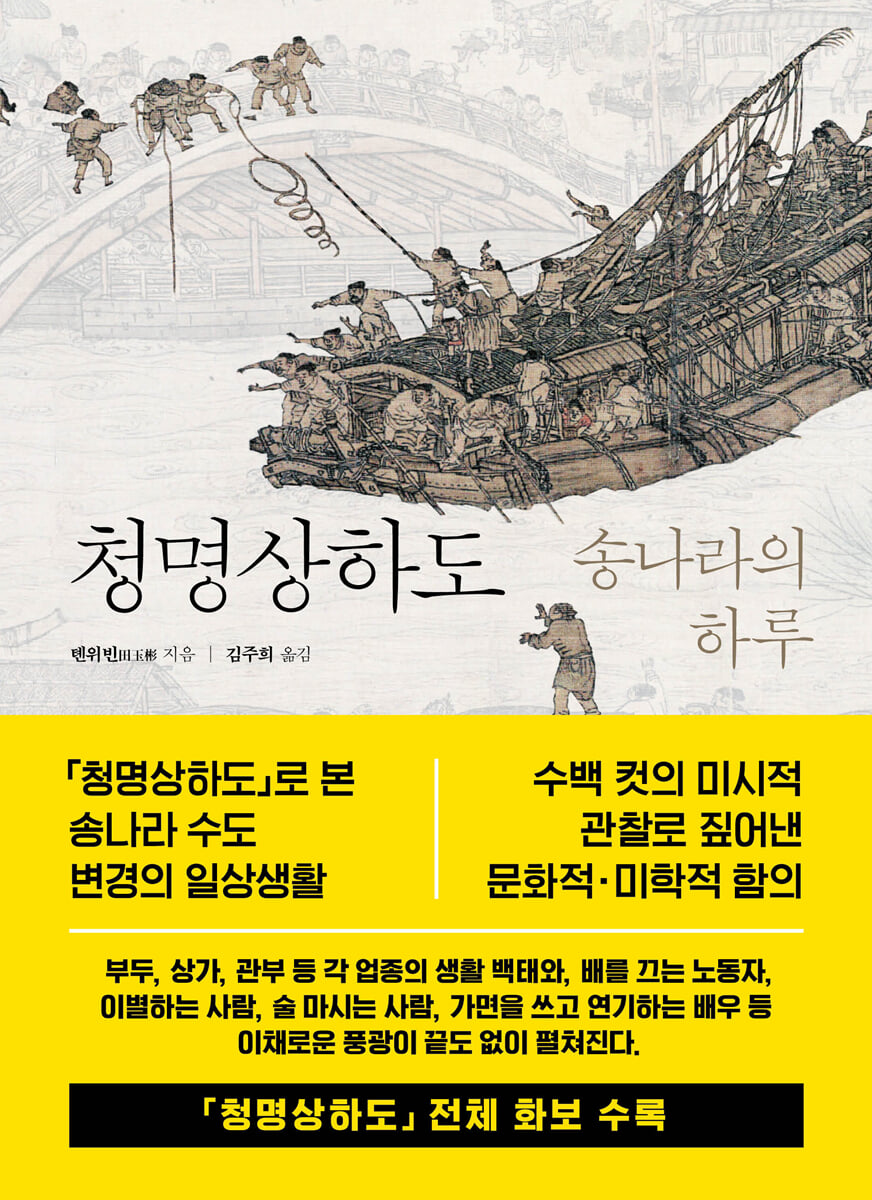
China's National Treasure No. 1 is the "Qingming Shanghe Dao" (Map of the River during the Qingming Festival).
The reason why a painting, rather than a large building or a Buddhist statue, is designated as National Treasure No. 1 is probably because it is so important.
"Along the River during the Qingming Festival" is one of the ten most famous paintings in China and is a genre painting painted by Zhang Zeduan, a scholar of the Hanlin Academy during the Northern Song Dynasty in the 12th century.
It is a silk scroll measuring 24.8 centimeters in height and 528.7 centimeters in width. It vividly depicts crowds of people celebrating the Qingming Festival against the backdrop of Bianjing (present-day Kaifeng, Henan Province), the capital of the Northern Song Dynasty.
This painting, which vividly depicts the prosperity of the Song Dynasty, depicts a whopping 814 people, 28 ships, 60 animals, 30 buildings, 20 oxcarts, 8 palanquins, and 170 trees.
It is evaluated as having high value in terms of artistic and historical verification, as it depicts the people, customs, and social prosperity of the Song Dynasty in a realistic style.
The city, suburbs, downtown, boats, bridges, city gates, and streets are shown in order across the river that flows through the capital city. Bars, shops, street vendors, merchant carriages, and crowds are arranged in this format, and the perspective is applied to make it as accurate and realistic as a photograph.
Author Tian Yubin has included 36 stories in this book that he captured through meticulous observation of the Qingming Festival.
First of all, this book is unique in that it deals with a single painting.
Books on ancient art published in Korea so far have mainly focused on themes such as eras or artists.
There is no book that examines a single work in detail.
You can experience the bustling daily lives of common people in the Song Dynasty with vivid commentary by Tian Yubin, a star docent in the Chinese ancient art world, including a father and son urging their donkey to load it with charcoal at dawn, a woman looking out while traveling in a palanquin, people drinking in the taverns of Gyeongseong splendidly decorated with colorful silks, ships crossing the Bian River and people gathered on the Hongqiao Bridge to watch them.
Revealing its secrets and cultural implications
A spectacle of microhistory brought to life through detailed reading
China's National Treasure No. 1 is the "Qingming Shanghe Dao" (Map of the River during the Qingming Festival).
The reason why a painting, rather than a large building or a Buddhist statue, is designated as National Treasure No. 1 is probably because it is so important.
"Along the River during the Qingming Festival" is one of the ten most famous paintings in China and is a genre painting painted by Zhang Zeduan, a scholar of the Hanlin Academy during the Northern Song Dynasty in the 12th century.
It is a silk scroll measuring 24.8 centimeters in height and 528.7 centimeters in width. It vividly depicts crowds of people celebrating the Qingming Festival against the backdrop of Bianjing (present-day Kaifeng, Henan Province), the capital of the Northern Song Dynasty.
This painting, which vividly depicts the prosperity of the Song Dynasty, depicts a whopping 814 people, 28 ships, 60 animals, 30 buildings, 20 oxcarts, 8 palanquins, and 170 trees.
It is evaluated as having high value in terms of artistic and historical verification, as it depicts the people, customs, and social prosperity of the Song Dynasty in a realistic style.
The city, suburbs, downtown, boats, bridges, city gates, and streets are shown in order across the river that flows through the capital city. Bars, shops, street vendors, merchant carriages, and crowds are arranged in this format, and the perspective is applied to make it as accurate and realistic as a photograph.
Author Tian Yubin has included 36 stories in this book that he captured through meticulous observation of the Qingming Festival.
First of all, this book is unique in that it deals with a single painting.
Books on ancient art published in Korea so far have mainly focused on themes such as eras or artists.
There is no book that examines a single work in detail.
You can experience the bustling daily lives of common people in the Song Dynasty with vivid commentary by Tian Yubin, a star docent in the Chinese ancient art world, including a father and son urging their donkey to load it with charcoal at dawn, a woman looking out while traveling in a palanquin, people drinking in the taverns of Gyeongseong splendidly decorated with colorful silks, ships crossing the Bian River and people gathered on the Hongqiao Bridge to watch them.
- You can preview some of the book's contents.
Preview
index
Introduction I love old Chinese paintings.
Preview of the complete volume of "Qingming Shanghe Dao"
A few things to know before looking at the picture in Chapter 1
1.
Contents of "Qingming Shanghe Dao"
2.
The fate of the painter and the painting
3.
Palace Museum Open Run
Chapter 2: 36 Lifestyles Encountered in the Streets of the Song Dynasty
1.
What is the load on the donkey's back?
2.
What are the tools in the yard of a farmhouse near the city?
3.
Why did the willow trunk break?
4.
Why was the horse surprised?
5.
Rice fields and temperatures during the Qingming Festival in the Northern Song Dynasty
6.
Change? River! Change? River!
7.
Byeonha Pier and narrow Saga Street
8.
Let's go up the river and see the big ships!
9.
What are all these ships doing in one place?
10.
A large oar? And something that worried the crew of the passenger ship.
11.
A lower garment spread on a boat cover
12.
Secret Traveler
13.
The story of ships in a chain of crises
14.
Honggyo! Honggyo!
15.
Street vendors and crisis situations on the bridge
16.
The Truth Behind the "Crisis of the Great Ship"
17.
What does each store sell?
18.
The tangled dangers on Honggyo Bridge
19.
The great river flows east.
20.
A story at the intersection outside the castle
21.
Tools in the cart repair shop
22.
A peddler carrying a portable display stand, a traveling doctor, a donkey selling charcoal and a merchant
23.
Secret House
24.
Three signs hanging at a fortune teller's stall
25.
A temple in the distance and a herd of pigs strolling
26.
Three things to consider: road conditions, street vendors, and a single, idle brush.
27.
A quiet atmosphere and beggars on the bridge
28.
Two mysteries unfold before the city gates
29.
The gate of the Great Song Dynasty
30.
Scales, sugarcane, shaving
31.
The exquisitely beautiful Son Yangjeongjeom
32.
The painter's eye?
33.
The Butcher's Shop and the Book of Discourses
34.
Haepo and fortune teller
35.
Tour the castle
36.
Wandering and Diligence: Two Conclusions of "The Road Along the Qingming River"
Chapter 3 Other Questions
1.
Time taken to complete "Qingming Shanghe Dao"
2.
Whether the "Qingming Shanghe Dao" is complete
3.
The Song Dynasty's major cities of Luoyang, Hangzhou, and Nanjing
4.
A quick look at the preface to "Qingming Shanghe Dao"
5.
The fate of the "Qingming River Painting" after the Ming Dynasty
6.
The legacy of the "Qingming Shanghe Dao"
7.
"Qingming Shanghe Dao" and the world of Gyehwa?
8.
Comparison of the "Qingming River Paintings" of the past
9.
How to better understand the lives of Song Dynasty people
Preview of the complete volume of "Qingming Shanghe Dao"
A few things to know before looking at the picture in Chapter 1
1.
Contents of "Qingming Shanghe Dao"
2.
The fate of the painter and the painting
3.
Palace Museum Open Run
Chapter 2: 36 Lifestyles Encountered in the Streets of the Song Dynasty
1.
What is the load on the donkey's back?
2.
What are the tools in the yard of a farmhouse near the city?
3.
Why did the willow trunk break?
4.
Why was the horse surprised?
5.
Rice fields and temperatures during the Qingming Festival in the Northern Song Dynasty
6.
Change? River! Change? River!
7.
Byeonha Pier and narrow Saga Street
8.
Let's go up the river and see the big ships!
9.
What are all these ships doing in one place?
10.
A large oar? And something that worried the crew of the passenger ship.
11.
A lower garment spread on a boat cover
12.
Secret Traveler
13.
The story of ships in a chain of crises
14.
Honggyo! Honggyo!
15.
Street vendors and crisis situations on the bridge
16.
The Truth Behind the "Crisis of the Great Ship"
17.
What does each store sell?
18.
The tangled dangers on Honggyo Bridge
19.
The great river flows east.
20.
A story at the intersection outside the castle
21.
Tools in the cart repair shop
22.
A peddler carrying a portable display stand, a traveling doctor, a donkey selling charcoal and a merchant
23.
Secret House
24.
Three signs hanging at a fortune teller's stall
25.
A temple in the distance and a herd of pigs strolling
26.
Three things to consider: road conditions, street vendors, and a single, idle brush.
27.
A quiet atmosphere and beggars on the bridge
28.
Two mysteries unfold before the city gates
29.
The gate of the Great Song Dynasty
30.
Scales, sugarcane, shaving
31.
The exquisitely beautiful Son Yangjeongjeom
32.
The painter's eye?
33.
The Butcher's Shop and the Book of Discourses
34.
Haepo and fortune teller
35.
Tour the castle
36.
Wandering and Diligence: Two Conclusions of "The Road Along the Qingming River"
Chapter 3 Other Questions
1.
Time taken to complete "Qingming Shanghe Dao"
2.
Whether the "Qingming Shanghe Dao" is complete
3.
The Song Dynasty's major cities of Luoyang, Hangzhou, and Nanjing
4.
A quick look at the preface to "Qingming Shanghe Dao"
5.
The fate of the "Qingming River Painting" after the Ming Dynasty
6.
The legacy of the "Qingming Shanghe Dao"
7.
"Qingming Shanghe Dao" and the world of Gyehwa?
8.
Comparison of the "Qingming River Paintings" of the past
9.
How to better understand the lives of Song Dynasty people
Publisher's Review
A combination of engaging storytelling and historical knowledge
This book has five unique features.
First, the overall picture was explained in an organized manner using the method of ‘super detailed reading.’
Second, with a passionate research attitude and full of affection, he pioneered a cultural and aesthetic space.
Third, it is an engaging storytelling.
The hidden stories, such as the postman sleeping on the street and the man selling flowers on the street, strongly attract readers.
Fourth, he is knowledgeable.
It also introduces the historical background of the painting, the artist's perspective, folk culture, the inheritance of the painting, and later models.
For example, let's take a look at one scene: two people are drinking in a bar.
The wine jug and bowl on the table are blue-and-white glazed engraved flower-carved jujubes and juwans excavated from Jingdezhen, a famous Song Dynasty porcelain production site, and are on display at the Palace Museum in Beijing.
The author tells the story without missing a single detail in this small bowl.
Fifth, the illustrations and explanations are closely aligned, allowing for immersion in reading.
As you follow the author's guidance and unfold the pages, you'll discover a wealth of stories from the city's outskirts to the docks. Amidst the bustle of commercial districts and government offices, you'll encounter scenes of daily life in various industries, the sweat of workers, and an endless array of otherworldly sights, including people parting ways, people drinking, and actors wearing masks.
What is the load on the donkey's back?
Let's look at a scene from the introduction.
When you open the "Qingming Shanghe Dao," the first thing you see is a herd of donkeys walking out of the light fog.
The roads and fields are empty, and there is no one to be seen except a herd of donkeys walking slowly.
It is assumed to be a quiet dawn.
The group consisted of five donkeys and two men.
Each donkey has two baskets on its back, and inside the baskets you can see something long and thin, black.
What is that? It looks very similar to charcoal.
According to Zhang Zuo's "Jie Le Pian?" of the Southern Song Dynasty, around the time Zhang Zeduan painted "Along the River during the Qingming Festival," the primary fuel used in all households in the border region had already changed from charcoal to coal.
“In the old days, most of the houses in the capital city of Bian were dependent on coal, and there was not a single house that burned wood.” Bian was the largest city in the world at the time (with a population of over a million, and a population density that surpassed the imagination of later generations).
The problem of firewood shortage was serious, and it was only after coal became the main fuel that the problem was solved.
So some people think that the charcoal carried on the donkey's back was used to heat the alcohol.
There is some evidence to support this idea.
The Song people loved alcohol excessively.
Since alcohol was sometimes included in relief supplies, it would have been necessary to heat the alcohol.
There is also an opinion that this charcoal was given to the wealthy class in the capital for heating purposes.
At the end of the Northern Song Dynasty, China's climate entered the 'Little Ice Age', and the Qingming Festival was much colder than it is now.
If you look closely at the boy in the front, you can see that he has a 'bachelor's horn' hairstyle.
A boy leads the group, and a bearded adult man stands at the very back.
The boy and the man must be father and son.
These rich men would have set out to Gyeongseong to sell charcoal before dawn.
Again, I look closely at the boy and the donkey at the front.
They reached near a small bridge.
The boy's gaze remains fixed forward, while the donkey beside him turns its head towards the bridge, trying to change direction.
Because it has been down this road many times, the donkey knows how to turn the corner on its own without its young master leading it.
Some scholars speculate that the scene we just saw is not the introduction to the original painting.
While the "Qingming Shanghe Tu" was being circulated for 500 years, the front part of the scroll (estimated to be about 1 foot) was lost, and in the late Ming Dynasty, a framer cut out the torn part and remounted it.
What do you think the cut-out picture contains? I'm guessing it contains distant mountains and trees.
There is no way to verify whether the scholars' guesses are correct, but I still think the current introduction is the best.
Great works don't have to begin with grand scenes.
On the contrary, a humble introduction can complete the beautiful style of a work that shakes the hearts of the viewers.
"The Road of the Qingming Festival" begins with a young boy and a donkey with its head turned away.
Isn't that enough?
Son Yang Jeongjeom, lavishly decorated with lanterns and colorful fabrics
As soon as you enter the castle, your eyes are immediately drawn to Sonyang Peak, one of the '72 Peaks of Gyeongseong'.
The painted pavilions and the five-colored silk-decorated Hwanmun Gate of the Gakjeom store on Honggyo Bridge were larger in size, but were not as splendid as the Sonyangjeongjeom.
There are decorations such as flower buds, flower branches, and embroidered silk balls, as well as circular and diamond-shaped decorations.
There are also six sculptures modeled after geese.
On the wooden pole to the left of the gate, there was a flagpole with a blue and white flag with the words “Son Yang Jeom” written on it.
In addition to the gate and flag, four lanterns also catch the eye.
It is modeled after the shape of the fruit of the gardenia.
You can imagine how beautiful the night of the garden lights must have been.
Stunning stories await you from near and far, just outside the luxurious and ornate entrance of Son Yangjeongjeom.
There are flower vendors on both sides of the main gate, but the people who buy the flowers are different.
The customers in front of the stall on the left are a man and a woman. The child next to the man is clearly his servant, and the one on the right of the woman is probably a girl, although her identity is unclear, judging by her pretty face.
While the vendor is eager to sell flowers, the male customers are not interested at all and the female customers are even less interested.
The distance between the man and the woman is close, and the woman has her left hand around the man's neck and is turning her head toward the street.
Among the two palanquins across the street, the one in front was so captivated by the woman that he turned his head away without realizing it.
The boy and the maid standing to the right raise their right hands and point in the direction.
“Come quickly, it’s not you!” he seems to shout at the porter.
Is it a bar, a gun shop, or something else?
Now, outside the store facing the street on the right side of the building, there are eight large buckets and inside the store there are three people.
The person in the middle is pulling the bowstring and taking a stance for shooting, the person on the left is trying to tie a waist guard by spreading out a long piece of cloth with both hands, and the person on the right seems to be wrapping a wrist guard.
It may look good, but they are just pretending, not practicing real archery.
There are different interpretations of this store.
One interpretation is that it is a store selling bows and arrows, and the other is that it is a store selling liquor for soldiers. The large barrels are all liquor for soldiers.
These three men are soldiers of the Eorim Army who are ordered to carry alcohol. Now that they have some alcohol to drink, they are excited and want to have a contest of strength.
The author, however, disagrees with both interpretations.
It is presumed that this place was a small fire station called “Gunsunpo-ok.”
These fire stations were usually located next to the city's main gate and were focused on protecting the city's high-income taxpayers.
The three people are fire artillerymen.
Why do you think so?
It's because of the two long sticks leaning against the wall.
There was a round object at the end of the stick, and this object was a tool called “Matap” to put out fires, which is mentioned in the “Donggyeongmonghwarok” as a “fire-fighting tool”.
Such close reading can also provide us with accurate historical facts.
This book has five unique features.
First, the overall picture was explained in an organized manner using the method of ‘super detailed reading.’
Second, with a passionate research attitude and full of affection, he pioneered a cultural and aesthetic space.
Third, it is an engaging storytelling.
The hidden stories, such as the postman sleeping on the street and the man selling flowers on the street, strongly attract readers.
Fourth, he is knowledgeable.
It also introduces the historical background of the painting, the artist's perspective, folk culture, the inheritance of the painting, and later models.
For example, let's take a look at one scene: two people are drinking in a bar.
The wine jug and bowl on the table are blue-and-white glazed engraved flower-carved jujubes and juwans excavated from Jingdezhen, a famous Song Dynasty porcelain production site, and are on display at the Palace Museum in Beijing.
The author tells the story without missing a single detail in this small bowl.
Fifth, the illustrations and explanations are closely aligned, allowing for immersion in reading.
As you follow the author's guidance and unfold the pages, you'll discover a wealth of stories from the city's outskirts to the docks. Amidst the bustle of commercial districts and government offices, you'll encounter scenes of daily life in various industries, the sweat of workers, and an endless array of otherworldly sights, including people parting ways, people drinking, and actors wearing masks.
What is the load on the donkey's back?
Let's look at a scene from the introduction.
When you open the "Qingming Shanghe Dao," the first thing you see is a herd of donkeys walking out of the light fog.
The roads and fields are empty, and there is no one to be seen except a herd of donkeys walking slowly.
It is assumed to be a quiet dawn.
The group consisted of five donkeys and two men.
Each donkey has two baskets on its back, and inside the baskets you can see something long and thin, black.
What is that? It looks very similar to charcoal.
According to Zhang Zuo's "Jie Le Pian?" of the Southern Song Dynasty, around the time Zhang Zeduan painted "Along the River during the Qingming Festival," the primary fuel used in all households in the border region had already changed from charcoal to coal.
“In the old days, most of the houses in the capital city of Bian were dependent on coal, and there was not a single house that burned wood.” Bian was the largest city in the world at the time (with a population of over a million, and a population density that surpassed the imagination of later generations).
The problem of firewood shortage was serious, and it was only after coal became the main fuel that the problem was solved.
So some people think that the charcoal carried on the donkey's back was used to heat the alcohol.
There is some evidence to support this idea.
The Song people loved alcohol excessively.
Since alcohol was sometimes included in relief supplies, it would have been necessary to heat the alcohol.
There is also an opinion that this charcoal was given to the wealthy class in the capital for heating purposes.
At the end of the Northern Song Dynasty, China's climate entered the 'Little Ice Age', and the Qingming Festival was much colder than it is now.
If you look closely at the boy in the front, you can see that he has a 'bachelor's horn' hairstyle.
A boy leads the group, and a bearded adult man stands at the very back.
The boy and the man must be father and son.
These rich men would have set out to Gyeongseong to sell charcoal before dawn.
Again, I look closely at the boy and the donkey at the front.
They reached near a small bridge.
The boy's gaze remains fixed forward, while the donkey beside him turns its head towards the bridge, trying to change direction.
Because it has been down this road many times, the donkey knows how to turn the corner on its own without its young master leading it.
Some scholars speculate that the scene we just saw is not the introduction to the original painting.
While the "Qingming Shanghe Tu" was being circulated for 500 years, the front part of the scroll (estimated to be about 1 foot) was lost, and in the late Ming Dynasty, a framer cut out the torn part and remounted it.
What do you think the cut-out picture contains? I'm guessing it contains distant mountains and trees.
There is no way to verify whether the scholars' guesses are correct, but I still think the current introduction is the best.
Great works don't have to begin with grand scenes.
On the contrary, a humble introduction can complete the beautiful style of a work that shakes the hearts of the viewers.
"The Road of the Qingming Festival" begins with a young boy and a donkey with its head turned away.
Isn't that enough?
Son Yang Jeongjeom, lavishly decorated with lanterns and colorful fabrics
As soon as you enter the castle, your eyes are immediately drawn to Sonyang Peak, one of the '72 Peaks of Gyeongseong'.
The painted pavilions and the five-colored silk-decorated Hwanmun Gate of the Gakjeom store on Honggyo Bridge were larger in size, but were not as splendid as the Sonyangjeongjeom.
There are decorations such as flower buds, flower branches, and embroidered silk balls, as well as circular and diamond-shaped decorations.
There are also six sculptures modeled after geese.
On the wooden pole to the left of the gate, there was a flagpole with a blue and white flag with the words “Son Yang Jeom” written on it.
In addition to the gate and flag, four lanterns also catch the eye.
It is modeled after the shape of the fruit of the gardenia.
You can imagine how beautiful the night of the garden lights must have been.
Stunning stories await you from near and far, just outside the luxurious and ornate entrance of Son Yangjeongjeom.
There are flower vendors on both sides of the main gate, but the people who buy the flowers are different.
The customers in front of the stall on the left are a man and a woman. The child next to the man is clearly his servant, and the one on the right of the woman is probably a girl, although her identity is unclear, judging by her pretty face.
While the vendor is eager to sell flowers, the male customers are not interested at all and the female customers are even less interested.
The distance between the man and the woman is close, and the woman has her left hand around the man's neck and is turning her head toward the street.
Among the two palanquins across the street, the one in front was so captivated by the woman that he turned his head away without realizing it.
The boy and the maid standing to the right raise their right hands and point in the direction.
“Come quickly, it’s not you!” he seems to shout at the porter.
Is it a bar, a gun shop, or something else?
Now, outside the store facing the street on the right side of the building, there are eight large buckets and inside the store there are three people.
The person in the middle is pulling the bowstring and taking a stance for shooting, the person on the left is trying to tie a waist guard by spreading out a long piece of cloth with both hands, and the person on the right seems to be wrapping a wrist guard.
It may look good, but they are just pretending, not practicing real archery.
There are different interpretations of this store.
One interpretation is that it is a store selling bows and arrows, and the other is that it is a store selling liquor for soldiers. The large barrels are all liquor for soldiers.
These three men are soldiers of the Eorim Army who are ordered to carry alcohol. Now that they have some alcohol to drink, they are excited and want to have a contest of strength.
The author, however, disagrees with both interpretations.
It is presumed that this place was a small fire station called “Gunsunpo-ok.”
These fire stations were usually located next to the city's main gate and were focused on protecting the city's high-income taxpayers.
The three people are fire artillerymen.
Why do you think so?
It's because of the two long sticks leaning against the wall.
There was a round object at the end of the stick, and this object was a tool called “Matap” to put out fires, which is mentioned in the “Donggyeongmonghwarok” as a “fire-fighting tool”.
Such close reading can also provide us with accurate historical facts.
GOODS SPECIFICS
- Date of issue: July 5, 2024
- Page count, weight, size: 256 pages | 434g | 161*221*17mm
- ISBN13: 9791169092579
- ISBN10: 1169092578
You may also like
카테고리
korean


korean

![GQ KOREA Mark (Monthly): December [2025]](http://librairie.coreenne.fr/cdn/shop/files/8ef265dbbfbf186523ed75ba7319009d.jpg?v=1765340328&width=3840)


