

The Chinese Communist Party, its 100 years
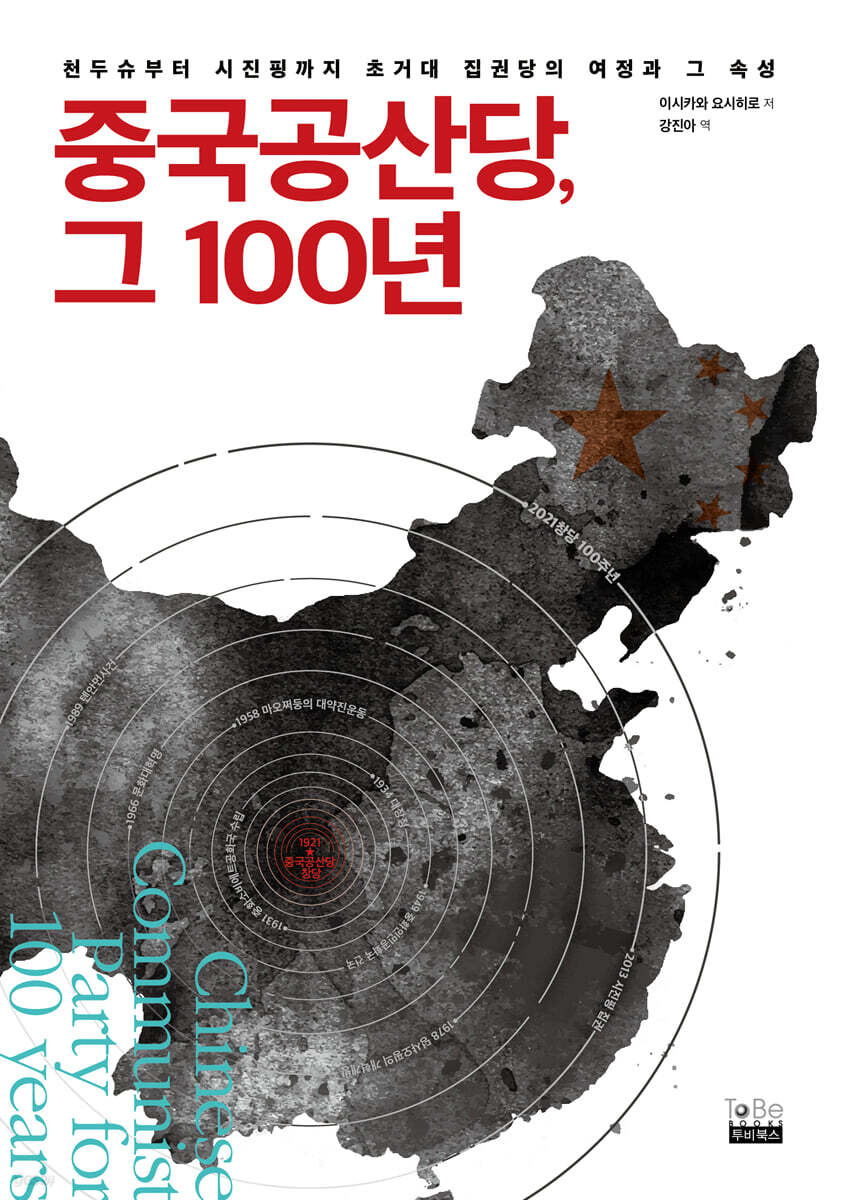 |
Description
Book Introduction
How did the Chinese Communist Party become such a massive ruling party?
The Chinese Communist Party rules China, the world's second-largest economy and a tightly managed society.
This book traces the 100-year journey of the Chinese Communist Party, revealing in depth and from diverse perspectives how it became a super-majority ruling party, as well as the core attributes of this organization and how it was formed.
The author, Yoshihiro Ishikawa, is a leading scholar of the Chinese Communist Party, and received the Asia Pacific Award and the Shiba Ryotaro Award for his book, The Chinese Communist Party: Its 100 Years.
The Chinese Communist Party began as a small revolutionary group of about 50 people in 1921, when China was being invaded by foreign powers.
It depicts the journey of the party, which fell behind its rival, the Kuomintang, and was defeated by the Japanese military, but emerged victorious within 30 years of its founding, took over China, and led a "Chinese-style socialism" unprecedented in world history while ruling by one party for over 70 years, repeatedly making unconventional moves.
In the process, it covers major events in context, such as the founding of the Communist Party, cooperation between the Kuomintang and the Communist Party, the Xi'an Incident, the Long March, the Sino-Japanese War, the establishment of the Communist Party of China, praise for Mao Zedong, the Great Leap Forward, the Cultural Revolution, reform and opening up, and the introduction of a market economy.
Meanwhile, it also describes the fundamentals and phenomena of why support for the Communist Party remains unchanged within China despite the many sacrifices the Chinese people have endured and the pressures of the world, and the ambivalence of viewing social control combined with digital technology as both protection and well-being.
The top leadership of the Chinese Communist Party has changed from Chen Duxiu to Mao Zedong and Xi Jinping, and the era of absolute reverence for Mao Zedong has passed, but the author believes that the role and operating principles of the Chinese Communist Party have not fundamentally changed.
The organizational principles of 'the party decides everything' and 'iron discipline' still remain, and are strongly supported by over 90 million Communist Party members.
The DNA of the Chinese Communist Party, which has been inherited unchanged from the Comintern while being influenced by it, is presented in a multifaceted and in-depth manner, and how it was formed and maintained.
The Chinese Communist Party system, with its world-class economic power and scientific and technological capabilities, is like a powerful dynasty from the pre-modern era.
Compared to the period when China was reduced to a semi-colony under foreign powers and suffered from internal and external troubles for decades, China now boasts enormous wealth and influence.
On the other hand, the entire society is so strongly controlled and managed that it is referred to as 'digital Leninism'.
This seemingly contradictory system of "market economy" and "social control" can only be understood by understanding the history and characteristics of the Chinese Communist Party that rules China, and this helps us understand present-day China.
The Chinese Communist Party rules China, the world's second-largest economy and a tightly managed society.
This book traces the 100-year journey of the Chinese Communist Party, revealing in depth and from diverse perspectives how it became a super-majority ruling party, as well as the core attributes of this organization and how it was formed.
The author, Yoshihiro Ishikawa, is a leading scholar of the Chinese Communist Party, and received the Asia Pacific Award and the Shiba Ryotaro Award for his book, The Chinese Communist Party: Its 100 Years.
The Chinese Communist Party began as a small revolutionary group of about 50 people in 1921, when China was being invaded by foreign powers.
It depicts the journey of the party, which fell behind its rival, the Kuomintang, and was defeated by the Japanese military, but emerged victorious within 30 years of its founding, took over China, and led a "Chinese-style socialism" unprecedented in world history while ruling by one party for over 70 years, repeatedly making unconventional moves.
In the process, it covers major events in context, such as the founding of the Communist Party, cooperation between the Kuomintang and the Communist Party, the Xi'an Incident, the Long March, the Sino-Japanese War, the establishment of the Communist Party of China, praise for Mao Zedong, the Great Leap Forward, the Cultural Revolution, reform and opening up, and the introduction of a market economy.
Meanwhile, it also describes the fundamentals and phenomena of why support for the Communist Party remains unchanged within China despite the many sacrifices the Chinese people have endured and the pressures of the world, and the ambivalence of viewing social control combined with digital technology as both protection and well-being.
The top leadership of the Chinese Communist Party has changed from Chen Duxiu to Mao Zedong and Xi Jinping, and the era of absolute reverence for Mao Zedong has passed, but the author believes that the role and operating principles of the Chinese Communist Party have not fundamentally changed.
The organizational principles of 'the party decides everything' and 'iron discipline' still remain, and are strongly supported by over 90 million Communist Party members.
The DNA of the Chinese Communist Party, which has been inherited unchanged from the Comintern while being influenced by it, is presented in a multifaceted and in-depth manner, and how it was formed and maintained.
The Chinese Communist Party system, with its world-class economic power and scientific and technological capabilities, is like a powerful dynasty from the pre-modern era.
Compared to the period when China was reduced to a semi-colony under foreign powers and suffered from internal and external troubles for decades, China now boasts enormous wealth and influence.
On the other hand, the entire society is so strongly controlled and managed that it is referred to as 'digital Leninism'.
This seemingly contradictory system of "market economy" and "social control" can only be understood by understanding the history and characteristics of the Chinese Communist Party that rules China, and this helps us understand present-day China.
- You can preview some of the book's contents.
Preview
index
Entering - The One Who Rules China… 6
Chapter 1: The Origins of a Revolutionary Party
1.
The Origins of the Chinese Communist Party… 14
2.
The Comintern: The Origins of Communist DNA… 21
3.
The Formation of the Chinese Communist Party - The Era of International Communism… 28
4.
The Kuomintang-Communist Joint Venture - A Meeting of Look-Alikes… 45
5.
National Revolution - The First Revolutionary Experience… 55
6.
The Communist Party's Political Culture - The Shock of a "New Way of Life"… 69
Column ① "The International" - The Eternal Resistance... 26
Column ② Before the Establishment of Popular Songs - The Unsung National Anthem… 42
Column ③ China's First Popular Song - "National Revolutionary Song" … 66
Chapter 2: The Road to Power
1.
The Rural Revolution and the Chinese Soviet Republic—A Stage for Revolutionary Bases… 80
2.
Jangjeong - A Turning Point for Party Self-Reliance… 96
3.
The United Front and the Xi'an Incident - Inside and Outside the Party... 104
4.
Anti-Japanese War and Guerrilla Warfare - Who's Fighting Whom? 112
5.
Mao Zedong's Party Established - The Merits and Sins of the Rectification Movement… 121
6.
To the ruling party - victory in the civil war and the establishment of the People's Republic... 132
Column ④ The Communist Party and the Military Song - "The Three Great Disciplines and the Eight Principles" … 93
Column 5: The Politics of Composers - "The Promising Trilogy" and Zhang Hanhui, Liu Xuean… 109
Chapter 3: Mao Zedong and His Comrades
1.
What it means to know Mao Zedong… 146
2.
Mao Zedong's Character - What Kind of Young Man Became a Communist? … 148
3.
Party Leaders - 'Loyalists' and 'Traitors'… 159
4.
Mao Zedong and 'Wen Wen' - The Emperor in His Study… 175
5.
Mao Zedong's Legacy: Law and History… 185
Column ⑥ Songs Written by Mao Zedong - Chairman Mao's Poetry and Quotations... 172
Column 7: The Rise and Fall of "Red Song" - The Later Stories of Li Zhifu and Wang Shuangyin... 195
Chapter 4: The Helmsman of the People's Republic
1.
The present and past of the giant ruling party… 200
2.
Launching in War: The Original Experience of a New Nation… 203
3.
People Being Reformed - A Society Filled with Ideology and Movement… 216
4.
Socialism Unveiled: China's Planned Economy and the Anti-Rightist Struggle… 224
5.
The Great Famine and the Great Rebellion - The Great Leap Forward and the Cultural Revolution… 233
Column ⑧ The theme song of a national salvation film that became the national anthem - "March of the Volunteers"… 213
Column ⑨ The Second National Anthem - "Dongbanghong" … 245
Chapter 5: Moving Away from Revolution
1.
The Search for a Post-Cultural Revolution: What Sustained the Chinese Communist Party? … 250
2.
The Light and Shadow of 'Reform and Openness' - The 1989 Democratization Movement... 265
3.
The Cry of Nationalism - Transformed into a Party of Patriots… 281
4.
Beyond Economic Development: The Value of the Chinese Model… 295
Column ⑩ The Son of the Founding Member and the Wife of the Supreme Leader - "In the Field of Hope" … 262
Column ⑪ Characteristics of Chinese Pop Songs - Statistical Analysis of Vocabulary… 278
Column ⑫ A Song Resonating Through Tiananmen Square - "Blood-Stained Bravery" … 291
Column ⑬: A Heart for the "Fatherland" Once Again - The Resurgence of "My Fatherland"… 308
Conclusion - The Trials of a Century... 312
Author's Note … 320
Translator's Note … 324
Source of the illustration … 330
Key References … 334
Index … 340
Chapter 1: The Origins of a Revolutionary Party
1.
The Origins of the Chinese Communist Party… 14
2.
The Comintern: The Origins of Communist DNA… 21
3.
The Formation of the Chinese Communist Party - The Era of International Communism… 28
4.
The Kuomintang-Communist Joint Venture - A Meeting of Look-Alikes… 45
5.
National Revolution - The First Revolutionary Experience… 55
6.
The Communist Party's Political Culture - The Shock of a "New Way of Life"… 69
Column ① "The International" - The Eternal Resistance... 26
Column ② Before the Establishment of Popular Songs - The Unsung National Anthem… 42
Column ③ China's First Popular Song - "National Revolutionary Song" … 66
Chapter 2: The Road to Power
1.
The Rural Revolution and the Chinese Soviet Republic—A Stage for Revolutionary Bases… 80
2.
Jangjeong - A Turning Point for Party Self-Reliance… 96
3.
The United Front and the Xi'an Incident - Inside and Outside the Party... 104
4.
Anti-Japanese War and Guerrilla Warfare - Who's Fighting Whom? 112
5.
Mao Zedong's Party Established - The Merits and Sins of the Rectification Movement… 121
6.
To the ruling party - victory in the civil war and the establishment of the People's Republic... 132
Column ④ The Communist Party and the Military Song - "The Three Great Disciplines and the Eight Principles" … 93
Column 5: The Politics of Composers - "The Promising Trilogy" and Zhang Hanhui, Liu Xuean… 109
Chapter 3: Mao Zedong and His Comrades
1.
What it means to know Mao Zedong… 146
2.
Mao Zedong's Character - What Kind of Young Man Became a Communist? … 148
3.
Party Leaders - 'Loyalists' and 'Traitors'… 159
4.
Mao Zedong and 'Wen Wen' - The Emperor in His Study… 175
5.
Mao Zedong's Legacy: Law and History… 185
Column ⑥ Songs Written by Mao Zedong - Chairman Mao's Poetry and Quotations... 172
Column 7: The Rise and Fall of "Red Song" - The Later Stories of Li Zhifu and Wang Shuangyin... 195
Chapter 4: The Helmsman of the People's Republic
1.
The present and past of the giant ruling party… 200
2.
Launching in War: The Original Experience of a New Nation… 203
3.
People Being Reformed - A Society Filled with Ideology and Movement… 216
4.
Socialism Unveiled: China's Planned Economy and the Anti-Rightist Struggle… 224
5.
The Great Famine and the Great Rebellion - The Great Leap Forward and the Cultural Revolution… 233
Column ⑧ The theme song of a national salvation film that became the national anthem - "March of the Volunteers"… 213
Column ⑨ The Second National Anthem - "Dongbanghong" … 245
Chapter 5: Moving Away from Revolution
1.
The Search for a Post-Cultural Revolution: What Sustained the Chinese Communist Party? … 250
2.
The Light and Shadow of 'Reform and Openness' - The 1989 Democratization Movement... 265
3.
The Cry of Nationalism - Transformed into a Party of Patriots… 281
4.
Beyond Economic Development: The Value of the Chinese Model… 295
Column ⑩ The Son of the Founding Member and the Wife of the Supreme Leader - "In the Field of Hope" … 262
Column ⑪ Characteristics of Chinese Pop Songs - Statistical Analysis of Vocabulary… 278
Column ⑫ A Song Resonating Through Tiananmen Square - "Blood-Stained Bravery" … 291
Column ⑬: A Heart for the "Fatherland" Once Again - The Resurgence of "My Fatherland"… 308
Conclusion - The Trials of a Century... 312
Author's Note … 320
Translator's Note … 324
Source of the illustration … 330
Key References … 334
Index … 340
Into the book
Although there have been tumultuous divisions over the past hundred years, the party has never changed its name, nor has it ever been dissolved or disbanded.
However, the fact that the party's appearance has changed so much can be interpreted as the Chinese Communist Party transforming itself to suit the circumstances surrounding the world and China at that time.
To put it positively, it means that he has excellent adaptability, but to put it negatively, it means that he does not hesitate to change his ways.
--- p.11
It is safe to say that the principles of the Communist Party's activities today, such as the centralized organizational principle, the prominent vanguardism represented by iron discipline, and the clear hierarchical relationship between the center and each branch, all originated from the Comintern or its core, the Russian Communist Party.
--- p.23
The cooperation between the Kuomintang and the Communist Party was officially initiated at the First National Congress of the Kuomintang held in Guangzhou in January 1924, and surprisingly, the Communist Party benefited greatly.
One is that even local governments were provided with living expenses for Communist Party members by becoming members of the Kuomintang, which was the ruling party with a stronghold in Guangdong Province at the time.
--- p.52
Among the Communist Party's rural uprisings, the only ones that barely survived were the bases established in Jinggangshan on the border of Hunan and Jiangxi provinces by the remnants of the uprising (Autumn Harvest Uprising) led by Mao Zedong and others in the fall of 1927.
In Jinggangshan, the remnants of the Nanchang Uprising led by Zhu De soon joined, and a new style of revolutionary movement of the Communist Party set in the countryside began.
Naturally, there was no longer any need to use the banner of the Kuomintang, and instead, what was raised was the 'Soviet Revolution', which aimed to establish an independent government, the 'Soviet'.
--- p.81
As the war situation became desperate, the Communists decided to retreat from their central base (southern Jiangxi Province), and the Party Central Committee withdrew from Ruijin in early October 1934.
At the same time, the 90,000 soldiers of the First Front Army, the main force of the Red Army, began moving westward.
This is the beginning of what the world calls a 'long journey'.
--- p.97
In December 1936, he arrested Chiang Kai-shek's new soldiers who had come to Xi'an to encourage the suppression of the Communists, and carried out an unprecedented act (called "Byeonggan" because it meant giving advice using force) to appeal to Chiang Kai-shek to stop the civil war and fight against Japan.
This is called the 'Xi'an Incident'.
--- p.105
After the outbreak of the Anti-Japanese War, many young people were driven by a passion for national salvation and took action, and the number of people heading to the Communist Party's base to join the party surged.
In particular, the influence of Edgar Snow's reportage, Red Star Over China (published in the fall of 1937), was absolute.
Many people were so moved by the Chinese version of 『Seohaengmangi』 published the following year that they decided to join the Communist Party.
The number of Communist Party members increased twentyfold (to 800,000) from 40,000 in 1937 to 1940.
--- p.122
It was a 'window movement' that expanded to a base after 1943.
'Changgu(?救)' means to save or rescue.
In other words, the nuance is that we will find those who were originally good people, but were led astray by someone's scheme or cooperated with the enemy, and bring them back on the right path.
However, the inside story was no different from a so-called purge, which involved identifying and disposing of and executing hostile elements (spies) hiding within the organization through forced confessions or manipulation at meetings.
--- p.129
At this time, Mao Zedong entered Beijing and spoke to the cadres around him, comparing it to going to take the final examination in the past, saying, “It is finally the day to enter the capital to take the examination.”
Zhou Enlai said, “You must not go back.
When I responded, “You must hurry,” he said, “Going back means defeat.
He is said to have replied, “You must not step on the path of self-interest.”
--- p.137
Why did so many leaders ultimately follow Mao Zedong, despite his seemingly reckless attempts, like the hasty socialization and Cultural Revolution? The answer is difficult, but if I had to simplify it, it would be this: "Haven't following him always paid off?"
There was nothing that ended in failure, was there?
Wasn't it a vague, all-encompassing sense of trust that came from experience, like, "If I just follow this person, everything will be okay?"
--- p.171
Mao's death effectively ended the Cultural Revolution, and after a brief period of policy adjustment, the reform and opening-up policy began.
If you compare China during Mao's time with China today, it has changed so much that it could be said to be a completely different country.
However, if we look at the party's role or operating mechanism, there is actually not much difference in its essence.
--- p.185
Earlier, I introduced you to Sun Xia, a young woman who devoted herself to the revolution and the Party without regrets and became a Party member without any regrets. Now, we can no longer expect to see such dedicated Party members.
The current party members have something they want to do separately, and they join the party to achieve it and obtain better conditions and conditions.
In that respect, the Communist Party is a quite useful organization.
--- p.202
The management of urban residents in the People's Republic has become significantly more robust by combining 'units' with 'personal party plans'.
As explained in Section 5 of Chapter 2, the 'Personal Party Record' is a personal record that cannot be viewed by the individual, compiled by the Communist Party in the early 1940s for the purpose of managing and understanding party members.
After 1949, this was written not only for party members but also for urban residents.
--- p.219
It must have been around the time when the spontaneous youth organizations that were first formed in late May 1966 and rapidly expanded and became popular began to pour out onto the streets and thoroughly destroy the old.
Young people in their late teens and twenties, wearing red armbands with the words "Red Guard" written on them and carrying small red books, began taking to the streets in August to protest.
What the young people were holding was the 『Quotes from Chairman Mao』, or 『Quotes from Mao Zedong』.
--- p.241
The Jiang Zemin leadership, which came to power after the suppression of the democracy movement, was a regime that, while communist ideology was losing its luster and declining, instead strongly promoted patriotic education through the mobilization of so-called Chinese nationalism.
It was a regime that strongly promoted patriotic education through the mobilization of Chinese nationalism.
--- p.275
When we tried communism, you hated us and called us communists.
When we accept capitalism, you hate us and call us capitalists.
When our population was a billion, you said we were ruining the planet.
When we try to control the population, you say we are violating human rights.
--- p.297
The Chinese people generally value this digital governance society and praise the Communist Party's rule.
Most people actually praise the surveillance cameras placed all over the streets for reducing dangerous traffic violations.
--- p.305
The People's Republic of China is a country where an organization of 90 million advanced elements selected from 1.4 billion people uses highly developed, world-leading technology that covers the entire country to monitor and watch over its people.
It is no exaggeration to say that the current top leader of the party is the most powerful ruler in history, possessing power that no one, including Mao Zedong, has ever possessed before.
The spread of the novel coronavirus in China in 2020 became a test of this perfect social management system's capabilities, watched by the entire world.
However, the fact that the party's appearance has changed so much can be interpreted as the Chinese Communist Party transforming itself to suit the circumstances surrounding the world and China at that time.
To put it positively, it means that he has excellent adaptability, but to put it negatively, it means that he does not hesitate to change his ways.
--- p.11
It is safe to say that the principles of the Communist Party's activities today, such as the centralized organizational principle, the prominent vanguardism represented by iron discipline, and the clear hierarchical relationship between the center and each branch, all originated from the Comintern or its core, the Russian Communist Party.
--- p.23
The cooperation between the Kuomintang and the Communist Party was officially initiated at the First National Congress of the Kuomintang held in Guangzhou in January 1924, and surprisingly, the Communist Party benefited greatly.
One is that even local governments were provided with living expenses for Communist Party members by becoming members of the Kuomintang, which was the ruling party with a stronghold in Guangdong Province at the time.
--- p.52
Among the Communist Party's rural uprisings, the only ones that barely survived were the bases established in Jinggangshan on the border of Hunan and Jiangxi provinces by the remnants of the uprising (Autumn Harvest Uprising) led by Mao Zedong and others in the fall of 1927.
In Jinggangshan, the remnants of the Nanchang Uprising led by Zhu De soon joined, and a new style of revolutionary movement of the Communist Party set in the countryside began.
Naturally, there was no longer any need to use the banner of the Kuomintang, and instead, what was raised was the 'Soviet Revolution', which aimed to establish an independent government, the 'Soviet'.
--- p.81
As the war situation became desperate, the Communists decided to retreat from their central base (southern Jiangxi Province), and the Party Central Committee withdrew from Ruijin in early October 1934.
At the same time, the 90,000 soldiers of the First Front Army, the main force of the Red Army, began moving westward.
This is the beginning of what the world calls a 'long journey'.
--- p.97
In December 1936, he arrested Chiang Kai-shek's new soldiers who had come to Xi'an to encourage the suppression of the Communists, and carried out an unprecedented act (called "Byeonggan" because it meant giving advice using force) to appeal to Chiang Kai-shek to stop the civil war and fight against Japan.
This is called the 'Xi'an Incident'.
--- p.105
After the outbreak of the Anti-Japanese War, many young people were driven by a passion for national salvation and took action, and the number of people heading to the Communist Party's base to join the party surged.
In particular, the influence of Edgar Snow's reportage, Red Star Over China (published in the fall of 1937), was absolute.
Many people were so moved by the Chinese version of 『Seohaengmangi』 published the following year that they decided to join the Communist Party.
The number of Communist Party members increased twentyfold (to 800,000) from 40,000 in 1937 to 1940.
--- p.122
It was a 'window movement' that expanded to a base after 1943.
'Changgu(?救)' means to save or rescue.
In other words, the nuance is that we will find those who were originally good people, but were led astray by someone's scheme or cooperated with the enemy, and bring them back on the right path.
However, the inside story was no different from a so-called purge, which involved identifying and disposing of and executing hostile elements (spies) hiding within the organization through forced confessions or manipulation at meetings.
--- p.129
At this time, Mao Zedong entered Beijing and spoke to the cadres around him, comparing it to going to take the final examination in the past, saying, “It is finally the day to enter the capital to take the examination.”
Zhou Enlai said, “You must not go back.
When I responded, “You must hurry,” he said, “Going back means defeat.
He is said to have replied, “You must not step on the path of self-interest.”
--- p.137
Why did so many leaders ultimately follow Mao Zedong, despite his seemingly reckless attempts, like the hasty socialization and Cultural Revolution? The answer is difficult, but if I had to simplify it, it would be this: "Haven't following him always paid off?"
There was nothing that ended in failure, was there?
Wasn't it a vague, all-encompassing sense of trust that came from experience, like, "If I just follow this person, everything will be okay?"
--- p.171
Mao's death effectively ended the Cultural Revolution, and after a brief period of policy adjustment, the reform and opening-up policy began.
If you compare China during Mao's time with China today, it has changed so much that it could be said to be a completely different country.
However, if we look at the party's role or operating mechanism, there is actually not much difference in its essence.
--- p.185
Earlier, I introduced you to Sun Xia, a young woman who devoted herself to the revolution and the Party without regrets and became a Party member without any regrets. Now, we can no longer expect to see such dedicated Party members.
The current party members have something they want to do separately, and they join the party to achieve it and obtain better conditions and conditions.
In that respect, the Communist Party is a quite useful organization.
--- p.202
The management of urban residents in the People's Republic has become significantly more robust by combining 'units' with 'personal party plans'.
As explained in Section 5 of Chapter 2, the 'Personal Party Record' is a personal record that cannot be viewed by the individual, compiled by the Communist Party in the early 1940s for the purpose of managing and understanding party members.
After 1949, this was written not only for party members but also for urban residents.
--- p.219
It must have been around the time when the spontaneous youth organizations that were first formed in late May 1966 and rapidly expanded and became popular began to pour out onto the streets and thoroughly destroy the old.
Young people in their late teens and twenties, wearing red armbands with the words "Red Guard" written on them and carrying small red books, began taking to the streets in August to protest.
What the young people were holding was the 『Quotes from Chairman Mao』, or 『Quotes from Mao Zedong』.
--- p.241
The Jiang Zemin leadership, which came to power after the suppression of the democracy movement, was a regime that, while communist ideology was losing its luster and declining, instead strongly promoted patriotic education through the mobilization of so-called Chinese nationalism.
It was a regime that strongly promoted patriotic education through the mobilization of Chinese nationalism.
--- p.275
When we tried communism, you hated us and called us communists.
When we accept capitalism, you hate us and call us capitalists.
When our population was a billion, you said we were ruining the planet.
When we try to control the population, you say we are violating human rights.
--- p.297
The Chinese people generally value this digital governance society and praise the Communist Party's rule.
Most people actually praise the surveillance cameras placed all over the streets for reducing dangerous traffic violations.
--- p.305
The People's Republic of China is a country where an organization of 90 million advanced elements selected from 1.4 billion people uses highly developed, world-leading technology that covers the entire country to monitor and watch over its people.
It is no exaggeration to say that the current top leader of the party is the most powerful ruler in history, possessing power that no one, including Mao Zedong, has ever possessed before.
The spread of the novel coronavirus in China in 2020 became a test of this perfect social management system's capabilities, watched by the entire world.
--- p.308
GOODS SPECIFICS
- Date of issue: April 2, 2024
- Page count, weight, size: 348 pages | 494g | 152*215*15mm
- ISBN13: 9788998286071
- ISBN10: 8998286076
You may also like
카테고리
korean


korean

![GQ KOREA Mark (Monthly): December [2025]](http://librairie.coreenne.fr/cdn/shop/files/8ef265dbbfbf186523ed75ba7319009d.jpg?v=1765340328&width=3840)


