

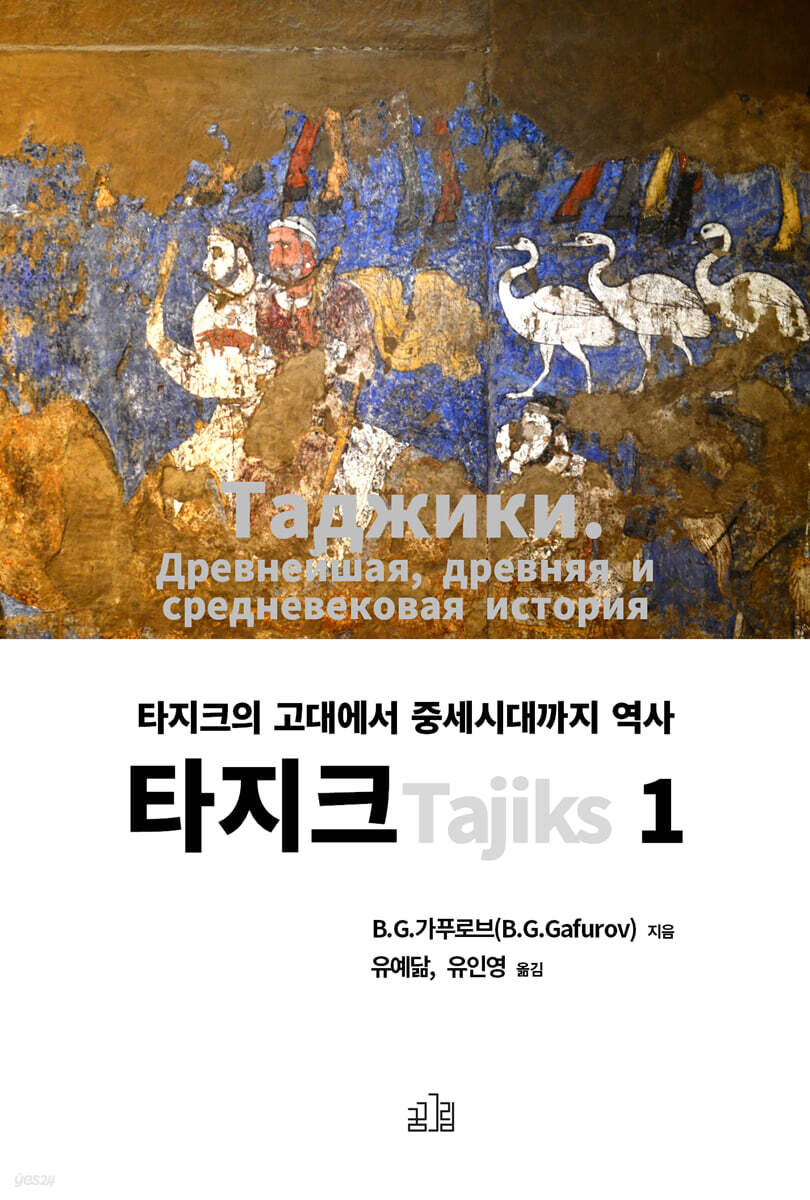
Tajik 1
 |
Description
Book Introduction
Tajiks I, which covers the history of Central Asia from ancient times to the Middle Ages from the perspective of the Central Asian peoples, is a work by B.
This is Gapurov's masterpiece.
Gafurov is a national hero of the Tajik people, and his image was featured on the currency to commemorate the 90th anniversary of his birth after Tajikistan gained independence from the Soviet Union.
The author, who was also active as a politician, served in his later years as director of the Institute of Oriental Studies of the Academy of Sciences of the Republic of Tajikistan, which bears his name.
The Tajik people are closely related to the Uzbeks, and these peoples share a common genetic origin.
The cultural heritage of the Tajik people was also introduced and spread from the Uzbek people long ago, so the cultural characteristics of the two peoples are very similar.
The reason these peoples are so close in their ancient cultural history and even medieval culture is because they lived in the same area.
Moreover, the history of the Tajik people, like that of other Central Asian peoples, is also linked to the peoples of the East, such as India, Pakistan, Afghanistan, Iran, and Arab countries.
The first chapter of this book documents the nature of the first societies formed in Central Asia.
The second deals with the emergence of various tribes and peoples during the period when slavery developed, becoming the ancestors of the Tajiks.
The third chapter records the historical destiny of the Tajik people and the formation of the feudal system.
This book is recommended as an essential introductory book for scholars and the general public interested in Central Asia, where over 300,000 of our compatriots, the Koryo-saram, reside.
This is Gapurov's masterpiece.
Gafurov is a national hero of the Tajik people, and his image was featured on the currency to commemorate the 90th anniversary of his birth after Tajikistan gained independence from the Soviet Union.
The author, who was also active as a politician, served in his later years as director of the Institute of Oriental Studies of the Academy of Sciences of the Republic of Tajikistan, which bears his name.
The Tajik people are closely related to the Uzbeks, and these peoples share a common genetic origin.
The cultural heritage of the Tajik people was also introduced and spread from the Uzbek people long ago, so the cultural characteristics of the two peoples are very similar.
The reason these peoples are so close in their ancient cultural history and even medieval culture is because they lived in the same area.
Moreover, the history of the Tajik people, like that of other Central Asian peoples, is also linked to the peoples of the East, such as India, Pakistan, Afghanistan, Iran, and Arab countries.
The first chapter of this book documents the nature of the first societies formed in Central Asia.
The second deals with the emergence of various tribes and peoples during the period when slavery developed, becoming the ancestors of the Tajiks.
The third chapter records the historical destiny of the Tajik people and the formation of the feudal system.
This book is recommended as an essential introductory book for scholars and the general public interested in Central Asia, where over 300,000 of our compatriots, the Koryo-saram, reside.
- You can preview some of the book's contents.
Preview
index
Translator's Preface 3
Author's Preface 5
[First Chapter] The First Organization in Central Asia and Its Migration Process
[Topic 1] Central Asia's First Societies 16
1.
The process of forming and forming Stone Age clans 16
2.
Mesolithic and Neolithic 23
3.
Bronze Age 30
4.
The Population of Bronze Age Central Asia and the Aryan Problem 42
[Topic 2] Uprisings of Central Asian Peoples in the Early Class Society (9th to mid-8th century BC) 66
1.
Early Iron Age Archaeological Data 66
2.
Early Iron Age Central Asian Society 70
[Second Unit] The ancestors of the Tajiks during the development of slavery
[Topic 1] Central Asia under the Achaemenid Dynasty 98
1.
A History of Central Asian Politics in the 6th and 5th Centuries BC 98
2.
Central Asian Society, 5th–4th Centuries BC 106
3.
Central Asia and Iran in the Achaemenid Era 116
[Topic 2] Central Asians in the Greco-Macedonian Wars of Conquest 125
1.
Alexander the Great's Eastern Expedition 125
2.
The Great Macedonian Uprising of Central Asians 130
[Topic 3] Greco-Baktria and Parthia 142
1.
Central Asia within the Seleucid state 142
2.
Greco-Bactrian and Parthian States 146
3.
Economy and Culture of Central Asia, 3rd to 2nd Centuries BC 159
[Topic 4] Central Asia in the Kushan Era 180
1.
Parthians, Greco-Bactrians and nomads.
Early History of the Yuezhi 180
2.
Central Asia, circa 2nd to 1st century BC 190
3.
Kushan Kingdom 202
4.
Cities and Towns of Kushan-Era Central Asia 222
5.
The Economy of Central Asia during the Kushan Period 227
6.
Culture and Religion in Kushan-Era Central Asia 234
[Topic 5] The Socio-Economic Order of Ancient Central Asia 248
1.
Problems of compiling historical records and the formation of socio-economic systems in ancient Central Asia 248
2.
Modern Claims about the Socio-Economy of Ancient Central Asia 256
[Unit 3] The Formation of the Central Asian Feudal System
[Topic 1] Tribes and Peoples of Central Asia, 4th to 6th Centuries 266
1.
History of Politics 266
2.
Ethnological Issues and Class Struggles 281
[Topic 2] The Peoples of Central Asia in the 6th to early 8th Centuries 298
1.
The Class Struggle as a Major Political Event 298
2.
Tokharistan 313, 6th-8th centuries
3.
Sogdian Empire of the 6th to 7th centuries 340
4.
Other regions of Central Asia 397
5.
The Formation of Socio-Economy and the Creation of the Feudal System 405
[References] 411
Author's Preface 5
[First Chapter] The First Organization in Central Asia and Its Migration Process
[Topic 1] Central Asia's First Societies 16
1.
The process of forming and forming Stone Age clans 16
2.
Mesolithic and Neolithic 23
3.
Bronze Age 30
4.
The Population of Bronze Age Central Asia and the Aryan Problem 42
[Topic 2] Uprisings of Central Asian Peoples in the Early Class Society (9th to mid-8th century BC) 66
1.
Early Iron Age Archaeological Data 66
2.
Early Iron Age Central Asian Society 70
[Second Unit] The ancestors of the Tajiks during the development of slavery
[Topic 1] Central Asia under the Achaemenid Dynasty 98
1.
A History of Central Asian Politics in the 6th and 5th Centuries BC 98
2.
Central Asian Society, 5th–4th Centuries BC 106
3.
Central Asia and Iran in the Achaemenid Era 116
[Topic 2] Central Asians in the Greco-Macedonian Wars of Conquest 125
1.
Alexander the Great's Eastern Expedition 125
2.
The Great Macedonian Uprising of Central Asians 130
[Topic 3] Greco-Baktria and Parthia 142
1.
Central Asia within the Seleucid state 142
2.
Greco-Bactrian and Parthian States 146
3.
Economy and Culture of Central Asia, 3rd to 2nd Centuries BC 159
[Topic 4] Central Asia in the Kushan Era 180
1.
Parthians, Greco-Bactrians and nomads.
Early History of the Yuezhi 180
2.
Central Asia, circa 2nd to 1st century BC 190
3.
Kushan Kingdom 202
4.
Cities and Towns of Kushan-Era Central Asia 222
5.
The Economy of Central Asia during the Kushan Period 227
6.
Culture and Religion in Kushan-Era Central Asia 234
[Topic 5] The Socio-Economic Order of Ancient Central Asia 248
1.
Problems of compiling historical records and the formation of socio-economic systems in ancient Central Asia 248
2.
Modern Claims about the Socio-Economy of Ancient Central Asia 256
[Unit 3] The Formation of the Central Asian Feudal System
[Topic 1] Tribes and Peoples of Central Asia, 4th to 6th Centuries 266
1.
History of Politics 266
2.
Ethnological Issues and Class Struggles 281
[Topic 2] The Peoples of Central Asia in the 6th to early 8th Centuries 298
1.
The Class Struggle as a Major Political Event 298
2.
Tokharistan 313, 6th-8th centuries
3.
Sogdian Empire of the 6th to 7th centuries 340
4.
Other regions of Central Asia 397
5.
The Formation of Socio-Economy and the Creation of the Feudal System 405
[References] 411
Publisher's Review
The author did not intend the book to be an encyclopedia of Tajik history, but rather to collect together in one place important, difficult, and often intriguing parts of Tajik history.
The reality is that Tajiks are not widely known in Korea.
There are differing opinions about the origins of the Tajik people, but the general view is that they originated from the Sogdian people, who existed before the Turkic peoples who are now the mainstream people of Central Asia.
Currently, the Tajik people are widely distributed in the Republic of Tajikistan in Central Asia and the Samarkand and Bukhara provinces of the Republic of Uzbekistan.
Even today, the Tajik language, a branch of Iranian language, is still used, which, along with Iranian and Pashto of Afghanistan, is a representative Persian language.
Some of the highlights of this book include a comparison of the economic and cultural development of Central Asia during the Bronze Age with that of Iran and India; the question of the Aryans and the linguistic-genetic perspectives on the peoples of Central Asia, northern India, Afghanistan, Iran, and the Eurasian steppe; the formation and development of class societies; the formation and development of Zoroastrianism, as well as the cultural connections between Central Asia, Iran, India, and the Hellenistic states; and the question of the dating of the Kushan period.
It also covers the socio-economic system of Central Asia at the time, as revealed by the relics being excavated.
The early medieval history of Tokharistan and Sogdiana is studied in great detail, covering the expansion of the feudal system, the increase in productivity that accompanied its development, and the social development that accompanied artistic development.
There is no doubt that Central Asia was a center of Eastern culture during the early Middle Ages and beyond, during the Kushan period.
The section on medieval history focuses on historical facts about the region that were recently discovered by Soviet scholars in the 1950s and 1960s.
This book describes the characteristics of each era, especially according to the records of socio-economic institutions.
The author used materials that previous scholars had not placed much emphasis on in studying the history, culture, and social characteristics of the medieval period in Central Asia.
It concisely records all aspects of Tajik culture, including culture, science, art, and architecture, in the Middle Ages.
The book also focuses heavily on genetic development.
The author collected, analyzed, and studied linguistic, anthropological, genetic, and literary data on all existing Tajik peoples.
Also cited were comrades' research materials on the origins of the Uzbek people and their unique culture.
The author also included an interpretation of the situation in Central Asia at the time when it belonged to the Sassanids, Achaemenids, Greco-Macedonians, and Arabs.
There is also a description of the Gandhar culture, which was influenced by Hellenistic culture, and which combined the best aspects of India, Central Asia, Parthia, and Greece at the time.
The exchanges and close relationships between ethnic groups have elevated cultural values while preserving the characteristics of their own culture. Among such ethnic groups are the Tajiks and the peoples of Central Asia, who have achieved a high level of culture.
The reality is that Tajiks are not widely known in Korea.
There are differing opinions about the origins of the Tajik people, but the general view is that they originated from the Sogdian people, who existed before the Turkic peoples who are now the mainstream people of Central Asia.
Currently, the Tajik people are widely distributed in the Republic of Tajikistan in Central Asia and the Samarkand and Bukhara provinces of the Republic of Uzbekistan.
Even today, the Tajik language, a branch of Iranian language, is still used, which, along with Iranian and Pashto of Afghanistan, is a representative Persian language.
Some of the highlights of this book include a comparison of the economic and cultural development of Central Asia during the Bronze Age with that of Iran and India; the question of the Aryans and the linguistic-genetic perspectives on the peoples of Central Asia, northern India, Afghanistan, Iran, and the Eurasian steppe; the formation and development of class societies; the formation and development of Zoroastrianism, as well as the cultural connections between Central Asia, Iran, India, and the Hellenistic states; and the question of the dating of the Kushan period.
It also covers the socio-economic system of Central Asia at the time, as revealed by the relics being excavated.
The early medieval history of Tokharistan and Sogdiana is studied in great detail, covering the expansion of the feudal system, the increase in productivity that accompanied its development, and the social development that accompanied artistic development.
There is no doubt that Central Asia was a center of Eastern culture during the early Middle Ages and beyond, during the Kushan period.
The section on medieval history focuses on historical facts about the region that were recently discovered by Soviet scholars in the 1950s and 1960s.
This book describes the characteristics of each era, especially according to the records of socio-economic institutions.
The author used materials that previous scholars had not placed much emphasis on in studying the history, culture, and social characteristics of the medieval period in Central Asia.
It concisely records all aspects of Tajik culture, including culture, science, art, and architecture, in the Middle Ages.
The book also focuses heavily on genetic development.
The author collected, analyzed, and studied linguistic, anthropological, genetic, and literary data on all existing Tajik peoples.
Also cited were comrades' research materials on the origins of the Uzbek people and their unique culture.
The author also included an interpretation of the situation in Central Asia at the time when it belonged to the Sassanids, Achaemenids, Greco-Macedonians, and Arabs.
There is also a description of the Gandhar culture, which was influenced by Hellenistic culture, and which combined the best aspects of India, Central Asia, Parthia, and Greece at the time.
The exchanges and close relationships between ethnic groups have elevated cultural values while preserving the characteristics of their own culture. Among such ethnic groups are the Tajiks and the peoples of Central Asia, who have achieved a high level of culture.
GOODS SPECIFICS
- Date of issue: January 5, 2024
- Page count, weight, size: 460 pages | 152*225*30mm
- ISBN13: 9791197506031
- ISBN10: 1197506039
You may also like
카테고리
korean


korean

![GQ KOREA Mark (Monthly): December [2025]](http://librairie.coreenne.fr/cdn/shop/files/8ef265dbbfbf186523ed75ba7319009d.jpg?v=1765340328&width=3840)


