

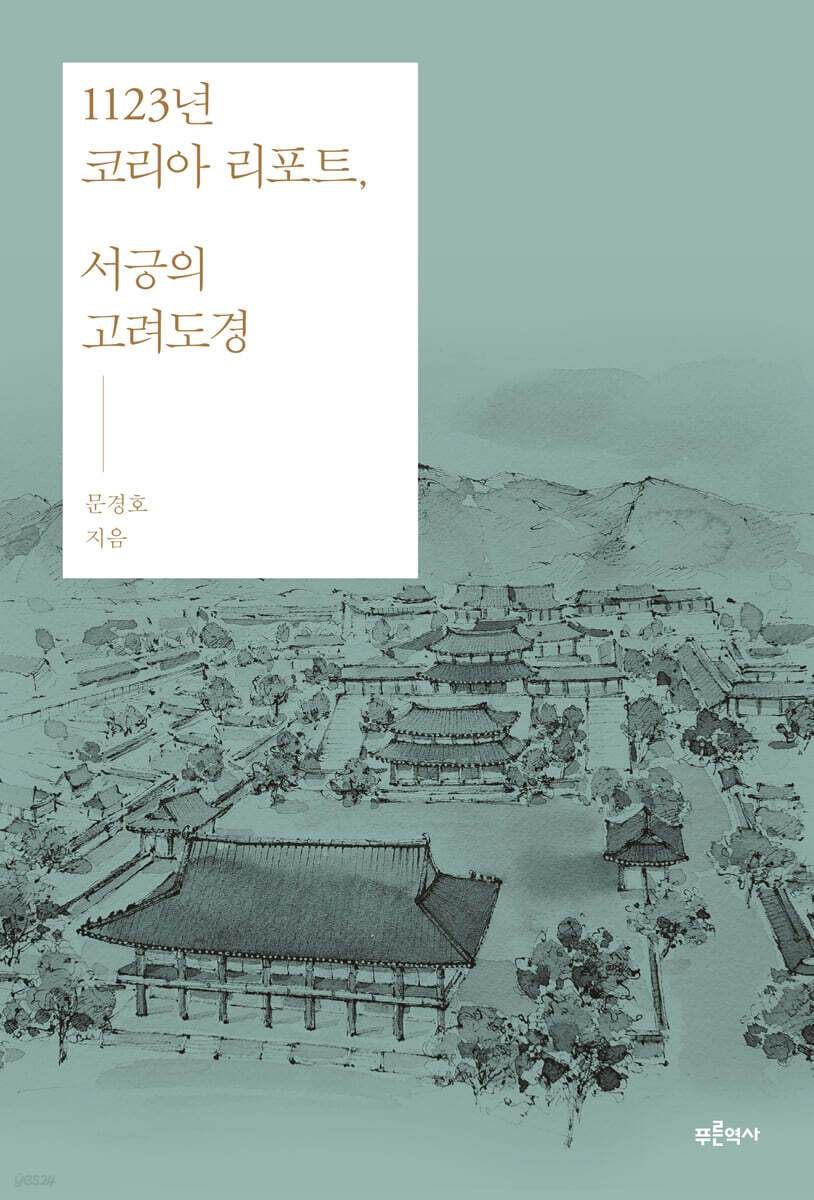
1123 Korea Report, Seo Geung's Goryeo Dogyeong
 |
Description
Book Introduction
Cross Street… Mongsu… Green Wheel… Chupo?
The Goryeo people of Gaegyeong 900 years ago, whom we didn't know about
Why We Should Pay Attention to Goryeo as Seen Through Foreign Eyes
『Goryeodogyeong』 is a travelogue written by Seo Geung, who stayed in Goryeo for about a month as a member of the diplomatic delegation sent by Emperor Huizong of Song in 1123, exactly 900 years ago.
It is difficult to simply call it a travelogue, as Seo Geung, who excelled in both scholarship and painting, vividly depicted the scenery of Goryeo at the time, including Gaegyeong, and the customs of the Goryeo people, with the meticulous eye of an observer.
Therefore, in order to study the history of Goryeo, which has a lack of literature compared to the Joseon Dynasty, 『Goryeo Dogyeong』 cannot be left out.
If that is the first reason, the author recommends reading 『Goryeo Dogyeong』 as an opportunity to think about practical diplomacy by comparing the situation of Goryeo in the 12th century with today.
The explanation is that 『Goryeodogyeong』 is worth noting as an opportunity to examine the wisdom of Goryeo, which was the most invaded nation in Korean history, in distinguishing between when to fight and when to make peace.
The Goryeo people of Gaegyeong 900 years ago, whom we didn't know about
Why We Should Pay Attention to Goryeo as Seen Through Foreign Eyes
『Goryeodogyeong』 is a travelogue written by Seo Geung, who stayed in Goryeo for about a month as a member of the diplomatic delegation sent by Emperor Huizong of Song in 1123, exactly 900 years ago.
It is difficult to simply call it a travelogue, as Seo Geung, who excelled in both scholarship and painting, vividly depicted the scenery of Goryeo at the time, including Gaegyeong, and the customs of the Goryeo people, with the meticulous eye of an observer.
Therefore, in order to study the history of Goryeo, which has a lack of literature compared to the Joseon Dynasty, 『Goryeo Dogyeong』 cannot be left out.
If that is the first reason, the author recommends reading 『Goryeo Dogyeong』 as an opportunity to think about practical diplomacy by comparing the situation of Goryeo in the 12th century with today.
The explanation is that 『Goryeodogyeong』 is worth noting as an opportunity to examine the wisdom of Goryeo, which was the most invaded nation in Korean history, in distinguishing between when to fight and when to make peace.
- You can preview some of the book's contents.
Preview
index
As you go in
Chapter 1: Seogeung Sets Off on a Journey
A Journey on a Spring Day | A Child Foretold by a Fairy | A Wise and Honest Official Life | Calligraphy and Writing That Even the Emperor Loved
Chapter 2: International Order in East Asia in the Early 12th Century
The Khitan Empire, which occupied 16 states of Yanyun | The Tangut nation of Western Xia | The Jurchen, a newly emerging northern power | Wang Anshi, a stubborn and brilliant reformer | The Song Dynasty's foreign policy that changed depending on the ruling party | The extravagant financial management of the virtuous emperor
Chapter 3: The Song Dynasty's envoys' vessels and guest houses
The Meaning of the Word "Shinju" | The Size and Shape of Shinju and Guest House
Chapter 4: The Goryeo Route of the New Emperor
A Mission with a Divine Lord|The Divine Lord and Guesthouse Set Out to Sea|The Black Sheep of the Sea of Fear
Chapter 5: The Song envoys enter the Goryeo sea
Heuksando, where beacon fires begin | The first Goryeo person Seo Geung meets | Seo Geung meets Kim Bu-sik | Goryeo ships of various shapes | From Gunsando to Mado | Anheungjeong, the second landing site | Yeongjongdo, called Jayeondo | Byeokrando, Goryeo's largest trading port
Chapter 6 From Yesong River to Gaegyeong
The solemn Goryeo honor guard | The Song envoy procession | The Goryeo capital surrounded by mountains | The scenery of Gaegyeong as seen through Seo Geung's eyes | Seo Geung's inability to distinguish between Goguryeo and Goryeo | The Goryeo fortress walls were more shabby than expected
Chapter 7: The Palaces and Capitals of Goryeo as Seen by Seo Geung
Shinbongmun Gate with its exquisite decorations|Goryeo people who loved to decorate their palaces|Janggyeongjeon Hall where the king's birthday banquet was held|Cheongyeongak and Bomungak, academic institutions|Nine large and small pavilions|Various government offices within the city|Warehouses where rice was stored for a long time|A poor market and a currency that was only superficial
Chapter 8: The Goryeo People Seo Geung Met
King Goryeo with the temperament of a virtuous king | Lee Ja-gyeom, the greatest relative of Goryeo | Yun Eon-sik, son of Yun Gwan, a man of exceptional writing | Kim Bu-sik, comparable to Su Dong-po | Kim In-gyu with a beautiful beard | Lee Ji-mi with a Chinese appearance | People met at a banquet | Goryeo people with a strong passion for learning | Goryeo people who entered Song Dynasty's Taehak
Chapter 9: Clothing and Attire of the Koryo People
Official uniforms with different decorations and colors depending on rank|Horses wearing armor and various types of carts|Various types of banners raised during marches|Slightly different clothing of Goryeo people depending on social status|Goryeo noblewomen wearing Goryeo-style hijab and mongsu|Tying one side of the hair that was popular among Goryeo women|Goryeo women carrying goods on their backs and even carrying children|Polite and diligent lower-level officials|Servants serving envoys|Talented Goryeo craftsmen
Chapter 10: Customs of Goryeo
A country that worships Buddha|People who light fires and drink alcohol|A banquet table full of sweet wine and rice cakes|Officials' work|When officials meet officials|When officials go on a trip|Goryeo women riding horses|Clean Goryeo people, Chinese who don't wash well|Goryeo's terraced rice fields built in the mountains|Goryeo people who eat more fish than meat|Cooks who are bad at butchering and cooking meat|Goryeo woodcutters|Seori who calculate by carving into trees with knives|Goryeo people who accumulate virtue|Goryeo specialties
Chapter 11: The Shrine and Surrounding Buildings
The envoys' quarters, Suncheon-gwan | Neat and splendid rooms | The envoys' quarters behind Suncheon-gwan | Residences of various envoys and beautiful pavilions | Shrines and Taoist temples | Jeonggukanhwasa, the most splendid temple in Gaeseong | Gwangtongbojesa, where a large bell hangs | Royal temples Heungguksa and Gukcheongsa
Chapter 12: Vessels and Tools from Goryeo
Silverware|Ceramics made of nickel and copper|Goryeo celadon with a pinkish hue resembling a kingfisher's feather|Goryeo culture of drinking soup after tea|Crockery made of rustic yet practical earthenware|Gangjuri made of woven rattan|Bamboo pots and water jars|Multipurpose pencil cases containing knives and brushes
Chapter 13: The Way Back
The delegation returns to Shinju | A perilous voyage, a series of crises | Worries about the nation day and night
As I go out
What kind of book is the 『Goryeo Dogyeong』? | The 『Goryeo Dogyeong』, passed down like a miracle | The situation in 12th-century East Asia as seen in the 21st century | Why we're paying attention to the 『Goryeo Dogyeong』 again?
Search
Chapter 1: Seogeung Sets Off on a Journey
A Journey on a Spring Day | A Child Foretold by a Fairy | A Wise and Honest Official Life | Calligraphy and Writing That Even the Emperor Loved
Chapter 2: International Order in East Asia in the Early 12th Century
The Khitan Empire, which occupied 16 states of Yanyun | The Tangut nation of Western Xia | The Jurchen, a newly emerging northern power | Wang Anshi, a stubborn and brilliant reformer | The Song Dynasty's foreign policy that changed depending on the ruling party | The extravagant financial management of the virtuous emperor
Chapter 3: The Song Dynasty's envoys' vessels and guest houses
The Meaning of the Word "Shinju" | The Size and Shape of Shinju and Guest House
Chapter 4: The Goryeo Route of the New Emperor
A Mission with a Divine Lord|The Divine Lord and Guesthouse Set Out to Sea|The Black Sheep of the Sea of Fear
Chapter 5: The Song envoys enter the Goryeo sea
Heuksando, where beacon fires begin | The first Goryeo person Seo Geung meets | Seo Geung meets Kim Bu-sik | Goryeo ships of various shapes | From Gunsando to Mado | Anheungjeong, the second landing site | Yeongjongdo, called Jayeondo | Byeokrando, Goryeo's largest trading port
Chapter 6 From Yesong River to Gaegyeong
The solemn Goryeo honor guard | The Song envoy procession | The Goryeo capital surrounded by mountains | The scenery of Gaegyeong as seen through Seo Geung's eyes | Seo Geung's inability to distinguish between Goguryeo and Goryeo | The Goryeo fortress walls were more shabby than expected
Chapter 7: The Palaces and Capitals of Goryeo as Seen by Seo Geung
Shinbongmun Gate with its exquisite decorations|Goryeo people who loved to decorate their palaces|Janggyeongjeon Hall where the king's birthday banquet was held|Cheongyeongak and Bomungak, academic institutions|Nine large and small pavilions|Various government offices within the city|Warehouses where rice was stored for a long time|A poor market and a currency that was only superficial
Chapter 8: The Goryeo People Seo Geung Met
King Goryeo with the temperament of a virtuous king | Lee Ja-gyeom, the greatest relative of Goryeo | Yun Eon-sik, son of Yun Gwan, a man of exceptional writing | Kim Bu-sik, comparable to Su Dong-po | Kim In-gyu with a beautiful beard | Lee Ji-mi with a Chinese appearance | People met at a banquet | Goryeo people with a strong passion for learning | Goryeo people who entered Song Dynasty's Taehak
Chapter 9: Clothing and Attire of the Koryo People
Official uniforms with different decorations and colors depending on rank|Horses wearing armor and various types of carts|Various types of banners raised during marches|Slightly different clothing of Goryeo people depending on social status|Goryeo noblewomen wearing Goryeo-style hijab and mongsu|Tying one side of the hair that was popular among Goryeo women|Goryeo women carrying goods on their backs and even carrying children|Polite and diligent lower-level officials|Servants serving envoys|Talented Goryeo craftsmen
Chapter 10: Customs of Goryeo
A country that worships Buddha|People who light fires and drink alcohol|A banquet table full of sweet wine and rice cakes|Officials' work|When officials meet officials|When officials go on a trip|Goryeo women riding horses|Clean Goryeo people, Chinese who don't wash well|Goryeo's terraced rice fields built in the mountains|Goryeo people who eat more fish than meat|Cooks who are bad at butchering and cooking meat|Goryeo woodcutters|Seori who calculate by carving into trees with knives|Goryeo people who accumulate virtue|Goryeo specialties
Chapter 11: The Shrine and Surrounding Buildings
The envoys' quarters, Suncheon-gwan | Neat and splendid rooms | The envoys' quarters behind Suncheon-gwan | Residences of various envoys and beautiful pavilions | Shrines and Taoist temples | Jeonggukanhwasa, the most splendid temple in Gaeseong | Gwangtongbojesa, where a large bell hangs | Royal temples Heungguksa and Gukcheongsa
Chapter 12: Vessels and Tools from Goryeo
Silverware|Ceramics made of nickel and copper|Goryeo celadon with a pinkish hue resembling a kingfisher's feather|Goryeo culture of drinking soup after tea|Crockery made of rustic yet practical earthenware|Gangjuri made of woven rattan|Bamboo pots and water jars|Multipurpose pencil cases containing knives and brushes
Chapter 13: The Way Back
The delegation returns to Shinju | A perilous voyage, a series of crises | Worries about the nation day and night
As I go out
What kind of book is the 『Goryeo Dogyeong』? | The 『Goryeo Dogyeong』, passed down like a miracle | The situation in 12th-century East Asia as seen in the 21st century | Why we're paying attention to the 『Goryeo Dogyeong』 again?
Search
Into the book
In 1122, when King Huizong was preparing to send a state envoy to Goryeo, a Goryeo envoy who had entered the Song Dynasty conveyed his wish to find someone skilled in calligraphy to return to Goryeo.
After hearing the request of the Goryeo envoy, King Huijong ordered that Seo Geung be taken along when No Yun-jeok was dispatched as a national envoy.
His mission was to produce various information about Goryeo in writing and pictures so that King Huijong could properly understand the situation in Goryeo.
--- p.36
The Song envoy's mission to Goryeo in 1123 had two missions.
On the surface, it was a condolence letter and delivery of condolence goods to King Yejong, who had passed away in 1122, but in reality, it was a way to solidify a military alliance with Goryeo by conveying King Huijong's intention to recommend investiture.
Therefore, King Huizong ordered the production of a shinju following the example of the Yuanfeng period to show Song's sincerity toward Goryeo.
--- p.58
It is said that when the Song envoy arrives at Heuksando, the Koryo people light a beacon fire on the mountaintop every night to notify other regions.
According to the boatman, if a signal fire is lit on the highest peak of Heuksan, it will extend along the coast to Gaeseong.
It was a signal to the court to inform the arrival of the envoy, but it was also a lighthouse to guide the sailors.
--- p.89
The people from Wido who brought water were the first Goryeo people that Seo Geung and his party met, excluding the interpreter and guide who had originally set out together.
They wore hats on their heads and long hemp jackets, but they appeared to be wearing no trousers underneath.
--- p.92
On the morning of June 12th, when the rain stopped, the expedition team followed the high tide and arrived at Yesong Port.
At noon, the Prime Minister and Vice-Minister, along with their subordinates, transferred the Emperor's imperial edict to a Goryeo ship with a colored scroll.
Seo Geung turned his eyes and looked at the Yesong River, where Goryeo generals and soldiers on horseback were lined up along the shore, holding various flags, weapons, and other ceremonial items.
And the people who came to see the new shrine lined up along the riverbank like a wall.
To his eyes, there seemed to be at least ten thousand onlookers.
--- p.120
The capital city of Goryeo was built in a stepped shape at the foot of Songaksan Mountain.
Unlike the Song palace, which was obscured by tall, ornate gates and obscured from view, the Goryeo palace was spread out in layers, making it appear magnificent at a glance.
--- p.133
To Seogeung's eyes, the topography of Gaegyeong, with the mountain range of Mt. Ogong blending with the Baecheon-Namgye on the left, looked like a 'blue dragon drinking from a stream.'
Since the overall topography resembles the shape of a blue dragon, representing the East, I thought the record in the Gyerimji that “it is appropriate to be a vassal state of China even while possessing independent territory” was plausible.
--- p.134
Gaegyeong was also built according to that principle.
First, twelve gates were installed in the city wall.
The gate to the north was called Xuanhua, and the gate to the north was called Bukchang.
And in between, two more small doors were placed.
The eastern and western roads from Jeongdong to Jeongseo, and the southern and southern roads from Gwanghwamun to Hoebingmun at the southernmost point, were larger and wider than the other roads.
The two roads intersected south of the palace, and the Goryeo people called it "the cross."
--- p.137
Like the Tang and Song Dynasties, Goryeo's markets were located south of the capital.
The Goryeo Dynasty's city hall was built in the form of a long corridor facing the road from Gyeongsi Temple to the bridge of Heungguk Temple in the south and the road from Gwanghwamun to Bongseongo.
It looked like it was hundreds of square meters in size.
--- p.137
The houses of the common people were as small as beehives or ant holes.
The only wood was two rafters, and the roof was mostly thatched with strips.
According to the interpreter, the number of lakes in Gaegyeong is approximately 100,000.
--- p.138
As we entered Seungpyeongmun Gate, an unexpectedly large stadium appeared.
According to the stories of merchants who frequently visited Goryeo, Goryeo's stadium was originally a venue for events where the Goryeo king, royal family, and subjects enjoyed playing geukgu or held banseung (an event where food was provided to monks).
--- p.151
Yeongyeongjeongak is where the Goryeo king personally examined the civil service examination candidates.
Nowadays, the only countries in the world that select talent through the civil service examination, aside from the Song Dynasty, are Goryeo and the Great Viet (Ly Dynasty in Vietnam).
… … Bomun Pavilion is said to be a place where the edicts issued by various emperors of China are enshrined, and Cheongyeon Pavilion is said to be a place where various Confucian books, disciples, and anthologies are stored.
According to the records of envoys who had previously visited Goryeo, during the reign of King Hyeonjong of Goryeo, there were already tens of thousands of books stored in Imcheongak.
--- p.161
Seo Geung heard that the deceased King Yu told his subjects not to spare their advice if they saw him doing something wrong.
However, when the subjects were half-believing the king's will and kept quiet and sparing their words, it is said that he composed a song called 'Beolgokjo (Cuckoo in Goryeo language)'.
The cuckoo is a bird that sings beautifully.
He said that he named it to indicate that he would not care even if his subjects continued to criticize the king's mistakes like a cuckoo.
--- p.163
Rice stored in Goryeo's warehouses remains as good as new even after a couple of years, because it is stored in islands to allow air to circulate.
In Korea, islands are used for a wide variety of purposes.
Not only do they carry rice, but they also carry firewood like charcoal, and even food ingredients like flour and noodles to the island.
--- p.171
It is said that there were about 3,000 officials in Goryeo who received salary for their current positions, and about 14,000 mountain officials who only had official ranks but no official positions.
All the land they receive from the state is in the provinces... ... When grain comes in from the provinces, it is said that the Yesong River is crowded with people distributing rice and with the green carts waiting to transport it.
A green cart is a cart with large wheels and a wide loading area.
--- p.173
As a result of Seo Geung's observation and investigation, it seemed that there were no permanent stores in Goryeo.
… … The Koryo people only took out their remaining goods while the sun was up and exchanged them for necessary goods.
I haven't even seen money used to buy or sell things.
Most people seemed to pay for it with silk, hemp, or silver bottles.
… … The fabric is said to be used mainly for commerce rather than for making clothes, and is called ‘chupo?布’
--- p.174
On the main street called Namdae-ga, I saw the Daeshi-sa and Gyeongshi-sa facing each other from east to west.
Both offices are responsible for managing market transactions and the accuracy of weights and measures.
It is said that if merchants cheat on scales or weights and measures, they will be caught and punished by the two authorities.
--- p.176
Seo Geung once heard that the people of Goryeo valued scholars the most among the four classes of people.
Even in poor households, there was no household without books, and it was said that scholars sought out teachers and studied from a very young age in order to pass the civil service examination.
… … Not only the grooms who pulled the envoys’ horses, but also the children who ran errands at the Suncheon Hall could read and write.
--- p.192
It is said that the scholars of Goryeo enjoyed writing poems called “Gakchokbusi” (刻燭賦詩).
A poetry contest is a type of writing contest where a mark is engraved in the middle of a candle and a poem is written before the candle reaches that mark.
--- p.193
Not only descendants of noble families, but even soldiers and children learned from Hyang Seon-saeng.
The Goryeo government dispatched a doctor of classics to provide local people with opportunities to study.
As I walked through the market street, I saw two or three bookstores lined up across from brothels and shabby market streets.
--- p.194
When Seo Geung got off at Byeokrando, he saw that most of the Goryeo women were wearing white ramie jackets and yellow skirts.
He looked at it and remembered a passage he had read in the "Gyerimji".
It was said that if women of Goryeo wore silk clothes with patterns or embroidered flower patterns, the officials called the royal inspectors would confiscate them and punish the person.
However, upon entering the royal palace of Gaegyeong, not only the queen and concubines, but also the wives of high-ranking officials were wearing gorgeous silk clothes.
--- p.218
The most striking feature of the attire of Goryeo noblewomen is the veil called Mongsu made of black silk.
The dreamcatcher is made of three panels, each measuring 8 feet (about 160 centimeters) long.
It covers everything except the face and eyes, and it hangs down from the crown of the head, so it drags on the ground.
--- p.219
Korean women are also very good at carrying things on their heads.
Unless it's a fairly large item, don't carry it on your shoulder, but carry it on your head.
… … The jar has two ears, and with one hand he holds the ear of the jar on his head, and with the other hand he walks while pulling up his clothes.
--- p.225
Among Koryo people, there were many cases of marriage between half-siblings or cousins.
Wealthy people may have three or four wives, but because there is no set ceremony (formalities and procedures), they often meet and then break up easily.
It is not considered strange for a person to remarry when their husband or wife dies.
Even when the children of a remarried person look at the past or inherit property, there is no discrimination compared to the children of the first wife.
--- p.238
When a person dies, only salt is used and no coffin is used. This is also the case for kings and nobles.
If you are too poor to afford a funeral, you may leave the body in the field. It is said that it is not considered a big deal even if crows, magpies, and ants damage the body.
In fact, there was nothing that could be called a tomb near Gaegyeong except for the royal tomb.
--- p.39
The Koryo people openly give and receive bribes, and they like to walk briskly when they are out and about.
When standing, many people carry their hands behind their backs instead of clasping them together, and when women or nuns bow, they do so like men.
--- p.241
“Officials working in the same office stop for a moment and briefly greet each other while walking down the street.
Officials from different government offices bow to each other when they meet in the palace or on the street.
“Usually, a lower-ranking official bows first, and then a higher-ranking official returns the bow.”
--- p.248
In Goryeo, a woman refers to the wife of a nobleman or a person of noble birth.
Even when women go out, they ride horses.
It is said that the horses they ride and the slaves who pull them are given by the country.
Seo Geung occasionally witnessed their procession while going to and from Suncheon Hall.
On his head he wore a black silk cap, and on top of that he wore a wide-brimmed hat.
The end of the dream hat was long enough to cover the horse's back, so it fluttered in the wind.
--- p.251
When Koreans woke up early in the morning, the first thing they did was take a bath before leaving the house.
He said that in the hot summer, he bathes twice a day.
… … Unlike the Chinese, the Koryo people gathered by the flowing stream and enjoyed bathing without distinction between men and women, after taking off their clothes on the hill.
They didn't seem ashamed to show their underwear.
--- p.252
There are two main reasons why Goryeo people do not eat meat.
One is that it is too expensive, and the other is that they believe in Buddha and are wary of killing.
However, when they receive word that Song envoys are visiting, they start raising sheep and pigs in advance.
… … Seo Geung heard that when the Goryeo people slaughter an animal, they tie up the four legs of the animal and throw it into the fire. Only after the animal stops breathing and all its fur disappears do they wash it in water.
… … It is said that the entire process of cleaning is to cut out all the internal organs and wash away the feces and waste.
Perhaps that's why the soups and grilled foods I ate in Goryeo had a meaty smell from wild animals.
--- p.256
One of the things that impressed Seo Geung when he came to Goryeo was that almost all of the water in Goryeo was clean enough to drink.
So, Goryeo people do not drink tea or boil water to drink.
Because you can get water and drink it anywhere by just carrying a bottle or a bucket.
It is common to see gourds hanging from travelers' luggage.
--- p.274
A face warmer is a jar containing medicine that warms the face.
When you have a cold, boil water with medicine in it and let the steam rise to raise your body temperature and prevent your face from getting damaged.
Seo Geung-i saw that each of the messengers' rooms had a mask prepared.
However, the ones in the main and secondary sections, including the upper section, were made of silver, while those in other sections were made of copper.
--- p.291
The most impressive scene that Seo Geung saw in Goryeo was that of monks boiling porridge on a main street and serving it to passersby.
The cooking pot is made of iron, has three legs, and has a lid on top.
Between the three legs below the pot, there is a bowl filled with lit charcoal, so you can always serve warm porridge.
--- p.305
In Goryeo, lower-level officials were called dopiljiim (刀筆之任).
Dopiljiim means an official who uses a sword and a brush, that is, a secretary in charge of practical administration.
… … It was given that name because they carried a small knife and brush and wrote on wooden or bamboo slips, and also carved or engraved them with a knife.
After hearing the request of the Goryeo envoy, King Huijong ordered that Seo Geung be taken along when No Yun-jeok was dispatched as a national envoy.
His mission was to produce various information about Goryeo in writing and pictures so that King Huijong could properly understand the situation in Goryeo.
--- p.36
The Song envoy's mission to Goryeo in 1123 had two missions.
On the surface, it was a condolence letter and delivery of condolence goods to King Yejong, who had passed away in 1122, but in reality, it was a way to solidify a military alliance with Goryeo by conveying King Huijong's intention to recommend investiture.
Therefore, King Huizong ordered the production of a shinju following the example of the Yuanfeng period to show Song's sincerity toward Goryeo.
--- p.58
It is said that when the Song envoy arrives at Heuksando, the Koryo people light a beacon fire on the mountaintop every night to notify other regions.
According to the boatman, if a signal fire is lit on the highest peak of Heuksan, it will extend along the coast to Gaeseong.
It was a signal to the court to inform the arrival of the envoy, but it was also a lighthouse to guide the sailors.
--- p.89
The people from Wido who brought water were the first Goryeo people that Seo Geung and his party met, excluding the interpreter and guide who had originally set out together.
They wore hats on their heads and long hemp jackets, but they appeared to be wearing no trousers underneath.
--- p.92
On the morning of June 12th, when the rain stopped, the expedition team followed the high tide and arrived at Yesong Port.
At noon, the Prime Minister and Vice-Minister, along with their subordinates, transferred the Emperor's imperial edict to a Goryeo ship with a colored scroll.
Seo Geung turned his eyes and looked at the Yesong River, where Goryeo generals and soldiers on horseback were lined up along the shore, holding various flags, weapons, and other ceremonial items.
And the people who came to see the new shrine lined up along the riverbank like a wall.
To his eyes, there seemed to be at least ten thousand onlookers.
--- p.120
The capital city of Goryeo was built in a stepped shape at the foot of Songaksan Mountain.
Unlike the Song palace, which was obscured by tall, ornate gates and obscured from view, the Goryeo palace was spread out in layers, making it appear magnificent at a glance.
--- p.133
To Seogeung's eyes, the topography of Gaegyeong, with the mountain range of Mt. Ogong blending with the Baecheon-Namgye on the left, looked like a 'blue dragon drinking from a stream.'
Since the overall topography resembles the shape of a blue dragon, representing the East, I thought the record in the Gyerimji that “it is appropriate to be a vassal state of China even while possessing independent territory” was plausible.
--- p.134
Gaegyeong was also built according to that principle.
First, twelve gates were installed in the city wall.
The gate to the north was called Xuanhua, and the gate to the north was called Bukchang.
And in between, two more small doors were placed.
The eastern and western roads from Jeongdong to Jeongseo, and the southern and southern roads from Gwanghwamun to Hoebingmun at the southernmost point, were larger and wider than the other roads.
The two roads intersected south of the palace, and the Goryeo people called it "the cross."
--- p.137
Like the Tang and Song Dynasties, Goryeo's markets were located south of the capital.
The Goryeo Dynasty's city hall was built in the form of a long corridor facing the road from Gyeongsi Temple to the bridge of Heungguk Temple in the south and the road from Gwanghwamun to Bongseongo.
It looked like it was hundreds of square meters in size.
--- p.137
The houses of the common people were as small as beehives or ant holes.
The only wood was two rafters, and the roof was mostly thatched with strips.
According to the interpreter, the number of lakes in Gaegyeong is approximately 100,000.
--- p.138
As we entered Seungpyeongmun Gate, an unexpectedly large stadium appeared.
According to the stories of merchants who frequently visited Goryeo, Goryeo's stadium was originally a venue for events where the Goryeo king, royal family, and subjects enjoyed playing geukgu or held banseung (an event where food was provided to monks).
--- p.151
Yeongyeongjeongak is where the Goryeo king personally examined the civil service examination candidates.
Nowadays, the only countries in the world that select talent through the civil service examination, aside from the Song Dynasty, are Goryeo and the Great Viet (Ly Dynasty in Vietnam).
… … Bomun Pavilion is said to be a place where the edicts issued by various emperors of China are enshrined, and Cheongyeon Pavilion is said to be a place where various Confucian books, disciples, and anthologies are stored.
According to the records of envoys who had previously visited Goryeo, during the reign of King Hyeonjong of Goryeo, there were already tens of thousands of books stored in Imcheongak.
--- p.161
Seo Geung heard that the deceased King Yu told his subjects not to spare their advice if they saw him doing something wrong.
However, when the subjects were half-believing the king's will and kept quiet and sparing their words, it is said that he composed a song called 'Beolgokjo (Cuckoo in Goryeo language)'.
The cuckoo is a bird that sings beautifully.
He said that he named it to indicate that he would not care even if his subjects continued to criticize the king's mistakes like a cuckoo.
--- p.163
Rice stored in Goryeo's warehouses remains as good as new even after a couple of years, because it is stored in islands to allow air to circulate.
In Korea, islands are used for a wide variety of purposes.
Not only do they carry rice, but they also carry firewood like charcoal, and even food ingredients like flour and noodles to the island.
--- p.171
It is said that there were about 3,000 officials in Goryeo who received salary for their current positions, and about 14,000 mountain officials who only had official ranks but no official positions.
All the land they receive from the state is in the provinces... ... When grain comes in from the provinces, it is said that the Yesong River is crowded with people distributing rice and with the green carts waiting to transport it.
A green cart is a cart with large wheels and a wide loading area.
--- p.173
As a result of Seo Geung's observation and investigation, it seemed that there were no permanent stores in Goryeo.
… … The Koryo people only took out their remaining goods while the sun was up and exchanged them for necessary goods.
I haven't even seen money used to buy or sell things.
Most people seemed to pay for it with silk, hemp, or silver bottles.
… … The fabric is said to be used mainly for commerce rather than for making clothes, and is called ‘chupo?布’
--- p.174
On the main street called Namdae-ga, I saw the Daeshi-sa and Gyeongshi-sa facing each other from east to west.
Both offices are responsible for managing market transactions and the accuracy of weights and measures.
It is said that if merchants cheat on scales or weights and measures, they will be caught and punished by the two authorities.
--- p.176
Seo Geung once heard that the people of Goryeo valued scholars the most among the four classes of people.
Even in poor households, there was no household without books, and it was said that scholars sought out teachers and studied from a very young age in order to pass the civil service examination.
… … Not only the grooms who pulled the envoys’ horses, but also the children who ran errands at the Suncheon Hall could read and write.
--- p.192
It is said that the scholars of Goryeo enjoyed writing poems called “Gakchokbusi” (刻燭賦詩).
A poetry contest is a type of writing contest where a mark is engraved in the middle of a candle and a poem is written before the candle reaches that mark.
--- p.193
Not only descendants of noble families, but even soldiers and children learned from Hyang Seon-saeng.
The Goryeo government dispatched a doctor of classics to provide local people with opportunities to study.
As I walked through the market street, I saw two or three bookstores lined up across from brothels and shabby market streets.
--- p.194
When Seo Geung got off at Byeokrando, he saw that most of the Goryeo women were wearing white ramie jackets and yellow skirts.
He looked at it and remembered a passage he had read in the "Gyerimji".
It was said that if women of Goryeo wore silk clothes with patterns or embroidered flower patterns, the officials called the royal inspectors would confiscate them and punish the person.
However, upon entering the royal palace of Gaegyeong, not only the queen and concubines, but also the wives of high-ranking officials were wearing gorgeous silk clothes.
--- p.218
The most striking feature of the attire of Goryeo noblewomen is the veil called Mongsu made of black silk.
The dreamcatcher is made of three panels, each measuring 8 feet (about 160 centimeters) long.
It covers everything except the face and eyes, and it hangs down from the crown of the head, so it drags on the ground.
--- p.219
Korean women are also very good at carrying things on their heads.
Unless it's a fairly large item, don't carry it on your shoulder, but carry it on your head.
… … The jar has two ears, and with one hand he holds the ear of the jar on his head, and with the other hand he walks while pulling up his clothes.
--- p.225
Among Koryo people, there were many cases of marriage between half-siblings or cousins.
Wealthy people may have three or four wives, but because there is no set ceremony (formalities and procedures), they often meet and then break up easily.
It is not considered strange for a person to remarry when their husband or wife dies.
Even when the children of a remarried person look at the past or inherit property, there is no discrimination compared to the children of the first wife.
--- p.238
When a person dies, only salt is used and no coffin is used. This is also the case for kings and nobles.
If you are too poor to afford a funeral, you may leave the body in the field. It is said that it is not considered a big deal even if crows, magpies, and ants damage the body.
In fact, there was nothing that could be called a tomb near Gaegyeong except for the royal tomb.
--- p.39
The Koryo people openly give and receive bribes, and they like to walk briskly when they are out and about.
When standing, many people carry their hands behind their backs instead of clasping them together, and when women or nuns bow, they do so like men.
--- p.241
“Officials working in the same office stop for a moment and briefly greet each other while walking down the street.
Officials from different government offices bow to each other when they meet in the palace or on the street.
“Usually, a lower-ranking official bows first, and then a higher-ranking official returns the bow.”
--- p.248
In Goryeo, a woman refers to the wife of a nobleman or a person of noble birth.
Even when women go out, they ride horses.
It is said that the horses they ride and the slaves who pull them are given by the country.
Seo Geung occasionally witnessed their procession while going to and from Suncheon Hall.
On his head he wore a black silk cap, and on top of that he wore a wide-brimmed hat.
The end of the dream hat was long enough to cover the horse's back, so it fluttered in the wind.
--- p.251
When Koreans woke up early in the morning, the first thing they did was take a bath before leaving the house.
He said that in the hot summer, he bathes twice a day.
… … Unlike the Chinese, the Koryo people gathered by the flowing stream and enjoyed bathing without distinction between men and women, after taking off their clothes on the hill.
They didn't seem ashamed to show their underwear.
--- p.252
There are two main reasons why Goryeo people do not eat meat.
One is that it is too expensive, and the other is that they believe in Buddha and are wary of killing.
However, when they receive word that Song envoys are visiting, they start raising sheep and pigs in advance.
… … Seo Geung heard that when the Goryeo people slaughter an animal, they tie up the four legs of the animal and throw it into the fire. Only after the animal stops breathing and all its fur disappears do they wash it in water.
… … It is said that the entire process of cleaning is to cut out all the internal organs and wash away the feces and waste.
Perhaps that's why the soups and grilled foods I ate in Goryeo had a meaty smell from wild animals.
--- p.256
One of the things that impressed Seo Geung when he came to Goryeo was that almost all of the water in Goryeo was clean enough to drink.
So, Goryeo people do not drink tea or boil water to drink.
Because you can get water and drink it anywhere by just carrying a bottle or a bucket.
It is common to see gourds hanging from travelers' luggage.
--- p.274
A face warmer is a jar containing medicine that warms the face.
When you have a cold, boil water with medicine in it and let the steam rise to raise your body temperature and prevent your face from getting damaged.
Seo Geung-i saw that each of the messengers' rooms had a mask prepared.
However, the ones in the main and secondary sections, including the upper section, were made of silver, while those in other sections were made of copper.
--- p.291
The most impressive scene that Seo Geung saw in Goryeo was that of monks boiling porridge on a main street and serving it to passersby.
The cooking pot is made of iron, has three legs, and has a lid on top.
Between the three legs below the pot, there is a bowl filled with lit charcoal, so you can always serve warm porridge.
--- p.305
In Goryeo, lower-level officials were called dopiljiim (刀筆之任).
Dopiljiim means an official who uses a sword and a brush, that is, a secretary in charge of practical administration.
… … It was given that name because they carried a small knife and brush and wrote on wooden or bamboo slips, and also carved or engraved them with a knife.
--- p.306
Publisher's Review
A coachman who reads, a widow who is free to remarry
『Goryeo Dogyeong』 is a delightful read just because it shows how our ancestors lived 900 years ago.
The original purpose of the diplomatic mission was to seek a way to unite with Goryeo and subdue Liao and Jin, but Seo Geung's records of exploring Goryeo's internal affairs for this purpose revealed a side of Goryeo that we had not known before.
The passages that say there was a street in Gaegyeong called 'Cross Street' (page 137) and that there was a wide stadium inside the Seungpyeong Gate of the palace where the king, royal family, and subjects enjoyed playing geukgu (game of go) (page 151) are scenes that give us an idea of the prosperity of Goryeo at the time.
On the other hand, Goryeo held scholars in the highest regard, and even the grooms who led the envoys' horses knew how to read and write (page 192), and even stepbrothers or cousins could marry, and if a spouse died, remarriage was free, and the children of such people did not discriminate against the children of the first wife (page 238). These are records of customs that are quite different from those of the Joseon Dynasty and can only be found in the 『Goryeo Dogyeong』.
A newly refined and enriched 'Time Machine'
Originally composed of 40 volumes, 『Goryeodo-gyeong』 was divided into 29 categories and described in detail the history of Goryeo, the structure of the capital and palace, the types and equipment of soldiers, as well as the appearance of commoners, women, and technicians, and customs, and added illustrations (hence the name ‘Do-gyeong Illustrated Canon’, but unfortunately, the illustrations have not been passed down).
However, the author went beyond the level of translation and commentary of 『Goryeo Dogyeong』 and wrote it completely anew.
The original work's structure, which begins with history and ends with a maritime journey, was reversed by starting with a scene of departure from the Song Dynasty and ending with Seo Geung presenting the 『Goryeo Dogyeong』 to Emperor Huizong.
Here, we added explanations of the tense political situation in East Asia at the time, such as the appearance of Seogeung and the rise of the Khitan and Jurchen, so that readers can go back in time and draw a picture of the true nature of the Goryeo people.
In addition, by referencing old maps, photographs, and research results, we added the usefulness of the ‘time machine’ called ‘Goryeo Dogyeong’ by including beautiful paintings by artist Kim Young-ju in various places in the form of illustrations.
The elegance of a historical novel, the depth of a humanities book
What is even more welcome from the reader's perspective is the flowing narrative reminiscent of a historical novel.
The passage quoting Seo Geung's impression (page 118) that "the water gate (Sondolmok) between Ganghwa Island and Gimpo is tied to a mountain valley, and the startled waves crash against the shore and the rolling stones break through the cliffs, making a noise like thunder. Even the sound of a crossbow flying or a horse galloping against the wind is not enough to describe the rapids" is an example that conveys the scent of a literary work rather than a history book.
Here, the works of Tang and Song Dynasty poets such as Li Bai, Du Fu, and Su Dongpo, as well as classics such as Shuo Wen Zhi Zi, are appropriately quoted to add reading pleasure and humanistic knowledge, and efforts are made to enrich related materials such as the 18th-century Japanese painting “Tangshen Ji Zhi” to show the ships of the diplomatic mission, transcending the level of a mere translated version or a history textbook.
Footnote: It is said that King Yejong of Goryeo composed a song called 'Beolgokjo (Cuckoo in Goryeo language)' (page 163).
He asked his subjects to point out his mistakes and offer advice, but when they were reluctant, he said that he would listen to their criticism like the beautiful song of a cuckoo.
『Goryeo Dogyeong』 is a delightful read just because it shows how our ancestors lived 900 years ago.
The original purpose of the diplomatic mission was to seek a way to unite with Goryeo and subdue Liao and Jin, but Seo Geung's records of exploring Goryeo's internal affairs for this purpose revealed a side of Goryeo that we had not known before.
The passages that say there was a street in Gaegyeong called 'Cross Street' (page 137) and that there was a wide stadium inside the Seungpyeong Gate of the palace where the king, royal family, and subjects enjoyed playing geukgu (game of go) (page 151) are scenes that give us an idea of the prosperity of Goryeo at the time.
On the other hand, Goryeo held scholars in the highest regard, and even the grooms who led the envoys' horses knew how to read and write (page 192), and even stepbrothers or cousins could marry, and if a spouse died, remarriage was free, and the children of such people did not discriminate against the children of the first wife (page 238). These are records of customs that are quite different from those of the Joseon Dynasty and can only be found in the 『Goryeo Dogyeong』.
A newly refined and enriched 'Time Machine'
Originally composed of 40 volumes, 『Goryeodo-gyeong』 was divided into 29 categories and described in detail the history of Goryeo, the structure of the capital and palace, the types and equipment of soldiers, as well as the appearance of commoners, women, and technicians, and customs, and added illustrations (hence the name ‘Do-gyeong Illustrated Canon’, but unfortunately, the illustrations have not been passed down).
However, the author went beyond the level of translation and commentary of 『Goryeo Dogyeong』 and wrote it completely anew.
The original work's structure, which begins with history and ends with a maritime journey, was reversed by starting with a scene of departure from the Song Dynasty and ending with Seo Geung presenting the 『Goryeo Dogyeong』 to Emperor Huizong.
Here, we added explanations of the tense political situation in East Asia at the time, such as the appearance of Seogeung and the rise of the Khitan and Jurchen, so that readers can go back in time and draw a picture of the true nature of the Goryeo people.
In addition, by referencing old maps, photographs, and research results, we added the usefulness of the ‘time machine’ called ‘Goryeo Dogyeong’ by including beautiful paintings by artist Kim Young-ju in various places in the form of illustrations.
The elegance of a historical novel, the depth of a humanities book
What is even more welcome from the reader's perspective is the flowing narrative reminiscent of a historical novel.
The passage quoting Seo Geung's impression (page 118) that "the water gate (Sondolmok) between Ganghwa Island and Gimpo is tied to a mountain valley, and the startled waves crash against the shore and the rolling stones break through the cliffs, making a noise like thunder. Even the sound of a crossbow flying or a horse galloping against the wind is not enough to describe the rapids" is an example that conveys the scent of a literary work rather than a history book.
Here, the works of Tang and Song Dynasty poets such as Li Bai, Du Fu, and Su Dongpo, as well as classics such as Shuo Wen Zhi Zi, are appropriately quoted to add reading pleasure and humanistic knowledge, and efforts are made to enrich related materials such as the 18th-century Japanese painting “Tangshen Ji Zhi” to show the ships of the diplomatic mission, transcending the level of a mere translated version or a history textbook.
Footnote: It is said that King Yejong of Goryeo composed a song called 'Beolgokjo (Cuckoo in Goryeo language)' (page 163).
He asked his subjects to point out his mistakes and offer advice, but when they were reluctant, he said that he would listen to their criticism like the beautiful song of a cuckoo.
GOODS SPECIFICS
- Date of issue: December 27, 2023
- Page count, weight, size: 352 pages | 532g | 152*224*17mm
- ISBN13: 9791156122661
- ISBN10: 115612266X
You may also like
카테고리
korean


korean

![GQ KOREA Mark (Monthly): December [2025]](http://librairie.coreenne.fr/cdn/shop/files/8ef265dbbfbf186523ed75ba7319009d.jpg?v=1765340328&width=3840)


