

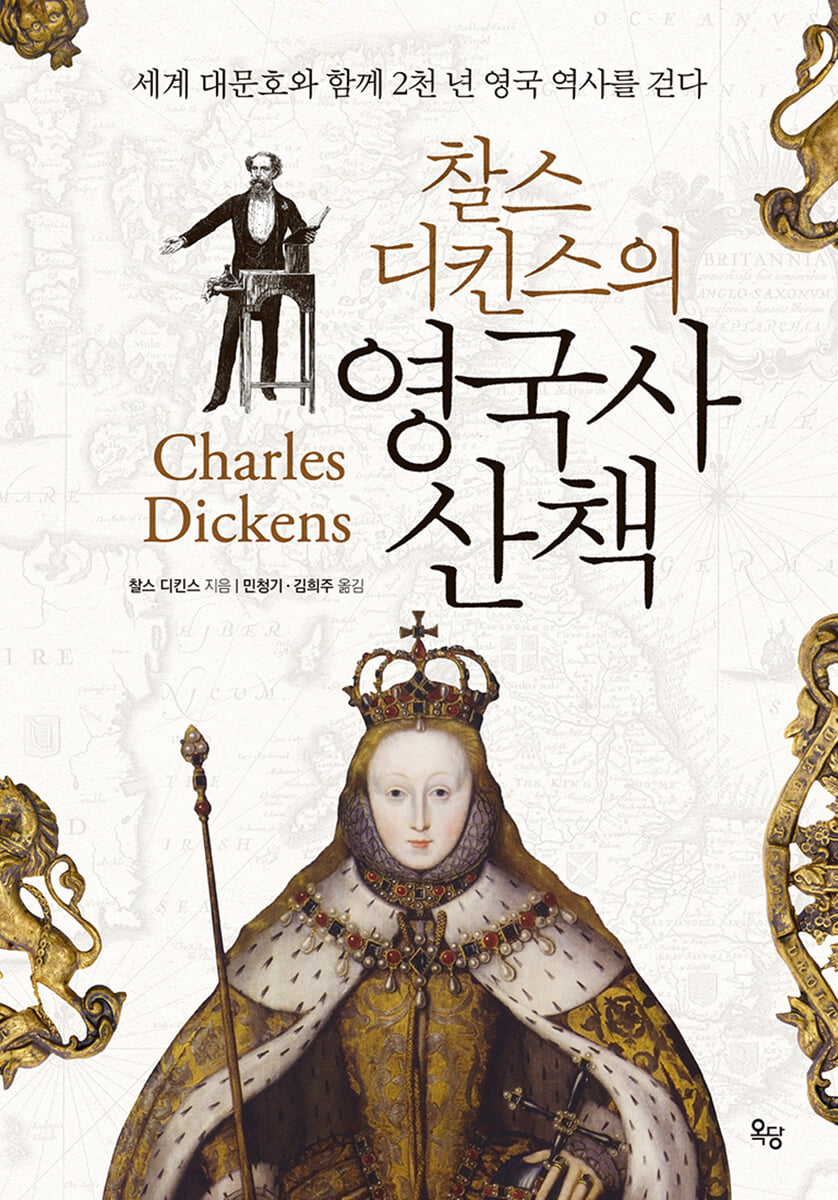
Charles Dickens's Walk Through British History
 |
Description
Book Introduction
A storybook written for children, but it turns out it was a history book.
Charles Dickens, the great 19th-century writer, published a unique book in 1853.
The book, which was published in three volumes by compiling the content serialized in the weekly magazine [Household Words] for three years, was surprisingly not a novel but a history book.
Why did he write a history of England? How does the history he tells differ from the history we know today? "A Child's History of England," a book that offers the essence of Dickensian historical writing, has been published.
This book covers two thousand years of British history, from around 50 BC, when Caesar invaded Britain, to Queen Victoria in the 19th century.
Dickens delves into the history of Britain, witnessing it firsthand as a contemporary, from the uncharted island of Britain to the formation of a modern nation, its growth in power, and the rise of the British Empire.
This masterpiece is imbued with Dickens' unique perspective and insight, and his unique strengths of not missing a single detail, from the overall flow and context to the detailed description of facts.
Charles Dickens, the great 19th-century writer, published a unique book in 1853.
The book, which was published in three volumes by compiling the content serialized in the weekly magazine [Household Words] for three years, was surprisingly not a novel but a history book.
Why did he write a history of England? How does the history he tells differ from the history we know today? "A Child's History of England," a book that offers the essence of Dickensian historical writing, has been published.
This book covers two thousand years of British history, from around 50 BC, when Caesar invaded Britain, to Queen Victoria in the 19th century.
Dickens delves into the history of Britain, witnessing it firsthand as a contemporary, from the uncharted island of Britain to the formation of a modern nation, its growth in power, and the rise of the British Empire.
This masterpiece is imbued with Dickens' unique perspective and insight, and his unique strengths of not missing a single detail, from the overall flow and context to the detailed description of facts.
- You can preview some of the book's contents.
Preview
index
Part 1: The Birth of England
Chapter 1: Encounter with the Unknown Island of Britain
Britain, the Land of Tin and Lead | Caesar's Expedition | Britain, Encountering Civilization
Chapter 2: The Saxons Become Masters of Britain
The Crisis in Britain | The Rise of the Seven Anglo-Saxon Kingdoms
Part 2: Laying the Foundation of the Nation
Chapter 3: Alfred the Great: The Foundation for a Unified Kingdom
Peace Found After Countless Wars | Embracing the Danes | Edward Unites the Seven Kingdoms
Chapter 4: Aethelstan and the Six Boy Kings
Dunstan's grip on the court and the fate of the six kings | Edward, the "Martyr" murdered by his stepmother | Repeated Dane invasions
Chapter 5: Cnut the Dane Becomes King of England
From Tyrant to Saint | Canute's Death and the Coming Crisis
Chapter 6: The Struggle for the Throne Between the Danes and the Anglo-Saxons
The Tragic Death of Prince Alfred | The Secret Pact Between King Edward and Count Godwin | The Queen Confined to a Convent
Chapter 7: The Restoration of the Anglo-Saxon Dynasty, Harold II
The Struggle to Protect the Crown | A Disastrous Defeat to the Normans
Chapter 8 William I, the Beginning of Norman Rule
Turning England into a Mass Grave | Hereward, the Elusive Rebel Leader | The Conqueror's End
Chapter 9: The Princes' Rebellion
Prince Henry faces peril from his brothers' betrayal | The Duke of Normandy sells his rule | The sorrow of the New Forest
Chapter 10: Henry I's Plot to Secure the Crown
Eliminate the former king's favorites | Duke Robert's trials | Confrontation with his nephew | A sudden accident
Chapter 11: The Struggle for the Throne Between Matilda, Daughter of Henry I, and Stephen
The Fifteen Years' War Devastated England | A Time of Brutality
Chapter 12: Henry II Abandoned by His Subjects
Geoffrey, the younger brother who rebelled in France | Thomas Becket, who stands up to the king | Becket's end | The conflict between Henry II and the Pope | The rebellion of his third son, Richard
Chapter 13: Richard I and the Crusades
The coronation ceremony that became a slaughterhouse for the Jews | Standing before the court of the Holy Roman Empire | The end of the Lionheart
Chapter 14: King John, the Villain, Throws England into Chaos
A quarrel with his nephew over the throne | Excommunicated by the Pope | Stephen Langton rebels against King John | Signs the Magna Carta
Chapter 15: The Shadow King, Henry III
The Earl of Pembroke, who saved England from crisis | The trials of the Earl of de Burgh | The conflict between royalists and Londoners | The Earl of Leicester, the real power behind the throne
Part 3: Expanding Territory and Grow Power
Chapter 16: Edward I Centralizes England
Victory at the Battle of Chalons secures popular support | Welsh rebellion | Compromise with Parliament | Conflict with Scotland | William Wallace spearheads the war against England | Wallace's tragic death
Chapter 17: Edward II's Downfall as a Favourite
Troublemaker Gaveston | The arrival of Roger Mortimer, who will change fate | The tragic end of Edward II
Chapter 18 Edward III Conquers Scotland
The Fall of Roger Mortimer, the Queen's Lover | The Heroes of Calais | The Death of the Black Prince
Chapter 19: The Swamp of Regency and Tyranny, Richard II
The Continuing Troubles and Peasant Rebellions | The Tyrant Richard II and the Good Queen Anne | Richard II's Endless Greed
Chapter 20: Henry IV, the First Lancastrian King
The Rebellion That Led to Richard II's Death | Owen Glendower's Rise
Chapter 21: Henry V dies at the height of his power.
The Lollard Rebellion | Victory at the Battle of Agincourt | Catherine's Beauty-Turning Strategy
Chapter 22: Henry VI and the Wars of the Roses
Orléans in Crisis | The Virgin Who Hears the Voice of God | From 'Saint' to 'Witch' | The Mysterious Death of the Earl of Gloucester | The Beginning of the Wars of the Roses
Chapter 23: Edward IV, the Heartless Tyrant
Ascension to the throne in chaos | The end of the Earl of Warwick, the kingmaker
Chapter 24: Richard III, Who Usurped the Crown from His Young Nephew
The Boy King and His Uncle's Battle | The Last King of the Plantagenet Family
Chapter 25: Henry VII Ends the Wars of the Roses
A bizarre and outrageous fraud | The glorious return of a pretender to the throne | The enigmatic Perkin Warbeck
Part 4: Building the British Empire
Chapter 26: Henry VIII, the Scandal Maker
Victory in the war against France | The Conference of the Golden Fields | The divorce trial of Henry VIII and Queen Catherine | The downfall of Cardinal Wolsey | The wrongful deaths of Thomas More and John Fisher | Falling in love again | The final moment finally approaches
Chapter 27: Edward VI, the Ardent Protestant
The Earl of Hertford, who had ascended to the rank of Lord Protector, met his sudden death.
Chapter 28: Mary I, the Violent Monarch
Persecution of Protestants | The Trials of Princess Elizabeth | The Burning of Bishop Hooper and Archbishop Cranmer
Chapter 29: Elizabeth I vs. Mary Stuart
Elizabeth ascends the throne | The Queen who married the nation | The death of Darnley | Queen Mary, the seed of conspiracy and misfortune | The Massacre of St. Bartholomew | Queen Mary, the last of her kind | The forging of a great England
Chapter 30: The Stuarts Become the First King of England, James I
Elizabeth's troublesome cousin ascends the throne | The attempted bombing of the Houses of Lords | The ongoing conflict with Parliament | The Crown Prince's marriage negotiations with a Spanish princess
Chapter 31: Charles I and the Parliamentarians wage civil war.
The failed Spanish expedition to Cadiz | Twelve years of rule without parliament | Parliament puts the brakes on the king's abuses of power | The war between king and parliament | Captured in the civil war | The rise of Oliver Cromwell | The end of Charles I
Chapter 32: Oliver Cromwell, the Parliamentarian Hero
Crown Prince Charles, a fugitive | Admiral Blake, who defeated the Dutch navy | England became the greatest power in Europe | Aiming for the throne
Chapter 33: Charles II, Restoration of the Monarchy
Oliver Cromwell is executed | London devastated by plague and fire | Becomes a puppet of the French king | The Duke of York and the Catholics conspire | Parliament enacts the 'Bill of Exclusion' | Secret meetings in the Rye
Chapter 34: James II and the Glorious Revolution
All-in on the Rebuilding of Catholicism | A Horrible and Abominable Time | Those Who Bravely Stand Up to Tyrants
Chapter 35: The Birth of the British Empire
Chapter 1: Encounter with the Unknown Island of Britain
Britain, the Land of Tin and Lead | Caesar's Expedition | Britain, Encountering Civilization
Chapter 2: The Saxons Become Masters of Britain
The Crisis in Britain | The Rise of the Seven Anglo-Saxon Kingdoms
Part 2: Laying the Foundation of the Nation
Chapter 3: Alfred the Great: The Foundation for a Unified Kingdom
Peace Found After Countless Wars | Embracing the Danes | Edward Unites the Seven Kingdoms
Chapter 4: Aethelstan and the Six Boy Kings
Dunstan's grip on the court and the fate of the six kings | Edward, the "Martyr" murdered by his stepmother | Repeated Dane invasions
Chapter 5: Cnut the Dane Becomes King of England
From Tyrant to Saint | Canute's Death and the Coming Crisis
Chapter 6: The Struggle for the Throne Between the Danes and the Anglo-Saxons
The Tragic Death of Prince Alfred | The Secret Pact Between King Edward and Count Godwin | The Queen Confined to a Convent
Chapter 7: The Restoration of the Anglo-Saxon Dynasty, Harold II
The Struggle to Protect the Crown | A Disastrous Defeat to the Normans
Chapter 8 William I, the Beginning of Norman Rule
Turning England into a Mass Grave | Hereward, the Elusive Rebel Leader | The Conqueror's End
Chapter 9: The Princes' Rebellion
Prince Henry faces peril from his brothers' betrayal | The Duke of Normandy sells his rule | The sorrow of the New Forest
Chapter 10: Henry I's Plot to Secure the Crown
Eliminate the former king's favorites | Duke Robert's trials | Confrontation with his nephew | A sudden accident
Chapter 11: The Struggle for the Throne Between Matilda, Daughter of Henry I, and Stephen
The Fifteen Years' War Devastated England | A Time of Brutality
Chapter 12: Henry II Abandoned by His Subjects
Geoffrey, the younger brother who rebelled in France | Thomas Becket, who stands up to the king | Becket's end | The conflict between Henry II and the Pope | The rebellion of his third son, Richard
Chapter 13: Richard I and the Crusades
The coronation ceremony that became a slaughterhouse for the Jews | Standing before the court of the Holy Roman Empire | The end of the Lionheart
Chapter 14: King John, the Villain, Throws England into Chaos
A quarrel with his nephew over the throne | Excommunicated by the Pope | Stephen Langton rebels against King John | Signs the Magna Carta
Chapter 15: The Shadow King, Henry III
The Earl of Pembroke, who saved England from crisis | The trials of the Earl of de Burgh | The conflict between royalists and Londoners | The Earl of Leicester, the real power behind the throne
Part 3: Expanding Territory and Grow Power
Chapter 16: Edward I Centralizes England
Victory at the Battle of Chalons secures popular support | Welsh rebellion | Compromise with Parliament | Conflict with Scotland | William Wallace spearheads the war against England | Wallace's tragic death
Chapter 17: Edward II's Downfall as a Favourite
Troublemaker Gaveston | The arrival of Roger Mortimer, who will change fate | The tragic end of Edward II
Chapter 18 Edward III Conquers Scotland
The Fall of Roger Mortimer, the Queen's Lover | The Heroes of Calais | The Death of the Black Prince
Chapter 19: The Swamp of Regency and Tyranny, Richard II
The Continuing Troubles and Peasant Rebellions | The Tyrant Richard II and the Good Queen Anne | Richard II's Endless Greed
Chapter 20: Henry IV, the First Lancastrian King
The Rebellion That Led to Richard II's Death | Owen Glendower's Rise
Chapter 21: Henry V dies at the height of his power.
The Lollard Rebellion | Victory at the Battle of Agincourt | Catherine's Beauty-Turning Strategy
Chapter 22: Henry VI and the Wars of the Roses
Orléans in Crisis | The Virgin Who Hears the Voice of God | From 'Saint' to 'Witch' | The Mysterious Death of the Earl of Gloucester | The Beginning of the Wars of the Roses
Chapter 23: Edward IV, the Heartless Tyrant
Ascension to the throne in chaos | The end of the Earl of Warwick, the kingmaker
Chapter 24: Richard III, Who Usurped the Crown from His Young Nephew
The Boy King and His Uncle's Battle | The Last King of the Plantagenet Family
Chapter 25: Henry VII Ends the Wars of the Roses
A bizarre and outrageous fraud | The glorious return of a pretender to the throne | The enigmatic Perkin Warbeck
Part 4: Building the British Empire
Chapter 26: Henry VIII, the Scandal Maker
Victory in the war against France | The Conference of the Golden Fields | The divorce trial of Henry VIII and Queen Catherine | The downfall of Cardinal Wolsey | The wrongful deaths of Thomas More and John Fisher | Falling in love again | The final moment finally approaches
Chapter 27: Edward VI, the Ardent Protestant
The Earl of Hertford, who had ascended to the rank of Lord Protector, met his sudden death.
Chapter 28: Mary I, the Violent Monarch
Persecution of Protestants | The Trials of Princess Elizabeth | The Burning of Bishop Hooper and Archbishop Cranmer
Chapter 29: Elizabeth I vs. Mary Stuart
Elizabeth ascends the throne | The Queen who married the nation | The death of Darnley | Queen Mary, the seed of conspiracy and misfortune | The Massacre of St. Bartholomew | Queen Mary, the last of her kind | The forging of a great England
Chapter 30: The Stuarts Become the First King of England, James I
Elizabeth's troublesome cousin ascends the throne | The attempted bombing of the Houses of Lords | The ongoing conflict with Parliament | The Crown Prince's marriage negotiations with a Spanish princess
Chapter 31: Charles I and the Parliamentarians wage civil war.
The failed Spanish expedition to Cadiz | Twelve years of rule without parliament | Parliament puts the brakes on the king's abuses of power | The war between king and parliament | Captured in the civil war | The rise of Oliver Cromwell | The end of Charles I
Chapter 32: Oliver Cromwell, the Parliamentarian Hero
Crown Prince Charles, a fugitive | Admiral Blake, who defeated the Dutch navy | England became the greatest power in Europe | Aiming for the throne
Chapter 33: Charles II, Restoration of the Monarchy
Oliver Cromwell is executed | London devastated by plague and fire | Becomes a puppet of the French king | The Duke of York and the Catholics conspire | Parliament enacts the 'Bill of Exclusion' | Secret meetings in the Rye
Chapter 34: James II and the Glorious Revolution
All-in on the Rebuilding of Catholicism | A Horrible and Abominable Time | Those Who Bravely Stand Up to Tyrants
Chapter 35: The Birth of the British Empire
Publisher's Review
Why did Dickens focus on British history?
Interestingly, the original title of Charles Dickens' A Walk Through England was not 'A History of England' but 'A Child's History of England'.
In fact, it is said that this book was included in the British elementary school curriculum until the end of the 20th century.
To understand what motivated Dickens to write this book, we must look at the circumstances of the time in England.
England in the 1800s was the era of Queen Victoria, who created an empire unprecedented in history.
Although it grew into a powerful country that was called 'the country on which the sun never sets,' behind it were people suffering from poverty and disease.
The children's lives were even more miserable.
Homeless children were forced to sleep on the streets, do backbreaking work in coal mines, or clean factory chimneys.
The extent of the tragedy can be imagined when it is said that half of the funerals held in London in the 1830s involved children under the age of ten.
Dickens focused on children suffering in these contradictions.
Dickens, who wrote this book because he thought that “children need books that they can read happily, history books that are easy and fun to read,” made it possible for anyone to easily see the flow of British history at a glance by chronologically explaining how the country called England was founded and what twists and turns it went through to reach the present day, focusing on various kings.
The characters appearing in the book are not only kings and other rulers.
This book is filled with the lives of countless people who have created history together, sometimes with fervent support, and sometimes with cold-blooded criticism and surveillance.
This book shows that history is not made by just a few people, and that only by having a correct view of history through past history can we create the right history for the future.
This is precisely why it was loved by not only children but also adults and left its mark on British history.
The murderous instinct hidden behind the false name of the Iron Monarch,
The death of a great king, murdered by a mere robber in the royal banquet hall,
Princess Catherine's beauty trick that changed the course of the Anglo-French War.
Even the greatest fraud against the royal family!
Discover British history through the eyes of Charles Dickens.
This book has unique advantages not found in existing history books.
Rather than focusing on a specific era or dynasty, Dickens developed the story so that readers could view British history as if they were looking at a forest, and he did not stop at simply listing historical facts.
Like other works previously presented, this book is deeply imbued with a sharp critique of a contradictory society, a warm gaze toward the poor and oppressed, and a people-centered view of history.
Throughout the book, he offers scathing criticism of incompetent kings and nobles, and he pokes fun at them with sharp satire and witty wit.
“If I hadn’t been born a prince, I might have become a better person.
“I would not have seen so much blood in the world, and my life would not have been ruined because of it.” - Chapter 13_Richard I and the Crusades
“The self-evident truth is that Henry VIII was an intolerable villain, a stain on human nature, and a blot on English history.” - Chapter 26_Henry VIII, the Scandal Maker
“She will forever be remembered in England as a symbol of fear and loathing, as befitting ‘Bloody Queen Mary.’
“The memory of Mary I was so full of disgust that later writers deliberately wrote of her as a generally kind and cheerful monarch.” - Chapter 28_Mary I, the Violent Monarch
Dickens also developed his own unique 'monarchy' by organizing British history chronologically, focusing on the kings.
He presents his own views that are a bit different from what is generally known to us, such as the case of Richard I, who is praised as an iron monarch and 'the king with the heart of a lion'.
From Dickens's perspective, Richard I is more of a 'murderer' or a 'psychopath' than a great monarch.
In fact, he was a cruel king who not only massacred countless Jews, but also did not hesitate to kill for the sheer fun of it.
The interpretation of Elizabeth I is also interesting.
She was not a great queen as the world knows her to be, but rather she was fortunate enough to have produced many great figures during her reign, such as William Shakespeare, Francis Bacon, Edmund Spenser, and Admiral Sir Francis Drake, which contributed to her fame.
So, which king would Dickens consider a "good king"? Across two thousand years of British history, the only monarchs he considers worthy, aside from Queen Victoria, a contemporary of Dickens's, are the Saxon King Alfred the Great and the illustrious Parliamentarian hero Oliver Cromwell.
Alfred the Great was a king so near perfect that it was almost impossible to find a flaw in him, a monarch most beloved by his people, and Oliver Cromwell, with the exception of his greed for the throne in his later years, was a great leader who, no less than Queen Victoria, made England a truly powerful nation and a country respected around the world.
A fun read about Britain, the British, and British history, as if taking a walk with a great writer.
Although this book is a massive 650 pages, it is not boring at all and is an easy read.
Not only is it written in an easy-to-read format that even elementary school students can understand, but Dickens' unique way of developing the story makes it so exciting and thrilling that you won't even notice how each page turns.
The book is filled with fascinating stories that capture the interest of readers, from the story of Alfred the Great, the great monarch admired by the English people, being mocked by a shepherd's wife, to the tragedy of Edmund I, who was murdered by a mere robber at a royal banquet, to the shocking story of William I, whose body was abandoned and neglected three times after his death, to the ironic history of 12,000 books praising the pitiful King Charles I.
On the other hand, scenes of people being arrested for treason or taken prisoner in the religious wars between Catholics and Protestants and executed in ways that are too gruesome to describe in words, the rebellion of the people who could no longer endure the harsh oppression and exploitation and the tragedy that occurred in the process of suppressing them, and the plots to usurp the throne between siblings or relatives and the betrayal of nobles, allow us to feel the situation of the time in England and the suffering of the people.
Through this book, Dickens showed in a three-dimensional way how England was founded, through what process it grew and developed to become what it is today, and why the phenomenon of the rich getting richer and the poor getting poorer and inequality persist despite becoming a superpower. He also wanted to give readers a correct view of history and insight. This hope is still valid for us living in the 21st century.
E., who said, “History repeats itself.”
I hope this book will serve as a touchstone for the tragedy of history that continues to repeat itself today, just like H. Carr's story.
Interestingly, the original title of Charles Dickens' A Walk Through England was not 'A History of England' but 'A Child's History of England'.
In fact, it is said that this book was included in the British elementary school curriculum until the end of the 20th century.
To understand what motivated Dickens to write this book, we must look at the circumstances of the time in England.
England in the 1800s was the era of Queen Victoria, who created an empire unprecedented in history.
Although it grew into a powerful country that was called 'the country on which the sun never sets,' behind it were people suffering from poverty and disease.
The children's lives were even more miserable.
Homeless children were forced to sleep on the streets, do backbreaking work in coal mines, or clean factory chimneys.
The extent of the tragedy can be imagined when it is said that half of the funerals held in London in the 1830s involved children under the age of ten.
Dickens focused on children suffering in these contradictions.
Dickens, who wrote this book because he thought that “children need books that they can read happily, history books that are easy and fun to read,” made it possible for anyone to easily see the flow of British history at a glance by chronologically explaining how the country called England was founded and what twists and turns it went through to reach the present day, focusing on various kings.
The characters appearing in the book are not only kings and other rulers.
This book is filled with the lives of countless people who have created history together, sometimes with fervent support, and sometimes with cold-blooded criticism and surveillance.
This book shows that history is not made by just a few people, and that only by having a correct view of history through past history can we create the right history for the future.
This is precisely why it was loved by not only children but also adults and left its mark on British history.
The murderous instinct hidden behind the false name of the Iron Monarch,
The death of a great king, murdered by a mere robber in the royal banquet hall,
Princess Catherine's beauty trick that changed the course of the Anglo-French War.
Even the greatest fraud against the royal family!
Discover British history through the eyes of Charles Dickens.
This book has unique advantages not found in existing history books.
Rather than focusing on a specific era or dynasty, Dickens developed the story so that readers could view British history as if they were looking at a forest, and he did not stop at simply listing historical facts.
Like other works previously presented, this book is deeply imbued with a sharp critique of a contradictory society, a warm gaze toward the poor and oppressed, and a people-centered view of history.
Throughout the book, he offers scathing criticism of incompetent kings and nobles, and he pokes fun at them with sharp satire and witty wit.
“If I hadn’t been born a prince, I might have become a better person.
“I would not have seen so much blood in the world, and my life would not have been ruined because of it.” - Chapter 13_Richard I and the Crusades
“The self-evident truth is that Henry VIII was an intolerable villain, a stain on human nature, and a blot on English history.” - Chapter 26_Henry VIII, the Scandal Maker
“She will forever be remembered in England as a symbol of fear and loathing, as befitting ‘Bloody Queen Mary.’
“The memory of Mary I was so full of disgust that later writers deliberately wrote of her as a generally kind and cheerful monarch.” - Chapter 28_Mary I, the Violent Monarch
Dickens also developed his own unique 'monarchy' by organizing British history chronologically, focusing on the kings.
He presents his own views that are a bit different from what is generally known to us, such as the case of Richard I, who is praised as an iron monarch and 'the king with the heart of a lion'.
From Dickens's perspective, Richard I is more of a 'murderer' or a 'psychopath' than a great monarch.
In fact, he was a cruel king who not only massacred countless Jews, but also did not hesitate to kill for the sheer fun of it.
The interpretation of Elizabeth I is also interesting.
She was not a great queen as the world knows her to be, but rather she was fortunate enough to have produced many great figures during her reign, such as William Shakespeare, Francis Bacon, Edmund Spenser, and Admiral Sir Francis Drake, which contributed to her fame.
So, which king would Dickens consider a "good king"? Across two thousand years of British history, the only monarchs he considers worthy, aside from Queen Victoria, a contemporary of Dickens's, are the Saxon King Alfred the Great and the illustrious Parliamentarian hero Oliver Cromwell.
Alfred the Great was a king so near perfect that it was almost impossible to find a flaw in him, a monarch most beloved by his people, and Oliver Cromwell, with the exception of his greed for the throne in his later years, was a great leader who, no less than Queen Victoria, made England a truly powerful nation and a country respected around the world.
A fun read about Britain, the British, and British history, as if taking a walk with a great writer.
Although this book is a massive 650 pages, it is not boring at all and is an easy read.
Not only is it written in an easy-to-read format that even elementary school students can understand, but Dickens' unique way of developing the story makes it so exciting and thrilling that you won't even notice how each page turns.
The book is filled with fascinating stories that capture the interest of readers, from the story of Alfred the Great, the great monarch admired by the English people, being mocked by a shepherd's wife, to the tragedy of Edmund I, who was murdered by a mere robber at a royal banquet, to the shocking story of William I, whose body was abandoned and neglected three times after his death, to the ironic history of 12,000 books praising the pitiful King Charles I.
On the other hand, scenes of people being arrested for treason or taken prisoner in the religious wars between Catholics and Protestants and executed in ways that are too gruesome to describe in words, the rebellion of the people who could no longer endure the harsh oppression and exploitation and the tragedy that occurred in the process of suppressing them, and the plots to usurp the throne between siblings or relatives and the betrayal of nobles, allow us to feel the situation of the time in England and the suffering of the people.
Through this book, Dickens showed in a three-dimensional way how England was founded, through what process it grew and developed to become what it is today, and why the phenomenon of the rich getting richer and the poor getting poorer and inequality persist despite becoming a superpower. He also wanted to give readers a correct view of history and insight. This hope is still valid for us living in the 21st century.
E., who said, “History repeats itself.”
I hope this book will serve as a touchstone for the tragedy of history that continues to repeat itself today, just like H. Carr's story.
GOODS SPECIFICS
- Date of issue: October 2, 2023
- Format: Hardcover book binding method guide
- Page count, weight, size: 648 pages | 148*210*35mm
- ISBN13: 9791189936433
- ISBN10: 1189936437
You may also like
카테고리
korean


korean

![GQ KOREA Mark (Monthly): December [2025]](http://librairie.coreenne.fr/cdn/shop/files/8ef265dbbfbf186523ed75ba7319009d.jpg?v=1765340328&width=3840)


