

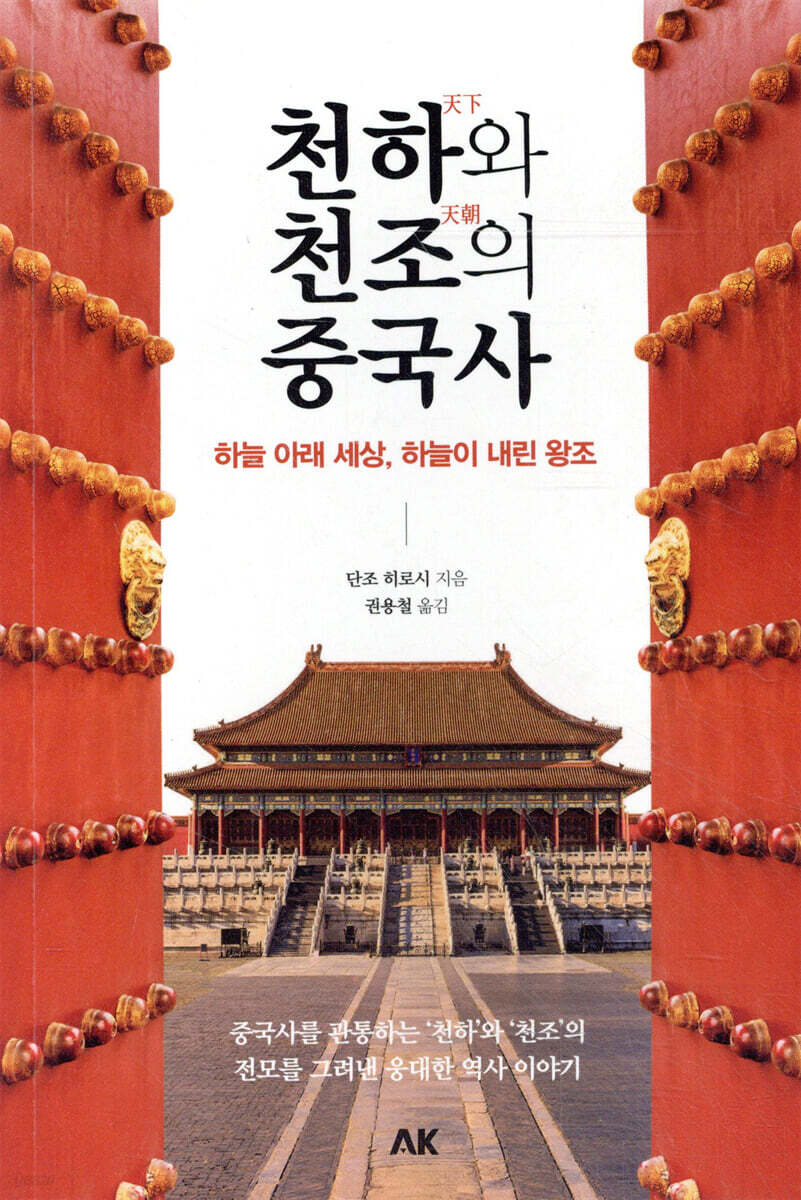
Chinese history of the world and the dynasty
 |
Description
Book Introduction
The Heavenly Court refers to the court of the Emperor who rules the world by receiving the mandate of Heaven.
This book traces and explores the principles of action of the traditional Chinese empire through the keywords "world" and "heavenly dynasty."
It is a re-examination of Chinese history from ancient times to the present as the history of the world and the dynasties.
The actions of the Chinese Empire were all justified as long as they followed the logic of the Celestial Empire, and successive dynasties tried to apply that logic to real politics.
The Cheonjo system has survived for a thousand years and continues to this day, even though its substance has changed significantly over time.
It will be of great help in gaining a comprehensive view of Chinese history and understanding China today.
This book traces and explores the principles of action of the traditional Chinese empire through the keywords "world" and "heavenly dynasty."
It is a re-examination of Chinese history from ancient times to the present as the history of the world and the dynasties.
The actions of the Chinese Empire were all justified as long as they followed the logic of the Celestial Empire, and successive dynasties tried to apply that logic to real politics.
The Cheonjo system has survived for a thousand years and continues to this day, even though its substance has changed significantly over time.
It will be of great help in gaining a comprehensive view of Chinese history and understanding China today.
index
prolog
Chapter 1: Is there no place under the vast sky that is not the king's land? - The Spring and Autumn Annals and the Warring States Period
Heaven and China
What is the world? / What is the world to the Chinese?
From the bottom to the top / The consciousness of the same kind among the Hwaha people
The Expansion of China / The Birth of Sinocentrism
The center and the periphery are gold and silver.
The Five Fortunes Speak / The World in a Covered Shape
Chapter 2: Structure of the Celestial System - Jin and Han
Teachers and Seed Shopkeepers / The Beginning of the Gyomyo System
Confucianism as the state religion / Justification of imperial rule
The Six Seals of the Emperor / The Essential Contradiction Between the Emperor and the Emperor
The Three Great Powers / The Three Great Powers / The Changed Interpretation of the Three Great Powers
Various notions of the Heavenly Family / The concept of the Heavenly Family in a broad sense
Chapter 3: The World in the North, the World in the South - The Han, Wei, Jin, Southern and Northern Dynasties (1)
Three types of fire
If you go to China, it is considered China.
China where Ho and Han live together
If it's not our kind, then the mind is definitely different.
Descendants of the Emperor / Fu Jian's concept of Hwa-i
The Six Family / The World That Fu Jian Dreamed of
Northern Wei's unification of North China / Jade of the National History
Emperor Hyojong's policy of peace and harmony / Between peace and harmony
Zhonghua and the Southern Expedition / The Whereabouts of the Southern Expedition
Chapter 4: The World and Its Order - The Han, Wei, Jin, Southern and Northern Dynasties (2)
The World and the Savior / The Savior as the World
Bureaucratic order and constructive order
Investiture of foreign ministers / royal titles and acquisitions
Why is Waenoguk a Waeguk? / Awarding of Official Ranks and Titles
Himiko's Investiture / From Foreign to Domestic
The Myth of the King of the Four Kings / Why the Appearance of the King of the Five Kings
Chapter 5: China's Great Tianxia and Japan's Little Tianxia - Southern Dynasties, Sui, and Tang
King Chicheonha / King Muui of Wa
The world of several countries on the Korean Peninsula
The younger brother of the sky, the older brother of the sun / The emperor of the place where the sun rises
The Double Standards of the Emperor and the King / The Small Empire of Dongyi
What was called the Heavenly King / Two Small Heavens
Chapter 6: The Tianxia System in East Asia - Tang
Cheon Ga-han / Expansion of Kimi-ju / Cheon Ga-han's Hwa-i-gwan
Three Layers of Heaven / The Golden Age of the Heavenly Dynasty / The Rites of the Yuan Dynasty
The Order of the Lord and His Servants and the Order of the Family / The Visualization of the World's Families
East Asia's Little World / Competition between the Worlds
The Completion of the Heavenly System / The Heavenly System and the Logic of the Heavenly Dynasty
Ritualization of trade
Chapter 7: The Whereabouts of the Heavenly Emperor - Five Dynasties and Ten Kingdoms, Song, Liao, and Jin
From the example of the Khitans and the Sata / ruler and subject to the example of Cain
The rule of the Central Plains by the Liao Dynasty / King Sejong of the Later Zhou Dynasty and Emperor Taizu of Song Dynasty
The Age of the Oath / The Age of the Oath
Two Worlds, Two Heavenly Emperors / The Hwai Palace of the Song and Liao
Chinese Painting of Liao / Jin and Southern Song / King Hae-ryung's Ambition
Cheondo and Nambeol / Soyosun's World / Hwai Gwan of the North and South
Chapter 8: The Completion of the Heavenly Family - Won
Kublai Khan's Rule of Han China / Aid and Mongolian History
When was the Yuan Dynasty established?
The opening of the Chinese capital / The law of heaven / The capital of the celestial dynasty
Great, Geonwon / Daewon's world
Unification of North and South / Infinite World
The Red Turban Rebellion / The Twilight of the Great Yuan / The End of the World
Chapter 9: From the Heavenly Family to the Hwai Family - Ming
Justification of the Yuan and Ming Revolutions / The Rise of China
The Great Myung Family / Reign of Terror / General and the Unban
He is the monarch of Huai / From Hongwu to Yongle
Aiming for the Huai family / Surpassing Kublai Khan
The Golden Age of the Yongle Emperor / The Realization of the Hwa-i Family
The collapse of the Huai family / The invasion of China / The crisis of the world
Chapter 10: The Hwa-i Metamorphosis and the Jung-oe Family - Qing
The Rise of the Qing Dynasty and the Transformation of the Fire / The Master of the Middle and Lower
Manhan Ilga / From Manhan Ilga to Jungoe Ilga
The Gift Case / The World of the Ten-Year-Old Man
The Middle and Lower Levels of the Yellow River / The Middle and Lower Levels of the Yellow River
Joseon's ideology of small China / Japanese-style Chinese order
The Song of the Southern Zhonghua / The Song of the Heavenly King
Chapter 11: The Great Family of the Chinese Nation - Modern and Contemporary Times
The distinction between martial arts reform and Huai and the unification of the Great One
Xinhai Revolution / China and the Chinese People
Sun Yat-sen's Theory of the Chinese Nation / The Song of the Sino-Japanese Family
The Chinese Communist Party's Ethnic Policy / The Pluralistic and Integral Structure of the Chinese Nation
The Influence of the Worldview / The Creation of a New World
Epilogue
References
Translator's Note
Chapter 1: Is there no place under the vast sky that is not the king's land? - The Spring and Autumn Annals and the Warring States Period
Heaven and China
What is the world? / What is the world to the Chinese?
From the bottom to the top / The consciousness of the same kind among the Hwaha people
The Expansion of China / The Birth of Sinocentrism
The center and the periphery are gold and silver.
The Five Fortunes Speak / The World in a Covered Shape
Chapter 2: Structure of the Celestial System - Jin and Han
Teachers and Seed Shopkeepers / The Beginning of the Gyomyo System
Confucianism as the state religion / Justification of imperial rule
The Six Seals of the Emperor / The Essential Contradiction Between the Emperor and the Emperor
The Three Great Powers / The Three Great Powers / The Changed Interpretation of the Three Great Powers
Various notions of the Heavenly Family / The concept of the Heavenly Family in a broad sense
Chapter 3: The World in the North, the World in the South - The Han, Wei, Jin, Southern and Northern Dynasties (1)
Three types of fire
If you go to China, it is considered China.
China where Ho and Han live together
If it's not our kind, then the mind is definitely different.
Descendants of the Emperor / Fu Jian's concept of Hwa-i
The Six Family / The World That Fu Jian Dreamed of
Northern Wei's unification of North China / Jade of the National History
Emperor Hyojong's policy of peace and harmony / Between peace and harmony
Zhonghua and the Southern Expedition / The Whereabouts of the Southern Expedition
Chapter 4: The World and Its Order - The Han, Wei, Jin, Southern and Northern Dynasties (2)
The World and the Savior / The Savior as the World
Bureaucratic order and constructive order
Investiture of foreign ministers / royal titles and acquisitions
Why is Waenoguk a Waeguk? / Awarding of Official Ranks and Titles
Himiko's Investiture / From Foreign to Domestic
The Myth of the King of the Four Kings / Why the Appearance of the King of the Five Kings
Chapter 5: China's Great Tianxia and Japan's Little Tianxia - Southern Dynasties, Sui, and Tang
King Chicheonha / King Muui of Wa
The world of several countries on the Korean Peninsula
The younger brother of the sky, the older brother of the sun / The emperor of the place where the sun rises
The Double Standards of the Emperor and the King / The Small Empire of Dongyi
What was called the Heavenly King / Two Small Heavens
Chapter 6: The Tianxia System in East Asia - Tang
Cheon Ga-han / Expansion of Kimi-ju / Cheon Ga-han's Hwa-i-gwan
Three Layers of Heaven / The Golden Age of the Heavenly Dynasty / The Rites of the Yuan Dynasty
The Order of the Lord and His Servants and the Order of the Family / The Visualization of the World's Families
East Asia's Little World / Competition between the Worlds
The Completion of the Heavenly System / The Heavenly System and the Logic of the Heavenly Dynasty
Ritualization of trade
Chapter 7: The Whereabouts of the Heavenly Emperor - Five Dynasties and Ten Kingdoms, Song, Liao, and Jin
From the example of the Khitans and the Sata / ruler and subject to the example of Cain
The rule of the Central Plains by the Liao Dynasty / King Sejong of the Later Zhou Dynasty and Emperor Taizu of Song Dynasty
The Age of the Oath / The Age of the Oath
Two Worlds, Two Heavenly Emperors / The Hwai Palace of the Song and Liao
Chinese Painting of Liao / Jin and Southern Song / King Hae-ryung's Ambition
Cheondo and Nambeol / Soyosun's World / Hwai Gwan of the North and South
Chapter 8: The Completion of the Heavenly Family - Won
Kublai Khan's Rule of Han China / Aid and Mongolian History
When was the Yuan Dynasty established?
The opening of the Chinese capital / The law of heaven / The capital of the celestial dynasty
Great, Geonwon / Daewon's world
Unification of North and South / Infinite World
The Red Turban Rebellion / The Twilight of the Great Yuan / The End of the World
Chapter 9: From the Heavenly Family to the Hwai Family - Ming
Justification of the Yuan and Ming Revolutions / The Rise of China
The Great Myung Family / Reign of Terror / General and the Unban
He is the monarch of Huai / From Hongwu to Yongle
Aiming for the Huai family / Surpassing Kublai Khan
The Golden Age of the Yongle Emperor / The Realization of the Hwa-i Family
The collapse of the Huai family / The invasion of China / The crisis of the world
Chapter 10: The Hwa-i Metamorphosis and the Jung-oe Family - Qing
The Rise of the Qing Dynasty and the Transformation of the Fire / The Master of the Middle and Lower
Manhan Ilga / From Manhan Ilga to Jungoe Ilga
The Gift Case / The World of the Ten-Year-Old Man
The Middle and Lower Levels of the Yellow River / The Middle and Lower Levels of the Yellow River
Joseon's ideology of small China / Japanese-style Chinese order
The Song of the Southern Zhonghua / The Song of the Heavenly King
Chapter 11: The Great Family of the Chinese Nation - Modern and Contemporary Times
The distinction between martial arts reform and Huai and the unification of the Great One
Xinhai Revolution / China and the Chinese People
Sun Yat-sen's Theory of the Chinese Nation / The Song of the Sino-Japanese Family
The Chinese Communist Party's Ethnic Policy / The Pluralistic and Integral Structure of the Chinese Nation
The Influence of the Worldview / The Creation of a New World
Epilogue
References
Translator's Note
Into the book
The term “Celestial Dynasty” refers to the court of the Emperor who rules the world by receiving the mandate of Heaven.
Since the Han Dynasty, when Confucianism became the state religion, the Chinese Empire has been called the dynasty of the time by everyone, including the emperor.
In Confucianism, when a virtuous emperor takes charge of the court, the Chinese Empire gains the basis for ruling the world.
According to this logic, the territory of the world ruled by the emperor would naturally change in accordance with the degree of the emperor's virtue, so if the territory of the Chinese Empire expanded, it was considered evidence of the emperor's high virtue.
In short, to put it the other way around, the actions of the Chinese Empire were all justified if they followed the logic of the Celestial Empire, and successive dynasties had no choice but to strive to apply that logic to real-world politics.
--- p.14
In East Asia, there were multiple worlds, some large and some small, and the world system as a political system was formed by organically connecting these worlds.
And what may have supported this system was each country's unique concept of the world, as described above.
However, what also underlies that concept was the celestial consciousness of each country, and those concepts and consciousnesses continuously adjusted between the great world and the small world, and between the small worlds, creating a loose international order in East Asia as a whole.
--- p.200
This can also be seen through the relationship between Joseon and Japan.
In the diplomatic letters exchanged between the two countries, the names used to refer to each other were the King of Joseon in Japan and the Prince of Japan in Joseon, a special diplomatic title used in response to Japan's demands.
The reason why the Japanese shogun avoided the name of the king was because in the Chinese nobility system, the king was a vassal of the emperor (the Son of Heaven), and he was also reluctant to become equal to the king of Joseon, who had been invested by the Qing.
And in Joseon, the title of Grand Prince was considered inferior to that of the King, so the use of the title of Grand Prince in Japan was accepted without resistance.
Although the names were decided based on the respective ideas of Joseon and Japan, the underlying principle was the implicit order of the world that pervaded both countries, even if they were not conscious of it.
Since the Han Dynasty, when Confucianism became the state religion, the Chinese Empire has been called the dynasty of the time by everyone, including the emperor.
In Confucianism, when a virtuous emperor takes charge of the court, the Chinese Empire gains the basis for ruling the world.
According to this logic, the territory of the world ruled by the emperor would naturally change in accordance with the degree of the emperor's virtue, so if the territory of the Chinese Empire expanded, it was considered evidence of the emperor's high virtue.
In short, to put it the other way around, the actions of the Chinese Empire were all justified if they followed the logic of the Celestial Empire, and successive dynasties had no choice but to strive to apply that logic to real-world politics.
--- p.14
In East Asia, there were multiple worlds, some large and some small, and the world system as a political system was formed by organically connecting these worlds.
And what may have supported this system was each country's unique concept of the world, as described above.
However, what also underlies that concept was the celestial consciousness of each country, and those concepts and consciousnesses continuously adjusted between the great world and the small world, and between the small worlds, creating a loose international order in East Asia as a whole.
--- p.200
This can also be seen through the relationship between Joseon and Japan.
In the diplomatic letters exchanged between the two countries, the names used to refer to each other were the King of Joseon in Japan and the Prince of Japan in Joseon, a special diplomatic title used in response to Japan's demands.
The reason why the Japanese shogun avoided the name of the king was because in the Chinese nobility system, the king was a vassal of the emperor (the Son of Heaven), and he was also reluctant to become equal to the king of Joseon, who had been invested by the Qing.
And in Joseon, the title of Grand Prince was considered inferior to that of the King, so the use of the title of Grand Prince in Japan was accepted without resistance.
Although the names were decided based on the respective ideas of Joseon and Japan, the underlying principle was the implicit order of the world that pervaded both countries, even if they were not conscious of it.
--- p.364
Publisher's Review
The 'world' and 'heavenly dynasty' that run through Chinese history
A grand historical story that depicts the whole picture!
The Heavenly Court refers to the court of the Emperor who rules the world by receiving the mandate of Heaven.
This book traces and explores the principles of action of the traditional Chinese empire through the keywords "world" and "heavenly dynasty."
It is a re-examination of Chinese history from ancient times to the present as the history of the world and the dynasties.
The actions of the Chinese Empire were all justified as long as they followed the logic of the Celestial Empire, and successive dynasties tried to apply that logic to real politics.
The Cheonjo system has survived for a thousand years and continues to this day, even though its substance has changed significantly over time.
Let's take a closer look at the development process.
Understand today's China more clearly!
Historical disputes with China, such as the 'Northeast Project' and the 'Cultural War,' and conflicts surrounding culture are likely the main factors worsening the impression of China today.
There are also various discussions taking place surrounding China-centered foreign expansion policies.
Important concepts for understanding these Chinese movements include the world, the dynasty, the concept of Huai Guan, and the idea of Sinocentrism.
The Chinese concept of the world is not fixed, but is carefully designed to be applied according to the situation.
China's current movements are difficult to understand without the traditional Chinese imperial view of the world.
This book provides a comprehensive overview of Chinese history and will be of great help in understanding China today.
A grand historical story that depicts the whole picture!
The Heavenly Court refers to the court of the Emperor who rules the world by receiving the mandate of Heaven.
This book traces and explores the principles of action of the traditional Chinese empire through the keywords "world" and "heavenly dynasty."
It is a re-examination of Chinese history from ancient times to the present as the history of the world and the dynasties.
The actions of the Chinese Empire were all justified as long as they followed the logic of the Celestial Empire, and successive dynasties tried to apply that logic to real politics.
The Cheonjo system has survived for a thousand years and continues to this day, even though its substance has changed significantly over time.
Let's take a closer look at the development process.
Understand today's China more clearly!
Historical disputes with China, such as the 'Northeast Project' and the 'Cultural War,' and conflicts surrounding culture are likely the main factors worsening the impression of China today.
There are also various discussions taking place surrounding China-centered foreign expansion policies.
Important concepts for understanding these Chinese movements include the world, the dynasty, the concept of Huai Guan, and the idea of Sinocentrism.
The Chinese concept of the world is not fixed, but is carefully designed to be applied according to the situation.
China's current movements are difficult to understand without the traditional Chinese imperial view of the world.
This book provides a comprehensive overview of Chinese history and will be of great help in understanding China today.
GOODS SPECIFICS
- Date of issue: August 10, 2023
- Page count, weight, size: 436 pages | 442g | 128*188*22mm
- ISBN13: 9791127464240
- ISBN10: 1127464248
You may also like
카테고리
korean


korean

![GQ KOREA Mark (Monthly): December [2025]](http://librairie.coreenne.fr/cdn/shop/files/8ef265dbbfbf186523ed75ba7319009d.jpg?v=1765340328&width=3840)


