

History of God
 |
Description
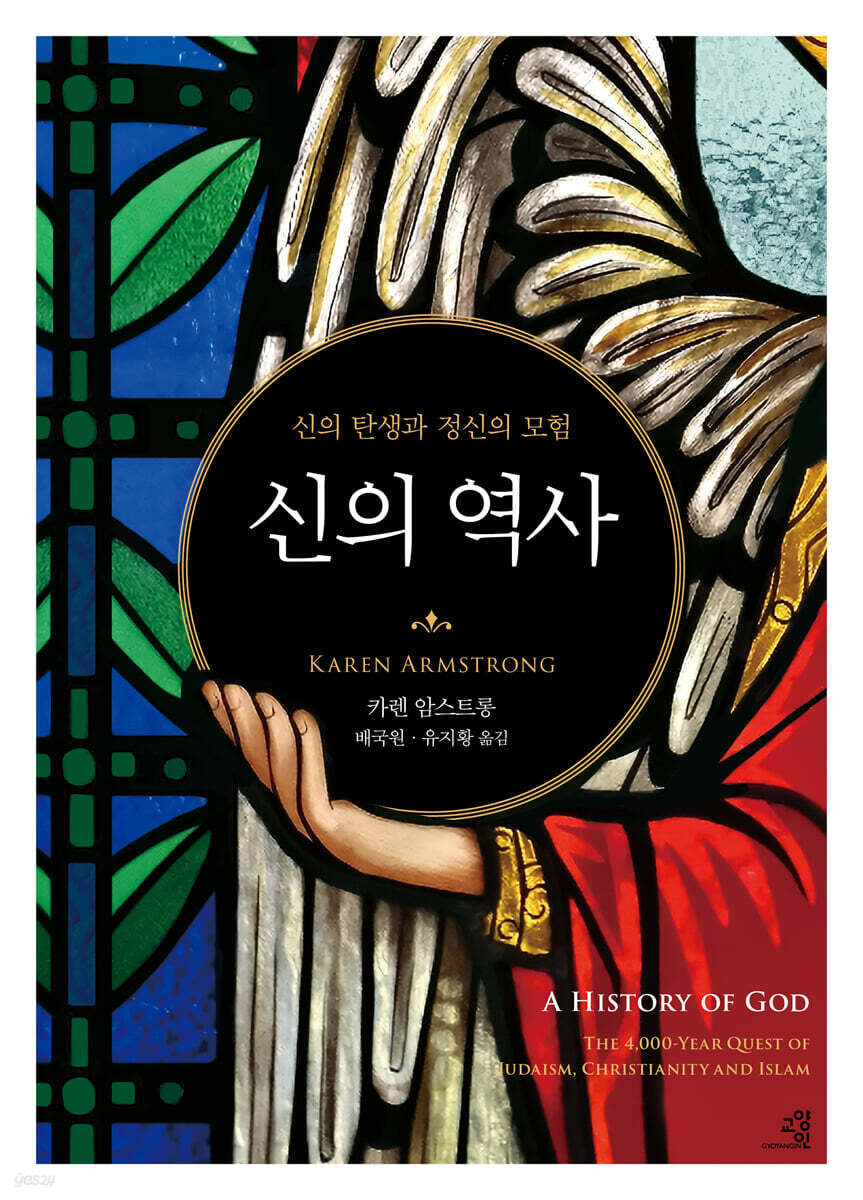
Book Introduction
- A word from MD
-
Humanity's Journey to Explore GodA masterpiece by world-renowned religious scholar Karen Armstrong.
It explores how humans have thought about and imagined God, focusing on Judaism, Christianity, and Islam.
We examine the various views on God that have shaken human history, from ancient Babylonian mythology to the 19th-century atheism of Feuerbach, Nietzsche, and Freud.
August 4, 2023. Humanities PD Son Min-gyu
A classic of our time that made Karen Armstrong a world-renowned religious scholar!
The ultimate guide to understanding the meaning of God and the essence of religion!
“As soon as a human being realizes who he is,
“I began to seek God and worship Him.”
Why is the human spirit so drawn to God?
The history of mankind cannot be told without mentioning 'God'.
Augustine's confession that "every soul is restless until it finds rest in God" and Sartre's declaration that "if God exists, man is nothing" clearly show the position that God occupies in human life.
God was a being who provided comfort and solace in the midst of a painful life, but he was also a being who bound humans with oppressive ideas and blocked freedom and liberation.
Why does the human spirit turn to God? How has the meaning of God evolved over the four thousand years of turbulent history, from around 2000 BCE to the present, as countless civilizations and nations have vanished and emerged?
World-renowned religious scholar Karen Armstrong's masterpiece, A Brief History of God, is a true classic of our time, having reigned as a bestseller in the field of religion for 30 years since its publication.
In this book, Armstrong explores how humans have thought about and imagined 'God' by focusing on three monotheistic religions: Judaism, Christianity, and Islam.
Beginning with the fundamental question, “Why do humans seek God?”, it illuminates all the revolutionary thoughts on God that have shaken human history, from the creation myth of ancient Babylonia to the “atheism” of Feuerbach, Nietzsche, and Freud in the 19th century.
The ultimate guide to understanding the meaning of God and the essence of religion!
“As soon as a human being realizes who he is,
“I began to seek God and worship Him.”
Why is the human spirit so drawn to God?
The history of mankind cannot be told without mentioning 'God'.
Augustine's confession that "every soul is restless until it finds rest in God" and Sartre's declaration that "if God exists, man is nothing" clearly show the position that God occupies in human life.
God was a being who provided comfort and solace in the midst of a painful life, but he was also a being who bound humans with oppressive ideas and blocked freedom and liberation.
Why does the human spirit turn to God? How has the meaning of God evolved over the four thousand years of turbulent history, from around 2000 BCE to the present, as countless civilizations and nations have vanished and emerged?
World-renowned religious scholar Karen Armstrong's masterpiece, A Brief History of God, is a true classic of our time, having reigned as a bestseller in the field of religion for 30 years since its publication.
In this book, Armstrong explores how humans have thought about and imagined 'God' by focusing on three monotheistic religions: Judaism, Christianity, and Islam.
Beginning with the fundamental question, “Why do humans seek God?”, it illuminates all the revolutionary thoughts on God that have shaken human history, from the creation myth of ancient Babylonia to the “atheism” of Feuerbach, Nietzsche, and Freud in the 19th century.
- You can preview some of the book's contents.
Preview
index
map
Preface - Who is God?
Chapter 1: The Origin of God
The creation myth of Enuma Elish
The Writers of the Bible and the Pentateuch
The Covenant between Yahweh, the "Unconditional God," and Israel
Brahman and Atman of India
The transcendent ideal of Nibbana
Plato and Aristotle's 'rationalism'
Chapter 2: The Birth of the One God
Isaiah's Holy and Sad God
Amos' Justice and Hosea's Self-Reflection
Yahweh, the god of war established by reformers
The Visions of the Prophets and the Triumph of Yahweh
The Book of Wisdom and Philo's Jewish Philosophy
Babylonian Exile, Shekinah of the Pharisees
Chapter 3: Light for the Gentiles
Jesus, the Son of Man who became God
Bodhisattva and the Deification of Krishna
Paul's 'In Christ'
Philosophy for ideology, religion for emotion
Gnosticism and Marcionism
The Greek Spirit and the Development of Christianity
Plotinus's date and leak
Chapter 4 The God of Christianity
The Divinity of Jesus Controversy: Arius and Athanasius
Eastern Dogma and Western Kerygma
Augustine's doctrine of the Trinity
Ecstasis of Pseudo-Dionysius
Chapter 5 The God of Islam
Muhammad became a 'prophet'
The Quranic and Islamic Meaning of 'Signs'
The Oneness of God and His 99 Names
Ummah, the Birth of the Islamic Community
The Rise of the Empire and the Sunni-Shia Split
The middle ground between traditionalism and rationalism, Ashurai
Chapter 6: The Philosopher's God
Al-Farabi, founder of the Falsa sect
Ibn Sina, the philosophical mystic
Al-Ghazali's Conference and Ibn Rushd's Unification
Maimonides, the last Jewish phasadist
The path of negativity and the path of positivity
Aquinas and Bonaventure's Proof of God's Existence
Chapter 7 The Mystic's God
The Chariot of Heaven, Merkava Mysticism
Muhammad and Augustine ascended to heaven
Visions and Images of the Eastern Hesychasts
Sufism's self-annihilation and regression
Suhrawardy, the founder of lighting science
Ibn al-Arabi's imagination and Rumi's poetry
The Sephiroth Tree of Kabbalah
Mystics of the Continent
Chapter 8 The God of the Reformers
Three Islamic Empires: Ottoman, Safavid, and Mughal
Luria, the hero of Jewish Kabbalism
Anxiety and Phobias in the Renaissance
Luther's Wrath of the God and Calvin's Conversion
Ignatius' Jesuits
The 'insult' of atheism
Chapter 9: The God of Enlightenment
Pascal's Wager and Descartes' Cogito
Principia and Paradise Lost
The God of Spinoza, Mendelssohn, and Kant
Religion of the Heart and Deism
The fanatical fervor of the Great Awakening
The apostasy of Shabbatai Chevi, the 'Messiah'
From the Habad Movement to the Wahhabi Movement
There's nothing out there somewhere
Chapter 10: The Death of God
The Gods of Romanticism: Blake and Schleiermacher
God of Hegel, Schopenhauer, and Nietzsche
Islam's Drift Between Modernization and Traditionalism
Judaism and Rosenzweig's Universal Religion
Anti-Semitism and Zionism
Chapter 11: The Future of God
The Death of God and the Liberation of Man
Tillich's "God Above God," Whitehead's "The Great Companion"
Philosophers who returned to tradition
For the new god
annotation
References
Glossary
Search
Preface - Who is God?
Chapter 1: The Origin of God
The creation myth of Enuma Elish
The Writers of the Bible and the Pentateuch
The Covenant between Yahweh, the "Unconditional God," and Israel
Brahman and Atman of India
The transcendent ideal of Nibbana
Plato and Aristotle's 'rationalism'
Chapter 2: The Birth of the One God
Isaiah's Holy and Sad God
Amos' Justice and Hosea's Self-Reflection
Yahweh, the god of war established by reformers
The Visions of the Prophets and the Triumph of Yahweh
The Book of Wisdom and Philo's Jewish Philosophy
Babylonian Exile, Shekinah of the Pharisees
Chapter 3: Light for the Gentiles
Jesus, the Son of Man who became God
Bodhisattva and the Deification of Krishna
Paul's 'In Christ'
Philosophy for ideology, religion for emotion
Gnosticism and Marcionism
The Greek Spirit and the Development of Christianity
Plotinus's date and leak
Chapter 4 The God of Christianity
The Divinity of Jesus Controversy: Arius and Athanasius
Eastern Dogma and Western Kerygma
Augustine's doctrine of the Trinity
Ecstasis of Pseudo-Dionysius
Chapter 5 The God of Islam
Muhammad became a 'prophet'
The Quranic and Islamic Meaning of 'Signs'
The Oneness of God and His 99 Names
Ummah, the Birth of the Islamic Community
The Rise of the Empire and the Sunni-Shia Split
The middle ground between traditionalism and rationalism, Ashurai
Chapter 6: The Philosopher's God
Al-Farabi, founder of the Falsa sect
Ibn Sina, the philosophical mystic
Al-Ghazali's Conference and Ibn Rushd's Unification
Maimonides, the last Jewish phasadist
The path of negativity and the path of positivity
Aquinas and Bonaventure's Proof of God's Existence
Chapter 7 The Mystic's God
The Chariot of Heaven, Merkava Mysticism
Muhammad and Augustine ascended to heaven
Visions and Images of the Eastern Hesychasts
Sufism's self-annihilation and regression
Suhrawardy, the founder of lighting science
Ibn al-Arabi's imagination and Rumi's poetry
The Sephiroth Tree of Kabbalah
Mystics of the Continent
Chapter 8 The God of the Reformers
Three Islamic Empires: Ottoman, Safavid, and Mughal
Luria, the hero of Jewish Kabbalism
Anxiety and Phobias in the Renaissance
Luther's Wrath of the God and Calvin's Conversion
Ignatius' Jesuits
The 'insult' of atheism
Chapter 9: The God of Enlightenment
Pascal's Wager and Descartes' Cogito
Principia and Paradise Lost
The God of Spinoza, Mendelssohn, and Kant
Religion of the Heart and Deism
The fanatical fervor of the Great Awakening
The apostasy of Shabbatai Chevi, the 'Messiah'
From the Habad Movement to the Wahhabi Movement
There's nothing out there somewhere
Chapter 10: The Death of God
The Gods of Romanticism: Blake and Schleiermacher
God of Hegel, Schopenhauer, and Nietzsche
Islam's Drift Between Modernization and Traditionalism
Judaism and Rosenzweig's Universal Religion
Anti-Semitism and Zionism
Chapter 11: The Future of God
The Death of God and the Liberation of Man
Tillich's "God Above God," Whitehead's "The Great Companion"
Philosophers who returned to tradition
For the new god
annotation
References
Glossary
Search
Detailed image
.jpg)
Into the book
“Humans have never believed in the same God.”
The meaning of God has changed according to the needs of the times.
In this book, Karen Armstrong looks back on humanity's long history of searching for God and declares, "Humans have always created gods that are useful to their time."
Humans believed in God not because he was logically or scientifically sound, but because he was effective in solving the problems of life's pain, unhappiness, and death, which were impossible to understand.
From the Babylonian captivity to the Nazi Holocaust, Jews have constantly imagined a God who would save them from countless persecutions, exiles, and the threat of extinction. Christian church fathers, convinced that the human Jesus was God, created and developed a new concept of a "personal God."
Muslims have always longed for a God who would give them strength through the rise and fall of Islamic empires and through humiliating colonial experiences.
This book is not a history of the ineffable reality of God itself, which exists beyond time and change.
It is a history of how people have perceived God from the time of Abraham to the present day.
The human concept of God has a history.
Because it always had a slightly different meaning for each group of people who used the concept at different times.
… … The word ‘God’ does not contain a single, unchanging concept, but rather contains a whole range of contradictory and even conflicting meanings.
If this flexibility had not existed, the idea of God would never have survived as one of the great ideas of humanity.
---From “Preface, pages 24-25”
As always, the reason new theologies succeed is not because they can be rationally proven, but because they are effective in preventing despair and inspiring hope.
The Jews, exiled to a strange land and thrown into confusion, no longer found the isolation of Yahweh's worship alien and uncomfortable.
This clearly stated the situation they were in.
---From "Chapter 2: The Birth of the One God, pp. 128-129"
“A personal God can never be the ideal of religion.”
Beyond the personal God, to the transcendent God
According to Armstrong, the belief in a "personal God"—one who sees, hears, creates, and destroys like a human—is common to Judaism, Christianity, and Islam.
The imagination of a god in human form was a crucial reason why the three religions were able to penetrate the masses and expand their influence, and it was also the foundation for the West's acceptance of humanistic values during the Renaissance period from the 14th to the 16th centuries.
But great thinkers throughout history have always been wary that God would become a tool to justify human actions and a projection of human desires and fears.
They were constantly aware that the personal God was extremely vulnerable to these dangers, so they sought a 'transcendent God' who would transcend human limitations.
The 'God of Transcendence' became the driving force that enabled humans to overcome their prejudices and stubbornness, and became an inexhaustible source of compassion and mercy.
A personal God and a God who actively intervenes in human history can be subject to criticism.
It is all too easy to make such a 'god' into an absurd tyrant or judge, or into a being that meets human expectations.
We can each make 'God' a Tory, a socialist, a racist, or a revolutionary, depending on our personal views.
---From "Chapter 5: The God of Islam, p. 302"
Personality can be a serious problem.
Because a personal God could be nothing more than an idol in the form of ourselves, a projection of our limited human desires, fears, and desires.
We tend to assume that God loves what we love, hates what we hate, and tolerates rather than rejects our prejudices.
When God fails to prevent disaster or seems to wish for tragedy, he can appear cold and cruel.
The easy belief that disaster is God's will can lead us to accept things that are fundamentally unacceptable.
---From "Chapter 7 The Mystic's God, p. 376"
How can the evil in the world be explained?
The Good God and the God of War
If an omnipotent God created and governs all things, why does evil exist in this world? If God is the creator of evil, can he truly be good? How can a God who demands good and generous behavior from humanity be the same as a God who is the source of religious conflict and violence? Armstrong emphasizes that the suffering and unhappiness that pervade life has always been a central theme of religion, and highlights the remarkable thinking that has attempted to understand "evil."
Augustine believed that God had placed an eternal curse on all mankind because of the sin of the first human, Adam (original sin), and that because of this, humans would always groan in the swamp of evil.
Marcion, who had a large following within Christianity, abandoned the path of integrating the good and evil gods and advocated dualism, which strictly separated the two gods.
Jewish mystics uniquely sought to reflect on the unstable psychological state of human beings through the myth of the birth of 'evil'.
How could a benevolent God create a world so blatantly filled with evil and suffering? Marcion was also horrified when he read the Jewish scriptures, which portrayed a cruel and ferocious god who, in his zeal for justice, slaughtered entire nations.
Marcion concluded that this Jewish god, “a god who delights in war, who is inconsistent in his attitude, who is self-contradictory,” was the god who created this evil world.
---From "Chapter 3: Light for the Stranger, p. 190"
Augustine's later writings were also filled with deep sadness.
The fall of the Roman Empire had a profound impact on Augustine's formation of the doctrine of 'original sin,' which later became central to the Western worldview.
Augustine believed that God had placed an eternal curse on all humanity because of Adam's sin.
---From "Chapter 4 The Christian God, p. 236"
Two Paths to Faith
The God of Reason and the God of Mystery
How can humans discover God? Armstrong shows that throughout the millennia of religious history, there have traditionally been two paths to faith.
One is the rationalist tradition, which originated from ancient Greek philosophy and seeks to interpret God's will through reason, and the other is the mystical tradition, which seeks to experience divine power through exploring one's inner self.
Avicenna, Maimonides, Aquinas, and Descartes attempted to rationally prove the existence of God through 'reason', a gift given to humans by God.
However, in Jewish mystical literature, the Zohar and Bahir, and in Islamic mysticism, Sufism, verbal expressions of God were always considered incomplete, and myths full of metaphors and symbols were created.
Eastern Christianity emphasized 'silence' regarding the truth of God beyond the clear teachings expressed in the Bible.
Religious scriptures contain spiritual meanings that are difficult to express in words, in addition to their literal meanings.
… … The attempt to describe reality in human language is as absurd as trying to explain verbally one of Beethoven's late string quartets.
As Basil the Great, Bishop of Caesarea, a Cappadocian Father, said, the religious reality, which is difficult to define, can only be presented by the symbolic expression of the liturgy or (more appropriately) by silence.
---From "Chapter 4 The Christian God, p. 222"
Eastern Christians came to distrust rationalism, seeing it as inadequate as a tool for discussing a God who transcends concepts and logic.
Metaphysics may be useful for secular studies, but it can endanger faith.
They believed that philosophy was nothing more than a long-winded discourse representing the human mind, and that we should remain silent about God, who could only be understood through religious and mystical experience.
---From "Chapter 6: The Philosopher's God, p. 362"
The Islamic God, born from the failure of Christianity and growing from its triumph
Christianity and Islam, which have a long history of hostility, from the Crusades to the 13th and 14th century Reconquista to the 9/11 terrorist attacks, are actually brother religions that split from the same root, the 'Abrahamic religion.'
How did these two religions come to write a history of "blood-soaked" conflict? How different are their attitudes toward faith in God and religious practice? Armstrong notes that the two religions have distinct perspectives on human society.
Christianity was born from the humiliation and failure of Jesus, who was believed to be the 'Messiah', dying on the cross like a sinner.
As Christians developed the spirituality that Jesus died to save humanity, who was sinless but had the original sin of corruption from the beginning, the values of this world became inferior and God came to be seen as a kind of 'burden'.
Islam, on the other hand, was born out of a glorious history of triumph, in which a divided Arab people, never before united, built a vast empire.
Allah was a god who especially brought victory.
For Muslims, secular politics was not inferior, but an active religious activity that carried out God's will.
Just as Jesus' failures and humiliation played a significant role in his development in Christianity, so did his successes in Islam.
Unlike Christianity, which distrusts worldly success, the religious life of individual Muslims has not been unrelated to politics.
Muslims believe they are dedicated to building a just society according to God's will.
The place of the political integrity of the Ummah in Muslim spirituality is roughly equivalent to the place of a particular theological choice (Catholic, Protestant, Methodist, Baptist) in Christian life.
If Christians find Muslims' interest in politics odd, they should consider that their own passion for arcane theological debates seems equally odd to Jews and Muslims.
---From "Chapter 5: The God of Islam, p. 295"
In the West, Christianity was a religion that revealed the meaning of suffering and tribulation based on the death of Jesus Christ on the cross, but Islam was a success-oriented religion.
The Qur'an teaches that those who live according to God's will—justice, equality, and a fair distribution of wealth—cannot fail, and the history of Islam seems to bear this out.
Unlike Jesus, Muhammad was not a loser but a man of remarkable success.
His achievements were further strengthened by the remarkable development of the Islamic Empire in the 7th and 8th centuries.
This success seemed to naturally vindicate Muslims' faith in God.
---From "Chapter 10, The Death of God, p. 627"
Does God still have value in our time?
For the creation of a new god
Although Nietzsche declared the death of God over a century ago, 'God' still remains a burning issue for us.
Atheism, which has been accepted as a trend of the times and has been popular since the 19th century, paradoxically seems to only prove the reality that humans can never shake off God.
What does God mean to us today? Even in this age of widespread scientism and humanism, can it still serve as a value that elevates life and allows us to transcend our limitations? What path should religion take to create a God fit for the times?
The concept of a personal God seems increasingly unacceptable today for moral, intellectual, scientific, and spiritual reasons.
… … The metaphysical concept of God as a supreme being, which has long been popular in the West, is also unsatisfactory.
The philosophers' God is merely a product of banal rationalism, and the traditional proofs of God's existence are no longer convincing.
The widespread acceptance of the philosophers' god by the Enlightenment deists was the first step toward modern atheism.
Like the old gods, they have become so distant from humans and society that they have easily become 'inactive gods' and are now disappearing from our consciousness.
---From "Chapter 11: The Future of God, pp. 673-674"
If the concept of God today is no longer valid, it will be discarded.
But… …humans have always created beliefs for themselves to cultivate a sense of the wonder and inexpressible meaning of life.
The loss of purpose, alienation, cultural chaos, and violence that pervade today's society seem to indicate that modern people are failing to create a concept of God appropriate to their times and are falling into despair.
The meaning of God has changed according to the needs of the times.
In this book, Karen Armstrong looks back on humanity's long history of searching for God and declares, "Humans have always created gods that are useful to their time."
Humans believed in God not because he was logically or scientifically sound, but because he was effective in solving the problems of life's pain, unhappiness, and death, which were impossible to understand.
From the Babylonian captivity to the Nazi Holocaust, Jews have constantly imagined a God who would save them from countless persecutions, exiles, and the threat of extinction. Christian church fathers, convinced that the human Jesus was God, created and developed a new concept of a "personal God."
Muslims have always longed for a God who would give them strength through the rise and fall of Islamic empires and through humiliating colonial experiences.
This book is not a history of the ineffable reality of God itself, which exists beyond time and change.
It is a history of how people have perceived God from the time of Abraham to the present day.
The human concept of God has a history.
Because it always had a slightly different meaning for each group of people who used the concept at different times.
… … The word ‘God’ does not contain a single, unchanging concept, but rather contains a whole range of contradictory and even conflicting meanings.
If this flexibility had not existed, the idea of God would never have survived as one of the great ideas of humanity.
---From “Preface, pages 24-25”
As always, the reason new theologies succeed is not because they can be rationally proven, but because they are effective in preventing despair and inspiring hope.
The Jews, exiled to a strange land and thrown into confusion, no longer found the isolation of Yahweh's worship alien and uncomfortable.
This clearly stated the situation they were in.
---From "Chapter 2: The Birth of the One God, pp. 128-129"
“A personal God can never be the ideal of religion.”
Beyond the personal God, to the transcendent God
According to Armstrong, the belief in a "personal God"—one who sees, hears, creates, and destroys like a human—is common to Judaism, Christianity, and Islam.
The imagination of a god in human form was a crucial reason why the three religions were able to penetrate the masses and expand their influence, and it was also the foundation for the West's acceptance of humanistic values during the Renaissance period from the 14th to the 16th centuries.
But great thinkers throughout history have always been wary that God would become a tool to justify human actions and a projection of human desires and fears.
They were constantly aware that the personal God was extremely vulnerable to these dangers, so they sought a 'transcendent God' who would transcend human limitations.
The 'God of Transcendence' became the driving force that enabled humans to overcome their prejudices and stubbornness, and became an inexhaustible source of compassion and mercy.
A personal God and a God who actively intervenes in human history can be subject to criticism.
It is all too easy to make such a 'god' into an absurd tyrant or judge, or into a being that meets human expectations.
We can each make 'God' a Tory, a socialist, a racist, or a revolutionary, depending on our personal views.
---From "Chapter 5: The God of Islam, p. 302"
Personality can be a serious problem.
Because a personal God could be nothing more than an idol in the form of ourselves, a projection of our limited human desires, fears, and desires.
We tend to assume that God loves what we love, hates what we hate, and tolerates rather than rejects our prejudices.
When God fails to prevent disaster or seems to wish for tragedy, he can appear cold and cruel.
The easy belief that disaster is God's will can lead us to accept things that are fundamentally unacceptable.
---From "Chapter 7 The Mystic's God, p. 376"
How can the evil in the world be explained?
The Good God and the God of War
If an omnipotent God created and governs all things, why does evil exist in this world? If God is the creator of evil, can he truly be good? How can a God who demands good and generous behavior from humanity be the same as a God who is the source of religious conflict and violence? Armstrong emphasizes that the suffering and unhappiness that pervade life has always been a central theme of religion, and highlights the remarkable thinking that has attempted to understand "evil."
Augustine believed that God had placed an eternal curse on all mankind because of the sin of the first human, Adam (original sin), and that because of this, humans would always groan in the swamp of evil.
Marcion, who had a large following within Christianity, abandoned the path of integrating the good and evil gods and advocated dualism, which strictly separated the two gods.
Jewish mystics uniquely sought to reflect on the unstable psychological state of human beings through the myth of the birth of 'evil'.
How could a benevolent God create a world so blatantly filled with evil and suffering? Marcion was also horrified when he read the Jewish scriptures, which portrayed a cruel and ferocious god who, in his zeal for justice, slaughtered entire nations.
Marcion concluded that this Jewish god, “a god who delights in war, who is inconsistent in his attitude, who is self-contradictory,” was the god who created this evil world.
---From "Chapter 3: Light for the Stranger, p. 190"
Augustine's later writings were also filled with deep sadness.
The fall of the Roman Empire had a profound impact on Augustine's formation of the doctrine of 'original sin,' which later became central to the Western worldview.
Augustine believed that God had placed an eternal curse on all humanity because of Adam's sin.
---From "Chapter 4 The Christian God, p. 236"
Two Paths to Faith
The God of Reason and the God of Mystery
How can humans discover God? Armstrong shows that throughout the millennia of religious history, there have traditionally been two paths to faith.
One is the rationalist tradition, which originated from ancient Greek philosophy and seeks to interpret God's will through reason, and the other is the mystical tradition, which seeks to experience divine power through exploring one's inner self.
Avicenna, Maimonides, Aquinas, and Descartes attempted to rationally prove the existence of God through 'reason', a gift given to humans by God.
However, in Jewish mystical literature, the Zohar and Bahir, and in Islamic mysticism, Sufism, verbal expressions of God were always considered incomplete, and myths full of metaphors and symbols were created.
Eastern Christianity emphasized 'silence' regarding the truth of God beyond the clear teachings expressed in the Bible.
Religious scriptures contain spiritual meanings that are difficult to express in words, in addition to their literal meanings.
… … The attempt to describe reality in human language is as absurd as trying to explain verbally one of Beethoven's late string quartets.
As Basil the Great, Bishop of Caesarea, a Cappadocian Father, said, the religious reality, which is difficult to define, can only be presented by the symbolic expression of the liturgy or (more appropriately) by silence.
---From "Chapter 4 The Christian God, p. 222"
Eastern Christians came to distrust rationalism, seeing it as inadequate as a tool for discussing a God who transcends concepts and logic.
Metaphysics may be useful for secular studies, but it can endanger faith.
They believed that philosophy was nothing more than a long-winded discourse representing the human mind, and that we should remain silent about God, who could only be understood through religious and mystical experience.
---From "Chapter 6: The Philosopher's God, p. 362"
The Islamic God, born from the failure of Christianity and growing from its triumph
Christianity and Islam, which have a long history of hostility, from the Crusades to the 13th and 14th century Reconquista to the 9/11 terrorist attacks, are actually brother religions that split from the same root, the 'Abrahamic religion.'
How did these two religions come to write a history of "blood-soaked" conflict? How different are their attitudes toward faith in God and religious practice? Armstrong notes that the two religions have distinct perspectives on human society.
Christianity was born from the humiliation and failure of Jesus, who was believed to be the 'Messiah', dying on the cross like a sinner.
As Christians developed the spirituality that Jesus died to save humanity, who was sinless but had the original sin of corruption from the beginning, the values of this world became inferior and God came to be seen as a kind of 'burden'.
Islam, on the other hand, was born out of a glorious history of triumph, in which a divided Arab people, never before united, built a vast empire.
Allah was a god who especially brought victory.
For Muslims, secular politics was not inferior, but an active religious activity that carried out God's will.
Just as Jesus' failures and humiliation played a significant role in his development in Christianity, so did his successes in Islam.
Unlike Christianity, which distrusts worldly success, the religious life of individual Muslims has not been unrelated to politics.
Muslims believe they are dedicated to building a just society according to God's will.
The place of the political integrity of the Ummah in Muslim spirituality is roughly equivalent to the place of a particular theological choice (Catholic, Protestant, Methodist, Baptist) in Christian life.
If Christians find Muslims' interest in politics odd, they should consider that their own passion for arcane theological debates seems equally odd to Jews and Muslims.
---From "Chapter 5: The God of Islam, p. 295"
In the West, Christianity was a religion that revealed the meaning of suffering and tribulation based on the death of Jesus Christ on the cross, but Islam was a success-oriented religion.
The Qur'an teaches that those who live according to God's will—justice, equality, and a fair distribution of wealth—cannot fail, and the history of Islam seems to bear this out.
Unlike Jesus, Muhammad was not a loser but a man of remarkable success.
His achievements were further strengthened by the remarkable development of the Islamic Empire in the 7th and 8th centuries.
This success seemed to naturally vindicate Muslims' faith in God.
---From "Chapter 10, The Death of God, p. 627"
Does God still have value in our time?
For the creation of a new god
Although Nietzsche declared the death of God over a century ago, 'God' still remains a burning issue for us.
Atheism, which has been accepted as a trend of the times and has been popular since the 19th century, paradoxically seems to only prove the reality that humans can never shake off God.
What does God mean to us today? Even in this age of widespread scientism and humanism, can it still serve as a value that elevates life and allows us to transcend our limitations? What path should religion take to create a God fit for the times?
The concept of a personal God seems increasingly unacceptable today for moral, intellectual, scientific, and spiritual reasons.
… … The metaphysical concept of God as a supreme being, which has long been popular in the West, is also unsatisfactory.
The philosophers' God is merely a product of banal rationalism, and the traditional proofs of God's existence are no longer convincing.
The widespread acceptance of the philosophers' god by the Enlightenment deists was the first step toward modern atheism.
Like the old gods, they have become so distant from humans and society that they have easily become 'inactive gods' and are now disappearing from our consciousness.
---From "Chapter 11: The Future of God, pp. 673-674"
If the concept of God today is no longer valid, it will be discarded.
But… …humans have always created beliefs for themselves to cultivate a sense of the wonder and inexpressible meaning of life.
The loss of purpose, alienation, cultural chaos, and violence that pervade today's society seem to indicate that modern people are failing to create a concept of God appropriate to their times and are falling into despair.
---From "Chapter 11, The Future of God, p. 676"
Publisher's Review
“Humans have always created gods that were useful to their own time.”
From ancient Greek philosophy to modern Islamic mysticism,
A brilliant feast of thought that has adorned human history!
Karen Armstrong's culmination of her research in comparative religion, A Brief History of God, vividly portrays the defining moments of agony and joy experienced by great thinkers, philosophers, and theologians in the midst of an age of suffering and anxiety.
The earliest Babylonian myths sang of the mysterious and wondrous nature that humans could not understand in the name of the gods.
Great thinkers, including Isaiah, Jeremiah, and Buddha, sought mercy, compassion, and social justice through God and spirituality, and around the same time, Plato and Aristotle discovered God as a rational universe through rational thought.
The great mystics of the Middle Ages explored the human mind and experienced ecstatic visions that transcended rational understanding.
In the modern era of scientific civilization, Descartes, Kant, and Newton asserted that “God does not interfere with worldly affairs,” but Pascal and Blake believed that an aloof God, detached from the human world, could never provide us with comfort or consolation.
From Spinoza, who believed that “all of nature is God,” to Hegel, who believed that “God is the spirit of the world,” to Nietzsche, who declared that “God is dead,” this amazingly intellectual book brings together the essence of creative thinking and will provide a moving and enlightening joy to all who question the meaning of life and the role of religion in today’s so-called “age of purposelessness.”
Karen Armstrong's source of intellectual exploration, a 'completely revised edition' that restores all the missing content from the original text!
“The most intelligent commentator on religion” (Alain de Botton), “one of the most lucid and broadly informed historians of religion” (The Washington Post), “a researcher who provides a remarkably objective understanding of Islam” (Juan Campo, author of the Encyclopedia of Islam) Karen Armstrong’s masterpiece, A History of God, which is the source of her intellectual exploration and contains her core ideas, is published by Gyoyangin.
Containing the most profound and outstanding insights into religion and spirituality, The History of God has been consistently loved not only in the United States and Europe but also in Islamic and Asian cultures for 30 years since its first edition was published in 1993, and is considered the most authoritative book in the field of religion.
This new Korean edition, newly released by Kyoyangin, is a "completely revised edition" after 25 years, not only correcting every single mistranslation through thorough comparison with the original text from beginning to end, but also restoring all the missing content from the previous translation and retranslating it while preserving the original text's elegant writing style as much as possible.
With this, readers can now read a new, authentic version of “History of God,” which is completely different from the existing translations.
A 4,000-Year Adventure of the Human Spirit Toward God
This book consists of 11 chapters and is written in chronological order.
Chapters 1 through 5 depict the birth of the gods of Judaism, Christianity, and Islam in Mesopotamia, Rome, and the Levant from around 2000 BC to the 8th century AD.
By penetrating the core of the Bible, the Qur'an, and the Talmud, it examines how different spiritualities have grown from the same root of the "Abrahamic religion," and explores the meaning of God as imagined in the ancient Greek rationalist philosophy of Plato and Aristotle, the patristic philosophy of Augustine, and the mysticism of the enigmatic thinker Pseudo-Dionysus.
Chapters 6 to 8 cover Islamic philosophy, which dominated the Middle Ages from the 9th to the 16th centuries, Western scholasticism, which was deeply influenced by it, mysticism, which reached its peak in Judaism and Islam, and the religious reformation ideas of Luther and Calvin in the 15th and 16th centuries.
In particular, it clearly shows that the Islamic world that conquered Europe at the time, as the true successor to ancient Greco-Roman civilization, flourished in science, medicine, mathematics, literature, and philosophy, and that this trend was passed on to intellectuals in the Latin world, giving birth to the theology of Thomas Aquinas and ultimately becoming the origin of the European Renaissance.
Finally, chapters 9 through 11 critically examine the Enlightenment and Romantic theology of the 17th and 18th centuries, as well as atheism that began to emerge in the 19th century.
By examining the thoughts on religion and spirituality that great philosophers such as Pascal, Descartes, Spinoza, Hegel, Nietzsche, and Freud achieved in the spirit of the new age, we ask what kind of God we need today.
“A stunning and powerful work that will provide insight and satisfaction to countless readers.”
- [The Washington Post Book World]
“A remarkably clear and dazzlingly eloquent book.”
- [The Sunday Times]
“Overwhelming immersion… a treasure trove of learning.”
- [Time]
“In this book, Karen Armstrong fills the ‘empty space for God’ in human consciousness, as Sartre said, with ‘history.’”
- [Los Angeles Times]
“In this extraordinary study, Armstrong traces the development of three monotheistic religions from their beginnings to the present, showing how they were created and shaped under what historical conditions.
… … is an authoritative and excellent book.”
- [Kirkus Reviews]
From ancient Greek philosophy to modern Islamic mysticism,
A brilliant feast of thought that has adorned human history!
Karen Armstrong's culmination of her research in comparative religion, A Brief History of God, vividly portrays the defining moments of agony and joy experienced by great thinkers, philosophers, and theologians in the midst of an age of suffering and anxiety.
The earliest Babylonian myths sang of the mysterious and wondrous nature that humans could not understand in the name of the gods.
Great thinkers, including Isaiah, Jeremiah, and Buddha, sought mercy, compassion, and social justice through God and spirituality, and around the same time, Plato and Aristotle discovered God as a rational universe through rational thought.
The great mystics of the Middle Ages explored the human mind and experienced ecstatic visions that transcended rational understanding.
In the modern era of scientific civilization, Descartes, Kant, and Newton asserted that “God does not interfere with worldly affairs,” but Pascal and Blake believed that an aloof God, detached from the human world, could never provide us with comfort or consolation.
From Spinoza, who believed that “all of nature is God,” to Hegel, who believed that “God is the spirit of the world,” to Nietzsche, who declared that “God is dead,” this amazingly intellectual book brings together the essence of creative thinking and will provide a moving and enlightening joy to all who question the meaning of life and the role of religion in today’s so-called “age of purposelessness.”
Karen Armstrong's source of intellectual exploration, a 'completely revised edition' that restores all the missing content from the original text!
“The most intelligent commentator on religion” (Alain de Botton), “one of the most lucid and broadly informed historians of religion” (The Washington Post), “a researcher who provides a remarkably objective understanding of Islam” (Juan Campo, author of the Encyclopedia of Islam) Karen Armstrong’s masterpiece, A History of God, which is the source of her intellectual exploration and contains her core ideas, is published by Gyoyangin.
Containing the most profound and outstanding insights into religion and spirituality, The History of God has been consistently loved not only in the United States and Europe but also in Islamic and Asian cultures for 30 years since its first edition was published in 1993, and is considered the most authoritative book in the field of religion.
This new Korean edition, newly released by Kyoyangin, is a "completely revised edition" after 25 years, not only correcting every single mistranslation through thorough comparison with the original text from beginning to end, but also restoring all the missing content from the previous translation and retranslating it while preserving the original text's elegant writing style as much as possible.
With this, readers can now read a new, authentic version of “History of God,” which is completely different from the existing translations.
A 4,000-Year Adventure of the Human Spirit Toward God
This book consists of 11 chapters and is written in chronological order.
Chapters 1 through 5 depict the birth of the gods of Judaism, Christianity, and Islam in Mesopotamia, Rome, and the Levant from around 2000 BC to the 8th century AD.
By penetrating the core of the Bible, the Qur'an, and the Talmud, it examines how different spiritualities have grown from the same root of the "Abrahamic religion," and explores the meaning of God as imagined in the ancient Greek rationalist philosophy of Plato and Aristotle, the patristic philosophy of Augustine, and the mysticism of the enigmatic thinker Pseudo-Dionysus.
Chapters 6 to 8 cover Islamic philosophy, which dominated the Middle Ages from the 9th to the 16th centuries, Western scholasticism, which was deeply influenced by it, mysticism, which reached its peak in Judaism and Islam, and the religious reformation ideas of Luther and Calvin in the 15th and 16th centuries.
In particular, it clearly shows that the Islamic world that conquered Europe at the time, as the true successor to ancient Greco-Roman civilization, flourished in science, medicine, mathematics, literature, and philosophy, and that this trend was passed on to intellectuals in the Latin world, giving birth to the theology of Thomas Aquinas and ultimately becoming the origin of the European Renaissance.
Finally, chapters 9 through 11 critically examine the Enlightenment and Romantic theology of the 17th and 18th centuries, as well as atheism that began to emerge in the 19th century.
By examining the thoughts on religion and spirituality that great philosophers such as Pascal, Descartes, Spinoza, Hegel, Nietzsche, and Freud achieved in the spirit of the new age, we ask what kind of God we need today.
“A stunning and powerful work that will provide insight and satisfaction to countless readers.”
- [The Washington Post Book World]
“A remarkably clear and dazzlingly eloquent book.”
- [The Sunday Times]
“Overwhelming immersion… a treasure trove of learning.”
- [Time]
“In this book, Karen Armstrong fills the ‘empty space for God’ in human consciousness, as Sartre said, with ‘history.’”
- [Los Angeles Times]
“In this extraordinary study, Armstrong traces the development of three monotheistic religions from their beginnings to the present, showing how they were created and shaped under what historical conditions.
… … is an authoritative and excellent book.”
- [Kirkus Reviews]
GOODS SPECIFICS
- Date of issue: July 24, 2023
- Format: Hardcover book binding method guide
- Page count, weight, size: 736 pages | 1,114g | 153*215*40mm
- ISBN13: 9791193154069
- ISBN10: 1193154065
You may also like
카테고리
korean


korean

![ELLE 엘르 스페셜 에디션 A형 : 12월 [2025]](http://librairie.coreenne.fr/cdn/shop/files/b8e27a3de6c9538896439686c6b0e8fb.jpg?v=1766436872&width=3840)


