

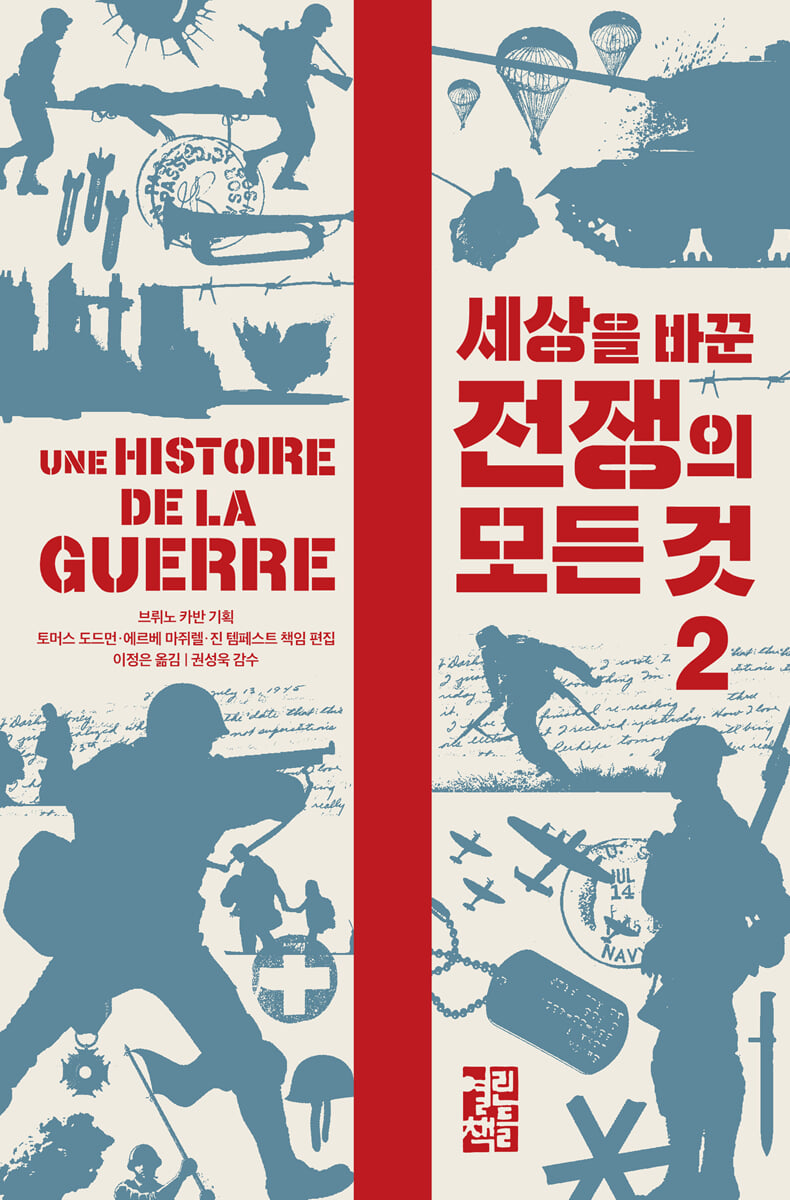
Everything About the War That Changed the World 2
 |
Description
Book Introduction
The best book of 2018 selected by France's Le Point!
This book succeeds in raising questions about the changes in war that have taken place over the past 150 years.
Written in a way that is accessible to the general public, it allows a wider range of people to participate in the discussion about the nature of war.
It will help you participate.
―Jean-Michel Turcourt (Researcher, Leibniz Institute for European History)
[All About War]: A Look Through the Eyes of 57 Experts
"Everything About War That Changed the World" is the result of efforts to convey the latest research on war to the public.
This book analyzes war from multiple perspectives to understand it as a political, social, and cultural phenomenon.
To this end, Bruno Caban, the planner of this book, brought together 57 experts from various fields, including literature, history, politics, and art history, to create “Everything About the War That Changed the World.”
As you follow the themes of each chapter, you will encounter [everything] about modern warfare, from the 19th century to the present day.
This book is divided into two volumes, each with its own theme: [The Birth of Modern Warfare], [The World of the Military], [The Experience of War], and [Escape from War].
And for each section, we collected articles containing various keywords that can support the topic.
Bruno Caban, the author of "The War That Changed the World," explains that the book was designed to give readers the necessary distance from the process of thinking about war.
What does it mean to keep a distance? Perhaps it's a suggestion, as Brecht suggested, to think about war from a certain distance.
The questions that follow war, especially those concerning its ethical dimensions, are not very different between past and present.
On the other hand, Kaban urges his readers not to approach war from a strategic and tactical perspective, and not from a [top-down] perspective.
Such a perspective overlooks the human existence that experiences war within war.
In modern warfare, where drones are used to kill people without any sense of guilt, this is an attitude that must be guarded against.
This book also distances itself from the narrative style of war history that focuses on strategy, tactics, and heroism.
As you read the book, you can easily recall the state of our society through past examples.
This is a strength of this book, as it provides a platform for more citizens to participate and speak out about war, which has such a profound impact on their lives, and creates an opportunity for lively discussion.
This book succeeds in raising questions about the changes in war that have taken place over the past 150 years.
Written in a way that is accessible to the general public, it allows a wider range of people to participate in the discussion about the nature of war.
It will help you participate.
―Jean-Michel Turcourt (Researcher, Leibniz Institute for European History)
[All About War]: A Look Through the Eyes of 57 Experts
"Everything About War That Changed the World" is the result of efforts to convey the latest research on war to the public.
This book analyzes war from multiple perspectives to understand it as a political, social, and cultural phenomenon.
To this end, Bruno Caban, the planner of this book, brought together 57 experts from various fields, including literature, history, politics, and art history, to create “Everything About the War That Changed the World.”
As you follow the themes of each chapter, you will encounter [everything] about modern warfare, from the 19th century to the present day.
This book is divided into two volumes, each with its own theme: [The Birth of Modern Warfare], [The World of the Military], [The Experience of War], and [Escape from War].
And for each section, we collected articles containing various keywords that can support the topic.
Bruno Caban, the author of "The War That Changed the World," explains that the book was designed to give readers the necessary distance from the process of thinking about war.
What does it mean to keep a distance? Perhaps it's a suggestion, as Brecht suggested, to think about war from a certain distance.
The questions that follow war, especially those concerning its ethical dimensions, are not very different between past and present.
On the other hand, Kaban urges his readers not to approach war from a strategic and tactical perspective, and not from a [top-down] perspective.
Such a perspective overlooks the human existence that experiences war within war.
In modern warfare, where drones are used to kill people without any sense of guilt, this is an attitude that must be guarded against.
This book also distances itself from the narrative style of war history that focuses on strategy, tactics, and heroism.
As you read the book, you can easily recall the state of our society through past examples.
This is a strength of this book, as it provides a platform for more citizens to participate and speak out about war, which has such a profound impact on their lives, and creates an opportunity for lively discussion.
- You can preview some of the book's contents.
Preview
index
Part 3 War Experience
introduction
From the military side
01 A body undergoing trials
02 What happens to the dead?
03 Injuries and the Injured
04 Testify
05 〈All kinds of tremendous emotions〉
06 In the Colonies: The War That Became Savage
From the citizens' side
07 Bombing seen from below
08 Silence on Hiroshima
Occupy 09
10 Goya: Anatomy of a Massacre
11 1914-1915, the whole society is mobilized
12 Japan: Someone Else's War?
13 Hunger, another weapon
14 Extreme Violence
15 Killing your neighbor
16 Vendée Civil War
17 Rape, a weapon of war?
18 Escape: Refugees and Displaced Persons
Part 4: Escape from the War
introduction
01 Vienna, Paris, Yalta: Reconciliation
02 Soldier's Homecoming
03 On the ruins
04 The flames of Stalingrad went out
05 Who Won the Civil War?
06 Time for Mourning
07 The Spirits of Mirai
08 Neurology and Neurosis
09 Surviving Witness
10. Judge, tell the truth, reconcile
11 After the Genocide: The Gachacha Trial
Chronology
References
Acknowledgements
Reviewer's Note
Search
introduction
From the military side
01 A body undergoing trials
02 What happens to the dead?
03 Injuries and the Injured
04 Testify
05 〈All kinds of tremendous emotions〉
06 In the Colonies: The War That Became Savage
From the citizens' side
07 Bombing seen from below
08 Silence on Hiroshima
Occupy 09
10 Goya: Anatomy of a Massacre
11 1914-1915, the whole society is mobilized
12 Japan: Someone Else's War?
13 Hunger, another weapon
14 Extreme Violence
15 Killing your neighbor
16 Vendée Civil War
17 Rape, a weapon of war?
18 Escape: Refugees and Displaced Persons
Part 4: Escape from the War
introduction
01 Vienna, Paris, Yalta: Reconciliation
02 Soldier's Homecoming
03 On the ruins
04 The flames of Stalingrad went out
05 Who Won the Civil War?
06 Time for Mourning
07 The Spirits of Mirai
08 Neurology and Neurosis
09 Surviving Witness
10. Judge, tell the truth, reconcile
11 After the Genocide: The Gachacha Trial
Chronology
References
Acknowledgements
Reviewer's Note
Search
Detailed image

Into the book
During the Pacific War and the Vietnam War, the constant sounds and stench of death from the jungle undermined social trust, creating a strong sense that the unseen enemy was not human, and that it had to be tracked down, killed, and in some cases, physically mutilated like a wild animal.
--- p.579
War is boring above all else.
Paradoxical as it may seem, it is a constant element in combat experience, a fact well summarized in the famous post-Civil War dictum, "Being a soldier is 99 percent boredom and 1 percent glory."
--- p.615
In Britain and Germany, cases of severe depression directly attributed to the bombing were very rare.
The bombing provoked a wide range of emotional reactions.
But most of the psychological damage is undocumented.
Because the victim quietly dealt with his or her psychological trauma within the home.
--- p.669
As the two atomic bombs are commemorated, the fate of tens of thousands of Koreans and Chinese who were forcibly conscripted and brought to Japan during the war and died in Hiroshima and Nagasaki is left in the shadows.
In the case of Japanese hibakusha, ······ even decades after the bombing, they still lived in the atomic bomb slum right across from the newly created Peace Park.
--- p.683
On every continent, the term “refugee” encompasses, as in the past, anyone for whom fleeing war is a survival quest.
--- p.838
As Southerners took their own revenge, the fears of many Union veterans that the war was not over were confirmed, and what caused the terrible disillusionment was, above all, the incredible enthusiasm of Northern civilians for the idea of national reconciliation.
--- p.932
Their argument that tactical necessity and the fog of war necessitated the killing of hundreds of unarmed civilians falls flat when the sexual violence committed during the massacre is taken into account.
In Mirai, American soldiers raped 20 women and girls.
The youngest victim was 10 years old.
Media reports at the time omitted this shocking detail.
--- p.579
War is boring above all else.
Paradoxical as it may seem, it is a constant element in combat experience, a fact well summarized in the famous post-Civil War dictum, "Being a soldier is 99 percent boredom and 1 percent glory."
--- p.615
In Britain and Germany, cases of severe depression directly attributed to the bombing were very rare.
The bombing provoked a wide range of emotional reactions.
But most of the psychological damage is undocumented.
Because the victim quietly dealt with his or her psychological trauma within the home.
--- p.669
As the two atomic bombs are commemorated, the fate of tens of thousands of Koreans and Chinese who were forcibly conscripted and brought to Japan during the war and died in Hiroshima and Nagasaki is left in the shadows.
In the case of Japanese hibakusha, ······ even decades after the bombing, they still lived in the atomic bomb slum right across from the newly created Peace Park.
--- p.683
On every continent, the term “refugee” encompasses, as in the past, anyone for whom fleeing war is a survival quest.
--- p.838
As Southerners took their own revenge, the fears of many Union veterans that the war was not over were confirmed, and what caused the terrible disillusionment was, above all, the incredible enthusiasm of Northern civilians for the idea of national reconciliation.
--- p.932
Their argument that tactical necessity and the fog of war necessitated the killing of hundreds of unarmed civilians falls flat when the sexual violence committed during the massacre is taken into account.
In Mirai, American soldiers raped 20 women and girls.
The youngest victim was 10 years old.
Media reports at the time omitted this shocking detail.
--- p.963
Publisher's Review
The changing nature of war over time
Over the past 200 years, war has changed in ways that are different from those of the past.
It covers how wars declared through diplomatic procedures are now labeled as wars and "special military operations," as in the recent war in Ukraine; how the conventional wisdom that the direction of a war is determined by one or two battles is being shattered; and how the front line is expanding beyond the battlefield where soldiers clash to the rear where the materials needed for war are produced.
On the other hand, it also introduces aspects of modern warfare in which drones perform military operations in place of manned military aircraft or infantry.
Part 1 of the book, "The Birth of Modern Warfare," reveals the historical origins and the transformation of modern warfare into the modern era.
The changes in war also affect the lives of soldiers living in war and the military.
How did being a soldier become a profession in the modern military? And what motivated the soldiers who committed themselves to war? Part 2, "The World of the Military," examines the internalized ideologies and myths, emotional aspects, and practical motivations of soldiers from colonies and volunteers who went to support foreign wars to defend a "cause."
It also adds diversity to the perspective on war through a critical history of women who participated in the war and the patriarchal order that attempted to conceal their existence.
When war breaks out and soldiers and civilians are mobilized, they each experience the war from their own position and perspective.
From the soldiers' perspective, physical experiences such as injury and death and the emotions that overwhelm soldiers the moment they enter combat are important topics covered in Part 3 of this book, "The War Experience."
In addition to the experiences of soldiers, the experiences of war from the perspective of civilians include the Blitz in London, the atomic bombing of Hiroshima, the poverty caused by trade embargoes, the sexual abuse of civilians and prisoners in occupied territories, and the refugees and displaced persons who fled their homes. This shows that the experience of war is not solely the domain of soldiers.
People who have experienced war seek to “escape from war,” as the title of Chapter 4 of this book suggests.
It leaves room for reflection on how the world moves toward reconciliation after war, the social and emotional conflicts faced by soldiers returning from war, how societies mourn the victims after war, how war criminals are punished and justice is served, and how humanity once again pursues peace.
The titles of each part introduced so far, as readers might expect, encapsulate the process by which the war began and ended.
Each essay in "Everything About the War That Changed the World" tells the story of a different era and a different war.
This is to keep a certain distance from the war, as the planner intended.
However, as you read the book, you can discover a connected context called “The Flow of War,” just like the titles and order of each part.
As you connect the different topics in the book's flow, you will discover clues that will lead you to the answer to the ever-present question, "What is war?"
Over the past 200 years, war has changed in ways that are different from those of the past.
It covers how wars declared through diplomatic procedures are now labeled as wars and "special military operations," as in the recent war in Ukraine; how the conventional wisdom that the direction of a war is determined by one or two battles is being shattered; and how the front line is expanding beyond the battlefield where soldiers clash to the rear where the materials needed for war are produced.
On the other hand, it also introduces aspects of modern warfare in which drones perform military operations in place of manned military aircraft or infantry.
Part 1 of the book, "The Birth of Modern Warfare," reveals the historical origins and the transformation of modern warfare into the modern era.
The changes in war also affect the lives of soldiers living in war and the military.
How did being a soldier become a profession in the modern military? And what motivated the soldiers who committed themselves to war? Part 2, "The World of the Military," examines the internalized ideologies and myths, emotional aspects, and practical motivations of soldiers from colonies and volunteers who went to support foreign wars to defend a "cause."
It also adds diversity to the perspective on war through a critical history of women who participated in the war and the patriarchal order that attempted to conceal their existence.
When war breaks out and soldiers and civilians are mobilized, they each experience the war from their own position and perspective.
From the soldiers' perspective, physical experiences such as injury and death and the emotions that overwhelm soldiers the moment they enter combat are important topics covered in Part 3 of this book, "The War Experience."
In addition to the experiences of soldiers, the experiences of war from the perspective of civilians include the Blitz in London, the atomic bombing of Hiroshima, the poverty caused by trade embargoes, the sexual abuse of civilians and prisoners in occupied territories, and the refugees and displaced persons who fled their homes. This shows that the experience of war is not solely the domain of soldiers.
People who have experienced war seek to “escape from war,” as the title of Chapter 4 of this book suggests.
It leaves room for reflection on how the world moves toward reconciliation after war, the social and emotional conflicts faced by soldiers returning from war, how societies mourn the victims after war, how war criminals are punished and justice is served, and how humanity once again pursues peace.
The titles of each part introduced so far, as readers might expect, encapsulate the process by which the war began and ended.
Each essay in "Everything About the War That Changed the World" tells the story of a different era and a different war.
This is to keep a certain distance from the war, as the planner intended.
However, as you read the book, you can discover a connected context called “The Flow of War,” just like the titles and order of each part.
As you connect the different topics in the book's flow, you will discover clues that will lead you to the answer to the ever-present question, "What is war?"
GOODS SPECIFICS
- Date of issue: June 15, 2023
- Page count, weight, size: 680 pages | 922g | 143*217*29mm
- ISBN13: 9788932923130
- ISBN10: 8932923132
You may also like
카테고리
korean


korean

![GQ KOREA Mark (Monthly): December [2025]](http://librairie.coreenne.fr/cdn/shop/files/8ef265dbbfbf186523ed75ba7319009d.jpg?v=1765340328&width=3840)


