

Another Economic History 2
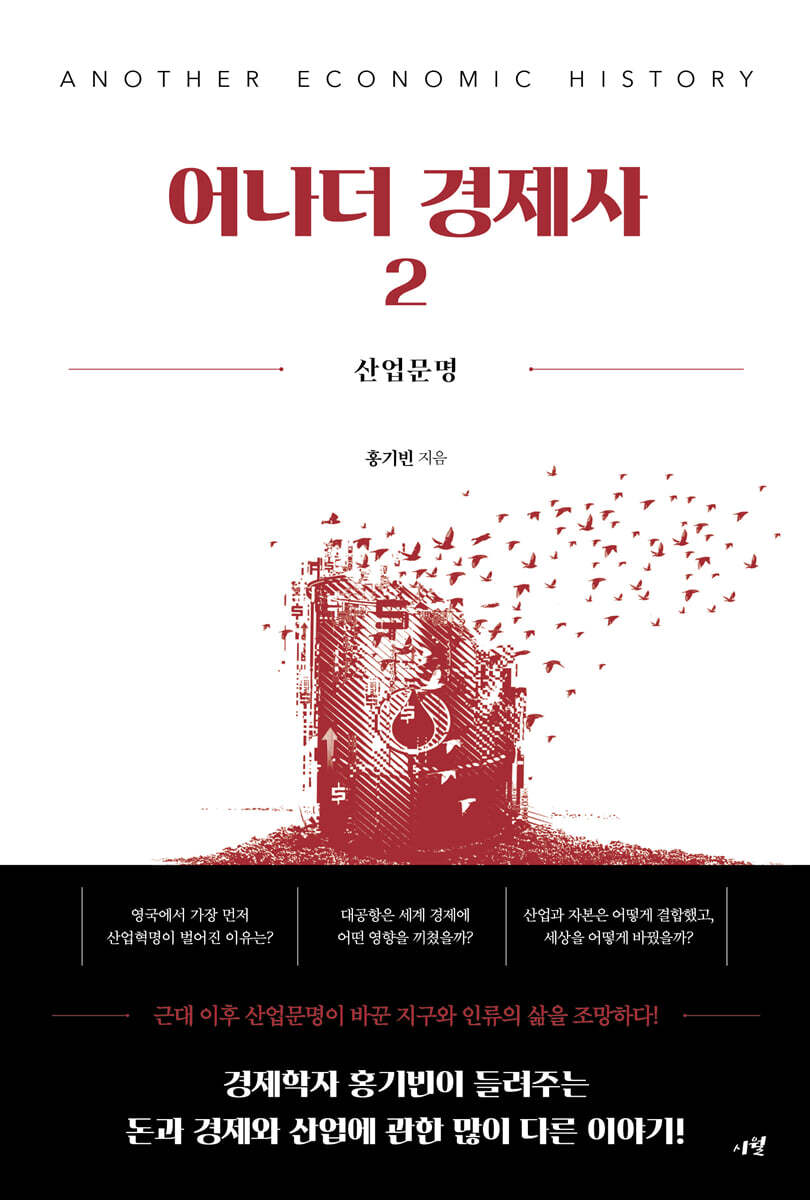 |
Description
Book Introduction
How has modern industrial civilization changed the Earth and human life?
Economist Hong Ki-bin tells us many different stories about money, economy, and industry!
The Industrial Revolution, which began in 18th-century Britain, spread throughout Europe and North America in the 19th century, and then spread around the world in the 20th century, creating an industrial civilization across the globe.
We who live today cannot escape its influence either.
No, it is no exaggeration to say that we are on the path to even more heated expansion.
So how was this industrial civilization built, and how did it change our lives and the planet? While "Another Economic History 1" explored the economic history from prehistory to the modern era, examining the background to the formation of capitalism, "Another Economic History 2" explores the process by which industrial civilization was built, anchored by capitalism, which came to dominate humanity's social and economic lifestyles.
It meticulously examines the complex intertwining of the three threads of technology, social forces, and institutions, while tracing major events in global economic history, from the First Industrial Revolution to the transformation of the working class, the socialist movement, 19th-century capitalism, state capitalism, the gold standard, the development of central banking, the dual movement and imperialism, the transformation of capital and financial markets, the Second Industrial Revolution, the Great Depression, fascism, human capital theory, and neoliberalism.
Economist Hong Ki-bin tells us many different stories about money, economy, and industry!
The Industrial Revolution, which began in 18th-century Britain, spread throughout Europe and North America in the 19th century, and then spread around the world in the 20th century, creating an industrial civilization across the globe.
We who live today cannot escape its influence either.
No, it is no exaggeration to say that we are on the path to even more heated expansion.
So how was this industrial civilization built, and how did it change our lives and the planet? While "Another Economic History 1" explored the economic history from prehistory to the modern era, examining the background to the formation of capitalism, "Another Economic History 2" explores the process by which industrial civilization was built, anchored by capitalism, which came to dominate humanity's social and economic lifestyles.
It meticulously examines the complex intertwining of the three threads of technology, social forces, and institutions, while tracing major events in global economic history, from the First Industrial Revolution to the transformation of the working class, the socialist movement, 19th-century capitalism, state capitalism, the gold standard, the development of central banking, the dual movement and imperialism, the transformation of capital and financial markets, the Second Industrial Revolution, the Great Depression, fascism, human capital theory, and neoliberalism.
- You can preview some of the book's contents.
Preview
index
Another Economic History - Starting with the Industrial Civilization Part 6
PART 1.
Industrial civilization, a rope twisted with three strands
1 Saint-Simon Discovers 'Industry' 20
2 The 'Red Flag Law' Story 27
PART 2.
First Industrial Revolution
1 Before entering 36
2 History Changed by Cotton 45
3 Why Britain? 52
4 Characteristics of Technological Change 57
5 The Emergence of Capital and Perpetual Businesses 64
6 The Emergence of the Working Class 70
7 Wealth increases, but people become beasts. 77
8 The Rise of the Working Class and the Socialist Movement 89
PART 3.
After the Industrial Revolution, 19th century capitalism
1 The Emergence of Economics 1- Malthus and Scarcity 102
2 The Emergence of Economics 2 - Ricardo and the Myth of Capital Accumulation 110
3 Everything as a Product 118
4 The Emergence of a Constitutional State 124
5 International Gold Standard 127
6 The Pain of the Gold Standard and the Evolution of Central Banking 135
7 Dual Movement and Imperialism 140
8 The Greatest Invention of the 19th Century: The Advent of the Railway 146
9 Spatial and Temporal Changes Created by Logistics 151
10 Changes in Capital and Financial Markets Due to Railways 158
PART 4.
The world changed by the Second Industrial Revolution
1 From mechanical process to physical and chemical process 166
2 Changes in Corporate Organization and Markets 173
3 The Emergence of Financial Capitalism 180
4. Those who think are different, those who do are different. 189
5 Workers as a Group, Exerting Power 196
6. The University as a Power Institution that Became a Handmaiden to Industry 205
7 Why do we want to live in castles and are obsessed with Hermes? 215
INTERMEZZO.
The Second Industrial Revolution and the Crisis of the 19th-Century "Global System"
1 The 19th-Century World System and the Fear of Collapse 225
2 The Second Industrial Revolution and the Emergence of 'State-Capital-Trust' 229
3 The Contradictions of the Gold Standard and the Second Industrial Revolution 234
PART 5.
Industrial civilization into a state capitalist system
1 The Peaceful Conclusion of War and the "Golden Shackles" 240
2 The Beginning of the Great Depression 248
- Stock market crash and the collapse of the gold standard
3. The Great Depression and State Capitalism 255
4 Changes in the Socialist Movement and the Formation of Party Politics 261
5 Fascism, Power, and World Conquest 269
6 Creating a New World Economic Order 273
- Bretton Woods system and GATT system
7 The Birth of Regular Workers 281
8 The Age of Abundance, Flowing with Milk and Honey 287
PART 6.
The dismantling of postwar industrial civilization
1 The Age of Abundance and Hormones 295
2 Transition to a Knowledge-Based Economy 300
3 "People as Capital!" The Rise of Human Capital Theory 303
4 Changes in the World Economic System 308
5 Major Changes in Economic Policy 315
- From demand-side policy to supply-side policy
6 Until the Third World was incorporated into the global economy 324
7 The Fall of Communist Countries 332
Another Economic History - Concluding the Industrial Civilization Chapter 340
PART 1.
Industrial civilization, a rope twisted with three strands
1 Saint-Simon Discovers 'Industry' 20
2 The 'Red Flag Law' Story 27
PART 2.
First Industrial Revolution
1 Before entering 36
2 History Changed by Cotton 45
3 Why Britain? 52
4 Characteristics of Technological Change 57
5 The Emergence of Capital and Perpetual Businesses 64
6 The Emergence of the Working Class 70
7 Wealth increases, but people become beasts. 77
8 The Rise of the Working Class and the Socialist Movement 89
PART 3.
After the Industrial Revolution, 19th century capitalism
1 The Emergence of Economics 1- Malthus and Scarcity 102
2 The Emergence of Economics 2 - Ricardo and the Myth of Capital Accumulation 110
3 Everything as a Product 118
4 The Emergence of a Constitutional State 124
5 International Gold Standard 127
6 The Pain of the Gold Standard and the Evolution of Central Banking 135
7 Dual Movement and Imperialism 140
8 The Greatest Invention of the 19th Century: The Advent of the Railway 146
9 Spatial and Temporal Changes Created by Logistics 151
10 Changes in Capital and Financial Markets Due to Railways 158
PART 4.
The world changed by the Second Industrial Revolution
1 From mechanical process to physical and chemical process 166
2 Changes in Corporate Organization and Markets 173
3 The Emergence of Financial Capitalism 180
4. Those who think are different, those who do are different. 189
5 Workers as a Group, Exerting Power 196
6. The University as a Power Institution that Became a Handmaiden to Industry 205
7 Why do we want to live in castles and are obsessed with Hermes? 215
INTERMEZZO.
The Second Industrial Revolution and the Crisis of the 19th-Century "Global System"
1 The 19th-Century World System and the Fear of Collapse 225
2 The Second Industrial Revolution and the Emergence of 'State-Capital-Trust' 229
3 The Contradictions of the Gold Standard and the Second Industrial Revolution 234
PART 5.
Industrial civilization into a state capitalist system
1 The Peaceful Conclusion of War and the "Golden Shackles" 240
2 The Beginning of the Great Depression 248
- Stock market crash and the collapse of the gold standard
3. The Great Depression and State Capitalism 255
4 Changes in the Socialist Movement and the Formation of Party Politics 261
5 Fascism, Power, and World Conquest 269
6 Creating a New World Economic Order 273
- Bretton Woods system and GATT system
7 The Birth of Regular Workers 281
8 The Age of Abundance, Flowing with Milk and Honey 287
PART 6.
The dismantling of postwar industrial civilization
1 The Age of Abundance and Hormones 295
2 Transition to a Knowledge-Based Economy 300
3 "People as Capital!" The Rise of Human Capital Theory 303
4 Changes in the World Economic System 308
5 Major Changes in Economic Policy 315
- From demand-side policy to supply-side policy
6 Until the Third World was incorporated into the global economy 324
7 The Fall of Communist Countries 332
Another Economic History - Concluding the Industrial Civilization Chapter 340
Detailed image

Into the book
Perhaps the long story of the vast universe of industrial civilization unfolding over the past 300 years can be understood through the metaphor of these three ropes.
The story of technological change, the story of the formation and conflict of social forces, and the story of the establishment and change of institutions are each a string, and they are intricately intertwined and twisted together to create one thick, long rope.
Now, let's unfold the story.
--- p.13, from “Starting the Industrial Civilization”
His message is that now is the time to restructure society as a whole to fit the rationality of 'industry'.
The time has come to completely restructure society according to the principles of "science" suited to "industry," leaving aside outdated privileges, legal systems based on religion and metaphysics, and the behavior of kings and nobles blinded by power politics.
--- p.24, from “Saint-Simon, Discovering ‘Industry’”
Once you taste the fruit of the tree of the knowledge of good and evil, you cannot go back to the way it was before.
Now that cotton had spread throughout Europe, those who had become accustomed to cotton fabrics could no longer afford to live solely on woolen garments, and the traders could not afford to give up this golden opportunity.
They thought.
'If imports are banned, why don't we just make it ourselves?'
--- p.47, from “History Changed by Cotton”
Ultimately, the essence of the Industrial Revolution cannot be understood by looking only at the genius of those who led the technological innovation or the outwardly visible mechanical devices such as looms and steam engines.
We must look at the larger, more colossal human civilization that the machine symbolizes and represents.
Here are some truly great things that the Industrial Revolution created and changed.
--- p.63, from “Characteristics of Technological Change”
Looking back, it's absurd.
No one can deny that in order for an industrial society to function, machines must be operated, and therefore the working class is essential in the modern sense.
However, in England in the late 18th and early 19th centuries, when these people first appeared, they were not recognized as a social group.
The workers were completely ignored and worked like machines in the horrible factories for three or four months, then came out and lived a life of crime and prostitution, and eventually died young at the age of 30 or 35 from alcoholism.
What hope, what meaning could there be in a life like this?
--- p.82, from “Wealth increases, but people become beasts”
I would like to say this out of concern, but “Another Economic History” is a book that deals with the economy in history, not a book that talks about how economics or economic thought developed.
Besides, I don't intend to just recite boring economics numbers or repeat the same things from textbooks.
However, I would like to focus on the fact that industrial civilization is a thick rope, and that it is composed of technological, social, and institutional changes.
---- p.102, from “The Emergence of Economics 1 - Malthus and Scarcity”
Was it truly a pure donation, a donation made by Rockefeller, a man considered a leader among the robber barons, to advance truth and science, that he spent this much money? It's impossible to know, but it's likely.
Rockefeller is said to have later said, “That money was the best investment I ever made in my life.”
The story of technological change, the story of the formation and conflict of social forces, and the story of the establishment and change of institutions are each a string, and they are intricately intertwined and twisted together to create one thick, long rope.
Now, let's unfold the story.
--- p.13, from “Starting the Industrial Civilization”
His message is that now is the time to restructure society as a whole to fit the rationality of 'industry'.
The time has come to completely restructure society according to the principles of "science" suited to "industry," leaving aside outdated privileges, legal systems based on religion and metaphysics, and the behavior of kings and nobles blinded by power politics.
--- p.24, from “Saint-Simon, Discovering ‘Industry’”
Once you taste the fruit of the tree of the knowledge of good and evil, you cannot go back to the way it was before.
Now that cotton had spread throughout Europe, those who had become accustomed to cotton fabrics could no longer afford to live solely on woolen garments, and the traders could not afford to give up this golden opportunity.
They thought.
'If imports are banned, why don't we just make it ourselves?'
--- p.47, from “History Changed by Cotton”
Ultimately, the essence of the Industrial Revolution cannot be understood by looking only at the genius of those who led the technological innovation or the outwardly visible mechanical devices such as looms and steam engines.
We must look at the larger, more colossal human civilization that the machine symbolizes and represents.
Here are some truly great things that the Industrial Revolution created and changed.
--- p.63, from “Characteristics of Technological Change”
Looking back, it's absurd.
No one can deny that in order for an industrial society to function, machines must be operated, and therefore the working class is essential in the modern sense.
However, in England in the late 18th and early 19th centuries, when these people first appeared, they were not recognized as a social group.
The workers were completely ignored and worked like machines in the horrible factories for three or four months, then came out and lived a life of crime and prostitution, and eventually died young at the age of 30 or 35 from alcoholism.
What hope, what meaning could there be in a life like this?
--- p.82, from “Wealth increases, but people become beasts”
I would like to say this out of concern, but “Another Economic History” is a book that deals with the economy in history, not a book that talks about how economics or economic thought developed.
Besides, I don't intend to just recite boring economics numbers or repeat the same things from textbooks.
However, I would like to focus on the fact that industrial civilization is a thick rope, and that it is composed of technological, social, and institutional changes.
---- p.102, from “The Emergence of Economics 1 - Malthus and Scarcity”
Was it truly a pure donation, a donation made by Rockefeller, a man considered a leader among the robber barons, to advance truth and science, that he spent this much money? It's impossible to know, but it's likely.
Rockefeller is said to have later said, “That money was the best investment I ever made in my life.”
---- p.210, from “Universities as Power Institutions that Became Handmaids of Industry”
Publisher's Review
A single book that covers major events in global economic history, from the First Industrial Revolution to the Second Industrial Revolution and neoliberalism.
To understand the Industrial Revolution, industrial civilization, and the subsequent changes in human life and the Earth's ecology, we must look beyond fragmentary perspectives.
This is because the Industrial Revolution cannot be seen as a whole if we only consider the creation of the steam engine, the spinning and weaving machine, and the further spread of coal, railroads, and agriculture.
In "Another Economic History 2," we delve into the historical and decisive moments in world economic history, not only from technological changes but also from the perspectives of social forces and institutions.
· Did the Industrial Revolution begin with a running shirt?
· Why did the Industrial Revolution begin first in Britain?
· What does the socialist movement have to do with economic history?
· Wealth increases, but why do people become beasts?
· What is the price of turning money, labor, and nature into commodities?
· Why do we want to live in a 'castle' and are crazy about 'Hermes'?
· What impact did the Great Depression of 1930 have on the world economy?
· How were corporations and stock companies born?
And how did this series of processes combine to create the massive framework called industrial civilization?
Huge and extensive history, but fun!
The main characteristic of the “Another Economic History” series is that it has a narrative structure.
Hong Ki-bin, the author of this book and an economist, fully demonstrates his talent as an excellent storyteller.
It covers a huge and extensive history, but it's easy, exciting, and fun.
At the same time, the book features numerous economists, sociologists, anthropologists, historians, philosophers, and businessmen, from Saint-Simon to Thorstein Veblen, EP Thompson, Mark Twain, Milton Friedman, and JP Morgan.
The "Another Economic History" series allows readers to grasp at a glance the core values of famous businessmen as well as scholars who influenced their eras.
So, through this book, readers will not only come to understand the 'suspicious order of the world' but will also be able to enjoy an intellectual feast delicately constructed within the larger framework of economics and history.
To understand the Industrial Revolution, industrial civilization, and the subsequent changes in human life and the Earth's ecology, we must look beyond fragmentary perspectives.
This is because the Industrial Revolution cannot be seen as a whole if we only consider the creation of the steam engine, the spinning and weaving machine, and the further spread of coal, railroads, and agriculture.
In "Another Economic History 2," we delve into the historical and decisive moments in world economic history, not only from technological changes but also from the perspectives of social forces and institutions.
· Did the Industrial Revolution begin with a running shirt?
· Why did the Industrial Revolution begin first in Britain?
· What does the socialist movement have to do with economic history?
· Wealth increases, but why do people become beasts?
· What is the price of turning money, labor, and nature into commodities?
· Why do we want to live in a 'castle' and are crazy about 'Hermes'?
· What impact did the Great Depression of 1930 have on the world economy?
· How were corporations and stock companies born?
And how did this series of processes combine to create the massive framework called industrial civilization?
Huge and extensive history, but fun!
The main characteristic of the “Another Economic History” series is that it has a narrative structure.
Hong Ki-bin, the author of this book and an economist, fully demonstrates his talent as an excellent storyteller.
It covers a huge and extensive history, but it's easy, exciting, and fun.
At the same time, the book features numerous economists, sociologists, anthropologists, historians, philosophers, and businessmen, from Saint-Simon to Thorstein Veblen, EP Thompson, Mark Twain, Milton Friedman, and JP Morgan.
The "Another Economic History" series allows readers to grasp at a glance the core values of famous businessmen as well as scholars who influenced their eras.
So, through this book, readers will not only come to understand the 'suspicious order of the world' but will also be able to enjoy an intellectual feast delicately constructed within the larger framework of economics and history.
GOODS SPECIFICS
- Date of issue: July 1, 2023
- Page count, weight, size: 352 pages | 622g | 152*225*20mm
- ISBN13: 9791191975123
- ISBN10: 1191975126
You may also like
카테고리
korean


korean

![GQ KOREA Mark (Monthly): December [2025]](http://librairie.coreenne.fr/cdn/shop/files/8ef265dbbfbf186523ed75ba7319009d.jpg?v=1765340328&width=3840)


