

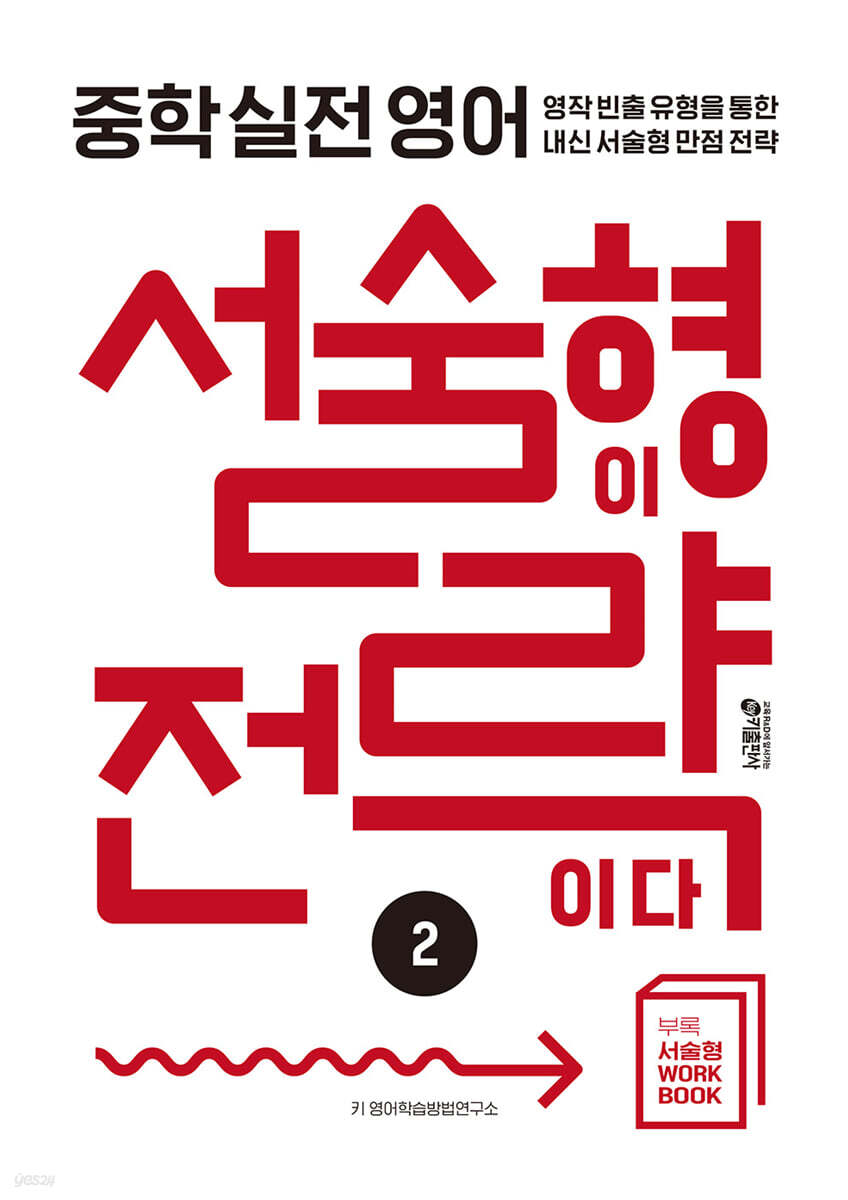
Descriptive English is a Strategy for Middle School Students 2
 |
Description
Book Introduction
A perfect English essay prep book that even helps you master the problem-solving habits of those who score perfect English scores.
"Middle School Practical English Descriptive Strategy 2" is systematically designed to help learners who have established a solid foundation in English through basic English grammar study thoroughly prepare for school descriptive tests and performance assessments.
By identifying gaps in learners' English grammar concepts and completing correct English sentences according to English sentence structure principles, students can increase their understanding of grammar.
After ample writing practice, students practice descriptive questions using a step-by-step approach that analyzes the problem-solving habits of high-scoring English students. This helps students gain confidence in descriptive questions and improve their overall English skills.
"Middle School Practical English Descriptive Strategy 2" is systematically designed to help learners who have established a solid foundation in English through basic English grammar study thoroughly prepare for school descriptive tests and performance assessments.
By identifying gaps in learners' English grammar concepts and completing correct English sentences according to English sentence structure principles, students can increase their understanding of grammar.
After ample writing practice, students practice descriptive questions using a step-by-step approach that analyzes the problem-solving habits of high-scoring English students. This helps students gain confidence in descriptive questions and improve their overall English skills.
- You can preview some of the book's contents.
Preview
index
Chapter 1.
tense
Unit 1.
Present perfect
Unit 2.
Present perfect negative and interrogative sentences
Chapter 2.
auxiliary verb
Unit 3.
can/may/must/should/had better
Unit 4.
would like to/would/used to
Chapter 3.
passive
Unit 5.
The form and meaning of the passive voice
Unit 6.
Passive tense, passive verb phrases, passive voice using prepositions other than by
Chapter 4.
jet
Unit 7.
Present participle and past participle
Unit 8.
Emotional division
Chapter 5.
to-infinitive and gerund
Unit 9.
Nominal use of to-infinitive
Unit 10.
Adjectival/adverbial usage of to-infinitive
Unit 11.
Idiomatic expressions of gerunds
Chapter 6.
Sentence format
Unit 12.
Nominative complement, indirect/direct object
Unit 13.
objective complement
Chapter 7.
pronoun
Unit 14.
one, another, the other
Unit 15.
each, every, all, reflexive pronouns
Chapter 8.
Comparative and superlative
Unit 16.
Primary/comparative/superlative
Unit 17.
Various comparative expressions
Chapter 9.
relative
Unit 18.
Nominative/objective/possessive relative pronouns
Unit 19.
Relative pronoun what and relative pronoun that
Unit 20.
relative adverb
Ch 10.
conjunction
Unit 21.
Correlative conjunction
Unit 22.
Adverbial conjunction
Unit 23.
Noun clause conjunction that and indirect questions
tense
Unit 1.
Present perfect
Unit 2.
Present perfect negative and interrogative sentences
Chapter 2.
auxiliary verb
Unit 3.
can/may/must/should/had better
Unit 4.
would like to/would/used to
Chapter 3.
passive
Unit 5.
The form and meaning of the passive voice
Unit 6.
Passive tense, passive verb phrases, passive voice using prepositions other than by
Chapter 4.
jet
Unit 7.
Present participle and past participle
Unit 8.
Emotional division
Chapter 5.
to-infinitive and gerund
Unit 9.
Nominal use of to-infinitive
Unit 10.
Adjectival/adverbial usage of to-infinitive
Unit 11.
Idiomatic expressions of gerunds
Chapter 6.
Sentence format
Unit 12.
Nominative complement, indirect/direct object
Unit 13.
objective complement
Chapter 7.
pronoun
Unit 14.
one, another, the other
Unit 15.
each, every, all, reflexive pronouns
Chapter 8.
Comparative and superlative
Unit 16.
Primary/comparative/superlative
Unit 17.
Various comparative expressions
Chapter 9.
relative
Unit 18.
Nominative/objective/possessive relative pronouns
Unit 19.
Relative pronoun what and relative pronoun that
Unit 20.
relative adverb
Ch 10.
conjunction
Unit 21.
Correlative conjunction
Unit 22.
Adverbial conjunction
Unit 23.
Noun clause conjunction that and indirect questions
Detailed image

Publisher's Review
Aiming for zero error rate in descriptive/performance assessments by presenting a step-by-step approach
"The Strategy for Practical Middle School English Descriptive Writing"
Feature 1.
Running practice to guide you to solve various problems correctly
When looking at descriptive questions on the exam, before just writing down the answer, I train myself to think about what the question is asking, what I need to check first, and how to apply the grammar I've learned.
Just as important as solving a lot of different problems is solving them correctly.
As you follow the helpful guidance and solve each problem properly, you will feel your confidence in descriptive questions, which used to be vague and difficult, increasing.
Feature 2.
A comprehensive overview of the most important elements for descriptive contrast.
It contains all the essential elements for solving descriptive problems: a solid understanding of grammar, accurate writing skills, and problem comprehension skills.
- Before practicing descriptive problems by filling out the concept summary notes, we will guide you to thoroughly study the basics once again by checking whether you really know the grammar concepts that you must know.
- Before writing sentences, you can think about the components of English sentences and practice writing using sentence structures as hints.
- You can practice a variety of descriptive questions by analyzing the latest trends in internal exam questions to improve your adaptability to the actual exam.
"The Strategy for Practical Middle School English Descriptive Writing"
Feature 1.
Running practice to guide you to solve various problems correctly
When looking at descriptive questions on the exam, before just writing down the answer, I train myself to think about what the question is asking, what I need to check first, and how to apply the grammar I've learned.
Just as important as solving a lot of different problems is solving them correctly.
As you follow the helpful guidance and solve each problem properly, you will feel your confidence in descriptive questions, which used to be vague and difficult, increasing.
Feature 2.
A comprehensive overview of the most important elements for descriptive contrast.
It contains all the essential elements for solving descriptive problems: a solid understanding of grammar, accurate writing skills, and problem comprehension skills.
- Before practicing descriptive problems by filling out the concept summary notes, we will guide you to thoroughly study the basics once again by checking whether you really know the grammar concepts that you must know.
- Before writing sentences, you can think about the components of English sentences and practice writing using sentence structures as hints.
- You can practice a variety of descriptive questions by analyzing the latest trends in internal exam questions to improve your adaptability to the actual exam.
GOODS SPECIFICS
- Date of issue: February 12, 2025
- Page count, weight, size: 312 pages | 210*297*14mm
- ISBN13: 9791165262952
- ISBN10: 1165262959
You may also like
카테고리
korean


korean

![GQ KOREA Mark (Monthly): December [2025]](http://librairie.coreenne.fr/cdn/shop/files/8ef265dbbfbf186523ed75ba7319009d.jpg?v=1765340328&width=3840)


