

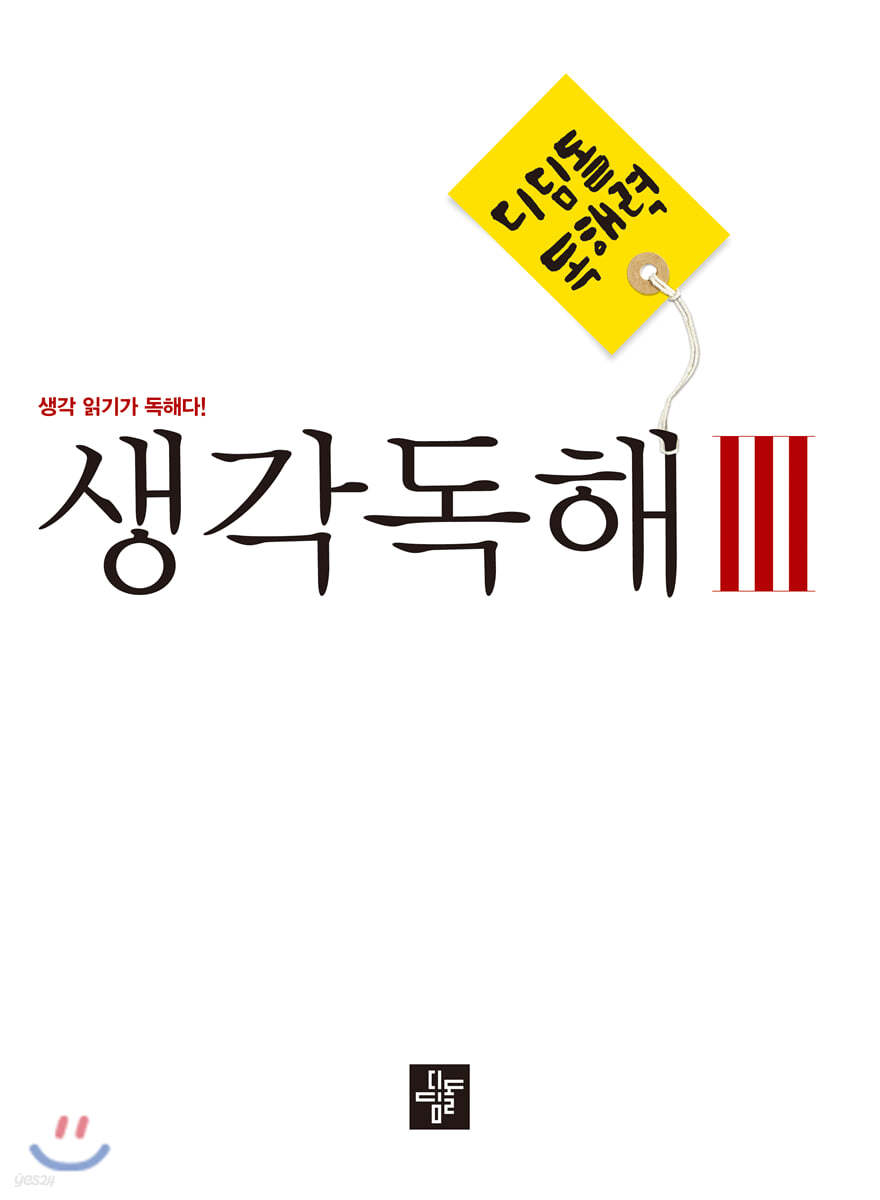
Stepping Stone Middle School Korean Reading Comprehension - Thinking Reading 3
 |
Description
Book Introduction
Reading minds is reading comprehension! Why do Korean scores differ when we read the same text? Being good at reading isn't about who can read faster. Learning how to read and think properly is the core of reading comprehension. Thinking Reading focuses on the process of reading, starting with the question "why" and then thinking about "what" and "how." It selects "big ideas" that span various fields such as humanities, social sciences, science, technology, and the arts, helping readers develop their thinking skills beyond simply reading. To reach your destination, the CSAT, let's start with reading comprehension, just like unfolding a map. |
- You can preview some of the book's contents.
Preview
index
Thinking Reading III
01 Desire
Mind Reading 1 [World History] The Palace of Versailles and Louis XIV
Mind Reading 2 [Humanities] Is Controlling Desire Really Necessary?
When a claim is made about reading thought in principle, its basis follows.
Mind Reading 3 [Economy] Corporate Pursuit of Profit
Mind Reading 4 [Eastern Thought] A Two-Thousand-Year-Old Debate
Mind Reading 5 [Psychology] Lacan's Mirror Stage Theory
Mind Reading 6 [Art] The Five Senses in Bozin's Still Lifes in Louvain
02 Exercise
Reading Thoughts 1 [Thoughts] Hoping for an Era of Transformation
Mind Reading 2 [Sports] The Hidden Principle of the Banana Kick
The reason why Chinese characters are often used instead of pure Korean words
Mind Reading 3 [Art] A Beautiful Life as Seen by Millet and Courbet
Mind Reading 4 [Earth Science] Why Are Earth's Days Getting Longer?
When explaining principles or processes, show them with pictures.
Mind Reading 5 [Physics/Astronomy] About Motion in Space
Mind Reading 6 [Physical Education/Medicine] What Happens in Our Bodies When We Exercise
Principle 03
Mind Reading 1 [Traditional Technology] There Were Digital Clocks in Joseon, Too
Mind Reading 2 [Art] The Principle of Painting's Formative Form: 'Unity'
Reading Thoughts 3 [Language] The Principles and Values of the Creation of Hunminjeongeum
Mind Reading 4 [Biology] How does water move in plants?
Mind Reading 5 [Science] Igloo, Filled with Inuit Wisdom
The reason why the author of Thinking with Principles asks and answers questions to himself
Mind Reading 6 [Ethics] Tolerance: A Social Ethics of Hope
04 Paradigm
Mind Reading 1 [Science/Philosophy] Thomas Kuhn's Paradigm Story
Refuting common sense is an effective explanatory strategy.
Reading Thoughts 2 [Astronomy/History] 1582: The Advent of the Gregorian Calendar
Mind Reading 3 [Arts & Society] Changes in Music Revenue Distribution
Mind Reading 4 [Economy] From the Age of Ownership to the Age of Sharing
Mind Reading 5 [Humanities and Thought] The Birth of Silhak in the Joseon Dynasty
Mind Reading 6 [World History] The Medici Family that Led the Renaissance
05 Secret
Mind Reading 1 [Language and Life Science] How Do Bees Communicate?
Why You Should Pay Attention to the Predicate in a Principle-Based Reading Sentence
Mind Reading 2 [Mathematics] The Magic Square Story
Mind Reading 3 [Architecture/World History] The Great Wall of China Will Not Collapse
Mind Reading 4 [Art] Secret Codes in Eastern and Western Art
Mind Reading 5 [Life Science] Why Birds Make Alarm Calls
Mind Reading 6 [Brain Science & Psychology] The Brain: Unraveling the Secrets of Desire
06 Essence
Mind Reading 1 [Humanities and Philosophy] What is Essence?
Reading case studies using principles become tools for understanding text.
Mind Reading 2 [Art] Minimalist Sculpture
Mind Reading 3 [Humanities and History] What is Truth?
Mind Reading 4 [Society and Politics] What is Justice?
Mind Reading 5 [Science and Technology] What is Time?
Mind Reading 6 [Language] What is Language?
07 Imagination
Mind Reading 1 [Culture] Imaginary Animals in Our Culture
Mind Reading 2 [Film/Comics] Cinematic and Comic Representations
Mind Reading 3 [Nature & Language] Rainbows: Natural Phenomena and the Expression of Imagination
Mind Reading 4 [Science/People] A Billionaire's Mars Colonization Project
Mind Reading 5 [Humanities and Technology] The Future of Humanity and Artificial Intelligence (AI)
Reading with Principles: Modifiers that clarify the writer's thoughts
Mind Reading 6 [Medicine] Future Medical Technology
01 Desire
Mind Reading 1 [World History] The Palace of Versailles and Louis XIV
Mind Reading 2 [Humanities] Is Controlling Desire Really Necessary?
When a claim is made about reading thought in principle, its basis follows.
Mind Reading 3 [Economy] Corporate Pursuit of Profit
Mind Reading 4 [Eastern Thought] A Two-Thousand-Year-Old Debate
Mind Reading 5 [Psychology] Lacan's Mirror Stage Theory
Mind Reading 6 [Art] The Five Senses in Bozin's Still Lifes in Louvain
02 Exercise
Reading Thoughts 1 [Thoughts] Hoping for an Era of Transformation
Mind Reading 2 [Sports] The Hidden Principle of the Banana Kick
The reason why Chinese characters are often used instead of pure Korean words
Mind Reading 3 [Art] A Beautiful Life as Seen by Millet and Courbet
Mind Reading 4 [Earth Science] Why Are Earth's Days Getting Longer?
When explaining principles or processes, show them with pictures.
Mind Reading 5 [Physics/Astronomy] About Motion in Space
Mind Reading 6 [Physical Education/Medicine] What Happens in Our Bodies When We Exercise
Principle 03
Mind Reading 1 [Traditional Technology] There Were Digital Clocks in Joseon, Too
Mind Reading 2 [Art] The Principle of Painting's Formative Form: 'Unity'
Reading Thoughts 3 [Language] The Principles and Values of the Creation of Hunminjeongeum
Mind Reading 4 [Biology] How does water move in plants?
Mind Reading 5 [Science] Igloo, Filled with Inuit Wisdom
The reason why the author of Thinking with Principles asks and answers questions to himself
Mind Reading 6 [Ethics] Tolerance: A Social Ethics of Hope
04 Paradigm
Mind Reading 1 [Science/Philosophy] Thomas Kuhn's Paradigm Story
Refuting common sense is an effective explanatory strategy.
Reading Thoughts 2 [Astronomy/History] 1582: The Advent of the Gregorian Calendar
Mind Reading 3 [Arts & Society] Changes in Music Revenue Distribution
Mind Reading 4 [Economy] From the Age of Ownership to the Age of Sharing
Mind Reading 5 [Humanities and Thought] The Birth of Silhak in the Joseon Dynasty
Mind Reading 6 [World History] The Medici Family that Led the Renaissance
05 Secret
Mind Reading 1 [Language and Life Science] How Do Bees Communicate?
Why You Should Pay Attention to the Predicate in a Principle-Based Reading Sentence
Mind Reading 2 [Mathematics] The Magic Square Story
Mind Reading 3 [Architecture/World History] The Great Wall of China Will Not Collapse
Mind Reading 4 [Art] Secret Codes in Eastern and Western Art
Mind Reading 5 [Life Science] Why Birds Make Alarm Calls
Mind Reading 6 [Brain Science & Psychology] The Brain: Unraveling the Secrets of Desire
06 Essence
Mind Reading 1 [Humanities and Philosophy] What is Essence?
Reading case studies using principles become tools for understanding text.
Mind Reading 2 [Art] Minimalist Sculpture
Mind Reading 3 [Humanities and History] What is Truth?
Mind Reading 4 [Society and Politics] What is Justice?
Mind Reading 5 [Science and Technology] What is Time?
Mind Reading 6 [Language] What is Language?
07 Imagination
Mind Reading 1 [Culture] Imaginary Animals in Our Culture
Mind Reading 2 [Film/Comics] Cinematic and Comic Representations
Mind Reading 3 [Nature & Language] Rainbows: Natural Phenomena and the Expression of Imagination
Mind Reading 4 [Science/People] A Billionaire's Mars Colonization Project
Mind Reading 5 [Humanities and Technology] The Future of Humanity and Artificial Intelligence (AI)
Reading with Principles: Modifiers that clarify the writer's thoughts
Mind Reading 6 [Medicine] Future Medical Technology
Detailed image

Publisher's Review
[How to Use Textbooks (How to Use Thinking Reading)]
Is reading comprehension complete just by reading the passage and solving the problems?
True reading is when you can read the writer's thoughts!
Reading comprehension refers to the ability to read text and understand its meaning.
The basis of reading comprehension is how accurately you can grasp the content of the text, that is, the information organized according to the writer's thoughts.
So, if I understand all the content of the text, is reading comprehension finished?
There is no writing that does not contain the writer's thoughts.
However, writers often do not express their thoughts directly, but hide them tightly in their writing.
The best strategy for developing reading comprehension is not to simply read the text, but to put yourself in the author's shoes and read the author's hidden thoughts.
True reading is when you can read the writer's thoughts.
One, can you read thoughts from various fields with one idea?
Aren't you curious about what thoughts are circulating across the humanities, society, economics, history, science, technology, art, music, and more, all based on the same idea? Mind Reading presents a panoramic view of diverse fields, all connected by a single, big idea.
Don't be overwhelmed by the uncertainty of what questions will appear on the CSAT. Start by learning how to read your mind!
Second, curious about the principles of reading comprehension? The author's thoughts are the principles of reading comprehension!
As you solve the problem, you might wonder, "Why did the author write this way? Why did they pose this problem?" You might also feel a sense of resentment. You can find answers to these questions through thoughtful reading, using the image tips and principles hidden throughout the text.
Third, no more rigid paragraph structures! Structure your thoughts with fun thought puzzles!
If you practice turning the thoughts in each paragraph into a puzzle, like playing a game, before you know it, when you read a piece of writing, your mind will see the writing in a familiar puzzle form!
Fourth, real reading is complete when you can gather your thoughts into one word!
If I just read without organizing my thoughts, like floating dust, the text I read will soon disappear from my mind without a trace.
When I can read a long piece of writing and summarize it in one sentence, or even one word, then that writing becomes truly mine.
In the structuring of thoughts, try to integrate various thoughts into paragraphs, sentences, and words and make them your own!
Is reading comprehension complete just by reading the passage and solving the problems?
True reading is when you can read the writer's thoughts!
Reading comprehension refers to the ability to read text and understand its meaning.
The basis of reading comprehension is how accurately you can grasp the content of the text, that is, the information organized according to the writer's thoughts.
So, if I understand all the content of the text, is reading comprehension finished?
There is no writing that does not contain the writer's thoughts.
However, writers often do not express their thoughts directly, but hide them tightly in their writing.
The best strategy for developing reading comprehension is not to simply read the text, but to put yourself in the author's shoes and read the author's hidden thoughts.
True reading is when you can read the writer's thoughts.
One, can you read thoughts from various fields with one idea?
Aren't you curious about what thoughts are circulating across the humanities, society, economics, history, science, technology, art, music, and more, all based on the same idea? Mind Reading presents a panoramic view of diverse fields, all connected by a single, big idea.
Don't be overwhelmed by the uncertainty of what questions will appear on the CSAT. Start by learning how to read your mind!
Second, curious about the principles of reading comprehension? The author's thoughts are the principles of reading comprehension!
As you solve the problem, you might wonder, "Why did the author write this way? Why did they pose this problem?" You might also feel a sense of resentment. You can find answers to these questions through thoughtful reading, using the image tips and principles hidden throughout the text.
Third, no more rigid paragraph structures! Structure your thoughts with fun thought puzzles!
If you practice turning the thoughts in each paragraph into a puzzle, like playing a game, before you know it, when you read a piece of writing, your mind will see the writing in a familiar puzzle form!
Fourth, real reading is complete when you can gather your thoughts into one word!
If I just read without organizing my thoughts, like floating dust, the text I read will soon disappear from my mind without a trace.
When I can read a long piece of writing and summarize it in one sentence, or even one word, then that writing becomes truly mine.
In the structuring of thoughts, try to integrate various thoughts into paragraphs, sentences, and words and make them your own!
GOODS SPECIFICS
- Date of issue: September 15, 2020
- Page count, weight, size: 280 pages | 220*300*20mm
- ISBN13: 9788926158746
- ISBN10: 8926158748
- Reference book for use in grades: Common for middle school students
- Reference book usage semester: Common semester
- Reference book difficulty: Medium Reference book difficulty guide
You may also like
카테고리
korean


korean

![GQ KOREA Mark (Monthly): December [2025]](http://librairie.coreenne.fr/cdn/shop/files/8ef265dbbfbf186523ed75ba7319009d.jpg?v=1765340328&width=3840)


