

Nam June Paik
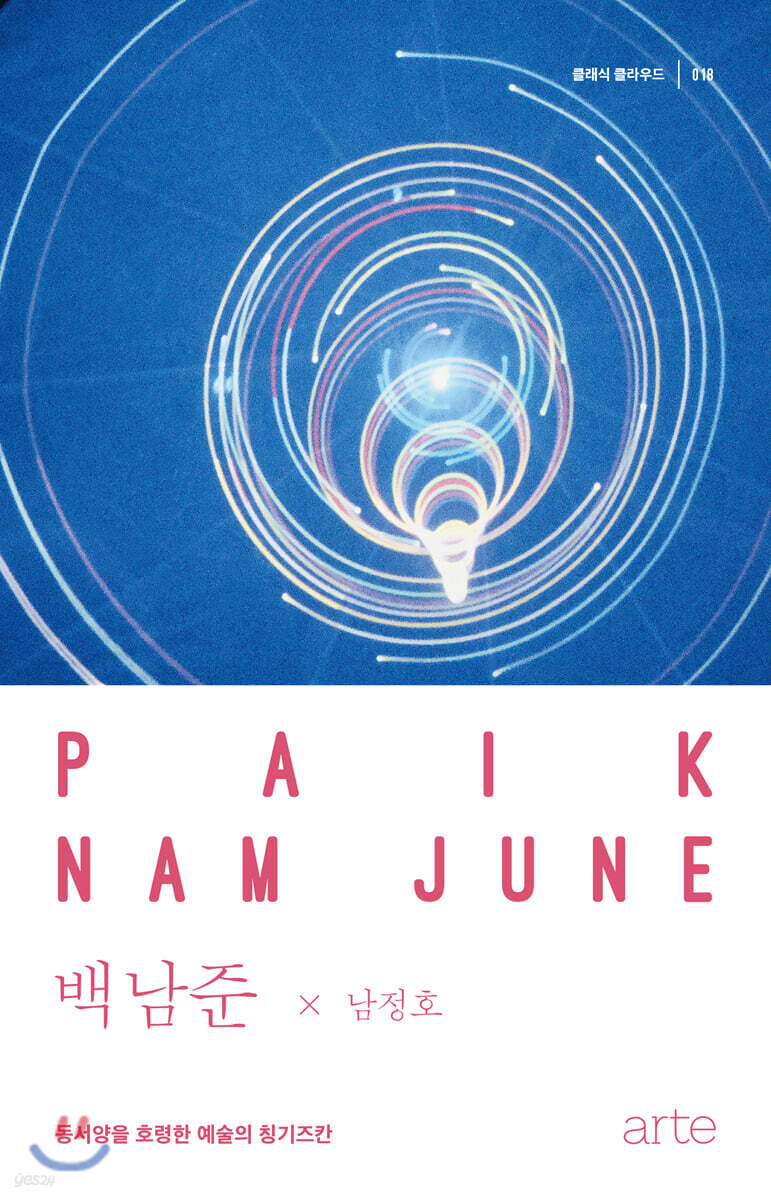 |
Description
Book Introduction
An artist whose name alone has become a genre in itself
Nam June Paik is revered as a world-renowned artist born in Korea, but his name became known to Korean society in 1984 when the world's first live satellite broadcast work, "Good Morning Mr. Orwell," was broadcast.
The title of the work is an ironic allusion to British novelist George Orwell, author of the dystopian novel '1984', and was viewed by 25 million people worldwide.
Thanks to the worldwide attention that "Good Morning Mr. Orwell" received, Nam June Paik returned to his homeland 34 years after fleeing the blaze of war, receiving a splendid amount of attention.
The world's attention was focused for a short time, but interest gradually waned when Nam June Paik passed away at the age of seventy-four in 2006.
Nowadays, it is difficult to find even a book that properly illuminates his artistic world, and in fact, he is more highly recognized overseas than in Korea.
Accordingly, there is a constant need to reexamine Nam June Paik as a master who continuously innovated art across the East and West.
The eighteenth book in the Classic Cloud series, Nam June Paik, traces the traces of Nam June Paik and reconstructs his life and world of works.
In particular, it attracts attention as it contains Nam June Paik's time in Japan, which is not well known in Korea.
This book does not simply list Nam June Paik's life and works individually; it encompasses the beginning and end of his art, from the events that inspired his works to the people and ideas around him that inspired them.
The author follows the turbulent footsteps of Nam June Paik, a self-proclaimed cultural nomad, and vividly portrays the turbulent history and life he lived.
As expected from a current journalist, he uses clear writing to explain modern art, which was perceived as difficult and monotonous, in a way that is very familiar.
Furthermore, it sheds the outdated image of a world-class artist born in Korea and provides a starting point for correcting the evaluation of Nam June Paik's life and work, which have been riddled with prejudice and misunderstanding, by telling the story of the ups and downs he experienced as an artist in a candid manner without exaggeration.
This alone will allow readers to get closer to his artistic world.
Nam June Paik is revered as a world-renowned artist born in Korea, but his name became known to Korean society in 1984 when the world's first live satellite broadcast work, "Good Morning Mr. Orwell," was broadcast.
The title of the work is an ironic allusion to British novelist George Orwell, author of the dystopian novel '1984', and was viewed by 25 million people worldwide.
Thanks to the worldwide attention that "Good Morning Mr. Orwell" received, Nam June Paik returned to his homeland 34 years after fleeing the blaze of war, receiving a splendid amount of attention.
The world's attention was focused for a short time, but interest gradually waned when Nam June Paik passed away at the age of seventy-four in 2006.
Nowadays, it is difficult to find even a book that properly illuminates his artistic world, and in fact, he is more highly recognized overseas than in Korea.
Accordingly, there is a constant need to reexamine Nam June Paik as a master who continuously innovated art across the East and West.
The eighteenth book in the Classic Cloud series, Nam June Paik, traces the traces of Nam June Paik and reconstructs his life and world of works.
In particular, it attracts attention as it contains Nam June Paik's time in Japan, which is not well known in Korea.
This book does not simply list Nam June Paik's life and works individually; it encompasses the beginning and end of his art, from the events that inspired his works to the people and ideas around him that inspired them.
The author follows the turbulent footsteps of Nam June Paik, a self-proclaimed cultural nomad, and vividly portrays the turbulent history and life he lived.
As expected from a current journalist, he uses clear writing to explain modern art, which was perceived as difficult and monotonous, in a way that is very familiar.
Furthermore, it sheds the outdated image of a world-class artist born in Korea and provides a starting point for correcting the evaluation of Nam June Paik's life and work, which have been riddled with prejudice and misunderstanding, by telling the story of the ups and downs he experienced as an artist in a candid manner without exaggeration.
This alone will allow readers to get closer to his artistic world.
- You can preview some of the book's contents.
Preview
index
PROLOGUE The 21st century begins on January 1, 1984.
01 My joy will not be rough
CRT replaces canvas
Jongno's Child
Inspired by childhood memories
A smart but sickly rich young master
Falling in love with Marx and Schoenberg
02 A Fateful Encounter in Japan
Missing one's homeland
[TV Buddha] East and West Become One
People I met at the University of Tokyo
Yellow disaster, that's me
Lifelong supporter, Shizuko Watari
The world's greatest doctor, Shuya Abe
03 Dreaming of a new art that has never existed before
A feast of delightful eccentricities
My time is divided into before and after I met Cage.
A new enfant terrible in the art world
Meet your eternal friend, Voice
The birth of video art
04 Nam June Paik's Unfinished Art
Enter New York
Call for sexual liberation
Art or pornography?
From artistic comrade to life partner
The forgery controversy erupted at a Cincinnati studio.
The Apocalypse of the Information Age: [Electronic Superhighway]
Space opera using satellites
Nam June Paik climbs Jacob's Ladder
EPILOGUE: Da Vinci in the 20th Century
Keywords of Nam June Paik's art
A defining moment in Nam June Paik's life
Notes and References
01 My joy will not be rough
CRT replaces canvas
Jongno's Child
Inspired by childhood memories
A smart but sickly rich young master
Falling in love with Marx and Schoenberg
02 A Fateful Encounter in Japan
Missing one's homeland
[TV Buddha] East and West Become One
People I met at the University of Tokyo
Yellow disaster, that's me
Lifelong supporter, Shizuko Watari
The world's greatest doctor, Shuya Abe
03 Dreaming of a new art that has never existed before
A feast of delightful eccentricities
My time is divided into before and after I met Cage.
A new enfant terrible in the art world
Meet your eternal friend, Voice
The birth of video art
04 Nam June Paik's Unfinished Art
Enter New York
Call for sexual liberation
Art or pornography?
From artistic comrade to life partner
The forgery controversy erupted at a Cincinnati studio.
The Apocalypse of the Information Age: [Electronic Superhighway]
Space opera using satellites
Nam June Paik climbs Jacob's Ladder
EPILOGUE: Da Vinci in the 20th Century
Keywords of Nam June Paik's art
A defining moment in Nam June Paik's life
Notes and References
Detailed image

Into the book
Without exception, works of art are imbued with the artist's philosophical thoughts, outlook on life, and experiences.
Therefore, without understanding the author, it is difficult to perceive the true meaning contained in the work.
Therefore, when appreciating a work of art, it is most important to understand the trajectory of the artist's life.
In that sense, I focused on following Nam June Paik's footsteps across Korea, Japan, Germany, and the United States, and understanding how his experiences in each country influenced his work.
The process of going to the scene and confirming where, what, and how Nam June Paik felt was no different from taking a step into his life.
Nam June Paik's thoughts, like Genghis Khan of Mongolia, flew wildly from Korea to Japan, Germany, and finally to the United States.
Although his body was tied to one place, his thoughts stretched out freely across borders and across the world.
Nam June Paik called this phenomenon a ‘stationary nomad.’
He considered himself a descendant of nomads and loved life on the road.
Living in different countries gave him a variety of experiences, which gave him insight into the world.
---From the "Prologue"
The meaning of video art can vary depending on the artist's intention.
But there is one clear fact that no one questions.
The fact is that Nam June Paik was the founder of video art.
One critic said, “I don’t know who started painting.
But the founder of video art is clear.
As I said, “It’s Nam June Paik,” many people naturally think of Nam June Paik when they think of video art.
The video art created by Nam June Paik was revolutionary in many ways.
The work overturns our common concept of painting in that the material used in the work is not paper or canvas, but cathode ray tubes or electric circuits.
It is also noteworthy that the images that appear on the screen are not fixed but constantly changing.
---From "Chapter 1 My Joy Will Not Be Rough"
The [TV Garden] at the Nam June Paik Art Center is surrounded by a small corridor that allows visitors to view the garden, and is displayed so that the entire forest can be viewed from above.
In other words, you can see the foreground and background of the work at the same time.
Nam June Paik created a garden by arranging plants indoors, and then placed televisions between them.
By composing nature and television as if they were one from the beginning, I wanted to reveal that nature and human technology are inevitably intertwined.
---From "Chapter 1 My Joy Will Not Be Rough"
In the case of art, when appreciating works such as paintings or sculptures, the passage of time is not greatly restricted.
The audience can enjoy the show for as long as they want, whether it be a few minutes or a few seconds.
But music is fundamentally different from art.
Timing is very important because you have to play an instrument or sing to a certain rhythm.
In terms of the flow of time, video art is closer to music than to fine art.
That is why it is said that Nam June Paik, who received music education, is an artist who is suitable for video art.
---From "Chapter 1 My Joy Will Not Be Rough"
Among his numerous works, no one would disagree that [TV Buddha] is one of his top five masterpieces.
In fact, critics do not hesitate to call this work the pinnacle of Nam June Paik's art.
This [TV Buddha] is a highly philosophical and conceptual masterpiece that poses fundamental questions by exquisitely harmonizing seemingly disparate elements such as East and West, Zen and technology, contemplation and narcissism.
(…)
[TV Buddha] is a work that provides viewers with room for reflection while leading us into a world of profound truth, but its premise is extremely simple.
All you have are small Buddhist statues, video cameras, and televisions that can be easily found at any antique shop.
Nam June Paik placed a Buddha statue in front of the television and had them face each other.
Then he set up a video camera behind the television and set it to capture the Buddha statue.
In other words, the Buddha was directed to look at his own image taken with a video camera on a monitor.
Although it is a very simple installation, looking at it makes one immerse one in countless thoughts such as, "What would Buddha think when he sees himself captured on screen?" or "Can technology capture a metaphysical world beyond the cold, mechanical civilization?"
---From "Chapter 2: A Fateful Encounter in Japan"
[Homage to John Cage] was created by Nam June Paik to express his respect for Cage.
From Cage, he learned to break away from conventional thinking and that all the noise in the world, even silence, could be music.
This work was part of an effort to sublimate all kinds of noises and even the sound of a piano being overturned into music based on that idea.
---From Chapter 3, Dreaming of a New Art That Never Existed in the World
Nam June Paik considered art that did not presuppose communication to be dictatorial or the art of the creator alone, and so he actively encouraged the participation of the audience rather than creating difficult, solemn, and rigid art.
The core of the art that Nam June Paik pursues is the diversity of art achieved by each viewer understanding, accepting, and enjoying the work in their own way.
---From Chapter 3, Dreaming of a New Art That Never Existed in the World
If we seriously consider human nature, we will realize that nudity, excretion, and sexual intercourse, which are generally considered shameful, are not things to be ashamed of.
Everyone knows that when men and women take off their clothes, their bodies look like this.
There is no human being who does not excrete, and we are all beings born from sexual intercourse between a man and a woman.
Why should we hide and be ashamed of essential forms and actions that apply to everyone?
It is such a contradictory idea that many great thinkers have thrown away their stereotypes like a blade of grass.
Mooreman and Nam June Paik must have also abandoned such hypocritical thoughts long ago.
---From "Chapter 4: Nam June Paik's Unfinished Art"
Although there are exceptions, at first glance it may seem that art and science are fields that cannot be united.
If we look at the history of mankind, art was born and developed based on emotion, and science on reason.
So, while art emphasizes the subjective and a priori aspects, science emphasizes the objective and empirical aspects.
So, it is impossible for an ordinary person to be proficient in both disparate arts and sciences and to raise them to the highest level.
However, both da Vinci and Nam June Paik were skilled in both art and science and mastered them.
Therefore, without understanding the author, it is difficult to perceive the true meaning contained in the work.
Therefore, when appreciating a work of art, it is most important to understand the trajectory of the artist's life.
In that sense, I focused on following Nam June Paik's footsteps across Korea, Japan, Germany, and the United States, and understanding how his experiences in each country influenced his work.
The process of going to the scene and confirming where, what, and how Nam June Paik felt was no different from taking a step into his life.
Nam June Paik's thoughts, like Genghis Khan of Mongolia, flew wildly from Korea to Japan, Germany, and finally to the United States.
Although his body was tied to one place, his thoughts stretched out freely across borders and across the world.
Nam June Paik called this phenomenon a ‘stationary nomad.’
He considered himself a descendant of nomads and loved life on the road.
Living in different countries gave him a variety of experiences, which gave him insight into the world.
---From the "Prologue"
The meaning of video art can vary depending on the artist's intention.
But there is one clear fact that no one questions.
The fact is that Nam June Paik was the founder of video art.
One critic said, “I don’t know who started painting.
But the founder of video art is clear.
As I said, “It’s Nam June Paik,” many people naturally think of Nam June Paik when they think of video art.
The video art created by Nam June Paik was revolutionary in many ways.
The work overturns our common concept of painting in that the material used in the work is not paper or canvas, but cathode ray tubes or electric circuits.
It is also noteworthy that the images that appear on the screen are not fixed but constantly changing.
---From "Chapter 1 My Joy Will Not Be Rough"
The [TV Garden] at the Nam June Paik Art Center is surrounded by a small corridor that allows visitors to view the garden, and is displayed so that the entire forest can be viewed from above.
In other words, you can see the foreground and background of the work at the same time.
Nam June Paik created a garden by arranging plants indoors, and then placed televisions between them.
By composing nature and television as if they were one from the beginning, I wanted to reveal that nature and human technology are inevitably intertwined.
---From "Chapter 1 My Joy Will Not Be Rough"
In the case of art, when appreciating works such as paintings or sculptures, the passage of time is not greatly restricted.
The audience can enjoy the show for as long as they want, whether it be a few minutes or a few seconds.
But music is fundamentally different from art.
Timing is very important because you have to play an instrument or sing to a certain rhythm.
In terms of the flow of time, video art is closer to music than to fine art.
That is why it is said that Nam June Paik, who received music education, is an artist who is suitable for video art.
---From "Chapter 1 My Joy Will Not Be Rough"
Among his numerous works, no one would disagree that [TV Buddha] is one of his top five masterpieces.
In fact, critics do not hesitate to call this work the pinnacle of Nam June Paik's art.
This [TV Buddha] is a highly philosophical and conceptual masterpiece that poses fundamental questions by exquisitely harmonizing seemingly disparate elements such as East and West, Zen and technology, contemplation and narcissism.
(…)
[TV Buddha] is a work that provides viewers with room for reflection while leading us into a world of profound truth, but its premise is extremely simple.
All you have are small Buddhist statues, video cameras, and televisions that can be easily found at any antique shop.
Nam June Paik placed a Buddha statue in front of the television and had them face each other.
Then he set up a video camera behind the television and set it to capture the Buddha statue.
In other words, the Buddha was directed to look at his own image taken with a video camera on a monitor.
Although it is a very simple installation, looking at it makes one immerse one in countless thoughts such as, "What would Buddha think when he sees himself captured on screen?" or "Can technology capture a metaphysical world beyond the cold, mechanical civilization?"
---From "Chapter 2: A Fateful Encounter in Japan"
[Homage to John Cage] was created by Nam June Paik to express his respect for Cage.
From Cage, he learned to break away from conventional thinking and that all the noise in the world, even silence, could be music.
This work was part of an effort to sublimate all kinds of noises and even the sound of a piano being overturned into music based on that idea.
---From Chapter 3, Dreaming of a New Art That Never Existed in the World
Nam June Paik considered art that did not presuppose communication to be dictatorial or the art of the creator alone, and so he actively encouraged the participation of the audience rather than creating difficult, solemn, and rigid art.
The core of the art that Nam June Paik pursues is the diversity of art achieved by each viewer understanding, accepting, and enjoying the work in their own way.
---From Chapter 3, Dreaming of a New Art That Never Existed in the World
If we seriously consider human nature, we will realize that nudity, excretion, and sexual intercourse, which are generally considered shameful, are not things to be ashamed of.
Everyone knows that when men and women take off their clothes, their bodies look like this.
There is no human being who does not excrete, and we are all beings born from sexual intercourse between a man and a woman.
Why should we hide and be ashamed of essential forms and actions that apply to everyone?
It is such a contradictory idea that many great thinkers have thrown away their stereotypes like a blade of grass.
Mooreman and Nam June Paik must have also abandoned such hypocritical thoughts long ago.
---From "Chapter 4: Nam June Paik's Unfinished Art"
Although there are exceptions, at first glance it may seem that art and science are fields that cannot be united.
If we look at the history of mankind, art was born and developed based on emotion, and science on reason.
So, while art emphasizes the subjective and a priori aspects, science emphasizes the objective and empirical aspects.
So, it is impossible for an ordinary person to be proficient in both disparate arts and sciences and to raise them to the highest level.
However, both da Vinci and Nam June Paik were skilled in both art and science and mastered them.
---From the "Epilogue"
Publisher's Review
Nam June Paik, who lived as a cosmopolitan,
Dreaming of a free life, untethered to one place
Nam June Paik, who lived in an era of sharp conflict between communism and capitalism, dreamed of a nomadic life, free from ideology, unbound by one place, and capable of free thought.
As he wished, he lived in many countries including Korea, Japan, Germany, and the United States.
Thanks to this, the traces of his life are scattered all over the world.
Born into a wealthy family during the Japanese colonial period, Nam June Paik enjoyed a comfortable life and learned piano and violin, and also began to open his eyes to music through encounters with musicians such as Arnold Schoenberg, who is called the father of modern music.
He began to study music in earnest when he entered Gyeonggi Middle School, but was forced to leave Korea after becoming embroiled in a violent incident between left and right factions.
After studying abroad in Hong Kong and returning to Korea for a while, he moved to Kobe, Japan with his family due to the outbreak of the Korean War, and then settled in Kamakura.
There, Nam June Paik encountered Zen philosophy and took Eastern philosophy as his artistic roots, creating representative works such as [TV Garden], which are later evaluated as having played a significant role in making his name known in European society.
In 1956, he entered the University of Tokyo and studied modern music and philosophy, but then decided to study abroad in Germany.
In Germany, Nam June Paik stood at the center of Fluxus (an experimental art movement that rejected existing art and culture), and presented works that shook up the existing artistic language and values, causing a great shock to European society.
He also developed his own artistic world by interacting with avant-garde artists such as John Cage, Joseph Beuys, and George Maciunas.
At the time, Nam June Paik presented groundbreaking and difficult performances such as [One for Violin Solo] and [Homage to John Cage], calling himself a “terrorist from the East.”
The performances, which included smashing instruments or making bizarre noises, were met with negative reviews from the media, such as, "What kind of art is this?" and "The mentally ill escaped from the hospital."
Nam June Paik, who had emerged as a radical happening artist in the European art world, did not rest on his laurels and suddenly moved to the United States in search of a new challenge, where he presented even more experimental works.
At the time, he raised the issue of how sex was used as an important motif in literature and art, while it was taboo in music, and performed a half-naked performance [Opera Sextronique] with Charlotte Moorman.
The two were arrested by the police on charges of indecency during the performance, and the incident was widely reported the next day, escalating beyond a provocation of sexual taboos into a debate over artists' freedom of expression.
As the court ruled in favor of both men, he became a monumental figure who brought freedom of expression to art.
From video art to satellite art and laser art
The 20th century's Da Vinci, who constantly created new genres
Nam June Paik was not simply an eccentric who only presented difficult and destructive performances.
He just wanted to create something new.
Nam June Paik's interest was solely in art, to the point that he devoted his entire life to art and never stopped creating until the end of his life, burning his artistic spirit.
He constantly pondered the relationship between nature and technology, and was not afraid to fuse seemingly disparate elements such as science and religion, and Eastern and Western cultures.
For the sake of my work, I did not hesitate to delve into unfamiliar fields.
Many of his works were created thanks to this free-thinking, borderless approach.
Nam June Paik, who always dreamed of new art, turned to new media to create original works, and he used the cathode ray tube, which had become a part of his life, as a canvas to unfold his own artistic world, dismantling the boundaries between everyday life and art.
In 1963, at his first exhibition in Wuppertal, Germany, he pioneered a new genre called video art by presenting works utilizing video and television.
The works he presented at the time not only overturned people's common sense and stereotypes by completely renewing their perception of objects, but also helped them view objects from a new perspective.
Once Nam June Paik completed a work, he stopped looking at it and became completely absorbed in the idea of a new project.
Instead of creating works of the same or similar format, he always lived his life wondering how to create something new.
Armed with a creative force that constantly opened up new worlds, Nam June Paik not only inspired other artists but also paved the way for the emergence of unprecedented art.
Video art, satellite art that followed, and laser art created in the final stages of his life were all great challenges toward new art.
- From the Epilogue
“The role of the artist is to think about the future.”
An artist who dreams of peace through communication through art
Having experienced two world wars, the Korean War, and the Cold War in the 20th century, Nam June Paik witnessed the ugly side of a society losing its humanity and sought the direction and values he should pursue in life as an artist.
He believed that the absence of communication brought about tragedy, and that two-way communication could lead to peace and prosperity for mankind, and that mass media such as television could bring about the expansion of communication.
The satellite art works that originated from his ideas are [Good Morning Mr. Orwell], [Bye Bye Kipling], and [Hand in Hand with the World].
For him, satellites were a window through which he could communicate with many people, so they had a meaning beyond just being objects for his works. These three works are sometimes called the 'Satellite Trilogy Series'.
These satellite art pieces convey the message that humanity can become one through art, even if languages differ.
In particular, [Holding Hands with the World] featured a scene in which Soviet musician Sergei Kuryokhin and his band performed in Leningrad (now St. Petersburg). It was truly remarkable that such an ideologically transcending performance took place before the Cold War collapsed.
Nam June Paik's works still send us a message that is valid even in the current situation where nationalism is once again raising its head.
Additionally, you will be able to glimpse Nam June Paik's artistic world along with the 20th century era, when technology changed people's lifestyles.
Dreaming of a free life, untethered to one place
Nam June Paik, who lived in an era of sharp conflict between communism and capitalism, dreamed of a nomadic life, free from ideology, unbound by one place, and capable of free thought.
As he wished, he lived in many countries including Korea, Japan, Germany, and the United States.
Thanks to this, the traces of his life are scattered all over the world.
Born into a wealthy family during the Japanese colonial period, Nam June Paik enjoyed a comfortable life and learned piano and violin, and also began to open his eyes to music through encounters with musicians such as Arnold Schoenberg, who is called the father of modern music.
He began to study music in earnest when he entered Gyeonggi Middle School, but was forced to leave Korea after becoming embroiled in a violent incident between left and right factions.
After studying abroad in Hong Kong and returning to Korea for a while, he moved to Kobe, Japan with his family due to the outbreak of the Korean War, and then settled in Kamakura.
There, Nam June Paik encountered Zen philosophy and took Eastern philosophy as his artistic roots, creating representative works such as [TV Garden], which are later evaluated as having played a significant role in making his name known in European society.
In 1956, he entered the University of Tokyo and studied modern music and philosophy, but then decided to study abroad in Germany.
In Germany, Nam June Paik stood at the center of Fluxus (an experimental art movement that rejected existing art and culture), and presented works that shook up the existing artistic language and values, causing a great shock to European society.
He also developed his own artistic world by interacting with avant-garde artists such as John Cage, Joseph Beuys, and George Maciunas.
At the time, Nam June Paik presented groundbreaking and difficult performances such as [One for Violin Solo] and [Homage to John Cage], calling himself a “terrorist from the East.”
The performances, which included smashing instruments or making bizarre noises, were met with negative reviews from the media, such as, "What kind of art is this?" and "The mentally ill escaped from the hospital."
Nam June Paik, who had emerged as a radical happening artist in the European art world, did not rest on his laurels and suddenly moved to the United States in search of a new challenge, where he presented even more experimental works.
At the time, he raised the issue of how sex was used as an important motif in literature and art, while it was taboo in music, and performed a half-naked performance [Opera Sextronique] with Charlotte Moorman.
The two were arrested by the police on charges of indecency during the performance, and the incident was widely reported the next day, escalating beyond a provocation of sexual taboos into a debate over artists' freedom of expression.
As the court ruled in favor of both men, he became a monumental figure who brought freedom of expression to art.
From video art to satellite art and laser art
The 20th century's Da Vinci, who constantly created new genres
Nam June Paik was not simply an eccentric who only presented difficult and destructive performances.
He just wanted to create something new.
Nam June Paik's interest was solely in art, to the point that he devoted his entire life to art and never stopped creating until the end of his life, burning his artistic spirit.
He constantly pondered the relationship between nature and technology, and was not afraid to fuse seemingly disparate elements such as science and religion, and Eastern and Western cultures.
For the sake of my work, I did not hesitate to delve into unfamiliar fields.
Many of his works were created thanks to this free-thinking, borderless approach.
Nam June Paik, who always dreamed of new art, turned to new media to create original works, and he used the cathode ray tube, which had become a part of his life, as a canvas to unfold his own artistic world, dismantling the boundaries between everyday life and art.
In 1963, at his first exhibition in Wuppertal, Germany, he pioneered a new genre called video art by presenting works utilizing video and television.
The works he presented at the time not only overturned people's common sense and stereotypes by completely renewing their perception of objects, but also helped them view objects from a new perspective.
Once Nam June Paik completed a work, he stopped looking at it and became completely absorbed in the idea of a new project.
Instead of creating works of the same or similar format, he always lived his life wondering how to create something new.
Armed with a creative force that constantly opened up new worlds, Nam June Paik not only inspired other artists but also paved the way for the emergence of unprecedented art.
Video art, satellite art that followed, and laser art created in the final stages of his life were all great challenges toward new art.
- From the Epilogue
“The role of the artist is to think about the future.”
An artist who dreams of peace through communication through art
Having experienced two world wars, the Korean War, and the Cold War in the 20th century, Nam June Paik witnessed the ugly side of a society losing its humanity and sought the direction and values he should pursue in life as an artist.
He believed that the absence of communication brought about tragedy, and that two-way communication could lead to peace and prosperity for mankind, and that mass media such as television could bring about the expansion of communication.
The satellite art works that originated from his ideas are [Good Morning Mr. Orwell], [Bye Bye Kipling], and [Hand in Hand with the World].
For him, satellites were a window through which he could communicate with many people, so they had a meaning beyond just being objects for his works. These three works are sometimes called the 'Satellite Trilogy Series'.
These satellite art pieces convey the message that humanity can become one through art, even if languages differ.
In particular, [Holding Hands with the World] featured a scene in which Soviet musician Sergei Kuryokhin and his band performed in Leningrad (now St. Petersburg). It was truly remarkable that such an ideologically transcending performance took place before the Cold War collapsed.
Nam June Paik's works still send us a message that is valid even in the current situation where nationalism is once again raising its head.
Additionally, you will be able to glimpse Nam June Paik's artistic world along with the 20th century era, when technology changed people's lifestyles.
GOODS SPECIFICS
- Date of issue: April 22, 2020
- Page count, weight, size: 220 pages | 348g | 135*210*20mm
- ISBN13: 9788950987374
- ISBN10: 8950987376
You may also like
카테고리
korean


korean

![GQ KOREA Mark (Monthly): December [2025]](http://librairie.coreenne.fr/cdn/shop/files/8ef265dbbfbf186523ed75ba7319009d.jpg?v=1765340328&width=3840)


