

CS LEWIS Lewis
 |
Description
Book Introduction
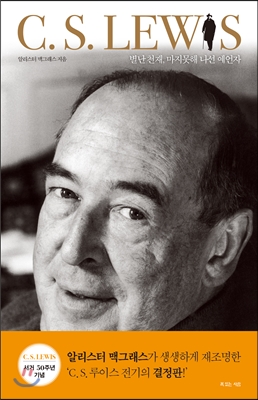
“C. 50th anniversary of S. Lewis's death, Meet the creator of Narnia, a story that has captivated generations!” Alister McGrath, considered the greatest evangelical theologian of the 21st century, and C. S. Lewis met. This book is about the genius C., who went from being an atheist to a theist and finally became one of the greatest Christian apologists. This is a biography of S. Lewis. Lewis's Narnia series, considered one of the world's three greatest fantasy novels and a classic of children's literature, has captured the imagination of countless people for over half a century. In this book, Alister McGrath charts the remarkable life trajectory of this Oxford professor, who taught English literature at university by day and wrote a bestselling children's fantasy series in his spare time. McGrath researches Lewis's writings extensively and examines Lewis's correspondence and archives in chronological order to create a new picture of his life. Rather than simply repeating the vast amount of information about Lewis's life, we attempt to identify the deeper themes and concerns contained therein and assess their significance. This monumental biography is a compelling portrait of an eccentric thinker who reluctantly emerged as a powerful prophet of our time, a captivating portrait of a creative genius who inspired generations—a book too good to be missed. |
- You can preview some of the book's contents.
Preview
index
introduction
Part 1 Prologue
1.
The Rolling Hills of County Down: Childhood in Ireland 1898-1908
2.
England, the Ugly Land: School Years 1908-1917
3.
The Vast Fields of France: War 1917-1918
Part 2 Oxford
4.
Deception and Discovery: The Birth of an Oxford Professor 1919–1927
5.
Fellowships, Family, and Friendship: My Early Years at Magdalene College, 1927-1930
6.
The Most Unwilling Conversion: The Birth of a Pure Christian 1930-1932
7.
Scholar: Literary Studies and Literary Criticism 1933-1939
8.
National Acclaim: The Wartime Apologist 1939-1942
9.
International Fame: Pure Christian 1942-1945
10.
An Unrespected Prophet?: Postwar Tensions and Issues 1945-1954
Part 3 Narnia
11.
The Reconfiguration of Reality: The Creation of Narnia
12.
Narnia: Exploring a World of Imagination
Part 4 Cambridge
13.
Magdalen College, Cambridge, 1954-1960
14.
Bereavement, Illness, and Death: Later Years 1960–1963
Part 5 After the death of Louis
15.
Amazing man, Louis
Acknowledgements
Translator's Note
main
References
Search
Part 1 Prologue
1.
The Rolling Hills of County Down: Childhood in Ireland 1898-1908
2.
England, the Ugly Land: School Years 1908-1917
3.
The Vast Fields of France: War 1917-1918
Part 2 Oxford
4.
Deception and Discovery: The Birth of an Oxford Professor 1919–1927
5.
Fellowships, Family, and Friendship: My Early Years at Magdalene College, 1927-1930
6.
The Most Unwilling Conversion: The Birth of a Pure Christian 1930-1932
7.
Scholar: Literary Studies and Literary Criticism 1933-1939
8.
National Acclaim: The Wartime Apologist 1939-1942
9.
International Fame: Pure Christian 1942-1945
10.
An Unrespected Prophet?: Postwar Tensions and Issues 1945-1954
Part 3 Narnia
11.
The Reconfiguration of Reality: The Creation of Narnia
12.
Narnia: Exploring a World of Imagination
Part 4 Cambridge
13.
Magdalen College, Cambridge, 1954-1960
14.
Bereavement, Illness, and Death: Later Years 1960–1963
Part 5 After the death of Louis
15.
Amazing man, Louis
Acknowledgements
Translator's Note
main
References
Search
Into the book
In this book, I want to focus on Lewis's writings and how his thoughts were formed and expressed.
My interest is not to document every aspect of Lewis's life in detail, but to explore the complex and fascinating connections between his outer and inner worlds.
Therefore, this biography is structured around the real and imaginary worlds in which Lewis lived, primarily Oxford, Cambridge, and Narnia.
How did the development of his thoughts and imagination connect with the physical world he inhabited? Who helped shape his intellectual and imaginative view of reality? ---'Preface'
Lewis seemed to attach particular importance to two things: finding out how ordinary people speak, and translating his own thoughts into the way they speak.
“We have to learn the language of our audience.
Let me be clear from the outset: it is useless to try to presuppose what an "ordinary person" understands and what he or she does not understand.
You have to go through it empirically... In conclusion, you have to translate every part of theology into common language.
It's a real pain in the ass to do that, and you'll only be able to say a little in the thirty minutes you're given, but it's absolutely necessary.
This exercise will also greatly help your thinking.
I have become convinced that if an idea cannot be translated into the language of the uneducated, it is not yet organized.
The ability to translate is the true test of one's understanding of one's own words." ---Chapter 8, "National Praise: The Wartime Apologist"
To understand the profound allure of Narnia, we must appreciate the impact the story has on our conception of reality and our place within that reality.
The Chronicles of Narnia powerfully responds to our basic human intuition that our stories are part of a larger story—a story that, once grasped, allows us to see our circumstances in new and meaningful ways.
The veil is lifted, the door opens, the curtain is drawn, and we enter a new realm.
My interest is not to document every aspect of Lewis's life in detail, but to explore the complex and fascinating connections between his outer and inner worlds.
Therefore, this biography is structured around the real and imaginary worlds in which Lewis lived, primarily Oxford, Cambridge, and Narnia.
How did the development of his thoughts and imagination connect with the physical world he inhabited? Who helped shape his intellectual and imaginative view of reality? ---'Preface'
Lewis seemed to attach particular importance to two things: finding out how ordinary people speak, and translating his own thoughts into the way they speak.
“We have to learn the language of our audience.
Let me be clear from the outset: it is useless to try to presuppose what an "ordinary person" understands and what he or she does not understand.
You have to go through it empirically... In conclusion, you have to translate every part of theology into common language.
It's a real pain in the ass to do that, and you'll only be able to say a little in the thirty minutes you're given, but it's absolutely necessary.
This exercise will also greatly help your thinking.
I have become convinced that if an idea cannot be translated into the language of the uneducated, it is not yet organized.
The ability to translate is the true test of one's understanding of one's own words." ---Chapter 8, "National Praise: The Wartime Apologist"
To understand the profound allure of Narnia, we must appreciate the impact the story has on our conception of reality and our place within that reality.
The Chronicles of Narnia powerfully responds to our basic human intuition that our stories are part of a larger story—a story that, once grasped, allows us to see our circumstances in new and meaningful ways.
The veil is lifted, the door opens, the curtain is drawn, and we enter a new realm.
Chapter 11, "Rearranging Reality: The Creation of Narnia"
Publisher's Review
characteristic
- C.
A comprehensive look at S. Lewis's life, faith, and theology.
- C.
Includes photos and a chronology vividly illustrating the life and activities of S. Lewis.
- Volume 13 of the 'Man of God' series
For readers
- C.
Readers who want to deeply understand the life and thoughts of S. Lewis
- Christians who want to know how one person who embraces the truth can change into someone who influences the whole world.
- Pastors, seminarians, and missionary group workers who proclaim and spread the word together with theologians
C.
Clive Staples Lewis (1898-1963) Chronology
Born on November 29, 1898, in Belfast, Northern Ireland, to Albert and Flora Augusta Lewis.
Baptized in 1899 at St. Mark's Church, Dundella, Belfast.
In 1905, the Lewis family moved into their newly built house, Littleley, on the outskirts of Belfast.
Her mother, Flora Louise, died in 1908.
“With my mother’s death, everything that had been stable, happy, and peaceful disappeared from my life.” He moved to England and began studying at Wynyard School in Watford.
He entered Campbell College in Belfast in 1910, but dropped out due to respiratory illness.
Entered Sherberg School in Great Malvern in 1911.
During this period, the remnants of the Christian faith were completely lost.
Entered Malvern College in Great Malvern in 1913.
In 1914 he stayed at Great Bookham and received private lessons from William Thompson Kirkpatrick.
Read George MacDonald's Phantastes in 1915.
“That night, in a sense, my imagination was baptized.”
In 1916, he was accepted as a classics scholarship student at Oxford University College.
In 1917, he applied to the Oxford University Student Military Training Corps.
While attending University College, World War I broke out, and he was assigned to Company E, 4th Battalion, Officers' Training Corps, stationed at Keble College, Oxford.
Afterwards, he was assigned as a second lieutenant to the 3rd Battalion, Somerset Light Infantry, and went to France to join the British front line near Arras.
In 1918 he was admitted to a hospital in Le Trefort near Dieppe with 'trench fever'.
Wounded in battle at Liège du Vinage.
He was sent back to his home country, England, for convalescence and was discharged in December.
He returned to Oxford in 1919 and resumed his studies at University College.
Publication of the poetry collection Spirits in Bondage.
Received a first-class grade in the first examination for the Bachelor of Classics in 1920.
In 1921, he won the President's Cup Essay Contest on the topic of "Optimism."
Received a first-class honors degree in classical studies in 1922.
Received a first-class honors degree in English Literature in 1923.
In 1924, he took up a position as a lecturer in philosophy at University College.
In 1925, he was appointed a fellow of the English Literature Tutoring Department at Magdalen College, Oxford.
He taught English literature here for 29 years before moving to Cambridge.
1926: Publication of the poetry collection Dymer.
His father, Albert Lewis, died in 1929.
In 1930, Mrs. Moore moved to Kilns in partnership with her brother Warren Lewis.
In 1931 J.
RR
After talking with Tolkien, I realized that Christianity is the 'true myth'.
“I went from believing in God to believing in Christ, that is, Christianity.” Attending Holy Communion for the first time as an adult at Holy Trinity Church, Headington Quarry, Oxford.
In 1933, the Inklings group began, led by Lewis and Tolkien.
Publication of The Pilgrim's Regress.
1936: The Allegory of Love published.
In 1938, the science fiction novel Out of the Silent Planet was published (which, along with Perelandra and The Terrible Power, forms the Ransom Trilogy).
1940: The Problem of Pain published.
In 1941, he gave a series of live broadcast lectures at the BBC headquarters in London, Broadcasting House, over a period of three years (through these lectures, he gained national fame in the UK).
1942: The Screwtape Letters published (this book solidified his reputation as a popular Christian theologian and brought him international fame).
Received an honorary doctorate in divinity from the University of St. Andrews in 1946.
Publication of The Great Divorce.
Appeared on the cover of Time magazine in 1947 (introduced as “one of the most influential Christian apologists in the English-speaking world”).
Publication of 『Miracles』.
Elected as a Fellow of the Royal Society of Literature in 1948.
1949: The Weight of Glory, and Other Addresses published.
The first book in the Narnia series, The Lion, the Witch and the Wardrobe, was published in 1950.
The series was completed in 7 volumes, including The Last Battle, published in 1956.
Mrs. Moore died in 1951.
1952: Publication of Mere Christianity (a book that deals with the essence of the Christian faith and is considered one of the most influential religious books of the 20th century).
In 1954, he accepted a full professorship in Medieval and Renaissance English Literature at Cambridge University.
Publication of 『English Literature in the Sixteenth Century, Excluding Drama』.
Entered Magdalen College, Cambridge in 1955.
Elected as a Fellow of the British Academy.
Publication of 『Surprised by Joy』.
He married Joy Davidman in a civil ceremony at the Oxford Registry Office in 1956, and the following year they held their wedding ceremony at Churchill Hospital, Oxford.
Till We Have Faces published.
1958: Published Reflections on the Psalms.
His wife, Joy Davidman, died in 1960.
Publication of The Four Loves.
Diagnosed with benign prostatic hyperplasia in 1961.
Publication of 『A Grief Observed』.
He died on 22 November 1963 in Kilns at the age of sixty-five (his tombstone bears the inscription: "One must endure death").
1964: Published Letters to Malcolm: Chiefly on Prayer.
Other recommendations
“The 20th Century’s Greatest Christian Apologist” by Time
“The most influential writer in American evangelicalism over the past 40 years,” Christianity Today
“The Augustine of 20th-century evangelicalism” J.
I. Packer
“The most beloved thinker and writer of this century” - HarperCollins Publishers
Colin Duryez, author of Lewis and Tolkien, “The John Bunyan of the 20th Century”
- C.
A comprehensive look at S. Lewis's life, faith, and theology.
- C.
Includes photos and a chronology vividly illustrating the life and activities of S. Lewis.
- Volume 13 of the 'Man of God' series
For readers
- C.
Readers who want to deeply understand the life and thoughts of S. Lewis
- Christians who want to know how one person who embraces the truth can change into someone who influences the whole world.
- Pastors, seminarians, and missionary group workers who proclaim and spread the word together with theologians
C.
Clive Staples Lewis (1898-1963) Chronology
Born on November 29, 1898, in Belfast, Northern Ireland, to Albert and Flora Augusta Lewis.
Baptized in 1899 at St. Mark's Church, Dundella, Belfast.
In 1905, the Lewis family moved into their newly built house, Littleley, on the outskirts of Belfast.
Her mother, Flora Louise, died in 1908.
“With my mother’s death, everything that had been stable, happy, and peaceful disappeared from my life.” He moved to England and began studying at Wynyard School in Watford.
He entered Campbell College in Belfast in 1910, but dropped out due to respiratory illness.
Entered Sherberg School in Great Malvern in 1911.
During this period, the remnants of the Christian faith were completely lost.
Entered Malvern College in Great Malvern in 1913.
In 1914 he stayed at Great Bookham and received private lessons from William Thompson Kirkpatrick.
Read George MacDonald's Phantastes in 1915.
“That night, in a sense, my imagination was baptized.”
In 1916, he was accepted as a classics scholarship student at Oxford University College.
In 1917, he applied to the Oxford University Student Military Training Corps.
While attending University College, World War I broke out, and he was assigned to Company E, 4th Battalion, Officers' Training Corps, stationed at Keble College, Oxford.
Afterwards, he was assigned as a second lieutenant to the 3rd Battalion, Somerset Light Infantry, and went to France to join the British front line near Arras.
In 1918 he was admitted to a hospital in Le Trefort near Dieppe with 'trench fever'.
Wounded in battle at Liège du Vinage.
He was sent back to his home country, England, for convalescence and was discharged in December.
He returned to Oxford in 1919 and resumed his studies at University College.
Publication of the poetry collection Spirits in Bondage.
Received a first-class grade in the first examination for the Bachelor of Classics in 1920.
In 1921, he won the President's Cup Essay Contest on the topic of "Optimism."
Received a first-class honors degree in classical studies in 1922.
Received a first-class honors degree in English Literature in 1923.
In 1924, he took up a position as a lecturer in philosophy at University College.
In 1925, he was appointed a fellow of the English Literature Tutoring Department at Magdalen College, Oxford.
He taught English literature here for 29 years before moving to Cambridge.
1926: Publication of the poetry collection Dymer.
His father, Albert Lewis, died in 1929.
In 1930, Mrs. Moore moved to Kilns in partnership with her brother Warren Lewis.
In 1931 J.
RR
After talking with Tolkien, I realized that Christianity is the 'true myth'.
“I went from believing in God to believing in Christ, that is, Christianity.” Attending Holy Communion for the first time as an adult at Holy Trinity Church, Headington Quarry, Oxford.
In 1933, the Inklings group began, led by Lewis and Tolkien.
Publication of The Pilgrim's Regress.
1936: The Allegory of Love published.
In 1938, the science fiction novel Out of the Silent Planet was published (which, along with Perelandra and The Terrible Power, forms the Ransom Trilogy).
1940: The Problem of Pain published.
In 1941, he gave a series of live broadcast lectures at the BBC headquarters in London, Broadcasting House, over a period of three years (through these lectures, he gained national fame in the UK).
1942: The Screwtape Letters published (this book solidified his reputation as a popular Christian theologian and brought him international fame).
Received an honorary doctorate in divinity from the University of St. Andrews in 1946.
Publication of The Great Divorce.
Appeared on the cover of Time magazine in 1947 (introduced as “one of the most influential Christian apologists in the English-speaking world”).
Publication of 『Miracles』.
Elected as a Fellow of the Royal Society of Literature in 1948.
1949: The Weight of Glory, and Other Addresses published.
The first book in the Narnia series, The Lion, the Witch and the Wardrobe, was published in 1950.
The series was completed in 7 volumes, including The Last Battle, published in 1956.
Mrs. Moore died in 1951.
1952: Publication of Mere Christianity (a book that deals with the essence of the Christian faith and is considered one of the most influential religious books of the 20th century).
In 1954, he accepted a full professorship in Medieval and Renaissance English Literature at Cambridge University.
Publication of 『English Literature in the Sixteenth Century, Excluding Drama』.
Entered Magdalen College, Cambridge in 1955.
Elected as a Fellow of the British Academy.
Publication of 『Surprised by Joy』.
He married Joy Davidman in a civil ceremony at the Oxford Registry Office in 1956, and the following year they held their wedding ceremony at Churchill Hospital, Oxford.
Till We Have Faces published.
1958: Published Reflections on the Psalms.
His wife, Joy Davidman, died in 1960.
Publication of The Four Loves.
Diagnosed with benign prostatic hyperplasia in 1961.
Publication of 『A Grief Observed』.
He died on 22 November 1963 in Kilns at the age of sixty-five (his tombstone bears the inscription: "One must endure death").
1964: Published Letters to Malcolm: Chiefly on Prayer.
Other recommendations
“The 20th Century’s Greatest Christian Apologist” by Time
“The most influential writer in American evangelicalism over the past 40 years,” Christianity Today
“The Augustine of 20th-century evangelicalism” J.
I. Packer
“The most beloved thinker and writer of this century” - HarperCollins Publishers
Colin Duryez, author of Lewis and Tolkien, “The John Bunyan of the 20th Century”
GOODS SPECIFICS
- Date of issue: October 2, 2013
- Format: Hardcover book binding method guide
- Page count, weight, size: 544 pages | 867g | 153*224*35mm
- ISBN13: 9788963601205
- ISBN10: 896360120X
You may also like
카테고리
korean


korean

![GQ KOREA Mark (Monthly): December [2025]](http://librairie.coreenne.fr/cdn/shop/files/8ef265dbbfbf186523ed75ba7319009d.jpg?v=1765340328&width=3840)


