

Creating a First-Class Life and Ethics 760 Questions (for 2026)
 |
Description
Book Introduction
"Life and Ethics: Creating a Top Grade" is a collection of past exam analysis questions that perfectly prepares you for your final exam by organizing key concepts and frequently appearing questions.
We have analyzed the types of questions that frequently appear on exams and created a variety of questions to help you quickly acquire the know-how to achieve a top grade in your internal exams.
We have analyzed the types of questions that frequently appear on exams and created a variety of questions to help you quickly acquire the know-how to achieve a top grade in your internal exams.
- You can preview some of the book's contents.
Preview
index
Ⅰ.
Modern Life and Practice Ethics
01 Modern Life and Practical Ethics
02 Approaches and Explorations to Contemporary Ethical Issues
Unit End Problems
Ⅱ.
Life and Ethics
03 Ethics of Life and Death
04 Bioethics
05 Love and Sexual Ethics
Unit End Problems
Ⅲ.
Society and Ethics
06 Ethics of Profession and Integrity
07 Social Justice and Ethics
08 Ethics of the State and Citizens
Unit End Problems
Ⅳ.
Science and Ethics
09 Science, Technology, and Ethics
10 Information Society and Ethics
11 Nature and Ethics
Unit End Problems
V.
Culture and Ethics
12 Ethics of Art and Popular Culture
13 Ethics of Food, Clothing, and Shelter and Ethical Consumption
14 Ethics in a Multicultural Society
Unit End Problems
Ⅵ.
Ethics of Peace and Coexistence
15 Ethics of Communication and National Integration
16 Ethics of Global Peace
Unit End Problems
[Correct Answer/Informative Explanation]
Modern Life and Practice Ethics
01 Modern Life and Practical Ethics
02 Approaches and Explorations to Contemporary Ethical Issues
Unit End Problems
Ⅱ.
Life and Ethics
03 Ethics of Life and Death
04 Bioethics
05 Love and Sexual Ethics
Unit End Problems
Ⅲ.
Society and Ethics
06 Ethics of Profession and Integrity
07 Social Justice and Ethics
08 Ethics of the State and Citizens
Unit End Problems
Ⅳ.
Science and Ethics
09 Science, Technology, and Ethics
10 Information Society and Ethics
11 Nature and Ethics
Unit End Problems
V.
Culture and Ethics
12 Ethics of Art and Popular Culture
13 Ethics of Food, Clothing, and Shelter and Ethical Consumption
14 Ethics in a Multicultural Society
Unit End Problems
Ⅵ.
Ethics of Peace and Coexistence
15 Ethics of Communication and National Integration
16 Ethics of Global Peace
Unit End Problems
[Correct Answer/Informative Explanation]
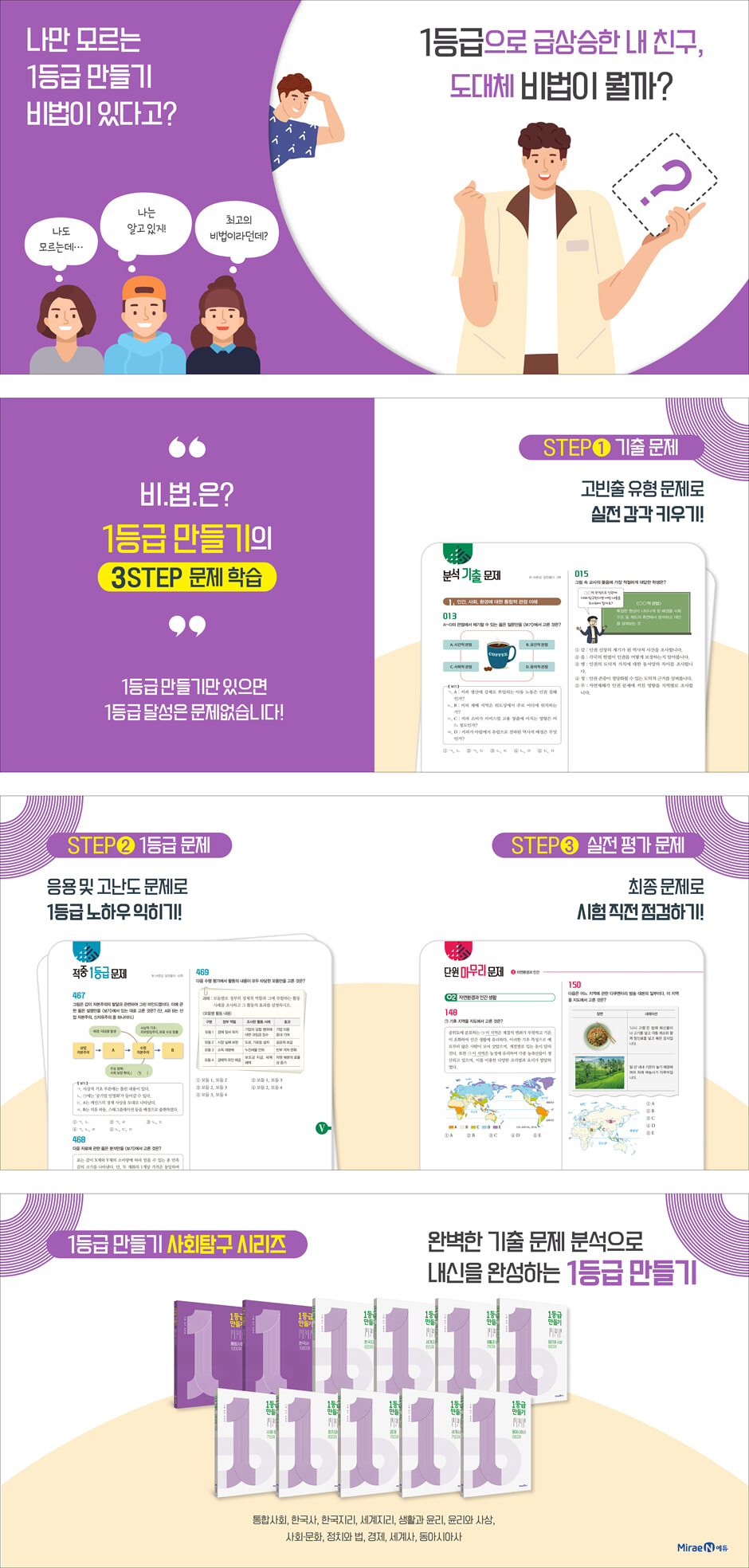
Detailed image
Publisher's Review
Analyzing past exam questions to get your grades, life and ethics to get a top grade!
1.
Organize concepts using key concepts and test materials
We've organized the key concepts and materials that frequently appear on school exams to help you grasp the core.
We have provided concept problems to help you easily check key concepts, and linked them to “Check with Problems” to help you check your understanding of the material.
2.
Analysis of past exam questions
We analyzed past exam questions and organized them into frequently appearing types of questions.
We have compiled a list of representative types of short answer and essay questions that frequently appear on exams.
3.
Hit 1st grade problem
In school exams, one or two difficult questions are sure to appear.
It is composed of difficult problems that can help you develop your application and thinking skills so that you can confidently solve difficult problems that determine the difference in grades.
4.
Unit End Problems
It is composed of practical problems that can be used to prepare for midterm and final exams, and the lecture titles are aligned with the school exam progress to make it easy to study.
You can review the learning content for each chapter and check your skills right before the exam.
5.
Correct answer, full explanation
〈Correction〉 helps you understand even difficult problems easily with detailed explanations of incorrect answers.
〈Level 1 Data Analysis〉 provides analysis and editing explanations for difficult and challenging data.
〈1st Grade Summary Notes〉 summarizes the key concepts that frequently appear on exams.
1.
Organize concepts using key concepts and test materials
We've organized the key concepts and materials that frequently appear on school exams to help you grasp the core.
We have provided concept problems to help you easily check key concepts, and linked them to “Check with Problems” to help you check your understanding of the material.
2.
Analysis of past exam questions
We analyzed past exam questions and organized them into frequently appearing types of questions.
We have compiled a list of representative types of short answer and essay questions that frequently appear on exams.
3.
Hit 1st grade problem
In school exams, one or two difficult questions are sure to appear.
It is composed of difficult problems that can help you develop your application and thinking skills so that you can confidently solve difficult problems that determine the difference in grades.
4.
Unit End Problems
It is composed of practical problems that can be used to prepare for midterm and final exams, and the lecture titles are aligned with the school exam progress to make it easy to study.
You can review the learning content for each chapter and check your skills right before the exam.
5.
Correct answer, full explanation
〈Correction〉 helps you understand even difficult problems easily with detailed explanations of incorrect answers.
〈Level 1 Data Analysis〉 provides analysis and editing explanations for difficult and challenging data.
〈1st Grade Summary Notes〉 summarizes the key concepts that frequently appear on exams.
GOODS SPECIFICS
- Publication date: September 30, 2021
- Page count, weight, size: 224 pages | 225*300mm
- ISBN13: 9791164138760
- ISBN10: 1164138766
- Reference book for use in grades: High school common
You may also like
카테고리
korean


korean

![GQ KOREA Mark (Monthly): December [2025]](http://librairie.coreenne.fr/cdn/shop/files/8ef265dbbfbf186523ed75ba7319009d.jpg?v=1765340328&width=3840)


