

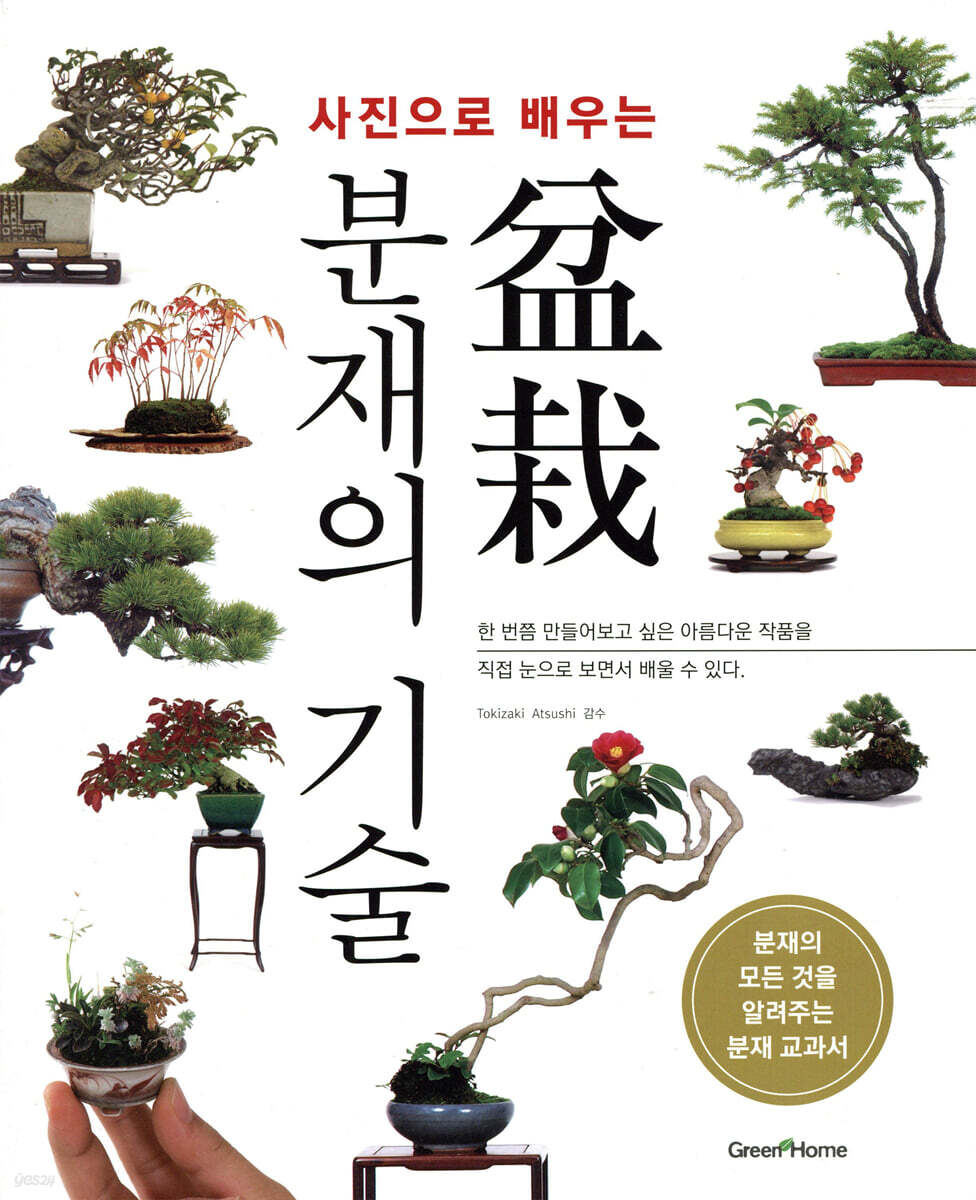
Learning the Art of Bonsai through Photos
 |
Description
Book Introduction
“Raising, creating, and elevating quality
“A comprehensive overview of the techniques of bonsai!”
Includes 47 popular bonsai varieties, including pine and white bonsai, common maple bonsai, common flower bonsai, common fruit bonsai, and herb bonsai.
The basic theories that you need to know about bonsai, such as the shape of the bonsai tree, bonsai techniques and management methods, annual work schedule, and decoration methods, are explained in detail, and each bonsai is explained in detail with photos and drawings for easy understanding.
“A comprehensive overview of the techniques of bonsai!”
Includes 47 popular bonsai varieties, including pine and white bonsai, common maple bonsai, common flower bonsai, common fruit bonsai, and herb bonsai.
The basic theories that you need to know about bonsai, such as the shape of the bonsai tree, bonsai techniques and management methods, annual work schedule, and decoration methods, are explained in detail, and each bonsai is explained in detail with photos and drawings for easy understanding.
- You can preview some of the book's contents.
Preview
index
● The basics of bonsai
How to enjoy bonsai
The charm of bonsai ① Charm points ② Matching the bonsai
Types of bonsai ① Pine and white bonsai ② Leaf bonsai ③ Flower bonsai ④ Fruit bonsai ⑤ Herb bonsai
Bonsai tree shape ① Basic tree shape ② Types of tree shape
How to start a bonsai ① How to purchase ② Soil ③ Tools
Bonsai techniques ① Division ② Pruning and bud cutting ③ Pruning and leaf cutting ④ Wiring ⑤ Propagation method
Bonsai care ① Location ② Watering ③ Fertilizer ④ Pest control methods
Annual Work Schedule
Bonsai decoration methods ① Floor decoration ② Display stand decoration ③ Decorative display stands and tables
● Songbaek Bonsai
Black pine (black pine) / Japanese cedar (white pine) / Red pine (red pine) / Japanese fir (snow pine) / Yew / Firs / Korean pine (five-leaf pine)
● Sangyeop Bonsai
Zelkova / Elm / Chinese maple / Japanese maple / Primrose / Musk maple / Japanese lacquer tree / Dragon's ivy / Common ivy / Crape myrtle
● Sanghwa Bonsai
Plum tree / Cherry tree / Camellia / Rosewood / Yakushima clover / Hydrangea / Rosemary / Rhododendron / Longicorn
● Sanggwabunjae
Baby's breath (Noah's tree) / Winter linden / Japanese ash / Pomegranate / Prunus mume / Old-growth vine / Cherry blossoms / Schisandra chinensis / Falling azalea / Agapear tree (Deep mountain azalea) / Arrow tree / Pyracantha / Golden thorn
● Herbaceous bonsai
How to make soybean sprouts, rock aster, wild buckwheat, rock moss, silver mugwort, acorns, and moss balls
Bonsai terminology
Tree Species INDEX
How to enjoy bonsai
The charm of bonsai ① Charm points ② Matching the bonsai
Types of bonsai ① Pine and white bonsai ② Leaf bonsai ③ Flower bonsai ④ Fruit bonsai ⑤ Herb bonsai
Bonsai tree shape ① Basic tree shape ② Types of tree shape
How to start a bonsai ① How to purchase ② Soil ③ Tools
Bonsai techniques ① Division ② Pruning and bud cutting ③ Pruning and leaf cutting ④ Wiring ⑤ Propagation method
Bonsai care ① Location ② Watering ③ Fertilizer ④ Pest control methods
Annual Work Schedule
Bonsai decoration methods ① Floor decoration ② Display stand decoration ③ Decorative display stands and tables
● Songbaek Bonsai
Black pine (black pine) / Japanese cedar (white pine) / Red pine (red pine) / Japanese fir (snow pine) / Yew / Firs / Korean pine (five-leaf pine)
● Sangyeop Bonsai
Zelkova / Elm / Chinese maple / Japanese maple / Primrose / Musk maple / Japanese lacquer tree / Dragon's ivy / Common ivy / Crape myrtle
● Sanghwa Bonsai
Plum tree / Cherry tree / Camellia / Rosewood / Yakushima clover / Hydrangea / Rosemary / Rhododendron / Longicorn
● Sanggwabunjae
Baby's breath (Noah's tree) / Winter linden / Japanese ash / Pomegranate / Prunus mume / Old-growth vine / Cherry blossoms / Schisandra chinensis / Falling azalea / Agapear tree (Deep mountain azalea) / Arrow tree / Pyracantha / Golden thorn
● Herbaceous bonsai
How to make soybean sprouts, rock aster, wild buckwheat, rock moss, silver mugwort, acorns, and moss balls
Bonsai terminology
Tree Species INDEX
Detailed image

Publisher's Review
Classification of bonsai
1.
Classification by size_ Large bonsai / Medium bonsai / Small bonsai
2.
Classification by tree type_Pine and white bonsai / Leaf bonsai / Flower bonsai / Fruit bonsai / Herb bonsai
The tree shape of the bonsai
The tree shape of the bonsai tree is modeled after the appearance of trees that have endured and adapted to harsh snowstorms and long-term environmental changes in nature, and there are many types, such as straight trunk, dangling tree, shaped tree, flowing tree, stone statue, root-shaped tree, and broom-shaped tree.
The attractive points of bonsai
1.
The beauty of the trunk_ The shape of the bonsai tree is determined by the shape of the trunk.
In bonsai, the strength suppressed by branches and leaves is contained in the trunk to express the dignity of a large tree.
2.
Stable rooting_ The part of the root that is visible above the soil is called “rooting.”
The point of rooting is stability.
3.
Shape of branches and leaves_ The point is to have the branches and leaves balanced to suit each bonsai.
Repeated pruning is required to make the leaves smaller and the branches more delicate.
1.
Classification by size_ Large bonsai / Medium bonsai / Small bonsai
2.
Classification by tree type_Pine and white bonsai / Leaf bonsai / Flower bonsai / Fruit bonsai / Herb bonsai
The tree shape of the bonsai
The tree shape of the bonsai tree is modeled after the appearance of trees that have endured and adapted to harsh snowstorms and long-term environmental changes in nature, and there are many types, such as straight trunk, dangling tree, shaped tree, flowing tree, stone statue, root-shaped tree, and broom-shaped tree.
The attractive points of bonsai
1.
The beauty of the trunk_ The shape of the bonsai tree is determined by the shape of the trunk.
In bonsai, the strength suppressed by branches and leaves is contained in the trunk to express the dignity of a large tree.
2.
Stable rooting_ The part of the root that is visible above the soil is called “rooting.”
The point of rooting is stability.
3.
Shape of branches and leaves_ The point is to have the branches and leaves balanced to suit each bonsai.
Repeated pruning is required to make the leaves smaller and the branches more delicate.
GOODS SPECIFICS
- Date of issue: April 10, 2019
- Page count, weight, size: 208 pages | 802g | 210*257*17mm
- ISBN13: 9788971907016
- ISBN10: 8971907010
You may also like
카테고리
korean


korean

![GQ KOREA Mark (Monthly): December [2025]](http://librairie.coreenne.fr/cdn/shop/files/8ef265dbbfbf186523ed75ba7319009d.jpg?v=1765340328&width=3840)


