

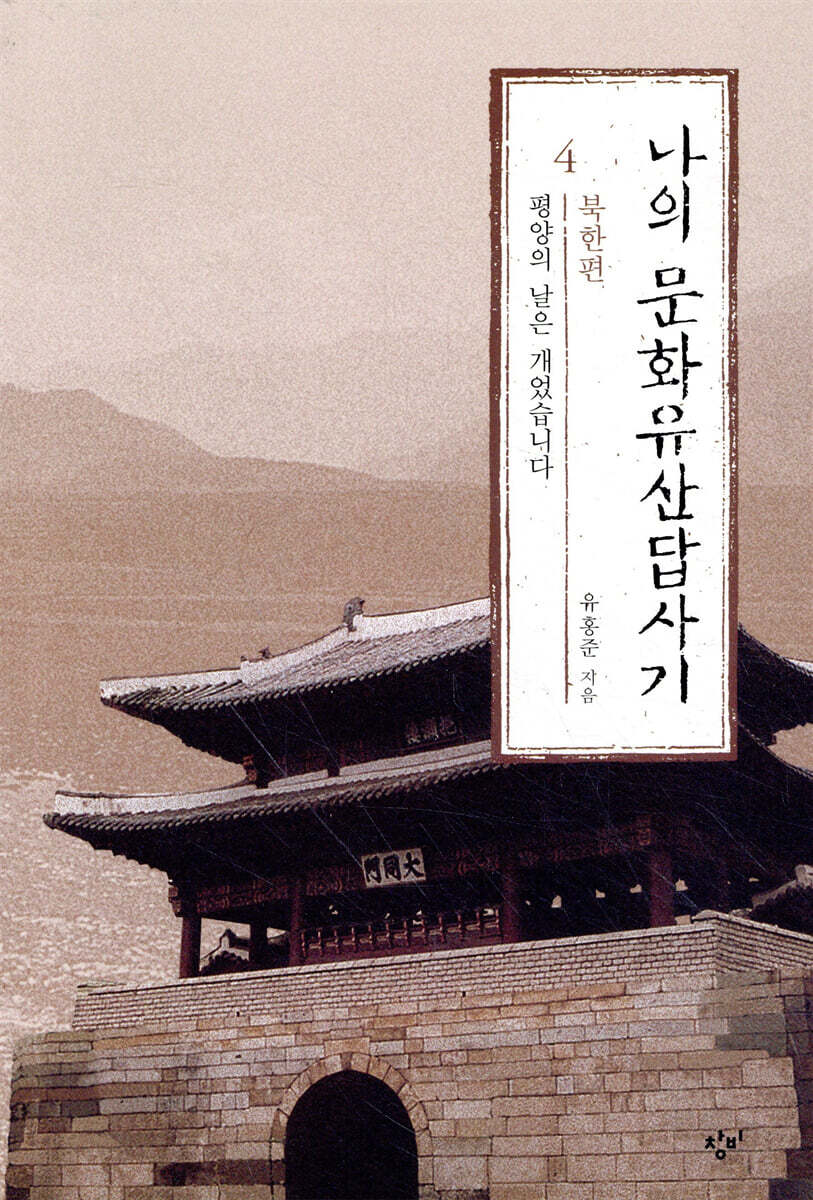
My Cultural Heritage Tour 4
 |
Description
Book Introduction
Volume 4, "The Day in Pyongyang Has Cleared," focuses on field trips to the Kansai region, including Pyongyang and Myohyangsan Mountain, and is divided into four parts.
Part 1, "Pyongyang Taedonggang," presents explanations of Pyongyang's representative cultural heritage sites and artists, including the Taedonggang River, Jeong Ji-sang, Pubyokru and Kim Hwang-won, Eulmildae and Kim Dong-in, along with a sense of nostalgia.
Part 2, "From Dolmens to Modern Art," includes a tour of the dolmens of the Pyongyang area, including the Black Moru Cave in Sangwon, where the first humans lived on the Korean Peninsula, and where 14,000 dolmens are said to be gathered, as well as a visit to the Korean Central History Museum, the Korean Art Museum, and the Pyongyang Handicraft Research Institute.
It is also a useful read to understand the issue of Dangun's Mausoleum, where the two Koreas have differing positions, and to explore opportunities for the two Koreas to jointly develop their cultural heritage through a conversation with North Korea's leading scholar, Joo Young-heon.
Part 1, "Pyongyang Taedonggang," presents explanations of Pyongyang's representative cultural heritage sites and artists, including the Taedonggang River, Jeong Ji-sang, Pubyokru and Kim Hwang-won, Eulmildae and Kim Dong-in, along with a sense of nostalgia.
Part 2, "From Dolmens to Modern Art," includes a tour of the dolmens of the Pyongyang area, including the Black Moru Cave in Sangwon, where the first humans lived on the Korean Peninsula, and where 14,000 dolmens are said to be gathered, as well as a visit to the Korean Central History Museum, the Korean Art Museum, and the Pyongyang Handicraft Research Institute.
It is also a useful read to understand the issue of Dangun's Mausoleum, where the two Koreas have differing positions, and to explore opportunities for the two Koreas to jointly develop their cultural heritage through a conversation with North Korea's leading scholar, Joo Young-heon.
- You can preview some of the book's contents.
Preview
index
Part 1: Taedong River, Pyongyang
On Air Koryo Flight 1 to Pyongyang: "The day has cleared in Pyongyang."
Pyongyang-bound 2 - Seojae-dong Invitation: A Poplar Tree by the West Window
Daedong River 1 - Daedong River and Jeong Ji-sang: The riverbank is green after the rain.
Daedonggang 2 - Daedongmun Gate and Yeongwangjeong Pavilion: The Greatest Pavilion in the World
Daedonggang 3-Bubyeokru and Kim Hwangwon: To the east of the wide field, distant mountains are dot, dot, dot
Daedonggang 4-Chilseongmun and Eulmildae: At dusk, there are welcoming illusions on the banks of the Daedonggang River.
Ordinary River Ordinary Gate: The collapsed rafters can be fixed, but… …
Pyongyang Daesongsanseong: A Gorobong-style mountain fortress embracing a vast plain
Part 2: From Dolmens to Modern Art
Senate Black Anvil Cave: A Homo Erectus Habitat
Dolmen Tour - Yonggok-ri, Gwiil-ri, and Munheung-ri Dolmens: Home of Gojoseon's Megalithic Relics
Dangun Mausoleum Observations: The meaning of the 1,994 stones
A Conversation with Professor Joo Young-heon: "Historical Imagination Should Not Be Limited"
The Central History Museum of Korea 1: The Museum's Tasks as a History Education Center
Joseon Central History Museum 2: In Search of the Lost Kingdom of Balhae
Joseon Art Museum 1: North Korea's Art Museum, Joseon Art Museum
Joseon Art Museum 2: Meeting Danwon and Gyeomjae
Contemporary Art in North Korea: The Art of the South and the North, Distant as Time Goes By
Part 3: Myohyangsan Mountain
Myohyangsan Journey 1 - Cheongcheon River and Anju Fields: When Literature Lives in Life
Myohyangsan Journey 2 - Pohyonsa Temple and the Octagonal 13-Story Stone Pagoda: Thus, the mountain was called Myohyang and the temple was called Pohyon.
Myohyangsan Journey 3 - Ansimsa Temple Stupa Field and Manbokdong: A Majestic and Beautiful Mountain, Myohyangsan
Myohyangsan Journey 4 - Sangwonam and Hyangsan Hotel: When Myohyangsan water flows, it becomes a waterfall, and when you drink it, it becomes medicinal water.
Myohyangsan Journey 5 - Seosan Daesa's Geumganggul Cave: A Serene Hermitage That Calms My Mind
Part 4: Goguryeo Tomb Murals in Pyongyang
Jinpari's Reminiscence 1 - Jeongneungsa Temple: In front of the well that has kept a thousand-year-old secret
Jinpari's Reminiscence 2 - King Dongmyeong's Tomb: He Resurrected as a National Heroic Epic
Jinpari Reminiscences 3 - Jinpari Mural Tomb and Princess Pyeonggang: A Mural Blessing a Beautiful Life
Goguryeo Mural Tomb in Gangseo 1 - Deokheung-ri Mural Tomb: Cowherd and Weaver Girl in a 'Minor Universe'
Goguryeo Mural Tomb in Gangseo 2 - Sammyori Gangseo Large Tomb: Ah! The Great Glory of Goguryeo Culture!
And the rest of the story: The smile of Baekbeom Buknyeo (North Woman) of Dunam and Beopunam at Yonggok Seowon in Yongaksan Mountain, Pyongyang
Concluding the North Korean tour
Review: Before this book came out
I'm writing again for the readers of the book.
On Air Koryo Flight 1 to Pyongyang: "The day has cleared in Pyongyang."
Pyongyang-bound 2 - Seojae-dong Invitation: A Poplar Tree by the West Window
Daedong River 1 - Daedong River and Jeong Ji-sang: The riverbank is green after the rain.
Daedonggang 2 - Daedongmun Gate and Yeongwangjeong Pavilion: The Greatest Pavilion in the World
Daedonggang 3-Bubyeokru and Kim Hwangwon: To the east of the wide field, distant mountains are dot, dot, dot
Daedonggang 4-Chilseongmun and Eulmildae: At dusk, there are welcoming illusions on the banks of the Daedonggang River.
Ordinary River Ordinary Gate: The collapsed rafters can be fixed, but… …
Pyongyang Daesongsanseong: A Gorobong-style mountain fortress embracing a vast plain
Part 2: From Dolmens to Modern Art
Senate Black Anvil Cave: A Homo Erectus Habitat
Dolmen Tour - Yonggok-ri, Gwiil-ri, and Munheung-ri Dolmens: Home of Gojoseon's Megalithic Relics
Dangun Mausoleum Observations: The meaning of the 1,994 stones
A Conversation with Professor Joo Young-heon: "Historical Imagination Should Not Be Limited"
The Central History Museum of Korea 1: The Museum's Tasks as a History Education Center
Joseon Central History Museum 2: In Search of the Lost Kingdom of Balhae
Joseon Art Museum 1: North Korea's Art Museum, Joseon Art Museum
Joseon Art Museum 2: Meeting Danwon and Gyeomjae
Contemporary Art in North Korea: The Art of the South and the North, Distant as Time Goes By
Part 3: Myohyangsan Mountain
Myohyangsan Journey 1 - Cheongcheon River and Anju Fields: When Literature Lives in Life
Myohyangsan Journey 2 - Pohyonsa Temple and the Octagonal 13-Story Stone Pagoda: Thus, the mountain was called Myohyang and the temple was called Pohyon.
Myohyangsan Journey 3 - Ansimsa Temple Stupa Field and Manbokdong: A Majestic and Beautiful Mountain, Myohyangsan
Myohyangsan Journey 4 - Sangwonam and Hyangsan Hotel: When Myohyangsan water flows, it becomes a waterfall, and when you drink it, it becomes medicinal water.
Myohyangsan Journey 5 - Seosan Daesa's Geumganggul Cave: A Serene Hermitage That Calms My Mind
Part 4: Goguryeo Tomb Murals in Pyongyang
Jinpari's Reminiscence 1 - Jeongneungsa Temple: In front of the well that has kept a thousand-year-old secret
Jinpari's Reminiscence 2 - King Dongmyeong's Tomb: He Resurrected as a National Heroic Epic
Jinpari Reminiscences 3 - Jinpari Mural Tomb and Princess Pyeonggang: A Mural Blessing a Beautiful Life
Goguryeo Mural Tomb in Gangseo 1 - Deokheung-ri Mural Tomb: Cowherd and Weaver Girl in a 'Minor Universe'
Goguryeo Mural Tomb in Gangseo 2 - Sammyori Gangseo Large Tomb: Ah! The Great Glory of Goguryeo Culture!
And the rest of the story: The smile of Baekbeom Buknyeo (North Woman) of Dunam and Beopunam at Yonggok Seowon in Yongaksan Mountain, Pyongyang
Concluding the North Korean tour
Review: Before this book came out
I'm writing again for the readers of the book.
Publisher's Review
The fourth volume of the travelogue, "The Day in Pyongyang Has Cleared," focuses on the travel to Pyongyang, Myohyangsan, and other parts of the Gwanseo region, and is divided into four parts.
Part 1, "Pyongyang Taedonggang," presents explanations of Pyongyang's representative cultural heritage sites and artists, including the Taedonggang River, Jeong Ji-sang, Pubyokru and Kim Hwang-won, Eulmildae and Kim Dong-in, along with a sense of nostalgia.
Part 2, "From Dolmens to Modern Art," includes a tour of the dolmens of the Pyongyang area, including the Black Moru Cave in Sangwon, where the first humans lived on the Korean Peninsula, and where 14,000 dolmens are said to be gathered, as well as a visit to the Korean Central History Museum, the Korean Art Museum, and the Pyongyang Handicraft Research Institute.
It is also a useful read to understand the issue of Dangun's Mausoleum, where the two Koreas have differing positions, and to explore opportunities for the two Koreas to jointly develop their cultural heritage through a conversation with North Korea's leading scholar, Joo Young-heon.
Part 3, 'Myohyangsan', contains a travelogue of Myohyangsan, which Seosan Daesa praised as a 'majestic and beautiful mountain', and Part 4, 'Goguryeo Tomb Murals in Pyongyang', explains the status and value of tomb murals after visiting the Dongmyeongwangneung Tomb, Jinpari Tomb, Deokheung-ri Tomb, and Gangseo Large Tomb.
The last section of the book, 'And the Remaining Story', contains stories not included in the main text, such as Yonggok Seowon, which was visited on the last day of the field trip, the women he met in the North, his feelings about the field trip to North Korea with Go Eun and Kim Ju-young, and North Korean local food.
Unlike other travelogues about North Korea, Yu Hong-jun's travelogue on North Korea does not feature the country's most famous landmarks, such as Pyongyang Mountain Garden, Mangyongdae Students' and Children's Palace, or the International Friendship Exhibition Hall.
Instead of such flashy images, the author captured the everyday aspects of North Korea he encountered, such as the shy smile of a flight attendant bragging about her hometown on the plane, the corn stalks farmers placed on dolmens, and the jokes exchanged with the guides.
That is why, after closing the book, the cultural heritage of North Korea and the innocence of its people remain vividly in my heart.
His travelogue of North Korea, which captures the “expressions of everyday life,” can be said to be a “symbol of a unified national culture.”
Part 1, "Pyongyang Taedonggang," presents explanations of Pyongyang's representative cultural heritage sites and artists, including the Taedonggang River, Jeong Ji-sang, Pubyokru and Kim Hwang-won, Eulmildae and Kim Dong-in, along with a sense of nostalgia.
Part 2, "From Dolmens to Modern Art," includes a tour of the dolmens of the Pyongyang area, including the Black Moru Cave in Sangwon, where the first humans lived on the Korean Peninsula, and where 14,000 dolmens are said to be gathered, as well as a visit to the Korean Central History Museum, the Korean Art Museum, and the Pyongyang Handicraft Research Institute.
It is also a useful read to understand the issue of Dangun's Mausoleum, where the two Koreas have differing positions, and to explore opportunities for the two Koreas to jointly develop their cultural heritage through a conversation with North Korea's leading scholar, Joo Young-heon.
Part 3, 'Myohyangsan', contains a travelogue of Myohyangsan, which Seosan Daesa praised as a 'majestic and beautiful mountain', and Part 4, 'Goguryeo Tomb Murals in Pyongyang', explains the status and value of tomb murals after visiting the Dongmyeongwangneung Tomb, Jinpari Tomb, Deokheung-ri Tomb, and Gangseo Large Tomb.
The last section of the book, 'And the Remaining Story', contains stories not included in the main text, such as Yonggok Seowon, which was visited on the last day of the field trip, the women he met in the North, his feelings about the field trip to North Korea with Go Eun and Kim Ju-young, and North Korean local food.
Unlike other travelogues about North Korea, Yu Hong-jun's travelogue on North Korea does not feature the country's most famous landmarks, such as Pyongyang Mountain Garden, Mangyongdae Students' and Children's Palace, or the International Friendship Exhibition Hall.
Instead of such flashy images, the author captured the everyday aspects of North Korea he encountered, such as the shy smile of a flight attendant bragging about her hometown on the plane, the corn stalks farmers placed on dolmens, and the jokes exchanged with the guides.
That is why, after closing the book, the cultural heritage of North Korea and the innocence of its people remain vividly in my heart.
His travelogue of North Korea, which captures the “expressions of everyday life,” can be said to be a “symbol of a unified national culture.”
GOODS SPECIFICS
- Date of issue: May 11, 2011
- Page count, weight, size: 368 pages | 552g | 153*224*30mm
- ISBN13: 9788936472047
- ISBN10: 8936472047
You may also like
카테고리
korean


korean

![GQ KOREA Mark (Monthly): December [2025]](http://librairie.coreenne.fr/cdn/shop/files/8ef265dbbfbf186523ed75ba7319009d.jpg?v=1765340328&width=3840)


