

Magazine C: K-Chair No. 5
 |
Description
Book Introduction
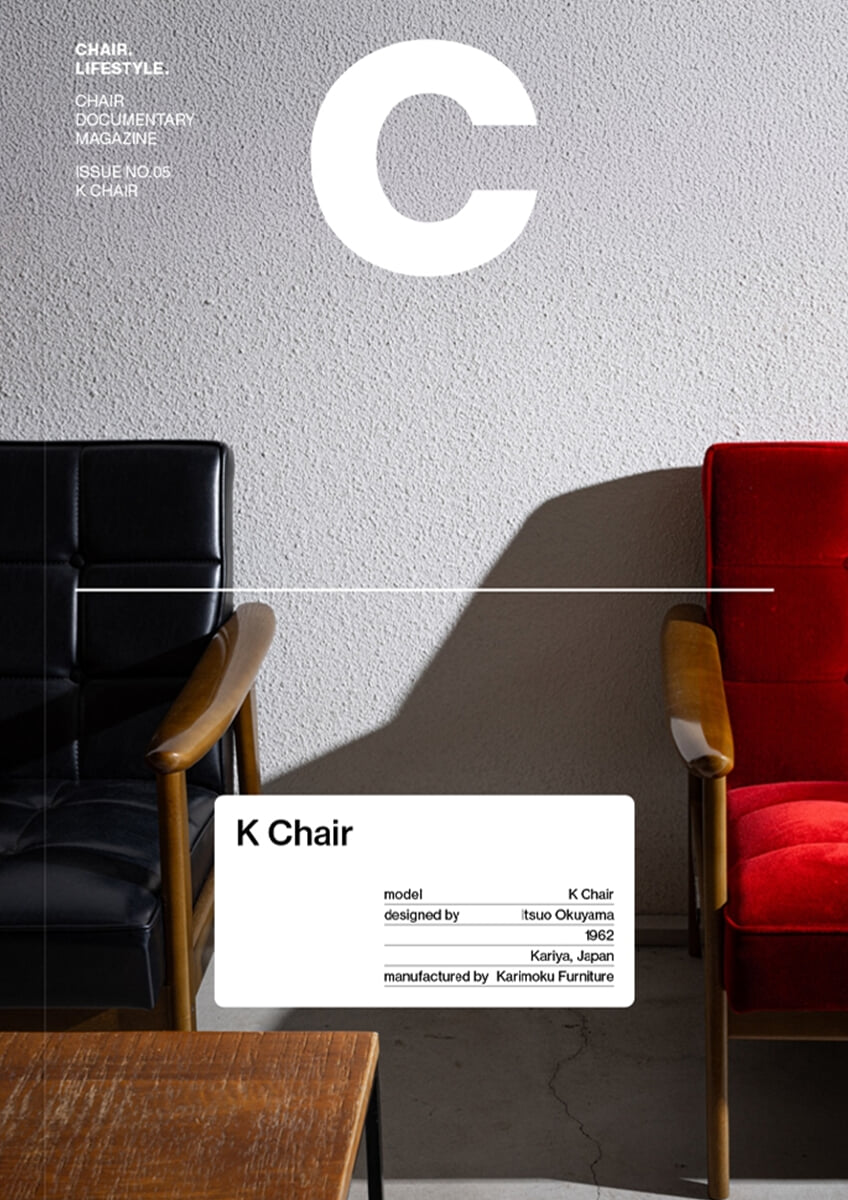
Magazine 《C》 is a chair documentary magazine that introduces design and lifestyle centered around an iconic chair selected by Grande Clip and Magazine 《B》 every issue.
Covering everything from famous chairs that have had a profound impact on related industries and public life to chairs just for the street, it illuminates the designers, brands, manufacturers, collectors, and the lifestyles of those who sit in them, as well as their contemporary influence.
Grande Clip, the publisher of the magazine "C," is a new startup founded by Kim Bong-jin, founder of Woowa Brothers (Baedal Minjok). With the motto of "making small things great," the company aims to find value in small and ordinary things like clips and make them meaningful and great.
Covering everything from famous chairs that have had a profound impact on related industries and public life to chairs just for the street, it illuminates the designers, brands, manufacturers, collectors, and the lifestyles of those who sit in them, as well as their contemporary influence.
Grande Clip, the publisher of the magazine "C," is a new startup founded by Kim Bong-jin, founder of Woowa Brothers (Baedal Minjok). With the motto of "making small things great," the company aims to find value in small and ordinary things like clips and make them meaningful and great.
index
Intro?
Letter From C
Publisher's Note
Quotes?
Words from world-renowned designers and architects paying tribute to Karimoku Furniture's passion and craftsmanship.
5 Cities, 5 Homes?
Those who choose the K-Chair from Karimoku 60 believe in the value of technology, philosophy, sincerity, and sincerity.
A variety of K-chair scenes in the homes of those who cherish everyday life and live life with sincerity.
Tokyo Koichi Tanabe, web designer & David Buechler, artist
Singaporean graphic designer and artist Wu Yanrong
Taichung Wei Liao, graphic designer
Seoul Bae Soo-yeol, co-CEO of MMMG
Kyoto Funayama and Naoko Tatsuro
Karimoku Family
The story of Karimoku Furniture, a three-generation brand that began as a woodworking factory and has continued to prioritize essence over efficiency.
Iconic Chair
The K Chair, first introduced by Karimoku Furniture in 1962, embodies the brand's manufacturing philosophy with its clean design, sturdy construction, and reasonable price.
Karimoku House
Karimoku House, a warm and comfortable space decorated with Karimoku 60 furniture featuring refined colors, convenient usability, and delicate details.
About Karimoku Furniture
The past, present, and future of Karimoku Furniture, a leading Japanese furniture brand that began in 1940 when founder Shohei Kato established a small woodworking shop in Kariya City, Aichi Prefecture.
Karimoku Perspectives
Karimoku Furniture, which practices respect for wood, a philosophy of space, and a belief in pursuing good furniture, is led by three brands: Karimoku New Standard (KNS), Karimoku Case, and Mars.
Defining Karimoku
An interview with Masatoshi Kato, president of Karimoku Furniture, who has inherited the family business for three generations, following in the footsteps of his grandfather and father. Building on the craftsmanship of his predecessors, he seeks to diversify his business.
The Karimoku Spirit
An interview with Ikuji Yamada, Managing Director of Karimoku Furniture, who has over 40 years of experience in various fields at Karimoku Furniture and who, together with Kenmei Nagaoka, created Karimoku 60, marking a new turning point.
High-tech & High-touch
Highly automated equipment performs precise, repetitive tasks, and the meticulous touch of craftsmen adds to the perfection of the product.
A view of the Karimoku Furniture Factory from above
Karimoku People
From wood drying to processing, polishing, assembly, covering, inspection, shipping, and sales.
Five questions to the 11 workers responsible for the entire process from the completion of Karimoku furniture to the consumer's purchase decision.
Digest
Karimoku Furniture has established itself as Japan's largest furniture manufacturer, showcasing high-quality furniture crafted with precise woodworking techniques and craftsmanship.
Special Interview
A conversation with Kenmei Nagaoka, a design activist who discovered and promoted long-life design and served as creative director of Karimoku60, reviving the K-chair.
Long-life Object
Long-life objects from four D&Department branches in Korea and Japan, containing not only the craftsman's touch but also the beliefs and philosophy of those who select and introduce them.
Opinion - Naomi Pollock
The concept of monozukuri as explained by Naomi Pollock, who has specialized in Japanese architectural design styles for over 30 years.
Through Karimoku60's K-Chair, we take a look at the sublime craftsmanship of the creator who puts his best effort into creating his products.
Viewing Rooms
From a cafe with new customers coming and going every day to a studio where artists stay like home, there's always a K-chair that provides a comfortable time for those who sit in it.
Opinion - Kenya Hara
The weighty presence of the K Chair is described by Kenya Hara, director of the Japan Design Center and professor at Musashino Art University.
This refers to a long-life design created by the unique aesthetic sense of the Japanese people through the K-chair, which has survived in daily life beyond the designer's intention.
Modern Japan
Acacia, a restaurant representing "Yoshoku," a cuisine that originated in the West and evolved uniquely within Japanese food culture.
Interior Design: Villa Serena, a mansion that set a new standard for urban housing in Japan in the 1960s, aimed at a practical and hygienic living environment.
The National Museum of Modern Art, Tokyo, combines Western-style spatial function with Japanese spatial sentiment.
Beams, a lifestyle select shop that promotes the American lifestyle
Opinion - Big-Game
An interview with Big Game, a design studio that collaborates with Karimoku New Standard (KNS) to create "world-class furniture made from local wood."
New Wave: Descendants of Karimoku furniture, which transcends the era and expands the possibilities of wood with a modern sensibility, creating new contact points; Standard A of Korea and Kumano of Japan.
Chairpunk
Studio Lee's K-Chair Twisting, which conveys the warmth of wood and presents a variety of furniture with the slogan of "expansion and accessibility."
Chair Index
my favorite chair
Outro
Letter From C
Publisher's Note
Quotes?
Words from world-renowned designers and architects paying tribute to Karimoku Furniture's passion and craftsmanship.
5 Cities, 5 Homes?
Those who choose the K-Chair from Karimoku 60 believe in the value of technology, philosophy, sincerity, and sincerity.
A variety of K-chair scenes in the homes of those who cherish everyday life and live life with sincerity.
Tokyo Koichi Tanabe, web designer & David Buechler, artist
Singaporean graphic designer and artist Wu Yanrong
Taichung Wei Liao, graphic designer
Seoul Bae Soo-yeol, co-CEO of MMMG
Kyoto Funayama and Naoko Tatsuro
Karimoku Family
The story of Karimoku Furniture, a three-generation brand that began as a woodworking factory and has continued to prioritize essence over efficiency.
Iconic Chair
The K Chair, first introduced by Karimoku Furniture in 1962, embodies the brand's manufacturing philosophy with its clean design, sturdy construction, and reasonable price.
Karimoku House
Karimoku House, a warm and comfortable space decorated with Karimoku 60 furniture featuring refined colors, convenient usability, and delicate details.
About Karimoku Furniture
The past, present, and future of Karimoku Furniture, a leading Japanese furniture brand that began in 1940 when founder Shohei Kato established a small woodworking shop in Kariya City, Aichi Prefecture.
Karimoku Perspectives
Karimoku Furniture, which practices respect for wood, a philosophy of space, and a belief in pursuing good furniture, is led by three brands: Karimoku New Standard (KNS), Karimoku Case, and Mars.
Defining Karimoku
An interview with Masatoshi Kato, president of Karimoku Furniture, who has inherited the family business for three generations, following in the footsteps of his grandfather and father. Building on the craftsmanship of his predecessors, he seeks to diversify his business.
The Karimoku Spirit
An interview with Ikuji Yamada, Managing Director of Karimoku Furniture, who has over 40 years of experience in various fields at Karimoku Furniture and who, together with Kenmei Nagaoka, created Karimoku 60, marking a new turning point.
High-tech & High-touch
Highly automated equipment performs precise, repetitive tasks, and the meticulous touch of craftsmen adds to the perfection of the product.
A view of the Karimoku Furniture Factory from above
Karimoku People
From wood drying to processing, polishing, assembly, covering, inspection, shipping, and sales.
Five questions to the 11 workers responsible for the entire process from the completion of Karimoku furniture to the consumer's purchase decision.
Digest
Karimoku Furniture has established itself as Japan's largest furniture manufacturer, showcasing high-quality furniture crafted with precise woodworking techniques and craftsmanship.
Special Interview
A conversation with Kenmei Nagaoka, a design activist who discovered and promoted long-life design and served as creative director of Karimoku60, reviving the K-chair.
Long-life Object
Long-life objects from four D&Department branches in Korea and Japan, containing not only the craftsman's touch but also the beliefs and philosophy of those who select and introduce them.
Opinion - Naomi Pollock
The concept of monozukuri as explained by Naomi Pollock, who has specialized in Japanese architectural design styles for over 30 years.
Through Karimoku60's K-Chair, we take a look at the sublime craftsmanship of the creator who puts his best effort into creating his products.
Viewing Rooms
From a cafe with new customers coming and going every day to a studio where artists stay like home, there's always a K-chair that provides a comfortable time for those who sit in it.
Opinion - Kenya Hara
The weighty presence of the K Chair is described by Kenya Hara, director of the Japan Design Center and professor at Musashino Art University.
This refers to a long-life design created by the unique aesthetic sense of the Japanese people through the K-chair, which has survived in daily life beyond the designer's intention.
Modern Japan
Acacia, a restaurant representing "Yoshoku," a cuisine that originated in the West and evolved uniquely within Japanese food culture.
Interior Design: Villa Serena, a mansion that set a new standard for urban housing in Japan in the 1960s, aimed at a practical and hygienic living environment.
The National Museum of Modern Art, Tokyo, combines Western-style spatial function with Japanese spatial sentiment.
Beams, a lifestyle select shop that promotes the American lifestyle
Opinion - Big-Game
An interview with Big Game, a design studio that collaborates with Karimoku New Standard (KNS) to create "world-class furniture made from local wood."
New Wave: Descendants of Karimoku furniture, which transcends the era and expands the possibilities of wood with a modern sensibility, creating new contact points; Standard A of Korea and Kumano of Japan.
Chairpunk
Studio Lee's K-Chair Twisting, which conveys the warmth of wood and presents a variety of furniture with the slogan of "expansion and accessibility."
Chair Index
my favorite chair
Outro
Detailed image

Publisher's Review
The K Chair, introduced by Karimoku Furniture in 1962, is a simple, sturdy, and true to its essence, a 'long-life design' product.
This iconic chair, which established the quality standards and philosophy of Karimoku Furniture, which is made with skill, sincerity, and sincerity, became widely known in 2002 when designer Kenmei Nagaoka rebranded it as the K Chair of "Karimoku 60."
The K-Chair, with its detachable and reassembleable structure that makes it easy to repair and its timeless charm, allows us to rediscover the beauty and value of everyday objects.
In this issue, magazine C takes a look at the lifestyles of K-chair users in five cities: Tokyo, Singapore, Taichung, Seoul, and Kyoto. It also visits the headquarters and factory of Karimoku Furniture to delve into the history and production process of the K-chair.
In addition, through a special interview with Kenmei Nagaoka, creative director of Karimoku60, and interviews with world-renowned designers such as Kenya Hara and Big Game, we define the power of the 'monozukuri spirit' and 'long-life design' that permeate the K-chair.
*
A few years ago, I had a custom-made dining table made of maple wood.
I really liked the feel of the wood through my fingertips.
The table was finished, but then the worries began.
“What kind of chair would go well with this table?” Then, I happened to discover the ‘Karimoku Case’ chair from Karimoku Furniture.
This product was created by the Danish architecture and design studio Nom Architects, and from the curved armrests to the appropriate amount of space on the seating surface and the floor finish, it was really neat, practical, and tidy.
Even when the chair is turned over, it feels well made and not embarrassing.
Maybe it's because I'm a designer? I could feel the sincerity that comes from those details.
I studied more about the brand I only knew by name.
It all started with a small woodworking factory in Kariya, Aichi Prefecture, Japan.
And the name is cool too.
‘Karimoku’ is a combination of ‘Kariya’ and ‘Moku’, which means wood in Japanese.
In this day and age, where global names abound, it's a good idea to have a name that truly embodies your roots and identity.
I found that stubbornness even more impressive.
In a European and American-centric furniture market, it's rare for an Asian brand to maintain its identity while also gaining global recognition.
But Karimoku Furniture is doing it.
While maintaining our regional identity as a Japanese company and our core value as a company that excels at handling wood, we collaborate with Danish designers, exhibit at Milan Design Week, and communicate with consumers around the world.
At the 2024 Milan Design Week, the exhibition [walking sticks & canes] sponsored by Karimoku Furniture was the most impressive.
This exhibition, created in collaboration with 18 world-class designers, delivered a new message through the cane, an object we normally don't think deeply about, as a tool for walking through time and a beautiful design that supports people.
Each and every product is imbued with Karimoku Furniture's technology and philosophy, as well as the attitude of "people who know wood."
The sincerity was fully conveyed not only at the furniture fair but also at the outdoor exhibition.
I really like that look.
It seems like he's saying, "We've just been doing what we're good at with all our heart."
A brand that shows that you can connect with the world while maintaining your own identity.
I sincerely want to support such Karimoku furniture.
If we continue to do something with sincerity for a long time, won't we eventually connect with the world? Thank you, Karimoku Furniture.
Please stay cool for a long time.
Publisher Kim Bong-jin
This iconic chair, which established the quality standards and philosophy of Karimoku Furniture, which is made with skill, sincerity, and sincerity, became widely known in 2002 when designer Kenmei Nagaoka rebranded it as the K Chair of "Karimoku 60."
The K-Chair, with its detachable and reassembleable structure that makes it easy to repair and its timeless charm, allows us to rediscover the beauty and value of everyday objects.
In this issue, magazine C takes a look at the lifestyles of K-chair users in five cities: Tokyo, Singapore, Taichung, Seoul, and Kyoto. It also visits the headquarters and factory of Karimoku Furniture to delve into the history and production process of the K-chair.
In addition, through a special interview with Kenmei Nagaoka, creative director of Karimoku60, and interviews with world-renowned designers such as Kenya Hara and Big Game, we define the power of the 'monozukuri spirit' and 'long-life design' that permeate the K-chair.
*
A few years ago, I had a custom-made dining table made of maple wood.
I really liked the feel of the wood through my fingertips.
The table was finished, but then the worries began.
“What kind of chair would go well with this table?” Then, I happened to discover the ‘Karimoku Case’ chair from Karimoku Furniture.
This product was created by the Danish architecture and design studio Nom Architects, and from the curved armrests to the appropriate amount of space on the seating surface and the floor finish, it was really neat, practical, and tidy.
Even when the chair is turned over, it feels well made and not embarrassing.
Maybe it's because I'm a designer? I could feel the sincerity that comes from those details.
I studied more about the brand I only knew by name.
It all started with a small woodworking factory in Kariya, Aichi Prefecture, Japan.
And the name is cool too.
‘Karimoku’ is a combination of ‘Kariya’ and ‘Moku’, which means wood in Japanese.
In this day and age, where global names abound, it's a good idea to have a name that truly embodies your roots and identity.
I found that stubbornness even more impressive.
In a European and American-centric furniture market, it's rare for an Asian brand to maintain its identity while also gaining global recognition.
But Karimoku Furniture is doing it.
While maintaining our regional identity as a Japanese company and our core value as a company that excels at handling wood, we collaborate with Danish designers, exhibit at Milan Design Week, and communicate with consumers around the world.
At the 2024 Milan Design Week, the exhibition [walking sticks & canes] sponsored by Karimoku Furniture was the most impressive.
This exhibition, created in collaboration with 18 world-class designers, delivered a new message through the cane, an object we normally don't think deeply about, as a tool for walking through time and a beautiful design that supports people.
Each and every product is imbued with Karimoku Furniture's technology and philosophy, as well as the attitude of "people who know wood."
The sincerity was fully conveyed not only at the furniture fair but also at the outdoor exhibition.
I really like that look.
It seems like he's saying, "We've just been doing what we're good at with all our heart."
A brand that shows that you can connect with the world while maintaining your own identity.
I sincerely want to support such Karimoku furniture.
If we continue to do something with sincerity for a long time, won't we eventually connect with the world? Thank you, Karimoku Furniture.
Please stay cool for a long time.
Publisher Kim Bong-jin
GOODS SPECIFICS
- Date of issue: June 30, 2025
- Page count, weight, size: 202 pages | 170*240*20mm
- ISBN13: 9791198807076
- ISBN10: 1198807075
You may also like
카테고리
korean


korean

![GQ KOREA Mark (Monthly): December [2025]](http://librairie.coreenne.fr/cdn/shop/files/8ef265dbbfbf186523ed75ba7319009d.jpg?v=1765340328&width=3840)


