![Magazine G: Issue 1 [2020]](http://librairie.coreenne.fr/cdn/shop/files/ad1372cc31ee4c4366c2d9f968c25541.jpg?v=1765421128&width=3840)

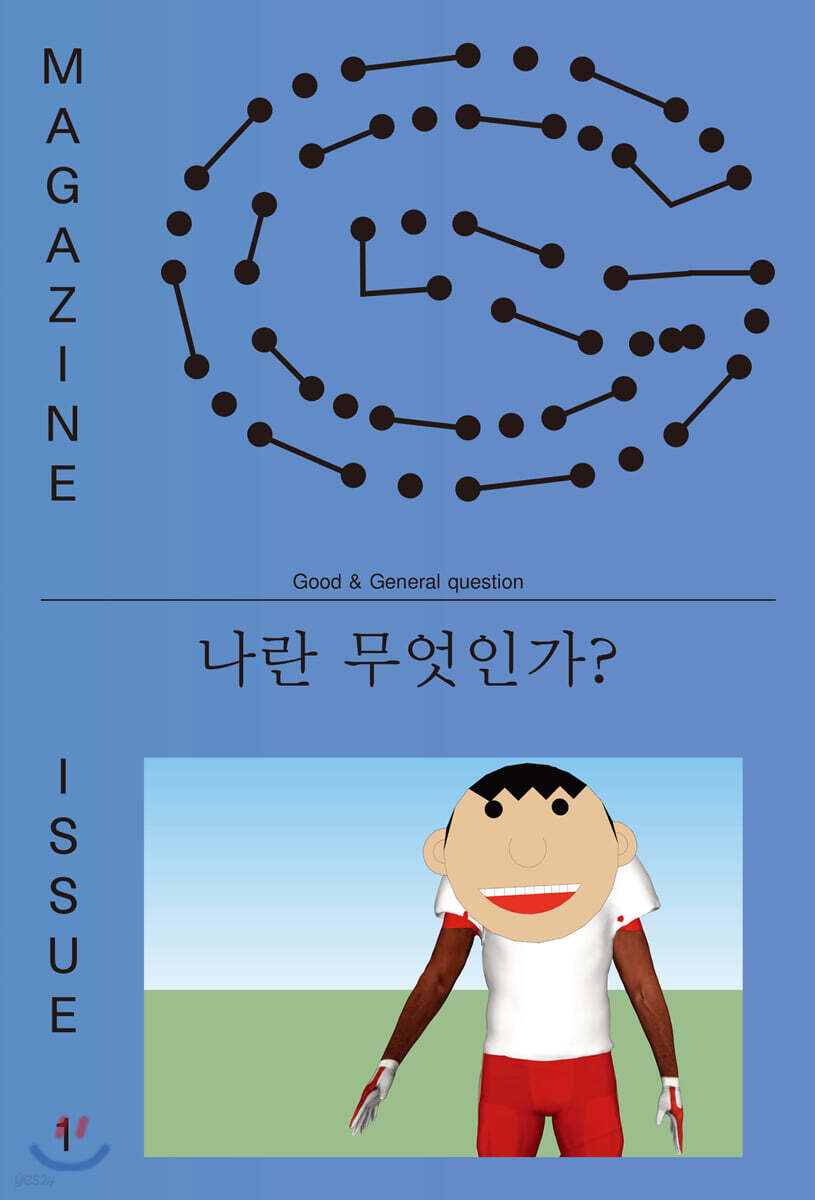
Magazine G: Issue 1 [2020]
 |
Description
Book Introduction
How about this magazine?
Launch of [Magazine G], an analog, irregular, heterogeneous knowledge and culture magazine!
What if there was a space where we could freely ask and answer the questions on our minds?
It is a time of great change.
When familiar things are shaken, when the pace of social change exceeds the pace of individual adaptation, when everything becomes so jumbled that we can't make sense of it, we begin with questions.
[Magazine G], a knowledge and culture magazine, is a space where we ask and answer familiar yet fundamental questions that we keep in our hearts but cannot bring out, using today's sentences and sensibilities.
Questions and answers will be filled and then emptied.
[Magazine G]’s first question is “What am I?”
I first looked at the one who was asking and the one who was confused.
'I' is explored in twenty-three branches.
From the era of lifelong careers to the golden age of side jobs, from the microbes in our bodies to the universe beyond Earth, from the topics of philosophy and religion across the East and the West, to the latest neuroscience research achievement, "brain cloning."
A diverse range of writers, including sociologists, neuroanthropologists, microbiologists, religious scholars, neuroscientists, meditators, architects, essayists, and cartoonists, ask and answer questions.
It will provide you with the experience of familiar questions becoming unfamiliar, and insights that will elevate and expand your thoughts.
Launch of [Magazine G], an analog, irregular, heterogeneous knowledge and culture magazine!
What if there was a space where we could freely ask and answer the questions on our minds?
It is a time of great change.
When familiar things are shaken, when the pace of social change exceeds the pace of individual adaptation, when everything becomes so jumbled that we can't make sense of it, we begin with questions.
[Magazine G], a knowledge and culture magazine, is a space where we ask and answer familiar yet fundamental questions that we keep in our hearts but cannot bring out, using today's sentences and sensibilities.
Questions and answers will be filled and then emptied.
[Magazine G]’s first question is “What am I?”
I first looked at the one who was asking and the one who was confused.
'I' is explored in twenty-three branches.
From the era of lifelong careers to the golden age of side jobs, from the microbes in our bodies to the universe beyond Earth, from the topics of philosophy and religion across the East and the West, to the latest neuroscience research achievement, "brain cloning."
A diverse range of writers, including sociologists, neuroanthropologists, microbiologists, religious scholars, neuroscientists, meditators, architects, essayists, and cartoonists, ask and answer questions.
It will provide you with the experience of familiar questions becoming unfamiliar, and insights that will elevate and expand your thoughts.
- You can preview some of the book's contents.
Preview
index
prolog
This kind of magazine_Kim Dae-sik
Tendency
We need more side characters_Jeon Seung-hwan
Surroundings
Me in a Relationship_Kim Beom-jun
A Short History of Personality_Noh Myung-woo
Words
My current pronoun_Shin Kyeon-sik
SAYINGS_Editorial Department
Mechanism
The Beginning of Feeling and the Evolution of Boundaries_Park Han-seon
Brain, Memory, and Me_Bong-Kyun Kang
Micro & Macro
Living with Microbes: Thoughts on My Biological Self_Ryu Chung-min
Thinking Stardust_Lee Myeong-heon
Beyond
The Teachings of Deep Religion and Me_Oh Kang-nam
GRAVITY ZERO_OLDDOG(Jung Woo-yeol)
Inspiring
Can You Clone Me?_Kim Dae-sik
The Bearable Lightness of Being_Lee Mok-dol
Deep thinking
No Self_Hong Chang-seong
I, so-and-so X_Kim Sang-hwan
Pop culture
Sing for Myself_Lee Gyu-tak
Read Me: My Reading Tools_Editorial Department
Inner side
The Secret to My Growth: The Courage to Deal with Criticism_Jeong Yeo-ul
How many times have you parted ways with yourself in your life?: Parting and meeting with yourself_Kim Do-in
Separating "Me" from "Not Me"_Kim Cheol-su
Critic
What tribe are you from?_Oh Chan-ho
To Build or to Sin: How to Incorporate 'Me' into Architecture_Lee Il-hoon
People
Cautious Optimist, Jared Diamond_Jared Diamond X Editorial Department
Contributor
Epilogue
Image source
Appendix [Consumer Food, Clothing, and Housing: The Pleasures of Today's People]
This kind of magazine_Kim Dae-sik
Tendency
We need more side characters_Jeon Seung-hwan
Surroundings
Me in a Relationship_Kim Beom-jun
A Short History of Personality_Noh Myung-woo
Words
My current pronoun_Shin Kyeon-sik
SAYINGS_Editorial Department
Mechanism
The Beginning of Feeling and the Evolution of Boundaries_Park Han-seon
Brain, Memory, and Me_Bong-Kyun Kang
Micro & Macro
Living with Microbes: Thoughts on My Biological Self_Ryu Chung-min
Thinking Stardust_Lee Myeong-heon
Beyond
The Teachings of Deep Religion and Me_Oh Kang-nam
GRAVITY ZERO_OLDDOG(Jung Woo-yeol)
Inspiring
Can You Clone Me?_Kim Dae-sik
The Bearable Lightness of Being_Lee Mok-dol
Deep thinking
No Self_Hong Chang-seong
I, so-and-so X_Kim Sang-hwan
Pop culture
Sing for Myself_Lee Gyu-tak
Read Me: My Reading Tools_Editorial Department
Inner side
The Secret to My Growth: The Courage to Deal with Criticism_Jeong Yeo-ul
How many times have you parted ways with yourself in your life?: Parting and meeting with yourself_Kim Do-in
Separating "Me" from "Not Me"_Kim Cheol-su
Critic
What tribe are you from?_Oh Chan-ho
To Build or to Sin: How to Incorporate 'Me' into Architecture_Lee Il-hoon
People
Cautious Optimist, Jared Diamond_Jared Diamond X Editorial Department
Contributor
Epilogue
Image source
Appendix [Consumer Food, Clothing, and Housing: The Pleasures of Today's People]
Detailed image

Into the book
We already know very well that there are so many different selves within us.
There are times when the me of yesterday and the me of today are different.
I don't like who I am today, but I might like who I am tomorrow.
Even when I feel very confident about myself, there are times when I suddenly feel like I don't know myself very well.
This is the existence of 'me', which makes me hate myself for being so hesitant and indecisive, but then also love myself.
--- p.
10
Who I am is ultimately defined by my relationships with countless others.
When we introduce ourselves to someone we meet for the first time, we often talk about the relationships we are in, rather than the 'me' itself that is independent from all relationships.
It is impossible to describe myself without mentioning the countless relationships I have formed.
The me described in that way is not me.
--- p.
16
Now that the caste system and lifelong careers have disappeared, the self-identity that sustains 'me' has lost its solid character and has become liquid in the short term.
Since we cannot choose a specific occupation as our lifelong career, the ‘professional self’ that is forced by the severity of earning a living has a short-term nature.
Every modern 'I' is adrift.
--- p.
41
Our brains are constantly updated by experiences and information that change from moment to moment.
Synapses change, and these accumulated changes create memories.
If we define the current state of our brain in terms of synaptic patterns as our 'true self' or 'identity', then our identity can be said to be dynamic rather than static.
Because the brain changes from moment to moment.
--- p.
92
The key factors to keep in mind in order to survive as a 'biological self' in an environment full of microorganisms are 'diversity' and 'homeostasis'.
Individuals or ecosystems that lack diversity easily collapse when they encounter a new environment.
This has an absolute impact on homeostasis.
--- p.
105
Elements that make up our bodies, such as oxygen, nitrogen, and carbon, were not created on Earth.
The sun's ancestor stars created it through life and death, and scattered it in the nebula, which flowed into the sun and the earth, and now resides in our bodies at this very moment.
There is not a single element that does not come from space.
We are beings who hold the history of the universe, the history of the birth and death of stars.
--- p.
109
Let's assume, as modern brain science claims, that my memories, thoughts, emotions, and hopes are all just spike patterns.
If that's the case, shouldn't the very existence of "me" itself be a spatiotemporal spike pattern based on the connectome? And ultimately, if we can perfectly replicate the connectome structure and spike patterns, wouldn't we be able to logically conclude that we can replicate my "self"—my very being, beyond memories, emotions, and thoughts?
--- p.
145
According to the Buddha, we do not have a fixed, unchanging essence, but rather a bundle of ever-changing bodies and four states of consciousness that exist for about 80 years.
This collection of insignificant things is 'me' from Gil-dong's subjective point of view, and 'Gil-dong' is the human being from a third-party perspective.
That's all.
Something like an immortal, eternal, and great soul or self exists only in our imagination, as a wishful thinking.
So there is no reason to be obsessed with the idea that ‘I’ have a fixed and unchanging nature.
In fact, you shouldn't be bound by such obsessions and restrict yourself.
--- p.
187
There is a saying that “90 percent of popular music is love stories,” and the joy and excitement of meeting, passionate emotional exchanges, heartbreaking breakups, and longing for past loves occupy a very high proportion of popular music lyrics.
But there is one theme that recur just as often as love.
It is the ego, that is, ‘self.’
As an art form, popular music has captured the inner self, self-confession, and self-reflection of creators and performers.
The conversations we have with ourselves through music and lyrics often serve as opportunities to spark interest and awareness about the people around us, the society we live in, and the world we live in.
--- p.
210
What is a healthy state of mind?
A healthy mind is not a state of indifference or dullness that prevents one from being hurt.
Rather, it is better to be sensitive enough to be hurt at any time, but at the same time have the courage and flexibility to pull yourself out of the hurt at any time.
A rubber band of flexibility is a much healthier state of mind than a steely stubbornness.
--- p.
233
Wherever the line is drawn, it creates two camps.
The border is also a potential front line where these two sides fight each other.
As a psychosomatic organism, I will view the environment outside my organism as something foreign and an enemy that could threaten my life and well-being.
As the ego, I will view not only the environment but also my own body as foreign objects, which will further amplify the conflict and discord.
--- pp.
259~260
For a long time, tribal power dominated Korea.
The democratization movement was suppressed under the guise of 'Korean-style' democracy, and anyone who tried to see the other side of economic growth was suddenly labeled a communist.
Thirty years of military dictatorship may have passed, but would the sentiments of those who loved the tribe be erased like computer data?
People realized (through their own experience), practiced (while living), and passed on (to future generations) that the most efficient way to live is to create a plausible cause, unite people, and suppress opposing opinions.
There are times when the me of yesterday and the me of today are different.
I don't like who I am today, but I might like who I am tomorrow.
Even when I feel very confident about myself, there are times when I suddenly feel like I don't know myself very well.
This is the existence of 'me', which makes me hate myself for being so hesitant and indecisive, but then also love myself.
--- p.
10
Who I am is ultimately defined by my relationships with countless others.
When we introduce ourselves to someone we meet for the first time, we often talk about the relationships we are in, rather than the 'me' itself that is independent from all relationships.
It is impossible to describe myself without mentioning the countless relationships I have formed.
The me described in that way is not me.
--- p.
16
Now that the caste system and lifelong careers have disappeared, the self-identity that sustains 'me' has lost its solid character and has become liquid in the short term.
Since we cannot choose a specific occupation as our lifelong career, the ‘professional self’ that is forced by the severity of earning a living has a short-term nature.
Every modern 'I' is adrift.
--- p.
41
Our brains are constantly updated by experiences and information that change from moment to moment.
Synapses change, and these accumulated changes create memories.
If we define the current state of our brain in terms of synaptic patterns as our 'true self' or 'identity', then our identity can be said to be dynamic rather than static.
Because the brain changes from moment to moment.
--- p.
92
The key factors to keep in mind in order to survive as a 'biological self' in an environment full of microorganisms are 'diversity' and 'homeostasis'.
Individuals or ecosystems that lack diversity easily collapse when they encounter a new environment.
This has an absolute impact on homeostasis.
--- p.
105
Elements that make up our bodies, such as oxygen, nitrogen, and carbon, were not created on Earth.
The sun's ancestor stars created it through life and death, and scattered it in the nebula, which flowed into the sun and the earth, and now resides in our bodies at this very moment.
There is not a single element that does not come from space.
We are beings who hold the history of the universe, the history of the birth and death of stars.
--- p.
109
Let's assume, as modern brain science claims, that my memories, thoughts, emotions, and hopes are all just spike patterns.
If that's the case, shouldn't the very existence of "me" itself be a spatiotemporal spike pattern based on the connectome? And ultimately, if we can perfectly replicate the connectome structure and spike patterns, wouldn't we be able to logically conclude that we can replicate my "self"—my very being, beyond memories, emotions, and thoughts?
--- p.
145
According to the Buddha, we do not have a fixed, unchanging essence, but rather a bundle of ever-changing bodies and four states of consciousness that exist for about 80 years.
This collection of insignificant things is 'me' from Gil-dong's subjective point of view, and 'Gil-dong' is the human being from a third-party perspective.
That's all.
Something like an immortal, eternal, and great soul or self exists only in our imagination, as a wishful thinking.
So there is no reason to be obsessed with the idea that ‘I’ have a fixed and unchanging nature.
In fact, you shouldn't be bound by such obsessions and restrict yourself.
--- p.
187
There is a saying that “90 percent of popular music is love stories,” and the joy and excitement of meeting, passionate emotional exchanges, heartbreaking breakups, and longing for past loves occupy a very high proportion of popular music lyrics.
But there is one theme that recur just as often as love.
It is the ego, that is, ‘self.’
As an art form, popular music has captured the inner self, self-confession, and self-reflection of creators and performers.
The conversations we have with ourselves through music and lyrics often serve as opportunities to spark interest and awareness about the people around us, the society we live in, and the world we live in.
--- p.
210
What is a healthy state of mind?
A healthy mind is not a state of indifference or dullness that prevents one from being hurt.
Rather, it is better to be sensitive enough to be hurt at any time, but at the same time have the courage and flexibility to pull yourself out of the hurt at any time.
A rubber band of flexibility is a much healthier state of mind than a steely stubbornness.
--- p.
233
Wherever the line is drawn, it creates two camps.
The border is also a potential front line where these two sides fight each other.
As a psychosomatic organism, I will view the environment outside my organism as something foreign and an enemy that could threaten my life and well-being.
As the ego, I will view not only the environment but also my own body as foreign objects, which will further amplify the conflict and discord.
--- pp.
259~260
For a long time, tribal power dominated Korea.
The democratization movement was suppressed under the guise of 'Korean-style' democracy, and anyone who tried to see the other side of economic growth was suddenly labeled a communist.
Thirty years of military dictatorship may have passed, but would the sentiments of those who loved the tribe be erased like computer data?
People realized (through their own experience), practiced (while living), and passed on (to future generations) that the most efficient way to live is to create a plausible cause, unite people, and suppress opposing opinions.
--- p.
269
269
Publisher's Review
Good & General question
[Magazine G], an analog knowledge and culture magazine for the digital age!
It is a time of great change.
All sectors, including politics, economy, society, and culture, are undergoing tectonic shifts.
The pace of change is also faster than ever.
It becomes increasingly difficult to be sure that what was right yesterday will be right tomorrow.
Uncertainty has reached a peak due to COVID-19.
“A mixed bag.” This is the expression used by Professor Jared Diamond, a historian of civilization, in response to a question from [Magazine G] about his recent activities.
When familiar things are shaken, when the pace of social change outpaces our ability to adapt, when everything becomes so jumbled that we can't grasp our bearings, how can we navigate our lives without wavering or falling behind? In this age where rules and order are constantly being dismantled and reshaped, what can we rely on as a support?
One of them is definitely 'question'.
Some questions as old as human history will provide answers to those who don't stop asking them.
A familiar yet fundamental question, one we've been harboring but haven't been able to bring to light: the Good & General question! [Magazine G] will be a space where we ask and answer questions with today's phrases and insights.
Questions and answers will be filled and then emptied.
Dismantling rules and order, adding depth and innovation
An experiment in the form of a non-regular, heterogeneous humanities magazine!
Let's start with a question about existence itself.
Why analog magazines these days? In a world that chases only volatile content, is there any reason for a paper magazine like this? Professor Kim Dae-sik, a neuroscientist who wrote the opening remarks for the inaugural issue, says that with the advent of the "online world, where everything changes—or must change—'superficiality' has become 'interesting,' and unchanging 'deep meaning' has become 'boring.'"
And ask questions.
Is it possible to create offline content that's cooler than online content, yet simultaneously touches my heart and mind, making my life leap forward? This is why I've launched my own experiment: a knowledge and culture magazine with depth and innovation.
Paper magazines are the perfect vessel for storing solid and flexible knowledge.
We also made several experimental attempts in design.
We boldly presented design ideas that were difficult to implement within the framework of existing single-volume books.
3D modeling images extracted through keyword search, uncomfortable physical devices that blend in with the text while also creating a sense of tension in reading, text papers of different materials and weights, sticker papers inserted out of nowhere, postcard novels of 'books within books', and even a separate paper [These Days' Food, Clothing, Shelter, and Entertainment] that provides a mosaic-like view of current trends.
It expressed the material properties of analog media without limitations and rejected inertia for free thought.
I hope you will enjoy the freedom to explore various perspectives through the material properties of holding it in your hands and taking your time turning each page.
Why is the theme of the inaugural issue “What am I?”
Starting from the origin of all questions
[Magazine G] started with the most basic question.
The question is addressed directly to the one who asks, to the one who is confused: “What am I?”
The closest, yet most incomprehensible thing is this 'I'.
If you don't know yourself, if you don't establish yourself first, all the questions that follow may lead to a castle in the air.
Several people put their heads together to solve this.
In fact, these days we are more eager than ever to ‘find ourselves.’
Why is it "me" all over again? Since the myth of lifetime employment collapsed, I can no longer be defined by my "job" alone (sociologist Noh Myung-woo, "A Short History of Personality"). The frequency of my social media identity clashing with my real-life identity has increased.
The ‘other self’, the ‘sub-character’, is sometimes more popular than the ‘normal self’ (Essayist Jeon Seung-hwan, “We need more sub-characters”).
Of course, the proposition that there is no 'I' as something fixed and unchanging has long been common sense in modern philosophy (philosopher Kim Sang-hwan, "I, so-and-so X").
The idea that brain data copying will be possible in the near future has been a popular culture cliché for quite some time (neuroscientist Dae-sik Kim, “Can You Clone Me?”).
However, the fact that people increasingly feel that 'I' is an extremely unclear and ambiguous code is largely due to recent social changes.
Perhaps that's why tools for self-discovery, like the MBTI and Sajoo, are driving cultural trends (Editorial Department, "Read Me: Tools for Reading Yourself").
The music of boy groups that clearly express their identity as idols is highly supported by young people around the world (Lee Kyu-tak, “Sing for myself”).
The popularization of meditation methods to manage one's inner turmoil and establish a new and stable self (Kim Do-in, "How many times have you parted with 'yourself' in life?") and the widespread sympathy for the idea of focusing on one's inner potential based on psychological concepts such as "resilience" (Jeong Yeo-ul, "The Secret of My Growth") are also in line with this context.
On the other hand, it is pointed out that the problem of exclusion and discrimination against others arises when we become absorbed in a single 'me' or 'we' (sociologist Chan-ho Oh, "What tribe are you from?").
There are also many voices criticizing the tendency to distort the original teachings of religion and focus only on preserving the 'self' of this world (Oh Kang-nam, comparative religion scholar, "The Teachings of Deep Religion and Me").
At first glance, this may seem to be a departure from the previous trends, but it can be said to be on the same track in that it asks how we should view this problematic 'me' to become a 'better me'.
In this way, the first issue of Magazine G explores the 'me', which even I do not know well, in twenty-three branches.
From the era of lifelong careers to the golden age of side jobs, from the microbes in our bodies to the universe beyond Earth, from the topics of philosophy and religion across the East and the West, to the latest neuroscience research achievement, "brain cloning."
It will provide you with the experience of familiar questions becoming unfamiliar, and insights that will elevate and expand your thoughts.
[Magazine G], an analog knowledge and culture magazine for the digital age!
It is a time of great change.
All sectors, including politics, economy, society, and culture, are undergoing tectonic shifts.
The pace of change is also faster than ever.
It becomes increasingly difficult to be sure that what was right yesterday will be right tomorrow.
Uncertainty has reached a peak due to COVID-19.
“A mixed bag.” This is the expression used by Professor Jared Diamond, a historian of civilization, in response to a question from [Magazine G] about his recent activities.
When familiar things are shaken, when the pace of social change outpaces our ability to adapt, when everything becomes so jumbled that we can't grasp our bearings, how can we navigate our lives without wavering or falling behind? In this age where rules and order are constantly being dismantled and reshaped, what can we rely on as a support?
One of them is definitely 'question'.
Some questions as old as human history will provide answers to those who don't stop asking them.
A familiar yet fundamental question, one we've been harboring but haven't been able to bring to light: the Good & General question! [Magazine G] will be a space where we ask and answer questions with today's phrases and insights.
Questions and answers will be filled and then emptied.
Dismantling rules and order, adding depth and innovation
An experiment in the form of a non-regular, heterogeneous humanities magazine!
Let's start with a question about existence itself.
Why analog magazines these days? In a world that chases only volatile content, is there any reason for a paper magazine like this? Professor Kim Dae-sik, a neuroscientist who wrote the opening remarks for the inaugural issue, says that with the advent of the "online world, where everything changes—or must change—'superficiality' has become 'interesting,' and unchanging 'deep meaning' has become 'boring.'"
And ask questions.
Is it possible to create offline content that's cooler than online content, yet simultaneously touches my heart and mind, making my life leap forward? This is why I've launched my own experiment: a knowledge and culture magazine with depth and innovation.
Paper magazines are the perfect vessel for storing solid and flexible knowledge.
We also made several experimental attempts in design.
We boldly presented design ideas that were difficult to implement within the framework of existing single-volume books.
3D modeling images extracted through keyword search, uncomfortable physical devices that blend in with the text while also creating a sense of tension in reading, text papers of different materials and weights, sticker papers inserted out of nowhere, postcard novels of 'books within books', and even a separate paper [These Days' Food, Clothing, Shelter, and Entertainment] that provides a mosaic-like view of current trends.
It expressed the material properties of analog media without limitations and rejected inertia for free thought.
I hope you will enjoy the freedom to explore various perspectives through the material properties of holding it in your hands and taking your time turning each page.
Why is the theme of the inaugural issue “What am I?”
Starting from the origin of all questions
[Magazine G] started with the most basic question.
The question is addressed directly to the one who asks, to the one who is confused: “What am I?”
The closest, yet most incomprehensible thing is this 'I'.
If you don't know yourself, if you don't establish yourself first, all the questions that follow may lead to a castle in the air.
Several people put their heads together to solve this.
In fact, these days we are more eager than ever to ‘find ourselves.’
Why is it "me" all over again? Since the myth of lifetime employment collapsed, I can no longer be defined by my "job" alone (sociologist Noh Myung-woo, "A Short History of Personality"). The frequency of my social media identity clashing with my real-life identity has increased.
The ‘other self’, the ‘sub-character’, is sometimes more popular than the ‘normal self’ (Essayist Jeon Seung-hwan, “We need more sub-characters”).
Of course, the proposition that there is no 'I' as something fixed and unchanging has long been common sense in modern philosophy (philosopher Kim Sang-hwan, "I, so-and-so X").
The idea that brain data copying will be possible in the near future has been a popular culture cliché for quite some time (neuroscientist Dae-sik Kim, “Can You Clone Me?”).
However, the fact that people increasingly feel that 'I' is an extremely unclear and ambiguous code is largely due to recent social changes.
Perhaps that's why tools for self-discovery, like the MBTI and Sajoo, are driving cultural trends (Editorial Department, "Read Me: Tools for Reading Yourself").
The music of boy groups that clearly express their identity as idols is highly supported by young people around the world (Lee Kyu-tak, “Sing for myself”).
The popularization of meditation methods to manage one's inner turmoil and establish a new and stable self (Kim Do-in, "How many times have you parted with 'yourself' in life?") and the widespread sympathy for the idea of focusing on one's inner potential based on psychological concepts such as "resilience" (Jeong Yeo-ul, "The Secret of My Growth") are also in line with this context.
On the other hand, it is pointed out that the problem of exclusion and discrimination against others arises when we become absorbed in a single 'me' or 'we' (sociologist Chan-ho Oh, "What tribe are you from?").
There are also many voices criticizing the tendency to distort the original teachings of religion and focus only on preserving the 'self' of this world (Oh Kang-nam, comparative religion scholar, "The Teachings of Deep Religion and Me").
At first glance, this may seem to be a departure from the previous trends, but it can be said to be on the same track in that it asks how we should view this problematic 'me' to become a 'better me'.
In this way, the first issue of Magazine G explores the 'me', which even I do not know well, in twenty-three branches.
From the era of lifelong careers to the golden age of side jobs, from the microbes in our bodies to the universe beyond Earth, from the topics of philosophy and religion across the East and the West, to the latest neuroscience research achievement, "brain cloning."
It will provide you with the experience of familiar questions becoming unfamiliar, and insights that will elevate and expand your thoughts.
GOODS SPECIFICS
- Publication date: December 15, 2020
- Page count, weight, size: 324 pages | 480g | 150*220*15mm
- ISBN13: 9788934989011
- ISBN10: 8934989017
You may also like
카테고리
korean


korean

![GQ KOREA Mark (Monthly): December [2025]](http://librairie.coreenne.fr/cdn/shop/files/8ef265dbbfbf186523ed75ba7319009d.jpg?v=1765340328&width=3840)


