

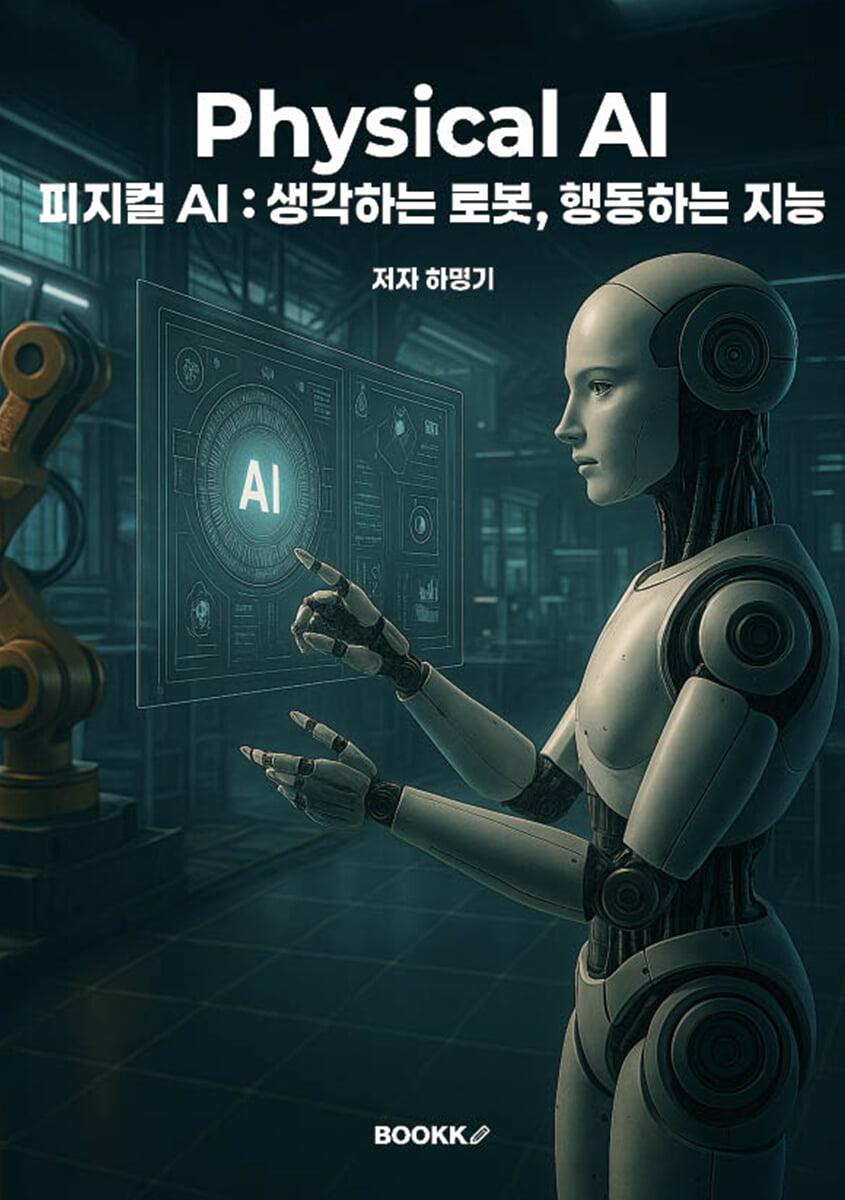
Physical AI: Thinking robots, acting intelligence
 |
Description
Book Introduction
“Intelligence isn’t just in the head.
“It also exists in the body that acts.”
We live in the age of artificial intelligence.
Artificial intelligence (AI), such as Chat GPT, self-driving cars, and robot vacuum cleaners, has now become deeply ingrained in our daily lives and is transforming people's lives and industries.
But most of it is still intelligence that remains on screen.
We write text, create images, and analyze information, but we haven't reached the point where we can 'move or manipulate' the real world.
Now the next step is clear.
We must move toward an era of 'physical AI', that is, artificial intelligence that can judge, execute, and react in the real world.
Physical AI is a technology that combines sensors, controllers, robotics, behavioral intelligence, digital twins, simulations, and machine learning to enable AI to interact with the physical environment and 'move' on its own.
This is not just a sophisticated automation, but a new civilizational shift that empowers machines with autonomy and agency.
The book is not simply about my interest in technology, but also my conviction that physical AI can be a driving force for structural transformation of South Korea's manufacturing industry and balanced regional growth.
The government and local governments are launching physical AI demonstration projects, with local universities at the center of the project, demonstrating, educating, and connecting industries. This will create a future of autonomous manufacturing mobility, with autonomous robots caring for patients in hospitals, controlling production in factories, and harvesting crops on farms.
All of this is an innovation strategy that transforms industries, regions, and entire societies.
In particular, for Korean society, which is suffering from structural problems such as an aging population, a shortage of industrial workers, and a stagnant regional economy, physical AI can be an alternative that goes beyond technology and a vision that goes beyond policy.
“It also exists in the body that acts.”
We live in the age of artificial intelligence.
Artificial intelligence (AI), such as Chat GPT, self-driving cars, and robot vacuum cleaners, has now become deeply ingrained in our daily lives and is transforming people's lives and industries.
But most of it is still intelligence that remains on screen.
We write text, create images, and analyze information, but we haven't reached the point where we can 'move or manipulate' the real world.
Now the next step is clear.
We must move toward an era of 'physical AI', that is, artificial intelligence that can judge, execute, and react in the real world.
Physical AI is a technology that combines sensors, controllers, robotics, behavioral intelligence, digital twins, simulations, and machine learning to enable AI to interact with the physical environment and 'move' on its own.
This is not just a sophisticated automation, but a new civilizational shift that empowers machines with autonomy and agency.
The book is not simply about my interest in technology, but also my conviction that physical AI can be a driving force for structural transformation of South Korea's manufacturing industry and balanced regional growth.
The government and local governments are launching physical AI demonstration projects, with local universities at the center of the project, demonstrating, educating, and connecting industries. This will create a future of autonomous manufacturing mobility, with autonomous robots caring for patients in hospitals, controlling production in factories, and harvesting crops on farms.
All of this is an innovation strategy that transforms industries, regions, and entire societies.
In particular, for Korean society, which is suffering from structural problems such as an aging population, a shortage of industrial workers, and a stagnant regional economy, physical AI can be an alternative that goes beyond technology and a vision that goes beyond policy.
index
Korean version
Chapter 1.
The Birth and Concept of Physical AI / 01
1.
The Evolution and Turning Points of Artificial Intelligence
2.
Definition and Structure of Physical AI
3.
Realizing Physical AI in Industry
4.
Physical AI Understanding Self-Assessment Checklist: How Do I Score?
Chapter 2.
Physical AI Inference Process: A Five-Step Structure / 52
1.
Perception: First contact with the outside world
2.
Understanding and expressing the situation (Representation)
3.
Decision-Making & Reasoning
4.
Action Execution
5.
Feedback & Adaptation
Chapter 3.
Physical AI: Changing Industries and the Future / 100
1.
The Birth of Autonomous Manufacturing: Factories Make Their Own Decisions and Move
2.
Core Elements of Physical AI Technology
3.
Physical AI Revolutionizing Healthcare
4.
By Industry: Physical AI Industry Expansion into Logistics, Agriculture, and Construction
Chapter 4.
Physical AI Demonstration and Cluster Creation Strategy / 134
1.
Evidence Drives Innovation: Why Testbeds Matter
2.
Strategy for Building a Physical AI Cluster in Korea
3.
Physical AI and Regional Balanced Growth
4.
Physical AI Verification Self-Diagnosis Checklist
Chapter 5.
What Should We Prepare for in the Era of Physical AI? / 149
1.
Innovation in Convergence Education for Future Talents
2.
Direction of policies and systems
3.
The World After Physical AI
4.
A self-assessment checklist to prepare for the physical AI era.
Chapter 6.
South Korea's G3 Leap: Promoting Physical AI-Based Industries /161
1.
2. Entering the G3 of global industrial technology by 2035.
Industrial Promotion Strategy and Infrastructure Creation
Chapter 7.
Physical AI Innovation Strategies by Industry / 169
1.
2. Investment Priority Assessment by Industry
Promotion and Innovation Plans by Industry
3.
Physical AI Industry Promotion Self-Diagnosis Checklist
Chapter 8.
R&D Investment and Implementation Strategies by Industry / 191
1.
R&D investment direction by strategic industry 2.
Cluster-type demonstration R&D promotion plan
3.
Strategy for Advancing AI Algorithms Based on Empirical Data 4.
Physical AI International Joint R&D and Standardization Linkage Strategy
5.
Public procurement and commercialization strategies for demonstration results
Chapter 9.
Physical AI Global Integration Strategy / 203
1.
The need for global connectivity
2.
Physical AI Strategy Trends by Major Country
3.
South Korea's Global Linkage Strategy Direction
4.
Proposal of an international empirical cooperation model
Chapter 10.
Physical AI Practice Guide / 212
1.
Preparations for introduction
2.
Step-by-step introduction operation plan
3.
Implementation strategies by demand entity
English version
Chapter 1.
The Birth and Concept of Physical AI / 231
Chapter 2.
Inference Process of Physical AI: A 5-Stage Framework / 243
Chapter 3.
How Physical AI Is Transforming Industry and the Future / 259
Chapter 4.
Demonstration and Cluster Strategy for Physical AI / 270
Chapter 5.
Preparing for the Era of Physical AI / 280
Chapter 6.
Korea's Leap to G3 Status: Industrial Advancement with Physical AI / 291
Chapter 7.
Industry-Specific Physical AI Innovation Strategies / 298
Chapter 8.
R&D Investment and Implementation Strategy by Sector / 307
Chapter 9.
Global Strategy for Physical AI / 320
Chapter 10.
Practical Guide to Implementing Physical AI / 330
Chapter 1.
The Birth and Concept of Physical AI / 01
1.
The Evolution and Turning Points of Artificial Intelligence
2.
Definition and Structure of Physical AI
3.
Realizing Physical AI in Industry
4.
Physical AI Understanding Self-Assessment Checklist: How Do I Score?
Chapter 2.
Physical AI Inference Process: A Five-Step Structure / 52
1.
Perception: First contact with the outside world
2.
Understanding and expressing the situation (Representation)
3.
Decision-Making & Reasoning
4.
Action Execution
5.
Feedback & Adaptation
Chapter 3.
Physical AI: Changing Industries and the Future / 100
1.
The Birth of Autonomous Manufacturing: Factories Make Their Own Decisions and Move
2.
Core Elements of Physical AI Technology
3.
Physical AI Revolutionizing Healthcare
4.
By Industry: Physical AI Industry Expansion into Logistics, Agriculture, and Construction
Chapter 4.
Physical AI Demonstration and Cluster Creation Strategy / 134
1.
Evidence Drives Innovation: Why Testbeds Matter
2.
Strategy for Building a Physical AI Cluster in Korea
3.
Physical AI and Regional Balanced Growth
4.
Physical AI Verification Self-Diagnosis Checklist
Chapter 5.
What Should We Prepare for in the Era of Physical AI? / 149
1.
Innovation in Convergence Education for Future Talents
2.
Direction of policies and systems
3.
The World After Physical AI
4.
A self-assessment checklist to prepare for the physical AI era.
Chapter 6.
South Korea's G3 Leap: Promoting Physical AI-Based Industries /161
1.
2. Entering the G3 of global industrial technology by 2035.
Industrial Promotion Strategy and Infrastructure Creation
Chapter 7.
Physical AI Innovation Strategies by Industry / 169
1.
2. Investment Priority Assessment by Industry
Promotion and Innovation Plans by Industry
3.
Physical AI Industry Promotion Self-Diagnosis Checklist
Chapter 8.
R&D Investment and Implementation Strategies by Industry / 191
1.
R&D investment direction by strategic industry 2.
Cluster-type demonstration R&D promotion plan
3.
Strategy for Advancing AI Algorithms Based on Empirical Data 4.
Physical AI International Joint R&D and Standardization Linkage Strategy
5.
Public procurement and commercialization strategies for demonstration results
Chapter 9.
Physical AI Global Integration Strategy / 203
1.
The need for global connectivity
2.
Physical AI Strategy Trends by Major Country
3.
South Korea's Global Linkage Strategy Direction
4.
Proposal of an international empirical cooperation model
Chapter 10.
Physical AI Practice Guide / 212
1.
Preparations for introduction
2.
Step-by-step introduction operation plan
3.
Implementation strategies by demand entity
English version
Chapter 1.
The Birth and Concept of Physical AI / 231
Chapter 2.
Inference Process of Physical AI: A 5-Stage Framework / 243
Chapter 3.
How Physical AI Is Transforming Industry and the Future / 259
Chapter 4.
Demonstration and Cluster Strategy for Physical AI / 270
Chapter 5.
Preparing for the Era of Physical AI / 280
Chapter 6.
Korea's Leap to G3 Status: Industrial Advancement with Physical AI / 291
Chapter 7.
Industry-Specific Physical AI Innovation Strategies / 298
Chapter 8.
R&D Investment and Implementation Strategy by Sector / 307
Chapter 9.
Global Strategy for Physical AI / 320
Chapter 10.
Practical Guide to Implementing Physical AI / 330
GOODS SPECIFICS
- Date of issue: September 2, 2025
- Page count, weight, size: 370 pages | 148*210*30mm
- ISBN13: 9791112052766
You may also like
카테고리
korean


korean

![GQ KOREA Mark (Monthly): December [2025]](http://librairie.coreenne.fr/cdn/shop/files/8ef265dbbfbf186523ed75ba7319009d.jpg?v=1765340328&width=3840)


