

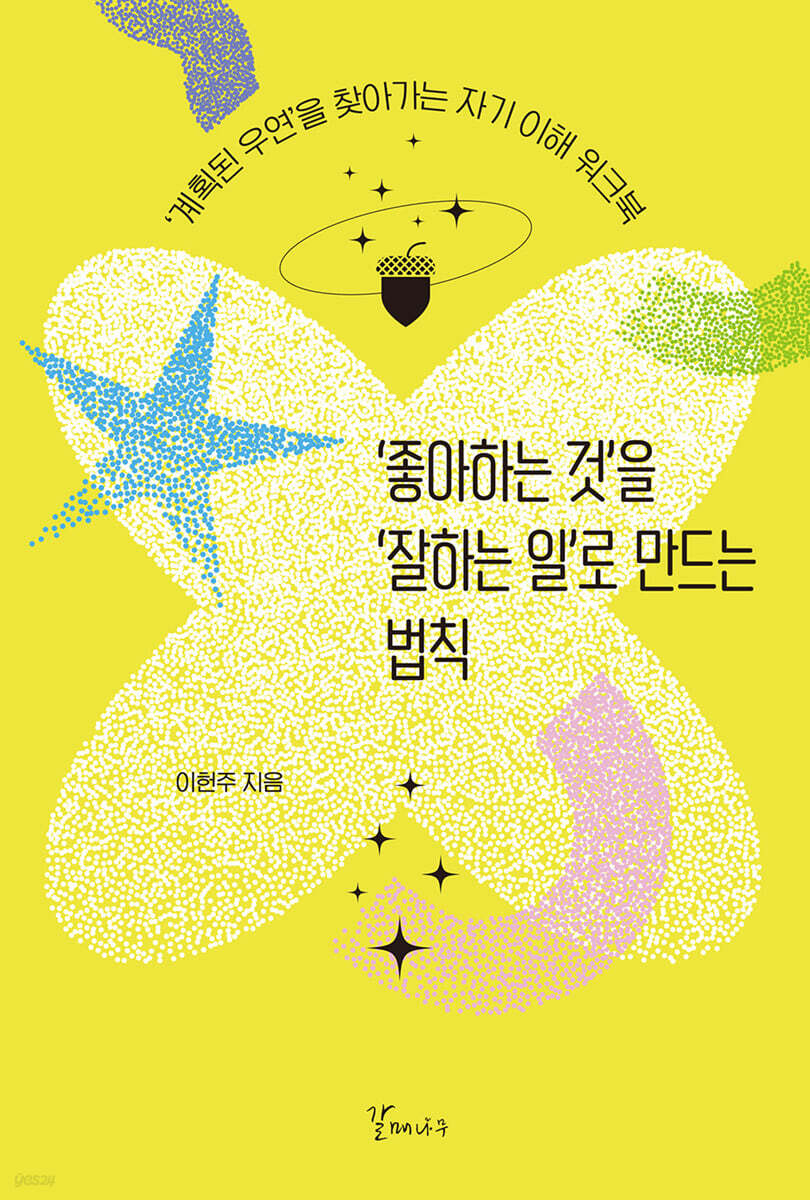
The Law of Turning What You Love into What You Are Good at
 |
Description
Book Introduction
Lee Heon-ju (Research Professor, Yonsei University Future Convergence Research Institute), author of “The Rules for Turning ‘What You Like’ into ‘What You Are Good at,’” is a counseling expert with extensive clinical experience who has dealt with these concerns countless times. In the process, he realized that ‘living while doing what you truly like’ is the key to a happy life.
The author, who has garnered over 900,000 views on YouTube for his career-related videos, wrote this book to help people beyond the confines of a counseling room discover their inner excellence and determine the direction of their lives.
The author, who has garnered over 900,000 views on YouTube for his career-related videos, wrote this book to help people beyond the confines of a counseling room discover their inner excellence and determine the direction of their lives.
- You can preview some of the book's contents.
Preview
index
Prologue: "What on earth do I want to do?" For those of you wondering 005
1.
Are you living the life you want now?
- If your days are neither happy nor unhappy
The Three Stages of Our Approach to Life 021
The Age of the Singularity, Lost People 032
Two Essential Things in Life's Vast Ocean 042
Have you ever thought about what kind of being you are? 052
The Power of Uniqueness: Turning Imagination into Reality 060
2.
The Crucial Difference Between "Liking" and "Doing Well"
- Value: Why you're confused about what you really want to do
There are so many 'good' people in the world 077
Is there something worth pursuing that you can never give up on, no matter how difficult it may be? 088
The Four Pillars of Interest That Support "Liking" 097
Decision 109 to Take Control of My Life
Humans grow on admiration 117
3.
How do you know what you really 'like'?
Strengths: 7 Powerful Questions for Self-Exploration
Do you have your own room where past, present, and future coexist? 131
Discovering Your Strengths: Workbook 166
Five Value Types That Tell Us Who You Are 182
The Power to Move People and Change Lives 201
4.
How do we create something that is truly ‘good’?
- Experience: Finding the 'planned coincidence' that realizes my potential
Even if you have your dream job, life goes on. 207
The Tipping Point 212: When What You Love Turns into What You Do
223 How to Grow Small Excellences into Big Things
Turning an Unexpected Event into an Opportunity: The "Turning Point" 232
Five Rules for Creating Planned Coincidence 238
Epilogue: Just as a small acorn contains a zelkova tree, 251
1.
Are you living the life you want now?
- If your days are neither happy nor unhappy
The Three Stages of Our Approach to Life 021
The Age of the Singularity, Lost People 032
Two Essential Things in Life's Vast Ocean 042
Have you ever thought about what kind of being you are? 052
The Power of Uniqueness: Turning Imagination into Reality 060
2.
The Crucial Difference Between "Liking" and "Doing Well"
- Value: Why you're confused about what you really want to do
There are so many 'good' people in the world 077
Is there something worth pursuing that you can never give up on, no matter how difficult it may be? 088
The Four Pillars of Interest That Support "Liking" 097
Decision 109 to Take Control of My Life
Humans grow on admiration 117
3.
How do you know what you really 'like'?
Strengths: 7 Powerful Questions for Self-Exploration
Do you have your own room where past, present, and future coexist? 131
Discovering Your Strengths: Workbook 166
Five Value Types That Tell Us Who You Are 182
The Power to Move People and Change Lives 201
4.
How do we create something that is truly ‘good’?
- Experience: Finding the 'planned coincidence' that realizes my potential
Even if you have your dream job, life goes on. 207
The Tipping Point 212: When What You Love Turns into What You Do
223 How to Grow Small Excellences into Big Things
Turning an Unexpected Event into an Opportunity: The "Turning Point" 232
Five Rules for Creating Planned Coincidence 238
Epilogue: Just as a small acorn contains a zelkova tree, 251
Detailed image

Into the book
In my counseling practice, I've realized that a huge number of people's concerns boil down to two issues.
It's 'work' and 'relationships'.
“What will we do, who will we meet, and what will we do together?” These are questions about the direction of life.
The direction of one's life can also be called one's career path.
--- p.7
Existing psychological research has identified 'conscientiousness' as one of the biggest factors in achieving success.
If you are sincere, you can accomplish anything effectively and quickly.
I've seen people who passed difficult exams appear in the media and say that they worked hard, even cutting down on sleep.
Of course, it's a good attitude, but it's problematic if sincerity is the alpha and omega of your abilities.
Because machines are the ultimate in integrity.
--- p.35
Creativity is not about being the best talent in the world, but rather the sum total of unique qualities that are universal yet different from others.
This uniqueness, this specialness, is what makes you who you are.
It's like a fingerprint.
Just as your fingerprints remain on your hands even if you put a fingerprint on them, your uniqueness is still within you.
--- pp.55-56
There are a few geniuses in the world who are just born with it.
Even without development, or with just a little bit of polishing, you're good enough to make a quantum jump.
That person knows exactly what he is good at, and others admire him when they see him do it.
It's just so overwhelmingly good.
But most people are not born with that talent.
And while there are things in the world that can be solved with dazzling talent, there are many more things that require honing and polishing to shine.
--- p.83
We are naturally drawn to things we are interested in and like, and we act accordingly.
But the opposite is also quite true.
As you experience various activities, you may find yourself developing interests in areas you didn't even know you had.
Your heart beats because you love something, but when you find something that makes your heart beat, you fall in love with it.
That way, life becomes a little richer.
--- p.108
Value is somewhat distant from realistic abilities or visible occupations.
Rather, it is because of that point that it holds countless symbols, metaphors, and possibilities.
And within that rich meaning, it plays a role in guiding us to find that person's inclinations, personality, strengths, resources, and essence.
--- p.168
Again, each value domain can also appear complex.
For example, let's say you selected values similar to those of the "independent" and "creative" types, and you work in the arts. Your dream job is more likely to involve running a business or expanding your field through art, rather than pure art.
--- p.201
As we live, there comes a moment when we encounter an opportunity.
But if you are not prepared at all, the opportunity will be lost.
Even when opportunities come, there are many times when we don't even know they are opportunities and just pass them by.
But what if an opportunity arises when you already possess condensed power? Like a "tipping point," a chance to unleash your potential suddenly arises.
--- p.221
By experiencing the things I like, finding environments where I'm surrounded by things I like, and frequently meeting people who share my interests, the probability of encountering a "chance opportunity" that suits me increases.
Because most opportunities come from the people around us.
--- p.239
Your future will be completely different depending on what you dream of, how you live today, and who you meet.
It's up to you to decide how richly you can reveal the hidden colors within you by utilizing the countless 'planned coincidences'.
Small actions and choices add up to create waves that propel you into the vast ocean.
In the midst of those majestic waves, you will surely see a large forest of zelkova trees.
It's 'work' and 'relationships'.
“What will we do, who will we meet, and what will we do together?” These are questions about the direction of life.
The direction of one's life can also be called one's career path.
--- p.7
Existing psychological research has identified 'conscientiousness' as one of the biggest factors in achieving success.
If you are sincere, you can accomplish anything effectively and quickly.
I've seen people who passed difficult exams appear in the media and say that they worked hard, even cutting down on sleep.
Of course, it's a good attitude, but it's problematic if sincerity is the alpha and omega of your abilities.
Because machines are the ultimate in integrity.
--- p.35
Creativity is not about being the best talent in the world, but rather the sum total of unique qualities that are universal yet different from others.
This uniqueness, this specialness, is what makes you who you are.
It's like a fingerprint.
Just as your fingerprints remain on your hands even if you put a fingerprint on them, your uniqueness is still within you.
--- pp.55-56
There are a few geniuses in the world who are just born with it.
Even without development, or with just a little bit of polishing, you're good enough to make a quantum jump.
That person knows exactly what he is good at, and others admire him when they see him do it.
It's just so overwhelmingly good.
But most people are not born with that talent.
And while there are things in the world that can be solved with dazzling talent, there are many more things that require honing and polishing to shine.
--- p.83
We are naturally drawn to things we are interested in and like, and we act accordingly.
But the opposite is also quite true.
As you experience various activities, you may find yourself developing interests in areas you didn't even know you had.
Your heart beats because you love something, but when you find something that makes your heart beat, you fall in love with it.
That way, life becomes a little richer.
--- p.108
Value is somewhat distant from realistic abilities or visible occupations.
Rather, it is because of that point that it holds countless symbols, metaphors, and possibilities.
And within that rich meaning, it plays a role in guiding us to find that person's inclinations, personality, strengths, resources, and essence.
--- p.168
Again, each value domain can also appear complex.
For example, let's say you selected values similar to those of the "independent" and "creative" types, and you work in the arts. Your dream job is more likely to involve running a business or expanding your field through art, rather than pure art.
--- p.201
As we live, there comes a moment when we encounter an opportunity.
But if you are not prepared at all, the opportunity will be lost.
Even when opportunities come, there are many times when we don't even know they are opportunities and just pass them by.
But what if an opportunity arises when you already possess condensed power? Like a "tipping point," a chance to unleash your potential suddenly arises.
--- p.221
By experiencing the things I like, finding environments where I'm surrounded by things I like, and frequently meeting people who share my interests, the probability of encountering a "chance opportunity" that suits me increases.
Because most opportunities come from the people around us.
--- p.239
Your future will be completely different depending on what you dream of, how you live today, and who you meet.
It's up to you to decide how richly you can reveal the hidden colors within you by utilizing the countless 'planned coincidences'.
Small actions and choices add up to create waves that propel you into the vast ocean.
In the midst of those majestic waves, you will surely see a large forest of zelkova trees.
--- p.255
Publisher's Review
“Are you living the life you want now?”
From the 'tipping point' where what you like turns into what you're good at
Even the 'turning point' that turns an unexpected incident into an opportunity
How to avoid missing the "planned coincidences" that are sure to occur in life.
“If you are someone who wants to discover your own hidden ‘gemstone’,
“I hope you don’t miss this book.”
Han Seok-jun (announcer, author of "Han Seok-jun's Speaking Class")
"What do I truly love to do?" "Is what I'm doing right now really suited to my aptitude?" "What kind of job should I have to live a more enjoyable and happy life?" From teenagers contemplating their future career paths to working adults already in the workforce, we constantly ponder "work" throughout our lives.
Lee Heon-ju (Research Professor, Yonsei University Future Convergence Research Institute), author of “The Rules for Turning ‘What You Like’ into ‘What You Are Good at,’” is a counseling expert with extensive clinical experience who has dealt with these concerns countless times. In the process, he realized that ‘living while doing what you truly like’ is the key to a happy life.
The author, who has garnered over 900,000 views on YouTube for his career-related videos, wrote this book to help people beyond the confines of a counseling room discover their inner excellence and determine the direction of their lives.
Why is it so important to make a living doing what you truly love? Because if you rely on external evaluations or projections to determine your career path, your life's direction can easily falter.
Especially in today's rapidly changing society driven by technological advancements, the prospect of new or declining jobs can be a source of anxiety.
The driving force that allows us to endure the anxiety and frustration that come from these situations and continue with the work we have done is the inner satisfaction that comes from doing something we love and find valuable.
Of course, it is difficult to succeed in a career just by liking something.
However, as you continue to experience environments and encounter people related to what you like, your chances of seizing unexpected opportunities increase.
If you have consistently worked hard and have built up a certain level of skill, this opportunity could be a turning point that will change your life.
John Krumboltz, a renowned American career counselor, described the process of creating an environment in which favorable opportunities arise and then seizing those opportunities as “planned coincidence.”
How well we utilize this 'planned coincidence' is the most important key to self-realization.
This book consists of four chapters and introduces step-by-step how to turn what I truly 'love' into 'what I'm good at.'
First, in Chapters 1 and 2, we will learn about 'uniqueness', a compass that helps us find our direction in the rapidly changing professional world, and we will look at the characteristics of 'what we like', the most important element of 'uniqueness', from the perspective of 'value'.
Next, in Chapter 3, you will have time to find your interests and strengths through a workbook consisting of the 'Seven Questions' and the 'Value Adjective Finding Test'.
By utilizing the note-taking space provided in the book, readers will have the opportunity to actively explore their inner selves by writing down their own answers to questions in the book.
Finally, Chapter 4 introduces five rules that will help you achieve professional growth and fulfillment in your favorite field, beyond mere hobby, based on the concept of "planned serendipity" proposed by John Krumboltz.
From the 'tipping point' where what you like turns into what you're good at
Even the 'turning point' that turns an unexpected incident into an opportunity
How to avoid missing the "planned coincidences" that are sure to occur in life.
“If you are someone who wants to discover your own hidden ‘gemstone’,
“I hope you don’t miss this book.”
Han Seok-jun (announcer, author of "Han Seok-jun's Speaking Class")
"What do I truly love to do?" "Is what I'm doing right now really suited to my aptitude?" "What kind of job should I have to live a more enjoyable and happy life?" From teenagers contemplating their future career paths to working adults already in the workforce, we constantly ponder "work" throughout our lives.
Lee Heon-ju (Research Professor, Yonsei University Future Convergence Research Institute), author of “The Rules for Turning ‘What You Like’ into ‘What You Are Good at,’” is a counseling expert with extensive clinical experience who has dealt with these concerns countless times. In the process, he realized that ‘living while doing what you truly like’ is the key to a happy life.
The author, who has garnered over 900,000 views on YouTube for his career-related videos, wrote this book to help people beyond the confines of a counseling room discover their inner excellence and determine the direction of their lives.
Why is it so important to make a living doing what you truly love? Because if you rely on external evaluations or projections to determine your career path, your life's direction can easily falter.
Especially in today's rapidly changing society driven by technological advancements, the prospect of new or declining jobs can be a source of anxiety.
The driving force that allows us to endure the anxiety and frustration that come from these situations and continue with the work we have done is the inner satisfaction that comes from doing something we love and find valuable.
Of course, it is difficult to succeed in a career just by liking something.
However, as you continue to experience environments and encounter people related to what you like, your chances of seizing unexpected opportunities increase.
If you have consistently worked hard and have built up a certain level of skill, this opportunity could be a turning point that will change your life.
John Krumboltz, a renowned American career counselor, described the process of creating an environment in which favorable opportunities arise and then seizing those opportunities as “planned coincidence.”
How well we utilize this 'planned coincidence' is the most important key to self-realization.
This book consists of four chapters and introduces step-by-step how to turn what I truly 'love' into 'what I'm good at.'
First, in Chapters 1 and 2, we will learn about 'uniqueness', a compass that helps us find our direction in the rapidly changing professional world, and we will look at the characteristics of 'what we like', the most important element of 'uniqueness', from the perspective of 'value'.
Next, in Chapter 3, you will have time to find your interests and strengths through a workbook consisting of the 'Seven Questions' and the 'Value Adjective Finding Test'.
By utilizing the note-taking space provided in the book, readers will have the opportunity to actively explore their inner selves by writing down their own answers to questions in the book.
Finally, Chapter 4 introduces five rules that will help you achieve professional growth and fulfillment in your favorite field, beyond mere hobby, based on the concept of "planned serendipity" proposed by John Krumboltz.
GOODS SPECIFICS
- Date of issue: August 20, 2024
- Page count, weight, size: 256 pages | 320g | 135*200*17mm
- ISBN13: 9791191842722
- ISBN10: 119184272X
You may also like
카테고리
korean


korean

![GQ KOREA Mark (Monthly): December [2025]](http://librairie.coreenne.fr/cdn/shop/files/8ef265dbbfbf186523ed75ba7319009d.jpg?v=1765340328&width=3840)


