

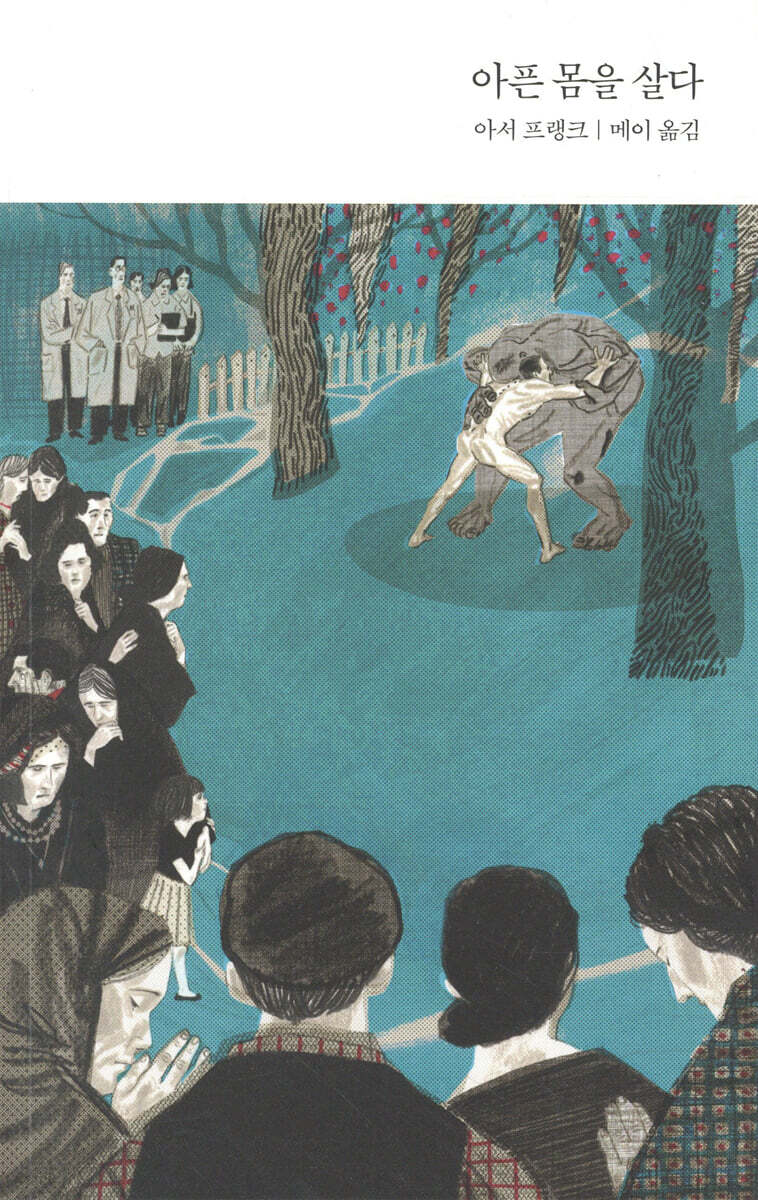
Living with a sick body
 |
Description
Book Introduction
What it is like to be sick,
A book that explains the meaning in elegant sentences!
“Arthur Frank takes us into his experiences with a brutal honesty that cuts to the bone.
He shows us the value of facing and moving through the experience of illness without being overwhelmed by it.”
“Living with a Sick Body” is a personal essay written by Arthur Frank, author of “Testimony of the Body,” about his experience with illness (specifically cancer).
The author, a young and healthy (and seemingly healthy) sociology professor, suffered a heart attack at age 39 and was diagnosed with testicular cancer the following year, recovering through surgery and chemotherapy.
Although this experience was the impetus for writing the book, it is not enough to describe 『Living with a Sick Body』 as a disease journal, because this book goes beyond what we usually expect to find in a disease journal: the symptoms of the disease (testicular cancer), the treatments tried, the difficulties and pain experienced during the treatment process, the success of the treatment and return to daily life, and advice for other cancer patients.
This book goes beyond a 'narrative' of the experience of illness to a 'thought' on the experience of illness. It questions and re-signifies the meaning of illness in human life by examining what the author has learned through his own experience of illness.
A book that explains the meaning in elegant sentences!
“Arthur Frank takes us into his experiences with a brutal honesty that cuts to the bone.
He shows us the value of facing and moving through the experience of illness without being overwhelmed by it.”
“Living with a Sick Body” is a personal essay written by Arthur Frank, author of “Testimony of the Body,” about his experience with illness (specifically cancer).
The author, a young and healthy (and seemingly healthy) sociology professor, suffered a heart attack at age 39 and was diagnosed with testicular cancer the following year, recovering through surgery and chemotherapy.
Although this experience was the impetus for writing the book, it is not enough to describe 『Living with a Sick Body』 as a disease journal, because this book goes beyond what we usually expect to find in a disease journal: the symptoms of the disease (testicular cancer), the treatments tried, the difficulties and pain experienced during the treatment process, the success of the treatment and return to daily life, and advice for other cancer patients.
This book goes beyond a 'narrative' of the experience of illness to a 'thought' on the experience of illness. It questions and re-signifies the meaning of illness in human life by examining what the author has learned through his own experience of illness.
- You can preview some of the book's contents.
Preview
index
Dangerous opportunities, diseases
Fall down on the road
A heart attack that was considered just a passing accident
Cancer is coming
Beauty glimpsed through the pain of the night
Mourning the lost
Care is knowing the uniqueness of the sick person.
Discovering wonders in a body colonized by medicine
A positive appearance forced on a sick person
Chemotherapy and the Adventures Found in Disease
Disease is not something to be fought
Cancer and Stigma
Those who deny the disease and those who acknowledge it
Those who comfort, those who condemn
Giving value to illness
Listen to the stories of people who are sick
Recovery ritual
A life gained as a bonus
Review of the revised edition
Helpful literature
Acknowledgements
Translator's Note
Fall down on the road
A heart attack that was considered just a passing accident
Cancer is coming
Beauty glimpsed through the pain of the night
Mourning the lost
Care is knowing the uniqueness of the sick person.
Discovering wonders in a body colonized by medicine
A positive appearance forced on a sick person
Chemotherapy and the Adventures Found in Disease
Disease is not something to be fought
Cancer and Stigma
Those who deny the disease and those who acknowledge it
Those who comfort, those who condemn
Giving value to illness
Listen to the stories of people who are sick
Recovery ritual
A life gained as a bonus
Review of the revised edition
Helpful literature
Acknowledgements
Translator's Note
Into the book
After I got cancer, I never wanted to go back to where I was before.
Because the price paid for the opportunity for change was too high to let it slip away.
I have seen so much suffering, and I have seen it from a perspective that might be difficult for a young or healthy person to grasp.
The game of life could not continue under the same conditions as before.
Rather than trying to recover my old self, I wanted to discover a different me that I could become.
And writing is part of the process of finding this other self. --- p.9
Being sick is simply a different way of living, and by the time we have fully survived the illness, we live differently. --- p.10
Sick people have a lot to say, but we rarely hear about their hopes and fears.
We rarely hear what it feels like to be in pain, how a sick person understands his or her suffering, and how he or she contemplates the possibility of death. --- p.12-13
One day my body broke down.
In fear and despair, I had no choice but to ask.
What's happening to me? That's the question we ask ourselves when we're sick. --- p.21
When discussing disease, the 'objective' story is always the story of medicine.
Patients quickly learn to express themselves in the language of their illness, but in expressing themselves in the language of medicine, the sick person loses himself.
Because the body I experience is not reducible to the body measured by someone else. --- p.28
Knowing that you are walking on the edge of a precipice is not just a terrifying experience.
It is also an experience that brings clarity. --- p.34
There is no term to express what it means to live 'in' pain.
Because they cannot express their pain, the sick person comes to believe that they have nothing to say.
By keeping their mouths shut, the person in pain becomes isolated in their pain, and isolation makes the pain worse.
Just as there is nausea that comes with knowing you are sick, there is also pain that is compounded by being in pain. --- p.52
In the midst of unspeakable pain, the sick person feels isolated, silenced, and exiled.
No matter how it is expressed, once the words are expressed, they are directed at others.
Even when there is no one around.
Expressing something means speaking in front of others.
And by expressing it, the sick person returns to the people. --- p.59~60
Serious illness takes travelers to the edge of human experience.
Even if you take just one more step, the person in pain may not come back.
I want this trip to be recognized. --- p.90
Human suffering becomes bearable when it is shared.
We can let go of our pain when we know that someone acknowledges it.
When you acknowledge your pain, it lessens.
This power cannot be explained, but it seems to be human nature. --- p.161~162
I still feel fear of other people's illness and pain.
Not only am I afraid of becoming like them again, but I am also afraid of having to stop what I am doing and take care of the sick.
Pain is scary, but slowing down is also scary.
It is natural to fear pain, but it is madness to fear slowness. --- p.188
The ultimate value of illness is that it teaches us the value of being alive.
It is for this very reason that sick people are not objects of pity, but rather beings to be valued.
From a distant star, we would appear as a light that blinks once and then disappears.
In the moment when the light fades, we realize that the very act of keeping the light burning is important.
Death is not the enemy of life.
Because of death, we reaffirm the value of life.
Also, through illness, we regain the sense of balance that we had lost while taking life for granted.
To learn what is valuable and what a balanced life looks like, we must respect illness and, ultimately, death. --- p.190-191
Seeing the world from the bed of an oncology ward is like seeing the world from space.
The world is small, but it is already complete.
To be in pain, that is to say, to experience the suffering that comes with being human, is to know where one's place is within that whole whole.
Knowing that I am connected to other people. --- p.191
If the responsibility of the sick is not to heal, what is their true responsibility? It is to witness their own suffering and express their experiences, so that others can learn from their experiences.
Of course, other people must want to learn.
Those who are sick express themselves, and others see and hear them; this is the responsibility of both sides in society. --- p.195
In this world built on chance, life is like a fragile piece of luck.
Life itself is precious. --- p.202
Life begins again.
Of course I knew that life never stopped.
The nights I listened to Bach, the afternoon sunlight on Chagall's paintings, the moments of hope and fear with Cathy, loss and despair—all of this was life.
Life never stops, even while suffering from cancer.
It was just more intense.--- p.208
When I can cherish the sunlight shining on the river, and imagine and believe that its light will continue to shine there, I feel a peace that belongs beyond this world, and I no longer fear death.
I'm happy to be here when I can imagine the smiles on the faces of my loved ones after I'm gone.
But it doesn't have to be here.
Joy lies in not clinging.
Because the price paid for the opportunity for change was too high to let it slip away.
I have seen so much suffering, and I have seen it from a perspective that might be difficult for a young or healthy person to grasp.
The game of life could not continue under the same conditions as before.
Rather than trying to recover my old self, I wanted to discover a different me that I could become.
And writing is part of the process of finding this other self. --- p.9
Being sick is simply a different way of living, and by the time we have fully survived the illness, we live differently. --- p.10
Sick people have a lot to say, but we rarely hear about their hopes and fears.
We rarely hear what it feels like to be in pain, how a sick person understands his or her suffering, and how he or she contemplates the possibility of death. --- p.12-13
One day my body broke down.
In fear and despair, I had no choice but to ask.
What's happening to me? That's the question we ask ourselves when we're sick. --- p.21
When discussing disease, the 'objective' story is always the story of medicine.
Patients quickly learn to express themselves in the language of their illness, but in expressing themselves in the language of medicine, the sick person loses himself.
Because the body I experience is not reducible to the body measured by someone else. --- p.28
Knowing that you are walking on the edge of a precipice is not just a terrifying experience.
It is also an experience that brings clarity. --- p.34
There is no term to express what it means to live 'in' pain.
Because they cannot express their pain, the sick person comes to believe that they have nothing to say.
By keeping their mouths shut, the person in pain becomes isolated in their pain, and isolation makes the pain worse.
Just as there is nausea that comes with knowing you are sick, there is also pain that is compounded by being in pain. --- p.52
In the midst of unspeakable pain, the sick person feels isolated, silenced, and exiled.
No matter how it is expressed, once the words are expressed, they are directed at others.
Even when there is no one around.
Expressing something means speaking in front of others.
And by expressing it, the sick person returns to the people. --- p.59~60
Serious illness takes travelers to the edge of human experience.
Even if you take just one more step, the person in pain may not come back.
I want this trip to be recognized. --- p.90
Human suffering becomes bearable when it is shared.
We can let go of our pain when we know that someone acknowledges it.
When you acknowledge your pain, it lessens.
This power cannot be explained, but it seems to be human nature. --- p.161~162
I still feel fear of other people's illness and pain.
Not only am I afraid of becoming like them again, but I am also afraid of having to stop what I am doing and take care of the sick.
Pain is scary, but slowing down is also scary.
It is natural to fear pain, but it is madness to fear slowness. --- p.188
The ultimate value of illness is that it teaches us the value of being alive.
It is for this very reason that sick people are not objects of pity, but rather beings to be valued.
From a distant star, we would appear as a light that blinks once and then disappears.
In the moment when the light fades, we realize that the very act of keeping the light burning is important.
Death is not the enemy of life.
Because of death, we reaffirm the value of life.
Also, through illness, we regain the sense of balance that we had lost while taking life for granted.
To learn what is valuable and what a balanced life looks like, we must respect illness and, ultimately, death. --- p.190-191
Seeing the world from the bed of an oncology ward is like seeing the world from space.
The world is small, but it is already complete.
To be in pain, that is to say, to experience the suffering that comes with being human, is to know where one's place is within that whole whole.
Knowing that I am connected to other people. --- p.191
If the responsibility of the sick is not to heal, what is their true responsibility? It is to witness their own suffering and express their experiences, so that others can learn from their experiences.
Of course, other people must want to learn.
Those who are sick express themselves, and others see and hear them; this is the responsibility of both sides in society. --- p.195
In this world built on chance, life is like a fragile piece of luck.
Life itself is precious. --- p.202
Life begins again.
Of course I knew that life never stopped.
The nights I listened to Bach, the afternoon sunlight on Chagall's paintings, the moments of hope and fear with Cathy, loss and despair—all of this was life.
Life never stops, even while suffering from cancer.
It was just more intense.--- p.208
When I can cherish the sunlight shining on the river, and imagine and believe that its light will continue to shine there, I feel a peace that belongs beyond this world, and I no longer fear death.
I'm happy to be here when I can imagine the smiles on the faces of my loved ones after I'm gone.
But it doesn't have to be here.
Joy lies in not clinging.
--- p.224
Publisher's Review
As Arthur Frank clearly recognizes, illness is not something that can be explained in medical terms, but rather “touches every aspect of life,” and so the author’s experiences, observations, and discussions in this book as he navigates his illness are diverse.
A life crisis suddenly encountered one day, pain that is difficult to express in words, surgery and chemotherapy, care, the patient's position in the medical system, the positive attitude required of the patient, cancer and stigma, the attitudes of those around them (denial, acceptance, criticism), the body as a wonder, the power of story, why the stories of sick people are important...
But the author's most important insight, which runs through all these topics, is that illness takes us to the edge of life, where we encounter life and ourselves with greater clarity and clarity than ever before.
This journey near death is certainly dangerous, but it is also an adventure, a process of discovering wonders and learning, and a connection to change and the possibilities of a different life.
That is why disease is a “dangerous opportunity.”
In Arthur Frank's story of illness, the meaning and position of illness and the patient are placed in a fundamentally different context.
Illness is not just an unfortunate event, something to be avoided, something to be quickly escaped, a waste of time and resources. It can be an opportunity for renewal, a stepping stone to a new life.
Patients are not just people in need of treatment, care, and support; they are witnesses who have seen what others have not, and who can bring new stories to life.
This book itself is an example of a new story brought back by a sick person.
The greatest significance of this book is that it presents a different perspective on seeing disease, talking about disease, or 'living' disease.
Arthur Frank's essay acknowledges the loss and suffering that illness brings, but it doesn't stop at just the victim's story.
It is also not the typical heroic story of a disease that bravely overcomes all difficulties.
Because it weaves together contradictory elements—danger and opportunity, pain and blessing, crisis and new life—with a clear vision, it resonates deeply on a spiritual level, but it is also far removed from the testimony of, "My life was transformed by a disease given by God."
A great virtue of this book is that it reveals the depth that illness can bring in terms that are both mundane and plain.
Another advantage is that it is easy to read despite the considerable weight of the text.
“Serious illness takes travelers to the edge of human experience.
If you take just one more step, someone who is that sick may never come back.
“I want this journey to be recognized,” “I encourage you to recognize the wonder of your body rather than try to control it,” “It was a blessing that I was face to face with life,” these are often “profound” words that are like aphorisms and the result of intuition rather than argument, but because we hear the story as we revisit the author’s experience together, it doesn’t feel like it’s floating in space.
Because he recounts what he has encountered in his own personal voice, readers can easily enter into those experiences, and while speaking of his own experiences, he always goes a step further and creates his own thoughts, allowing them to read while feeling the joy of enlightenment that is full of them.
This book has great significance in Korean society today.
Our society is filled with internal and external obsessions and pressures about healthy, young, and "normal" bodies, while at the same time there is fear, avoidance, and condemnation of sick bodies.
Furthermore, the burden on individuals' bodies is excessive as the lifestyle of the industrial age, which values speed, performance, and productivity, is considered the norm or desirable, along with the self-punishment of the self-development era.
Becoming ill in this situation means that both the patient and those around them experience a multi-layered, multi-faceted crisis.
The number of people experiencing illness directly or indirectly and living with chronic illness is increasing, but few words can empower those who face difficulties that extend far beyond medical care and encompass a multitude of different types and layers.
Stories about illness (including disease diaries) other than stories of treatment and diet, and religious testimony, are relatively few.
The emergence of gatherings, lectures, research, and books on topics like aging, illness, disability, and death in recent years may be a sign that there is a growing need for "different" stories and a growing desire to reflect on the human condition, which is forced upon us by our fragile, mortal bodies.
??Living with a Sick Body?? will respond to these needs and demands by providing stories that can transform the meaning of illness, stories that can give a voice to those in pain, stories that can offer a different perspective on pain, and stories that can thereby enable us to live with pain.
Recommendation
Living with a sick body, and continuing to live with a sick body even after some degree of healing, means coming to terms with the fundamental equality and inequality that constitutes life.
We all get sick, whether we want to or not, and we all face death someday.
However, how we experience illness varies significantly depending on the social consensus and the type of treatment and care we receive within the medical system.
This perception of equality and inequality is difficult to grasp unless you have suffered yourself, unless you have been brought, in pain, to a frighteningly close encounter with the boundary between the possible and the impossible that runs through life.
Arthur Frank's book leads us to a surprising insight into this perception.
He unfolds his experience as a "witness" caught in the middle of a meaningful "incident" with delicate observation and analytical yet moving storytelling.
It is possible to experience the shock, pain, and healing process that patients experience not as alienation from themselves or as a colonized otherness, but as an already complete self (being self) by becoming a witness to all of it.
And witnesses submit to ethical responsibility by truthfully telling others what they witnessed.
Now, others must willingly accept the responsibility of listening to that story with the same sincerity.
Through this responsibility of exchanging stories, we can realize that illness, disability, and death are not someone's misfortune, but a single truth shared by all. We can question the meaning of life that this truth urges, and we can create a social and public environment worthy of this truth.
Must be made.
This is the insight we reach as we listen to Arthur Frank's story about his experience of being sick/with a sick body, and empathize with him.
What a precious insight this is in an age where illness, disability, old age, and death are not fully respected and become other things!
Kim Young-ok (Director of the Okhee Salon, Life Culture Research Institute)
I underlined almost every page.
The entire book is filled with insights that are both painful and precious, subtle and yet profoundly clear.
That's probably why painful experiences are like that.
All humans get sick.
Some illnesses are okay, but others must be hidden.
Cancer patients live in a society where the expression “cancer-like existence” is used as a metaphor.
Sometimes, people criticize them by saying, “A personality prone to cancer,” and sometimes, their lives are reduced to cancer when faced with the incantation, “Don’t worry about anything else and just get better.”
The social stigma surrounding disease and the rigidity of medical attitudes fundamentally stem from a society that sets the standard for “people who don’t get sick.”
In such a society, we obsessively pursue health and banish the sick from “us.”
We are talking about ourselves.
As I read, I thought about the illnesses I have suffered or am suffering from, the illnesses that have taken down loved ones, and my experiences caring for the sick.
I vividly recalled the smell of the hospital examination room, the fear of sitting in front of the doctor in the outpatient clinic, and the process of feeling sick and getting better after being discharged.
In this book, Arthur Frank provides a language that allows us to critically and ethically think about just such specificities.
And it convinces us that illness is not an enemy to be fought against, but rather we ourselves, and that life itself, struggling with illness, whether we get better or not, is complete.
It is comforting to know that a sick person can think and reflect while he or she navigates the terrible valley of pain alone and helplessly.
I also find comfort in the fact that there are witnesses to the hardships and loneliness that come with being a “patient’s guardian.”
As sick people and as caregivers, we must be witnesses to ourselves and to each other.
I hope that the sentences in this book, which resonate with blood, bones, and the sound of a heartbeat, will reach those who lie in cold machines wearing only thin hospital gowns, those who sleep in the corner of the hospital room on a caregiver's bed, medical staff who feel they have failed despite their best efforts, and everyone who wants to understand what is happening in the midst of our lives when we are sick.
―Jeon Hee-kyung (Director of Women's Studies at the Sallim Medical Cooperative and Co-Director of the Okhee Salon at the Life Culture Research Institute)
A life crisis suddenly encountered one day, pain that is difficult to express in words, surgery and chemotherapy, care, the patient's position in the medical system, the positive attitude required of the patient, cancer and stigma, the attitudes of those around them (denial, acceptance, criticism), the body as a wonder, the power of story, why the stories of sick people are important...
But the author's most important insight, which runs through all these topics, is that illness takes us to the edge of life, where we encounter life and ourselves with greater clarity and clarity than ever before.
This journey near death is certainly dangerous, but it is also an adventure, a process of discovering wonders and learning, and a connection to change and the possibilities of a different life.
That is why disease is a “dangerous opportunity.”
In Arthur Frank's story of illness, the meaning and position of illness and the patient are placed in a fundamentally different context.
Illness is not just an unfortunate event, something to be avoided, something to be quickly escaped, a waste of time and resources. It can be an opportunity for renewal, a stepping stone to a new life.
Patients are not just people in need of treatment, care, and support; they are witnesses who have seen what others have not, and who can bring new stories to life.
This book itself is an example of a new story brought back by a sick person.
The greatest significance of this book is that it presents a different perspective on seeing disease, talking about disease, or 'living' disease.
Arthur Frank's essay acknowledges the loss and suffering that illness brings, but it doesn't stop at just the victim's story.
It is also not the typical heroic story of a disease that bravely overcomes all difficulties.
Because it weaves together contradictory elements—danger and opportunity, pain and blessing, crisis and new life—with a clear vision, it resonates deeply on a spiritual level, but it is also far removed from the testimony of, "My life was transformed by a disease given by God."
A great virtue of this book is that it reveals the depth that illness can bring in terms that are both mundane and plain.
Another advantage is that it is easy to read despite the considerable weight of the text.
“Serious illness takes travelers to the edge of human experience.
If you take just one more step, someone who is that sick may never come back.
“I want this journey to be recognized,” “I encourage you to recognize the wonder of your body rather than try to control it,” “It was a blessing that I was face to face with life,” these are often “profound” words that are like aphorisms and the result of intuition rather than argument, but because we hear the story as we revisit the author’s experience together, it doesn’t feel like it’s floating in space.
Because he recounts what he has encountered in his own personal voice, readers can easily enter into those experiences, and while speaking of his own experiences, he always goes a step further and creates his own thoughts, allowing them to read while feeling the joy of enlightenment that is full of them.
This book has great significance in Korean society today.
Our society is filled with internal and external obsessions and pressures about healthy, young, and "normal" bodies, while at the same time there is fear, avoidance, and condemnation of sick bodies.
Furthermore, the burden on individuals' bodies is excessive as the lifestyle of the industrial age, which values speed, performance, and productivity, is considered the norm or desirable, along with the self-punishment of the self-development era.
Becoming ill in this situation means that both the patient and those around them experience a multi-layered, multi-faceted crisis.
The number of people experiencing illness directly or indirectly and living with chronic illness is increasing, but few words can empower those who face difficulties that extend far beyond medical care and encompass a multitude of different types and layers.
Stories about illness (including disease diaries) other than stories of treatment and diet, and religious testimony, are relatively few.
The emergence of gatherings, lectures, research, and books on topics like aging, illness, disability, and death in recent years may be a sign that there is a growing need for "different" stories and a growing desire to reflect on the human condition, which is forced upon us by our fragile, mortal bodies.
??Living with a Sick Body?? will respond to these needs and demands by providing stories that can transform the meaning of illness, stories that can give a voice to those in pain, stories that can offer a different perspective on pain, and stories that can thereby enable us to live with pain.
Recommendation
Living with a sick body, and continuing to live with a sick body even after some degree of healing, means coming to terms with the fundamental equality and inequality that constitutes life.
We all get sick, whether we want to or not, and we all face death someday.
However, how we experience illness varies significantly depending on the social consensus and the type of treatment and care we receive within the medical system.
This perception of equality and inequality is difficult to grasp unless you have suffered yourself, unless you have been brought, in pain, to a frighteningly close encounter with the boundary between the possible and the impossible that runs through life.
Arthur Frank's book leads us to a surprising insight into this perception.
He unfolds his experience as a "witness" caught in the middle of a meaningful "incident" with delicate observation and analytical yet moving storytelling.
It is possible to experience the shock, pain, and healing process that patients experience not as alienation from themselves or as a colonized otherness, but as an already complete self (being self) by becoming a witness to all of it.
And witnesses submit to ethical responsibility by truthfully telling others what they witnessed.
Now, others must willingly accept the responsibility of listening to that story with the same sincerity.
Through this responsibility of exchanging stories, we can realize that illness, disability, and death are not someone's misfortune, but a single truth shared by all. We can question the meaning of life that this truth urges, and we can create a social and public environment worthy of this truth.
Must be made.
This is the insight we reach as we listen to Arthur Frank's story about his experience of being sick/with a sick body, and empathize with him.
What a precious insight this is in an age where illness, disability, old age, and death are not fully respected and become other things!
Kim Young-ok (Director of the Okhee Salon, Life Culture Research Institute)
I underlined almost every page.
The entire book is filled with insights that are both painful and precious, subtle and yet profoundly clear.
That's probably why painful experiences are like that.
All humans get sick.
Some illnesses are okay, but others must be hidden.
Cancer patients live in a society where the expression “cancer-like existence” is used as a metaphor.
Sometimes, people criticize them by saying, “A personality prone to cancer,” and sometimes, their lives are reduced to cancer when faced with the incantation, “Don’t worry about anything else and just get better.”
The social stigma surrounding disease and the rigidity of medical attitudes fundamentally stem from a society that sets the standard for “people who don’t get sick.”
In such a society, we obsessively pursue health and banish the sick from “us.”
We are talking about ourselves.
As I read, I thought about the illnesses I have suffered or am suffering from, the illnesses that have taken down loved ones, and my experiences caring for the sick.
I vividly recalled the smell of the hospital examination room, the fear of sitting in front of the doctor in the outpatient clinic, and the process of feeling sick and getting better after being discharged.
In this book, Arthur Frank provides a language that allows us to critically and ethically think about just such specificities.
And it convinces us that illness is not an enemy to be fought against, but rather we ourselves, and that life itself, struggling with illness, whether we get better or not, is complete.
It is comforting to know that a sick person can think and reflect while he or she navigates the terrible valley of pain alone and helplessly.
I also find comfort in the fact that there are witnesses to the hardships and loneliness that come with being a “patient’s guardian.”
As sick people and as caregivers, we must be witnesses to ourselves and to each other.
I hope that the sentences in this book, which resonate with blood, bones, and the sound of a heartbeat, will reach those who lie in cold machines wearing only thin hospital gowns, those who sleep in the corner of the hospital room on a caregiver's bed, medical staff who feel they have failed despite their best efforts, and everyone who wants to understand what is happening in the midst of our lives when we are sick.
―Jeon Hee-kyung (Director of Women's Studies at the Sallim Medical Cooperative and Co-Director of the Okhee Salon at the Life Culture Research Institute)
GOODS SPECIFICS
- Date of issue: July 10, 2017
- Page count, weight, size: 256 pages | 366g | 140*220*20mm
- ISBN13: 9791186372111
- ISBN10: 1186372117
You may also like
카테고리
korean


korean

![GQ KOREA Mark (Monthly): December [2025]](http://librairie.coreenne.fr/cdn/shop/files/8ef265dbbfbf186523ed75ba7319009d.jpg?v=1765340328&width=3840)


