

Long view
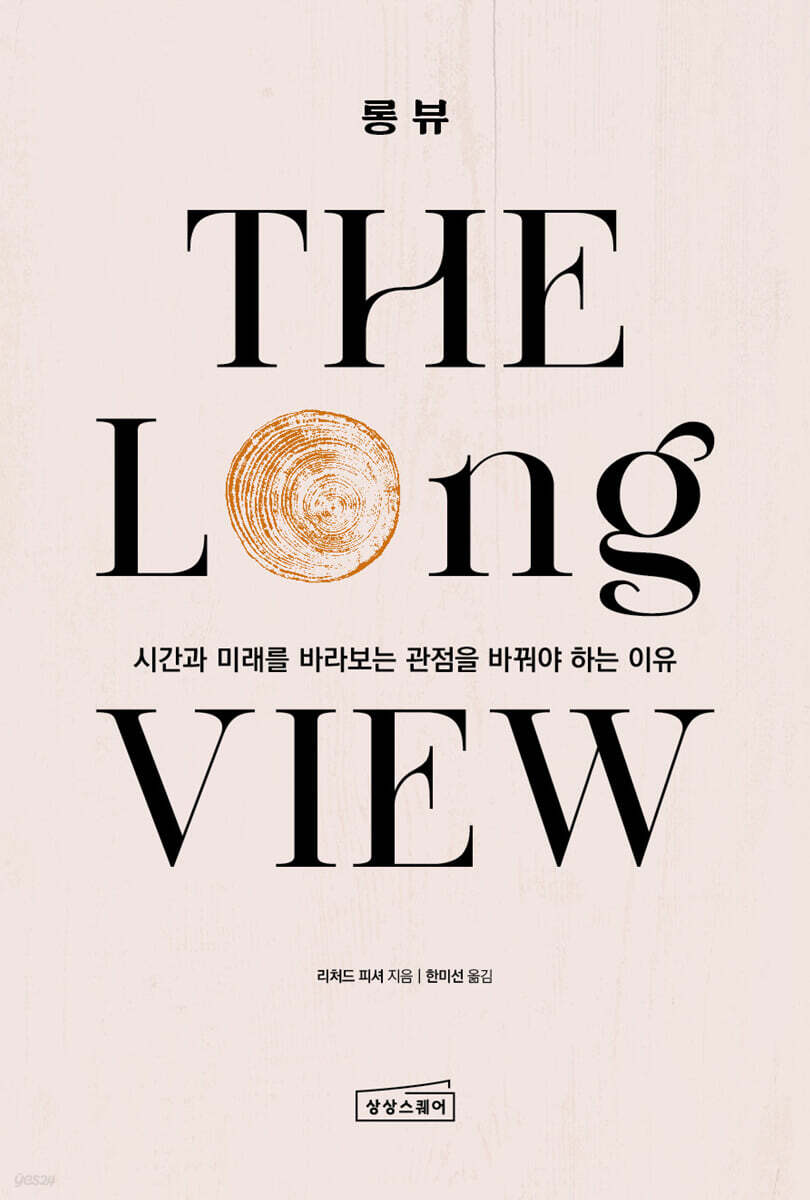 |
Description
Book Introduction
★ Finalist for the '2023 Best Nonfiction Book Award' selected by Non-Obvious
★ Winner of the 2023 Society of Professional Futurists' 'Most Important Future Work Award'
A perspective that sees further and for a longer period of time is the value that must be most urgently sought!
Humans have an incomparable ability to understand time compared to other species, and are unique in that they can understand the past and the future.
But why is today's society so stuck in the present? As threats to our lives and future pile up, modern technology and capitalism have further reinforced our short-termist tendencies.
Under the influence of myopic politics, quarterly earnings, and the 24-hour news cycle, we have become enslaved to the present.
But in the distant Middle Ages, craftsmen worked to build cathedrals they would never complete in their lifetime.
Indigenous leaders in each region encouraged and embraced intergenerational understanding.
In the early 20th century, numerous writers and artists expressed their ideals, looking ahead to a world thousands of years into the future.
It all comes down to one fact:
This means that humans are beings who can reset their thinking about time.
Connecting with future generations through 'temporal empathy' is not a distant goal, but an urgent task.
"Long View" teaches us how to expand our horizons far into the future, and in doing so, it embraces alternatives that find meaning, long-term thinking, and hope.
It is another masterpiece of our century, bridging the gap between eras and containing visionary ideas that will have a significant impact on the next century.
★ Winner of the 2023 Society of Professional Futurists' 'Most Important Future Work Award'
A perspective that sees further and for a longer period of time is the value that must be most urgently sought!
Humans have an incomparable ability to understand time compared to other species, and are unique in that they can understand the past and the future.
But why is today's society so stuck in the present? As threats to our lives and future pile up, modern technology and capitalism have further reinforced our short-termist tendencies.
Under the influence of myopic politics, quarterly earnings, and the 24-hour news cycle, we have become enslaved to the present.
But in the distant Middle Ages, craftsmen worked to build cathedrals they would never complete in their lifetime.
Indigenous leaders in each region encouraged and embraced intergenerational understanding.
In the early 20th century, numerous writers and artists expressed their ideals, looking ahead to a world thousands of years into the future.
It all comes down to one fact:
This means that humans are beings who can reset their thinking about time.
Connecting with future generations through 'temporal empathy' is not a distant goal, but an urgent task.
"Long View" teaches us how to expand our horizons far into the future, and in doing so, it embraces alternatives that find meaning, long-term thinking, and hope.
It is another masterpiece of our century, bridging the gap between eras and containing visionary ideas that will have a significant impact on the next century.
- You can preview some of the book's contents.
Preview
index
introduction
See further
Part 1.
Myopia: The Sources and Pressures of Short-Termism
Chapter 1.
A brief history in a long time
Chapter 2.
Selling Short: Capitalism's Relentless Short-Termism
Chapter 3.
Political pressure and democracy's greatest flaw
Part 2.
Short-Term Mindset: Understanding Human Time Perception
Chapter 4.
Apes that record time
Chapter 5.
Psychology of Yesterday, Today, and Tomorrow
Chapter 6.
Long-Termism: The Power of Language
Part 3.
Long-Term Perspective: Expanding Your Time Perception
Chapter 7.
A Pleasant Horror: The Sublime of a Distant Time
Chapter 8.
Time: Lessons from Religion, Ritual, and Tradition
Chapter 9.
Long-termism: A moral argument emphasizing responsibility to future generations
Chapter 10.
A Window in Time: Science, Nature, and the Anthropocene
Chapter 11.
The persuasive power of symbols and stories
Chapter 12.
Civilization of the distant future
Acknowledgements
References
See further
Part 1.
Myopia: The Sources and Pressures of Short-Termism
Chapter 1.
A brief history in a long time
Chapter 2.
Selling Short: Capitalism's Relentless Short-Termism
Chapter 3.
Political pressure and democracy's greatest flaw
Part 2.
Short-Term Mindset: Understanding Human Time Perception
Chapter 4.
Apes that record time
Chapter 5.
Psychology of Yesterday, Today, and Tomorrow
Chapter 6.
Long-Termism: The Power of Language
Part 3.
Long-Term Perspective: Expanding Your Time Perception
Chapter 7.
A Pleasant Horror: The Sublime of a Distant Time
Chapter 8.
Time: Lessons from Religion, Ritual, and Tradition
Chapter 9.
Long-termism: A moral argument emphasizing responsibility to future generations
Chapter 10.
A Window in Time: Science, Nature, and the Anthropocene
Chapter 11.
The persuasive power of symbols and stories
Chapter 12.
Civilization of the distant future
Acknowledgements
References
Detailed image

Into the book
In the 1700s, political thinker Edmund Burke wrote:
“Society is a partnership not only between present generations, but also between present, past, and future generations.” Unfortunately, this intergenerational partnership is breaking down.
If our descendants were to diagnose the most harmful habit of our generation, they would point to a dangerous new type of short-termism, particularly that of the Western world.
In the early 21st century, all attention is focused on the ‘now.’
The past and future can only be perceived through present events.
The world is saturated with information and the standard of living is higher than ever.
Plus, it's hard to turn your attention to anything other than new news, political buzz, and quarterly earnings.
For example, will humans still be here on Earth? (Probably.) How will we evolve? (The answer depends on technology.) Where will we live? (Climate change will reshape cities, borders, and countries.) Will there even be any nature left? (It will, but we should expect the emergence of highly evolved pigeons and rats.) How will language evolve? (In a thousand years or so, it will be incomprehensible to us.) And what will future archaeologists know about us? (As you might expect, they will be most interested in the garbage we leave behind.)
As part of this long-term perspective, we will also introduce the ethical approach of 'long-termism', which has recently emerged.
Long-termism is a call to rethink humanity's moral obligations to the future, using complex arithmetic to estimate the size of future generations.
This perspective assumes that, from the perspective of a trajectory far into the future, the human species may be only at the beginning of that trajectory.
--- From "Seeing Further"
The downside to looking at the future with a skeptical eye is that it can lead to myopic nihilism.
As the apocalypse approaches, it's tempting to party like it's the end of the world or give up trying to prevent it.
In the context of climate change, scientist Michael E.
Man calls this 'climate doomsday'.
Climate doomsday refers to the dangerous belief that it is too late to take action to reduce the threat of uncontrollable climate change.
This period provided an opportunity to greatly expand our horizons of understanding of ourselves and the Earth by scientifically and intellectually extending the span of time into the past and future.
In particular, Darwin was able to present the theory of evolution and gain a deep understanding of time in the natural world that is not centered on humans.
In his 1859 book, The Origin of Species, Darwin wrote, “Of course, the entire known history of the world is a time too long for us to fathom.
But in the future, it will be perceived as a very short moment compared to the long time that has passed since the creation of the first human being.
“In the distant future, I will be out in the field doing much more important research,” he said.
Meanwhile, astronomer William Herschel realized that Earth's long time was recorded in the night sky.
As he grew older, Herschel said to an acquaintance:
“I have seen farther into space than any other person has ever seen before.
It must have taken two million years for the light from the stars I saw to reach Earth.
Of course I can attest to this.” This acquaintance was none other than the poet Thomas Campbell.
During the conversation, the poet seemed to have something to say about time.
He later said, “At that moment, I felt as if I was having a conversation with a truly superhuman intelligence.
“After Herschel left, I felt so inspired, as if I had overcome something… (That moment) was one of the most exciting moments of my life,” he wrote.
--- From "A Short History in a Long Time"
While many practices and invisible cultural conventions inherent in 21st-century capitalism pressure businesses, investors, and individuals to make short-term decisions, the key point is that it's difficult to pinpoint any single actor as the culprit.
To understand how these time pressures have come to dominate modern capitalism, particularly Western capitalism, we need to zoom in and see how all its components—shareholders, corporations, regulators, fund managers, and legislators—interact.
Capitalism need not be inherently short-sighted.
But over the past century, countless actors have invented and introduced practices, incentives, and inhibitors, all of which hinder the development of long-term thinking and perspective.
--- From "Selling Short: Capitalism's Relentless Short-Termism"
After a crisis, long-term plans are often developed.
President Roosevelt launched the New Deal to revive the American economy after the Great Depression, laying the groundwork for social change ranging from government-sponsored retirement benefits to the end of child labor.
And after World War II, world leaders believed that the creation of the United Nations, the European Union, and the British National Health Service could create a more stable and progressive world for their citizens.
While there are often economic reasons behind these political decisions, this was not always the case.
The desire to preserve what is important in the past and present often serves the future.
For example, attempts to preserve heritage sites of historical significance or to establish national parks to protect beautiful landscapes and nature from destruction or development.
After a crisis, long-term plans are often developed.
President Roosevelt launched the New Deal to revive the American economy after the Great Depression, laying the groundwork for social change ranging from government-sponsored retirement benefits to the end of child labor.
And after World War II, world leaders believed that the creation of the United Nations, the European Union, and the British National Health Service could create a more stable and progressive world for their citizens.
While there are often economic reasons behind these political decisions, this was not always the case.
The desire to preserve what is important in the past and present often serves the future.
For example, attempts to preserve heritage sites of historical significance or to establish national parks to protect beautiful landscapes and nature from destruction or development.
The advent of the digital age has further reinforced these habits and norms.
With the help of the Internet, news cycles have become shorter, longer, and more repetitive.
Even as you read this, many of the most prominent news stories causing outrage online will, in a decade or so, be little more than footnotes to a broader historical narrative, barely remembered.
Much of journalism only shows a cross-section of world affairs.
--- From "Political Pressure and Democracy's Greatest Flaw"
“The ability to think about the future is one of the most important factors that differentiates humans from animals.
“This ability has become increasingly important over time,” Russell argued.
From the advent of agriculture to the establishment of law, education, and governance, humanity has been able to achieve many great things throughout history because it has been able to approach the future from a long-term perspective.
--- From "The Ape Who Records Time"
Problems in the near future, such as unemployment or inequality, feel much more concrete than problems in the future that feel far away.
If current problems are causing suffering, it is perhaps natural and humane to prioritize solving them.
But that doesn't mean we can ignore the potential suffering of our future selves and others.
As the British philosopher Derek Parfit put it in the 1980s, “When we imagine pain in the distant future, we imagine it to be less vivid and real, or we mistakenly believe it to be less painful.”
Ultimately, these biases are largely at work in everyday life as well.
Our brains prefer to create patterns that help us predict the world.
For example, if you have a lot of friends who have experienced side effects from vaccines, or your bus has been late three days in a row, or you've met three men named Jeff in your life who were all terrible people, these experiences could bias your predictions later on.
That means you're more likely to believe that getting the vaccine will cause side effects, that the bus will be late tomorrow, and that the next guy you meet named Jeff is a thug.
--- From "Psychology of Yesterday, Today, and Tomorrow"
But every time I pass by that tree and its tangled branches, I think of the truth of time that has guided me ever since.
The past may be one, but the future is always plural.
As you come to know the truth, you also gain a sense of purpose.
It affects how we view the trajectory of time, the future.
It tells me that I still have a role to play in partnership with multiple generations while I am alive.
--- From "A Pleasant Fear: The Sublimity of Distant Times"
There is also a sure way to pass down thoughts to future generations.
The most effective method can be found in religion.
Most religions have physical artifacts, such as places of worship, relics, and sacred items.
Such artifacts do not make belief systems sustainable for long.
What makes it possible is something else.
Unlike the industrialist concept of time, religion focuses on actions or behaviors that promote the longevity of the religion.
It emphasizes both the religion itself and the practices of the community, its ethical teachings, and the intergenerational bonds that exist within that religion.
I call this the temporal perspective of continuity.
It is one of the oldest evidences that mankind viewed time from a long-term perspective.
--- From "Time: Lessons from Religion, Ritual, and Tradition"
We have moral obligations to people who are distant geographically and temporally.
The circle of empathy and responsibility must expand beyond space and time.
--- From "Long-termism - A Moral Argument Emphasizing Responsibility to Future Generations"
If you could leave a gift to future generations, what would it be? Visual artist Katie Patterson's message is a unique document.
The "Future Library" project, spearheaded by Patterson, began in 2014.
Authors submit manuscripts to this library once a year.
However, this manuscript can only be read in 2114.
Their books will be printed on paper made from a thousand trees grown in a special forest called Nordmarka near Oslo, Norway.
As of 2021, eight writers have applied to participate, including Zimbabwean novelist Tsichi Dangaremba, Vietnamese-American poet Ocean Vuong, Norwegian writer Karl Ove Knausgaard, South Korean author Han Kang, Icelandic writer Shorn, and British novelist Elif Shafak.
Canada's Margaret Atwood contributed "Scribbler Moon," and David Mitchell submitted "Time Is Leaving Me."
None of these novels will be published for 100 years.
So only our descendants can read it.
--- From "The Power of Persuasion in Symbols and Stories"
It is important to note that the pursuit of a long-term perspective cannot be pursued alone.
As social animals, we live based on the thoughts and experiences of others, past and future.
This collaboration allows us to gain insights that we could not see, hear, or feel alone.
Therefore, the coming future may be a turning point in the evolution of our perception of time.
If we fail to embrace long-term thinking in this process, we will doom our species.
Conversely, if we can extend our horizons back millions of years, we can move toward a prosperous future.
If we want to prosper for another hundred years, we must change our current perspective on time.
In other words, we must reduce the gap between the prominent experiences of the present and the brightly shining trajectory of the future in the distance.
“Society is a partnership not only between present generations, but also between present, past, and future generations.” Unfortunately, this intergenerational partnership is breaking down.
If our descendants were to diagnose the most harmful habit of our generation, they would point to a dangerous new type of short-termism, particularly that of the Western world.
In the early 21st century, all attention is focused on the ‘now.’
The past and future can only be perceived through present events.
The world is saturated with information and the standard of living is higher than ever.
Plus, it's hard to turn your attention to anything other than new news, political buzz, and quarterly earnings.
For example, will humans still be here on Earth? (Probably.) How will we evolve? (The answer depends on technology.) Where will we live? (Climate change will reshape cities, borders, and countries.) Will there even be any nature left? (It will, but we should expect the emergence of highly evolved pigeons and rats.) How will language evolve? (In a thousand years or so, it will be incomprehensible to us.) And what will future archaeologists know about us? (As you might expect, they will be most interested in the garbage we leave behind.)
As part of this long-term perspective, we will also introduce the ethical approach of 'long-termism', which has recently emerged.
Long-termism is a call to rethink humanity's moral obligations to the future, using complex arithmetic to estimate the size of future generations.
This perspective assumes that, from the perspective of a trajectory far into the future, the human species may be only at the beginning of that trajectory.
--- From "Seeing Further"
The downside to looking at the future with a skeptical eye is that it can lead to myopic nihilism.
As the apocalypse approaches, it's tempting to party like it's the end of the world or give up trying to prevent it.
In the context of climate change, scientist Michael E.
Man calls this 'climate doomsday'.
Climate doomsday refers to the dangerous belief that it is too late to take action to reduce the threat of uncontrollable climate change.
This period provided an opportunity to greatly expand our horizons of understanding of ourselves and the Earth by scientifically and intellectually extending the span of time into the past and future.
In particular, Darwin was able to present the theory of evolution and gain a deep understanding of time in the natural world that is not centered on humans.
In his 1859 book, The Origin of Species, Darwin wrote, “Of course, the entire known history of the world is a time too long for us to fathom.
But in the future, it will be perceived as a very short moment compared to the long time that has passed since the creation of the first human being.
“In the distant future, I will be out in the field doing much more important research,” he said.
Meanwhile, astronomer William Herschel realized that Earth's long time was recorded in the night sky.
As he grew older, Herschel said to an acquaintance:
“I have seen farther into space than any other person has ever seen before.
It must have taken two million years for the light from the stars I saw to reach Earth.
Of course I can attest to this.” This acquaintance was none other than the poet Thomas Campbell.
During the conversation, the poet seemed to have something to say about time.
He later said, “At that moment, I felt as if I was having a conversation with a truly superhuman intelligence.
“After Herschel left, I felt so inspired, as if I had overcome something… (That moment) was one of the most exciting moments of my life,” he wrote.
--- From "A Short History in a Long Time"
While many practices and invisible cultural conventions inherent in 21st-century capitalism pressure businesses, investors, and individuals to make short-term decisions, the key point is that it's difficult to pinpoint any single actor as the culprit.
To understand how these time pressures have come to dominate modern capitalism, particularly Western capitalism, we need to zoom in and see how all its components—shareholders, corporations, regulators, fund managers, and legislators—interact.
Capitalism need not be inherently short-sighted.
But over the past century, countless actors have invented and introduced practices, incentives, and inhibitors, all of which hinder the development of long-term thinking and perspective.
--- From "Selling Short: Capitalism's Relentless Short-Termism"
After a crisis, long-term plans are often developed.
President Roosevelt launched the New Deal to revive the American economy after the Great Depression, laying the groundwork for social change ranging from government-sponsored retirement benefits to the end of child labor.
And after World War II, world leaders believed that the creation of the United Nations, the European Union, and the British National Health Service could create a more stable and progressive world for their citizens.
While there are often economic reasons behind these political decisions, this was not always the case.
The desire to preserve what is important in the past and present often serves the future.
For example, attempts to preserve heritage sites of historical significance or to establish national parks to protect beautiful landscapes and nature from destruction or development.
After a crisis, long-term plans are often developed.
President Roosevelt launched the New Deal to revive the American economy after the Great Depression, laying the groundwork for social change ranging from government-sponsored retirement benefits to the end of child labor.
And after World War II, world leaders believed that the creation of the United Nations, the European Union, and the British National Health Service could create a more stable and progressive world for their citizens.
While there are often economic reasons behind these political decisions, this was not always the case.
The desire to preserve what is important in the past and present often serves the future.
For example, attempts to preserve heritage sites of historical significance or to establish national parks to protect beautiful landscapes and nature from destruction or development.
The advent of the digital age has further reinforced these habits and norms.
With the help of the Internet, news cycles have become shorter, longer, and more repetitive.
Even as you read this, many of the most prominent news stories causing outrage online will, in a decade or so, be little more than footnotes to a broader historical narrative, barely remembered.
Much of journalism only shows a cross-section of world affairs.
--- From "Political Pressure and Democracy's Greatest Flaw"
“The ability to think about the future is one of the most important factors that differentiates humans from animals.
“This ability has become increasingly important over time,” Russell argued.
From the advent of agriculture to the establishment of law, education, and governance, humanity has been able to achieve many great things throughout history because it has been able to approach the future from a long-term perspective.
--- From "The Ape Who Records Time"
Problems in the near future, such as unemployment or inequality, feel much more concrete than problems in the future that feel far away.
If current problems are causing suffering, it is perhaps natural and humane to prioritize solving them.
But that doesn't mean we can ignore the potential suffering of our future selves and others.
As the British philosopher Derek Parfit put it in the 1980s, “When we imagine pain in the distant future, we imagine it to be less vivid and real, or we mistakenly believe it to be less painful.”
Ultimately, these biases are largely at work in everyday life as well.
Our brains prefer to create patterns that help us predict the world.
For example, if you have a lot of friends who have experienced side effects from vaccines, or your bus has been late three days in a row, or you've met three men named Jeff in your life who were all terrible people, these experiences could bias your predictions later on.
That means you're more likely to believe that getting the vaccine will cause side effects, that the bus will be late tomorrow, and that the next guy you meet named Jeff is a thug.
--- From "Psychology of Yesterday, Today, and Tomorrow"
But every time I pass by that tree and its tangled branches, I think of the truth of time that has guided me ever since.
The past may be one, but the future is always plural.
As you come to know the truth, you also gain a sense of purpose.
It affects how we view the trajectory of time, the future.
It tells me that I still have a role to play in partnership with multiple generations while I am alive.
--- From "A Pleasant Fear: The Sublimity of Distant Times"
There is also a sure way to pass down thoughts to future generations.
The most effective method can be found in religion.
Most religions have physical artifacts, such as places of worship, relics, and sacred items.
Such artifacts do not make belief systems sustainable for long.
What makes it possible is something else.
Unlike the industrialist concept of time, religion focuses on actions or behaviors that promote the longevity of the religion.
It emphasizes both the religion itself and the practices of the community, its ethical teachings, and the intergenerational bonds that exist within that religion.
I call this the temporal perspective of continuity.
It is one of the oldest evidences that mankind viewed time from a long-term perspective.
--- From "Time: Lessons from Religion, Ritual, and Tradition"
We have moral obligations to people who are distant geographically and temporally.
The circle of empathy and responsibility must expand beyond space and time.
--- From "Long-termism - A Moral Argument Emphasizing Responsibility to Future Generations"
If you could leave a gift to future generations, what would it be? Visual artist Katie Patterson's message is a unique document.
The "Future Library" project, spearheaded by Patterson, began in 2014.
Authors submit manuscripts to this library once a year.
However, this manuscript can only be read in 2114.
Their books will be printed on paper made from a thousand trees grown in a special forest called Nordmarka near Oslo, Norway.
As of 2021, eight writers have applied to participate, including Zimbabwean novelist Tsichi Dangaremba, Vietnamese-American poet Ocean Vuong, Norwegian writer Karl Ove Knausgaard, South Korean author Han Kang, Icelandic writer Shorn, and British novelist Elif Shafak.
Canada's Margaret Atwood contributed "Scribbler Moon," and David Mitchell submitted "Time Is Leaving Me."
None of these novels will be published for 100 years.
So only our descendants can read it.
--- From "The Power of Persuasion in Symbols and Stories"
It is important to note that the pursuit of a long-term perspective cannot be pursued alone.
As social animals, we live based on the thoughts and experiences of others, past and future.
This collaboration allows us to gain insights that we could not see, hear, or feel alone.
Therefore, the coming future may be a turning point in the evolution of our perception of time.
If we fail to embrace long-term thinking in this process, we will doom our species.
Conversely, if we can extend our horizons back millions of years, we can move toward a prosperous future.
If we want to prosper for another hundred years, we must change our current perspective on time.
In other words, we must reduce the gap between the prominent experiences of the present and the brightly shining trajectory of the future in the distance.
--- From "Civilization of the Distant Future"
Publisher's Review
The one book you need to stop flipping through and open right now!
A masterpiece that thoroughly dissects 'long-termism', which looks to the distant future and connects
The birth of another classic that spans centuries and generations, a must-read for humanity.
No generation in human history has ever amassed so much power as ours.
It is to the extent that it can even create the trajectory of the future.
We could use nuclear power, germ warfare, or artificial life to turn human civilization itself upside down.
It even has the capacity to make the Earth's biosphere and climate irreversible.
In this way, civilization is more advanced than ever before, and daily life is convenient, fast, and easy.
Yet, humanity still suffers and conflicts, and the world reels from climate change, pandemics, inequality, and political unrest.
This is the evil of ‘short-termism.’
Short-termism is a narrow-minded view that permeates capitalism, politics, media, and popular culture today.
When our vision narrows, we not only ignore the lessons of history, but also fail to consider the future ramifications of our actions.
This short-sighted era not only hides the threats before us, but also blinds us to the possibilities ahead.
How can we reclaim our grand vision as we face long-term challenges of unprecedented scale? How can we broaden our understanding of time and learn to respect our obligations to the lives of those yet unborn? In "The Long View," a book based on ten years of research on "long-termism," BBC journalist and journalist Richard Fisher emphasizes that solving the many challenges we face today requires a fundamental shift in our understanding of time.
It also offers insights into how individuals and societies will connect with future generations and time.
This is a masterpiece that emphasizes the harmful effects of short-termism in modern society and the importance of "long-term thinking" throughout society to overcome it, and even contains practical measures to apply this to reality.
"Long View" also integrates perspectives from psychology and behavioral economics, analyzing from various angles how the human "present bias" influences decision-making through scientific and psychological evidence.
It frequently cites behavioral economics examples and experimental results to explain how our mindsets can hinder the achievement of long-term goals.
We also critically addressed institutional aspects, such as a policy culture focused on short-term election cycles and a corporate culture focused on quarterly performance, and compared cases from various countries to explore successful examples of "long-term planning."
It introduces cases and research from various fields, including psychology, political economics, and climate science, and discusses how individuals, organizations, and society can work together to consider future generations.
By presenting the concept of 'temporal empathy' with future generations, it naturally emphasizes the need for a way of thinking that connects generations across a long time axis.
This book stands out for its fluid writing style, worthy of praise from Man Booker Prize-winning author Ian McEwan, and its comprehensive perspective that is both accessible and narrative, yet crosses various fields.
In concluding 『Long View』, the author summarizes and emphasizes the meaning and role of a long-term perspective.
Long-term thinking is the source of resilience.
Long-term thinking can be seen as a sacrifice exercise, a solemn and burdensome obligation that requires giving up today's pleasures. But it can also be a source of balance during upheaval and a source of energy and autonomy when faced with seemingly insurmountable negative news.
Because when viewed from a long and grand perspective, all phenomena are perceived as more objective and surmountable.
Long-term thinking is a compass.
The history of past generations and our own experiences suggest and foreshadow numerous possibilities for the future.
Long-term thinking makes the present more meaningful.
Rather than ignoring the present and prioritizing the past or future, it aims to clarify the purpose of life.
If we give up short-sighted thinking, we can live more in the present.
Because it is not simply the present, but a present that is connected to the past and the future.
Anyone can have long-term thinking.
Because training long-term thinking doesn't require a lot of capital or resources.
These are values that can be started and developed in everyday life, with family or close friends.
Long-term thinking is democratic.
Long-term thinking should be a collective adventure, accessible to everyone and shared across diverse cultures.
Long-term thinking makes political integration possible.
Even in an era of polarization and increasingly severe political conflict, the duty to future generations remains a shared value.
Long-term thinking leads to a healthier media diet.
Among the countless large and small pieces of information pouring in, a long-term perspective allows for more valuable selection and deeper insight.
Long-term thinking provides a clearer picture of development.
The achievements of science and technology are not necessarily complete developments.
Long-term thinking provides a lens through which to see both improvements and mistakes, providing a rich evidence base for what to fix, how to act, and how to move forward.
Long-term thinking is the engine of hope.
The power to overcome nihilism and pessimism, the belief that everything is useless because we will not exist in the future, can come from the belief that we are connected to the future and to generations.
The more precarious the times, the more we must broaden our perspective beyond the issues that must be prioritized at the moment.
Humanity has the capacity to evolve to better understand our roles and responsibilities over the long term.
Now, more than ever, a forward-looking perspective is needed.
The history of the past will begin to reveal itself in the form of wisdom and experience that will help us solve the problems we face today, and the future will reveal itself in the form of a distant future that goes beyond the limits of our imagination.
Developing a long-term perspective also allows us to see how far we've come, what we've learned along the way, and see the path toward a better world.
If Aldous Huxley's Brave New World, which envisioned a dystopian future in the 26th century through the eyes of a 20th-century man, is a classic of our century, then Richard Fisher's The Long View, which advocates a true connection with the eternal future based on faith in human potential and humanism, will establish itself as a classic that transcends the centuries.
A masterpiece that thoroughly dissects 'long-termism', which looks to the distant future and connects
The birth of another classic that spans centuries and generations, a must-read for humanity.
No generation in human history has ever amassed so much power as ours.
It is to the extent that it can even create the trajectory of the future.
We could use nuclear power, germ warfare, or artificial life to turn human civilization itself upside down.
It even has the capacity to make the Earth's biosphere and climate irreversible.
In this way, civilization is more advanced than ever before, and daily life is convenient, fast, and easy.
Yet, humanity still suffers and conflicts, and the world reels from climate change, pandemics, inequality, and political unrest.
This is the evil of ‘short-termism.’
Short-termism is a narrow-minded view that permeates capitalism, politics, media, and popular culture today.
When our vision narrows, we not only ignore the lessons of history, but also fail to consider the future ramifications of our actions.
This short-sighted era not only hides the threats before us, but also blinds us to the possibilities ahead.
How can we reclaim our grand vision as we face long-term challenges of unprecedented scale? How can we broaden our understanding of time and learn to respect our obligations to the lives of those yet unborn? In "The Long View," a book based on ten years of research on "long-termism," BBC journalist and journalist Richard Fisher emphasizes that solving the many challenges we face today requires a fundamental shift in our understanding of time.
It also offers insights into how individuals and societies will connect with future generations and time.
This is a masterpiece that emphasizes the harmful effects of short-termism in modern society and the importance of "long-term thinking" throughout society to overcome it, and even contains practical measures to apply this to reality.
"Long View" also integrates perspectives from psychology and behavioral economics, analyzing from various angles how the human "present bias" influences decision-making through scientific and psychological evidence.
It frequently cites behavioral economics examples and experimental results to explain how our mindsets can hinder the achievement of long-term goals.
We also critically addressed institutional aspects, such as a policy culture focused on short-term election cycles and a corporate culture focused on quarterly performance, and compared cases from various countries to explore successful examples of "long-term planning."
It introduces cases and research from various fields, including psychology, political economics, and climate science, and discusses how individuals, organizations, and society can work together to consider future generations.
By presenting the concept of 'temporal empathy' with future generations, it naturally emphasizes the need for a way of thinking that connects generations across a long time axis.
This book stands out for its fluid writing style, worthy of praise from Man Booker Prize-winning author Ian McEwan, and its comprehensive perspective that is both accessible and narrative, yet crosses various fields.
In concluding 『Long View』, the author summarizes and emphasizes the meaning and role of a long-term perspective.
Long-term thinking is the source of resilience.
Long-term thinking can be seen as a sacrifice exercise, a solemn and burdensome obligation that requires giving up today's pleasures. But it can also be a source of balance during upheaval and a source of energy and autonomy when faced with seemingly insurmountable negative news.
Because when viewed from a long and grand perspective, all phenomena are perceived as more objective and surmountable.
Long-term thinking is a compass.
The history of past generations and our own experiences suggest and foreshadow numerous possibilities for the future.
Long-term thinking makes the present more meaningful.
Rather than ignoring the present and prioritizing the past or future, it aims to clarify the purpose of life.
If we give up short-sighted thinking, we can live more in the present.
Because it is not simply the present, but a present that is connected to the past and the future.
Anyone can have long-term thinking.
Because training long-term thinking doesn't require a lot of capital or resources.
These are values that can be started and developed in everyday life, with family or close friends.
Long-term thinking is democratic.
Long-term thinking should be a collective adventure, accessible to everyone and shared across diverse cultures.
Long-term thinking makes political integration possible.
Even in an era of polarization and increasingly severe political conflict, the duty to future generations remains a shared value.
Long-term thinking leads to a healthier media diet.
Among the countless large and small pieces of information pouring in, a long-term perspective allows for more valuable selection and deeper insight.
Long-term thinking provides a clearer picture of development.
The achievements of science and technology are not necessarily complete developments.
Long-term thinking provides a lens through which to see both improvements and mistakes, providing a rich evidence base for what to fix, how to act, and how to move forward.
Long-term thinking is the engine of hope.
The power to overcome nihilism and pessimism, the belief that everything is useless because we will not exist in the future, can come from the belief that we are connected to the future and to generations.
The more precarious the times, the more we must broaden our perspective beyond the issues that must be prioritized at the moment.
Humanity has the capacity to evolve to better understand our roles and responsibilities over the long term.
Now, more than ever, a forward-looking perspective is needed.
The history of the past will begin to reveal itself in the form of wisdom and experience that will help us solve the problems we face today, and the future will reveal itself in the form of a distant future that goes beyond the limits of our imagination.
Developing a long-term perspective also allows us to see how far we've come, what we've learned along the way, and see the path toward a better world.
If Aldous Huxley's Brave New World, which envisioned a dystopian future in the 26th century through the eyes of a 20th-century man, is a classic of our century, then Richard Fisher's The Long View, which advocates a true connection with the eternal future based on faith in human potential and humanism, will establish itself as a classic that transcends the centuries.
GOODS SPECIFICS
- Date of issue: March 19, 2025
- Page count, weight, size: 464 pages | 603g | 152*225*30mm
- ISBN13: 9791194368151
- ISBN10: 1194368158
You may also like
카테고리
korean


korean

![GQ KOREA Mark (Monthly): December [2025]](http://librairie.coreenne.fr/cdn/shop/files/8ef265dbbfbf186523ed75ba7319009d.jpg?v=1765340328&width=3840)


