

Plain sense
 |
Description
Book Introduction
- A word from MD
- The airplane is the fastest means of transportation available to humans.
It is a representative means of transportation for travelers and a cutting-edge weapon in war.
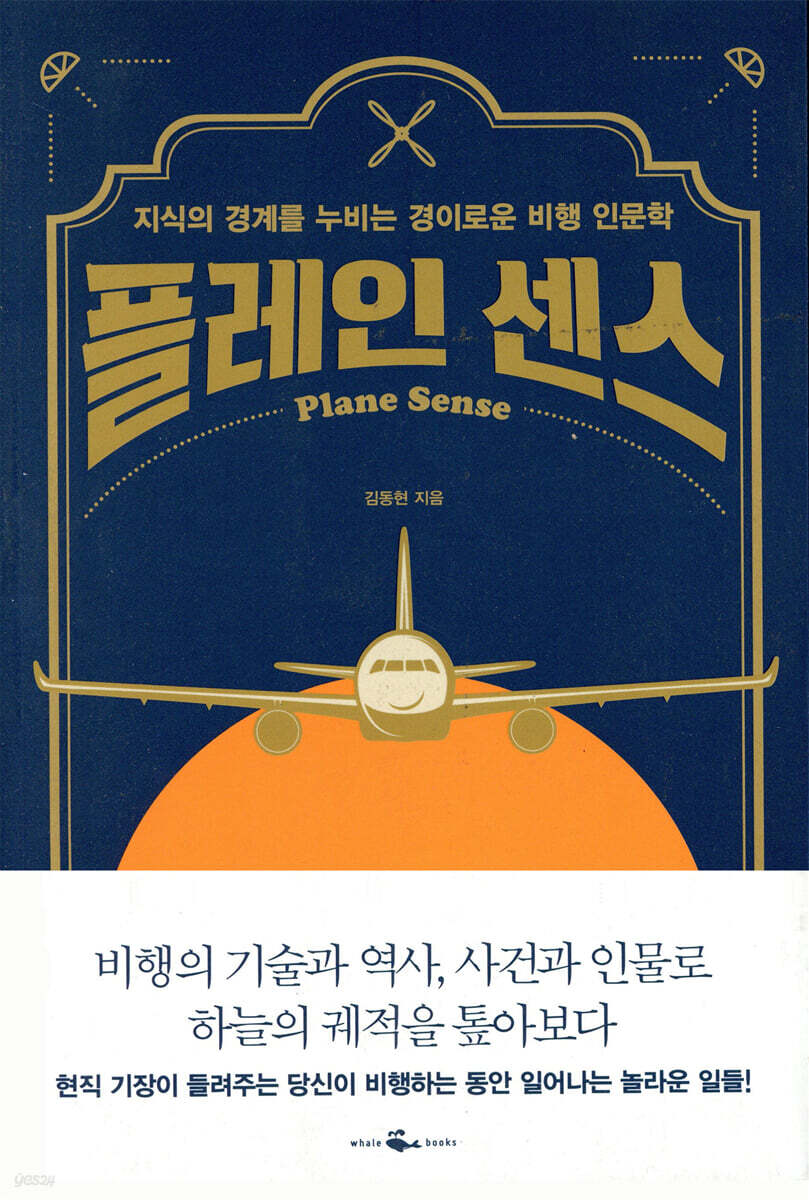
This book was written by a pilot with over 10,000 flight hours, and it conveys various interesting stories, including types of airplanes, terrorism, and flight accidents, along with the atmosphere of the scene.
- Son Min-gyu, MD of Humanities
“It starts with an exciting flight story.
“It goes so far as to question common sense!”
A current captain writes with tens of thousands of flight and exploration hours.
Since the Wright brothers succeeded in powered flight, airplanes have become the fastest means of transportation for humans, a weapon that determines victory or defeat in war, and a romantic escape from everyday life.
There have been many events and developments in aviation over the past century.
But that alone is hardly enough to explain the hundred years of flight.
Author Captain Kim Dong-hyun began flying with first-generation airline pilots and learned the behind-the-scenes stories of all kinds of aviation incidents.
And through tens of thousands of hours of flight and official accident investigation reports from aviation authorities, we explored previously unknown flights.
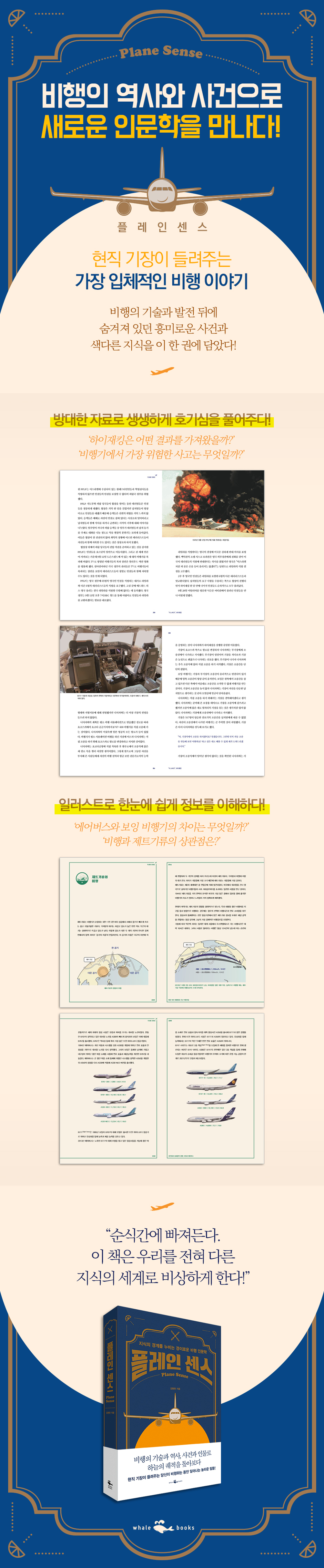
The author weaves together a long and voluminous text and hundreds of vivid photographs to tell the story of flight with a sense of wonder that goes beyond mere entertainment.
From intriguing events like "What was the ultimate outcome of hijacking?" and "What is the most dangerous accident in the air?" to the history and science of flight, such as "How do we get enough oxygen at cruising altitude?", "Why don't airplanes collide in the air?" and "What's the difference between a Boeing and an Airbus?", this book covers almost every story related to flight.
The airplanes listed in this book are no longer limited to being just a means of transportation.
From the development of reasonable flight to the creation of an airplane imbued with a human philosophy, we witness a variety of aerial trajectories unfolding in the midst of the turning points of aviation history.
As a story no one has ever told is clearly revealed by the current chief of staff, you will begin to question even the most rigid boundaries of common sense that you may have easily overlooked.
“It goes so far as to question common sense!”
A current captain writes with tens of thousands of flight and exploration hours.
Since the Wright brothers succeeded in powered flight, airplanes have become the fastest means of transportation for humans, a weapon that determines victory or defeat in war, and a romantic escape from everyday life.
There have been many events and developments in aviation over the past century.
But that alone is hardly enough to explain the hundred years of flight.
Author Captain Kim Dong-hyun began flying with first-generation airline pilots and learned the behind-the-scenes stories of all kinds of aviation incidents.
And through tens of thousands of hours of flight and official accident investigation reports from aviation authorities, we explored previously unknown flights.
The author weaves together a long and voluminous text and hundreds of vivid photographs to tell the story of flight with a sense of wonder that goes beyond mere entertainment.
From intriguing events like "What was the ultimate outcome of hijacking?" and "What is the most dangerous accident in the air?" to the history and science of flight, such as "How do we get enough oxygen at cruising altitude?", "Why don't airplanes collide in the air?" and "What's the difference between a Boeing and an Airbus?", this book covers almost every story related to flight.
The airplanes listed in this book are no longer limited to being just a means of transportation.
From the development of reasonable flight to the creation of an airplane imbued with a human philosophy, we witness a variety of aerial trajectories unfolding in the midst of the turning points of aviation history.
As a story no one has ever told is clearly revealed by the current chief of staff, you will begin to question even the most rigid boundaries of common sense that you may have easily overlooked.
- You can preview some of the book's contents.
Preview
index
Recommendation
Prologue Common sense is not so universal
1.
“HI, JACK”, hijacking
- Don't try to be a hero.
- Air Marshall, the invisible watcher
- US Marine turned hijacker
- Skyjack Sunday at Dawson's Field
- An unarmed hijacker cannot take control of a plane.
- Korean Air plane hijacked to Pyongyang
- This is Pyongyang Control Center, guiding approach.
- An otaku who passed the security check
- A ban on passenger meetings is issued.
- The greatest happiness for the greatest number?
- The best strategy is to win without fighting.
*Captain's announcement and cockpit door
2.
People who survived at 12,000 meters
- Vertical limit
- Airplane frozen in supercooled water
The boy who hid in the landing gear bay and crossed the Pacific Ocean
- Landing gear bay, a secret space for stowaways
- “CHECK WHEELS DOWN”
- The first airplane stowaway
- People who die by falling from airplanes
Deadly dangers hidden in the high altitudes
- Start jumping into a moving plane
- The sorrow of the survivors
- People who cannot return to their hometown even after death
*The structure of the airplane and the role of each part
3.
Xanadu, calling for an era of purity
- Regular passenger flight with a flight time of 25 minutes
- The Birth of a Stewardess
- The legendary propeller plane DC-3
- Plane crashes over the Grand Canyon
- The advent of radar and wireless radio
- Collectivist pilots and individualistic air traffic controllers
- Manager in the cockpit, worst disaster in Tenerife
- Pilot and controller identity and call signs
- No more children yearn for their father's uniform.
*Iron Man's plane, Super Constellation
*Attractive call signs that express the airline's identity
4.
burning aluminum cans, cabin fire
- Blue sky with zero fine dust
- Critical time 30 seconds, put on oxygen mask
- The waiting oxygen mask doesn't come down.
- The disaster caused by the habit of smoking after eating
- 229 names engraved in Peggy's Cove
- Flame of Wrath, Flash Fire
- Compressed energy will eventually explode.
- The only key to survival, time
- “SAVE YOUR LIFE BEFORE YOUR LUGGAGE”
- The gap between law and system, culture
*Force acting on an airplane in the air
5.
A Competition of Strength and Delicacy: Boeing and Airbus
- The birth of Boeing, a sturdy airplane
The Tragedy of Half-Brothers, Concorde and Tupolev 144
- The A300, which ushered in the era of twin-engine widebody aircraft
- A market where only Boeing and Airbus remain
- William Boeing, the tough commander, Roger Betheuw, the cautious philosopher
- IF NOT BOEING, I'M NOT GOING?
*Representative passenger aircraft models from Boeing and Airbus
6.
Planes that crossed the Pacific Ocean following the stars
- Routes and waypoints
- The beginning of a voyage is knowing my position.
- Astronomical awards in the longitude law
- John Harrison's watch that changed the history of navigation
- A life-threatening transoceanic flight
- The emergence of radio navigation and satellite navigation
- Pacific Autobahn, North Pacific Route
- “WHEN IN DOUBT, LOOK OUTSIDE”
*Jet streams and flight
7.
Amateurs and Pros: The Invisible Difference
- He who thinks above the runner
- Reactive, Proactive, Predictive
- Find the Parisian man
Lindbergh Becomes a Hero, Link Becomes CEO
- Pilots who couldn't keep up with the plane
- Fool the human senses, visuals and motion
- “It has been extended for 6 months.”
- Mayday, mayday, mayday
- Can an individual be free from culture?
Epilogue: The more you know, the more fun it is to fly.
Prologue Common sense is not so universal
1.
“HI, JACK”, hijacking
- Don't try to be a hero.
- Air Marshall, the invisible watcher
- US Marine turned hijacker
- Skyjack Sunday at Dawson's Field
- An unarmed hijacker cannot take control of a plane.
- Korean Air plane hijacked to Pyongyang
- This is Pyongyang Control Center, guiding approach.
- An otaku who passed the security check
- A ban on passenger meetings is issued.
- The greatest happiness for the greatest number?
- The best strategy is to win without fighting.
*Captain's announcement and cockpit door
2.
People who survived at 12,000 meters
- Vertical limit
- Airplane frozen in supercooled water
The boy who hid in the landing gear bay and crossed the Pacific Ocean
- Landing gear bay, a secret space for stowaways
- “CHECK WHEELS DOWN”
- The first airplane stowaway
- People who die by falling from airplanes
Deadly dangers hidden in the high altitudes
- Start jumping into a moving plane
- The sorrow of the survivors
- People who cannot return to their hometown even after death
*The structure of the airplane and the role of each part
3.
Xanadu, calling for an era of purity
- Regular passenger flight with a flight time of 25 minutes
- The Birth of a Stewardess
- The legendary propeller plane DC-3
- Plane crashes over the Grand Canyon
- The advent of radar and wireless radio
- Collectivist pilots and individualistic air traffic controllers
- Manager in the cockpit, worst disaster in Tenerife
- Pilot and controller identity and call signs
- No more children yearn for their father's uniform.
*Iron Man's plane, Super Constellation
*Attractive call signs that express the airline's identity
4.
burning aluminum cans, cabin fire
- Blue sky with zero fine dust
- Critical time 30 seconds, put on oxygen mask
- The waiting oxygen mask doesn't come down.
- The disaster caused by the habit of smoking after eating
- 229 names engraved in Peggy's Cove
- Flame of Wrath, Flash Fire
- Compressed energy will eventually explode.
- The only key to survival, time
- “SAVE YOUR LIFE BEFORE YOUR LUGGAGE”
- The gap between law and system, culture
*Force acting on an airplane in the air
5.
A Competition of Strength and Delicacy: Boeing and Airbus
- The birth of Boeing, a sturdy airplane
The Tragedy of Half-Brothers, Concorde and Tupolev 144
- The A300, which ushered in the era of twin-engine widebody aircraft
- A market where only Boeing and Airbus remain
- William Boeing, the tough commander, Roger Betheuw, the cautious philosopher
- IF NOT BOEING, I'M NOT GOING?
*Representative passenger aircraft models from Boeing and Airbus
6.
Planes that crossed the Pacific Ocean following the stars
- Routes and waypoints
- The beginning of a voyage is knowing my position.
- Astronomical awards in the longitude law
- John Harrison's watch that changed the history of navigation
- A life-threatening transoceanic flight
- The emergence of radio navigation and satellite navigation
- Pacific Autobahn, North Pacific Route
- “WHEN IN DOUBT, LOOK OUTSIDE”
*Jet streams and flight
7.
Amateurs and Pros: The Invisible Difference
- He who thinks above the runner
- Reactive, Proactive, Predictive
- Find the Parisian man
Lindbergh Becomes a Hero, Link Becomes CEO
- Pilots who couldn't keep up with the plane
- Fool the human senses, visuals and motion
- “It has been extended for 6 months.”
- Mayday, mayday, mayday
- Can an individual be free from culture?
Epilogue: The more you know, the more fun it is to fly.
Detailed image
Into the book
Common sense is not that universal.
There is a clear difference between the common sense about flying in Western society and our common sense.
The fact that actions that are considered normal in our country often cause great misunderstandings and repercussions overseas also stems from this difference in common sense.
Who would have thought that mistaking the cockpit for a bathroom would result in a plane being diverted, a huge fine, and even imprisonment?
I have been meticulously reading official accident investigation reports on issues that have surfaced in airline history over the past 20 years.
And each time I flew over a related area, I explored the people involved in each issue and the cultural and historical background of that society through various sources.
It's always a wonderful and moving experience to encounter the dreams and frustrations, passion and competition, challenges and efforts of those who have dedicated their lives to aviation.
---From "Common sense is not that universal"
Politicians and aviation authorities have been reluctant to consider the obvious solution of comprehensive security screening, instead announcing various alternatives.
This included building a fake Havana airport in Florida, adjacent to Cuba.
The idea that the plane would pretend to go to Cuba as the hijackers demanded, land at a fake Havana airport in Florida, and then have special forces disguised as Cuban officials board the plane to arrest the hijackers was quite plausible.
However, building a new fake Havana airport required a huge budget.
The same alternatives were proposed over and over again each time a plane was hijacked to Cuba, but the fake Havana airport was never built due to budgetary constraints.
Ironically, this ingenious idea was put into practice at Gimpo Airport in Korea the year after Raphael flew TWA to Italy.
---From "An unarmed hijacker cannot take control of an airplane"
The incident in which a pilot was killed mid-flight by a 28-year-old man suffering from depression, and 517 people were nearly killed, sent shockwaves through Japanese society.
Japan's Ministry of Land, Infrastructure, Transport and Tourism belatedly held a meeting to discuss countermeasures and installed backflow prevention gates and stationed security guards in the arrival and departure halls of all airport terminals in Japan, including Haneda Airport.
These were exactly the anti-hijacking measures Nishizawa had requested in his email. After the ANA Flight 061 incident, Japanese aviation authorities established a rule requiring cockpit doors to be locked at all times during flight.
The idea was to keep the cockpit closed until the end, even if a hijacking occurred and the lives of passengers and crew were at risk.
Cockpit tours by passengers during flights, which had previously been permitted as part of the service, were also banned, and the cockpit doors of all passenger aircraft were now marked with the warning sign “KEEP DOOR CLOSED.”
---From "The Otaku Who Passed the Full Security Check"
In countries with strict aviation security, if you refuse to comply with airport security checks or act threateningly toward crew members during a flight, you will be arrested on the spot and subject to legal punishment.
Unlike our country, most aviation authorities around the world not only prohibit passengers who refuse or obstruct security screening from boarding, but also impose fairly heavy penalties by formally prosecuting those who pose a threat to safety during the flight.
In February 2019, a South Korean passenger verbally abused a flight attendant on an American flight. After receiving a report from the flight attendant, the captain notified the authorities and immediately returned to the departure airport.
A U.S. court sentenced the passenger to six months in prison and fined him over 200 million won for hotel accommodations and airline fuel costs for other passengers involved in the diversion.
No one enjoys having someone search their body and rummage through their bag.
However, unless you are willing to sacrifice yourself at any time to save the lives of innocent civilians, you should gratefully cooperate with the thorough screening of airport security personnel.
---From "The Best Strategy: Winning Without Fighting"
On June 1, 2009, Air France Flight 447, flying from Rio de Janeiro, Brazil to Paris, France, encountered cumulonimbus clouds high above its cruising altitude over the Atlantic Ocean.
In the summer, thunderstorms of various sizes frequently form and disappear rapidly in the skies near the equator. At the time, a wide band of thunderstorms was forming along the equatorial convergence zone along the route that Air France Flight 447 was flying.
These clouds rose to an altitude of 15,000 meters above sea level.
Airline pilots should never fly into a thunderstorm under any circumstances.
However, not all clouds along the route are avoided during the flight.
If you try to avoid every cloud one by one, you will use up too much fuel and you will not be able to fly to your destination.
So pilots selectively avoid cumulonimbus clouds that they should not enter, while saving fuel as much as possible.
The ability to distinguish between passable and non-passable clouds is a critical skill for airline pilots.
---From "Airplane frozen in supercooled water"
After takeoff, the landing gear retracts into the fuselage using 3000 psi of hydraulic pressure.
This force is so enormous that it can crush one square meter with a weight of about 2,000 tons.
When the landing gear retracts or descends into the fuselage, objects in its path are literally crumpled like sheets of paper, so mechanics also take extreme care when operating hydraulics on the ground.
The National Transportation Safety Board (NTSB)'s aviation accident investigation report describes the condition of the stowaways who were hiding in the landing gear bay and died after being caught in the retracting landing gear as "crushed."
It literally means crushed.
Among the stowaways hiding in the landing gear bay, all survivors were lucky to survive because they had positioned themselves to avoid the landing gear retracting in.
---From "The Landing Gear Bay, a Secret Space for Stowaways"
To maximize the publicity of the business, Elliott hired Tony Jenner, then famous as America's first parachute pilot, as captain.
The ticket cost five dollars and there was only one seat available, next to the cockpit.
There was a lot of interest in the idea of flying across Tampa Bay with Tony Jenner.
Elliott put the seats on the historic first regular flight up for public auction.
The first successful bidder was former Tampa Mayor Abram Feil, who bid $400.
On January 1, 1914, Tony Jenners took off from the port of St. Petersburg with his first passenger, Abram Peyle.
Before departure, Jenus flew in a straight line to Tampa at an altitude of 5 meters above sea level, following the bearing calculated on the map in advance.
The flight time was only 23 minutes.
A crowd of about 3,500 people gathered on the banks of the Hillsborough River in Tampa, where the plane landed, to watch the first commercial flight, piloted by Tony Jenner, take off.
---From "A 25-minute regular passenger plane"
Even before the aircraft manufacturer Boeing and aviation authorities in Spain, the United States and the Netherlands had completed their investigations into the accident, the media blamed the accident on KLM Captain Jacob's mistake of attempting to take off without permission from the tower.
The fact that Captain Jacob, who was famous to the public as the captain of the B747 at the time, had caused the worst accident must have been a very sensational issue.
However, aviation accidents occur as a result of a causal relationship between various factors.
Captain Jacob's taking off without clearance should be defined as the ultimate act that caused the accident, not the cause of the accident.
The cause must be able to explain why such a fatal mistake occurred.
This way, we can prevent the same accident from happening again.
---From "The Manager in the Cockpit, the Worst Disaster in Tenerife"
An in-flight fire is the most dangerous emergency a passenger aircraft can face.
If a fire breaks out during a flight that causes smoke to spread throughout the cabin, flight attendants must wear protective gear and locate and extinguish the fire before passengers become seriously ill.
However, there are very few cases where crew members have successfully extinguished a fire that spread smoke throughout the cabin during an actual flight.
Even if the cabin is filled with toxic gas and passengers cannot breathe, the oxygen masks on the shelves do not come down.
This is because when a fire breaks out in a room, if the oxygen mask is activated, fresh oxygen is supplied, which makes the fire worse.
The cabin's oxygen masks only come down in the event of loss of pressure.
---From "The waiting oxygen mask does not come down"
Most countries currently prohibit all forms of smoking, including e-cigarettes, on board aircraft by aviation law.
However, if a passenger secretly smokes in the restroom, a smoke detector installed on the ceiling will sound a fire alarm in the cockpit and cabin.
If a fire breaks out inside a trash can, the fire extinguisher will automatically activate, and the cabin crew must immediately open the bathroom door where the fire alarm was triggered and check the fire situation.
For this reason, the bathroom door is designed so that even if it is locked from the inside, it can be unlocked from the outside.
If a fire alarm is sounded in a lavatory during a flight, the captain must hand over the passenger who smoked in the lavatory to the police of the destination country and report it to the aviation authorities, regardless of whether the fire has been extinguished.
While our country still tends to punish passengers who smoke on board with reprimands or fines, countries with strict aviation safety laws sometimes arrest passengers after landing and bring them to trial.
In fact, in the United States, there was a case where a court sentenced a person to two years in prison for smoking on an airplane.
---From "Flame of Wrath, Flash Fire"
Several years ago, during an actual emergency evacuation situation in Korea, some media outlets reported that “the passengers were offended because the flight attendant spoke informally to them and ordered them to “throw away their luggage!”
This incident clearly reveals the distorted perception of our society that the role of flight attendants is only to provide a 'friendly smile'.
Flight attendants are no longer the same stewardesses of the 1950s who wore white gloves and high heels.
Cabin crew members are basically the crew responsible for in-flight safety.
The terminology used by flight attendants to direct passengers in an emergency evacuation is internationally standardized.
When directing an emergency evacuation using a slide, the international standard term for flight attendants is “Shoes off, Go,” not “Ladies, please remove your heels.”
Our country's flight attendants are also trained to conduct emergency evacuation quickly and decisively in emergency situations according to these international standard procedures.
---From ““SAVE YOUR LIFE BEFORE YOUR LUGGAGE””
A characteristic of recent emergency situations is that vivid videos of the situation on board the plane at the time are uploaded to personal blogs or YouTube.
Even in that tense situation, some passengers took out their cell phones and filmed the chaotic scene inside the plane.
In modern capitalist society, where individuals have little control, people increasingly seek to express themselves through provocative behavior.
What's the point of becoming a social media victim rather than surviving an emergency?
---From "Culture, the Gap Between Law and System"
The difference in handling characteristics between aircraft types is also a matter of which aircraft type the pilot is more familiar with, not a difference in performance between Airbus and Boeing aircraft.
For airline pilots, controlling an aircraft's characteristics is merely a fundamental skill.
The real difference between Boeing and Airbus lies in their autopilot systems.
Boeing designed the plane so that the pilot could always take direct control of the plane, while Airbus designed it so that the computer could limit or intervene in the pilot's control.
Boeing aircraft use a classic control column.
Because the control stick is physically connected to the airplane's wings, Boeing airplanes always respond to the pilot's commands.
Passenger planes don't need to tilt their wings more than 90 degrees during normal operation, but Boeing planes respond to the pilot's tilt of the control stick.
A Boeing airplane is one that reacts exactly as the pilot directs, no matter the situation.
Even Boeing airplanes are designed to allow pilots to intervene in computer controls even during autonomous flight.
---From "The Tough Commander William Boeing, the Prudent Philosopher Roger Betheuw"
In the equatorial region, even a one-minute error can result in a distance deviation of up to 28 kilometers.
To accurately determine longitude, a precise clock with very little error was needed.
In 18th-century Europe, pendulum clocks and pocket watches powered by metal springs already existed, but pendulum clocks were useless on a rocking ship, and pocket watches were too inaccurate for navigation.
Ships at the time, sailing with such equipment, would often deviate from their course by several kilometers while crossing the English Channel, which was just over 100 kilometers long, and would only correct course and return to their destination port when land was in sight.
European powers, including Britain, mobilized all their national capabilities to solve the longitude measurement problem.
Astronomers relied on the method of lunation, which calculates longitude by comparing the relative positions of the moon and certain constellations.
However, astronomical methods were not only limited by meteorological conditions, but could only be applied to specific celestial configurations and required very complex observation and calculation processes.
Above all, the task of charting the relative positions of the moon and constellations was too complicated.
Although many astronomers and navigators have been working on it for decades, the lunar cycle chart has never been completed.
---From "Astronomical Awards in the Longitude and Longitude Act"
The topic of the 2017 French Baccalaureate essay was 'Can an individual be free from culture?'
The reason why questions that ask for insight into a given issue, like the Baccalaureate, are not included in our country's college entrance exam is probably because we are not confident in ensuring the fairness of the evaluation.
In a society where fairness is not guaranteed, the evaluation method can only be a multiple-choice question that evaluates memorized knowledge.
The differences in the core of simulator training and evaluation in the East and the West are similar to the differences between the CSAT and the Baccalaureate.
While memorizing procedures is enough, a pilot's careful and calm demeanor cannot be achieved without a deep sense of responsibility for passenger safety and constant self-effort.
---From "Can an Individual Be Freed from Culture?"
As the Federal Aviation Administration (FAA) puts it, "A pilot's accomplishment is like a building's standing."
Skills must be based on knowledge, and what governs knowledge and skills is the pilot's attitude.
That attitude starts with understanding the background behind the rules and procedures.
Everything in the world is seen as much as you know.
The same goes for flying.
All aviation knowledge, including airplanes, pilots, operating systems, and boarding procedures, becomes fully self-evident only when understood within the philosophical and historical context of that society.
I hope that through this book, readers will be able to transform the boring moments they sometimes experience while traveling by air into meaningful and interesting experiences.
There is a clear difference between the common sense about flying in Western society and our common sense.
The fact that actions that are considered normal in our country often cause great misunderstandings and repercussions overseas also stems from this difference in common sense.
Who would have thought that mistaking the cockpit for a bathroom would result in a plane being diverted, a huge fine, and even imprisonment?
I have been meticulously reading official accident investigation reports on issues that have surfaced in airline history over the past 20 years.
And each time I flew over a related area, I explored the people involved in each issue and the cultural and historical background of that society through various sources.
It's always a wonderful and moving experience to encounter the dreams and frustrations, passion and competition, challenges and efforts of those who have dedicated their lives to aviation.
---From "Common sense is not that universal"
Politicians and aviation authorities have been reluctant to consider the obvious solution of comprehensive security screening, instead announcing various alternatives.
This included building a fake Havana airport in Florida, adjacent to Cuba.
The idea that the plane would pretend to go to Cuba as the hijackers demanded, land at a fake Havana airport in Florida, and then have special forces disguised as Cuban officials board the plane to arrest the hijackers was quite plausible.
However, building a new fake Havana airport required a huge budget.
The same alternatives were proposed over and over again each time a plane was hijacked to Cuba, but the fake Havana airport was never built due to budgetary constraints.
Ironically, this ingenious idea was put into practice at Gimpo Airport in Korea the year after Raphael flew TWA to Italy.
---From "An unarmed hijacker cannot take control of an airplane"
The incident in which a pilot was killed mid-flight by a 28-year-old man suffering from depression, and 517 people were nearly killed, sent shockwaves through Japanese society.
Japan's Ministry of Land, Infrastructure, Transport and Tourism belatedly held a meeting to discuss countermeasures and installed backflow prevention gates and stationed security guards in the arrival and departure halls of all airport terminals in Japan, including Haneda Airport.
These were exactly the anti-hijacking measures Nishizawa had requested in his email. After the ANA Flight 061 incident, Japanese aviation authorities established a rule requiring cockpit doors to be locked at all times during flight.
The idea was to keep the cockpit closed until the end, even if a hijacking occurred and the lives of passengers and crew were at risk.
Cockpit tours by passengers during flights, which had previously been permitted as part of the service, were also banned, and the cockpit doors of all passenger aircraft were now marked with the warning sign “KEEP DOOR CLOSED.”
---From "The Otaku Who Passed the Full Security Check"
In countries with strict aviation security, if you refuse to comply with airport security checks or act threateningly toward crew members during a flight, you will be arrested on the spot and subject to legal punishment.
Unlike our country, most aviation authorities around the world not only prohibit passengers who refuse or obstruct security screening from boarding, but also impose fairly heavy penalties by formally prosecuting those who pose a threat to safety during the flight.
In February 2019, a South Korean passenger verbally abused a flight attendant on an American flight. After receiving a report from the flight attendant, the captain notified the authorities and immediately returned to the departure airport.
A U.S. court sentenced the passenger to six months in prison and fined him over 200 million won for hotel accommodations and airline fuel costs for other passengers involved in the diversion.
No one enjoys having someone search their body and rummage through their bag.
However, unless you are willing to sacrifice yourself at any time to save the lives of innocent civilians, you should gratefully cooperate with the thorough screening of airport security personnel.
---From "The Best Strategy: Winning Without Fighting"
On June 1, 2009, Air France Flight 447, flying from Rio de Janeiro, Brazil to Paris, France, encountered cumulonimbus clouds high above its cruising altitude over the Atlantic Ocean.
In the summer, thunderstorms of various sizes frequently form and disappear rapidly in the skies near the equator. At the time, a wide band of thunderstorms was forming along the equatorial convergence zone along the route that Air France Flight 447 was flying.
These clouds rose to an altitude of 15,000 meters above sea level.
Airline pilots should never fly into a thunderstorm under any circumstances.
However, not all clouds along the route are avoided during the flight.
If you try to avoid every cloud one by one, you will use up too much fuel and you will not be able to fly to your destination.
So pilots selectively avoid cumulonimbus clouds that they should not enter, while saving fuel as much as possible.
The ability to distinguish between passable and non-passable clouds is a critical skill for airline pilots.
---From "Airplane frozen in supercooled water"
After takeoff, the landing gear retracts into the fuselage using 3000 psi of hydraulic pressure.
This force is so enormous that it can crush one square meter with a weight of about 2,000 tons.
When the landing gear retracts or descends into the fuselage, objects in its path are literally crumpled like sheets of paper, so mechanics also take extreme care when operating hydraulics on the ground.
The National Transportation Safety Board (NTSB)'s aviation accident investigation report describes the condition of the stowaways who were hiding in the landing gear bay and died after being caught in the retracting landing gear as "crushed."
It literally means crushed.
Among the stowaways hiding in the landing gear bay, all survivors were lucky to survive because they had positioned themselves to avoid the landing gear retracting in.
---From "The Landing Gear Bay, a Secret Space for Stowaways"
To maximize the publicity of the business, Elliott hired Tony Jenner, then famous as America's first parachute pilot, as captain.
The ticket cost five dollars and there was only one seat available, next to the cockpit.
There was a lot of interest in the idea of flying across Tampa Bay with Tony Jenner.
Elliott put the seats on the historic first regular flight up for public auction.
The first successful bidder was former Tampa Mayor Abram Feil, who bid $400.
On January 1, 1914, Tony Jenners took off from the port of St. Petersburg with his first passenger, Abram Peyle.
Before departure, Jenus flew in a straight line to Tampa at an altitude of 5 meters above sea level, following the bearing calculated on the map in advance.
The flight time was only 23 minutes.
A crowd of about 3,500 people gathered on the banks of the Hillsborough River in Tampa, where the plane landed, to watch the first commercial flight, piloted by Tony Jenner, take off.
---From "A 25-minute regular passenger plane"
Even before the aircraft manufacturer Boeing and aviation authorities in Spain, the United States and the Netherlands had completed their investigations into the accident, the media blamed the accident on KLM Captain Jacob's mistake of attempting to take off without permission from the tower.
The fact that Captain Jacob, who was famous to the public as the captain of the B747 at the time, had caused the worst accident must have been a very sensational issue.
However, aviation accidents occur as a result of a causal relationship between various factors.
Captain Jacob's taking off without clearance should be defined as the ultimate act that caused the accident, not the cause of the accident.
The cause must be able to explain why such a fatal mistake occurred.
This way, we can prevent the same accident from happening again.
---From "The Manager in the Cockpit, the Worst Disaster in Tenerife"
An in-flight fire is the most dangerous emergency a passenger aircraft can face.
If a fire breaks out during a flight that causes smoke to spread throughout the cabin, flight attendants must wear protective gear and locate and extinguish the fire before passengers become seriously ill.
However, there are very few cases where crew members have successfully extinguished a fire that spread smoke throughout the cabin during an actual flight.
Even if the cabin is filled with toxic gas and passengers cannot breathe, the oxygen masks on the shelves do not come down.
This is because when a fire breaks out in a room, if the oxygen mask is activated, fresh oxygen is supplied, which makes the fire worse.
The cabin's oxygen masks only come down in the event of loss of pressure.
---From "The waiting oxygen mask does not come down"
Most countries currently prohibit all forms of smoking, including e-cigarettes, on board aircraft by aviation law.
However, if a passenger secretly smokes in the restroom, a smoke detector installed on the ceiling will sound a fire alarm in the cockpit and cabin.
If a fire breaks out inside a trash can, the fire extinguisher will automatically activate, and the cabin crew must immediately open the bathroom door where the fire alarm was triggered and check the fire situation.
For this reason, the bathroom door is designed so that even if it is locked from the inside, it can be unlocked from the outside.
If a fire alarm is sounded in a lavatory during a flight, the captain must hand over the passenger who smoked in the lavatory to the police of the destination country and report it to the aviation authorities, regardless of whether the fire has been extinguished.
While our country still tends to punish passengers who smoke on board with reprimands or fines, countries with strict aviation safety laws sometimes arrest passengers after landing and bring them to trial.
In fact, in the United States, there was a case where a court sentenced a person to two years in prison for smoking on an airplane.
---From "Flame of Wrath, Flash Fire"
Several years ago, during an actual emergency evacuation situation in Korea, some media outlets reported that “the passengers were offended because the flight attendant spoke informally to them and ordered them to “throw away their luggage!”
This incident clearly reveals the distorted perception of our society that the role of flight attendants is only to provide a 'friendly smile'.
Flight attendants are no longer the same stewardesses of the 1950s who wore white gloves and high heels.
Cabin crew members are basically the crew responsible for in-flight safety.
The terminology used by flight attendants to direct passengers in an emergency evacuation is internationally standardized.
When directing an emergency evacuation using a slide, the international standard term for flight attendants is “Shoes off, Go,” not “Ladies, please remove your heels.”
Our country's flight attendants are also trained to conduct emergency evacuation quickly and decisively in emergency situations according to these international standard procedures.
---From ““SAVE YOUR LIFE BEFORE YOUR LUGGAGE””
A characteristic of recent emergency situations is that vivid videos of the situation on board the plane at the time are uploaded to personal blogs or YouTube.
Even in that tense situation, some passengers took out their cell phones and filmed the chaotic scene inside the plane.
In modern capitalist society, where individuals have little control, people increasingly seek to express themselves through provocative behavior.
What's the point of becoming a social media victim rather than surviving an emergency?
---From "Culture, the Gap Between Law and System"
The difference in handling characteristics between aircraft types is also a matter of which aircraft type the pilot is more familiar with, not a difference in performance between Airbus and Boeing aircraft.
For airline pilots, controlling an aircraft's characteristics is merely a fundamental skill.
The real difference between Boeing and Airbus lies in their autopilot systems.
Boeing designed the plane so that the pilot could always take direct control of the plane, while Airbus designed it so that the computer could limit or intervene in the pilot's control.
Boeing aircraft use a classic control column.
Because the control stick is physically connected to the airplane's wings, Boeing airplanes always respond to the pilot's commands.
Passenger planes don't need to tilt their wings more than 90 degrees during normal operation, but Boeing planes respond to the pilot's tilt of the control stick.
A Boeing airplane is one that reacts exactly as the pilot directs, no matter the situation.
Even Boeing airplanes are designed to allow pilots to intervene in computer controls even during autonomous flight.
---From "The Tough Commander William Boeing, the Prudent Philosopher Roger Betheuw"
In the equatorial region, even a one-minute error can result in a distance deviation of up to 28 kilometers.
To accurately determine longitude, a precise clock with very little error was needed.
In 18th-century Europe, pendulum clocks and pocket watches powered by metal springs already existed, but pendulum clocks were useless on a rocking ship, and pocket watches were too inaccurate for navigation.
Ships at the time, sailing with such equipment, would often deviate from their course by several kilometers while crossing the English Channel, which was just over 100 kilometers long, and would only correct course and return to their destination port when land was in sight.
European powers, including Britain, mobilized all their national capabilities to solve the longitude measurement problem.
Astronomers relied on the method of lunation, which calculates longitude by comparing the relative positions of the moon and certain constellations.
However, astronomical methods were not only limited by meteorological conditions, but could only be applied to specific celestial configurations and required very complex observation and calculation processes.
Above all, the task of charting the relative positions of the moon and constellations was too complicated.
Although many astronomers and navigators have been working on it for decades, the lunar cycle chart has never been completed.
---From "Astronomical Awards in the Longitude and Longitude Act"
The topic of the 2017 French Baccalaureate essay was 'Can an individual be free from culture?'
The reason why questions that ask for insight into a given issue, like the Baccalaureate, are not included in our country's college entrance exam is probably because we are not confident in ensuring the fairness of the evaluation.
In a society where fairness is not guaranteed, the evaluation method can only be a multiple-choice question that evaluates memorized knowledge.
The differences in the core of simulator training and evaluation in the East and the West are similar to the differences between the CSAT and the Baccalaureate.
While memorizing procedures is enough, a pilot's careful and calm demeanor cannot be achieved without a deep sense of responsibility for passenger safety and constant self-effort.
---From "Can an Individual Be Freed from Culture?"
As the Federal Aviation Administration (FAA) puts it, "A pilot's accomplishment is like a building's standing."
Skills must be based on knowledge, and what governs knowledge and skills is the pilot's attitude.
That attitude starts with understanding the background behind the rules and procedures.
Everything in the world is seen as much as you know.
The same goes for flying.
All aviation knowledge, including airplanes, pilots, operating systems, and boarding procedures, becomes fully self-evident only when understood within the philosophical and historical context of that society.
I hope that through this book, readers will be able to transform the boring moments they sometimes experience while traveling by air into meaningful and interesting experiences.
---From "Flight is as fun as you know"
Publisher's Review
“It starts with an exciting flight story.
“It goes so far as to question common sense!”
A current captain writes with tens of thousands of flight and exploration hours.
Since the Wright brothers succeeded in powered flight, airplanes have become the fastest means of transportation for humans, a weapon that determines victory or defeat in war, and a romantic escape from everyday life.
There have been many events and developments in aviation over the past century.
But that alone is hardly enough to explain the hundred years of flight.
Author Captain Kim Dong-hyun began flying with first-generation airline pilots and learned the behind-the-scenes stories of all kinds of aviation incidents.
And through tens of thousands of hours of flight and official accident investigation reports from aviation authorities, we explored previously unknown flights.
The author weaves together a long and voluminous text and hundreds of vivid photographs to tell the story of flight with a sense of wonder that goes beyond mere entertainment.
From intriguing events like "What was the ultimate outcome of hijacking?" and "What is the most dangerous accident in the air?" to the history and science of flight, such as "How do we get enough oxygen at cruising altitude?", "Why don't airplanes collide in the air?" and "What's the difference between a Boeing and an Airbus?", this book covers almost every story related to flight.
The airplanes listed in this book are no longer limited to being just a means of transportation.
From the development of reasonable flight to the creation of an airplane imbued with a human philosophy, we witness a variety of aerial trajectories unfolding in the midst of the turning points of aviation history.
As a story no one has ever told is clearly revealed by the current chief of staff, you will begin to question even the most rigid boundaries of common sense that you have easily overlooked.
"The Pilot, the Reason You'll Meet Beyond"
Immerse yourself in a world of unique knowledge through the fascinating history of the air.
There are clues to reason between the interesting stories in this book, Plain Sense.
The hidden cultural and individual roles in aviation accidents, the inside story of those who stowaway onto airplanes, the socio-political issues behind hijacking incidents, and the philosophical pillars of those who created faster and safer airplanes are the keys to understanding this thinking.
While it presents gripping and tense events, what ultimately runs through it all is a human being connected to the world.
This is why this book will never be read as a monotonous 'history of flight technology'.
“A pilot is not an operator who operates the airplane’s automatic devices according to GPS guidance.
The role of an airline pilot is to ensure the safety of the aircraft and passengers to their destination under any circumstances.
Like Lindbergh, Smith, and Ulm, pilots must constantly develop their knowledge and experience, and only through such constant effort can they ensure the absolute safety of their passengers against the uncontrollable contingencies of nature.”
- In the text
The author also looks back on the history of aviation and talks about his responsibilities and roles as an individual and as a pilot.
The fact that we think of airplanes as the safest means of transportation cannot be explained by the simple fact of technological advancement alone.
The history of the air continues to be solidly sustained by the developments achieved by countless people and the individual roles played in protecting the air.
“A book that will fill your flying journey with intellectual pleasure.”
Expand your limited world of knowledge and become truly extraordinary.
For those of us who are accustomed to traveling abroad and riding airplanes, ignoring the story of flying is like missing out on the intellectual pleasure that is most easily attainable.
In that sense, this book is a must-read before you get on and off the plane again.
Humans have trained themselves to adapt to the air.
They risked their lives to cross the continent and developed navigation techniques to travel farther and faster than ever before.
This book, which chronicles the journey of humans on Earth, will leave you feeling vibrant and intrigued.
And when interest turns into knowledge, you spontaneously connect and savor various pieces of knowledge in every moment of your flight.
“Everything in the world is seen to the extent that it is known.
The same goes for flying.
All aviation knowledge, including airplanes, pilots, operating systems, and boarding procedures, becomes fully self-evident only when understood within the philosophical and historical context of that society.
I hope that through this book, readers will be able to transform the boring moments they sometimes experience while traveling by air into meaningful and interesting experiences.”
- In the text
Now you won't fill your flights with 'moments of movement' or fill your seats with passive passengers.
Your flight journey will be perfect with almost every story that crosses the border between the air and people.
“It goes so far as to question common sense!”
A current captain writes with tens of thousands of flight and exploration hours.
Since the Wright brothers succeeded in powered flight, airplanes have become the fastest means of transportation for humans, a weapon that determines victory or defeat in war, and a romantic escape from everyday life.
There have been many events and developments in aviation over the past century.
But that alone is hardly enough to explain the hundred years of flight.
Author Captain Kim Dong-hyun began flying with first-generation airline pilots and learned the behind-the-scenes stories of all kinds of aviation incidents.
And through tens of thousands of hours of flight and official accident investigation reports from aviation authorities, we explored previously unknown flights.
The author weaves together a long and voluminous text and hundreds of vivid photographs to tell the story of flight with a sense of wonder that goes beyond mere entertainment.
From intriguing events like "What was the ultimate outcome of hijacking?" and "What is the most dangerous accident in the air?" to the history and science of flight, such as "How do we get enough oxygen at cruising altitude?", "Why don't airplanes collide in the air?" and "What's the difference between a Boeing and an Airbus?", this book covers almost every story related to flight.
The airplanes listed in this book are no longer limited to being just a means of transportation.
From the development of reasonable flight to the creation of an airplane imbued with a human philosophy, we witness a variety of aerial trajectories unfolding in the midst of the turning points of aviation history.
As a story no one has ever told is clearly revealed by the current chief of staff, you will begin to question even the most rigid boundaries of common sense that you have easily overlooked.
"The Pilot, the Reason You'll Meet Beyond"
Immerse yourself in a world of unique knowledge through the fascinating history of the air.
There are clues to reason between the interesting stories in this book, Plain Sense.
The hidden cultural and individual roles in aviation accidents, the inside story of those who stowaway onto airplanes, the socio-political issues behind hijacking incidents, and the philosophical pillars of those who created faster and safer airplanes are the keys to understanding this thinking.
While it presents gripping and tense events, what ultimately runs through it all is a human being connected to the world.
This is why this book will never be read as a monotonous 'history of flight technology'.
“A pilot is not an operator who operates the airplane’s automatic devices according to GPS guidance.
The role of an airline pilot is to ensure the safety of the aircraft and passengers to their destination under any circumstances.
Like Lindbergh, Smith, and Ulm, pilots must constantly develop their knowledge and experience, and only through such constant effort can they ensure the absolute safety of their passengers against the uncontrollable contingencies of nature.”
- In the text
The author also looks back on the history of aviation and talks about his responsibilities and roles as an individual and as a pilot.
The fact that we think of airplanes as the safest means of transportation cannot be explained by the simple fact of technological advancement alone.
The history of the air continues to be solidly sustained by the developments achieved by countless people and the individual roles played in protecting the air.
“A book that will fill your flying journey with intellectual pleasure.”
Expand your limited world of knowledge and become truly extraordinary.
For those of us who are accustomed to traveling abroad and riding airplanes, ignoring the story of flying is like missing out on the intellectual pleasure that is most easily attainable.
In that sense, this book is a must-read before you get on and off the plane again.
Humans have trained themselves to adapt to the air.
They risked their lives to cross the continent and developed navigation techniques to travel farther and faster than ever before.
This book, which chronicles the journey of humans on Earth, will leave you feeling vibrant and intrigued.
And when interest turns into knowledge, you spontaneously connect and savor various pieces of knowledge in every moment of your flight.
“Everything in the world is seen to the extent that it is known.
The same goes for flying.
All aviation knowledge, including airplanes, pilots, operating systems, and boarding procedures, becomes fully self-evident only when understood within the philosophical and historical context of that society.
I hope that through this book, readers will be able to transform the boring moments they sometimes experience while traveling by air into meaningful and interesting experiences.”
- In the text
Now you won't fill your flights with 'moments of movement' or fill your seats with passive passengers.
Your flight journey will be perfect with almost every story that crosses the border between the air and people.
GOODS SPECIFICS
- Date of issue: June 1, 2020
- Page count, weight, size: 384 pages | 606g | 153*225*30mm
- ISBN13: 9791190313377
- ISBN10: 1190313375
You may also like
카테고리
korean


korean

![GQ KOREA Mark (Monthly): December [2025]](http://librairie.coreenne.fr/cdn/shop/files/8ef265dbbfbf186523ed75ba7319009d.jpg?v=1765340328&width=3840)


