

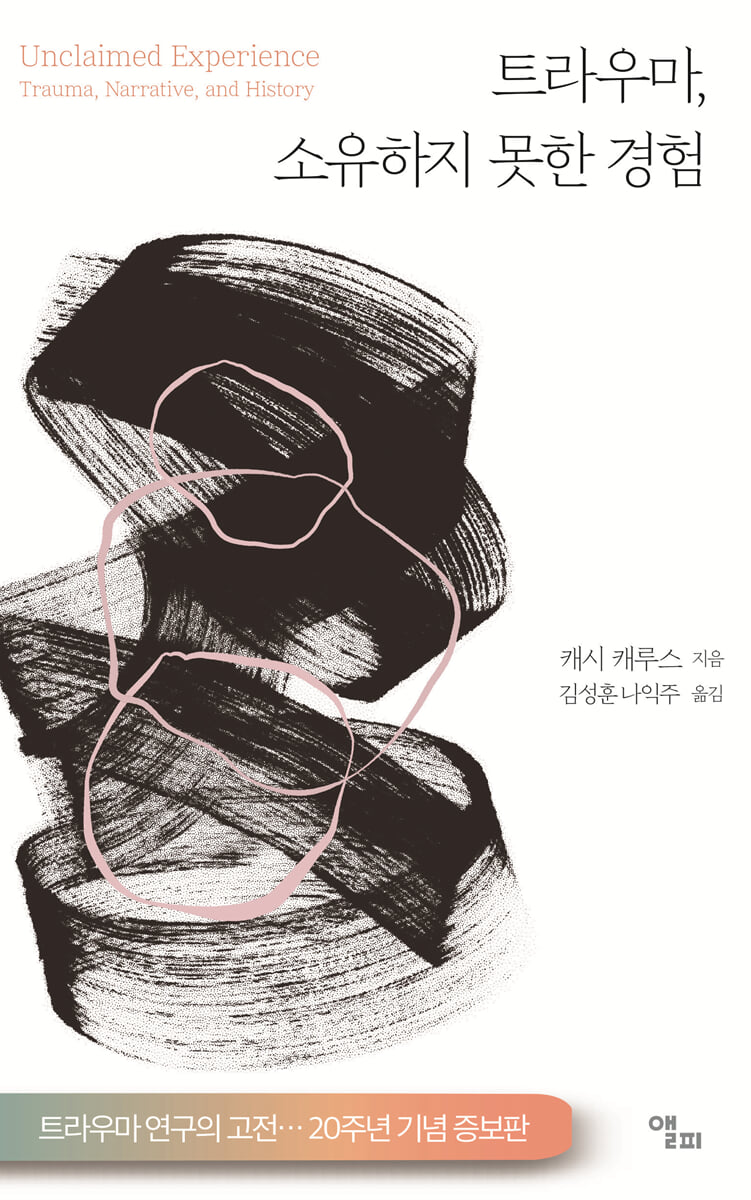
Trauma, an experience not owned
 |
Description
Book Introduction
A classic in trauma studies...first complete translation into Korean!
A classic in trauma studies
This is the 20th anniversary expanded edition of a must-read book on trauma studies that has been widely read and cited in various academic fields, including humanities, social sciences, and art studies, both domestically and internationally since its first publication in 1996.
As the author, Carus, recalls in his “Afterword,” the book played a decisive role in establishing “trauma studies,” which had not yet established itself as an independent field of study at the time of the first edition’s publication, as a central field in the humanities.
The insights Carus presented in 1996—including the testimony scene and reader ethics, clinical discussions on the dimension of structural violence, the ethics of historical narrative, the genealogy of the concept of trauma, and intergenerational memory and image mediation—are still being accepted, varied, deepened, and expanded across various academic horizons, even now, 20 or 30 years later.
In this 'classic study of trauma' that approaches the essence of the concept of trauma across literary criticism, psychoanalysis, cultural criticism, hermeneutics, and philosophy, the legacy Carus leaves behind is not a definition or answer to a specific concept.
It is a complex and ongoing question in itself: 'How did you listen and how did you respond?'
A classic in trauma studies
This is the 20th anniversary expanded edition of a must-read book on trauma studies that has been widely read and cited in various academic fields, including humanities, social sciences, and art studies, both domestically and internationally since its first publication in 1996.
As the author, Carus, recalls in his “Afterword,” the book played a decisive role in establishing “trauma studies,” which had not yet established itself as an independent field of study at the time of the first edition’s publication, as a central field in the humanities.
The insights Carus presented in 1996—including the testimony scene and reader ethics, clinical discussions on the dimension of structural violence, the ethics of historical narrative, the genealogy of the concept of trauma, and intergenerational memory and image mediation—are still being accepted, varied, deepened, and expanded across various academic horizons, even now, 20 or 30 years later.
In this 'classic study of trauma' that approaches the essence of the concept of trauma across literary criticism, psychoanalysis, cultural criticism, hermeneutics, and philosophy, the legacy Carus leaves behind is not a definition or answer to a specific concept.
It is a complex and ongoing question in itself: 'How did you listen and how did you respond?'
index
Translator's note
| Introduction | Wounds and Voices
Chapter 1: Unowned Experience: Trauma and the Possibility of History _ Freud, Moses and Monotheism
Exodus, the History of Departure
Disaster Writing
Chapter 2 | Literature and the Reenactment of Memory _Duras, René, Hiroshima Mon Amour
Betrayal of Vision
“Listen to me.”
The Tale of the Typing
Chapter 3 | Traumatic Departure: Survival and History in Freud _ Beyond the Pleasure Principle, Moses and Monotheism
History and Survival
traumatic awakening
Historical trauma, or Jewish history
Chapter 4: The Falling Body and the Influence of Instruction - De Man, Kant, and Kleist
World of Fall
Body of Philosophy
elegant metaphor
Shadowy reality
The influence of instructions
Chapter 5: Traumatic Awakening: Freud and Lacan, and the Ethics of Memory
A story about a dream
A story about awakening
The nature of survival
An unavoidable command
“I saw it too.”
| Review | An Appeal to Life: Literary Voices in Trauma Theory
Search
| Introduction | Wounds and Voices
Chapter 1: Unowned Experience: Trauma and the Possibility of History _ Freud, Moses and Monotheism
Exodus, the History of Departure
Disaster Writing
Chapter 2 | Literature and the Reenactment of Memory _Duras, René, Hiroshima Mon Amour
Betrayal of Vision
“Listen to me.”
The Tale of the Typing
Chapter 3 | Traumatic Departure: Survival and History in Freud _ Beyond the Pleasure Principle, Moses and Monotheism
History and Survival
traumatic awakening
Historical trauma, or Jewish history
Chapter 4: The Falling Body and the Influence of Instruction - De Man, Kant, and Kleist
World of Fall
Body of Philosophy
elegant metaphor
Shadowy reality
The influence of instructions
Chapter 5: Traumatic Awakening: Freud and Lacan, and the Ethics of Memory
A story about a dream
A story about awakening
The nature of survival
An unavoidable command
“I saw it too.”
| Review | An Appeal to Life: Literary Voices in Trauma Theory
Search
Into the book
What does the metaphor of the wound and the voice tell us? And what lies at the heart of Freud's writings on trauma, whether in the words it conveys or the story it unwittingly tells? It is that trauma appears to be more than a pathology, or a simple illness of the wounded psyche.
That is, trauma is always a story of a crying wound, an attempt to speak to us to tell us a reality or truth that cannot be known otherwise.
--- p.24
The traumatic nature of history could be said to mean that events are historical only to the extent that they implicate others.
It is precisely in this respect that Jewish history has been one of suffering caused by the trauma of others.
--- p.54
He listens to her because he does not know, because he cannot face his past, and because he has no self to refer to in his questions.
And because he speaks from this very impossible point, asking questions that even he himself does not fully possess, he is able to enter into her story and allow the answers to that story to say more than it could originally say.
Not because I know her truth, but because I don't know my own truth.
--- p.96
Post-traumatic stress disorder provides the most direct link between mental health and external violence, and appears to be the most devastating mental disorder.
In this essay, I will argue that trauma is not simply the impact of destruction, but fundamentally a puzzle of survival.
Only by recognizing traumatic experiences as a paradoxical relationship between destructiveness and survival can we recognize the legacy of incomprehensibility that lies at the heart of catastrophic experiences.
--- p.132
Today, trauma theory is one area where this survival is taking place precisely.
This is true not only in the conviction that psychiatry has transformed and internalized trauma theory, but also in the creative uncertainty of this theory, which remains an unsolved puzzle for both psychiatry and psychoanalysis.
That riddle is trauma as destruction and survival at the same time, and it is this that lies at the heart of Freud's insight itself.
--- p.163
Traumatic experiences suggest a paradox that goes beyond the psychological dimension of the accompanying pain.
The paradox is that the moment of most direct witnessing of a violent event can manifest itself as an absolute inability to know about it.
Paradoxically, so to speak, immediacy can take the form of belatedness.
Recurrences of the traumatic event continue to intrude into our vision, even though we are still unconscious of it.
This repetition thus extends beyond what can be simply seen or known, and suggests a larger relationship to events that are intimately connected to both the belatedness and the incomprehensibility that remain at the heart of this repetitive seeing.
That is, trauma is always a story of a crying wound, an attempt to speak to us to tell us a reality or truth that cannot be known otherwise.
--- p.24
The traumatic nature of history could be said to mean that events are historical only to the extent that they implicate others.
It is precisely in this respect that Jewish history has been one of suffering caused by the trauma of others.
--- p.54
He listens to her because he does not know, because he cannot face his past, and because he has no self to refer to in his questions.
And because he speaks from this very impossible point, asking questions that even he himself does not fully possess, he is able to enter into her story and allow the answers to that story to say more than it could originally say.
Not because I know her truth, but because I don't know my own truth.
--- p.96
Post-traumatic stress disorder provides the most direct link between mental health and external violence, and appears to be the most devastating mental disorder.
In this essay, I will argue that trauma is not simply the impact of destruction, but fundamentally a puzzle of survival.
Only by recognizing traumatic experiences as a paradoxical relationship between destructiveness and survival can we recognize the legacy of incomprehensibility that lies at the heart of catastrophic experiences.
--- p.132
Today, trauma theory is one area where this survival is taking place precisely.
This is true not only in the conviction that psychiatry has transformed and internalized trauma theory, but also in the creative uncertainty of this theory, which remains an unsolved puzzle for both psychiatry and psychoanalysis.
That riddle is trauma as destruction and survival at the same time, and it is this that lies at the heart of Freud's insight itself.
--- p.163
Traumatic experiences suggest a paradox that goes beyond the psychological dimension of the accompanying pain.
The paradox is that the moment of most direct witnessing of a violent event can manifest itself as an absolute inability to know about it.
Paradoxically, so to speak, immediacy can take the form of belatedness.
Recurrences of the traumatic event continue to intrude into our vision, even though we are still unconscious of it.
This repetition thus extends beyond what can be simply seen or known, and suggests a larger relationship to events that are intimately connected to both the belatedness and the incomprehensibility that remain at the heart of this repetitive seeing.
--- p.199
Publisher's Review
How to listen and how to respond
The process of understanding Carus's text begins not simply with a narrative reading of events, but with a close examination of the paradoxical structure that experience reveals over time.
Some experiences are not fully recognized or ignored at the time they occur, only to catch up with us later, and some wounds bring pain only after a period of time has passed.
The scene where an 'accident' that has apparently already passed is revived as a nightmare, flashback, or physical reaction after some time has passed clearly shows the delayed structure of trauma.
What is 'returning' at this time is not a simple memory.
It is a reality that has not yet been fully revealed, and the story captures the subtle shocks that occur at the point where that reality is revealed.
At that juncture, sentences, images, and silence combine into “an attempt to speak to us.”
Enduring these moments of 'delay' and deeply examining their structure and implications is an essential process for 'getting through' this book.
Rather than reducing events to fragmentary meanings, the author calls for an ethics of repeated listening and response, paying attention to delayed 'appeals' and complex semantic networks.
Literary reading is presented as a key field for practicing that ethics.
The Delayed Structure of Trauma and the Ethics of Response
This book, "Trauma: An Unowned Experience," consists of an introduction, five chapters, and an afterword to the expanded edition.
Each chapter explores in depth key themes surrounding the temporal and structural characteristics of trauma, issues of language and narrative, and repetition and survival at both individual and collective levels.
By presenting trauma as a concept that transcends pathological symptoms or clinical classifications, Carus leads us to reconsider its complex structure and mode of operation at the intersection of language, history, and ethics.
As we follow Carus's metaphorical narrative, the reader will grasp how 'conscious' and 'unconscious' elements, 'knowing' and 'not knowing' are intertwined within the traumatic language and the narratives that contain it.
The process of following these subtle interactions is central to understanding the text, enabling readers to emotionally perceive the complex structure and operation of traumatic experiences.
This reasoning is particularly meaningful because it is closely linked to Korea's historical and social time.
In a world of overlapping memories, including the Japanese colonial period, war and division, state violence and democratization, and large-scale disasters and losses, "delay" is by no means an unfamiliar concept.
Literature, film, and oral history that document the wounds of Korean society thus provide a space where the concepts of this book can be put into practice in real life.
The process of understanding Carus's text begins not simply with a narrative reading of events, but with a close examination of the paradoxical structure that experience reveals over time.
Some experiences are not fully recognized or ignored at the time they occur, only to catch up with us later, and some wounds bring pain only after a period of time has passed.
The scene where an 'accident' that has apparently already passed is revived as a nightmare, flashback, or physical reaction after some time has passed clearly shows the delayed structure of trauma.
What is 'returning' at this time is not a simple memory.
It is a reality that has not yet been fully revealed, and the story captures the subtle shocks that occur at the point where that reality is revealed.
At that juncture, sentences, images, and silence combine into “an attempt to speak to us.”
Enduring these moments of 'delay' and deeply examining their structure and implications is an essential process for 'getting through' this book.
Rather than reducing events to fragmentary meanings, the author calls for an ethics of repeated listening and response, paying attention to delayed 'appeals' and complex semantic networks.
Literary reading is presented as a key field for practicing that ethics.
The Delayed Structure of Trauma and the Ethics of Response
This book, "Trauma: An Unowned Experience," consists of an introduction, five chapters, and an afterword to the expanded edition.
Each chapter explores in depth key themes surrounding the temporal and structural characteristics of trauma, issues of language and narrative, and repetition and survival at both individual and collective levels.
By presenting trauma as a concept that transcends pathological symptoms or clinical classifications, Carus leads us to reconsider its complex structure and mode of operation at the intersection of language, history, and ethics.
As we follow Carus's metaphorical narrative, the reader will grasp how 'conscious' and 'unconscious' elements, 'knowing' and 'not knowing' are intertwined within the traumatic language and the narratives that contain it.
The process of following these subtle interactions is central to understanding the text, enabling readers to emotionally perceive the complex structure and operation of traumatic experiences.
This reasoning is particularly meaningful because it is closely linked to Korea's historical and social time.
In a world of overlapping memories, including the Japanese colonial period, war and division, state violence and democratization, and large-scale disasters and losses, "delay" is by no means an unfamiliar concept.
Literature, film, and oral history that document the wounds of Korean society thus provide a space where the concepts of this book can be put into practice in real life.
GOODS SPECIFICS
- Date of issue: November 20, 2025
- Page count, weight, size: 306 pages | 434g | 132*210*19mm
- ISBN13: 9791192647753
- ISBN10: 1192647750
You may also like
카테고리
korean


korean

![GQ KOREA Mark (Monthly): December [2025]](http://librairie.coreenne.fr/cdn/shop/files/8ef265dbbfbf186523ed75ba7319009d.jpg?v=1765340328&width=3840)


