

Iliad
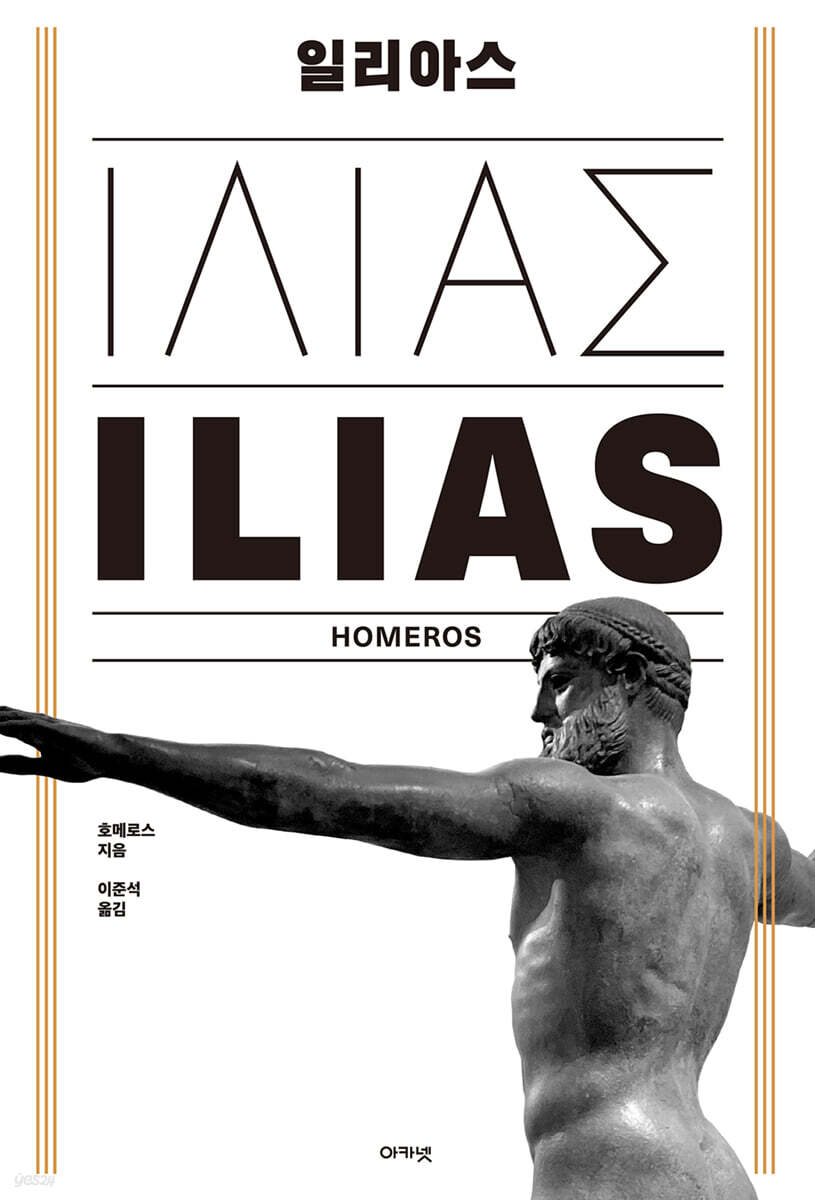 |
Description
Book Introduction
“I sincerely hope that Professor Lee Jun-seok’s new translation will be widely read.”
Recommended by classicists Lee Tae-su and Kang Dae-jin
Newly introduced after 40 years
A Greek translation by a Homeric expert!
The Iliad is the origin of Western literature and the epic poem that has had the greatest influence on Western culture.
Professor Lee Jun-seok's new translation of the Iliad, published after 40 years, is considered to have vividly restored Homer's poetic language.
It is the result of the translator's persistent efforts to revive the classical Greek world, assuming Homer designed his works with consistent poetics.
The Iliad, written by a Homeric expert who majored in classical literature at Seoul National University and received a degree in Homeric studies from the University of Basel in Switzerland, will guide readers into a new world of classics.
Recommended by classicists Lee Tae-su and Kang Dae-jin
Newly introduced after 40 years
A Greek translation by a Homeric expert!
The Iliad is the origin of Western literature and the epic poem that has had the greatest influence on Western culture.
Professor Lee Jun-seok's new translation of the Iliad, published after 40 years, is considered to have vividly restored Homer's poetic language.
It is the result of the translator's persistent efforts to revive the classical Greek world, assuming Homer designed his works with consistent poetics.
The Iliad, written by a Homeric expert who majored in classical literature at Seoul National University and received a degree in Homeric studies from the University of Basel in Switzerland, will guide readers into a new world of classics.
- You can preview some of the book's contents.
Preview
index
Recommendation
Volumes 1-24
Commentary: Gods and Men of the Iliad
Translator's Note
Search
Volumes 1-24
Commentary: Gods and Men of the Iliad
Translator's Note
Search
Detailed image

Publisher's Review
A translation that revives the flavor of the original text.
Opening a new path to the classical world!
The new translation of the Iliad introduces the reader to the unfamiliar expression, "handed over a winged horse."
This is a bold translation that brings to life the poet's metaphor, rather than the usual translation of 'spoken without hesitation.'
The question, "What are you talking nonsense about?" was translated to "What is that word that escaped the fence of teeth?", keeping the original expression.
Aristotle said in Poetics that metaphor is where a poet's talent is most evident.
Conveying the exact same expressions that Homer used in the original text brings the reader to life and awakens their imagination.
Humanism that breaks free from conventional values,
Meet the true face of Homer!
The Iliad begins with a request to the goddess to sing of Achilles' wrath.
The object of his wrath cannot escape destruction.
In his first wrath, the Greek army is on the verge of annihilation, and in his second wrath, the Trojans are slaughtered and Hector loses his life.
However, unlike many other heroic and war poems, his wrath does not end with revenge and retribution against his enemies.
What appeases Achilles' wrath is not compensation or forgiveness, but compassion and tolerance.
The new translation of the Iliad presents readers with a humanism that transcends conventional values.
Prints that double the emotion
Commentary to deepen understanding
The new translation includes etchings of key scenes from the Iliad, and the translator's commentary on them is beyond comprehensible and deeply moving.
These prints, produced by various artists based on drawings by John Flaxman, faithfully capture the content of the epic while remaining in keeping with Homer's restrained tone.
In addition, the introduction of gods and humans, which are a priority for understanding the work, goes beyond the explanation of the characters and further enhances the understanding of the work.
Homer revived
Features of the New Iliad Translation
Easy to understand: It matches the ‘language sensibility of the new generation’ in that it uses native language rather than Chinese characters and colloquial language rather than literary language.
These modern expressions break away from the 'stiffness' that is the common impression of classics.
The adjectives that follow the characters have also been translated into expressions that are much easier to understand.
Lively: As highlighted in his altercation with Agamemnon, the speech of the central figure Achilles in the new translation is quite rough.
This differs from classical translations, which are careful not to exaggerate the original text's intent.
Characters depicted in bold lines shed their flatness and come across as three-dimensional.
Stimulates the imagination: The new translation preserves the Greek word order and the poet's metaphors.
In keeping with the Western epic tradition of revealing the subject in the first line, the word order was maintained (“Sing your wrath, goddess!”) and metaphors such as “winged horse” and “teeth fence” were used to breathe life into the translation, bringing the breath of Homer to life.
Opening a new path to the classical world!
The new translation of the Iliad introduces the reader to the unfamiliar expression, "handed over a winged horse."
This is a bold translation that brings to life the poet's metaphor, rather than the usual translation of 'spoken without hesitation.'
The question, "What are you talking nonsense about?" was translated to "What is that word that escaped the fence of teeth?", keeping the original expression.
Aristotle said in Poetics that metaphor is where a poet's talent is most evident.
Conveying the exact same expressions that Homer used in the original text brings the reader to life and awakens their imagination.
Humanism that breaks free from conventional values,
Meet the true face of Homer!
The Iliad begins with a request to the goddess to sing of Achilles' wrath.
The object of his wrath cannot escape destruction.
In his first wrath, the Greek army is on the verge of annihilation, and in his second wrath, the Trojans are slaughtered and Hector loses his life.
However, unlike many other heroic and war poems, his wrath does not end with revenge and retribution against his enemies.
What appeases Achilles' wrath is not compensation or forgiveness, but compassion and tolerance.
The new translation of the Iliad presents readers with a humanism that transcends conventional values.
Prints that double the emotion
Commentary to deepen understanding
The new translation includes etchings of key scenes from the Iliad, and the translator's commentary on them is beyond comprehensible and deeply moving.
These prints, produced by various artists based on drawings by John Flaxman, faithfully capture the content of the epic while remaining in keeping with Homer's restrained tone.
In addition, the introduction of gods and humans, which are a priority for understanding the work, goes beyond the explanation of the characters and further enhances the understanding of the work.
Homer revived
Features of the New Iliad Translation
Easy to understand: It matches the ‘language sensibility of the new generation’ in that it uses native language rather than Chinese characters and colloquial language rather than literary language.
These modern expressions break away from the 'stiffness' that is the common impression of classics.
The adjectives that follow the characters have also been translated into expressions that are much easier to understand.
Lively: As highlighted in his altercation with Agamemnon, the speech of the central figure Achilles in the new translation is quite rough.
This differs from classical translations, which are careful not to exaggerate the original text's intent.
Characters depicted in bold lines shed their flatness and come across as three-dimensional.
Stimulates the imagination: The new translation preserves the Greek word order and the poet's metaphors.
In keeping with the Western epic tradition of revealing the subject in the first line, the word order was maintained (“Sing your wrath, goddess!”) and metaphors such as “winged horse” and “teeth fence” were used to breathe life into the translation, bringing the breath of Homer to life.
GOODS SPECIFICS
- Date of issue: June 20, 2023
- Page count, weight, size: 844 pages | 1,336g | 152*224*45mm
- ISBN13: 9788957338568
- ISBN10: 895733856X
You may also like
카테고리
korean


korean

![GQ KOREA Mark (Monthly): December [2025]](http://librairie.coreenne.fr/cdn/shop/files/8ef265dbbfbf186523ed75ba7319009d.jpg?v=1765340328&width=3840)


