

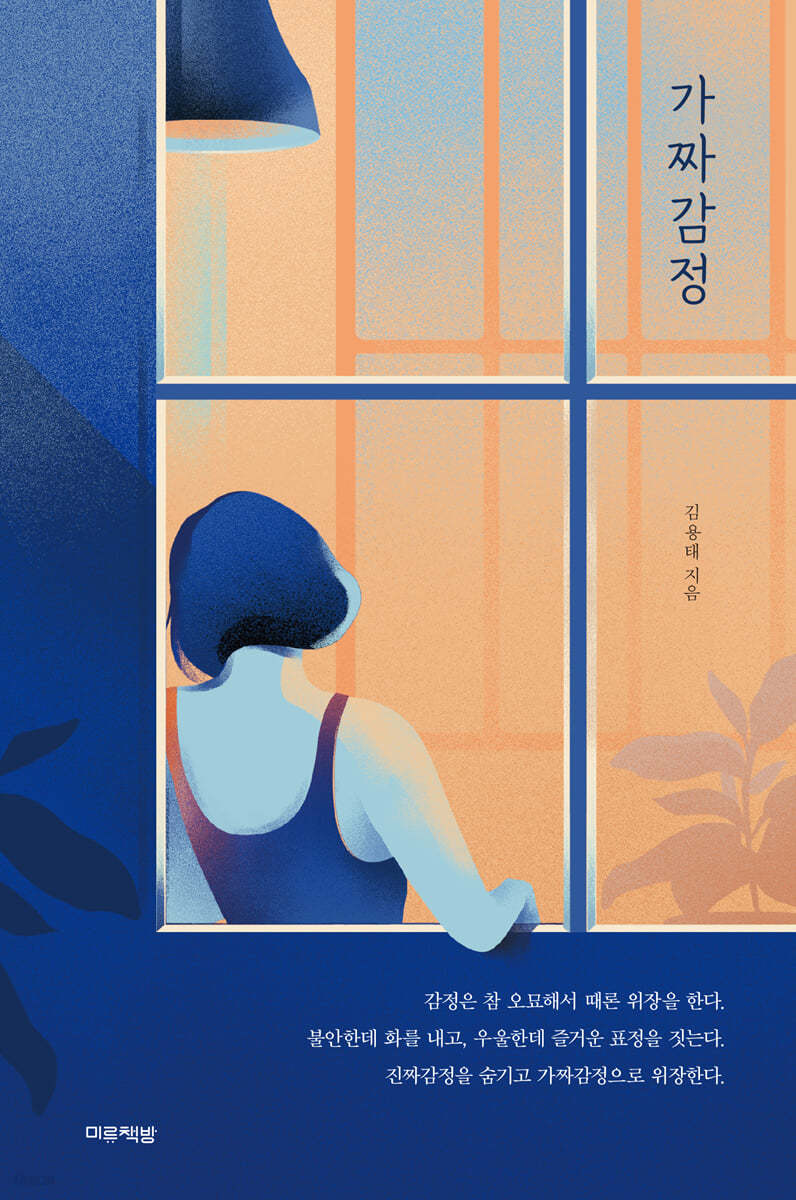
fake feelings
 |
Description
Book Introduction
Emotions are so mysterious that they sometimes disguise themselves.
When you're anxious, you get angry, and when you're depressed, you put on a happy expression.
Hide your true feelings and disguise them with fake feelings.
All humans have a sense of shame about being small and insignificant, and they become anxious, depressed, and angry because they are afraid that their small and shabby appearance will be revealed.
However, fake emotions do not mean they are wrong or bad emotions.
Every emotion has a reason.
Any emotion should be welcomed and cared for.
When you acknowledge and care for someone's true feelings, your mind becomes at ease and life becomes easier and lighter.
When your emotions are released, your life is released.
When you're anxious, you get angry, and when you're depressed, you put on a happy expression.
Hide your true feelings and disguise them with fake feelings.
All humans have a sense of shame about being small and insignificant, and they become anxious, depressed, and angry because they are afraid that their small and shabby appearance will be revealed.
However, fake emotions do not mean they are wrong or bad emotions.
Every emotion has a reason.
Any emotion should be welcomed and cared for.
When you acknowledge and care for someone's true feelings, your mind becomes at ease and life becomes easier and lighter.
When your emotions are released, your life is released.
- You can preview some of the book's contents.
Preview
index
Prologue: It's my feelings, so why can't I do what I want?
Part 1: Why are emotions so unfamiliar to us?
A couple who can't understand each other
A fight that touches one's pride
A stormy night passes
Couples counseling that started on the edge of a cliff
Major emotions developed in childhood
The reason I wanted to avoid conflict at all costs
Why don't I know my feelings?
Why we are human
The first emotion, anxiety
A person without emotions, a person with only emotions
I am the master of my emotions
Part 2: When you reveal your feelings
Jinyoung's 'loneliness'
An illusion created by loneliness
Gicheon's 'Fear'
Good person complex
Shame, the source of negative emotions
The angel and monster inside me
If you admit it, you will be free
“There was a monster living inside me too.”
unmet needs for self-love
Surface emotions, hidden emotions, deep emotions
Part 3: Emotions that make us uncomfortable
If you just change the direction of negative emotions,
Angry_I'm right and you're wrong
The trap of dichotomy
Injustice_A state of coexistence of sadness and anger
Anxiety_I'm worried that something bad will happen
The Three Types of People Created by Anxiety
Loneliness_No one will like me
Children who live while taking care of their parents
The identity of a workaholic
The type that rules with compassion
Inferiority complex_Even I, who am ugly, and you, who are good, can't stand it!
“I want to become stronger by taking from others.”
Part 4: I Can Control the Emotions That Sway Me
Emotion regulation requires training.
Step 1: Notice the feeling
Step 2: Expressing your feelings
Step 3: Finding the theme of my life
Step 4: Understand yourself deeply
Step 5: Accepting the Unwanted Side of Yourself
Step 6: The long fight that makes me grow
Step 7: The Birth of New Values
Part 5: How to Get Along with Your Emotions - Practical Guide
Let me ask you how I'm feeling today.
Welcome uncomfortable feelings
The more negative the emotion, the more we should express it.
Let's not blame others for our emotions.
Let's use integrative expressions rather than dichotomous expressions.
Recognize the signals your emotions are giving you
Let's train the 7 steps of emotional regulation.
Let's admit that we are small beings.
Let's distinguish between what we can and cannot do.
Let's establish new values that embrace my shortcomings.
Epilogue: Even if I'm imperfect, even if I'm lacking, even if I'm lonely, it's okay.
Part 1: Why are emotions so unfamiliar to us?
A couple who can't understand each other
A fight that touches one's pride
A stormy night passes
Couples counseling that started on the edge of a cliff
Major emotions developed in childhood
The reason I wanted to avoid conflict at all costs
Why don't I know my feelings?
Why we are human
The first emotion, anxiety
A person without emotions, a person with only emotions
I am the master of my emotions
Part 2: When you reveal your feelings
Jinyoung's 'loneliness'
An illusion created by loneliness
Gicheon's 'Fear'
Good person complex
Shame, the source of negative emotions
The angel and monster inside me
If you admit it, you will be free
“There was a monster living inside me too.”
unmet needs for self-love
Surface emotions, hidden emotions, deep emotions
Part 3: Emotions that make us uncomfortable
If you just change the direction of negative emotions,
Angry_I'm right and you're wrong
The trap of dichotomy
Injustice_A state of coexistence of sadness and anger
Anxiety_I'm worried that something bad will happen
The Three Types of People Created by Anxiety
Loneliness_No one will like me
Children who live while taking care of their parents
The identity of a workaholic
The type that rules with compassion
Inferiority complex_Even I, who am ugly, and you, who are good, can't stand it!
“I want to become stronger by taking from others.”
Part 4: I Can Control the Emotions That Sway Me
Emotion regulation requires training.
Step 1: Notice the feeling
Step 2: Expressing your feelings
Step 3: Finding the theme of my life
Step 4: Understand yourself deeply
Step 5: Accepting the Unwanted Side of Yourself
Step 6: The long fight that makes me grow
Step 7: The Birth of New Values
Part 5: How to Get Along with Your Emotions - Practical Guide
Let me ask you how I'm feeling today.
Welcome uncomfortable feelings
The more negative the emotion, the more we should express it.
Let's not blame others for our emotions.
Let's use integrative expressions rather than dichotomous expressions.
Recognize the signals your emotions are giving you
Let's train the 7 steps of emotional regulation.
Let's admit that we are small beings.
Let's distinguish between what we can and cannot do.
Let's establish new values that embrace my shortcomings.
Epilogue: Even if I'm imperfect, even if I'm lacking, even if I'm lonely, it's okay.
Into the book
I often say this during my lectures.
“Even if someone else caused it, the feelings I felt were mine.
Yet, many people act as if the person who caused the upset is the owner of their emotions.
But you must remember.
No matter how much of a cause the other person may have provided, the feelings I am currently experiencing are my own.
“I need to develop the ability to process those emotions on my own.”
When I say this, the audience usually becomes silent.
--- p.62
However, the emotions mentioned above can become resources for a rich life if we change the direction.
Angry people are passionate people.
People who are angry tend to have good drive.
When you try to push something, you get angry.
People who are not interested in people or things do not get angry no matter what happens to the other person or how things turn out.
If you manage your anger well, this passion can be used as energy to help others and yourself.
Anxiety, in other words, is the desire to live a safe future life.
Anxious people want to plan ahead and live without difficulties.
So, if you can just manage your anxiety, you can plan your future life beautifully.
These are people with foresight and imagination.
If you manage your anxiety well, you can use this talent positively.
People who suffer from loneliness a lot are relationship-oriented.
The reason women feel relatively lonely is because they are more relationship-oriented than men.
If you can manage your feelings of loneliness well, you can form beautiful relationships with people and live a rich life.
Inferiority complex becomes the driving force that can help you upgrade yourself.
Psychiatrist Alfred Adler argues that all humans have feelings of inferiority and that they can use these feelings as a driving force to live better lives.
Because people who feel inadequate work harder than those who believe they have no shortcomings, feelings of inferiority can be a driving force for development if properly managed.
--- pp.124~125
If someone listens to my feelings and empathizes with them, I should be very grateful to them.
He puts a lot more energy and effort into me than I realize.
But there is no need to be discouraged if there is no such person around you.
I can practice by making myself into that kind of object.
Anytime, anywhere, I can practice emotional regulation with myself.
And that too in a safe environment, without the fear of ruining the relationship.
--- p.231
It is not easy for anyone to accept negative emotions.
It is human nature to want to push away.
But emotions themselves are neither good nor bad.
There is always a reason for emotions.
The most important thing to do to manage your emotions well is to welcome uncomfortable emotions when they arise.
“Oh, I feel heavy now.
“Heavy feeling welcome!”
“Oh, I feel bad now.
“Welcome to a bad mood!”
When uncomfortable feelings come, there is no need to pretend not to feel them.
When you feel depressed, it's okay to look gloomy or act gloomy, and in fact, it's necessary to do so.
It's about staying in your emotions.
If I acknowledge my feelings, that alone will relieve a significant portion of them.
“Even if someone else caused it, the feelings I felt were mine.
Yet, many people act as if the person who caused the upset is the owner of their emotions.
But you must remember.
No matter how much of a cause the other person may have provided, the feelings I am currently experiencing are my own.
“I need to develop the ability to process those emotions on my own.”
When I say this, the audience usually becomes silent.
--- p.62
However, the emotions mentioned above can become resources for a rich life if we change the direction.
Angry people are passionate people.
People who are angry tend to have good drive.
When you try to push something, you get angry.
People who are not interested in people or things do not get angry no matter what happens to the other person or how things turn out.
If you manage your anger well, this passion can be used as energy to help others and yourself.
Anxiety, in other words, is the desire to live a safe future life.
Anxious people want to plan ahead and live without difficulties.
So, if you can just manage your anxiety, you can plan your future life beautifully.
These are people with foresight and imagination.
If you manage your anxiety well, you can use this talent positively.
People who suffer from loneliness a lot are relationship-oriented.
The reason women feel relatively lonely is because they are more relationship-oriented than men.
If you can manage your feelings of loneliness well, you can form beautiful relationships with people and live a rich life.
Inferiority complex becomes the driving force that can help you upgrade yourself.
Psychiatrist Alfred Adler argues that all humans have feelings of inferiority and that they can use these feelings as a driving force to live better lives.
Because people who feel inadequate work harder than those who believe they have no shortcomings, feelings of inferiority can be a driving force for development if properly managed.
--- pp.124~125
If someone listens to my feelings and empathizes with them, I should be very grateful to them.
He puts a lot more energy and effort into me than I realize.
But there is no need to be discouraged if there is no such person around you.
I can practice by making myself into that kind of object.
Anytime, anywhere, I can practice emotional regulation with myself.
And that too in a safe environment, without the fear of ruining the relationship.
--- p.231
It is not easy for anyone to accept negative emotions.
It is human nature to want to push away.
But emotions themselves are neither good nor bad.
There is always a reason for emotions.
The most important thing to do to manage your emotions well is to welcome uncomfortable emotions when they arise.
“Oh, I feel heavy now.
“Heavy feeling welcome!”
“Oh, I feel bad now.
“Welcome to a bad mood!”
When uncomfortable feelings come, there is no need to pretend not to feel them.
When you feel depressed, it's okay to look gloomy or act gloomy, and in fact, it's necessary to do so.
It's about staying in your emotions.
If I acknowledge my feelings, that alone will relieve a significant portion of them.
--- pp.234~235
Publisher's Review
We think we know our own emotions well.
I think, 'It's my feeling, how can I not know?'
Is that really true? If you frequently experience "it's my feeling, but I can't control it," you're not fully aware of your own emotions.
Emotions are truly wonderful and mysterious, and sometimes they are disguised.
When you're anxious, you get angry, and when you're depressed, you put on a happy expression.
Hide your true feelings and disguise them with fake feelings.
When you feel uncomfortable, rather than expressing it, you pretend not to know your feelings by avoiding, ignoring, or suppressing them.
But just because it disappears from consciousness doesn't mean the feeling disappears.
Emotions disappear on their own once they are felt and expressed, but unexpressed emotions remain somewhere in our bodies and constantly demand to be expressed.
Have you ever suppressed your emotions, only to be provoked by something trivial, and then unleashed an uncontrollable rage, only to regret it later? Or have you ever ignored the occasional feelings that arose, only to work and feel a sense of emptiness? What if we acknowledged and appropriately expressed our emotions whenever we felt them?
If we follow the depths of uncomfortable emotions such as anger, anxiety, depression, inferiority, fear, and loneliness, we will eventually end up in shame.
All humans have a sense of shame about being small and insignificant, and it is painful when this is touched.
They become anxious, depressed, and angry because they are afraid that their small and pitiful appearance will be revealed.
That is, behind the anger (surface emotion) that is shown on the outside, there is anxiety and fear (underlying emotion), and underneath that, there is shame (deep emotion), which is an emotion that is fundamental to human beings.
Of course, just because surface emotions are fake doesn't mean they are wrong or bad emotions.
Every emotion has a reason.
Any emotion should be welcomed and cared for.
However, the point is that we can only solve 'my problem' by going one step further and looking into the source of my emotions, that is, my true emotions.
When emotions are released, many problems in life are solved.
The author, a leading authority in the domestic counseling field, explains why emotions are important and how to regulate them through various counseling cases.
Part 1 shows the emotions we commonly experience through the case of a couple.
Part 2 details the couple's counseling process.
Their stories are not special, so if you read them carefully while examining your own mind, you can see the effect of counseling yourself.
In Part 3, we take a more in-depth look at the negative emotions we commonly feel: anger, anxiety, fear, loneliness, and feelings of inferiority.
Let's explore why these feelings arise and how they relate to shame.
Part 4 introduces the seven stages of emotional regulation.
If we can control our negative emotions well, we can live our lives with a much lighter and more comfortable mind.
Part 5 summarizes the key emotional topics covered in this book in an easy-to-practice format.
My feelings are my own.
Even if someone else caused it, the feelings I felt were mine.
Therefore, I must develop the ability to process those emotions on my own.
Here's how to do it.
I think, 'It's my feeling, how can I not know?'
Is that really true? If you frequently experience "it's my feeling, but I can't control it," you're not fully aware of your own emotions.
Emotions are truly wonderful and mysterious, and sometimes they are disguised.
When you're anxious, you get angry, and when you're depressed, you put on a happy expression.
Hide your true feelings and disguise them with fake feelings.
When you feel uncomfortable, rather than expressing it, you pretend not to know your feelings by avoiding, ignoring, or suppressing them.
But just because it disappears from consciousness doesn't mean the feeling disappears.
Emotions disappear on their own once they are felt and expressed, but unexpressed emotions remain somewhere in our bodies and constantly demand to be expressed.
Have you ever suppressed your emotions, only to be provoked by something trivial, and then unleashed an uncontrollable rage, only to regret it later? Or have you ever ignored the occasional feelings that arose, only to work and feel a sense of emptiness? What if we acknowledged and appropriately expressed our emotions whenever we felt them?
If we follow the depths of uncomfortable emotions such as anger, anxiety, depression, inferiority, fear, and loneliness, we will eventually end up in shame.
All humans have a sense of shame about being small and insignificant, and it is painful when this is touched.
They become anxious, depressed, and angry because they are afraid that their small and pitiful appearance will be revealed.
That is, behind the anger (surface emotion) that is shown on the outside, there is anxiety and fear (underlying emotion), and underneath that, there is shame (deep emotion), which is an emotion that is fundamental to human beings.
Of course, just because surface emotions are fake doesn't mean they are wrong or bad emotions.
Every emotion has a reason.
Any emotion should be welcomed and cared for.
However, the point is that we can only solve 'my problem' by going one step further and looking into the source of my emotions, that is, my true emotions.
When emotions are released, many problems in life are solved.
The author, a leading authority in the domestic counseling field, explains why emotions are important and how to regulate them through various counseling cases.
Part 1 shows the emotions we commonly experience through the case of a couple.
Part 2 details the couple's counseling process.
Their stories are not special, so if you read them carefully while examining your own mind, you can see the effect of counseling yourself.
In Part 3, we take a more in-depth look at the negative emotions we commonly feel: anger, anxiety, fear, loneliness, and feelings of inferiority.
Let's explore why these feelings arise and how they relate to shame.
Part 4 introduces the seven stages of emotional regulation.
If we can control our negative emotions well, we can live our lives with a much lighter and more comfortable mind.
Part 5 summarizes the key emotional topics covered in this book in an easy-to-practice format.
My feelings are my own.
Even if someone else caused it, the feelings I felt were mine.
Therefore, I must develop the ability to process those emotions on my own.
Here's how to do it.
GOODS SPECIFICS
- Date of issue: March 25, 2023
- Page count, weight, size: 288 pages | 358g | 136*205*18mm
- ISBN13: 9791188632077
- ISBN10: 1188632078
You may also like
카테고리
korean


korean

![GQ KOREA Mark (Monthly): December [2025]](http://librairie.coreenne.fr/cdn/shop/files/8ef265dbbfbf186523ed75ba7319009d.jpg?v=1765340328&width=3840)


