

Sunja
 |
Description
Book Introduction
Our Attitude to the World's Evil
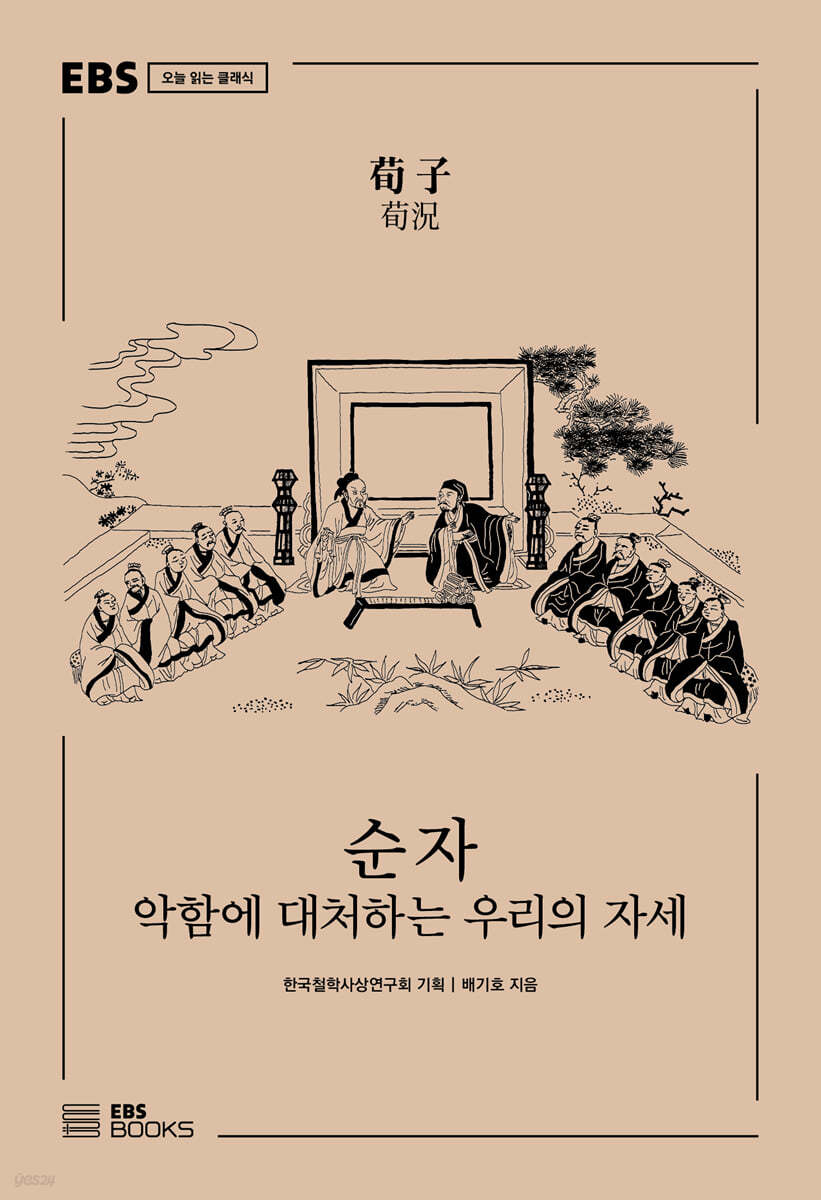
Sunja, speaking of human nature
Sunja characterized the times she lived in as chaotic.
But he believed that the sky was just nature, and that the reason the world was in chaos lay within humans.
Also, unlike Confucian thinkers who pursued kingly politics, he dreamed of a compromise between ideals and reality.
In the reality of the law of the jungle, the king's way of government was nothing more than an illusion, so Xunzi accepted to a certain extent the hegemonic way of government that ruled the world by force.
How did Xunzi, who received conflicting assessments as both a Confucian successor and a heretic, view the world? How does his theory of human nature as evil contrast with Mencius's theory of human nature as good? This book, written by Professor Bae Ki-ho, a leading Oriental philosopher, explores Xunzi's true nature through his book, "Xunzi," exploring human nature, the chaos of the world, and how to navigate it.
However, his thought, which was a successor to Confucianism but also connected to Legalism, has an unclear academic lineage.
Because of this, it was not easy to understand or approach the book 『Sunja』.
The author's role is not only to sufficiently convey existing knowledge and information, but also to help readers observe and understand the world from their own perspectives and viewpoints.
This book aims to make 『Xunzi』, which contains the essence of Xunzi's thought, easy to understand by revealing the main points of his life and thought and selecting and explaining the contents of the classic while reading it together.
Sunja, speaking of human nature
Sunja characterized the times she lived in as chaotic.
But he believed that the sky was just nature, and that the reason the world was in chaos lay within humans.
Also, unlike Confucian thinkers who pursued kingly politics, he dreamed of a compromise between ideals and reality.
In the reality of the law of the jungle, the king's way of government was nothing more than an illusion, so Xunzi accepted to a certain extent the hegemonic way of government that ruled the world by force.
How did Xunzi, who received conflicting assessments as both a Confucian successor and a heretic, view the world? How does his theory of human nature as evil contrast with Mencius's theory of human nature as good? This book, written by Professor Bae Ki-ho, a leading Oriental philosopher, explores Xunzi's true nature through his book, "Xunzi," exploring human nature, the chaos of the world, and how to navigate it.
However, his thought, which was a successor to Confucianism but also connected to Legalism, has an unclear academic lineage.
Because of this, it was not easy to understand or approach the book 『Sunja』.
The author's role is not only to sufficiently convey existing knowledge and information, but also to help readers observe and understand the world from their own perspectives and viewpoints.
This book aims to make 『Xunzi』, which contains the essence of Xunzi's thought, easy to understand by revealing the main points of his life and thought and selecting and explaining the contents of the classic while reading it together.
- You can preview some of the book's contents.
Preview
index
introduction
Chapter 1: Sunja Dreams of a Better World
Are you confused
Sunja's efforts to resolve the confusion and the results
Philosophy based on Sunja
Xunzi, who wanted to be like Confucius, and the people surrounding him.
In search of a clue to a better world
Chapter 2: Reading "Sunja"
Why is the world in chaos?
The inner self of a person is the cause of confusion
A look of confusion
Change nature to create artificiality
Looking back at politics
Chapter 3: Milestones of Philosophy
Confucius's words and deeds, the Analects
Xunzi's rival, Meng Jia's "Mencius"
Confucianism's rival, Mohist philosopher Mozi's 『Mozi』
The Book of the Lord Shang by Shang Yang, a practitioner of Legalism
Xunzi's wayward disciple, Han Fei's "Han Feizi"
Life chronology
References
Chapter 1: Sunja Dreams of a Better World
Are you confused
Sunja's efforts to resolve the confusion and the results
Philosophy based on Sunja
Xunzi, who wanted to be like Confucius, and the people surrounding him.
In search of a clue to a better world
Chapter 2: Reading "Sunja"
Why is the world in chaos?
The inner self of a person is the cause of confusion
A look of confusion
Change nature to create artificiality
Looking back at politics
Chapter 3: Milestones of Philosophy
Confucius's words and deeds, the Analects
Xunzi's rival, Meng Jia's "Mencius"
Confucianism's rival, Mohist philosopher Mozi's 『Mozi』
The Book of the Lord Shang by Shang Yang, a practitioner of Legalism
Xunzi's wayward disciple, Han Fei's "Han Feizi"
Life chronology
References
Into the book
Sunja regarded the world's chaos as a problem and tried to solve it.
However, let's not have excessive expectations that if we ask Sunja about the problems of the world today, "Sunhyung, why is the world like this?", she will give us a refreshing answer.
As you know, he is not here now.
There are only words he left behind long ago.
So, with Sunja's help, let's find the answers to the questions we asked ourselves.
---From the "Preface"
Just as conflicts and wars still break out somewhere even now, people and the world they create always harbor the seeds of chaos, and those seeds of chaos germinate, blossom, and bear fruit, repeating the uncomfortable but familiar process.
Is there no will to shift this cycle, even if only slightly, toward a more positive and progressive direction? If you find yourself at a loss for an answer to this seemingly random question, consider seeking help from someone named Xun Zi, who witnessed and personally experienced the turbulent peak of the late Warring States period, approximately 2,300 years ago.
---From "Chapter 1: Sunja Dreaming of a Good World"
Second, there is a newness to writing.
The Analects and Mencius are mostly written in the form of questions and answers or records of what someone says.
Because of this, sometimes we miss the overall context when we don't know or overlook the specific situation.
However, 『Sunja』 generally has a writing style similar to a modern editorial.
Therefore, if you read while understanding the context, you will not have much difficulty understanding the overall context.
---From "Chapter 1: Sunja Dreaming of a Good World"
When you think of Sun Tzu's philosophical thoughts, what comes to mind first?
If you think of the theory of human nature being evil, there is a high probability that you have faithfully completed the Korean education curriculum or have studied equivalently.
The theory of human nature as evil is learned in morals and ethics classes during school days by comparing and contrasting it with Mencius' theory of human nature as good.
And even if we put aside the quantity and detail, the theory of the evil nature of Sun Tzu appears without fail in materials related to human nature.
---From "Chapter 1: Sunja Dreaming of a Good World"
Although Sun Tzu's philosophy and thought have their own unique characteristics, they are not absolutely superior or unique compared to others.
It is just one of many philosophical thoughts.
Besides, knowing him well doesn't suddenly make my life richer.
However, I hope that readers will be able to form their own perspectives and values by looking at various philosophical thoughts, including Sun Tzu's, with a more critical perspective, going beyond a fragmentary understanding.
---From "Chapter 1: Sunja Dreaming of a Good World"
The thoughts of Sunja about heaven and people that we have seen so far may not seem very fresh to us.
Because it is not much different from modern people's perception of the sky and people.
However, if we remember that Sunja lived approximately 2,300 years ago, we cannot deny that he was a rational, scientific, and realistic thinker ahead of his time.
Ultimately, for Sunja, the relationship between heaven and man is the relationship between nature and man.
Since the affairs of heaven and the affairs of man are clearly separated, man should be in harmony with the affairs of heaven, that is, nature, rather than interfering with them.
And the purpose of harmony is, of course, the happiness of the people and the stability of the world, and whether happiness and stability are achieved depends on the efforts of the people who make up the world.
---From "Reading Chapter 2, 'Sunja'"
The saints, sage kings, and wise men who were said to have ruled in an era of peace and harmony in the past have ceased to exist in reality at some point.
Is it because it's difficult to do so? No.
Because there are few people who work hard to achieve that.
I've seen many people who initially dreamed of pure and grand dreams and went into leadership positions, only to end up being nothing more than ordinary people.
That is why Sunja emphasizes the virtues, responsibility, and sense of mission that a leader must possess.
If a person in a leadership position only wants to be “comfortable” while the world is in chaos because he cannot govern harmoniously and evenly, he is crazy.
Because “a madman enjoys himself without hesitation” (from “Archipelago”).
---From "Reading Chapter 2, 'Sunja'"
Sun Tzu valued law so much that he said, “The principles of governance are propriety and punishment” (Seongsang).
This even connects to his perception of the royal road and the path of hegemony.
In Xunzi's thought, the royal way is to respect propriety and virtuous people, and the way of the wicked is to value the law and love the people.
If we speak of examples, it is said that if examples are perfectly practiced, it is the royal way, if examples are imperfectly practiced, it is the way of ruin, and if examples are completely abandoned, the country will perish.
Soon, the royal way and the way of hegemony were not perceived as opposing each other.
The path of defeat is a second best option when it is difficult to achieve the path of kingship.
---From "Reading Chapter 2, 'Sunja'"
The good nature of man, as Mencius speaks of it, comes from the pure goodness of heaven.
In other words, Mencius is saying that heaven and man are related to each other.
Mencius also believed that the chaos of the Warring States Period could be resolved if the king first upheld the will of heaven and implemented royal politics based on good nature.
At the same time, he absolutely did not acknowledge the tyranny of power.
This is in contrast to Sunja's recognition that heaven and man are distinct and that hegemony is also a secondary good.
When an argument breaks out between two people, there is nothing more foolish than hearing only one side and judging whether it is right or wrong.
Although Mencius and Xun Zi never directly engaged in a debate, a proxy war continues to this day between them through those who represent them.
Now, let's meet 『Mencius』 and 『Xunzi』 for yourself.
After listening to both sides, it's time to decide whose story is more persuasive and whose argument is more feasible.
However, let's not have excessive expectations that if we ask Sunja about the problems of the world today, "Sunhyung, why is the world like this?", she will give us a refreshing answer.
As you know, he is not here now.
There are only words he left behind long ago.
So, with Sunja's help, let's find the answers to the questions we asked ourselves.
---From the "Preface"
Just as conflicts and wars still break out somewhere even now, people and the world they create always harbor the seeds of chaos, and those seeds of chaos germinate, blossom, and bear fruit, repeating the uncomfortable but familiar process.
Is there no will to shift this cycle, even if only slightly, toward a more positive and progressive direction? If you find yourself at a loss for an answer to this seemingly random question, consider seeking help from someone named Xun Zi, who witnessed and personally experienced the turbulent peak of the late Warring States period, approximately 2,300 years ago.
---From "Chapter 1: Sunja Dreaming of a Good World"
Second, there is a newness to writing.
The Analects and Mencius are mostly written in the form of questions and answers or records of what someone says.
Because of this, sometimes we miss the overall context when we don't know or overlook the specific situation.
However, 『Sunja』 generally has a writing style similar to a modern editorial.
Therefore, if you read while understanding the context, you will not have much difficulty understanding the overall context.
---From "Chapter 1: Sunja Dreaming of a Good World"
When you think of Sun Tzu's philosophical thoughts, what comes to mind first?
If you think of the theory of human nature being evil, there is a high probability that you have faithfully completed the Korean education curriculum or have studied equivalently.
The theory of human nature as evil is learned in morals and ethics classes during school days by comparing and contrasting it with Mencius' theory of human nature as good.
And even if we put aside the quantity and detail, the theory of the evil nature of Sun Tzu appears without fail in materials related to human nature.
---From "Chapter 1: Sunja Dreaming of a Good World"
Although Sun Tzu's philosophy and thought have their own unique characteristics, they are not absolutely superior or unique compared to others.
It is just one of many philosophical thoughts.
Besides, knowing him well doesn't suddenly make my life richer.
However, I hope that readers will be able to form their own perspectives and values by looking at various philosophical thoughts, including Sun Tzu's, with a more critical perspective, going beyond a fragmentary understanding.
---From "Chapter 1: Sunja Dreaming of a Good World"
The thoughts of Sunja about heaven and people that we have seen so far may not seem very fresh to us.
Because it is not much different from modern people's perception of the sky and people.
However, if we remember that Sunja lived approximately 2,300 years ago, we cannot deny that he was a rational, scientific, and realistic thinker ahead of his time.
Ultimately, for Sunja, the relationship between heaven and man is the relationship between nature and man.
Since the affairs of heaven and the affairs of man are clearly separated, man should be in harmony with the affairs of heaven, that is, nature, rather than interfering with them.
And the purpose of harmony is, of course, the happiness of the people and the stability of the world, and whether happiness and stability are achieved depends on the efforts of the people who make up the world.
---From "Reading Chapter 2, 'Sunja'"
The saints, sage kings, and wise men who were said to have ruled in an era of peace and harmony in the past have ceased to exist in reality at some point.
Is it because it's difficult to do so? No.
Because there are few people who work hard to achieve that.
I've seen many people who initially dreamed of pure and grand dreams and went into leadership positions, only to end up being nothing more than ordinary people.
That is why Sunja emphasizes the virtues, responsibility, and sense of mission that a leader must possess.
If a person in a leadership position only wants to be “comfortable” while the world is in chaos because he cannot govern harmoniously and evenly, he is crazy.
Because “a madman enjoys himself without hesitation” (from “Archipelago”).
---From "Reading Chapter 2, 'Sunja'"
Sun Tzu valued law so much that he said, “The principles of governance are propriety and punishment” (Seongsang).
This even connects to his perception of the royal road and the path of hegemony.
In Xunzi's thought, the royal way is to respect propriety and virtuous people, and the way of the wicked is to value the law and love the people.
If we speak of examples, it is said that if examples are perfectly practiced, it is the royal way, if examples are imperfectly practiced, it is the way of ruin, and if examples are completely abandoned, the country will perish.
Soon, the royal way and the way of hegemony were not perceived as opposing each other.
The path of defeat is a second best option when it is difficult to achieve the path of kingship.
---From "Reading Chapter 2, 'Sunja'"
The good nature of man, as Mencius speaks of it, comes from the pure goodness of heaven.
In other words, Mencius is saying that heaven and man are related to each other.
Mencius also believed that the chaos of the Warring States Period could be resolved if the king first upheld the will of heaven and implemented royal politics based on good nature.
At the same time, he absolutely did not acknowledge the tyranny of power.
This is in contrast to Sunja's recognition that heaven and man are distinct and that hegemony is also a secondary good.
When an argument breaks out between two people, there is nothing more foolish than hearing only one side and judging whether it is right or wrong.
Although Mencius and Xun Zi never directly engaged in a debate, a proxy war continues to this day between them through those who represent them.
Now, let's meet 『Mencius』 and 『Xunzi』 for yourself.
After listening to both sides, it's time to decide whose story is more persuasive and whose argument is more feasible.
---From "Chapter 3: Milestones of Philosophy"
Publisher's Review
The sky is just nature, the cause of chaos is people
The theory of human nature as guided by philosopher Bae Ki-ho
When asked what comes to mind when thinking of 'Sun Zi', people often answer that she is a thinker who advocated the theory of human nature as evil, in contrast to Mencius' theory of human nature as good.
The author explains Sunja's thoughts by saying that if we only answer like this, we will benefit from school education, but we will also suffer from its disadvantages.
The theory of human nature being evil is the opinion, claim, or doctrine that human nature is definitely evil.
However, this is only an interpretation of the literal meaning.
Xunzi's thoughts, including the theory of human nature as evil, the division of heaven and man (天人之分), which states that heaven and man each have their own roles; the theory of transformation and creation of falsehood (化性起僞), which states that evil nature arises through human effort to change it into a good individual and world; the theory of following the example of later sage kings rather than the sage kings of old (法後王), which states that we should elevate rites (禮) and value dharma (法), and the theory of emphasizing the importance of politics and the weight of the qualifications and role of the leader at the center of politics, while acknowledging that kingly politics is the best but hegemonic politics is also a second best, were generally evaluated as people-centered and realistic.
Humanism and worldliness are representative characteristics of Confucianism.
So, although Sunja can be seen as a thinker who properly inherited Confucianism, he is called a heretic of Confucianism.
And at the heart of why it is called that is the theory of vocal music.
Mencius clearly dreamed of a good world.
But it was the same for Sunja.
However, Mencius said that the essence of human nature is good, and if each person preserves and expands that goodness, they can create a good world. Xunzi said that the phenomenon of human nature is evil, and if each person changes that evil into good, they can create a good world.
Soon, both of them diagnosed the reality surrounding them as chaotic, and in order to overcome that chaos, they both said that people must be good, and they both aimed for a good world filled with such people.
However, the focus was on the essence and phenomenon of nature, and later generations' evaluations of the two men differed on this point.
Xunzi, who wanted to become Confucius,
『Sunja』, which reveals the cause of confusion and suggests a solution
Sunja's thoughts are evaluated as realistic yet idealistic, flexible yet strict.
To what extent can Sun Tzu's thought help us understand and resolve the current chaos? The author begins by asking why the world is in chaos.
Sunja says that the recurring chaos caused by man-made disasters is more problematic than the temporary chaos caused by natural phenomena that occur regardless of human will.
It was soon discovered that the fundamental cause of the world's chaos lay with people.
Chapter 1 of this book, “Sunja Dreamed of a Good World,” explores Sunja’s life, thoughts, and historical background.
We examine why he is considered a successor to Confucianism and a heretic, and introduce the evaluation and influence of the book "Xunzi."
Chapter 2 provides an in-depth reading of 『Sunja』 and explains the core of its ideas.
The last three chapters help readers understand the major books of thinkers such as Confucius, Mencius, Mozi, Shang Yang, and Han Feizi by cross-referencing them as milestones on the path to Xun Zi's thought.
EBS Classics to Read Today
“Why is it a classic again today?”
This is because the thoughtful writings of thinkers from the East and the West, past and present, pose challenging questions to us living in the modern era and provide deep resonance and reflection.
The "EBS Today's Classics" series is a friendly guide and companion that helps you read Eastern and Western philosophical classics in an easy and three-dimensional way.
For readers who might get lost in the forest of ideas, the author provides a stepping stone to find direction and think for themselves.
If you re-examine Eastern and Western classics today and read them calmly, you will soon discover a new path.
Reading these classics becomes a valuable key to asking, thinking, and answering questions for yourself.
The humanistic wisdom of the classics provides us with a guidepost for life today.
- Korean Philosophical Thought Research Association
Starting with Mencius, the thinker of human nature, and Xunzi, the thinker of human music.
Opening the flow of Eastern classical thought
A new edition of Oriental philosophy has been published in the "EBS Today's Classics" series.
Beginning with Mencius, the philosopher of human nature, and Xunzi, the philosopher of music, we present representative classics of the East and must-reads for people around the world.
You can encounter landmarks of Eastern thought, such as Confucius's Analects, the Great Learning and the Doctrine of the Mean, and Laozi's Tao Te Ching.
The influence of Eastern Confucianism and Taoism on modern times is as wide as the diversity of their interpretations.
It is both a moral philosophy and a political philosophy, and it is both an ontology and a natural philosophy.
Especially in times of war, the passion and struggles of ancient thinkers who asked why the world was in chaos still resonate deeply with modern people.
Let's challenge ourselves to create our own philosophy, using Confucius, Mencius, Xunzi, and Laozi as a stepping stone!
Philosophical thoughts that remained in textbooks
Here, you can encounter new and colorful things in everyday life.
From Confucius, Lao-tzu, and Mencius to Plato, Thomas More, Locke, Adam Smith, and modern philosophy such as Wittgenstein, Gilles Deleuze, and Slavoj Žižek.
EBS has compiled the epic journey of Eastern and Western and modern philosophy into its "Reading Classics Today" series.
Readers who are interested in philosophy and frequent bookstores but are not satisfied with the "digest philosophy books," readers who want to read the classics of humanities but are prevented by the huge wall of "original texts," and readers who like philosophy books but find them heavy and burdensome and cannot readily take them out of the bookshelf.
A classic reading series that high school students and adult readers alike can dive into right now, seeking both depth of philosophical knowledge and contemporary relevance!
A philosophical classic you must read at least once in your life.
Start your philosophy binge today with "EBS Today's Classics"!
Understand the core ideas of classic philosophy, and explore the history of Eastern and Western philosophy and the genealogy of modern thought in this comprehensive collection of classics! Discover the lives of individual philosophers, as well as key philosophical ideas and their lineages, with other recommended reading! "Reading Classics Today," a joint project by EBS and the Korean Society for the Study of Philosophy, offers a comprehensive overview of modern and contemporary philosophy. Through this series, you can examine contemporary society, politics, and economics through classic philosophy, and revisit the philosophical reflections essential to individuals and communities in contemporary society.
The theory of human nature as guided by philosopher Bae Ki-ho
When asked what comes to mind when thinking of 'Sun Zi', people often answer that she is a thinker who advocated the theory of human nature as evil, in contrast to Mencius' theory of human nature as good.
The author explains Sunja's thoughts by saying that if we only answer like this, we will benefit from school education, but we will also suffer from its disadvantages.
The theory of human nature being evil is the opinion, claim, or doctrine that human nature is definitely evil.
However, this is only an interpretation of the literal meaning.
Xunzi's thoughts, including the theory of human nature as evil, the division of heaven and man (天人之分), which states that heaven and man each have their own roles; the theory of transformation and creation of falsehood (化性起僞), which states that evil nature arises through human effort to change it into a good individual and world; the theory of following the example of later sage kings rather than the sage kings of old (法後王), which states that we should elevate rites (禮) and value dharma (法), and the theory of emphasizing the importance of politics and the weight of the qualifications and role of the leader at the center of politics, while acknowledging that kingly politics is the best but hegemonic politics is also a second best, were generally evaluated as people-centered and realistic.
Humanism and worldliness are representative characteristics of Confucianism.
So, although Sunja can be seen as a thinker who properly inherited Confucianism, he is called a heretic of Confucianism.
And at the heart of why it is called that is the theory of vocal music.
Mencius clearly dreamed of a good world.
But it was the same for Sunja.
However, Mencius said that the essence of human nature is good, and if each person preserves and expands that goodness, they can create a good world. Xunzi said that the phenomenon of human nature is evil, and if each person changes that evil into good, they can create a good world.
Soon, both of them diagnosed the reality surrounding them as chaotic, and in order to overcome that chaos, they both said that people must be good, and they both aimed for a good world filled with such people.
However, the focus was on the essence and phenomenon of nature, and later generations' evaluations of the two men differed on this point.
Xunzi, who wanted to become Confucius,
『Sunja』, which reveals the cause of confusion and suggests a solution
Sunja's thoughts are evaluated as realistic yet idealistic, flexible yet strict.
To what extent can Sun Tzu's thought help us understand and resolve the current chaos? The author begins by asking why the world is in chaos.
Sunja says that the recurring chaos caused by man-made disasters is more problematic than the temporary chaos caused by natural phenomena that occur regardless of human will.
It was soon discovered that the fundamental cause of the world's chaos lay with people.
Chapter 1 of this book, “Sunja Dreamed of a Good World,” explores Sunja’s life, thoughts, and historical background.
We examine why he is considered a successor to Confucianism and a heretic, and introduce the evaluation and influence of the book "Xunzi."
Chapter 2 provides an in-depth reading of 『Sunja』 and explains the core of its ideas.
The last three chapters help readers understand the major books of thinkers such as Confucius, Mencius, Mozi, Shang Yang, and Han Feizi by cross-referencing them as milestones on the path to Xun Zi's thought.
EBS Classics to Read Today
“Why is it a classic again today?”
This is because the thoughtful writings of thinkers from the East and the West, past and present, pose challenging questions to us living in the modern era and provide deep resonance and reflection.
The "EBS Today's Classics" series is a friendly guide and companion that helps you read Eastern and Western philosophical classics in an easy and three-dimensional way.
For readers who might get lost in the forest of ideas, the author provides a stepping stone to find direction and think for themselves.
If you re-examine Eastern and Western classics today and read them calmly, you will soon discover a new path.
Reading these classics becomes a valuable key to asking, thinking, and answering questions for yourself.
The humanistic wisdom of the classics provides us with a guidepost for life today.
- Korean Philosophical Thought Research Association
Starting with Mencius, the thinker of human nature, and Xunzi, the thinker of human music.
Opening the flow of Eastern classical thought
A new edition of Oriental philosophy has been published in the "EBS Today's Classics" series.
Beginning with Mencius, the philosopher of human nature, and Xunzi, the philosopher of music, we present representative classics of the East and must-reads for people around the world.
You can encounter landmarks of Eastern thought, such as Confucius's Analects, the Great Learning and the Doctrine of the Mean, and Laozi's Tao Te Ching.
The influence of Eastern Confucianism and Taoism on modern times is as wide as the diversity of their interpretations.
It is both a moral philosophy and a political philosophy, and it is both an ontology and a natural philosophy.
Especially in times of war, the passion and struggles of ancient thinkers who asked why the world was in chaos still resonate deeply with modern people.
Let's challenge ourselves to create our own philosophy, using Confucius, Mencius, Xunzi, and Laozi as a stepping stone!
Philosophical thoughts that remained in textbooks
Here, you can encounter new and colorful things in everyday life.
From Confucius, Lao-tzu, and Mencius to Plato, Thomas More, Locke, Adam Smith, and modern philosophy such as Wittgenstein, Gilles Deleuze, and Slavoj Žižek.
EBS has compiled the epic journey of Eastern and Western and modern philosophy into its "Reading Classics Today" series.
Readers who are interested in philosophy and frequent bookstores but are not satisfied with the "digest philosophy books," readers who want to read the classics of humanities but are prevented by the huge wall of "original texts," and readers who like philosophy books but find them heavy and burdensome and cannot readily take them out of the bookshelf.
A classic reading series that high school students and adult readers alike can dive into right now, seeking both depth of philosophical knowledge and contemporary relevance!
A philosophical classic you must read at least once in your life.
Start your philosophy binge today with "EBS Today's Classics"!
Understand the core ideas of classic philosophy, and explore the history of Eastern and Western philosophy and the genealogy of modern thought in this comprehensive collection of classics! Discover the lives of individual philosophers, as well as key philosophical ideas and their lineages, with other recommended reading! "Reading Classics Today," a joint project by EBS and the Korean Society for the Study of Philosophy, offers a comprehensive overview of modern and contemporary philosophy. Through this series, you can examine contemporary society, politics, and economics through classic philosophy, and revisit the philosophical reflections essential to individuals and communities in contemporary society.
GOODS SPECIFICS
- Publication date: June 10, 2022
- Page count, weight, size: 212 pages | 284g | 128*188*20mm
- ISBN13: 9788954799799
- ISBN10: 8954799795
You may also like
카테고리
korean


korean

![GQ KOREA Mark (Monthly): December [2025]](http://librairie.coreenne.fr/cdn/shop/files/8ef265dbbfbf186523ed75ba7319009d.jpg?v=1765340328&width=3840)


