

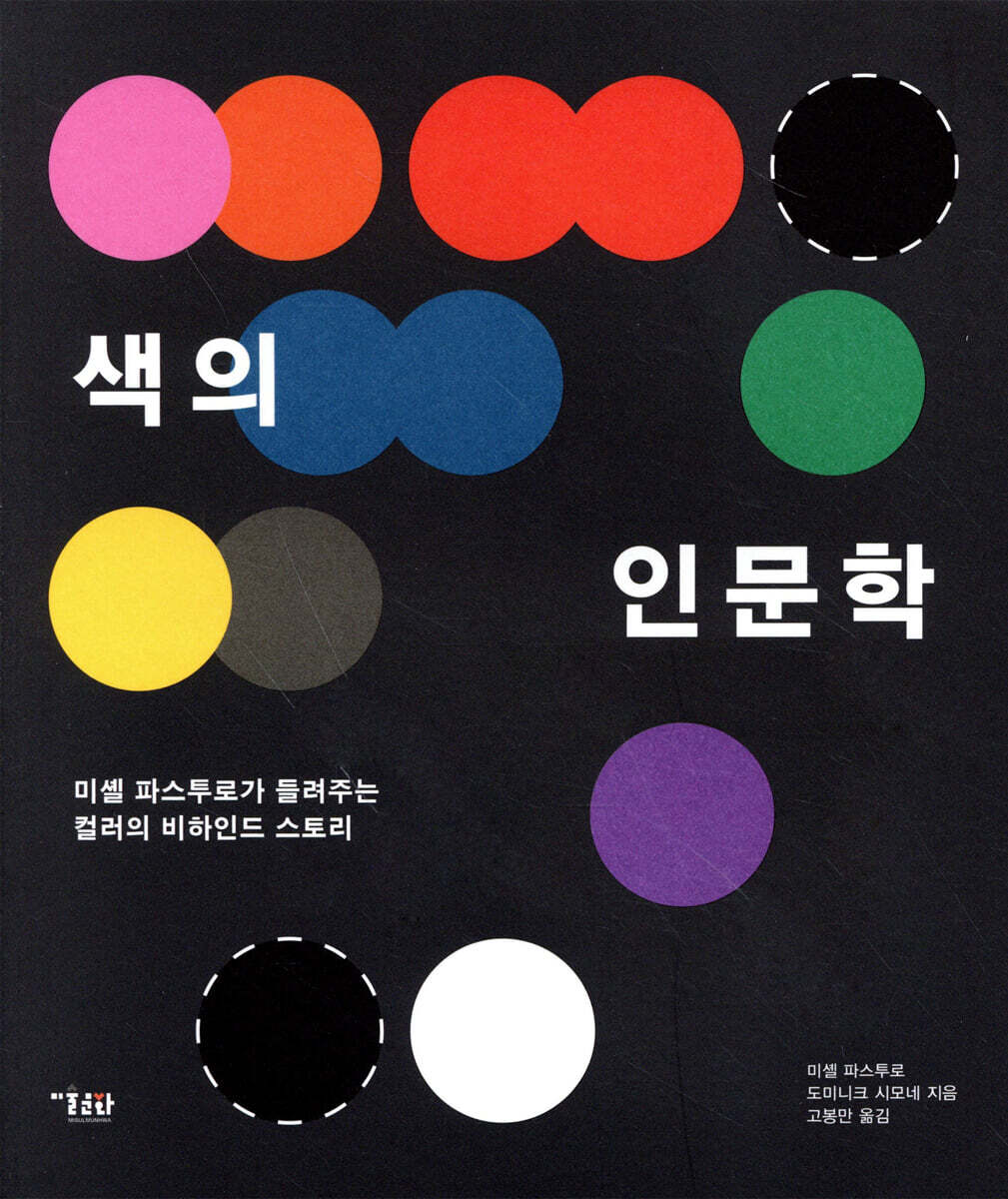
Humanities of Color
 |
Description
Book Introduction
Michel Pastouro, a master of Western symbolism, tells us
A variety of interesting stories about colors
“Every color has a story.”
What meaning did color have and how was it used?
Why did it change into what it is now?
Simone asks, Pasturo answers.
This is a revised edition of 『Le petit livre des couleurs』, a bestseller in France, written by Michel Pastoureau, a leading French medieval historian and expert on the history of color.
This is a collection of summer special articles from the famous French daily newspaper "l'Express" and is structured in a format where novelist and journalist Dominique Simonet poses questions and Michel Pastourot answers.
Michel Pastourot explains the social norms, taboos, and prejudices that people hold about color, and emphasizes the influence of color on our social and cultural environment, attitudes, language, and imagination through its various meanings.
He argues that the colors of everything in this world, including paintings, decorations, architecture, advertisements, and even the products, clothes, and cars we consume in our daily lives, are governed by secret, unwritten codes.
Now, let's take a look at the symbolism and historical and social significance of color through the behind-the-scenes story of color that he tells.
A variety of interesting stories about colors
“Every color has a story.”
What meaning did color have and how was it used?
Why did it change into what it is now?
Simone asks, Pasturo answers.
This is a revised edition of 『Le petit livre des couleurs』, a bestseller in France, written by Michel Pastoureau, a leading French medieval historian and expert on the history of color.
This is a collection of summer special articles from the famous French daily newspaper "l'Express" and is structured in a format where novelist and journalist Dominique Simonet poses questions and Michel Pastourot answers.
Michel Pastourot explains the social norms, taboos, and prejudices that people hold about color, and emphasizes the influence of color on our social and cultural environment, attitudes, language, and imagination through its various meanings.
He argues that the colors of everything in this world, including paintings, decorations, architecture, advertisements, and even the products, clothes, and cars we consume in our daily lives, are governed by secret, unwritten codes.
Now, let's take a look at the symbolism and historical and social significance of color through the behind-the-scenes story of color that he tells.
- You can preview some of the book's contents.
Preview
index
Introduction: Every color has a story.
Blue is a timeless color
Red, the color of fire and blood, love and hell
White, a color that advocates purity and innocence
Green is a color that is completely unreadable
Yellow, the color that has been covered with all kinds of stigmas
Black, the color of mourning and elegance
Intermediate colors such as rain gray and candy pink
index
Illustration credits
Blue is a timeless color
Red, the color of fire and blood, love and hell
White, a color that advocates purity and innocence
Green is a color that is completely unreadable
Yellow, the color that has been covered with all kinds of stigmas
Black, the color of mourning and elegance
Intermediate colors such as rain gray and candy pink
index
Illustration credits
Detailed image

Into the book
Blue has long been an unimportant color, a color with no meaning or significance, and in ancient times even a color despised.
Then, gradually, it changed into a more stylish outfit and took its place without clashing with anyone, and eventually it became a sacred color, a color of unanimity, a color officially recognized.
---From "Blue, the Timeless Color"
“Our taste in color changes very slowly.
I think blue will still be a popular color in 30 years.
Because blue is a color that can bring empathy and agreement from everyone.
Blue is also the least hated color in opinion polls.
It is non-aggressive and doesn't violate anything, so it provides a sense of security and serves as a unifying force.
International organizations such as the United Nations, UNESCO, the European Parliament, and the European Union may have chosen blue as their symbolic color for this very reason.”
---From "Blue, the Timeless Color"
Unlike the timid blue, red is arrogant, ambitious, and power-oriented.
It is the color that you want others to look at, the color that you want to overpower all other colors.
But despite this arrogant nature of Red, his past was not so glorious.
---From "Red Fire and Blood, the Colors of Love and Hell"
“In the Middle Ages, blue was a feminine color due to the influence of the Virgin Mary, while red, symbolizing power and war, was a masculine color.
But this has changed.
Afterwards, blue became a less noticeable color and became a masculine color, while red shifted towards the feminine side.
Traces of it remain even today.
“There is a tendency to choose blue as the color for boys and pink as the color for girls.”
---From "Red Fire and Blood, the Colors of Love and Hell"
Poor Ha-yang has had a difficult time getting her due and has been treated with ridiculous inflexibility throughout history.
People were not very satisfied with this color.
Always demanding more, wanting something “whiter than white.”
---From "White, the Color that Advocates Purity and Innocence"
“White people are not actually white people.
It's the same reason why the color of white wine isn't white.
But we are obsessed with these kinds of symbols that make us feel superior to our narcissism.
Asians associate white skin with death.
To them, white people have the complexion of a sick person.
In this way, we each look at others through our own unique symbol system.”
---From "White, the Color that Advocates Purity and Innocence"
My head hurts because everyone is shouting green.
Green zones, green numbers, green classrooms, green parties… Even trash cans on the streets are painted green, believing that green is associated with nature and cleanliness.
I feel like I need to be careful.
Because, contrary to appearances, green is not an honest color.
---From "Green, a color whose color is completely unknown"
“It is a theory that denies all systems of color values and symbols that have been passed down from long ago, and does not even consider the fact that color is a cultural phenomenon.
Such a classification method shows a lack of understanding of history itself.
But, oddly enough, this flawed theory brings about another symbolism of green.
“Because green is considered the ‘complementary color’ of red, which is the color of prohibition, it has come to be positioned as the color of ‘permission.’”
---From "Green, a color whose color is completely unknown"
Yellow, people don't like this color very much.
In the small world of color, yellow is a foreigner, a stateless person.
It is also a color that people are wary of and consider shameful.
When I think of yellow, I think of faded photographs, fallen leaves, and traitors.
---From "Yellow, the color that has been covered with all kinds of stigmas"
“Yellow was highly regarded in ancient Greece and Rome.
Romans readily wore yellow clothing for religious ceremonies, weddings, and other occasions.
Yellow has always been highly regarded in non-European cultures such as Asia and South America.
In China, only the emperor was allowed to wear yellow.
For the Chinese, yellow has always been a good color, symbolizing power, wealth, and wisdom.
Conversely, even in the West, yellow is the least chosen of the six primary colors.
“If you look at polls on ‘preferred colors,’ yellow ranks last, after blue, green, red, white, and black.”
---From "Yellow, the color that has been covered with all kinds of stigmas"
Black, along with its companion white, constitutes a separate world of our imagination.
That world resembles the world that black-and-white photographs and black-and-white films have shown us, a world that can be expressed more 'truly' than what color depicts.
The black-and-white world that we dismiss as an outdated relic of the past is still with us.
Deeply rooted in our dreams and thoughts.
---From "Black, the Color of Mourning and Elegance"
“All readability tests show that yellow text on a black background is more readable than black text on a white background.
We need to break our stereotypes about color contrast.
Contrary to popular belief, the contrast between black and white is not as strong or appropriate as the contrast between other colors.”
---From "Black, the Color of Mourning and Elegance"
“As technology advances, new colors continue to be discovered, but the essence of color remains unchanged.
The six basic colors inherited by Western society will remain the same for decades to come.
There will also be various changes in color tone.
However, the color symbolism will not change much.
I believe that color is an abstract category that cannot be manipulated by technology.
Now is the time to ask, 'What do red, blue, black, and white mean?'
Because they determine our actions and thoughts.”
Then, gradually, it changed into a more stylish outfit and took its place without clashing with anyone, and eventually it became a sacred color, a color of unanimity, a color officially recognized.
---From "Blue, the Timeless Color"
“Our taste in color changes very slowly.
I think blue will still be a popular color in 30 years.
Because blue is a color that can bring empathy and agreement from everyone.
Blue is also the least hated color in opinion polls.
It is non-aggressive and doesn't violate anything, so it provides a sense of security and serves as a unifying force.
International organizations such as the United Nations, UNESCO, the European Parliament, and the European Union may have chosen blue as their symbolic color for this very reason.”
---From "Blue, the Timeless Color"
Unlike the timid blue, red is arrogant, ambitious, and power-oriented.
It is the color that you want others to look at, the color that you want to overpower all other colors.
But despite this arrogant nature of Red, his past was not so glorious.
---From "Red Fire and Blood, the Colors of Love and Hell"
“In the Middle Ages, blue was a feminine color due to the influence of the Virgin Mary, while red, symbolizing power and war, was a masculine color.
But this has changed.
Afterwards, blue became a less noticeable color and became a masculine color, while red shifted towards the feminine side.
Traces of it remain even today.
“There is a tendency to choose blue as the color for boys and pink as the color for girls.”
---From "Red Fire and Blood, the Colors of Love and Hell"
Poor Ha-yang has had a difficult time getting her due and has been treated with ridiculous inflexibility throughout history.
People were not very satisfied with this color.
Always demanding more, wanting something “whiter than white.”
---From "White, the Color that Advocates Purity and Innocence"
“White people are not actually white people.
It's the same reason why the color of white wine isn't white.
But we are obsessed with these kinds of symbols that make us feel superior to our narcissism.
Asians associate white skin with death.
To them, white people have the complexion of a sick person.
In this way, we each look at others through our own unique symbol system.”
---From "White, the Color that Advocates Purity and Innocence"
My head hurts because everyone is shouting green.
Green zones, green numbers, green classrooms, green parties… Even trash cans on the streets are painted green, believing that green is associated with nature and cleanliness.
I feel like I need to be careful.
Because, contrary to appearances, green is not an honest color.
---From "Green, a color whose color is completely unknown"
“It is a theory that denies all systems of color values and symbols that have been passed down from long ago, and does not even consider the fact that color is a cultural phenomenon.
Such a classification method shows a lack of understanding of history itself.
But, oddly enough, this flawed theory brings about another symbolism of green.
“Because green is considered the ‘complementary color’ of red, which is the color of prohibition, it has come to be positioned as the color of ‘permission.’”
---From "Green, a color whose color is completely unknown"
Yellow, people don't like this color very much.
In the small world of color, yellow is a foreigner, a stateless person.
It is also a color that people are wary of and consider shameful.
When I think of yellow, I think of faded photographs, fallen leaves, and traitors.
---From "Yellow, the color that has been covered with all kinds of stigmas"
“Yellow was highly regarded in ancient Greece and Rome.
Romans readily wore yellow clothing for religious ceremonies, weddings, and other occasions.
Yellow has always been highly regarded in non-European cultures such as Asia and South America.
In China, only the emperor was allowed to wear yellow.
For the Chinese, yellow has always been a good color, symbolizing power, wealth, and wisdom.
Conversely, even in the West, yellow is the least chosen of the six primary colors.
“If you look at polls on ‘preferred colors,’ yellow ranks last, after blue, green, red, white, and black.”
---From "Yellow, the color that has been covered with all kinds of stigmas"
Black, along with its companion white, constitutes a separate world of our imagination.
That world resembles the world that black-and-white photographs and black-and-white films have shown us, a world that can be expressed more 'truly' than what color depicts.
The black-and-white world that we dismiss as an outdated relic of the past is still with us.
Deeply rooted in our dreams and thoughts.
---From "Black, the Color of Mourning and Elegance"
“All readability tests show that yellow text on a black background is more readable than black text on a white background.
We need to break our stereotypes about color contrast.
Contrary to popular belief, the contrast between black and white is not as strong or appropriate as the contrast between other colors.”
---From "Black, the Color of Mourning and Elegance"
“As technology advances, new colors continue to be discovered, but the essence of color remains unchanged.
The six basic colors inherited by Western society will remain the same for decades to come.
There will also be various changes in color tone.
However, the color symbolism will not change much.
I believe that color is an abstract category that cannot be manipulated by technology.
Now is the time to ask, 'What do red, blue, black, and white mean?'
Because they determine our actions and thoughts.”
---Among "intermediate colors such as rain gray and candy pink"
Publisher's Review
The story that colors tell us
When did "blue," the color symbolizing peace, become so beloved by everyone? Why was "white," with its clean and pure feel, chosen as the color for wedding dresses? Was the negative reception of "yellow" ultimately due to its perceived weakness in competition with gold? What connection is there between the popularity of "black" and the Reformation? Why do we perceive "blue" as a masculine color and "red" as a feminine color?
The symbolism of color is never fixed and unchanging.
It is constantly changing depending on the time and place, and is sometimes loved or rejected.
When you think of "wedding dress," what color comes to mind first? While the answer may vary from country to country, most would probably say "white."
But until just a few centuries ago, the color of wedding dresses was a gorgeous and bright 'red'.
Red was loved by people of all ages and genders because it signified power, victory in war, and gorgeous beauty.
What's interesting here is that most colors have both positive and negative sides, that is, duality.
So what were the negative aspects of red?
Simone asks, Pasturo answers.
This is a revised edition of 『Le petit livre des couleurs』, a bestseller in France, written by Michel Pastoureau, a leading French medieval historian and expert on the history of color.
This is a collection of summer special articles from the famous French daily newspaper "l'Express" and is structured in a format where novelist and journalist Dominique Simonet poses questions and Michel Pastourot answers.
Michel Pastourot explains the social norms, taboos, and prejudices that people hold about color, and emphasizes the influence of color on our social and cultural environment, attitudes, language, and imagination through its various meanings.
He argues that the colors of everything in this world, including paintings, decorations, architecture, advertisements, and even the products, clothes, and cars we consume in our daily lives, are governed by secret, unwritten codes.
Now, let's take a look at the symbolism and historical and social significance of color through the behind-the-scenes story of color that he tells.
Six primary colors + five intermediate colors
He argues that we live in a system of six 'primary colours': blue, red, white, green, yellow and black.
First, let's mention the timid 'Blue'.
The reason modern people love blue is because they believe this color has the power to bring about consensus.
Next is the arrogant 'Red'.
This color, which craves power, simultaneously stirs up blood and fire, virtue and sin.
Next is the turn of the pure 'White'.
It is the color of angels and ghosts, and a color that symbolizes self-reflection and sleepless nights.
'Green' also has a lot to say in its own way.
This color, which has a bad reputation, symbolizes hypocrisy, cunning, luck, coincidence, and unfaithful love.
Next is the 'yellow' of the wheat field.
This color is full of complexes and feels that one's situation is unfair.
We have neglected him for too long, so we must forgive him.
Finally, there is the gorgeous 'black'.
Black, which is different on the outside and inside, is the color of strictness and remorse, but also the color of elegance and arrogance, as in ceremonial attire.
So what comes next after the six colors? Michel Pastoureau cites purple, orange, pink, brown, and gray as the next two.
These five 'intermediate colors' are mainly associated with fruits and flowers.
And each has its own unique symbolism, and they find their own identity, like orange, which symbolizes health and vitality, or pink, which symbolizes provocation and vanity.
After these eleven colors, there is an endless series of diverse colors that are impossible to separate and classify, and are difficult to express in words.
Therefore, it is futile to identify and define these colors one by one.
When did "blue," the color symbolizing peace, become so beloved by everyone? Why was "white," with its clean and pure feel, chosen as the color for wedding dresses? Was the negative reception of "yellow" ultimately due to its perceived weakness in competition with gold? What connection is there between the popularity of "black" and the Reformation? Why do we perceive "blue" as a masculine color and "red" as a feminine color?
The symbolism of color is never fixed and unchanging.
It is constantly changing depending on the time and place, and is sometimes loved or rejected.
When you think of "wedding dress," what color comes to mind first? While the answer may vary from country to country, most would probably say "white."
But until just a few centuries ago, the color of wedding dresses was a gorgeous and bright 'red'.
Red was loved by people of all ages and genders because it signified power, victory in war, and gorgeous beauty.
What's interesting here is that most colors have both positive and negative sides, that is, duality.
So what were the negative aspects of red?
Simone asks, Pasturo answers.
This is a revised edition of 『Le petit livre des couleurs』, a bestseller in France, written by Michel Pastoureau, a leading French medieval historian and expert on the history of color.
This is a collection of summer special articles from the famous French daily newspaper "l'Express" and is structured in a format where novelist and journalist Dominique Simonet poses questions and Michel Pastourot answers.
Michel Pastourot explains the social norms, taboos, and prejudices that people hold about color, and emphasizes the influence of color on our social and cultural environment, attitudes, language, and imagination through its various meanings.
He argues that the colors of everything in this world, including paintings, decorations, architecture, advertisements, and even the products, clothes, and cars we consume in our daily lives, are governed by secret, unwritten codes.
Now, let's take a look at the symbolism and historical and social significance of color through the behind-the-scenes story of color that he tells.
Six primary colors + five intermediate colors
He argues that we live in a system of six 'primary colours': blue, red, white, green, yellow and black.
First, let's mention the timid 'Blue'.
The reason modern people love blue is because they believe this color has the power to bring about consensus.
Next is the arrogant 'Red'.
This color, which craves power, simultaneously stirs up blood and fire, virtue and sin.
Next is the turn of the pure 'White'.
It is the color of angels and ghosts, and a color that symbolizes self-reflection and sleepless nights.
'Green' also has a lot to say in its own way.
This color, which has a bad reputation, symbolizes hypocrisy, cunning, luck, coincidence, and unfaithful love.
Next is the 'yellow' of the wheat field.
This color is full of complexes and feels that one's situation is unfair.
We have neglected him for too long, so we must forgive him.
Finally, there is the gorgeous 'black'.
Black, which is different on the outside and inside, is the color of strictness and remorse, but also the color of elegance and arrogance, as in ceremonial attire.
So what comes next after the six colors? Michel Pastoureau cites purple, orange, pink, brown, and gray as the next two.
These five 'intermediate colors' are mainly associated with fruits and flowers.
And each has its own unique symbolism, and they find their own identity, like orange, which symbolizes health and vitality, or pink, which symbolizes provocation and vanity.
After these eleven colors, there is an endless series of diverse colors that are impossible to separate and classify, and are difficult to express in words.
Therefore, it is futile to identify and define these colors one by one.
GOODS SPECIFICS
- Date of issue: March 17, 2020
- Page count, weight, size: 168 pages | 536g | 192*228*20mm
- ISBN13: 9791185954561
- ISBN10: 1185954562
You may also like
카테고리
korean


korean

![GQ KOREA Mark (Monthly): December [2025]](http://librairie.coreenne.fr/cdn/shop/files/8ef265dbbfbf186523ed75ba7319009d.jpg?v=1765340328&width=3840)


