

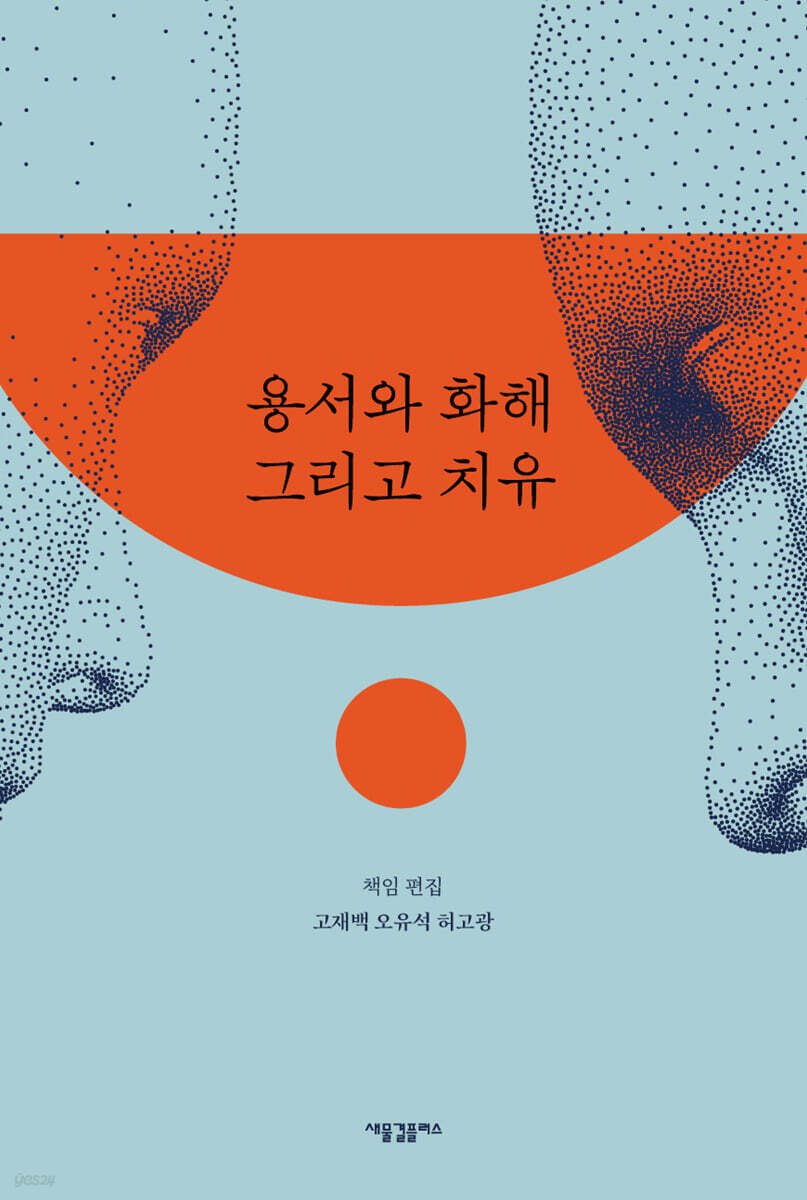
Forgiveness, Reconciliation, and Healing
 |
Description
Book Introduction
The history of mankind is a history of fratricide and is filled with memories of conflicts and wars with neighbors.
In the midst of constant confrontation and conflict with individuals other than ourselves and with those outside our group, we sometimes create mortal enemies and become enemies of others.
No one is free from the chains of painful and frustrating memories created by such accumulated hostility and resentment.
Even as we become more connected and the world grows closer, news of violence and war caused by discrimination and hatred continues to spread.
Given this reality, are the values of forgiveness, reconciliation, healing, understanding, coexistence, and peace truly achievable?
Scholars who seek answers to these questions, while examining the brutal aggression and predatory evil at work within humanity, have published a book titled "Forgiveness, Reconciliation, and Healing."
This book is the result of 13 authors from various academic fields, including philosophy, education, history, political sociology, and theology, who gathered together at the Institute of Social and Cultural Studies and the Institute for Future Society to introduce discussions that have been taking place in each field on the topic of “forgiveness, reconciliation, and healing” and, based on this, to unfold universal conflict resolution methods that we can apply in reality.
First, Part 1 of this book (“Forgiveness, Reconciliation, and Healing from an Academic Perspective”) examines the concepts of forgiveness and reconciliation and real-world cases from the perspectives of philosophy, psychology, history, political sociology, and law, and closely examines the process and necessary requirements for healing.
Part 2 (“Forgiveness, Reconciliation, and Healing from a Religious Perspective”) explores forgiveness and reconciliation from Buddhist and Christian perspectives.
Each author presents specific methods for putting the values of “forgiveness” and “reconciliation” emphasized from the perspective of their respective religions into practice in their lives.
Part 3 (“A History of Forgiveness, Reconciliation, and Healing”) introduces historical examples of healing achieved through forgiveness and reconciliation, such as racial conflict and hatred in the United States, overcoming Germany’s past, and the comfort women issue in Korea. By doing so, it examines the wisdom needed for the present and envisions a future outlook.
Part 4 (“Conflicts in Reality and Forgiveness and Reconciliation”) addresses specific issues facing South Korea by analyzing in detail the division of Korean society, conglomerate crimes, gender issues, and generational issues.
Authors from diverse fields explore the independent yet organic themes of individuals and groups who have sought forgiveness, reconciliation, and healing across time and space.
As I read each author's writings, I realized that forgiveness, reconciliation, and healing are themes that can enable Christians to build solidarity with citizens without a secular academic or religious foundation, and create social progress and good.
Furthermore, by recognizing the efforts of previous generations to reconcile conflicting and hostile parties, we will be reminded of the meaning of “forgiveness and reconciliation,” which is at the core of the Christian gospel, and thus rediscover our calling as “children of God who bring peace.”
Those who aspire to create a society where we all live together, and who wish to sow the seeds of peace in their daily lives by affirming their faith in the values of forgiveness and reconciliation, will find a small spark of hope in this book.
In the midst of constant confrontation and conflict with individuals other than ourselves and with those outside our group, we sometimes create mortal enemies and become enemies of others.
No one is free from the chains of painful and frustrating memories created by such accumulated hostility and resentment.
Even as we become more connected and the world grows closer, news of violence and war caused by discrimination and hatred continues to spread.
Given this reality, are the values of forgiveness, reconciliation, healing, understanding, coexistence, and peace truly achievable?
Scholars who seek answers to these questions, while examining the brutal aggression and predatory evil at work within humanity, have published a book titled "Forgiveness, Reconciliation, and Healing."
This book is the result of 13 authors from various academic fields, including philosophy, education, history, political sociology, and theology, who gathered together at the Institute of Social and Cultural Studies and the Institute for Future Society to introduce discussions that have been taking place in each field on the topic of “forgiveness, reconciliation, and healing” and, based on this, to unfold universal conflict resolution methods that we can apply in reality.
First, Part 1 of this book (“Forgiveness, Reconciliation, and Healing from an Academic Perspective”) examines the concepts of forgiveness and reconciliation and real-world cases from the perspectives of philosophy, psychology, history, political sociology, and law, and closely examines the process and necessary requirements for healing.
Part 2 (“Forgiveness, Reconciliation, and Healing from a Religious Perspective”) explores forgiveness and reconciliation from Buddhist and Christian perspectives.
Each author presents specific methods for putting the values of “forgiveness” and “reconciliation” emphasized from the perspective of their respective religions into practice in their lives.
Part 3 (“A History of Forgiveness, Reconciliation, and Healing”) introduces historical examples of healing achieved through forgiveness and reconciliation, such as racial conflict and hatred in the United States, overcoming Germany’s past, and the comfort women issue in Korea. By doing so, it examines the wisdom needed for the present and envisions a future outlook.
Part 4 (“Conflicts in Reality and Forgiveness and Reconciliation”) addresses specific issues facing South Korea by analyzing in detail the division of Korean society, conglomerate crimes, gender issues, and generational issues.
Authors from diverse fields explore the independent yet organic themes of individuals and groups who have sought forgiveness, reconciliation, and healing across time and space.
As I read each author's writings, I realized that forgiveness, reconciliation, and healing are themes that can enable Christians to build solidarity with citizens without a secular academic or religious foundation, and create social progress and good.
Furthermore, by recognizing the efforts of previous generations to reconcile conflicting and hostile parties, we will be reminded of the meaning of “forgiveness and reconciliation,” which is at the core of the Christian gospel, and thus rediscover our calling as “children of God who bring peace.”
Those who aspire to create a society where we all live together, and who wish to sow the seeds of peace in their daily lives by affirming their faith in the values of forgiveness and reconciliation, will find a small spark of hope in this book.
- You can preview some of the book's contents.
Preview
index
Editor's Preface
[Part 1: Forgiveness, Reconciliation, and Healing from an Academic Perspective]
From Achilles' Wrath to the Eichmann Trial: A Topography of Revenge and Forgiveness│Oh Yu-seok
Breaking the Cycle of School Violence through Forgiveness: Healing and Posttraumatic Growth Through Systematic Forgiveness and Reconciliation│Oh Young-hee
Dealing with Past Negative Group Conflict Experiences: Forgiveness and Reconciliation from a Political Sociology Perspective│Kim Byeong-ro
Efforts to Reconcile and Resolve the Past in Modern World History: A History of Reconciling the Past│Go Jae-baek
Law and Forgiveness: A Philosophy of Law Perspective│Oh Min-yong
[Part 2: Forgiveness, Reconciliation, and Healing from a Religious Perspective]
Compassion, Patience, and Forgiveness in Buddhist Thought: Examining Buddhism Through the Concept of Forgiveness│Lee Byeong-wook
“Love.
And then act: Forgiveness, Reconciliation, and Healing in Christianity│Holy Spirit
[Part 3: The History of Forgiveness, Reconciliation, and Healing]
Forty Acres and a Mule: The American Debate on Racial Reconciliation│Jin Gu-seop
Escaping the Specter of Nazism: Overcoming Germany's Past and Achieving Historical Reconciliation│Choi Seong-cheol
Historical Conflict and Reconciliation Between Korea and Japan: Focusing on the Japanese Military Comfort Women Issue│Jeong Jae-jeong
[Part 4: Conflicts in Reality, Forgiveness, and Reconciliation]
Mutual Recognition and Approaching First: For South and North Korea to Reconcile│Lee Chan-soo
Forgiveness and Reconciliation in the Economy: An Analysis of Cases of Inherited Innocence and Inherited Guilt in Chaebol Crimes│Lee Chang-min
The Art of Coexistence: Rethinking Gender and Generations│Kim Seon-gi
About the Author (Alphabetical Order)
About the Editor-in-Chief
[Part 1: Forgiveness, Reconciliation, and Healing from an Academic Perspective]
From Achilles' Wrath to the Eichmann Trial: A Topography of Revenge and Forgiveness│Oh Yu-seok
Breaking the Cycle of School Violence through Forgiveness: Healing and Posttraumatic Growth Through Systematic Forgiveness and Reconciliation│Oh Young-hee
Dealing with Past Negative Group Conflict Experiences: Forgiveness and Reconciliation from a Political Sociology Perspective│Kim Byeong-ro
Efforts to Reconcile and Resolve the Past in Modern World History: A History of Reconciling the Past│Go Jae-baek
Law and Forgiveness: A Philosophy of Law Perspective│Oh Min-yong
[Part 2: Forgiveness, Reconciliation, and Healing from a Religious Perspective]
Compassion, Patience, and Forgiveness in Buddhist Thought: Examining Buddhism Through the Concept of Forgiveness│Lee Byeong-wook
“Love.
And then act: Forgiveness, Reconciliation, and Healing in Christianity│Holy Spirit
[Part 3: The History of Forgiveness, Reconciliation, and Healing]
Forty Acres and a Mule: The American Debate on Racial Reconciliation│Jin Gu-seop
Escaping the Specter of Nazism: Overcoming Germany's Past and Achieving Historical Reconciliation│Choi Seong-cheol
Historical Conflict and Reconciliation Between Korea and Japan: Focusing on the Japanese Military Comfort Women Issue│Jeong Jae-jeong
[Part 4: Conflicts in Reality, Forgiveness, and Reconciliation]
Mutual Recognition and Approaching First: For South and North Korea to Reconcile│Lee Chan-soo
Forgiveness and Reconciliation in the Economy: An Analysis of Cases of Inherited Innocence and Inherited Guilt in Chaebol Crimes│Lee Chang-min
The Art of Coexistence: Rethinking Gender and Generations│Kim Seon-gi
About the Author (Alphabetical Order)
About the Editor-in-Chief
Into the book
Today, we live in a world where we experience conflicts of interest, such as those over historical issues, ideological conflicts, generational conflicts, the rich and the poor, and gender conflicts, just like in the time when Arendt lived. We live in a world where each person only asserts their own position and has no intention of respecting or considering the other.
In this situation, Arendt asks us the following question:
To what extent can we forgive the wrongdoings of others? Are there conditions required of both the perpetrator and the victim for true reconciliation and forgiveness? Or should forgiveness be unconditional? We desperately need in-depth social discussion and debate to answer these questions today.
---From "From the Wrath of Achilles to the Eichmann Trial (Oh Yu-seok)"
If systematic forgiveness is achieved, both victims and perpetrators can heal and grow.
Forgiveness is best practiced as soon as possible after school violence occurs.
That is why it is necessary to help children develop the habit of forgiveness by systematically teaching forgiveness at home and at school from an early age.
If children develop the habit of systematic forgiveness, it will reduce the number of times they are hurt in the first place, and even if they are hurt, they will be able to better process the effects, which will ultimately be a great help in preventing and healing school violence.
---From "Breaking the Vicious Cycle of School Violence through Forgiveness (Oh Young-hee)"
When the gap between ideals and reality shifts from the individual to the collective, forgiveness and reconciliation become much more difficult topics to address.
At the collective level, the dynamics of institutions and structures operate beyond individual empathy and beliefs.
On a personal level, we may shed tears and empathize with the values of forgiveness and reconciliation, but when it comes to the political and social level, greater effort and strategic wisdom are required to collectively mobilize and utilize empathy and conviction.
This is why, when applying and practicing forgiveness and reconciliation at the group and national levels, we must carefully consider the political and social circumstances and context in which they are applied.
---From "Dealing with Past Negative Group Conflict Experiences (Kim Byeong-ro)"
Many people worry that our era may forget its past.
In our country, historical issues have been directly affected by changes in the political landscape, and whenever such ups and downs occur, the task of settling the past has been treated as an obstacle on the path to the future.
However, coming to terms with the past is not something that is bound to the past, but rather something that is oriented toward the present and the future.
The common goals pursued by many countries that have experienced the process of coming to terms with their past were forgiveness, reconciliation, and healing.
---From "Efforts to Settle the Past and Reconcile History in Modern World History (Ko Jae-baek)"
The practical element of love is forgiveness.
Love is practically the condition of “justice and peace.”
“Justice and peace” are issues that concern the nation.
Therefore, in the practical horizon, love is not simply absorbed into the horizon of individual action, but rather takes the state as its place.
In modern society, all acts of the state, such as legislative, judicial, and administrative, are executed based on the law.
Therefore, dealing with love means that the law can be directly addressed as its object.
When dealing with law and love, we can contrast them at the level of ideological philosophy, but we can also examine the relationship between law and love at the practical level of action.
That is why the law is the place where love meets.
---From "Law and Forgiveness (Oh Min-yong)"
The Bodhisattva of the Lotus Sutra, Sangbulgyeong, also worships and praises many people, and even though he encounters many difficulties because of it, he continues his actions without being bound by them.
This also includes forgiveness for those who have caused you trouble.
Because even if you are in trouble because of the other person, continuing to practice your actions without being angry, holding a grudge in your heart, or being bound by such things ultimately means forgiving.
---From “Compassion, Insult, and Forgiveness in Buddhist Thought (Lee Byeong-uk)”
Forgiveness is one of the topics that humanity has long discussed philosophically and theologically.
Christianity, in particular, has long explored forgiveness in relation to the problems of evil and sin.
However, we have focused too much on the religious meaning and have failed to deeply understand the true meaning of forgiveness.
---“Love.
And take action” (Holy Spirit)
Racial reconciliation is a challenging task that requires a lot of time, effort, and resources.
Because the transformation into a “just and fair” society without racial discrimination inevitably involves debate, strife, and suffering.
American society still has many hurdles to overcome before it can achieve this lofty goal.
It is entirely up to the American people to decide whether they are willing to take the bold steps required and make the sacrifices that come with them.
---From "40 Acres of Land and a Mule (Jin Gu-seop)"
According to the German historical educator Bodo von Borries, reconciliation is “the alleviation of historical hostility and hatred.”
However, this may be a minimum requirement or starting point for reconciliation, but it cannot be a comprehensive definition of reconciliation.
If we redefine reconciliation from a forward-looking and open perspective, it means “going beyond peaceful coexistence without conflict to embracing differences and creating a framework for joint cooperation through productive competition.”
---From "Escape from the Specter of Nazism (Choi Seong-cheol)"
Korea and Japan are neighbors who can expand their interests by competing and cooperating with each other.
I'm not in a position where I can just not watch it because I hate it.
That is why the two countries must overcome the conflict caused by the Japanese military comfort women issue.
“Legal solutions” through trials have not been of much help in resolving the problem.
After the court ruling, the confrontation became more intense and the possibility of a resolution became even less likely.
If so, it is now necessary to go beyond a “legal solution” and seek a “historical solution.”
---From "Historical Conflict and Reconciliation Between Korea and Japan (Jeong Jae-jeong)"
When we examine the sense of history held by the South and the North, we clearly see the collective mentality of the people (to borrow a term from the French Annales School, “mentalité”), a collective way of thinking and lifestyle formed over a long period of time, rather than the conflicts of the past few decades marked by war, confrontation, and recrimination.
Choi Chi-won's remarks on the "inclusive three teachings" spirit of the Silla people, who have long embraced diversity, and Wonhyo's unification of all Buddhist thought into the keyword "one mind" are good examples of the long-standing capacity of the Korean Peninsula to accept given objects as they are.
---From "Acknowledging each other and approaching first (Lee Chan-su)"
In Korean society, this perception of “guilty until proven innocent” has exacerbated misunderstandings and conflicts between the rich and the poor.
Therefore, to address forgiveness and reconciliation as an economic issue, we must start from this “innocent until proven guilty, guilty until proven innocent.”
Is this statement true? If so, why does the judiciary give lenient rulings to the powerful? Only by accurately understanding this reality can we find a way to achieve forgiveness and reconciliation between the economically powerful and the economically disadvantaged in Korean society.
---From "Forgiveness and Reconciliation in the Economic Sector (Lee Chang-min)"
This article was written as an answer to the question of how we can experience reconciliation and healing and live together beyond the numerous discourses surrounding gender, sexuality, and generation.
In short, it is an attempt to explore the arts of coexistence.
However, this kind of coexistence is not something that can be achieved through different groups making small “concessions.”
I believe that seeking the conditions for exercising ethics toward the other in general and maintaining such an attitude may be the ultimate and only way.
In this situation, Arendt asks us the following question:
To what extent can we forgive the wrongdoings of others? Are there conditions required of both the perpetrator and the victim for true reconciliation and forgiveness? Or should forgiveness be unconditional? We desperately need in-depth social discussion and debate to answer these questions today.
---From "From the Wrath of Achilles to the Eichmann Trial (Oh Yu-seok)"
If systematic forgiveness is achieved, both victims and perpetrators can heal and grow.
Forgiveness is best practiced as soon as possible after school violence occurs.
That is why it is necessary to help children develop the habit of forgiveness by systematically teaching forgiveness at home and at school from an early age.
If children develop the habit of systematic forgiveness, it will reduce the number of times they are hurt in the first place, and even if they are hurt, they will be able to better process the effects, which will ultimately be a great help in preventing and healing school violence.
---From "Breaking the Vicious Cycle of School Violence through Forgiveness (Oh Young-hee)"
When the gap between ideals and reality shifts from the individual to the collective, forgiveness and reconciliation become much more difficult topics to address.
At the collective level, the dynamics of institutions and structures operate beyond individual empathy and beliefs.
On a personal level, we may shed tears and empathize with the values of forgiveness and reconciliation, but when it comes to the political and social level, greater effort and strategic wisdom are required to collectively mobilize and utilize empathy and conviction.
This is why, when applying and practicing forgiveness and reconciliation at the group and national levels, we must carefully consider the political and social circumstances and context in which they are applied.
---From "Dealing with Past Negative Group Conflict Experiences (Kim Byeong-ro)"
Many people worry that our era may forget its past.
In our country, historical issues have been directly affected by changes in the political landscape, and whenever such ups and downs occur, the task of settling the past has been treated as an obstacle on the path to the future.
However, coming to terms with the past is not something that is bound to the past, but rather something that is oriented toward the present and the future.
The common goals pursued by many countries that have experienced the process of coming to terms with their past were forgiveness, reconciliation, and healing.
---From "Efforts to Settle the Past and Reconcile History in Modern World History (Ko Jae-baek)"
The practical element of love is forgiveness.
Love is practically the condition of “justice and peace.”
“Justice and peace” are issues that concern the nation.
Therefore, in the practical horizon, love is not simply absorbed into the horizon of individual action, but rather takes the state as its place.
In modern society, all acts of the state, such as legislative, judicial, and administrative, are executed based on the law.
Therefore, dealing with love means that the law can be directly addressed as its object.
When dealing with law and love, we can contrast them at the level of ideological philosophy, but we can also examine the relationship between law and love at the practical level of action.
That is why the law is the place where love meets.
---From "Law and Forgiveness (Oh Min-yong)"
The Bodhisattva of the Lotus Sutra, Sangbulgyeong, also worships and praises many people, and even though he encounters many difficulties because of it, he continues his actions without being bound by them.
This also includes forgiveness for those who have caused you trouble.
Because even if you are in trouble because of the other person, continuing to practice your actions without being angry, holding a grudge in your heart, or being bound by such things ultimately means forgiving.
---From “Compassion, Insult, and Forgiveness in Buddhist Thought (Lee Byeong-uk)”
Forgiveness is one of the topics that humanity has long discussed philosophically and theologically.
Christianity, in particular, has long explored forgiveness in relation to the problems of evil and sin.
However, we have focused too much on the religious meaning and have failed to deeply understand the true meaning of forgiveness.
---“Love.
And take action” (Holy Spirit)
Racial reconciliation is a challenging task that requires a lot of time, effort, and resources.
Because the transformation into a “just and fair” society without racial discrimination inevitably involves debate, strife, and suffering.
American society still has many hurdles to overcome before it can achieve this lofty goal.
It is entirely up to the American people to decide whether they are willing to take the bold steps required and make the sacrifices that come with them.
---From "40 Acres of Land and a Mule (Jin Gu-seop)"
According to the German historical educator Bodo von Borries, reconciliation is “the alleviation of historical hostility and hatred.”
However, this may be a minimum requirement or starting point for reconciliation, but it cannot be a comprehensive definition of reconciliation.
If we redefine reconciliation from a forward-looking and open perspective, it means “going beyond peaceful coexistence without conflict to embracing differences and creating a framework for joint cooperation through productive competition.”
---From "Escape from the Specter of Nazism (Choi Seong-cheol)"
Korea and Japan are neighbors who can expand their interests by competing and cooperating with each other.
I'm not in a position where I can just not watch it because I hate it.
That is why the two countries must overcome the conflict caused by the Japanese military comfort women issue.
“Legal solutions” through trials have not been of much help in resolving the problem.
After the court ruling, the confrontation became more intense and the possibility of a resolution became even less likely.
If so, it is now necessary to go beyond a “legal solution” and seek a “historical solution.”
---From "Historical Conflict and Reconciliation Between Korea and Japan (Jeong Jae-jeong)"
When we examine the sense of history held by the South and the North, we clearly see the collective mentality of the people (to borrow a term from the French Annales School, “mentalité”), a collective way of thinking and lifestyle formed over a long period of time, rather than the conflicts of the past few decades marked by war, confrontation, and recrimination.
Choi Chi-won's remarks on the "inclusive three teachings" spirit of the Silla people, who have long embraced diversity, and Wonhyo's unification of all Buddhist thought into the keyword "one mind" are good examples of the long-standing capacity of the Korean Peninsula to accept given objects as they are.
---From "Acknowledging each other and approaching first (Lee Chan-su)"
In Korean society, this perception of “guilty until proven innocent” has exacerbated misunderstandings and conflicts between the rich and the poor.
Therefore, to address forgiveness and reconciliation as an economic issue, we must start from this “innocent until proven guilty, guilty until proven innocent.”
Is this statement true? If so, why does the judiciary give lenient rulings to the powerful? Only by accurately understanding this reality can we find a way to achieve forgiveness and reconciliation between the economically powerful and the economically disadvantaged in Korean society.
---From "Forgiveness and Reconciliation in the Economic Sector (Lee Chang-min)"
This article was written as an answer to the question of how we can experience reconciliation and healing and live together beyond the numerous discourses surrounding gender, sexuality, and generation.
In short, it is an attempt to explore the arts of coexistence.
However, this kind of coexistence is not something that can be achieved through different groups making small “concessions.”
I believe that seeking the conditions for exercising ethics toward the other in general and maintaining such an attitude may be the ultimate and only way.
---From "The Art of Coexistence (Kim Seon-gi)"
GOODS SPECIFICS
- Publication date: October 28, 2022
- Page count, weight, size: 472 pages | 6,425g | 148*220*24mm
- ISBN13: 9791161292434
- ISBN10: 1161292438
You may also like
카테고리
korean


korean

![GQ KOREA Mark (Monthly): December [2025]](http://librairie.coreenne.fr/cdn/shop/files/8ef265dbbfbf186523ed75ba7319009d.jpg?v=1765340328&width=3840)


