

AI Asks the Humanities for Directions
 |
Description
Book Introduction
How close can artificial intelligence become to humans?
And how far can humans be human?
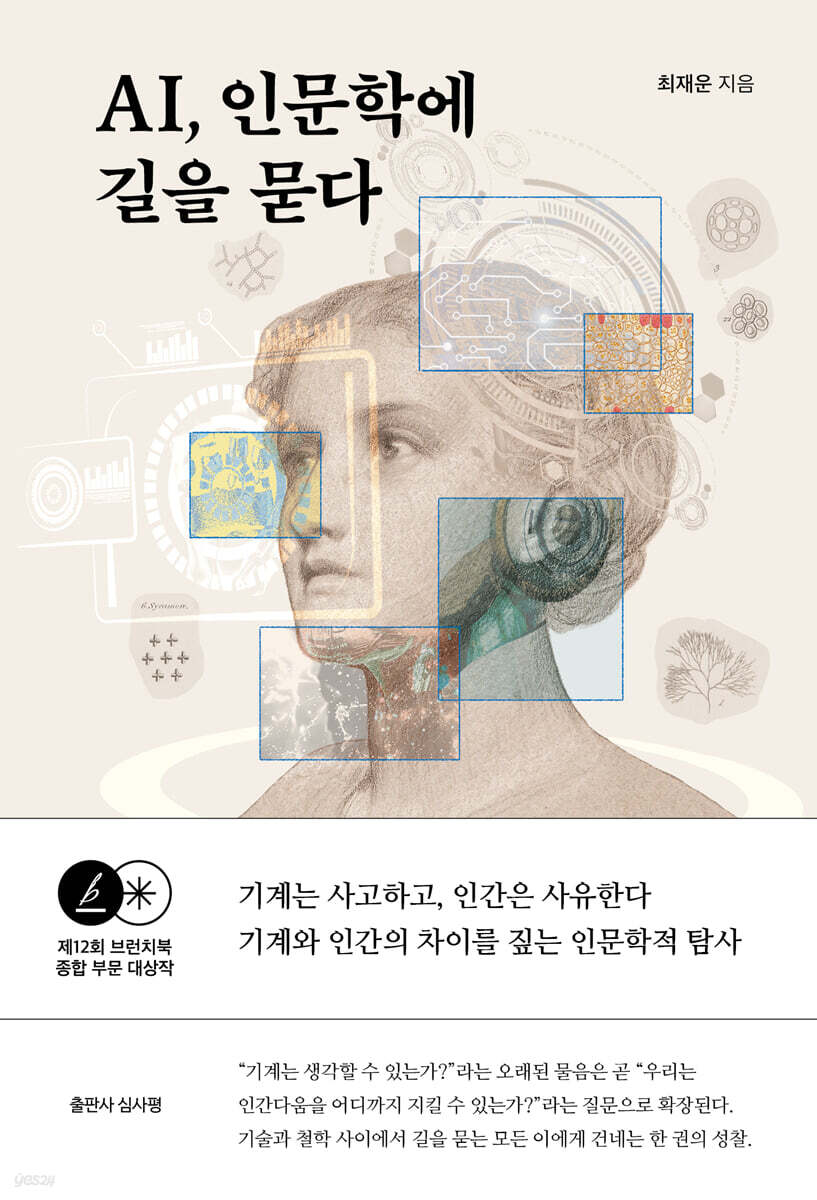
"AI, Asking the Humanities for Directions" is a book that reinterprets the technology of artificial intelligence through the humanities' language of philosophy, history, and science fiction.
Instead of explaining technology, it asks questions about the new world created by technology.
It begins with the age-old question, “Can machines think?” and expands to the most pressing question of our time: “What can we prove to be human?”
Symbolism and connectionism, Hegel's dialectics and Turing machines, from Ghost in the Shell to The Matrix.
At the intersection of philosophy and science, art and technology, we are asked to revisit the sense of humanity we have been missing.
AI is still learning.
Records, sentences, stories, errors, delusions, and even wounds left behind by humans.
If so, we must know.
“Who were the humans that AI observed and learned from?” This book neither mystifies nor terrorizes technology.
Instead, we look at human existence through the mirror of technology.
And he says: AI's problems are ultimately human problems, and the human answers always lie in the humanities.
I recommend this book to anyone who wants to understand the coming future in human terms, to anyone who seeks insight rather than fear of technology, and to anyone whose heart resonates with the following question:
“Are we still truly human?”
And how far can humans be human?
"AI, Asking the Humanities for Directions" is a book that reinterprets the technology of artificial intelligence through the humanities' language of philosophy, history, and science fiction.
Instead of explaining technology, it asks questions about the new world created by technology.
It begins with the age-old question, “Can machines think?” and expands to the most pressing question of our time: “What can we prove to be human?”
Symbolism and connectionism, Hegel's dialectics and Turing machines, from Ghost in the Shell to The Matrix.
At the intersection of philosophy and science, art and technology, we are asked to revisit the sense of humanity we have been missing.
AI is still learning.
Records, sentences, stories, errors, delusions, and even wounds left behind by humans.
If so, we must know.
“Who were the humans that AI observed and learned from?” This book neither mystifies nor terrorizes technology.
Instead, we look at human existence through the mirror of technology.
And he says: AI's problems are ultimately human problems, and the human answers always lie in the humanities.
I recommend this book to anyone who wants to understand the coming future in human terms, to anyone who seeks insight rather than fear of technology, and to anyone whose heart resonates with the following question:
“Are we still truly human?”
- You can preview some of the book's contents.
Preview
index
prolog
AI Meets Philosophy I
AI Meets Philosophy II
AI Meets History
AI meets science fiction
Epilogue
Appendix: AI, A Closer Look
AI Meets Philosophy I
AI Meets Philosophy II
AI Meets History
AI meets science fiction
Epilogue
Appendix: AI, A Closer Look
Detailed image

Into the book
The same is true of our artificial intelligence today.
Models become more sophisticated, and networks become more brain-like.
And within it, an intelligence that no one could have predicted is awakening.
In fact, today's artificial intelligence is learning human language and behavior and becoming more and more 'human-like'.
The phenomenon of artificial intelligence in games creating culture and developing religious beliefs is both eerie and fascinating.
What they learned was not a set of rules taught separately, but the lifestyle and imagination that humanity has accumulated.
The records and traces we leave behind become their ‘worldview.’
Ultimately, what we must do is clear.
It's about finding a balance between reason and experience, logic and intuition.
How quickly will artificial intelligence learn this wisdom, which philosophy has discovered through long trial and error? To understand this, we must examine the history of artificial intelligence against the history of philosophy.
This is not a simple intellectual game.
It is a journey to find answers to the existential question, “How should we develop technology in the future?”
Artificial intelligence has long since emerged from myth into reality.
But interestingly, as the gap between myth and reality narrows, we find ourselves seeking answers in old tales.
Models become more sophisticated, and networks become more brain-like.
And within it, an intelligence that no one could have predicted is awakening.
In fact, today's artificial intelligence is learning human language and behavior and becoming more and more 'human-like'.
The phenomenon of artificial intelligence in games creating culture and developing religious beliefs is both eerie and fascinating.
What they learned was not a set of rules taught separately, but the lifestyle and imagination that humanity has accumulated.
The records and traces we leave behind become their ‘worldview.’
Ultimately, what we must do is clear.
It's about finding a balance between reason and experience, logic and intuition.
How quickly will artificial intelligence learn this wisdom, which philosophy has discovered through long trial and error? To understand this, we must examine the history of artificial intelligence against the history of philosophy.
This is not a simple intellectual game.
It is a journey to find answers to the existential question, “How should we develop technology in the future?”
Artificial intelligence has long since emerged from myth into reality.
But interestingly, as the gap between myth and reality narrows, we find ourselves seeking answers in old tales.
--- From the text
Publisher's Review
Machines that wake up before humans
And the machine began to speak a language more human than humans.
The age-old question, "Can machines think?" now returns to the larger question, "How far can we preserve our humanity?" Poetry written by AI, art created by AI, philosophy answered by AI.
In front of all of this, we are amazed, but at the same time, we feel an inexplicable anxiety.
What is the nature of that emotion? This book answers.
It's not a question of technology, it's a question of existence.
Symbolism and connectionism, rationalism and empiricism
Asking the question between mechanical reasoning and emergent intelligence
“If AI mimics humans, how can we prove that we are human?”
Technology has already become a tremendous power, and that power has entered us much more quietly, quickly, and deeply than we might think.
Now is the time to reclaim the language of thinking that confronts technology before understanding it.
This is precisely why this book revisits the old languages of philosophy, history, and science fiction.
"AI, Asking the Humanities" discusses the imagination, reason, and ethics that we, as humans, must not abandon as we navigate the age of artificial intelligence.
And he says that if AI's problems are written only in code, humans will lose their questions and technology will lose its direction.
The starting point of an intellectual journey that does not get swept up in technology, but rather confronts it and ultimately reaches humanity again.
Now, we must rewrite the future in human language.
This book is the beginning of that sentence.
And the machine began to speak a language more human than humans.
The age-old question, "Can machines think?" now returns to the larger question, "How far can we preserve our humanity?" Poetry written by AI, art created by AI, philosophy answered by AI.
In front of all of this, we are amazed, but at the same time, we feel an inexplicable anxiety.
What is the nature of that emotion? This book answers.
It's not a question of technology, it's a question of existence.
Symbolism and connectionism, rationalism and empiricism
Asking the question between mechanical reasoning and emergent intelligence
“If AI mimics humans, how can we prove that we are human?”
Technology has already become a tremendous power, and that power has entered us much more quietly, quickly, and deeply than we might think.
Now is the time to reclaim the language of thinking that confronts technology before understanding it.
This is precisely why this book revisits the old languages of philosophy, history, and science fiction.
"AI, Asking the Humanities" discusses the imagination, reason, and ethics that we, as humans, must not abandon as we navigate the age of artificial intelligence.
And he says that if AI's problems are written only in code, humans will lose their questions and technology will lose its direction.
The starting point of an intellectual journey that does not get swept up in technology, but rather confronts it and ultimately reaches humanity again.
Now, we must rewrite the future in human language.
This book is the beginning of that sentence.
GOODS SPECIFICS
- Date of issue: July 16, 2025
- Page count, weight, size: 288 pages | 128*188*20mm
- ISBN13: 9791173351396
- ISBN10: 1173351396
You may also like
카테고리
korean


korean

![GQ KOREA Mark (Monthly): December [2025]](http://librairie.coreenne.fr/cdn/shop/files/8ef265dbbfbf186523ed75ba7319009d.jpg?v=1765340328&width=3840)


