

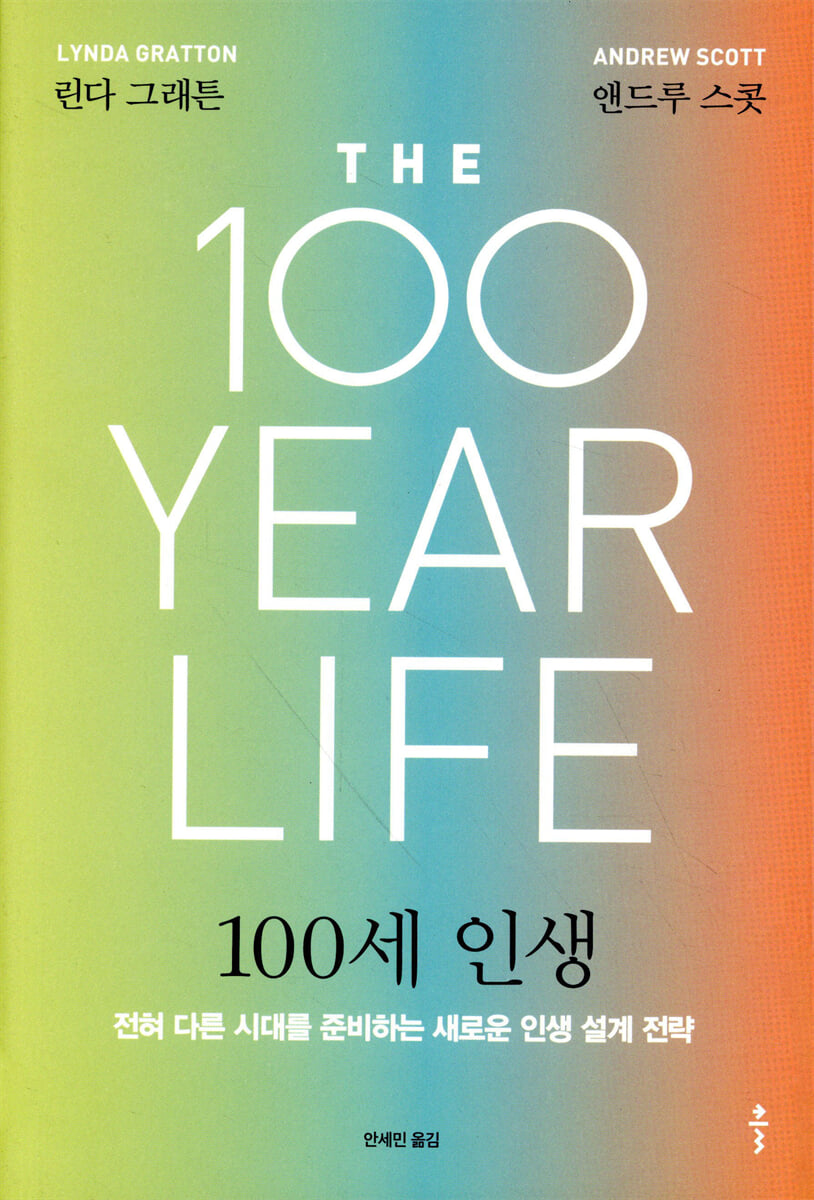
100 Year Life (Recovery)
 |
Description
Book Introduction
A new life plan for a completely different era
Shortlisted for the Financial Times' Business Book of the Year
First place overall at Japan's Business Book Grand Prix
What will your 100-year life look like? "Life at 100" suggests that if we prepare well now, we can make longevity a gift, not a curse.
Preparation means not only planning for the end of life, but also redesigning your entire life.
London Business School professors Linda Gratton and Andrew Scott provide concrete ideas for designing our lives by pointing out the everyday problems we face, such as how long we should work to maintain the desired standard of living after retirement, how to build a career to work for a long time, how to maintain various human relationships as well as finances, and how to manage our health for a vibrant life, based on research in economics and psychology.
And based on this, he says that in the future, everyone will live their own diverse lives, and within this diversity, we will be able to discover the gift of a 100-year life.
"The 100-Year Life" is an excellent guidebook for those of us who live today, where the traditional three-stage life of "education-work-retirement" is gradually collapsing and a multi-stage life is becoming increasingly necessary.
Shortlisted for the Financial Times' Business Book of the Year
First place overall at Japan's Business Book Grand Prix
What will your 100-year life look like? "Life at 100" suggests that if we prepare well now, we can make longevity a gift, not a curse.
Preparation means not only planning for the end of life, but also redesigning your entire life.
London Business School professors Linda Gratton and Andrew Scott provide concrete ideas for designing our lives by pointing out the everyday problems we face, such as how long we should work to maintain the desired standard of living after retirement, how to build a career to work for a long time, how to maintain various human relationships as well as finances, and how to manage our health for a vibrant life, based on research in economics and psychology.
And based on this, he says that in the future, everyone will live their own diverse lives, and within this diversity, we will be able to discover the gift of a 100-year life.
"The 100-Year Life" is an excellent guidebook for those of us who live today, where the traditional three-stage life of "education-work-retirement" is gradually collapsing and a multi-stage life is becoming increasingly necessary.
- You can preview some of the book's contents.
Preview
index
To Korean readers
introduction
Chapter 1: Life: The Gift of Longevity, Filled with Opportunity
Chapter 2: Financing Your Old Age
Chapter 3: The New and Rapidly Changing Employment Landscape
Chapter 4 Intangible Assets: What You Can't Price
Chapter 5 Scenario: Multiple Possible Selves
Chapter 6: Building Blocks of a New Life
Chapter 7: Money Matters: Managing Finances for a Longer Life
Chapter 8: Time: Leisure Time as a Time for Re-creation
Chapter 9: Human Relationships: The Changing Shape of Life
Agenda for Change
Live to be 100 years old
Table source
annotation
Search
introduction
Chapter 1: Life: The Gift of Longevity, Filled with Opportunity
Chapter 2: Financing Your Old Age
Chapter 3: The New and Rapidly Changing Employment Landscape
Chapter 4 Intangible Assets: What You Can't Price
Chapter 5 Scenario: Multiple Possible Selves
Chapter 6: Building Blocks of a New Life
Chapter 7: Money Matters: Managing Finances for a Longer Life
Chapter 8: Time: Leisure Time as a Time for Re-creation
Chapter 9: Human Relationships: The Changing Shape of Life
Agenda for Change
Live to be 100 years old
Table source
annotation
Search
Detailed image
.jpg)
Into the book
Over the past 50 years, life expectancy for Koreans has increased dramatically, by 28 years.
…In fact, the number of centenarians in Korea has nearly doubled over the past five years, reaching 3,500, and is projected to reach 10,000 by 2030.
If life expectancy increases this rapidly, the life expectancy of the majority of Koreans born today will exceed 107 years.
In other words, anyone under 50 among the readers of this book should probably prepare for a 100-year life. --- p.7
Our lives are much longer than ever before.
You will outlive the role models you look to today to determine the direction of your life, and you will outlive the current practices and institutional agreements.
Many things will change in the future, and this process of change is already underway.
We must be ready to adapt to these changes.
This is precisely why we wrote this book.
--- p.13
While money can't buy intangible assets, investing in them still requires money and financial stability.
You need money to buy a gym membership, spend a holiday with your family, or enjoy leisure time with loved ones and have peace of mind.
Having money allows you to invest in intangible assets, and these intangible assets help you achieve financial success.
This is an important relationship, and the proper balance of these two plays a crucial role in designing a 100-year life.
--- p.116
New steps create opportunities to try new things.
When you take on new challenges, you have the opportunity to learn from the experience.
We learn primarily by doing, and this new phase presents a wonderful opportunity to reflect on how our actions make us feel afterward.
…In fact, the number of centenarians in Korea has nearly doubled over the past five years, reaching 3,500, and is projected to reach 10,000 by 2030.
If life expectancy increases this rapidly, the life expectancy of the majority of Koreans born today will exceed 107 years.
In other words, anyone under 50 among the readers of this book should probably prepare for a 100-year life. --- p.7
Our lives are much longer than ever before.
You will outlive the role models you look to today to determine the direction of your life, and you will outlive the current practices and institutional agreements.
Many things will change in the future, and this process of change is already underway.
We must be ready to adapt to these changes.
This is precisely why we wrote this book.
--- p.13
While money can't buy intangible assets, investing in them still requires money and financial stability.
You need money to buy a gym membership, spend a holiday with your family, or enjoy leisure time with loved ones and have peace of mind.
Having money allows you to invest in intangible assets, and these intangible assets help you achieve financial success.
This is an important relationship, and the proper balance of these two plays a crucial role in designing a 100-year life.
--- p.116
New steps create opportunities to try new things.
When you take on new challenges, you have the opportunity to learn from the experience.
We learn primarily by doing, and this new phase presents a wonderful opportunity to reflect on how our actions make us feel afterward.
--- p.212
Publisher's Review
We must prepare for life to 100 years from now.
Over the past five years, life expectancy for Koreans has nearly doubled and is projected to exceed 10,000 by 2030.
Reflecting this, the life expectancy of the majority of Koreans born today is over 107 years, and those currently under 50 are very likely to live to be over 100.
These statistics suggest that living to 100 is not just a problem for older people, but something that younger generations should also prepare for now.
This requires questioning traditional ways of working and living, and being willing to embrace change throughout life.
Planning for a 100-year life isn't just about financial matters or preparing for retirement; it means redesigning your entire life.
The two authors of this book prove this with analysis and insights from economics and psychology.
The three-stage life cycle of "education, work, and retirement" is collapsing.
As life expectancy grows longer and the choices of lifestyle and life paths diversify, the traditional three-stage life cycle of 'education-work-retirement' has begun to break down.
It is no longer possible to follow the same life decisions that were made by previous generations.
As a concrete example, we present a 100-year life scenario for fictional characters Jack, Jimmy, and Jane.
Born in 1945, Jack lived a traditional three-stage life.
I saved 4.3% of my income each year during my 42 years of work, and I had no trouble living off my pension for eight years after retirement.
For Jimmy, who was born in 1971, working 44 years would give him 20 years to retire.
To receive 50% of your pre-retirement income as a pension during your retirement, you would need to save 17% of your income every year while working.
Jane, born in 1998, has been retired for 35 years, so she has had to consistently save a whopping 25% of her income.
It is impossible to ask someone who lives to be over 100 years old to live a three-stage life and retire at 65.
Live a multi-stage life that utilizes rest and transition periods.
When you live to be 100 years old, you gain a lot more time than before.
How will you distribute your newfound time?
Breaking free from the constraints of a three-stage life presents a genuine opportunity to live more flexibly and proactively.
That's a multi-stage life with diverse careers and periods of rest and transition.
In the future, a multi-stage life will be established, with people engaging in two or three different careers and at some stage retraining to acquire new skills.
As life's stages increase, so do the transition periods between them, which are crucial in a longer life.
In "100 Year Life," various multi-stage life scenarios are analyzed and organized into concrete examples that are easy to understand, such as the 3.5/4.0/5.0 stage scenarios that extend the traditional three-stage life, and the portfolio life of old age where various occupations are performed simultaneously.
There must be a balance between tangible and intangible assets.
To cope with the coming changes and make the most of the transition period, the role of intangible assets, as well as tangible assets, is crucial.
We live with the perception that problems with tangible assets, such as real estate and deposits, must be solved, but we tend not to do the same for intangible assets.
For example, intangible assets such as productive assets that increase productivity and earn more in the workplace, such as skills and knowledge; vital assets that provide physical and mental stability, such as positive family relationships or partnerships and good health; and transformational assets that play a crucial role in multi-level life, such as recognizing one's own identity and being open to new experiences, are often neglected because they do not have a physical presence and are difficult to measure in value.
But in a multi-level life, these intangible assets are the key to our longer economic lives and a more prosperous life.
The authors emphasize that achieving a balance of these assets is essential for a happy life.
Traditional relationships, such as family, friends, partnerships, and gender roles, are changing.
As life gets longer and has more stages, the forms of life also change in various ways.
Families may have fewer children, but they may have to support not only their parents but also their grandparents.
As people increasingly work into their 70s or 80s, and as the majority of family members work, the traditional roles of men and women in the home are breaking down.
These changes have positive consequences, reducing the gap between men and women in society.
As a result, gender discrimination in society disappears as roles are naturally exchanged, such as taking turns as the main source of income depending on the stage of life.
Moreover, in a multi-stage life where age does not imply each stage, there are more opportunities to share similar experiences with people of different ages, and age discrimination also disappears.
Individuals, businesses, and nations must prepare for the future together.
Making a difference in life at age 100 depends largely on individual will and preparation, but the role of government and corporate educational institutions is also crucial.
Just as individuals redesign their lives, government policies and institutions, including laws, taxes, welfare, employment, and education, must be redesigned.
Companies need to recognize the transitional phase of their workforce and make efforts to support the development of intangible assets as well as tangible ones.
As life stages increase, the need for flexible work becomes more apparent, and the relationship between companies and workers is reorganized to accommodate diverse lifestyles.
As a result, the problem of age discrimination in the labor market may also disappear.
In this way, governments and businesses must adapt policies and regulations based on the three-stage life cycle to reflect reality.
"Life to 100" emphasizes that the reality we face is a challenge that must be addressed not only as individuals, but also by businesses and the nation.
Over the past five years, life expectancy for Koreans has nearly doubled and is projected to exceed 10,000 by 2030.
Reflecting this, the life expectancy of the majority of Koreans born today is over 107 years, and those currently under 50 are very likely to live to be over 100.
These statistics suggest that living to 100 is not just a problem for older people, but something that younger generations should also prepare for now.
This requires questioning traditional ways of working and living, and being willing to embrace change throughout life.
Planning for a 100-year life isn't just about financial matters or preparing for retirement; it means redesigning your entire life.
The two authors of this book prove this with analysis and insights from economics and psychology.
The three-stage life cycle of "education, work, and retirement" is collapsing.
As life expectancy grows longer and the choices of lifestyle and life paths diversify, the traditional three-stage life cycle of 'education-work-retirement' has begun to break down.
It is no longer possible to follow the same life decisions that were made by previous generations.
As a concrete example, we present a 100-year life scenario for fictional characters Jack, Jimmy, and Jane.
Born in 1945, Jack lived a traditional three-stage life.
I saved 4.3% of my income each year during my 42 years of work, and I had no trouble living off my pension for eight years after retirement.
For Jimmy, who was born in 1971, working 44 years would give him 20 years to retire.
To receive 50% of your pre-retirement income as a pension during your retirement, you would need to save 17% of your income every year while working.
Jane, born in 1998, has been retired for 35 years, so she has had to consistently save a whopping 25% of her income.
It is impossible to ask someone who lives to be over 100 years old to live a three-stage life and retire at 65.
Live a multi-stage life that utilizes rest and transition periods.
When you live to be 100 years old, you gain a lot more time than before.
How will you distribute your newfound time?
Breaking free from the constraints of a three-stage life presents a genuine opportunity to live more flexibly and proactively.
That's a multi-stage life with diverse careers and periods of rest and transition.
In the future, a multi-stage life will be established, with people engaging in two or three different careers and at some stage retraining to acquire new skills.
As life's stages increase, so do the transition periods between them, which are crucial in a longer life.
In "100 Year Life," various multi-stage life scenarios are analyzed and organized into concrete examples that are easy to understand, such as the 3.5/4.0/5.0 stage scenarios that extend the traditional three-stage life, and the portfolio life of old age where various occupations are performed simultaneously.
There must be a balance between tangible and intangible assets.
To cope with the coming changes and make the most of the transition period, the role of intangible assets, as well as tangible assets, is crucial.
We live with the perception that problems with tangible assets, such as real estate and deposits, must be solved, but we tend not to do the same for intangible assets.
For example, intangible assets such as productive assets that increase productivity and earn more in the workplace, such as skills and knowledge; vital assets that provide physical and mental stability, such as positive family relationships or partnerships and good health; and transformational assets that play a crucial role in multi-level life, such as recognizing one's own identity and being open to new experiences, are often neglected because they do not have a physical presence and are difficult to measure in value.
But in a multi-level life, these intangible assets are the key to our longer economic lives and a more prosperous life.
The authors emphasize that achieving a balance of these assets is essential for a happy life.
Traditional relationships, such as family, friends, partnerships, and gender roles, are changing.
As life gets longer and has more stages, the forms of life also change in various ways.
Families may have fewer children, but they may have to support not only their parents but also their grandparents.
As people increasingly work into their 70s or 80s, and as the majority of family members work, the traditional roles of men and women in the home are breaking down.
These changes have positive consequences, reducing the gap between men and women in society.
As a result, gender discrimination in society disappears as roles are naturally exchanged, such as taking turns as the main source of income depending on the stage of life.
Moreover, in a multi-stage life where age does not imply each stage, there are more opportunities to share similar experiences with people of different ages, and age discrimination also disappears.
Individuals, businesses, and nations must prepare for the future together.
Making a difference in life at age 100 depends largely on individual will and preparation, but the role of government and corporate educational institutions is also crucial.
Just as individuals redesign their lives, government policies and institutions, including laws, taxes, welfare, employment, and education, must be redesigned.
Companies need to recognize the transitional phase of their workforce and make efforts to support the development of intangible assets as well as tangible ones.
As life stages increase, the need for flexible work becomes more apparent, and the relationship between companies and workers is reorganized to accommodate diverse lifestyles.
As a result, the problem of age discrimination in the labor market may also disappear.
In this way, governments and businesses must adapt policies and regulations based on the three-stage life cycle to reflect reality.
"Life to 100" emphasizes that the reality we face is a challenge that must be addressed not only as individuals, but also by businesses and the nation.
GOODS SPECIFICS
- Publication date: November 11, 2020
- Page count, weight, size: 392 pages | 628g | 153*225*30mm
- ISBN13: 9791190555319
- ISBN10: 119055531X
You may also like
카테고리
korean


korean

![GQ KOREA Mark (Monthly): December [2025]](http://librairie.coreenne.fr/cdn/shop/files/8ef265dbbfbf186523ed75ba7319009d.jpg?v=1765340328&width=3840)


