

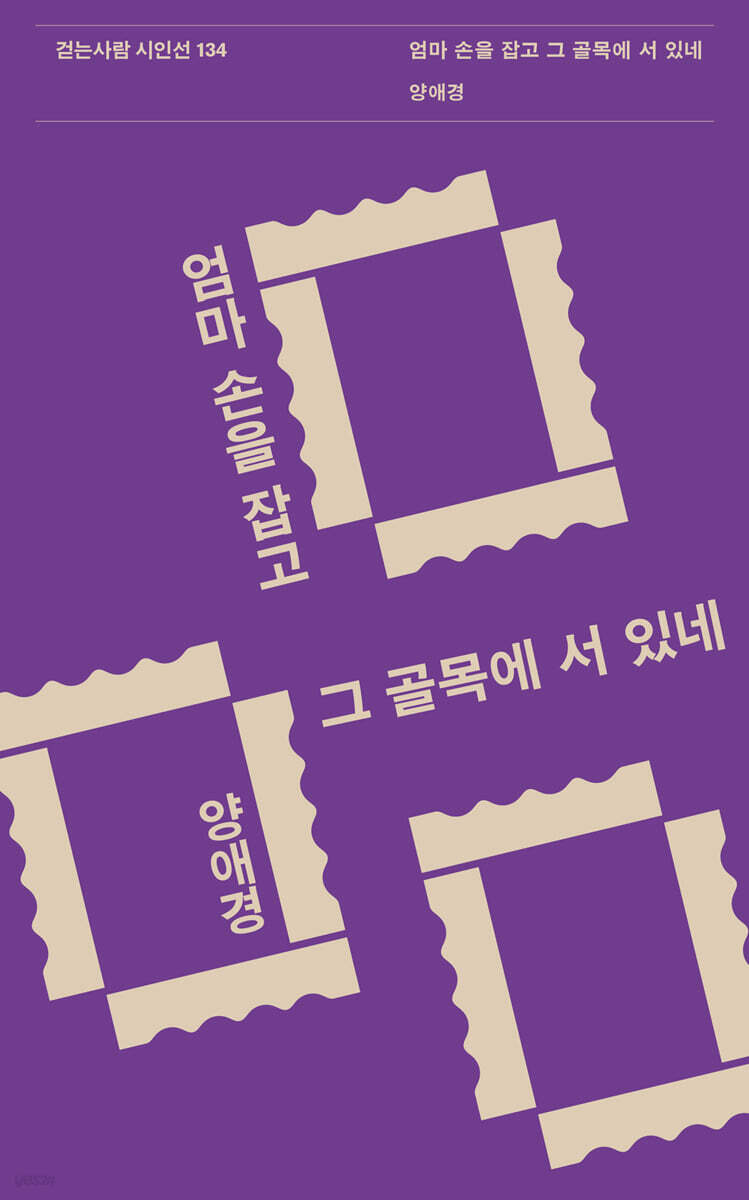
I'm standing in that alley holding my mother's hand.
 |
Description
Book Introduction
"I'm going to break down and cry like this
“Did my mother and I endure those years together?”
My daughter who went through 7 years of “solo care”
A poignant and cheerful declaration of independence for all 'care survivors'
Yang Ae-kyung's seventh poetry collection, "I'm Standing in That Alley Holding My Mother's Hand," was published as volume 134 of the Walking People Poet Series.
This collection of poems, which contains the experience of losing a mother whom she had cared for for seven years, goes beyond a personal record and examines the realities of caregiving and life after loss.
The poet vividly portrays the life of a 'care survivor' in his characteristically cheerful language, while honestly revealing the pain, isolation, and guilt of caregiving.
"Standing in the Alley Holding Mom's Hand" expands personal experience into social empathy, exploring human dignity and the sustainability of love through the process of loss and recovery.
“Did my mother and I endure those years together?”
My daughter who went through 7 years of “solo care”
A poignant and cheerful declaration of independence for all 'care survivors'
Yang Ae-kyung's seventh poetry collection, "I'm Standing in That Alley Holding My Mother's Hand," was published as volume 134 of the Walking People Poet Series.
This collection of poems, which contains the experience of losing a mother whom she had cared for for seven years, goes beyond a personal record and examines the realities of caregiving and life after loss.
The poet vividly portrays the life of a 'care survivor' in his characteristically cheerful language, while honestly revealing the pain, isolation, and guilt of caregiving.
"Standing in the Alley Holding Mom's Hand" expands personal experience into social empathy, exploring human dignity and the sustainability of love through the process of loss and recovery.
- You can preview some of the book's contents.
Preview
index
Part 1 Alley Map
mom
cowardice
Alley Map
Cinderella's fairy mother
I'm sick too
empty house
give up
All the hills of the world
constipation
Saalsal
Friday dinner table
discharge
drifting
Part 2: I Miss You
I miss you
fishy smell
Why I don't like trot
sexual orientation
age
Gourd
This is Noininnara Station
Your wife said
It's a bit shabby
A summer morning with a whistle
square
White hair wave
Snow falling on apartment 3
Seroquel
Don't revive the dead
The smell of urine
Haunted House
I'm standing in that alley holding my mother's hand.
Just one more day
cut with a knife
filial piety
You can get whatever you want
crescent moon during the day
Interview 1
bare back
Interview 2
Mom's bed
Snow falling on the apartment
Part 4 From Sinchon Station to Seoul Station
From Sinchon Station to Seoul Station
promise
A happy call
noise sensitive
Like pouring water into a pot
long bottle
Day 9
Crying with glasses on
Seven months and eleven days
Talking to yourself
A peaceful day
What grandmothers do
thigh
Spring, dawn, whistle
commentary
The Language of Care Survivors: Between Love and Mourning
- Kim Su-i (literary critic)
mom
cowardice
Alley Map
Cinderella's fairy mother
I'm sick too
empty house
give up
All the hills of the world
constipation
Saalsal
Friday dinner table
discharge
drifting
Part 2: I Miss You
I miss you
fishy smell
Why I don't like trot
sexual orientation
age
Gourd
This is Noininnara Station
Your wife said
It's a bit shabby
A summer morning with a whistle
square
White hair wave
Snow falling on apartment 3
Seroquel
Don't revive the dead
The smell of urine
Haunted House
I'm standing in that alley holding my mother's hand.
Just one more day
cut with a knife
filial piety
You can get whatever you want
crescent moon during the day
Interview 1
bare back
Interview 2
Mom's bed
Snow falling on the apartment
Part 4 From Sinchon Station to Seoul Station
From Sinchon Station to Seoul Station
promise
A happy call
noise sensitive
Like pouring water into a pot
long bottle
Day 9
Crying with glasses on
Seven months and eleven days
Talking to yourself
A peaceful day
What grandmothers do
thigh
Spring, dawn, whistle
commentary
The Language of Care Survivors: Between Love and Mourning
- Kim Su-i (literary critic)
Into the book
I'm standing in front of the sink
Soak the gauze in hot water
I start by carefully wiping the area around my mother's eyes.
Mom complains in a small voice
- Hey, every time you wipe, the world shakes.
I passed my mother's nose and up to her lips
Rub with gauze repeatedly
It's not easy to wipe away the wrinkles around your mouth.
- Doing that will shake the world?
Instead of blaming the world, try to stay steady.
- What?
"My mother protested in a small voice.
Always tottering and tilting my head
A mother complaining that the ground is not flat
How can I level all the hills in front of my mother?
--- From "All the Hills of the World"
I was eighteen years old
Standing far away from my friends in the classroom
I wish I could become a grandmother soon.
No, what if there's a war?
And he was muttering
Like a lie
Time has taken me away and left me here.
Now I'm a real grandmother
Did I get what I wanted back then?
--- From "Age"
A very long time ago
The person I liked
In the wrong place,
How have you been?
So that I can suddenly stick my head out
Still standing in the same life
good
Even if they flow separately
--- From "This Life"
The ghost
A person who has forgotten that he is dead
Knock! Turn on the light
Open the door gently
I pulled up a chair and sat down.
While singing a verse of an old song
Knock! The lights are off.
Don't call it a haunted house
The house is still
that person's house
I just forgot for a moment that he was dead
--- From "The Haunted House"
Is this our house?
Seriously, once a day, my mom asks me
I say yes
My mother had an accident about 40 years ago
Our home that we never left
This house is headed to the afterlife
Last stop on the Lee Seung side
Under the dim streetlight
Holding my mother's small hand that was leaning on a cane
I stand there sad
--- From "I'm standing in that alley holding my mother's hand"
We can't get into the glass door
Mom being pushed in a wheelchair
The back of my mother's head, exposed with her head held high
defenseless
As I was driving back, the back of his head came to mind.
I started crying
I'm definitely going to call my mom tomorrow and ask to borrow an electric bed.
(...)
I'm going to break down and cry like this
Did my mother and I endure those years together?
I guess I won't be able to bring my mom.
Seeing you cry like this
--- From "Interview 1"
Mom, I love you
In the next life, be born as my daughter
I'll do it well
No matter how many times I say I love you
My throat gets choked up every time I speak.
Soak the gauze in hot water
I start by carefully wiping the area around my mother's eyes.
Mom complains in a small voice
- Hey, every time you wipe, the world shakes.
I passed my mother's nose and up to her lips
Rub with gauze repeatedly
It's not easy to wipe away the wrinkles around your mouth.
- Doing that will shake the world?
Instead of blaming the world, try to stay steady.
- What?
"My mother protested in a small voice.
Always tottering and tilting my head
A mother complaining that the ground is not flat
How can I level all the hills in front of my mother?
--- From "All the Hills of the World"
I was eighteen years old
Standing far away from my friends in the classroom
I wish I could become a grandmother soon.
No, what if there's a war?
And he was muttering
Like a lie
Time has taken me away and left me here.
Now I'm a real grandmother
Did I get what I wanted back then?
--- From "Age"
A very long time ago
The person I liked
In the wrong place,
How have you been?
So that I can suddenly stick my head out
Still standing in the same life
good
Even if they flow separately
--- From "This Life"
The ghost
A person who has forgotten that he is dead
Knock! Turn on the light
Open the door gently
I pulled up a chair and sat down.
While singing a verse of an old song
Knock! The lights are off.
Don't call it a haunted house
The house is still
that person's house
I just forgot for a moment that he was dead
--- From "The Haunted House"
Is this our house?
Seriously, once a day, my mom asks me
I say yes
My mother had an accident about 40 years ago
Our home that we never left
This house is headed to the afterlife
Last stop on the Lee Seung side
Under the dim streetlight
Holding my mother's small hand that was leaning on a cane
I stand there sad
--- From "I'm standing in that alley holding my mother's hand"
We can't get into the glass door
Mom being pushed in a wheelchair
The back of my mother's head, exposed with her head held high
defenseless
As I was driving back, the back of his head came to mind.
I started crying
I'm definitely going to call my mom tomorrow and ask to borrow an electric bed.
(...)
I'm going to break down and cry like this
Did my mother and I endure those years together?
I guess I won't be able to bring my mom.
Seeing you cry like this
--- From "Interview 1"
Mom, I love you
In the next life, be born as my daughter
I'll do it well
No matter how many times I say I love you
My throat gets choked up every time I speak.
--- From "The 9th Day"
Publisher's Review
Behind the "Personal Trials": Breaking the Social Silence of Care
This collection of poems sharply captures the contemporary awareness that the pain of caregiving should no longer be dismissed as a "personal ordeal."
The cry, “Oh my gosh, what should I do? I’m scared/because a sane person can’t stand it” (“Seroquel”) vividly reveals the despair and fear in the nursing field.
The phrase “It feels like I’m paying the interest/once I’ve paid off the principal” (from “Filial Piety”) also reveals the shackles of care that are passed down in the names of “filial piety” and “caregiving.”
"Standing in the Alley Holding Mom's Hand" confronts the guilt and helplessness felt by those who shoulder the burden of caregiving, and suggests the possibility of healing and recovery within an attitude that acknowledges the finiteness of human beings.
Guilt and Human Limitations: Forgiveness and Comfort Beyond Grief
Yang Ae-kyung's poetry meticulously depicts the process of care that begins with love and devotion and leads to guilt.
The poet expresses extreme guilt and endures the time of accepting his mother's absence, writing, "I took my mother to the nursing home with my own hands/Slammed the door/And came back alone!" ("You can get anything you want").
After asking himself whether he can be happy “without a mother” (“Long Illness”), the poet reaches the language of forgiveness by making the resolution, “I will ask my mother in my heart/and I will live happily” (“Seven Months and Eleven Days”).
The phrase “Let’s go to Mom’s house/A million times heavier than ‘I love you’” (from “Visit 2”) shows both the weight of care and human limitations, and says that forgiveness that accepts sorrow is the beginning of comfort.
Recovery Beyond Pain: Rebuilding Life After Care
“Standing in the Alley Holding Mom’s Hand” contains the moment when someone who has overcome pain stands up again as themselves.
The poet finds himself “waiting for the day when I can shed my skin and become a butterfly/and fly away” (“It’s a bit shabby”), and he regains his will to live even in the midst of loss.
As can be seen in the poet's confession, "In the next life, please be born as my daughter/I will live my life doing for you all the things I could not do for you," the unpaid feelings are transformed into hope.
The phrase “I am a poet/a soul that knows that people are completely alone anyway” (from “Why Don’t I Like Trot”) is a declaration of standing again as a ‘poet’ beyond the identities of a caregiver and a daughter, and a sentence that recovers one’s own existence.
The poem “It’s a peaceful day/There are no patients/I’m not sick/I’m even happy” (“A Peaceful Day”), which appears in Part 4, shows the peace and freedom achieved after passing through a long tunnel of care.
The verses of "Standing in That Alley, Holding Mother's Hand" will leave a quiet but strong comfort to all who have experienced care and loss.
Poet's words
I lived under my mother's care
We lived together as good friends, relying on each other
I lived while taking care of my mother who became like a baby…
Now I left my mother on the mountain where my father is
In your next life, be born as my daughter.
I will live by doing all the things I couldn't do for you.
Yang Ae-kyung, Fall 2025
This collection of poems sharply captures the contemporary awareness that the pain of caregiving should no longer be dismissed as a "personal ordeal."
The cry, “Oh my gosh, what should I do? I’m scared/because a sane person can’t stand it” (“Seroquel”) vividly reveals the despair and fear in the nursing field.
The phrase “It feels like I’m paying the interest/once I’ve paid off the principal” (from “Filial Piety”) also reveals the shackles of care that are passed down in the names of “filial piety” and “caregiving.”
"Standing in the Alley Holding Mom's Hand" confronts the guilt and helplessness felt by those who shoulder the burden of caregiving, and suggests the possibility of healing and recovery within an attitude that acknowledges the finiteness of human beings.
Guilt and Human Limitations: Forgiveness and Comfort Beyond Grief
Yang Ae-kyung's poetry meticulously depicts the process of care that begins with love and devotion and leads to guilt.
The poet expresses extreme guilt and endures the time of accepting his mother's absence, writing, "I took my mother to the nursing home with my own hands/Slammed the door/And came back alone!" ("You can get anything you want").
After asking himself whether he can be happy “without a mother” (“Long Illness”), the poet reaches the language of forgiveness by making the resolution, “I will ask my mother in my heart/and I will live happily” (“Seven Months and Eleven Days”).
The phrase “Let’s go to Mom’s house/A million times heavier than ‘I love you’” (from “Visit 2”) shows both the weight of care and human limitations, and says that forgiveness that accepts sorrow is the beginning of comfort.
Recovery Beyond Pain: Rebuilding Life After Care
“Standing in the Alley Holding Mom’s Hand” contains the moment when someone who has overcome pain stands up again as themselves.
The poet finds himself “waiting for the day when I can shed my skin and become a butterfly/and fly away” (“It’s a bit shabby”), and he regains his will to live even in the midst of loss.
As can be seen in the poet's confession, "In the next life, please be born as my daughter/I will live my life doing for you all the things I could not do for you," the unpaid feelings are transformed into hope.
The phrase “I am a poet/a soul that knows that people are completely alone anyway” (from “Why Don’t I Like Trot”) is a declaration of standing again as a ‘poet’ beyond the identities of a caregiver and a daughter, and a sentence that recovers one’s own existence.
The poem “It’s a peaceful day/There are no patients/I’m not sick/I’m even happy” (“A Peaceful Day”), which appears in Part 4, shows the peace and freedom achieved after passing through a long tunnel of care.
The verses of "Standing in That Alley, Holding Mother's Hand" will leave a quiet but strong comfort to all who have experienced care and loss.
Poet's words
I lived under my mother's care
We lived together as good friends, relying on each other
I lived while taking care of my mother who became like a baby…
Now I left my mother on the mountain where my father is
In your next life, be born as my daughter.
I will live by doing all the things I couldn't do for you.
Yang Ae-kyung, Fall 2025
GOODS SPECIFICS
- Date of issue: October 20, 2025
- Page count, weight, size: 144 pages | 172g | 125*200*10mm
- ISBN13: 9791175010208
- ISBN10: 1175010200
You may also like
카테고리
korean


korean

![GQ KOREA Mark (Monthly): December [2025]](http://librairie.coreenne.fr/cdn/shop/files/8ef265dbbfbf186523ed75ba7319009d.jpg?v=1765340328&width=3840)


